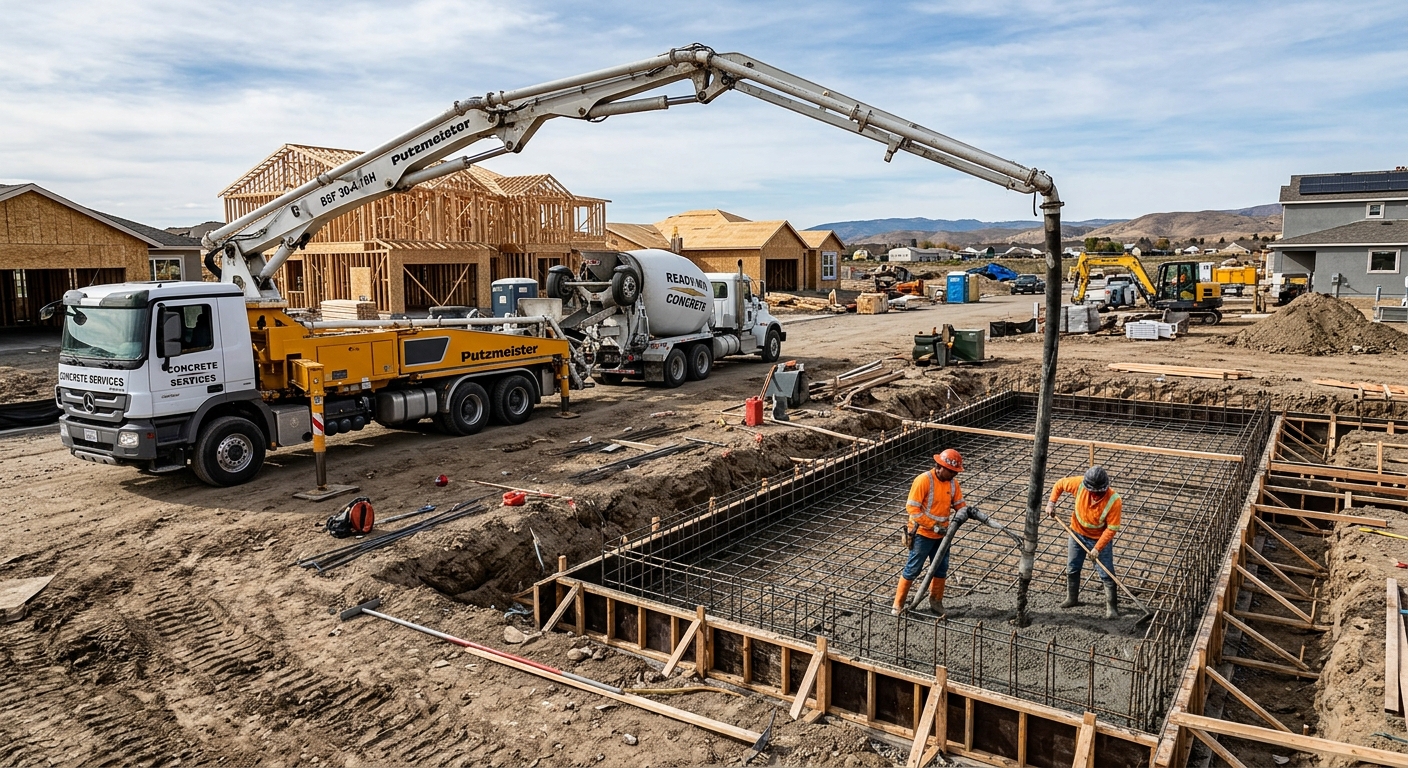
Concrete work options and costs in Westmount
Westmount homeowners often choose concrete because it’s durable, repairable, and—when built correctly—holds up well to the Toronto area’s freeze–thaw winters. In Westmount, the market is small but active for exterior concrete flatwork on older, established properties; with a population of 4,010 people (Statistics Canada, 2021 Census), you’ll notice trades get booked quickly, especially around the spring and early fall. Many residents live in a mix of housing types, including older neighbourhood pockets where driveways and walkways were installed decades ago and now need re-laying to improve slope, drainage, and curb appeal.
In the Toronto economic region, costs are driven by frost depth and freeze–thaw cycles. Most structural footings must be set below design frost depth (typically at least about 1.2 m in Ontario) to limit frost heave and differential movement. For exterior slabs—driveways, patios, and walkways—Toronto contractors usually specify air-entrained concrete, correct thickness, compacted granular base, and control joints to manage cracking. The GTA’s humid conditions and wet fall/spring weather also mean curing management matters: concrete needs protection and longer care when temperatures dip toward 10 °C or below. That affects labour time, material handling, and sometimes the amount of staging needed on tight Westmount lots.
If you’re near roads and lanes with limited access (and many properties have narrower approaches), haul and concrete-truck access can be a deciding factor—so it’s smart to compare options side-by-side. Below is a practical cost comparison for common Westmount projects, then we’ll break down what really moves the price.
| Application |
Typical Size |
Key Spec |
Finish Option |
Price Range |
| Concrete driveway (standard broom finish) |
400–600 sq. ft. |
Air-entrained mix, compacted granular base, control joints |
Broom finish |
$7,200–$16,800 |
| Exposed aggregate driveway |
400–600 sq. ft. |
Air-entrained mix, proper curing and surface retarder timing |
Exposed aggregate finish |
$9,000–$19,500 |
| Stamped concrete driveway or patio |
300–500 sq. ft. |
Air-entrained mix, release agent and curing schedule |
Stamped (texture + colour) |
$7,200–$20,000 |
| Plain concrete patio or walkway |
200–400 sq. ft. |
Compacted base, adequate thickness, joints |
Plain broom or smooth trowel with broom texture |
$3,200–$10,400 |
| Garage floor (interior slab) |
300–600 sq. ft. |
Vapour barrier (if needed), fibre or mesh, good curing |
Plain trowel finish |
$4,500–$18,000 |
| Foundation footings (structural, below frost) |
Varies (typical home) |
Engineered design; excavation to frost; rebar per drawings |
Formed concrete with proper cure |
$18,000–$45,000 |
Prices are estimates only and vary by project scope, site access and material selection.
What affects the price of concrete work in Westmount
In Toronto, quotes for the “same” concrete job can differ by 30–50% because the hidden scope is usually different—especially in older Westmount properties where the existing base, drainage, and soil condition aren’t always what they look like. One crew may include full excavation to proper frost-safe depth, granular base and compaction, and joint/sealing costs; another may price the pour with less prep. That’s why you’ll see driveway pricing land anywhere from the driveway/slab band of $18–$28 per sq. ft. depending on thickness, reinforcement, and finish. On the flatwork side, patio and walkway work typically sits around $16–$26 per sq. ft., with stamped work often shifting to the higher decorative band of $24–$40 per sq. ft. once stamp mats, additional colour products, and more labour-intensive finishing are included.
Toronto frost depth and freeze–thaw cycles dictate everything from footing depth to slab mix design. Exterior slabs should use air-entrained concrete to survive repeated freezing and thawing, and contractors must control thickness and compaction so saturated soils don’t expand and contract against the concrete each winter. When pours happen during cooler shoulder weather, cold-weather curing precautions—like insulating blankets or temporary heating—can add labour and material cost, but they protect long-term durability. De-icing salts in the GTA also increase risk of spalling, so sealing is often recommended after the cure window.
In Westmount, two common cost drivers are (1) drainage corrections—regrading and adding a swale so water doesn’t sit against the slab—and (2) restricted access, which increases labour time for handling forms, rebar, and concrete delivery. If you’re replacing a failing driveway, removing old concrete and hauling it away can also swing the total; in some cases, that prep pushes the job closer to the higher end of the $18–$28 band. Conversely, a straightforward patio replacement on well-draining soil with easy truck access may price closer to the $16–$26 band.
| Price Factor |
Why It Matters |
Cost Impact |
| Frost line depth — determines footing depth and form height |
Footings must sit below design frost depth to prevent heave and movement |
Higher excavation and concrete volume; can move foundation work from “entry” to “premium” quickly |
| Site preparation — excavation, grading, compacted granular base |
Proper base reduces settlement and keeps water from undermining slabs |
Often the largest swing factor on existing-driveway or patio tear-outs |
| Reinforcement — rebar or wire mesh requirement |
Controls cracking and improves performance under loads and thermal movement |
Labour and material add cost, especially for driveways and interior slabs |
| Mix design — air-entrainment and compressive strength spec |
Air entrainment is key for freeze–thaw durability; strength supports structural needs |
Right mix prevents premature scaling/spalling; wrong mix leads to costly callbacks |
| Finish type — broom vs. stamped vs. exposed aggregate |
Finish complexity determines labour time, materials, and cure/surface timing |
Stamped/exposed aggregate typically costs notably more than broom/plain |
| Pour size and concrete truck access to site |
Short access windows and difficult placements raise labour and staging time |
May increase crew hours or require alternate delivery logistics |
| Cold-weather curing precautions — heating and blankets |
Lower temperatures can slow strength gain and increase surface defects |
Additional labour/materials when pours occur near or below ~10 °C |
| Control joint pattern and sealing cost |
Joints manage crack locations; sealing helps resist salt scaling on exterior flatwork |
Added line items, but they reduce long-term deterioration |
Permits & regulations in Ontario
In Ontario, structural concrete work almost always starts with permits and engineered documentation. Footings, foundation walls, and grade beams are typically part of the building permit scope, and municipalities often require engineered drawings (especially for rebar placement, sizes, and loads). If your project involves underpinning, new foundation elements, or any structural replacement, assume you’ll need a building permit and review. In contrast, concrete flatwork—patios, walkways, and most driveways—often does not require a permit by default, as long as it does not materially change lot grading, alter required drainage, or create additional impervious surface beyond what’s allowed for the site.
For your Westmount project, the easiest way to avoid surprises is to confirm with the municipality before breaking ground, and ask whether your proposal changes drainage patterns or lot grading. Your contractor should also carry liability insurance and WSIB/WCB coverage (or the applicable coverage structure for the trade), and provide references on similar-scale concrete work.
Step-by-step contractor verification (what to look for): (1) Request a copy of their Certificate of Insurance—confirm general liability limits and that the policy is current for Ontario work; (2) Ask for their WSIB/WCB clearance information and ensure it matches the contractor’s legal entity; (3) Verify the contractor’s licensing/registration status using Ontario’s online resources; (4) Check that they can name the permit pathway for structural work and will provide engineered drawings where required; and (5) Compare their scope for excavation, base prep, reinforcement, and curing protection so you’re not missing permit-adjacent requirements.
Getting concrete right in Westmount's freeze-thaw climate
Concrete failures in Westmount are usually a freeze–thaw story plus a workmanship story. Water is the enemy: if the base isn’t compacted to the right depth or drainage lets water sit under or against the slab, the soil can expand and contract, stressing the concrete. The second big issue is mix durability—exterior flatwork needs an air-entrained mix and proper curing to resist scaling and spalling when freezing temperatures return. Finally, cracks happen when joints are missing or poorly spaced; even “good” concrete will crack, but control joints help it crack where it won’t create trip hazards or let water penetrate.
To spec your job for Toronto-area winters, focus on five items. First, base preparation: excavate to reach undisturbed soil and build a well-compacted granular sub-base suitable for local conditions and frost-safe thickness. Second, mix design: for exterior flatwork, contractors commonly target 5–7% air and a minimum 32 MPa compressive strength (with the right cementitious content for durability). Third, control joints: plan spacing to limit random cracking across the slab surface. Fourth, curing: allow at least 7 days of proper curing, and protect the pour more aggressively when temperatures approach ~10 °C or below. Fifth, sealing: apply a penetrating sealer after the full cure (often at 28 days) to repel de-icing salts and reduce surface scaling risk.
If you’re comparing options, it’s normal to see decorative work cost more. For example, moving from plain broom-finish patio work in the $16–$26 per sq. ft. band to stamped concrete in the $24–$40 band can cost roughly $8–$14 more per sq. ft. The best justification is consistent base prep, correct air-entrainment, and a joint/sealing plan that protects the patterned surface from salt and winter moisture—not just the stamp itself.
| Spec |
Why It Matters in Westmount |
What to Ask For |
Impact if Skipped |
| Compacted granular base (depth?) |
Reduces settlement and helps manage water away from the slab |
State the base depth and that it will be compacted in lifts to specs |
Settlement, cracked slab edges, and accelerated breakdown |
| Air-entrained concrete mix (target air %?) |
Improves freeze–thaw durability for exterior flatwork in Ontario winters |
Confirm 5–7% target air content for exterior applications |
Higher risk of scaling/spalling and surface deterioration |
| Compressive strength (MPa rating) |
Ensures adequate strength gain for load and long-term performance |
Confirm minimum 32 MPa compressive strength (or higher if engineered) |
Weaker concrete that can chip, crack, or wear prematurely |
| Control joints (spacing per ACI guidelines) |
Controls where cracks occur during shrinkage and temperature cycles |
Ask for a joint layout plan and spacing appropriate to slab dimensions |
Random cracking, trip hazards, and water intrusion |
| Minimum 7-day curing period |
Allows strength development, especially important during cooler periods |
Confirm curing method and temperature protections if pouring cool weather |
Surface defects, reduced strength, and higher failure risk |
| Penetrating sealer (when applied after cure) |
Repels de-icing salts and reduces freeze–thaw damage at the surface |
Confirm application after cure (commonly 28 days) and product type |
More scaling/spalling and faster aesthetic/structural decline |
How to choose a concrete work contractor in Westmount
For Westmount homeowners, picking the right concrete contractor is mostly about verification and clarity. Start by confirming Ontario licensing/registration where required, and ensure the contractor carries liability insurance and WSIB/WCB coverage (or the applicable coverage status for the business). Ask for the Certificate of Insurance directly and make sure it’s current, then request WSIB/WCB clearance details for the legal entity that will perform the work. A reputable contractor should be comfortable providing documents and explaining how they handle structural versus flatwork scope.
Next, don’t just compare totals—request 2–3 itemised written quotes with labour + materials breakdown. You want to see line items for excavation/removal, granular base and compaction, reinforcement (if included), concrete supply, forming, finishing, curing/protection, and sealing. Confirm what’s excluded (for example: disposal/haul-away, fencing, property protection, electrical heat/blankets for cold-weather curing, and any permit pull if structural work is involved). A proper warranty is also essential: ask for the workmanship warranty length, product/manufacturer warranty terms, and whether any coverage is transferable if you sell your home.
Payment should protect you. Never pay more than about 10–15% upfront. Use a holdback until the job is complete and cleaned up. Finally, insist on a written timeline: a start date and completion estimate, with contingencies for weather interruptions—especially in Ontario when temperature swings can delay proper curing.
- Provide proof of liability insurance (current certificate) and confirm coverage limits
- Provide WSIB/WCB clearance information for the correct legal entity
- Supply at least 2–3 recent photos of similar exterior flatwork in freeze–thaw conditions
- Use itemised quotes (not “all-in” only) showing base prep, reinforcement, and finishing
- Clarify haul-away/disposal inclusions for removed concrete
- Confirm thickness and joint pattern, including spacing and sealant/sealer plan
- Ask for the air-entrainment target and minimum compressive strength specification
- Confirm curing and cold-weather protection steps if the pour is near ~10 °C
- Ask who will manage quality checks (base compaction and concrete delivery timing)
- Check warranty terms in writing and what “workmanship” covers
- Confirm payment schedule and that holdback remains until final acceptance
- Request a signed contract with start date, completion estimate, and weather contingency language
Concrete red flags I commonly see in Westmount include: quoting without discussing base depth/compaction, vague language like “standard mix” (no air-entrainment or strength stated), skipping control-joint layouts, offering to pour without curing protection during cool periods, and refusing to put key specs (thickness, reinforcement, sealing schedule) in the written scope.
Frequently asked questions — concrete work in Westmount
Concrete vs pavers for a patio in Westmount?
In Westmount and the wider Toronto region, the choice usually comes down to maintenance, drainage, and how you want the surface to age in freeze–thaw winters. Concrete patios are typically less labour to maintain than pavers because they have a monolithic surface and—when built with proper base prep and control joints—crack patterns are manageable. Pavers can also perform well, but only if the base and bedding are built precisely and stay free of water; saturated bedding can shift and create uneven areas over time. If you want a clean look and longer uninterrupted surface performance, plain concrete or stamped concrete (often in the $24–$40 per sq. ft. decorative band) can be a strong fit. If you want easy localized repairs, pavers can be convenient. Ask contractors for the base depth, joint or restraint plan, and how they manage drainage for your specific patio footprint.
How long does a concrete driveway last?
A well-built concrete driveway in Ontario commonly lasts decades, but the lifespan depends on how it’s constructed for freeze–thaw. In Westmount, the biggest early-life risks are water issues at the edges, inadequate air-entrainment, and poor curing or joint design. For many homeowners, a driveway in the standard broom-finish category priced around the local driveway/slab band (roughly $18–$28 per sq. ft.) is expected to hold up well when the contractor includes a compacted granular base, correct thickness, and a control joint plan that manages shrinkage cracks. If de-icing salts are used and the surface isn’t sealed after cure, spalling can start sooner. A concrete driveway can also wear faster if the base settles or if drainage directs runoff onto the slab. Ask your contractor what mix spec they use (air content and strength), whether sealing is included, and how they handle edge drainage.
What is air-entrained concrete and why does it matter here?
Air-entrained concrete is mixed with microscopic air bubbles designed to give freezing water places to expand without damaging the cement paste. In Westmount and Ontario generally, the freeze–thaw cycle is what drives many exterior concrete failures like scaling and spalling, especially on driveways, walkways, and patios where de-icing salts accelerate surface wear. That’s why Toronto contractors typically specify air-entrained mixes for exterior flatwork and use adequate thickness with a well-compacted granular base. If air-entrainment is missing or incorrect, the concrete can look fine at first and then degrade over a few winters. When comparing quotes, don’t accept vague statements—ask for the target air content (often 5–7% for exterior work) and confirm curing steps so the concrete reaches the strength it needs.
How do I prepare the base for a concrete slab?
Base preparation is where most long-term performance is decided. For a slab in Westmount, the contractor should excavate to remove topsoil and loose material, then install a granular sub-base and compact it in lifts. The exact depth depends on soil conditions and slab type, but the goal is a stable foundation that won’t pump water or settle when temperatures swing. You should also ensure drainage works so water doesn’t flow toward the slab edges; if runoff is directed poorly, you’ll see edge cracking and scaling sooner. When you’re comparing contractor quotes, ask specifically what granular base depth is included, how compaction will be verified, and whether the work includes proper grading. A contractor who is clear about base depth and compaction is usually less likely to cut corners than one who only talks about finish.
How do I compare concrete quotes?
To compare concrete quotes in Westmount, treat them like technical proposals, not just price numbers. Start by ensuring each quote includes the same scope: excavation limits, granular base depth and compaction, reinforcement (if any), thickness, joint layout, curing/temperature protection, sealing (for exterior), and disposal/haul-away if demolition is included. If one quote is much lower, it’s often missing base prep, reinforcement, joints, or sealing—things that matter most in Toronto’s freeze–thaw climate. Use unit pricing as a check: plain patios and walkways often fall near the $16–$26 per sq. ft. band, while stamped/decorative work tends to sit higher (often $24–$40 per sq. ft.). Ask each contractor to explain their finish and how they’ll prevent cracking and spalling. A clear warranty and a realistic timeline during spring weather also help you choose confidently.
Can concrete be poured in cold weather in Westmount?
Yes, concrete can be poured in cold weather in Westmount/Ontario, but it has to be managed correctly. The key issue is that lower temperatures slow strength gain and increase the risk of surface damage if protection isn’t used. Toronto-area contractors may proceed during cooler periods only with cold-weather curing precautions such as insulated blankets, wind protection, and sometimes temporary heating to maintain curing conditions long enough for the concrete to reach early strength. If temperatures are trending downward toward around 10 °C or below, you should expect the contractor to discuss curing protection in writing. A contractor should also confirm the mix design, timing of finishing operations, and how they’ll prevent freezing in the first critical hours. If a quote doesn’t mention curing protection or cold-weather plan, that’s a red flag—because weather-related failures often show up after the first few freeze–thaw seasons.