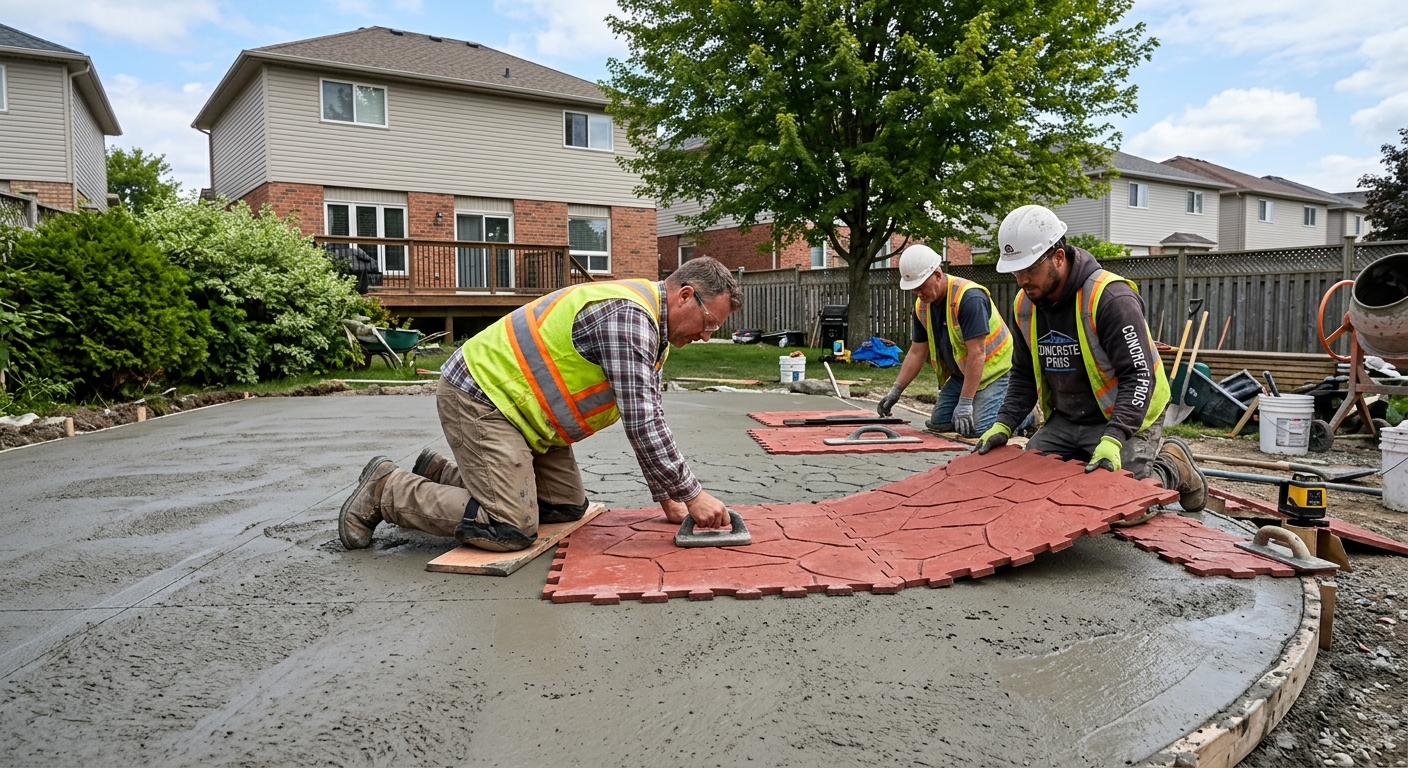
Concrete work options and costs in Oyster River
In Oyster River, concrete is one of the most practical ways to handle driveways, patios and foundation upgrades for homeowners on a year-round coastal-wet schedule. With a population of about 1,500 residents (Statistics Canada, 2021 Census), demand is concentrated among local homeowners and small trades crews—so availability can tighten during the best weather windows in late spring and summer. Oyster River’s housing stock is often primarily single-detached homes, which typically means more exterior flatwork like driveways and walkways; that’s where Lower Mainland–Southwest pricing becomes very “spec-driven” rather than just “square-foot” driven.
Lower Mainland–Southwest concrete work costs are shaped by a shallow but real frost depth design assumption (commonly around 450 mm / 18"). Even though our winters are milder than interior BC, freeze–thaw cycles, saturated soils and heavy coastal rainfall still demand well-drained sub-bases, air-entrained mixes, proper control joints and longer curing management. Contractors also plan pours around high humidity and cool nights—using curing blankets and sealers to reduce surface scaling and to help concrete reach design strength. In Oyster River, this trade is especially in demand around the residential blocks near the Oyster River community core, where homeowners frequently refresh driveways and front steps.
To help you budget, here are realistic cost bands for common projects—then we’ll break down what moves these numbers up or down by season, site conditions and finish.
| Application |
Typical Size |
Key Spec |
Finish Option |
Price Range |
| Concrete driveway (standard broom finish) |
400 sq. ft. |
4" slab, compacted granular base, air-entrained mix |
Broom + control joints |
$7,200–$11,200 |
| Exposed aggregate driveway |
400 sq. ft. |
4" slab, decorative mix, proper curing plan |
Exposed aggregate + seal coat |
$9,600–$14,800 |
| Stamped concrete driveway or patio |
300 sq. ft. |
4" slab, colored + release process, air-entrained mix |
Stamp pattern + sealer |
$8,700–$13,800 |
| Plain concrete patio or walkway |
180 sq. ft. |
4" slab, drainage-aware base prep |
Float/trowel + light broom |
$3,000–$4,800 |
| Garage floor (interior slab) |
300 sq. ft. |
4" slab, vapor considerations as needed |
Steel trowel finish |
$6,300–$10,200 |
| Foundation footings (structural, below frost) |
Per project |
Engineered rebar placement, below frost excavation |
N/A (structural) |
$200–$350 |
Prices are estimates only and vary by project scope, site access and material selection.
What affects the price of concrete work in Oyster River
In the Lower Mainland–Southwest, two quotes for the same “size” driveway or patio can differ by 30–50% because concrete pricing is really the cost of the full system: excavation and disposal, compacted granular base, reinforcement, mix design, finishing, and—critically—curing and protection in our coastal-wet conditions. Across British Columbia, contractors also face different frost design assumptions and shorter pour seasons farther from the coast, which changes how much labour time is spent on heating blankets, scheduling constraints and delayed curing. That’s why a Lower Mainland broom-finish driveway may look cheaper per square foot than interior BC, even when the finish is similar.
For every exterior slab in the region, frost depth and freeze–thaw cycles dictate specs. Footings must extend below the design frost depth; the Lower Mainland practice commonly targets about 450 mm / 18", but saturated soils and repeated temperature swings still punish weak base prep and underspecified concrete. Exterior slabs should use air-entrained concrete (often targeting 5–7% air content) and proper control joints to manage cracking and scaling. When it’s cooler or when rain threatens a pour, cold-weather curing precautions (blankets, temperature management) add labour and material cost. Sealing is also not “optional” here—de-icing salts and wet freeze–thaw accelerate surface spalling if the slab isn’t protected.
In Oyster River, a few examples show why costs swing: adding reinforcement (mesh/rebar) or thickening the edges for high-traffic drive lanes increases material and setup time; removing clay/organic topsoil for base replacement often adds excavation cost; and choosing a stamped or exposed finish moves you from standard broom pricing to decorative concrete pricing bands—often from the $18–$28 per square foot driveway range into the $22–$36 stamped & decorative band, depending on design complexity and colour requirements.
| Price Factor |
Why It Matters |
Cost Impact |
| Frost line depth — determines footing depth and form height |
Deeper excavation and formwork are required to prevent frost heave |
Raises footing/edge costs; can add significant excavation and labour time |
| Site preparation — excavation, grading, compacted granular base |
Unsuitable subgrade leads to settlement and premature cracking |
Often one of the biggest variables; poor soils can add days of work |
| Reinforcement — rebar or wire mesh requirement |
Controls cracking and supports heavier loads |
Increases material and labour; required for driveways and many slabs |
| Mix design — air-entrainment and compressive strength spec |
Air entrainment helps survive freeze–thaw and scaling risks |
May add a modest material cost but reduces failure risk |
| Finish type — broom vs. stamped vs. exposed aggregate |
Decorative processes require additional steps and skilled finishing |
Can move you into the stamped & decorative price band |
| Pour size and concrete truck access to site |
Access constraints affect pumping, labour, and pour logistics |
Small sites with long carry distances cost more per square foot |
| Cold-weather curing precautions — heating and blankets |
Cool nights/humidity can slow strength gain |
Adds labour and equipment rental; more common outside peak season |
| Control joint pattern and sealing cost |
Joints manage shrinkage; sealing helps repel salts and water |
Usually adds a predictable line item, but improves durability |
Permits & regulations in British Columbia
In British Columbia, structural concrete work typically requires permits and often engineered drawings. That generally includes footings, foundation walls, grade beams and any structural elements that support a building’s load. For concrete flatwork—driveways, patios and walkways—permits are usually not required unless the project affects lot grading, impervious surface coverage limits, or the municipal right-of-way. Because rules can vary with how your slab ties into drainage and existing grades, you should always confirm with the local authority before breaking ground.
Step-by-step, here’s how a homeowner in Oyster River can verify a contractor in a practical, BC-ready way:
- Licence/registration: confirm the company and key trades are properly registered to do concrete-related construction work in BC. Use the appropriate online registry search for the trade/contracting entity.
- Certificate of insurance: request a current certificate of liability insurance that lists your address (or, at minimum, the project scope) and shows active coverage limits.
- WCB/coverage: ask whether they hold required WCB coverage for their workers. Invoices and payroll paperwork don’t replace this—request proof up front.
- References: ask for 2–3 similar-scale references (driveway width, base prep complexity, and finish type) and, if possible, photos taken after one wet winter season.
- Written scope: ensure the quote includes excavation/disposal, base prep, concrete specs, joints, curing and sealing steps.
Doing this verification before work starts protects you from schedule gaps, workmanship disputes and insurance shortfalls—especially important in Oyster River where rain delays and freeze–thaw exposure can magnify the impact of poor prep.
Getting concrete right in Oyster River's freeze-thaw climate
Concrete failures in Oyster River are usually predictable: water finds weak points, freezes, expands, and breaks down the surface—especially when base prep, air entrainment and jointing are wrong. The Lower Mainland–Southwest climate adds frequent wetting and cooling cycles, so the “durability package” matters as much as the initial finish. A properly specified job starts with compacted granular base prep to the right depth for local soils and drainage, then moves to a mix design with air entrainment to resist freeze–thaw damage. We also need control joints spaced to limit random cracking, followed by curing long enough for the concrete to reach adequate strength. Finally, we typically plan for a penetrating sealer applied after cure (commonly around 28 days) to improve resistance to de-icing salts and repeated moisture exposure.
When you’re comparing options, ask technical questions that prevent the most expensive, visible failure: spalling. A common “bad quote” might save money on base thickness or use a lower air content mix or rushed curing. In a typical driveway, the difference between standard broom finish and stamped decorative is often justified—if the base, joints and air-entrained mix are correctly maintained. For example, moving from a plain broom driveway in the $18–$28 per square foot band to a stamped/decorative option in the $22–$36 band can be reasonable if the contractor also includes stronger execution on the waterproofing and jointing system. If they don’t, you’re paying more for a finish while still risking premature surface damage.
Use the table below to turn “we’ll do it properly” into clear, checkable specifications.
| Spec |
Why It Matters in Oyster River |
What to Ask For |
Impact if Skipped |
| Compacted granular base (depth?) |
Limits settlement and keeps water from saturating the slab edge |
Confirm excavation depth and granular thickness; specify compaction testing method if used |
Settlement cracking, pumping, and faster water intrusion |
| Air-entrained concrete mix (target air %?) |
Reduces scaling and spalling during freeze–thaw cycles |
Request air content target (commonly 5–7% for exterior flatwork) |
Higher risk of surface scaling and pop-outs within a few winters |
| Compressive strength (MPa rating) |
Ensures strength gain for durability and load performance |
Ask for minimum 32 MPa compressive strength spec |
Soft concrete, increased wear and crack widening under load |
| Control joints (spacing per ACI guidelines) |
Controls where shrinkage cracks occur |
Ask for joint layout and spacing plan for your slab size |
Random cracking through the finish and loss of water-tightness |
| Minimum 7-day curing period |
Cold nights and humidity in coastal BC can delay strength development |
Confirm how curing will be managed (blankets/sealer-safe curing) |
Weaker surface, dusting and premature breakdown |
| Penetrating sealer (when applied after cure) |
Repels moisture and helps protect against de-icing salt exposure |
Confirm application timing after cure (often 28 days) and product type |
Stains, increased scaling risk and faster deterioration |
How to choose a concrete work contractor in Oyster River
Choosing the right contractor in British Columbia starts with verification, not promises. First, confirm the contractor is eligible to do the work they’re quoting and that their business registration and trade coverage are active. Next, ask for a certificate of liability insurance and read it—coverage should be current and match the type of work (excavation, forming, pumping, finishing). For labour coverage, request proof of WCB/workers’ compensation coverage for their workers; don’t rely on verbal assurances. If a contractor can’t provide documentation promptly, that’s usually a scheduling and risk problem for you.
Then get 2–3 itemised written quotes. The best quotes show labour and materials as separate line items where possible: excavation and disposal, granular base, reinforcement, concrete supply, finishing, curing protection and sealing. Avoid “lump sum” only quotes that don’t clarify what’s included. Carefully review inclusions and exclusions: is permit work included if needed for structural tie-ins? Is site access described (pump vs. straight chute)? Is waste removal/disposal part of the price?
Finally, focus on risk management: a workmanship warranty (how long, what it covers), product/manufacturer warranty details, whether warranties are transferable, and a payment schedule. A common good-practice approach is to never pay more than about 10–15% upfront; keep a holdback until the job is complete and cleaned up.
- Written start date and estimated completion time in the contract.
- Concrete mix spec includes air entrainment and minimum strength (ask for the numbers).
- Clear base prep description and granular thickness/compaction expectations.
- Reinforcement callout (mesh vs. rebar) tied to your application.
- Control joint plan included on drawings or in writing.
- Curing method described for cool nights and rain risk.
- Sealer included as a step, not just “recommended”.
- Disposal of concrete and spoil included (and where it’s hauled).
- Truck access method (chute length, pumping, or manual placement) explained.
- Insurance certificate and WCB/workers’ coverage provided before work begins.
- Photo documentation of base prep before concrete placement.
- Payment schedule with a holdback until you sign off.
Concrete red flags I see in Oyster River: quotes that don’t specify air content or curing steps; thin or “we’ll figure it out” base prep; missing joint layout or no plan for sealing; contractors who ask for large upfront payments; and crews that arrive without proof of insurance or coverage. In our freeze–thaw conditions, those shortcuts show up fast.
Frequently asked questions — concrete work in Oyster River
What is air-entrained concrete and why does it matter here?
Air-entrained concrete is mixed with tiny, evenly distributed air bubbles designed to provide pressure relief when water in the concrete freezes. In Oyster River and across coastal BC, the repeated wetting and cooling that leads to freeze–thaw cycles makes air entrainment a core durability requirement, especially for exterior slabs like driveways, patios and walkways. Without proper air content, the concrete surface can scale and spall as moisture expands in pores and microcracks. When you’re comparing quotes, insist the mix spec includes air entrainment and that the contractor plans for correct curing in cool nights and humid weather. This is also a big reason exterior flatwork can feel more expensive than “cheap concrete” options—because the extra spec reduces the chance you’ll pay again to repair scaling a few winters later. For example, an exterior driveway might land in the $18–$28 range for standard broom finishes, but the durability specs should be included in both low and high bids.
How do I prepare the base for a concrete slab?
Base prep is the foundation of the foundation—done correctly, it prevents settlement, improves drainage and reduces cracking. In Oyster River’s Lower Mainland–Southwest climate, we focus on removing organic topsoil and any loose material, then placing a compacted granular base to the right depth for your slab thickness and local soil conditions. The base also needs proper grading so water doesn’t sit near slab edges; with coastal rainfall, saturated subgrade is a fast track to freeze–thaw damage. A good contractor will show you the excavation depth, granular thickness and compaction approach before concrete is poured. Ask what’s included in site preparation and disposal: excavation, grading, compacted granular, and any subdrainage if needed. If the quote doesn’t clearly describe base prep, that’s a major gap—because the same finish applied over poor base prep will still fail.
How do I compare concrete quotes?
Comparing concrete quotes in British Columbia is mostly about apples-to-apples specs, not just total cost. Start by checking whether the scope includes excavation/disposal, granular base depth, reinforcement (mesh or rebar), and the concrete mix requirements—especially air entrainment and minimum strength for exterior work. Then compare finishing and durability steps: control joints layout, curing method (blankets or protection during cool or damp conditions), and whether sealing is included after proper cure. Many homeowners get surprised when a “low bid” driveway looks cheap per square foot but omits key steps that prevent spalling and random cracking in winter. Use realistic budget bands: for plain patios and walkways you may see pricing around $16–$26 per square foot, while stamped and decorative work often sits higher (for example, $22–$36 per square foot for stamped & decorative concrete). If one quote is dramatically lower, ask exactly what they’re changing—often it’s base prep, reinforcement, mix spec, or curing quality.
Can concrete be poured in cold weather in Oyster River?
Yes, concrete can be poured in colder conditions in Oyster River, but it must be protected to ensure proper strength gain and durability. When nights are cool and humidity is high, curing slows down and freeze risk increases if the concrete is exposed to temperature drops too early. A reputable Lower Mainland–Southwest contractor will use cold-weather curing precautions such as curing blankets, insulating protection, and sometimes temperature management to keep the slab within acceptable limits during the critical early period. The target is to achieve the right strength and avoid damage from early freeze–thaw exposure. Ask the contractor what temperatures trigger special measures and how they plan to protect the pour overnight and through damp periods. If a quote doesn’t mention curing protection, it’s incomplete for our climate. While mild winters reduce the extremes compared to northern BC, coastal wet weather and repeated cycles can still cause trouble if curing isn’t managed correctly.
How do I maintain concrete in Oyster River's freeze-thaw climate?
Maintenance is mainly about water management, surface protection and preventing salts from sitting in the pores. For exterior flatwork in Oyster River, plan for a penetrating sealer applied after proper cure (often around 28 days). A sealer helps repel moisture and reduces how quickly de-icing salts and repeated wetting degrade the surface. Keep debris out of joints and edges so water can drain rather than pool. Use de-icers carefully—overuse of harsh salts can accelerate scaling in underprotected surfaces. During snow and freeze cycles, avoid scraping too aggressively; repeated impact can chip edges and expose fresh concrete to moisture. If you notice small hairline cracks, don’t ignore them—address joint sealing and drainage early. Also, check slopes and drainage after heavy rain; if water consistently ponds near the slab, even well-built concrete won’t perform as long as it should.
What causes concrete to spall in Oyster River winters?
Spalling is usually caused by moisture getting into the concrete, freezing and expanding, then breaking down the surface. In Oyster River’s Lower Mainland–Southwest conditions, this risk increases with freeze–thaw cycles, saturated soils and de-icing salt exposure. The most common technical causes are inadequate air entrainment, poor base drainage, weak curing protection, and improper or missing control joint planning. If the concrete mix doesn’t have the right air content, freeze–thaw damage concentrates at the surface; the result can be scaling, pop-outs and eventual spalling. Another major contributor is water pooling at slab edges due to inadequate base grading or insufficient subgrade drainage. That’s why a durable exterior driveway or patio needs not only a good finish, but also a properly compacted granular base, correct joint spacing and curing control. When budgeting, remember that a standard broom finish driveway may be in the $18–$28 per square foot range, but durability comes from the full spec—not the surface look alone.