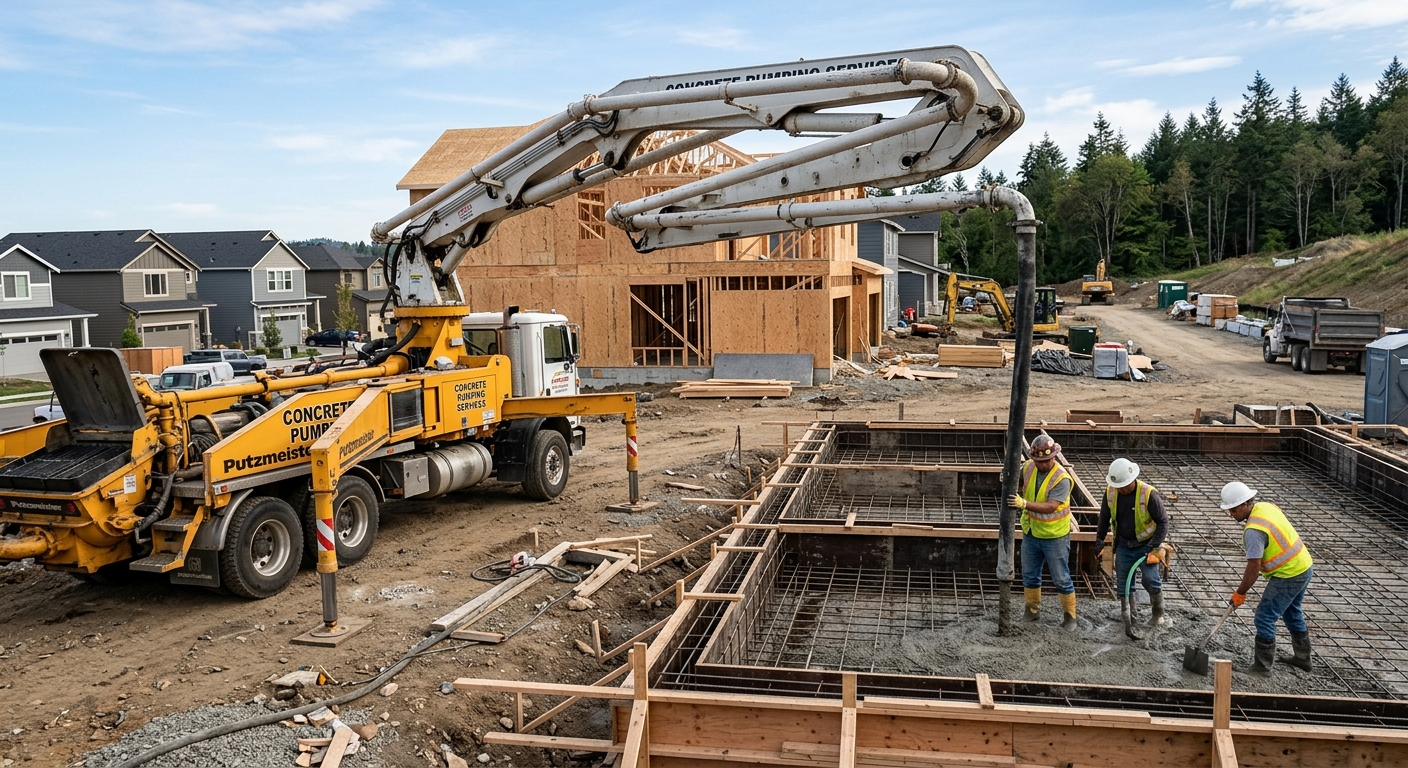
Concrete work options and costs in Lake Cowichan
Lake Cowichan is an active small-town community where homeowners commonly upgrade practical exterior surfaces—especially because roughly 78.2% of local dwellings are single-detached homes, and that’s the type of property most often tied to driveways, patios, and walkways. With 84.9% of households owning their homes, there’s steady demand for durable flatwork that can handle Vancouver Island’s wet winters and the repeated freeze–thaw cycles that stress the surface.
On the Vancouver Island and Coast, our pricing reflects a relatively shallow frost line, but that doesn’t eliminate frost movement risks. Concrete still needs to be designed to sit below the design frost and to use air-entrained mixes for exterior slabs. Frequent weather swings also affect scheduling: heavy rain can delay excavation and subgrade readiness, while cold snaps slow curing and can require blankets or mix adjustments—costs that vary by how the contractor manages weather contingencies and site protection. In Lake Cowichan, trades activity is often especially strong in the town’s established residential pockets such as the Cowichan Station area, where older homes and driveways benefit from re-pours, upgrades, and drainage improvements.
Below is a practical comparison of common options and what typically drives the price differences, so you can line up like-for-like specs before you request bids.
| Application |
Typical Size |
Key Spec |
Finish Option |
Price Range |
| Concrete driveway (standard broom finish) |
400 sq ft |
Air-entrained exterior mix, compacted granular base, control joints |
Broom finish |
$4,200–$6,500 |
| Exposed aggregate driveway |
400 sq ft |
Proper mix + retarder/top-dressing plan, consistent curing |
Exposed aggregate (washed) |
$6,000–$8,800 |
| Stamped concrete driveway or patio |
300 sq ft |
Stamped design, integral colour (where specified), sealer plan |
Stamped pattern + colour |
$7,800–$11,200 |
| Plain concrete patio or walkway |
200 sq ft |
Air-entrained mix, compacted base, joints at reasonable spacing |
Float/trowel then light broom/brush |
$2,800–$4,400 |
| Garage floor (interior slab) |
400 sq ft |
Vapour barrier (if specified), reinforcement per plan, proper curing |
Smooth trowel or light broom |
$4,000–$7,200 |
| Foundation footings (structural, below frost) |
Varies |
Excavation to design depth, rebar per engineer, granular base/drainage as needed |
Structural concrete + formed surfaces |
$10,500–$18,000 |
Prices are estimates only and vary by project scope, site access and material selection.
What affects the price of concrete work in Lake Cowichan
In Lake Cowichan and across British Columbia, the same “average” concrete job can price out 30–50% apart because contractors don’t all build to the same durability specs. A lot of the difference comes down to how they respond to the frost line requirements, freeze–thaw cycles, and the on-the-ground realities of your site (access for a truck, how much excavation is needed, and whether the base can be brought to the right grade and compaction).
For exterior work, frost and freeze–thaw drive the fundamentals: footings need to extend below the design frost depth to reduce frost heave, and exterior slabs need air-entrained concrete to resist surface scaling and cracking over repeated wetting and freezing. Even though coastal winters are milder than interior BC, Vancouver Island and Coast projects still see weather swings that make proper air entrainment and jointing non-negotiable. Colder regions face deeper frost and shorter pour seasons; here, that translates into added scheduling and curing protection costs during cold snaps. De-icing salt in winter can accelerate spalling if the mix and finishing/sealer plan aren’t right—good contractors price in the correct protection steps.
Local conditions also change cost either way. If your soil needs more granular base due to soft spots or poor drainage, the job moves up toward driveway pricing closer to the top of the $16–$25 per sq ft band. If access is tight near Cowichan Station and materials can’t be staged well, labour time and truck logistics increase, pushing higher-end totals. Conversely, if your existing grade is stable and drainage is already in place, a plain patio can stay closer to the $14–$22 per sq ft range because there’s less subgrade correction.
| Price Factor |
Why It Matters |
Cost Impact |
| Frost line depth — determines footing depth and form height |
Footings must sit below frost to limit heave and cracking |
Higher depth increases excavation, forming and concrete volume |
| Site preparation — excavation, grading, compacted granular base |
Subgrade stability controls settlement and surface failure |
Soft/poor drainage sites can add substantial labour and aggregate |
| Reinforcement — rebar or wire mesh requirement |
Controls cracking and improves performance under loading |
Adds material cost and labour for placement/tie-ins |
| Mix design — air-entrainment and compressive strength spec |
Exterior air-entrainment helps prevent freeze–thaw damage |
Upgraded mix typically costs more per yard but reduces premature spalling |
| Finish type — broom vs. stamped vs. exposed aggregate |
Finish method affects labour and material system complexity |
Stamped/exposed finishes usually price higher than broom finish |
| Pour size and concrete truck access to site |
Large pours need better logistics; access limits can slow production |
Long carry, small access, or limited truck access increases time and staging |
| Cold-weather curing precautions — heating and blankets |
Cool, saturated conditions slow strength gain |
May add equipment, labour supervision and warm-weather contingency planning |
| Control joint pattern and sealing cost |
Joints manage crack locations; sealing helps with salt exposure |
Improves durability; adds line-item materials and finishing steps |
Permits & regulations in British Columbia
In British Columbia, structural concrete work—typically the items that carry loads—usually requires a building permit, often along with engineered drawings reviewed by the municipality. That means concrete footings, foundation walls, grade beams and related structural foundations generally fall into the “permitted/engineered” category. Concrete work tied to the structure must be inspected as required through the permit process.
Concrete flatwork such as driveways, patios, and walkways typically does not require a permit unless the work changes lot grading, affects stormwater/drainage planning, triggers impervious surface coverage limits, or impacts municipal right-of-way elements (for example, work close to a boulevard or driveway tie-ins). Because every lot has unique drainage and servicing, it’s smart to confirm with the local authority before you break ground.
Step-by-step for homeowners in Lake Cowichan: (1) ask your contractor for their liability insurance certificate; confirm the company name matches the quote and that coverage is active for the project period. (2) verify their WCB coverage (BC employers often use the provincial workers’ compensation system for clearance); request a clearance letter or proof of coverage. (3) confirm the contractor’s business licence/registration through the appropriate provincial/registration channel and that the job scope aligns with their stated trades. (4) request references from similar slab or footing projects and ask what the weather challenges were and how they protected curing. If the job needs engineering or a permit, the contractor should be able to explain who submits what and what inspections are expected.
Getting concrete right in Lake Cowichan's freeze-thaw climate
Concrete can fail in Lake Cowichan when the mix and detailing don’t match the local freeze–thaw behaviour. The big risks we manage are surface scaling/spalling, random cracking, and settlement from weak or poorly drained base. The fix starts before the pour.
(1) Base preparation: excavate to the right elevation, then place and compact a granular sub-base to the correct depth for your soil and frost considerations. In a coastal environment with frequent wetting, drainage and compaction quality matter as much as the concrete itself.
(2) Mix design: for exterior flatwork, specify air-entrainment—commonly in the 5–7% range for exterior slabs—and a minimum 32 MPa compressive strength (or a higher rating if your engineer/spec calls for it). Without adequate air-entrainment, freeze–thaw cycles can drive water into the paste and chip the surface over time.
(3) Control joints: use a joint spacing plan that limits where cracks will form. Jointing is where you win against randomness.
(4) Curing: plan for minimum 7 days of proper curing conditions. Cool, damp conditions can slow strength gain, so contractors may need curing blankets or protective measures during cold snaps.
(5) Sealing: apply a penetrating sealer 28 days after the pour (after cure) to repel moisture and reduce salt exposure impact.
When you’re comparing quotes, ask why one is higher. For example, upgrading from a broom-finished driveway to stamped concrete can add cost—think closer to the $22–$35 per sq ft range for decorative work—but the price is justified if the contractor is also matching the right air content, base prep, jointing and curing plan. A cheap decorative job with weak subgrade or no air-entrainment is where you pay twice.
| Spec |
Why It Matters in Lake Cowichan |
What to Ask For |
Impact if Skipped |
| Compacted granular base (depth?) |
Prevents settlement and helps manage moisture under slabs in wet coastal soils |
Base depth and compaction method; confirm granular type and drainage plan |
Uneven surfaces, cracking, and accelerated wear |
| Air-entrained concrete mix (target air %?) |
Reduces freeze–thaw damage and limits surface scaling/spalling |
Target air content (often 5–7% for exterior flatwork) and verified mix design |
Spalling and scaling within a few winters |
| Compressive strength (MPa rating) |
Strength gain supports durability under traffic and winter moisture |
Minimum 32 MPa (or higher if specified) and documentation of mix |
Lower durability and easier cracking |
| Control joints (spacing per ACI guidelines) |
Manages crack locations during shrinkage and temperature changes |
Joint spacing plan and saw-cut timing |
Random cracking across visible surfaces |
| Minimum 7-day curing period |
Ensures the slab reaches enough strength before weather exposure |
Curing method; protection plan if temperatures drop |
Surface weakness, dusting, and scaling risk |
| Penetrating sealer (when applied after cure) |
Helps repel moisture and salt impacts during Vancouver Island winters |
Penetrating sealer applied 28 days after pour (after curing) |
Higher water/salt penetration and faster deterioration |
How to choose a concrete work contractor in Lake Cowichan
Choosing the right contractor in Lake Cowichan comes down to verifying coverage, demanding itemised quotes, and making sure the details match freeze–thaw durability requirements. Start with British Columbia licensing/registration where applicable for the trade and company. Then confirm liability insurance: request a current certificate of insurance showing the insured party, coverage limits and effective dates for your project. Next, verify WCB coverage (clearance letter/proof). A reputable crew can provide these documents quickly.
For pricing, don’t just compare totals. Ask for 2–3 itemised written quotes with a clear breakdown for labour, concrete supply, forms/finishing, reinforcement, granular base, excavation, disposal, and any traffic control or site protection. Check what’s excluded: permit pull (if structural or required), saw-cutting, sealing, concrete removal, hauling, and weather contingency measures.
Ask about warranties: separate workmanship warranty from manufacturer/product warranty (and whether it’s transferable if you sell the home). For payment, avoid large upfront deposits—keep to roughly 10–15% maximum upfront, and hold back until the job is complete and cleaned. Finally, insist on a written timeline: start date, pour date, curing/protection conditions, and completion estimate. In a community where weather can change quickly, the best contractors plan conservatively and protect the concrete so you don’t end up with winter-related surface damage.
- Ask the contractor to list their freeze–thaw durability specs (air-entrainment, joints, curing plan) in writing.
- Confirm liability insurance certificate matches the quoted company name and project dates.
- Request WCB proof/clearance and verify coverage is current.
- Check whether engineering/permits are included if the scope touches foundations/footings.
- Require itemised pricing (labour, materials, excavation, granular base, disposal, reinforcement).
- Confirm reinforcement type (rebar vs. mesh) and where it’s placed (top/bottom, coverage).
- Ask about subgrade conditions: how they handle soft spots, drainage issues, and poor soils.
- Verify finish details: broom type, exposure method (if stamped/exposed), and edging.
- Ask when saw cuts will happen and what joint spacing they use.
- Confirm curing method, including weather contingencies (blankets/heating if needed).
- Clarify sealing: type (penetrating), and when it’s applied after cure (28 days is typical).
- Make sure payment terms are clear and include a holdback until punch list items are done.
Concrete red flags we see in Lake Cowichan: vague quotes that don’t mention air-entrainment or jointing, no written curing/protection plan for cold or wet weather, skimping on granular base depth/compaction, rushing saw cuts or sawing too late, and offering “lifetime” durability promises without documenting mix design, sealing, and warranty terms.
Frequently asked questions — concrete work in Lake Cowichan
What is rebar and when is it required in British Columbia?
Rebar (reinforcing steel) is embedded in concrete to help control cracking and improve structural performance. In British Columbia, whether rebar is required depends on the engineering design and the loading conditions—not just the contractor’s preference. For structural elements like footings and foundation walls, engineered drawings usually specify reinforcement size, spacing and cover. For slabs and exterior flatwork, rebar or wire mesh may be specified based on slab thickness, subgrade support, and whether the surface is meant for heavier loads (for example, portions of a driveway). If you’re in a Lake Cowichan home with older foundation details (many houses were built before 1981), it’s especially important to match current specs rather than copying what’s already there. Always ask the contractor to show the reinforcement plan and concrete thickness they’re pricing; that’s where durability and compliance start.
How long does a concrete project take in Lake Cowichan?
Timing depends on the scope (excavation, forming, pour, finishing, curing and sealing). A small patio or walkway may be staged quickly, but even then you should plan for at least a couple of working days on-site plus curing time. For exterior flatwork, crew availability and weather are real variables on Vancouver Island—rain can delay subgrade prep, and cold snaps can slow strength gain. Practically, once you’ve completed base prep and are ready for the pour, finishing and jointing typically happen the same day, while curing protection may run through the following days. Sealing is usually planned around 28 days after the pour so the concrete has fully cured. If you’re budgeting, also note that more weather contingency can move a job within the driveway pricing range (for example, driveway work often lands around the $16–$25 per sq ft band depending on access and protection requirements).
What is a concrete overlay and is it suited to Lake Cowichan?
A concrete overlay is a cementitious topping placed over an existing slab to renew the surface without full removal. It can be suited to Lake Cowichan when the existing concrete is structurally sound—no major settlement, deep spalling, or widespread failed joints. Overlays are often used to change appearance or improve surface condition, but they won’t fix a weak subgrade; if water can get underneath and the base is failing, the overlay can crack or debond. In a freeze–thaw environment with winter moisture, surface preparation is everything: grinding, cleaning, bonding compound use and proper drainage detailing are critical. If the existing driveway was poured long ago (47.8% of homes in the area were built before 1981, and older slabs often have different joint patterns), a full-depth replacement may ultimately be the more durable option. If you’re considering an overlay, ask for a site assessment and a written bond/repair plan before you commit.
How do I seal concrete to protect it in Lake Cowichan?
Sealing in Lake Cowichan is mainly about reducing moisture and salt penetration during winter wetting-and-freezing periods. For most exterior flatwork, we recommend a penetrating sealer applied after the slab has cured—commonly at the 28-day mark. The contractor should confirm the concrete is clean and dry enough before application, and it should be weather-protected for the sealer’s cure window. If you live in a neighbourhood with regular de-icing (common where driveways see parked cars in winter), sealing helps limit salt-driven spalling risk, but it doesn’t replace proper mix design and air entrainment. Also ask what sealer type they’re using (penetrating vs. film-forming), coverage rates, and whether maintenance is included. If you’re budgeting, sealing is usually a line item on top of the concrete scope that’s part of keeping a driveway closer to the mid-to-upper durability expectations rather than “cheap now, brittle later.”
What is the difference between concrete and cement?
People use the terms interchangeably, but they’re not the same. Cement is one ingredient—typically Portland cement—inside the mixture. Concrete is the full engineered product made from cement plus water and aggregates (sand and gravel/crushed stone), plus sometimes admixtures like air-entrainers for exterior durability. In Lake Cowichan’s Vancouver Island and Coast climate, exterior concrete needs the right admixtures: air-entrainment is a key spec for freeze–thaw performance, and minimum compressive strength matters for long-term durability. When you compare quotes, pay attention to the “concrete” specs (air content target, MPa rating, curing plan, and jointing), not just the brand or the word “cement.” A properly specified concrete mix can be more expensive upfront, but it prevents premature surface scaling that would otherwise show up after repeated winters.
How much does concrete work cost in Lake Cowichan?
Concrete pricing in Lake Cowichan depends on the type of work (plain vs. decorative), the size, site access, and how much base repair/excavation is required. As a useful reference, driveway and slab pricing here is commonly tracked around the regional bands—driveways are often in the $16–$25 per sq ft range for standard to higher-spec work, while patios/walkways often fall around $14–$22 per sq ft. Decorative work like stamped concrete is commonly higher, roughly $22–$35 per sq ft depending on pattern complexity, colour options and edging. Foundation footings are commonly quoted per structural scope and end up within a wider band because excavation depth and reinforcement are driven by engineering. If you want a more precise number, ask for an itemised quote with a base depth and mix design specified—weather and freeze–thaw durability details are where contractors either control costs responsibly or cut corners that later cause cracking/spalling.