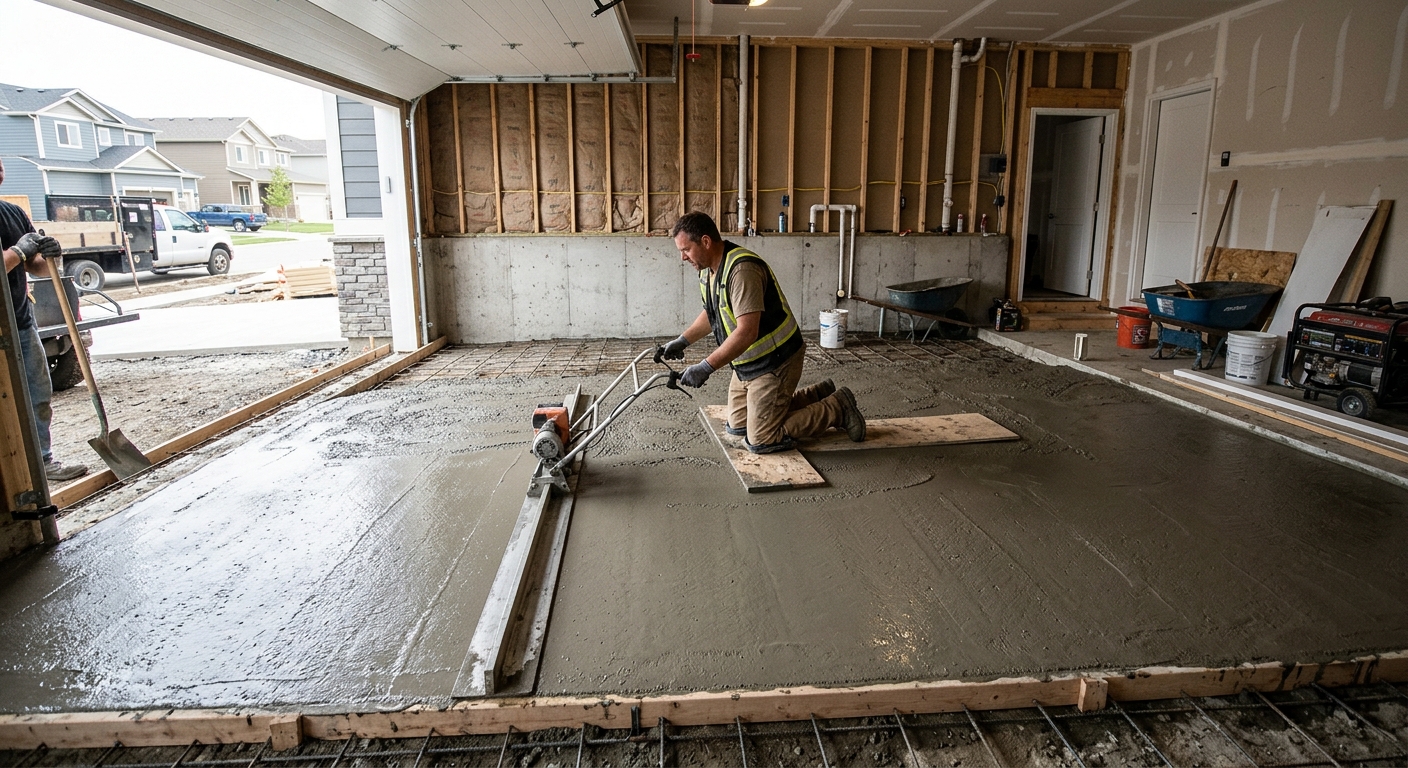
Concrete work options and costs in New Brighton
In New Brighton, concrete work is a big part of how homeowners protect value and keep driveways, patios, and walkways looking sharp through Alberta winters. With a population of 12,885 (Statistics Canada, 2021 Census), the neighbourhood market is active enough that you’ll see frequent turn-key concrete upgrades, especially around residential streets where flatwork meets garages and entrances. The typical concrete demand is driven by the area’s family-oriented housing mix—many homes rely on slab-based improvements for practical, durable outdoor living spaces. In Calgary’s broader market, contractor availability can affect pricing too: during the busiest spring-to-early-summer period, crews and finishing labour book out quickly, which is why it’s common to see quote differences before and after peak season.
Cost in New Brighton is engineered around the local cold continental climate. Calgary and area experience frequent freeze–thaw cycles, and the design frost depth is about 1.2 m (roughly 4 ft). That means footings for structures like garages, decks, and retaining elements must bear on undisturbed soil below the frost line to reduce frost heave and seasonal movement. For exterior flatwork, air-entrained mixes, granular base prep, and properly spaced control joints are non-negotiable to reduce cracking and surface scaling. Because the exterior pour season is tighter, winter-grade placement practices (and sometimes insulation/temporary heating) can add cost when projects slip late in the year.
If you’re in the area’s high-traffic corridors—many homeowners start planning upgrades around the approach routes to the community and nearby commercial nodes—these specs show up in your final numbers. Below is a practical comparison table of typical options and price ranges for New Brighton projects.
| Application |
Typical Size |
Key Spec |
Finish Option |
Price Range |
| Concrete driveway (standard broom finish) |
600 sq ft (e.g., 18 ft x 33 ft) |
Air-entrained exterior mix, granular base, control joints |
Broom finish |
$12,000 – $18,000 |
| Exposed aggregate driveway |
600 sq ft (e.g., 18 ft x 33 ft) |
Air-entrained exterior mix, base prep for freeze–thaw durability |
Exposed aggregate with consistent sealer plan |
$14,500 – $21,000 |
| Stamped concrete driveway or patio |
450–650 sq ft |
Air-entrained exterior mix, integral colour, joint layout |
Stamp mats (stone/brick patterns) |
$15,000 – $26,000 |
| Plain concrete patio or walkway |
200–400 sq ft |
Air-entrained exterior mix, compacted base, edging |
Light broom / smooth trowel option |
$5,000 – $9,000 |
| Garage floor (interior slab) |
400–600 sq ft |
Vapour barrier where required, reinforcing per design, proper curing |
Floated finish; optional densifier |
$9,000 – $16,000 |
| Foundation footings (structural, below frost) |
Typical house perimeter + garage/porch extensions |
Excavate to design frost depth (~1.2 m), reinforced concrete |
Structural finish (not decorative) |
$28,000 – $45,000 |
Prices are estimates only and vary by project scope, site access and material selection.
What affects the price of concrete work in New Brighton
In New Brighton and the Calgary region, it’s not unusual to see quotes for the “same” concrete job differ by 30–50%. The reason is that concrete pricing is a chain of choices—excavation depth, base prep, reinforcement, mix design, finish method, and curing procedures—each one influenced by our cold continental climate. If one contractor prices for minimal base thickness or a cheaper mix that isn’t properly air-entrained, the labour may look similar, but the long-term performance changes dramatically. That’s why the best comparison is item-by-item, not just total price.
Frost line depth is the big one. In Alberta, footings and structural concrete must extend below the design frost depth (around 1.2 m for Calgary area engineering practice) so the ground beneath doesn’t heave and move. For exterior slabs like driveways and patios, freeze–thaw cycles require air-entrained concrete mixes engineered to survive repeated wetting, freezing, and thawing. Cold-weather placement also shortens the practical pour season and may require winter-grade mixes, insulated blankets, and sometimes temporary heat to achieve proper curing. On top of that, de-icing salts accelerate surface deterioration if the mix and sealing plan aren’t right—so sealing can be part of a durable system.
Here are a few New Brighton examples that typically move the price up or down: (1) Longer excavations and deeper footing digs on harder or deeper frost-influenced soils push foundation costs into the $28,000 – $45,000 band. (2) A driveway that needs heavy regrading, haul-away, and a thicker granular base can push you toward the $12,000 – $18,000 driveway band rather than the lower end. (3) Upgrading from broom finish to stamped or exposed aggregate can add material and finishing labour—often the kind of choice that’s worth it if you’re also budgeting for the right jointing and sealing.
| Price Factor |
Why It Matters |
Cost Impact |
| Frost line depth |
Determines footing depth and form height |
Higher excavation volume can add substantial labour and material; impacts foundation totals most |
| Site preparation |
Excavation, grading, compacted granular base |
Unsuitable soils or poor drainage usually increase granular import, compaction time, and rework |
| Reinforcement |
Rebar or wire mesh requirement |
Correct reinforcement adds cost but reduces settlement-related cracking and spalling risk |
| Mix design |
Air-entrainment and compressive strength spec |
Air-entrained exterior mix and proper strength spec add material cost; also affects curing tolerance |
| Finish type |
Broom vs. stamped vs. exposed aggregate |
Stamped/exposed requires colour, labour, moulding/finishing steps, and sealing workflow |
| Pour size and concrete truck access to site |
Haul distance, pump needs, crane/placement constraints |
Access limitations can require additional labour and equipment; sometimes increases by thousands |
| Cold-weather curing precautions |
Heating and blankets |
Winter practices can add rental and labour days; prevents early freezing and surface scaling |
| Control joint pattern and sealing cost |
Crack control + protection from de-icing salt exposure |
Proper joint layout and sealing can increase line-item cost but improves longevity |
Permits & regulations in Alberta
In Alberta, structural concrete work generally needs a building permit and, in many cases, engineered drawings reviewed through the municipal process. That includes foundation footings, foundation walls, grade beams, and other structural elements that carry loads. For concrete flatwork—driveways, patios, walkways—permits often aren’t required when the work is strictly within the typical “non-structural” scope. However, if your project changes lot grading, affects stormwater flow, or touches municipal requirements around impervious surface coverage or right-of-way areas, you may need approval or at least a site/grading check. When in doubt, confirm with the local authority before you break ground.
Step-by-step, here’s how a New Brighton homeowner can verify a contractor properly. First, ask for proof of liability insurance and confirm the policy certificate matches the legal name of the company you’re hiring and the project address. Second, request evidence of WSIB/WCB coverage (workers’ compensation) so you’re not exposed if someone gets hurt on-site. Third, ask whether they’re insured for the actual type of concrete work you need (excavation, forming, pumping, saw-cutting, and sealing). Fourth, review their references: ask for similar-scale jobs completed recently in the Calgary area, not just older builds. Finally, check for permits and engineering sign-off where required—especially for foundation-related scopes—so your paperwork matches the design.
If the contractor won’t provide insurance and coverage documentation up front, or if they treat permit questions as “optional,” that’s a red flag in Alberta.
Getting concrete right in New Brighton's freeze-thaw climate
Concrete failures in New Brighton usually come down to three things: moisture movement through the base, inadequate freeze-thaw durability, and curing problems. When the ground freezes and thaws, water expands and contracts; if the mix isn’t air-entrained properly or the base wasn’t compacted to the right depth, the slab can crack unpredictably and surfaces can scale or spall. That’s why specifying the right system matters more here than in milder climates.
Start with base preparation. You want a compacted granular sub-base at the appropriate depth for the site conditions and drainage, not just “whatever the ground is.” Next, specify mix design: for exterior flatwork, air-entrainment is typically targeted in the 5–7% air range, and you should require a minimum 32 MPa compressive strength for durability. Third, control joints: proper joint spacing reduces random cracking, especially as temperatures swing through the seasons. Fourth, curing: aim for a minimum 7-day curing period under proper conditions. In late fall or early spring, cold-weather curing precautions—insulating blankets and, when needed, controlled heating—help prevent early freezing that can damage strength gain. Fifth, sealing: apply a penetrating sealer after cure (commonly 28 days post-pour) to repel de-icing salts that otherwise speed up surface deterioration.
If you’re choosing between options, it’s often worth paying for durability specs even if the finish is simpler. For example, moving from a plain patio to stamped concrete may add around $15,000 – $26,000 territory depending on area and pattern complexity, but you won’t get longevity without the right base, air content, joints, and curing. A “cheap” pour that misses air-entrainment can cost more later when you’re patching spalled edges and redoing sections.
| Spec |
Why It Matters in New Brighton |
What to Ask For |
Impact if Skipped |
| Compacted granular base (depth?) |
Controls drainage and reduces movement during freeze–thaw cycles |
Granular base type, target thickness, compaction testing method |
Settlement and cracking; accelerated deterioration at slab edges |
| Air-entrained concrete mix (target air %?) |
Provides freeze–thaw resistance in Alberta’s cold winter conditions |
Air content target (typically 5–7% for exterior flatwork) |
Spalling/scaling risk rises sharply in winter weather |
| Compressive strength (MPa rating) |
Strength gain supports long-term performance and durability |
Minimum 32 MPa (confirm test method and cure conditions) |
Weaker surface layer; higher likelihood of damage from de-icing and traffic |
| Control joints (spacing per ACI guidelines) |
Limits random cracking and directs where cracks form |
Proposed joint layout and saw-cut timing |
Random cracks; moisture ingress through unplanned fracture lines |
| Minimum 7-day curing period |
Ensures proper strength development despite temperature swings |
Curing plan for your pour date (especially if cold weather is possible) |
Premature freezing/scaling; reduced long-term durability |
| Penetrating sealer (when applied after cure) |
Helps repel de-icing salt exposure |
Sealer type, application timing (commonly after 28 days cure) |
Faster surface wear and spalling near edges and high-salt areas |
How to choose a concrete work contractor in New Brighton
Choosing a contractor in New Brighton is mostly about proof: proof they can build to spec, proof they’re insured, and proof their schedule is realistic. In Alberta, structural work hinges on compliance, but even flatwork should be treated like an engineered durability project in our freeze–thaw climate. Start by confirming Alberta coverage documentation. Ask for a current certificate of insurance (liability) that includes the correct legal entity and project site address, and request evidence of WSIB/WCB coverage so you’re protected if a worker is injured. If a contractor can’t supply these documents, don’t proceed.
Next, demand 2–3 itemised written quotes. You want a breakdown that separates excavation/site prep, base/granular, reinforcement, concrete supply, finishing, saw-cutting, sealing, and any cold-weather measures (blankets/heating). Avoid lump sums without scope detail. Also check what’s excluded: disposal of excess soil, protection of landscaping, permit pulls (if needed), rebar tying, and patching existing concrete. For warranty, ask for the length of workmanship warranty and whether it covers labour only or includes materials for defects. If a product has its own warranty, ask if it’s transferable to you as the homeowner.
Payment matters too. Never pay more than 10–15% upfront; hold back a portion until completion and cure expectations are met. Finally, insist on a timeline in writing: proposed start date, pour date, curing/return-to-site dates for sealing, and completion estimate.
- Confirm liability insurance certificate matches the hiring legal name and project address
- Verify WSIB/WCB coverage and that it’s current
- Request itemised quotes (labour vs materials vs equipment)
- Ask for a concrete mix specification sheet or written mix requirements (air-entrainment + strength)
- Confirm base prep depth and compaction method
- Review reinforcement plan (mesh/rebar, tie spacing, chairs/dowels if required)
- Get control joint spacing and timing for saw-cut
- Ask about cold-weather curing plans for your pour date
- Confirm sealing approach and timing (commonly after cure—often 28 days)
- Verify permit responsibility for any structural work and grading/lot impacts
- Ask what disposal/haul-away is included (and where excess soil goes)
- Use a payment schedule with a clear holdback until final walk-through and snag list completion
Concrete red flags in New Brighton include vague scope language like “standard base” without depth, refusing to provide insurance/coverage proof, quoting without discussing air-entrainment and joint spacing, skipping cold-weather curing precautions when the pour date is near shoulder season, and pushing full payment early before curing and sealing steps are complete.
Frequently asked questions — concrete work in New Brighton
How do I compare concrete quotes?
To compare concrete quotes in New Brighton (and across the Calgary region), treat it like an apples-to-apples spec review, not just total dollars. Ask each contractor for an itemised breakdown: excavation/site prep, granular base depth, reinforcement (if required), concrete mix requirements (air-entrainment and minimum strength), finishing method, saw-cut control joints, sealing, and any cold-weather measures. A driveway quoted in the $12,000 – $18,000 band can still perform very differently if one quote assumes a thinner base or a mix that doesn’t meet freeze–thaw durability needs. Also check exclusions: disposal, permit pull responsibility for any grading/structural impacts, and whether they protect landscaping during concrete truck movements. If a quote is cheaper but lacks these details, it often becomes more expensive later through repairs.
Can concrete be poured in cold weather in New Brighton?
Yes, concrete can often be poured in cold weather in New Brighton, but it depends on temperature, wind, and your contractor’s cold-weather curing plan—not just optimism. In Calgary’s freeze–thaw climate, placing concrete too cold or letting it freeze early can reduce strength gain and increase surface scaling risk. A proper approach usually includes winter-grade mix requirements, insulated blankets, and sometimes temporary heating to maintain curing conditions long enough to reach adequate strength. The key question for your quote is what they will do during placement and curing if the overnight temperatures drop. Also confirm the curing schedule: many jobs need additional time before full handling and before sealing. If the contractor won’t commit to a curing method in writing, that’s a risk in Alberta winters.
How do I maintain concrete in New Brighton's freeze-thaw climate?
Maintenance in New Brighton is about limiting moisture and salt exposure. Start with sealing: a penetrating sealer applied after cure (often around 28 days post-pour) helps repel de-icing salts and slows deterioration, especially on driveway edges and walkways. Use de-icers that are less harsh when possible, and avoid over-salting during deep winter storms. Keep water from ponding by ensuring proper grading around the slab. For crack monitoring, don’t panic—small, controlled cracks are expected when joints are properly installed—but keep an eye on widened cracks or areas where water is collecting. If you see spalling or scaling beginning, address it early. The best “maintenance plan” is actually getting the right base, air-entrained mix, and joint spacing during installation so you’re not constantly reacting after each winter cycle.
What causes concrete to spall in New Brighton winters?
Spalling (chipping/flaking of the surface) in Alberta’s winters is commonly caused by freeze–thaw action plus salt exposure—especially when the concrete mix isn’t adequately air-entrained or when curing is rushed. Water enters pores and microcracks; when temperatures drop, it expands and breaks the surface layer apart. De-icing salts intensify this by increasing the stress at the surface. Poor base prep can also contribute because slab movement opens up pathways for water infiltration. Another frequent cause is control joints not installed or not cut at the right time, leading to random cracking that becomes a water entry point. Finally, cold-weather curing problems—like early freezing—can reduce early strength and make the surface more vulnerable. In a properly engineered New Brighton pour, those failure modes are managed through the right mix, curing, and sealing.
What is rebar and when is it required in Alberta?
Rebar (reinforcing steel) is used to add tensile capacity and control cracking in structural concrete elements. In Alberta, whether rebar is required depends on the engineered design and the structural role of the concrete. For foundations and footings (which must extend below the design frost depth), reinforcement is typically required by structural design because these elements carry loads and must handle movement forces over winter. For exterior flatwork like patios and driveways, reinforcement requirements vary based on slab thickness, soil conditions, and design loads; some projects use wire mesh or rebar mats, others use fibres or thicker slabs depending on the spec. Your best move in New Brighton is to ask your contractor to quote based on the project design and to clearly state what reinforcement is included (or why it’s not needed). A reputable contractor won’t hand-wave this.
How long does a concrete project take in New Brighton?
The timeline in New Brighton depends on whether you’re doing flatwork or structural concrete, plus weather. For many driveways and patios, the site work and forming/finishing are often completed in a short window, but concrete projects can’t be rushed because curing matters. A typical flatwork job might involve excavation and base prep one day, the pour and finishing the next (or same day if access is easy), and then follow-up tasks like saw-cut control joints, sealing preparation, and sealing after the cure period. Many exterior projects require at least a 7-day curing period before full expectations for durability, and sealing is commonly done after cure (around 28 days). Foundation work takes longer due to structural staging, inspections, and engineered steps. If cold weather is possible, cure times and protective measures can extend the schedule.