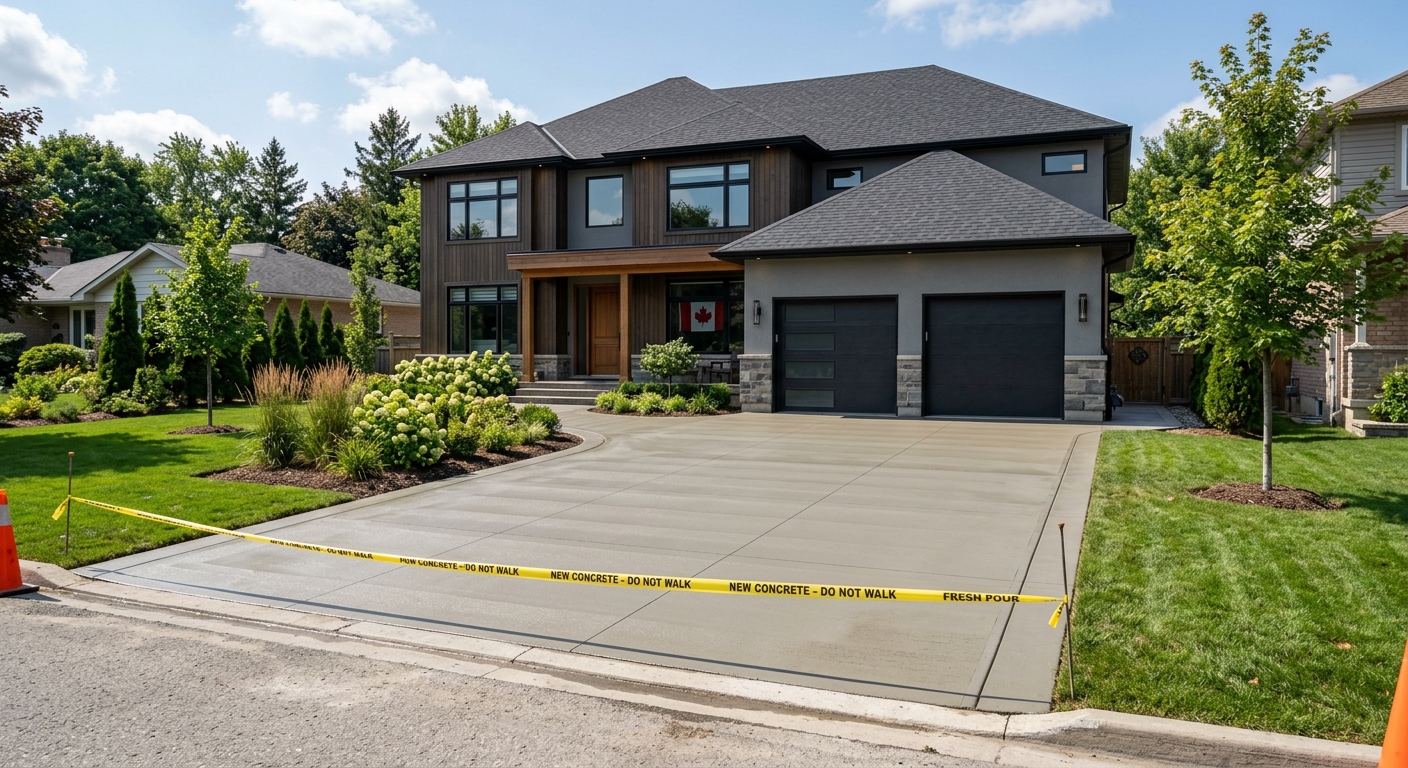
Concrete work options and costs in Sherwood
Sherwood, Alberta is a small but active community, and concrete flatwork is in steady demand because homes and accessory buildings need durable driveways, patios, and walkways for daily use. With a population of 6,520 (Statistics Canada, 2021 Census), local projects often serve families living in established neighbourhood pockets around the community’s main residential growth areas—places where homeowners value long-term, low-maintenance surfaces. In many Sherwood builds, concrete work goes hand-in-hand with new garages and rear-yard upgrades, so contractors plan around short exterior pour windows and the reality that freeze–thaw cycles can be punishing.
In the Calgary economic region, concrete pricing reflects cold continental winters: footings must be engineered to bear below the design frost depth (about 1.2 m, roughly 4 ft) and exterior slabs are built with air-entrained mixes, proper base prep, and control joints. The market also moves fast in the spring and early summer, so scheduling and labour availability can influence your final price—especially for decorative work where set-up time and finishing labour are higher.
If you’re comparing options, think about how each choice handles Alberta’s freeze–thaw and de-icing salt. A standard broom driveway is often the most cost-effective baseline, while stamped or exposed aggregate finishes add labour and material costs. The table below gives typical sizes and spec highlights for common Sherwood projects, then you can match your scope to the right price band.
| Application |
Typical Size |
Key Spec |
Finish Option |
Price Range |
| Concrete driveway (standard broom finish) |
24 ft x 10 ft (240 sq. ft.) |
4 in (100 mm) slab, air-entrained mix, compacted granular base |
Broom finish + control joints |
$12,000–$18,000 |
| Exposed aggregate driveway |
24 ft x 10 ft (240 sq. ft.) |
4 in (100 mm) slab, air-entrained mix, retarder/finisher plan |
Exposed aggregate finish + sealing |
$15,000–$21,000 |
| Stamped concrete driveway or patio |
20 ft x 12 ft (240 sq. ft.) |
4 in (100 mm) slab, air-entrained mix, release agent + curing plan |
Stamped pattern + integral/solid colour (as selected) |
$15,000–$26,000 |
| Plain concrete patio or walkway |
12 ft x 10 ft (120 sq. ft.) |
4 in (100 mm) slab, compacted base, air-entrained mix |
Smooth/brush float + light broom or broom finish |
$5,000–$9,000 |
| Garage floor (interior slab) |
22 ft x 20 ft (440 sq. ft.) |
4 in (100 mm) slab, vapour control as required, reinforcement per design |
Steel trowel finish or broom (as planned) |
$10,500–$16,500 |
| Foundation footings (structural, below frost) |
Per home plan; typical footing quantities vary |
Excavation to design frost depth, rebar cage, engineered dimensions |
Structural concrete only (no decorative finish) |
$28,000–$45,000 |
Prices are estimates only and vary by project scope, site access and material selection.
What affects the price of concrete work in Sherwood
In Sherwood and the wider Calgary area, you can see quotes for the same concrete project swing by about 30–50%. The main driver isn’t just “different contractors”—it’s how each crew designs the job for Alberta’s freeze–thaw reality, and how much work they include for excavation, base preparation, reinforcement, and curing. When pricing is separated into concrete, labour, haulage, and site prep, you’ll notice the range often comes from scope details and cold-weather risk management rather than the slab itself.
First, the frost-line requirement dictates excavation depth and footing volume. Alberta builds around a deeper design frost depth (commonly about 1.2 m), so formwork, rebar, and concrete quantities are higher than in milder climates. Second, Calgary-area freeze–thaw cycles require air-entrained concrete and well-spaced control joints on exterior slabs to reduce cracking and surface scaling. Third, the practical pour season for exterior work is shorter, and when crews place concrete in colder shoulder months they may use winter-grade concrete, insulated blankets, and temporary heat—each adds cost but can protect performance.
In Sherwood, two examples commonly push prices up: (1) poor drainage or frost-susceptible soils requiring extra granular removal and replacement; and (2) limited truck access that forces smaller placements and more labour. Costs can come down when the base is already well-prepared and the pour geometry is simple. For reference, a basic driveway typically aligns with the $12,000–$18,000 band, while stamped or decorative work often moves toward the $15,000–$26,000 range because finishing and colour options require more labour time and controlled curing.
| Price Factor |
Why It Matters |
Cost Impact |
| Frost line depth |
Determines footing depth and form height so footings sit below seasonal movement. |
Higher excavation and concrete volume; often one of the biggest drivers for foundations. |
| Site preparation |
Excavation, grading, and compacted granular base manage drainage and support the slab. |
Extra trucking, granular replacement, and compaction testing add cost. |
| Reinforcement |
Rebar or wire mesh controls cracking and supports structural loads. |
Material and labour increases; necessary when loads or spans require it. |
| Mix design |
Air-entrainment and specified compressive strength protect against freeze–thaw damage. |
Winter-grade and air-entrained mixes can increase unit costs. |
| Finish type |
Broom vs. stamped vs. exposed aggregate changes labour time and tooling. |
Stamped/exposed finishes typically raise price compared with standard broom. |
| Pour size and concrete truck access to site |
Small access constraints increase labour and re-handling time. |
May require additional manpower, smaller batches, or pump/line items. |
| Cold-weather curing precautions |
Heating and insulated blankets help reach safe curing conditions before freezing. |
Adds daily equipment and labour; prevents later scaling/spalling. |
| Control joint pattern and sealing cost |
Joint placement limits random cracks; sealing improves resistance to salts and water. |
Extra materials and labour timing (sealer is typically after curing). |
Permits & regulations in Alberta
In Alberta, the permitting rules largely depend on whether the concrete work is structural or strictly finishing/flatwork. Structural concrete work—such as footings, foundation walls, and grade beams—usually requires a building permit, and many projects need engineered drawings that get reviewed through the municipal process. Concrete flatwork like patios, walkways, and driveways typically does not require a permit on its own unless it affects lot grading, involves changes that impact impervious surface coverage rules, or touches municipal right-of-way considerations. Because each site has different drainage and boundary details, always confirm requirements with the local authority before breaking ground in Sherwood.
For contractor due diligence, start with proof they’re properly insured and eligible to work. Step 1: verify their liability insurance—ask for a current certificate of insurance showing your project address or general job coverage. Step 2: confirm they have the required WCB/WSIB clearance and appropriate worker coverage (or the correct Alberta equivalent paperwork). Step 3: if the scope includes structural concrete or engineering sign-offs, ask which parts are covered by an engineered package and who supplies it.
Where to look: check the contractor’s credentials and any registration details through appropriate online resources, request certificates directly from the contractor, and obtain clearance letters in writing. If they hesitate, that’s a red flag—especially in a region where frost and curing specifications must be followed precisely.
Getting concrete right in Sherwood's freeze-thaw climate
Concrete can fail in Sherwood when water gets into the slab system and then freezes, expands, and breaks down the surface over repeated Calgary-area cycles. The good news is that you can spec the work to resist those conditions. Start with base preparation: compacted granular sub-base must be built to the right depth for local soil conditions and the project’s frost-protection intent. Then lock in the mix design—exterior flatwork should use air-entrained concrete (typically about 5–7% air content) so freeze–thaw energy is controlled. Specify minimum 32 MPa compressive strength for durability, and ensure the crew places and finishes within the workable window.
Next, control joints. In Alberta, random cracking is predictable unless you guide it. A correct joint layout reduces ugly cracks and helps keep freeze–thaw water from finding long pathways through the slab. Curing is equally critical: plan for at least 7 days of curing under proper conditions, and when temperatures drop, crews must protect fresh concrete with insulation and, when needed, temporary heat. Finally, sealing matters in Sherwood because de-icing salts accelerate spalling when water and salts penetrate the surface. A penetrating sealer applied after cure (often around 28 days post-pour) helps repel salt and moisture.
Example of pricing value: if you choose a stamped driveway, you may spend closer to the $15,000–$26,000 band instead of a standard broom driveway at $12,000–$18,000, but the extra cost is justified only when the base, air-entrainment, joint pattern, and curing protection are handled properly. Decorative overlays without the right freeze–thaw specs are where homeowners get burned.
| Spec |
Why It Matters in Sherwood |
What to Ask For |
Impact if Skipped |
| Compacted granular base (depth?) |
Supports the slab and helps manage drainage so water can’t pump and freeze under the concrete. |
Granular base thickness and compaction method documented in writing |
Settlement, cracking, and accelerated freeze–thaw damage |
| Air-entrained concrete mix (target air %?) |
Protects against surface scaling and freeze–thaw deterioration in cold Alberta winters. |
Air content target (commonly 5–7% for exterior flatwork) noted on the ticket/spec |
Spalling and surface deterioration within seasons |
| Compressive strength (MPa rating) |
Provides durability for traffic loads and resistance to wear. |
Minimum 32 MPa compressive strength specified |
Premature wear, scaling, and weaker long-term performance |
| Control joints (spacing per ACI guidelines) |
Limits random cracking and gives cracks a predictable place to form. |
Joint spacing and timing (saw-cut schedule) provided before pour |
Wider, uncontrolled cracks and water intrusion |
| Minimum 7-day curing period |
Builds strength before exposure to cold and moisture swings. |
Protection plan for cold weather (blankets/heating if needed) and curing duration |
Surface scaling, weak bond, and long-term durability issues |
| Penetrating sealer (when applied after cure) |
Helps repel de-icing salts and water from the slab surface. |
Sealer type and timing (often around 28 days after pour once ready) |
Faster salt damage and higher risk of spalling |
How to choose a concrete work contractor in Sherwood
Choosing the right contractor in Sherwood comes down to verification and clarity. First, confirm Alberta compliance and coverage: ask for current liability insurance (and ensure it’s active for the project period), and request proof of WCB/WCB-equivalent coverage or clearance documentation so you know workers are covered. If the job includes structural components like footings, insist on engineered involvement where required and confirm they can execute the specs rather than improvising.
Next, get 2–3 itemised written quotes. “Same size, same finish” should still produce comparable line items: excavation, haul/disposal, granular base and compaction, reinforcement, formwork, concrete mix design, finishing, curing protection, and—if relevant—sealing. Push for a breakdown of labour and materials, not one lump sum, and confirm what’s excluded (grading tie-ins, removal of existing concrete, snow/ice removal, and permit handling if applicable).
Review warranty terms in writing. A workmanship warranty should specify duration and what it covers (cracking policy, spalling, workmanship defects). Ask whether product/manufacturer warranties apply to sealers or specialty materials and whether they’re transferable if you sell the home.
For payment, avoid large upfront deposits: a safe approach is no more than 10–15% upfront, with a holdback until the finish and cleanup are complete. Finally, require a start date and completion estimate in writing so you’re not relying on verbal scheduling—especially important in a short pour season.
- Ask for proof of liability insurance and confirm job dates and coverage limits.
- Request WSIB/WCB clearance documentation in writing (Alberta worker coverage).
- Confirm whether permits are required for your specific scope and who pulls them.
- Require itemised quotes: excavation, disposal, base prep, reinforcement, concrete, finish, and curing.
- Check if the quote specifies air-entrainment and concrete strength (e.g., 32 MPa minimum for durability).
- Verify joint layout and cutting/saw timing is included (not “standard practice”).
- Ask how they protect curing in cold weather (blankets/heating plan if temperatures drop).
- Confirm whether sealing is included and when it will be applied (after cure, often around 28 days).
- Clarify disposal: breaking/removal of old concrete and dumping fees included or extra?
- Review access constraints: how they’ll place concrete with a pump or smaller batches if needed.
- Set expectations on surface tolerances, slope to drain, and ties into existing grades.
- Get warranty details and what voids coverage (salt use, late sealing, poor maintenance).
Red flags in Sherwood: contractors who won’t state air-entrainment or strength targets, quotes that omit base depth/compaction details, “too cheap” decorative pricing that doesn’t match the finish complexity, crews who refuse to talk about curing protection in cold weather, and payment schedules that demand most funds upfront with no holdback.
Frequently asked questions — concrete work in Sherwood
When is the best time to pour concrete in Sherwood?
For Sherwood and the Calgary area, the safest exterior concrete work is typically late spring through summer when nighttime temperatures are more stable and curing isn’t constantly threatened by frost. In shoulder seasons, you can still pour, but the contractor must use cold-weather precautions—insulated blankets and, in some cases, temporary heat—to protect the slab while it gains strength. That matters because Calgary’s freeze–thaw cycles can cause surface scaling when curing is rushed. If you’re planning something like a plain patio or walkway, schedule it for a weather window that keeps temperatures within the concrete supplier’s requirements. For budgeting, exterior flatwork often lands in the $5,000–$9,000 (patios/walkways) and $12,000–$18,000 (driveways) bands when placed in suitable conditions.
How long does concrete take to cure?
Concrete “sets” in hours, but proper curing is what builds durability. In Sherwood, the minimum curing period you should expect is at least 7 days under proper conditions so the slab reaches meaningful strength before it’s exposed to harsh temperature swings. Full design strength is typically reached over a longer timeframe (often 28 days), and that timing affects when sealing is appropriate. If you’re seeing cold nights, curing protection becomes part of the spec: blankets, controlled warmth, and protection from freezing can prevent early damage. This is also why timelines matter—decorative work like stamped concrete relies on controlled curing so colours and surface finish stay consistent over time. For many homeowners, waiting the full cure window is what prevents later spalling, even if your project cost lands closer to the driveway ranges like $12,000–$18,000.
Do I need a permit for concrete work in Alberta?
In Alberta, permits are usually tied to whether your concrete is structural and whether it changes grading or affects site drainage. Footings, foundation walls, and grade beams generally require a building permit and often engineered drawings for review by the municipality. Concrete flatwork—patios, walkways, and driveways—often does not require a permit by default, unless your project affects lot grading, impervious surface rules, or the municipal right-of-way. For Sherwood, the practical approach is: confirm the scope with the local authority before excavation. A good contractor should ask you for site constraints early and explain what they’re assuming. Before hiring, verify the contractor carries liability insurance and has appropriate WCB/WSIB documentation and clearance; that’s separate from permits, but both are important for a safe, compliant job.
Concrete vs pavers for a patio in Sherwood?
Concrete and pavers can both work well in Sherwood, but they handle freeze–thaw differently. A properly built plain concrete patio (with air-entrained concrete, correct base prep, and control joints) is often very predictable and easier to maintain—especially when de-icing salts and water exposure are expected. Pavers can be great for flexibility and design, but they require excellent base preparation too, plus edging and joint discipline; if drainage isn’t managed, shifting can happen over time. For a lot of homeowners, a plain concrete patio or walkway is commonly in the $5,000–$9,000 range, which can be a better value when you want a smooth surface and fewer individual units to settle or lift. If you want colour or pattern without the higher maintenance of pavers, stamped concrete can also be an option, though it trends higher toward the $15,000–$26,000 band depending on size.
How long does a concrete driveway last?
A concrete driveway lifespan in the Calgary region depends on build quality and winter exposure, not just concrete “age.” With correct base prep, air-entrained mix, reinforcement/mesh as needed, and a control joint pattern, many driveways perform for decades before major issues appear. In Sherwood’s freeze–thaw climate, durability is especially influenced by water management and curing quality—poor curing and inadequate air-entrainment are common reasons homeowners see scaling and spalling earlier than expected. Sealing after cure helps repel de-icing salts, which otherwise accelerate surface deterioration. If you’re comparing quotes, don’t focus only on the price band of $12,000–$18,000; instead confirm the specs that protect the concrete system. Decorative finishes can last similarly when engineered correctly, but skipping the freeze–thaw protections can shorten the life no matter the finish.
What is air-entrained concrete and why does it matter here?
Air-entrained concrete is mixed with tiny, evenly distributed air bubbles that give freezing water a place to expand without breaking the cement paste. In Sherwood and the Calgary area, this is critical because repeated freeze–thaw cycles can drive water into the slab surface and then rupture it during freezing, leading to scaling and spalling. That’s why many exterior specs in Alberta call for air-entrained mixes (commonly around 5–7% air content for exterior flatwork). If a contractor doesn’t mention air-entrainment or provides a “one mix fits all” assumption, it’s a major technical concern. Air-entrainment costs a bit more, but the difference is what helps your slab survive multiple winters rather than deteriorate quickly. It’s also why quotes vary: cheaper pricing sometimes hides skipped mix design details even if the driveway budget target is the $12,000–$18,000 range.