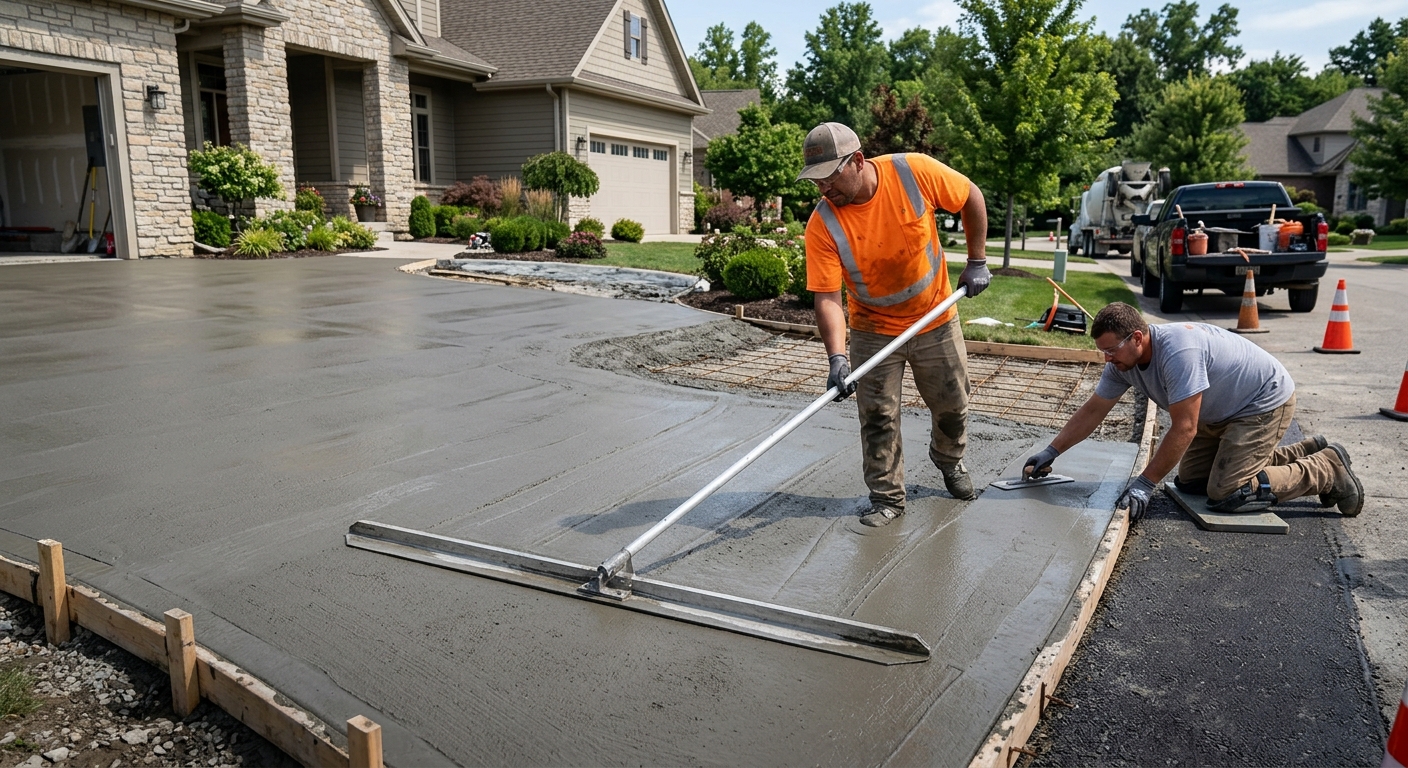
Concrete work options and costs in Brander Gardens
Concrete work is a regular part of home ownership in Brander Gardens, Alberta, where driveways, patios and walkways have to perform through cold winters and freeze–thaw swings. This is a small community within the Calgary region; the 2021 Census recorded a population of 2,435 (Statistics Canada, 2021 Census), and that local housing demand means experienced crews are busy when exterior seasons open. In many Brander Gardens neighbourhood pockets—especially where homes were built to accommodate family-style garage access—residents typically add or upgrade concrete flatwork to match driveway and walkway traffic patterns. On top of that, our market is shaped by Calgary’s climate-driven engineering: design frost depth is about 1.2 m (roughly 4 ft), so footing excavations for foundations and retaining structures are deeper and more labour-intensive than in milder parts of Canada. Frost depth and freeze–thaw cycling also influence mix design, base prep, and joint spacing, which shows up in pricing.
Contractors in the Calgary area price concrete work with these realities in mind, and you’ll often see different quotes for the “same” task—mainly because the specs differ (air-entrainment, reinforcement, insulation/heating during cold pours) and because jobsite access can slow down excavation and finishing. If you’re weighing options, the right finish is usually the difference between long-term performance and early surface issues. Driveway and slab choices are also where decorative upgrades can make sense: stamped & decorative work costs more, but it’s often less expensive than replacing a full driveway later.
Use the comparison table below to set expectations before you request an itemised quote.
| Application |
Typical Size |
Key Spec |
Finish Option |
Price Range |
| Concrete driveway (standard broom finish) |
400–600 sq. ft. |
Air-entrained mix, compacted base, control joints |
Broom finish |
$12,000–$18,000 |
| Exposed aggregate driveway |
400–600 sq. ft. |
Air-entrained mix, proper retarder/curing, adequate base |
Exposed aggregate |
$14,500–$21,500 |
| Stamped concrete driveway or patio |
300–550 sq. ft. |
Air-entrained mix, colour hardener, sealer |
Stamped pattern + antiquing |
$15,000–$26,000 |
| Plain concrete patio or walkway |
200–450 sq. ft. |
Air-entrained mix, compacted granular base, joints |
Float/screed + light broom |
$5,000–$9,000 |
| Garage floor (interior slab) |
450–650 sq. ft. |
Slab thickness, vapour control (poly), joints as required |
Plain trowel-finish / light broom |
$9,500–$15,500 |
| Foundation footings (structural, below frost) |
Typical 1–2 storey home footprint |
Engineered size/reinforcement, bear below frost depth |
Structural concrete placement |
$28,000–$45,000 |
Prices are estimates only and vary by project scope, site access and material selection.
What affects the price of concrete work in Brander Gardens
In Brander Gardens, you can see 30–50% variation between quotes for what sounds like the same concrete job. That’s usually not because one contractor is “cheaper” in a simple way—it’s because the hidden scope changes: excavation volume, granular base depth, whether the mix meets air-entrainment requirements for freeze–thaw, the amount of reinforcement, and the finishing time needed for decorative work. In this Calgary region, the cold continental climate makes these differences expensive to ignore. The design frost depth is about 1.2 m (roughly 4 ft), so footings (and any structures tied into frost protection) must extend below undisturbed soil at depth to reduce frost heave risk. For exterior flatwork like driveways and patios, freeze–thaw cycles also require air-entrained concrete and proper control joints to reduce cracking and spalling. If the pour happens in shoulder-season temperatures, cold-weather placement may require insulated blankets, sometimes temporary heat, and careful curing—each adds cost, but it’s what protects the slab later.
Here are a few Brander Gardens examples that commonly move the price up or down: (1) a driveway widened for a larger vehicle can add hundreds of cubic feet of excavation and base material—pushing a “standard” driveway toward the upper side of the $12,000–$18,000 band; (2) a stamped driveway or patio often costs more because of colour hardeners, mats/rollers, extra crew time and more involved sealing—commonly aligning with $15,000–$26,000; and (3) if truck access is tight or the grade requires heavier excavation, haul/disposal time rises and so does labour. Home projects started after spring thaw also tend to price differently because the site may need re-grading and additional base compaction to meet the engineered thickness.
| Price Factor |
Why It Matters |
Cost Impact |
| Frost line depth |
Determines footing depth and form height |
More excavation and higher concrete volume can raise structural work budgets |
| Site preparation |
Excavation, grading, compacted granular base |
Loose soils or inadequate base depth add labour and increase material quantities |
| Reinforcement |
Rebar or wire mesh requirement |
Steel, tie-in time, and inspection/engineering details increase costs |
| Mix design |
Air-entrainment and compressive strength spec |
Correct freeze–thaw durability can cost more upfront but reduces failures |
| Finish type |
Broom vs. stamped vs. exposed aggregate |
Decorative finishes demand extra crew steps and specialty materials |
| Pour size and concrete truck access to site |
Placement rate, wheelbarrowing distance, and staging |
Poor access can slow production and increase labour and cleanup |
| Cold-weather curing precautions |
Heating and blankets |
Season timing affects whether contractors must add thermal protection and monitoring |
| Control joint pattern and sealing cost |
Joint spacing limits random cracking; sealing improves surface durability |
More joints/planned patterning plus a proper seal coat increases line items |
Permits & regulations in Alberta
In Alberta, the rule of thumb is that structural concrete work needs a permit and, in many cases, engineered drawings reviewed through the municipal approval process. That typically includes foundation elements such as footings, foundation walls, grade beams and other structural grade supports. For concrete flatwork—patios, walkways and most residential driveways—permits usually are not required unless the work affects lot grading, drainage, impervious surface coverage limits, or the municipal right-of-way (for example, where curb/sidewalk interfaces are involved). Because requirements can vary by the specific site and scope, confirm with the local authority before breaking ground.
Before you hire anyone in Brander Gardens, verify that the contractor carries proper liability insurance and has active WSIB/WCB coverage where applicable to the work. A reliable contractor can also provide recent references on similar Alberta projects (cold-weather curing and frost-aware base prep are critical here). Step-by-step, you can check:
- Contractor licensing/registration: look up the contractor on the relevant online registry for proof of standing.
- Certificate of Insurance: request a current COI showing liability coverage and that the policy is valid for the project period.
- WSIB/WCB clearance: ask for a clearance letter or proof of coverage number (and confirm it covers the individuals performing the concrete work).
- Ask for engineered detail compliance (for structural pours) and check that the scope matches the permit drawings.
If you can’t get clear documentation quickly, it’s often a sign the job may not be built to Alberta’s expectations for frost performance and structural compliance.
Getting concrete right in Brander Gardens's freeze-thaw climate
Concrete failures in Brander Gardens usually come down to freeze–thaw durability, water management, and curing. In our Calgary region, the slab experiences repeated wetting and cooling; if the concrete mix isn’t properly air-entrained, freeze–thaw cycles can lead to surface scaling and spalling over time. The fix isn’t “try harder with finishing”—it’s getting the full specification right. Start with base preparation: the compacted granular sub-base must be built to the right depth and density for the local soil and to support the slab load without pumping fines. Next, use the right mix design: for exterior flatwork, specify air-entrainment typically in the 5–7% range and a minimum 32 MPa compressive strength. Control joints matter too—spacing should be planned to control where shrinkage and temperature cracking happen, rather than letting cracks wander. Curing is also critical: minimum 7 days under proper conditions is the standard I expect, and in cold weather you may need insulated blankets and heating so the concrete gains strength before temperatures drop. Finally, sealing: apply a penetrating sealer after cure (commonly at 28 days) to repel de-icing salts and reduce water intrusion.
When you’re asking questions, try to steer away from vague promises like “we use good concrete” and toward details like “What air content are you targeting, and how do you protect curing when it’s cold?” A practical dollar example: if a plain broom-finish driveway quote sits at roughly the lower end of $12,000–$18,000 but the proposal doesn’t include air-entrainment specs or proper joint/sealer scope, that’s where costs can look great today and turn into repair bills later. On the other hand, if a stamped option comes in closer to $15,000–$26,000, that premium is typically justified when the contractor includes the right mix, consistent curing protection, and a proper sealing plan for exterior durability.
| Spec |
Why It Matters in Brander Gardens |
What to Ask For |
Impact if Skipped |
| Compacted granular base (depth?) |
Supports the slab and reduces frost-related movement |
Confirm base depth and compaction testing/requirements |
Subgrade settlement, cracking, and premature surface failure |
| Air-entrained concrete mix (target air %?) |
Protects concrete through freeze–thaw cycles |
Specify target air content (typically 5–7% for exterior flatwork) |
Spalling/scaling risks increase significantly during winters |
| Compressive strength (MPa rating) |
Strength gain supports long-term structural performance |
Minimum 32 MPa compressive strength requirement |
Reduced durability and higher risk of early damage |
| Control joints (spacing per ACI guidelines) |
Controls cracking locations for predictable, repairable lines |
Requested joint spacing and whether joints are cut vs. tooled |
Random cracking, water entry, and edge deterioration |
| Minimum 7-day curing period |
Allows strength development before cold snaps |
Curing method and cold-weather protection plan |
Surface weakness, scaling, and reduced overall performance |
| Penetrating sealer (when applied after cure) |
Repels moisture and de-icing salt infiltration |
Sealer type and timing (commonly after 28 days of cure) |
Higher water/salt penetration leading to faster spalling |
How to choose a concrete work contractor in Brander Gardens
Choosing the right concrete contractor in Brander Gardens is mostly about proof: proof they build for frost, proof they’re insured, and proof their scope matches what you actually need. Start with Alberta verification. Ask for their current liability insurance certificate (COI) showing the coverage is active for the project window. Then confirm WSIB/WCB coverage—request a clearance letter or documentation tied to their coverage number for the trades involved. If they can’t provide these up front, move on.
Next, get 2–3 itemised written quotes—not just one lump-sum figure. The best quotes break down labour and materials separately (concrete supply, reinforcement, base/gravel, formwork, finishing, saw-cut joints, sealing, and disposal/hauling). Read the exclusions line carefully: is excavation and disposal included? Is permit pull included for structural work that requires it? Will they include insulation blankets/heating if temperatures drop during curing? Warranty clarity matters too. Ask for the workmanship warranty length (and what “workmanship” covers), whether there’s a product/manufacturer warranty on sealers or admixtures, and whether warranties are transferable if you sell your home. For payment, avoid large deposits—never pay more than 10–15% upfront—and hold back a portion until the final grading, cleanup, joint sealing and sealer are complete. Finally, insist on a written start date and completion estimate.
- Provide air-entrainment and curing protection details, not just “standard mix.”
- Confirm footing/sub-base depth and whether compaction testing is used.
- Ask who cuts control joints and when (timing affects cracking).
- Confirm reinforcement type/placement for any structural scope.
- Request a concrete pour plan for cold snaps (blankets/heating if needed).
- Get explicit disposal/haul-off included or priced separately.
- Clarify site access limits for the concrete truck and pump needs.
- Ask if sealing is included and specify the sealer type and timing (post-cure).
- Check warranty terms in writing: length, coverage, and exclusions.
- Verify insurance validity dates match the project timeline.
- Confirm WSIB/WCB clearance for workers involved in the pour/finish.
- Use an itemised quote template so you can compare like-for-like scopes.
Concrete red flags in Brander Gardens include: quotes that omit air-entrainment or compressive strength specs, vague “standard curing” promises without a cold-weather plan, no mention of control joints or sealing, missing insurance/WSIB/WCB documentation, and payment schedules that ask for most funds before forms are struck and finish work is complete.
Frequently asked questions — concrete work in Brander Gardens
Can concrete be poured in cold weather in Brander Gardens?
Yes, concrete can be poured in cold weather in Brander Gardens, but it must be done with the right protection plan. In Calgary and the surrounding area, cold snaps and freeze–thaw risk are part of the working reality, and contractors typically use cold-weather placement methods to help concrete reach early strength before temperatures drop. That often means insulated blankets, sometimes temporary heat, and strict attention to curing time (minimum 7 days under proper conditions is a standard I expect). The mix may also be winter-grade with admixtures that support early strength development. If a contractor wants to proceed with no heating/blanketing plan, that’s a concern—surface scaling and durability problems can show up later during winters. For exterior pours, the safest approach is matching the pour date to temperature trends and requiring a written cold-weather curing method in the scope.
How do I maintain concrete in Brander Gardens's freeze-thaw climate?
Maintenance in Brander Gardens is mainly about controlling water and salt exposure. Keep drainage paths clear and avoid letting water pool along slab edges—water is what drives freeze–thaw stress. If you have a broom-finished driveway or patio, regular gentle cleaning helps keep de-icing chemicals from accumulating in pores. After the slab has fully cured (commonly around 28 days), a penetrating sealer can reduce de-icing salt infiltration and help slow down spalling risk over time. Re-sealing schedules vary by product, but you’ll usually see best results with a planned maintenance cycle instead of waiting for visible scaling. Also, address small surface damage early: hairline cracks and minor chips can become water entry points. A properly built exterior slab aligned with air-entrainment and control joint planning will generally hold up better through winter—especially in our colder climate where frost depth is engineered around about 1.2 m.
What causes concrete to spall in Brander Gardens winters?
Spalling in Alberta winters is most commonly caused by freeze–thaw damage combined with water and de-icing salt entry. If the concrete isn’t air-entrained to the correct target (typically 5–7% air for exterior flatwork), microscopic damage from freezing water can build up. When the slab cycles through thaw and refreeze, the surface paste weakens and flakes off—what homeowners see as spalling. Poor curing also contributes; rushing curing in cold weather can leave the surface weaker than it should be. Another major driver is inadequate base prep or joint planning—if water finds its way under edges or through random cracking, it accelerates deterioration. That’s why the “hidden specs” matter just as much as the finish. If you’re comparing quotes in Brander Gardens, you should expect exterior work priced in the $12,000–$18,000 driveway band to include the air-entrainment and joint/sealer scope that protects the slab.
What is rebar and when is it required in Alberta?
Rebar (reinforcing steel) is used to improve a concrete element’s ability to resist cracking under loads and shrinkage. Whether rebar is required depends on what you’re building and what the design engineer (or contractor’s engineering standard) specifies. In Alberta, for structural concrete such as foundation footings, foundation walls, and grade beams, reinforcement is typically engineered and commonly required—especially where the member must carry loads and resist movement related to frost and soil conditions. For some exterior flatwork like driveways, reinforcement may or may not be required depending on slab thickness, soil support, and design assumptions; some projects use wire mesh, rebar, or thickened edges. The key is that reinforcement isn’t a “one size fits all” add-on. A good contractor will explain the reinforcement spec in relation to your slab thickness and the engineered frost-aware design for your site.
How long does a concrete project take in Brander Gardens?
Project duration depends on scope, access, and weather. For a typical residential driveway or patio, the main concrete placement day is usually just one day, but the schedule includes preparation (demo/excavation, base prep, forms, reinforcement) and follow-up (curing time, joint finishing, and sealing if included). Because the cold season in the Calgary region can shorten the effective exterior pour window, timelines can extend if temperatures drop during the curing period and winter protection is required. Even if the “pour” is quick, you should plan around minimum curing expectations—particularly minimum 7-day curing under proper conditions before you treat the slab as fully ready for stress. If your project includes stamped concrete or exposed aggregate, finishing and curing protection steps can add time, which is part of why those options commonly land higher than plain work. For example, stamped driveway/patio budgets often sit in the $15,000–$26,000 range and involve more steps than a plain broom finish.
What is a concrete overlay and is it suited to Brander Gardens?
A concrete overlay is a new concrete layer installed over an existing slab after preparation—usually including grinding, patching, and ensuring the surface bonding is sound. In Brander Gardens (and across the Calgary region), overlays can work when the original slab is still structurally sound and the problem is mainly surface deterioration. However, if the existing concrete has significant settlement, deep cracking, or frost-related movement, an overlay can fail because the new layer simply repeats the movement underneath. Overlays also need correct base and drainage considerations; freeze–thaw water management remains critical. In some cases, a full replacement is more reliable than an overlay, particularly if repairs would leave too-thin edges or if expansion/control joint patterns can’t be re-established properly. When overlay quotes look unusually low compared with a full driveway budget in the $12,000–$18,000 band, ask the contractor whether they’ve assessed structural soundness and specified surface prep methods and bond requirements.