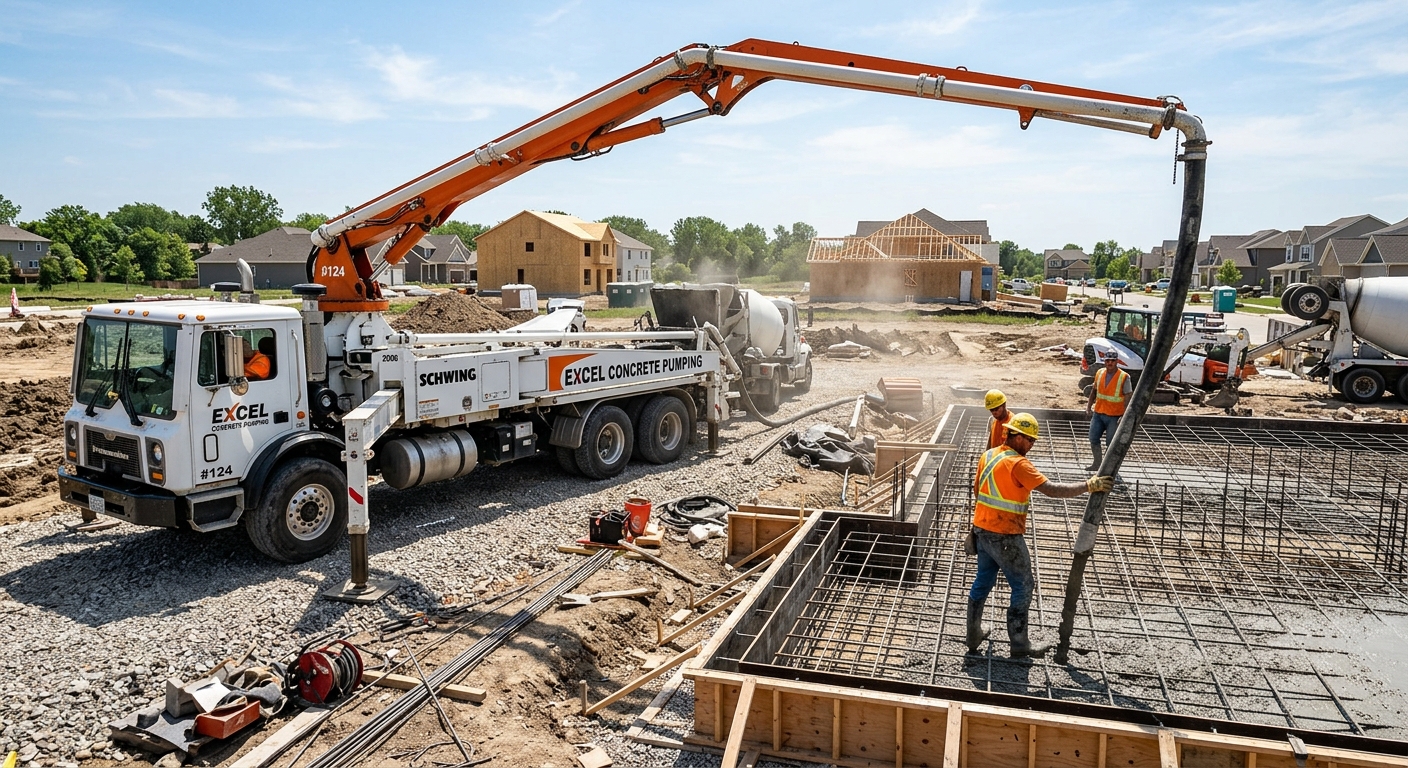
Concrete work options and costs in Edson
Edson is a solid market for concrete because most homeowners here—about 60.6% living in single-detached houses—need durable exterior surfaces that can handle winter freeze-thaw. With roughly 69.4% of households owning their homes, many projects are planned and budgeted well ahead of spring, which helps scheduling for driveways, patios and walkways. You’ll also see lots of older housing stock (49.6% of homes built before 1981), so replacement and repair work is common where original flatwork has started to heave or spall.
In the Banff–Jasper–Rocky Mountain House region, pricing is driven by freeze-thaw exposure, frost depth, and a shorter warm-weather pour season. That means contractors spend more on risk management: deeper excavation, more base preparation, air-entrained concrete, and tighter curing controls. Labour and mobilization costs can also rise because fewer crews are available for small “gap” jobs during cold snaps, and trucks may be scheduled around weather windows.
In Edson, concrete is especially in demand in established residential areas like Downtown/central Edson where drive upgrades and sidewalk replacements tend to be frequent. The best way to compare options is by application and finish type, since decorative work (stamping, colouring, sealers) adds labour and material.
Use the ranges below to gauge budget expectations before you ask for an itemised quote.
| Application |
Typical Size |
Key Spec |
Finish Option |
Price Range |
| Concrete driveway (standard broom finish) |
400–500 sq. ft. |
Air-entrained exterior mix, control joints, compacted granular base |
Broom finish |
$4,800 – $10,200 |
| Exposed aggregate driveway |
400–500 sq. ft. |
Air-entrained mix, exposed aggregate selection, proper curing and washing timing |
Exposed aggregate |
$6,800 – $13,800 |
| Stamped concrete driveway or patio |
300–450 sq. ft. |
Air-entrained mix, colouring system, densifier/sealer plan |
Stamp + colour |
$8,000 – $18,000 |
| Plain concrete patio or walkway |
200–300 sq. ft. |
Air-entrained mix, base prep, edge forms, joints |
Float and broom/score finish |
$2,400 – $6,600 |
| Garage floor (interior slab) |
500–600 sq. ft. |
Vapour barrier (as required), reinforcement as specified, proper curing |
Light broom finish |
$6,500 – $14,500 |
| Foundation footings (structural, below frost) |
Varies by house size |
Excavation to frost depth, engineered rebar, concrete placement plan |
Reinforced foundation concrete |
$18,000 – $45,000 |
Prices are estimates only and vary by project scope, site access and material selection.
What affects the price of concrete work in Edson
In Edson, two quotes for the “same” concrete job can land 30–50% apart because the hidden variables are mostly site and specification: frost depth, soil conditions, excavation difficulty, reinforcement amount, finishing complexity, and how much weather protection is needed during the pour window. In a cold region like the Banff–Jasper–Rocky Mountain House area, you’re not just buying concrete—you’re buying excavation, base preparation, curing control, and protection from early damage while strength develops.
Frost line depth and freeze-thaw cycles dictate every major spec. Exterior work needs to be built below the design frost depth to prevent heave, and colder Alberta areas commonly follow a rule-of-thumb of about 4 feet for frost depth for planning. All exterior slabs should use air-entrained concrete to survive repeated freeze-thaw. When the warm season is short, crews either pour earlier with protection or wait for weather, both of which influence labour scheduling and truck mobilization. De-icing salts also accelerate surface spalling if a driveway isn’t sealed and if the mix/air content isn’t correct.
In practical terms, a 10–12 mm swing in base thickness or a change in joint pattern can add rework time. For example, a plain patio or walkway budgeted in the $12–$22 per sq. ft. band can climb toward the top end when access is tight or when we add extra compacted granular base to meet frost-related performance. Meanwhile, stamped work in the $22–$40 per sq. ft. band often justifies itself when homeowners want colour stability and a crack-management plan, not just a “look.” Older homes (many built before 1981) also mean more uneven demo, tougher hauling, and sometimes additional sub-base correction before new concrete goes in.
| Price Factor |
Why It Matters |
Cost Impact |
| Frost line depth — determines footing depth and form height |
Footings must extend below frost heave depth for structural stability |
Higher excavation and concrete volume; can add significant labour and materials |
| Site preparation — excavation, grading, compacted granular base |
Concrete performs only as well as the base it sits on |
Extra truckloads, haul-off, and compaction time can move pricing up 10–25% |
| Reinforcement — rebar or wire mesh requirement |
Controls cracking and strengthens slabs/footings under load |
Material and placement labour increases, especially for driveways and foundations |
| Mix design — air-entrainment and compressive strength spec |
Air content and strength affect freeze-thaw durability and long-term performance |
Costs more than basic mixes, but reduces costly premature failures |
| Finish type — broom vs. stamped vs. exposed aggregate |
More steps, tighter finishing windows, additional materials |
Labour and material increases commonly drive higher per-sq.-ft. pricing |
| Pour size and concrete truck access to site |
Access affects pumping/spotting, downtime, and placement time |
Restricted access can add labour, equipment, and risk control costs |
| Cold-weather curing precautions — heating and blankets |
Cold slows strength gain and increases early freeze risk |
Heaters/insulation add cost and sometimes shift schedules |
| Control joint pattern and sealing cost |
Joints manage shrinkage; sealing helps repel salts and water |
Small line items, but they materially affect longevity and surface performance |
Permits & regulations in Alberta
In Alberta, structural concrete work typically needs municipal coordination and often a permit—especially for footings, foundation walls, and grade beams. If you’re building or doing a structural foundation repair/replacement, expect a building permit and, in many cases, engineered drawings reviewed through the municipal process. For most homeowners, that means the project is tied to the building permit stage, not just “pour day.”
Concrete flatwork like patios, walkways, and driveways usually does not require a permit, unless the work changes lot grading, impacts impervious surface coverage limits, alters drainage in a way the municipality cares about, or affects municipal right-of-way/approach requirements. Still, rules can vary by situation, so confirm with the local authority before excavation starts.
Before you sign, verify coverage and compliance in a straightforward checklist:
- Contractor licence/registration (Alberta): check the relevant provincial registry or the contractor’s own documentation.
- Liability insurance: request a Certificate of Insurance naming the correct insured party and confirming current coverage.
- WSIB/WCB coverage: ask for a clearance letter or proof of account status (and ensure it matches the company you’re contracting with).
- References: specifically ask for similar-scale jobs in comparable climates, not just interior slabs.
Then, keep it all in the same paper trail as your quote so you’re protected if access, frost-depth conditions, or disposal needs change during excavation in Edson.
Getting concrete right in Edson's freeze-thaw climate
Concrete failures in Edson almost always come back to one of five things: weak base prep, the wrong mix for freeze-thaw, poor jointing, inadequate curing, or skipping surface protection where de-icing salts and meltwater get into the surface. To spec correctly in the Banff–Jasper–Rocky Mountain House market, you want a system approach.
Base preparation comes first: excavation to the right depth for local soil and frost exposure, then compacted granular sub-base to provide a stable foundation. Mix design matters for exterior durability: air-entrained concrete is typically targeted around 5–7% air for exterior flatwork, and the concrete should meet at least 32 MPa compressive strength (as specified by your engineer/contractor). Control joints should be planned to limit random cracking—don’t let the slab “choose” the crack locations. Curing is critical in cold snaps: plan for minimum 7 days of proper curing under suitable conditions, and use blankets/heating where temperatures demand it so early freezing doesn’t damage early strength gain. Finally, sealing with a penetrating sealer is typically applied about 28 days post-pour so the surface repels salts and water.
Here’s a real budgeting example: a broom-finished walkway might start in the lower end of the $12–$22 per sq. ft. band, but adding air-entrainment verification, proper joint spacing, and a sealing plan can push the job toward the top end without changing the “look.” That spend is justified because in Edson winters, it’s the surface durability that keeps you from paying again for patching.
Ask the contractor how they will prevent spalling (often caused by inadequate air-entrainment or poor curing), not just how they will finish the top.
| Spec |
Why It Matters in Edson |
What to Ask For |
Impact if Skipped |
| Compacted granular base (depth?) |
Stable base reduces settlement and heaving under freeze-thaw |
Base thickness and compaction method documented in the scope |
Early cracking, unevenness and repeating repairs |
| Air-entrained concrete mix (target air %?) |
Freeze-thaw durability depends on correct air void system |
Confirm target air content around 5–7% for exterior flatwork |
Spalling and surface scaling, often within a few winters |
| Compressive strength (MPa rating) |
Strength gain supports safe service life and load capacity |
Minimum 32 MPa (or higher if your design calls for it) |
Soft concrete that wears, cracks and fails prematurely |
| Control joints (spacing per ACI guidelines) |
Manages shrinkage cracking so cracks don’t become random |
Joint spacing and layout plan before pour |
Random cracking, water intrusion and faster deterioration |
| Minimum 7-day curing period |
Cold weather slows strength gain; curing protects early age concrete |
Curing method and cold-weather protection plan |
Surface damage if loaded or exposed too soon |
| Penetrating sealer (when applied after cure) |
Repels de-icing salts and meltwater that attack the surface |
Sealer schedule—typically after ~28 days cure |
Increased spalling risk and more rapid surface wear |
How to choose a concrete work contractor in Edson
Start by verifying the basics in Alberta: licensing/registration where applicable, liability insurance, and WSIB/WCB coverage. Don’t rely on verbal reassurance—ask for proof. For insurance, request a Certificate of Insurance showing current effective dates and the correct legal business name. For worker coverage, ask for a clearance letter or current account proof that matches the contractor doing the work. If the contractor won’t provide documents, that’s a red flag by itself.
Next, get 2–3 itemised written quotes that break down labour and materials (concrete, rebar/wire mesh, forms, base prep, disposal, and finishing/curing/sealing). Avoid quotes that only give one lump-sum number with no scope. Itemisation matters because in Edson’s freeze-thaw conditions, small specification differences (air content verification, base thickness, joint layout, and cold-weather curing) are exactly what drives cost and performance.
Read the scope for what’s excluded: disposal/haul-off, permit pull (if required), protection from weather, saw-cut timing, and whether sealing is included or “optional.” Confirm warranty terms: workmanship warranty length, product/manufacturer warranty, and whether any warranty transfers if you sell your home. Finally, use a sensible payment schedule—typically no more than 10–15% upfront—and hold back a portion until completion and close-out paperwork.
- Ask for documentation of air-entrained mix plan for exterior work.
- Request base prep details (depth and compaction method).
- Confirm reinforcement type and placement (rebar chairing/support).
- Get joint layout spacing and whether joints are saw-cut vs tooled.
- Ask how they’ll protect curing during cold nights.
- Clarify sealing: product type and when it will be applied (~28 days).
- Verify disposal/haul-off is included for demo/excavation.
- Confirm approach/grade tie-ins to prevent ponding.
- Ask how they handle drainage near foundations (especially with older homes).
- Request an estimated schedule with start date and completion window.
- Get the quote in writing, signed, with change-order process.
- Confirm site cleanup standards (forms removal, regrading, sweep/vacuum).
Red flags in Edson: contractors who won’t discuss air-entrainment specifics, quotes that omit base thickness and compaction, crews that plan to pour and remove protection too quickly in cold weather, vague joint wording (“we’ll finish it nicely”), and companies that can’t provide proof of insurance and WCB/WSIB coverage.
Frequently asked questions — concrete work in Edson
What is the difference between concrete and cement?
In everyday terms, people say “concrete,” but technically cement is only one ingredient inside the concrete. Concrete is the full mix: Portland cement (the binder), sand and gravel (the aggregates), water, and sometimes additives such as air-entraining agents for freeze-thaw durability. In Edson and the Banff–Jasper–Rocky Mountain House region, the difference matters because exterior flatwork needs the right air-void system to resist spalling and scaling during winter cycles. So when you’re comparing quotes, don’t just ask about “cement”—ask for the air-entrained mix design, the target air content, and the compressive strength spec.
How much does concrete work cost in Edson?
Concrete costs in Edson usually land in bands depending on finish and scope. For example, plain patios and walkways are commonly budgeted in the $12–$22 per sq. ft. range, while stamped & decorative work often runs $22–$40 per sq. ft. Driveways typically sit higher because there’s more area and load considerations; standard driveway work commonly follows the $14–$26 per sq. ft. band. Exact pricing moves with frost-depth excavation, base prep, reinforcement, truck access, and whether cold-weather curing precautions are required in the shorter pour season. Always compare itemised quotes, not just the bottom line.
How deep must footings be for Edson's frost line?
Footings must be placed below the design frost depth to reduce heave, and your engineer/contract documents should specify the exact depth for the site conditions. As a practical planning rule in Alberta, many projects treat about 4 feet as a frost-depth reference for excavation planning, though the actual requirement can vary by location and soil. In the Edson area, freeze-thaw exposure and frost management drive the excavation and form height, which is why foundation work is the highest-cost category. If a contractor proposes shallow footings “because it’s not that cold,” that’s a serious performance risk in this climate and should be corrected before any concrete is poured.
Why does concrete crack in Edson and how is it prevented?
Concrete cracks are often normal, especially as it shrinks during curing and as temperatures swing through the freeze-thaw season. In Edson, those cracks can become a problem if they’re random and allow water intrusion into the slab edges, which can accelerate deterioration. Prevention comes from controlling where cracks happen using a proper control joint pattern, using correct base preparation, and specifying the right exterior mix (including air-entrainment). Curing matters too—cold nights slow strength gain, so removing protection too early can increase risk. If you want longevity, also plan sealing after cure, since de-icing salts and meltwater attack the surface over repeated winters.
Stamped vs broom-finish concrete — cost difference?
Stamped concrete costs more because it includes extra steps: colouring/colour hardener (or stains), moulding/stamping tools, tighter timing for finishing, and often an additional sealer plan for colour durability. In the Banff–Jasper–Rocky Mountain House region, stamped & decorative concrete commonly follows the $22–$40 per sq. ft. band, while a broom-finished option tends to fall lower—often closer to the driveway flatwork bands such as $14–$26 per sq. ft. for standard driveways, depending on size and base prep. If budgets are tight, broom-finished can be the best choice for performance; stamped is best when aesthetics plus a robust joint and sealing plan are both priorities.
When is the best time to pour concrete in Edson?
The best time is during Alberta’s stable warm-weather windows, when concrete can be placed, finished and cured without risking early-age freezing. In Edson’s climate, the short pour season means contractors plan around temperature and night-time lows, and they may schedule protection (blankets/heaters) if temperatures drop. The key is not just the day of the pour—curing is the make-or-break period for durability. If you’re aiming for exterior work, plan for a window where daytime temperatures are suitable and nights won’t stall curing. For winter-sensitive work, ask your contractor what cold-weather curing procedures they use and how they document curing protection in the scope.