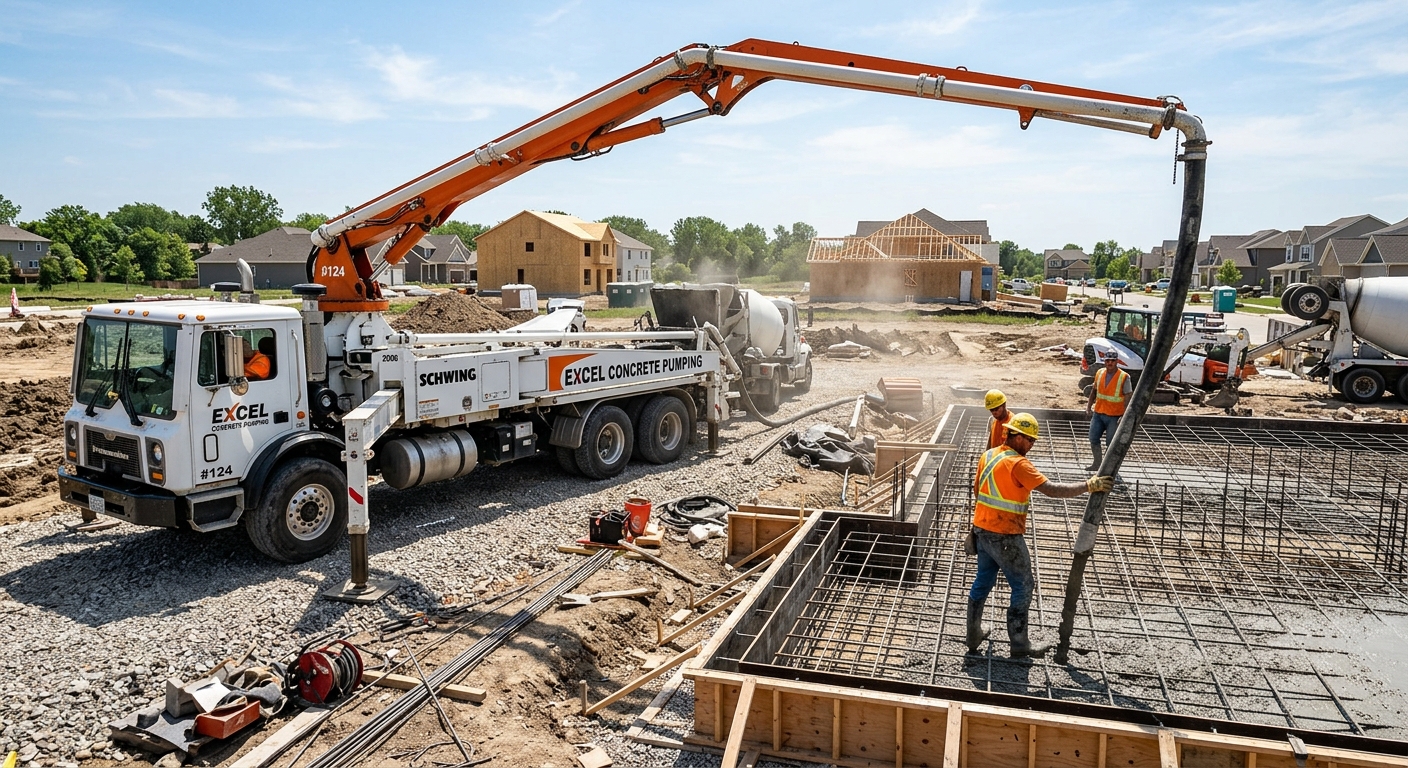
Concrete work options and costs in Deer Ridge
Concrete projects are common across Deer Ridge because homeowners and builders rely on durable flatwork—driveways, patios, walkways, and foundations—that can handle Calgary’s cold continental swings. With Deer Ridge’s population at 3,795 (Statistics Canada, 2021 Census), the market is active but not “mass volume,” so scheduling and crew availability can affect final pricing. The biggest demand usually comes from the area’s single-detached housing stock, where new builds and upgrades often include a driveway pad, garage approach, and landscaping-grade walkways.
In the Calgary economic region, costs are shaped less by aesthetics and more by engineering and cold-weather placement. A design frost depth of about 1.2 m (roughly 4 ft) means exterior footings and foundation elements must bear on undisturbed soil below this depth, which increases excavation and concrete volume versus warmer regions. Frequent freeze–thaw cycles also push contractors toward air-entrained mixes, well-graded granular base preparation, and properly spaced control joints—especially for patios and driveways that see de-icing salt. Finally, the pour season is shorter, so if you’re working late fall or early spring, winter-grade mixes, insulated blankets, and sometimes temporary heat are often needed to protect curing, and that adds labour and equipment time.
In Deer Ridge—particularly around newer subdivisions and infill sites near the approach roads—concrete flatwork is especially in demand because driveways and garage floors often get planned alongside landscaping and grading. Below is a practical cost comparison to help you line up scope and finish choices before you request a quote.
| Application |
Typical Size |
Key Spec |
Finish Option |
Price Range |
| Concrete driveway (standard broom finish) |
480–600 sq. ft. (e.g., 20' x 24' to 20' x 30') |
Air-entrained exterior mix; compacted granular base; control joints |
Broom finish, non-stamped |
$12,000–$18,000 |
| Exposed aggregate driveway |
480–600 sq. ft. |
Air-entrained exterior mix; proper timing for exposure; curing protection |
Exposed aggregate surface (washed finish) |
$15,000–$22,000 |
| Stamped concrete driveway or patio |
300–600 sq. ft. |
Air-entrained exterior mix; reinforced as required; joint layout planning |
Stamp mats + integral/overlay colour (as specified) |
$15,000–$26,000 |
| Plain concrete patio or walkway |
150–300 sq. ft. |
Exterior mix; compacted granular base; edge forms; joints |
Broom finish or light texture |
$5,000–$9,000 |
| Garage floor (interior slab) |
500–700 sq. ft. |
Vapour barrier (as applicable); base prep; reinforcement per design |
Float + broom/light texture |
$10,500–$16,500 |
| Foundation footings (structural, below frost) |
Per engineered design; often 1,000–1,600 sq. ft. of footprint area |
Footings below design frost depth (~1.2 m); reinforcement per engineer |
Structural concrete only (no decorative finish) |
$28,000–$45,000 |
Prices are estimates only and vary by project scope, site access and material selection.
What affects the price of concrete work in Deer Ridge
It’s common to see quotes for the same concrete work in Calgary that swing by 30–50%. In Deer Ridge, the difference usually isn’t “mystery markup”—it’s engineering depth, base preparation, reinforcement decisions, and whether cold-weather measures are included. When one contractor prices to minimums and another price includes the frost-protection and freeze–thaw durability details local specs expect, the labour and material gap shows up quickly.
First, the frost line depth matters. Footings and foundation elements must extend below the design frost depth (about 1.2 m in this region) so the foundation rests on undisturbed soil and avoids frost heave. That drives excavation volume and formwork height, which directly impacts foundation/footing pricing in the $28,000–$45,000 band. Second, Calgary’s freeze–thaw cycle affects every exterior slab: contractors plan for air-entrained concrete mixes and proper base drainage, plus well-spaced control joints to reduce cracking and spalling—especially where de-icing salt is used. Third, the cold-weather pour window is shorter. If the pour is scheduled late fall or early spring, winter-grade materials, insulated blankets, and sometimes temporary heat can add cost compared with a mid-summer placement.
Two practical Deer Ridge examples: (1) A driveway on heavy clay or poor drainage often requires deeper granular base and more excavation, nudging standard driveway pricing toward the higher side of $12,000–$18,000. (2) If you choose stamped or decorative options, the mix prep and finishing time are longer, and pricing often shifts into the $15,000–$26,000 range depending on square footage and joint complexity. For older home sites with mature landscaping, removal and regrading also add labour and disposal, which can be enough to explain “why two bids differ” even when the stated concrete thickness looks similar.
| Price Factor |
Why It Matters |
Cost Impact |
| Frost line depth — determines footing depth and form height |
Footings must bear below design frost depth to prevent frost heave and seasonal movement |
Higher excavation and concrete volume; can be a major driver for foundation bids |
| Site preparation — excavation, grading, compacted granular base |
Proper sub-base depth and compaction reduce settlement and cracking pathways |
Can add significant labour; poor site access increases time and equipment costs |
| Reinforcement — rebar or wire mesh requirement |
Controls cracking in slabs and supports structural loading where required |
Material and installation labour vary by thickness and design |
| Mix design — air-entrainment and compressive strength spec |
Air-entrainment helps resist freeze–thaw damage; strength supports structural performance |
Upcharges for winter-grade and engineered mix specs, especially in shoulder seasons |
| Finish type — broom vs. stamped vs. exposed aggregate |
Different finishing crews, tools, and curing sequences affect total time |
Stamped/exposed usually increases labour and materials (colour/overlay systems) |
| Pour size and concrete truck access to site |
Access affects how far concrete must be wheelbarrowed or pumped |
Pumping/extra labour can raise costs on tight lots or long driveways |
| Cold-weather curing precautions — heating and blankets |
Ensures proper cure and reduces scaling/spalling risk in freezing conditions |
Blankets, heaters, and monitoring time add cost during late/early season pours |
| Control joint pattern and sealing cost |
Joints localize cracking; sealing reduces moisture and salt intrusion |
More layout work plus sealer material and labour can add a meaningful line item |
Permits & regulations in Alberta
In Alberta, structural concrete work typically needs more oversight than decorative flatwork. For homeowners in Deer Ridge, the work most often requiring a building permit includes foundation footings, foundation walls, and grade beams—any structural elements that support the home’s load paths. Municipal reviews and sometimes engineered drawings are commonly involved before construction starts, because incorrect sizing or placement can create safety and long-term movement problems in frost-prone soils.
By contrast, concrete flatwork such as driveways, patios, and walkways usually does not require a permit by default. However, permits can become necessary if the project affects lot grading, drainage plans, impervious surface coverage limits, or the municipal right-of-way (for example, certain curb or sidewalk tie-ins). The safe approach is to confirm with the local authority before breaking ground, especially if you’re changing surface elevations or re-routing water away from the foundation.
To verify a contractor in Alberta step-by-step: (1) ask for their liability insurance and request a current certificate of insurance showing coverage limits and that the job location is covered; (2) confirm their worker protection coverage—WSIB/WCB clearance where applicable—by requesting proof or a clearance letter; and (3) verify their contractor details through appropriate online resources (start with any provincial/business registry listings they provide, plus the exact policy details they’ll share). If you’re hiring an engineering/structural team member, request proof of professional qualifications as well. Always get references from similar-scale projects in cold climates so you’re not learning about curing and frost details on your own driveway.
Getting concrete right in Deer Ridge's freeze-thaw climate
Concrete failures in Deer Ridge are almost always tied to how the job was engineered for freeze–thaw and de-icing salt. The most common problems are surface scaling, spalling around edges, and random cracking that lets water in. These issues happen when the base isn’t excavated and compacted to the right depth, when the mix isn’t air-entrained for Alberta’s freeze–thaw cycle, or when curing is rushed during cold nights. In this market, the Calgary-region frost depth requirement (about 1.2 m) also means excavation and placement sequencing for foundations need tighter control than homeowners expect.
To spec the job correctly, focus on five areas. (1) Base preparation: use a compacted granular sub-base to the designed depth and ensure drainage paths are correct for the lot’s soils. (2) Mix design: request air-entrained concrete with 5–7% target air content for exterior flatwork and a minimum 32 MPa compressive strength (unless an engineer specifies otherwise). (3) Control joints: plan the joint layout and spacing to limit random cracking. (4) Curing: require minimum 7-day curing under proper conditions; cold-weather pours often need insulated blankets to maintain workable temperatures. (5) Sealing: apply a penetrating sealer at about 28 days after pour to repel moisture and de-icing salts.
Here’s where the price difference is justified: if your driveway quote includes proper air-entrainment, adequate base prep, and winter curing measures, you might be closer to the higher end of the $12,000–$18,000 driveway band. Skipping or thinning out any of those steps can “save” money up front but costs more later when you need patching, replacement of weak surface areas, and repeated sealing.
| Spec |
Why It Matters in Deer Ridge |
What to Ask For |
Impact if Skipped |
| Compacted granular base (depth?) |
Prevents settlement and keeps slab support consistent through freeze–thaw cycles |
Granular base depth and compaction method; confirmation of drainage and grading |
Cracks, uneven surfaces, and early deterioration |
| Air-entrained concrete mix (target air %?) |
Reduces freeze–thaw damage and helps resist spalling from salt exposure |
Target air content of 5–7% for exterior flatwork (or engineer’s spec) |
Scaling and spalling, especially at edges and high-salt areas |
| Compressive strength (MPa rating) |
Ensures slab can handle loads without premature surface failure |
Minimum 32 MPa (or specified rating for the structure) |
Reduced durability and higher risk of cracking under load |
| Control joints (spacing per ACI guidelines) |
Directs shrinkage cracking to predictable locations and reduces random cracking |
Joint spacing and sawcut timing plan; how joints align with rebar/edges |
Random cracks that let water into the slab base |
| Minimum 7-day curing period |
Proper curing builds strength and reduces surface scaling risk |
Curings conditions requirements; cold-weather blanket/heating plan when needed |
Weak surface, increased scaling, and long-term spalling |
| Penetrating sealer (when applied after cure) |
Helps repel moisture and de-icing salts that worsen freeze–thaw damage |
Type of sealer and application timing (around 28 days post-pour) |
Faster deterioration and higher maintenance costs |
How to choose a concrete work contractor in Deer Ridge
Choosing the right concrete contractor in Deer Ridge starts with verification. In Alberta, confirm the company carries liability insurance at job-appropriate limits (ask for the certificate of insurance and ensure it lists the project address); then request proof of WSIB/WCB coverage for workers (or a clearance letter, depending on the coverage setup). Don’t rely on verbal confirmation—ask to see documents before work begins.
Next, request 2–3 itemised written quotes that break out labour and materials (concrete, reinforcement, excavation/granular base, forms, finishing, curing blankets/heaters if applicable, and disposal). A lump-sum number can hide important inclusions or exclusions. Pay attention to whether a contractor is including permits (when required), sawcut timing for joints, and whether sealing is included now or only offered later. For warranties, ask for workmanship warranty length in writing and whether any product/manufacturer warranty is provided for coatings or decorative systems—also ask if warranties are transferable to a future buyer.
Payment scheduling should protect you: never pay more than about 10–15% upfront, and build in a holdback until the full scope is complete and clean-up is done. Finally, insist on a start date and estimated completion time in writing so you have a baseline if scheduling shifts due to weather.
- Confirm liability insurance certificate and coverage limits match the project size.
- Request WSIB/WCB proof or a clearance letter for Alberta work.
- Ask what frost- and freeze–thaw specs they follow for exterior slabs.
- Require an itemised quote (labour + materials, not just a total).
- Clarify what’s included in site prep: excavation depth, granular type, compaction, and grading.
- Ask about reinforcement: rebar vs. mesh, and where it’s placed.
- Confirm mix design: air-entrainment target and concrete strength rating.
- Ask when control joints are cut/specified and how spacing is chosen.
- If pouring near cold weather, ask for blankets/heaters/curing protection in writing.
- Verify finish sequence for decorative work (stamps/exposed aggregate) and colour plan.
- Include sealing scope: product type and approximate timing (about 28 days post-pour).
- Set a payment schedule with a holdback until you pass final inspection.
Concrete red flags in Deer Ridge include: vague wording like “standard mix” with no air-entrainment or strength spec, quotes that omit granular base depth and compaction, no plan for curing blankets/heating when temps are dropping, refusal to provide insurance/WSIB/WCB documentation, and a warranty that only covers materials but not workmanship.
Frequently asked questions — concrete work in Deer Ridge
How much does concrete work cost in Deer Ridge?
In Deer Ridge, most concrete pricing comes down to scope and finish. For a typical residential driveway in the Calgary area, many homeowners land in the $12,000–$18,000 band depending on square footage, excavation, reinforcement, and access for the concrete truck. Patios and walkways often fall in the $5,000–$9,000 range for smaller areas, while stamped or decorative work is commonly higher at $15,000–$26,000 because finishing time and materials increase. Foundation/footings, where frost protection drives deeper excavation, is usually in the $28,000–$45,000 band. Because Deer Ridge is a smaller market (population 3,795 per Statistics Canada, 2021 Census), scheduling and site conditions can also impact labour costs.
How deep must footings be for Deer Ridge's frost line?
For Deer Ridge projects, footing depth is determined by the design frost depth used in local engineering and building practice. In this Calgary-region context, that design frost depth is about 1.2 m (roughly 4 ft). Practically, that means exterior foundation elements—like footings supporting houses, garages, and retaining structures—must bear on undisturbed soil below that depth to reduce the risk of frost heave and seasonal movement. Your contractor should base excavation to that design level and confirm subgrade conditions before concrete is placed. If soils are unstable or groundwater is an issue, engineering may require additional preparation beyond “just digging to depth,” and that’s another reason accurate quotes look different from each other.
Why does concrete crack in Deer Ridge and how is it prevented?
Concrete cracks in Deer Ridge mainly because of shrinkage, temperature swings, freeze–thaw stresses, and—most importantly—water getting into the wrong places. In Calgary-area conditions, exterior slabs must be engineered for durability: proper granular base prep, air-entrained concrete mixes, and planned control joints. Without air-entrainment, freeze–thaw cycles can contribute to surface scaling and spalling; without a good joint pattern, shrinkage cracking can become random and allow moisture pathways. Prevention comes from specifying 5–7% air content for exterior flatwork and choosing joint spacing that limits random cracks. Also, sealing (applied around 28 days after pour) helps repel de-icing salt and moisture, reducing ongoing freeze–thaw deterioration on driveways and patios.
Stamped vs broom-finish concrete — cost difference?
Stamped concrete costs more than broom-finish because it adds labour steps and materials: stamp mats, release agents, colour systems, and careful finishing timing. For driveway-sized projects, homeowners typically see broom-finish options in the $12,000–$18,000 range, while stamped projects often move into the $15,000–$26,000 range depending on square footage, joint complexity, and whether the design includes integral colour or an overlay. The climate matters too: both finishes still require air-entrained mix and proper curing to resist freeze–thaw damage. If your quote for stamped work doesn’t also include those durability specs, you may be paying extra for appearance but not for performance—which is where many early failures start.
When is the best time to pour concrete in Deer Ridge?
The best time for outdoor concrete in Deer Ridge is typically mid-spring through early fall, when temperatures support proper curing without heavy add-ons. In Calgary’s cold continental climate, late fall and early spring can require winter-grade mixes, insulated blankets, and sometimes temporary heat to keep curing on track. If you’re within those colder periods, ask your contractor how they’ll protect the slab during placement and the initial cure window. The curing window is critical: rushing it increases the risk of surface scaling and longer-term spalling, especially where de-icing salts are used. If timing is tight, request a written cold-weather curing plan as part of the quote scope, not just “we’ll manage it.”
How long does concrete take to cure?
Concrete curing depends on temperature and exposure conditions, but for planning purposes in Alberta, ask for a minimum 7-day curing period with proper protection during cold nights. That initial curing is when the concrete gains early strength and is most vulnerable to damage if temperatures drop or if the slab dries too quickly. Even after the slab reaches practical handling strength, many protective steps are timed later: for example, a penetrating sealer is commonly applied around 28 days after the pour, once cure is complete enough to avoid trapping moisture and to improve long-term salt resistance. If you’re budgeting, remember that weather protection (blankets/heaters) during curing can be a small line item compared to the cost of premature surface failures or replacement.