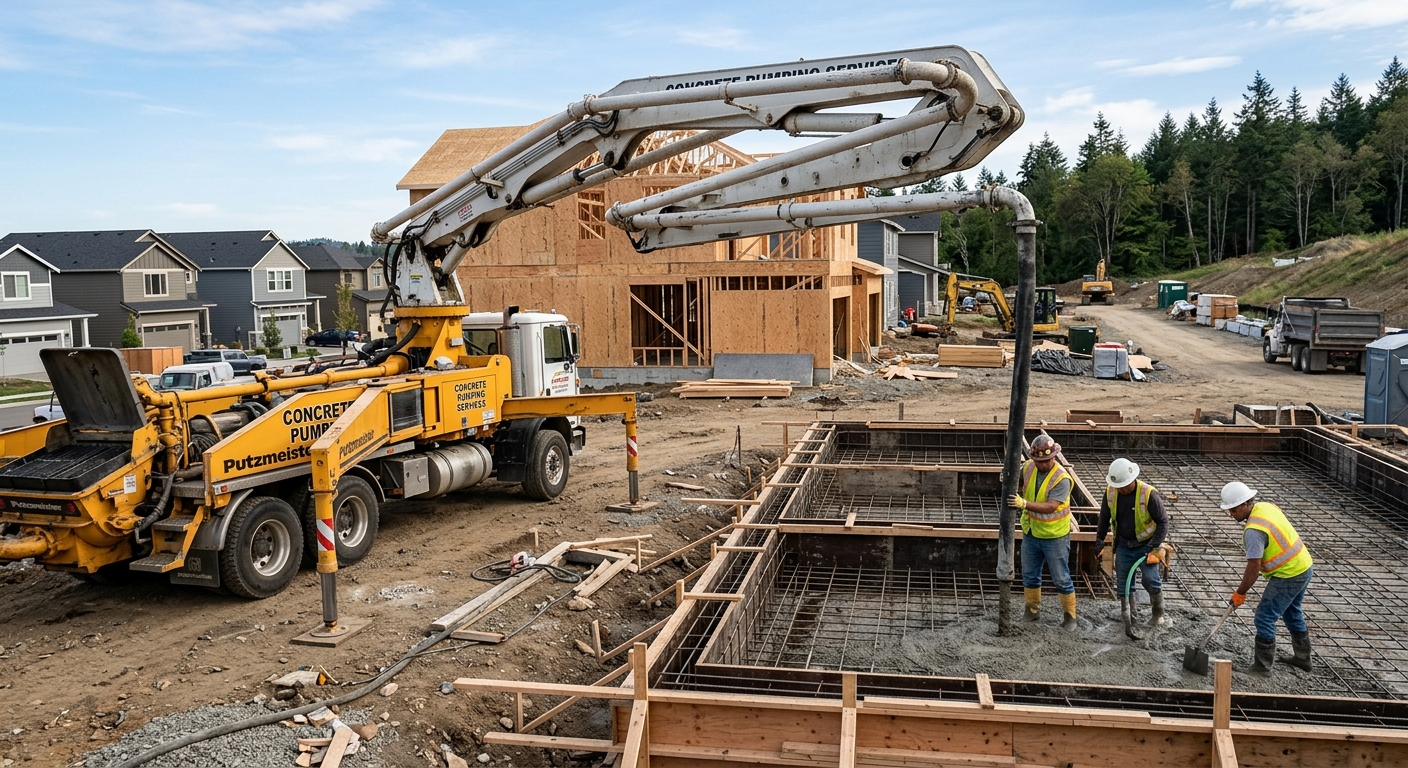
Concrete work options and costs in Calgary
Concrete work in Calgary is shaped by a cold continental climate and a large, steady homeowner market. With 55.0% of dwellings being single-detached houses, there’s consistent demand for concrete flatwork—driveways, patios, and walkways—through every season homeowners plan projects. Calgary also has a meaningful share of older housing stock (35.2% of homes built before 1981), which often means more foundation and slab repairs or replacement when homeowners update drainage, re-grade, or modernize entrances.
On pricing, the big driver is freeze–thaw. Calgary’s design frost depth is about 1.2 m (roughly 4 ft) and footings, foundation-related concrete, and exterior slab supports must bear on undisturbed soil below that level. That pushes excavation and increases foundation volumes. Then the year-round reality of freeze–thaw cycles means exterior flatwork needs air-entrained mixes, well-prepped granular bases, properly spaced control joints, and cold-weather curing discipline. In areas where winters are harsh—especially during late fall or early spring—contractors sometimes need winter-grade placement practices (insulation blankets and/or temperature control) to protect curing concrete and prevent scaling and premature spalling.
In Calgary’s demand pockets like Coventry Hills and the newer south and west growth communities, homeowners often want durable, low-maintenance surfaces that can handle de-icing salts, snow storage, and frequent temperature swings. The options below reflect typical installed ranges for Calgary projects and set you up for the next section on what changes your quote.
| Application |
Typical Size |
Key Spec |
Finish Option |
Price Range |
| Concrete driveway (standard broom finish) |
20 ft x 9 ft (180 sq ft) |
Air-entrained mix, compacted granular base |
Broom finish, standard thickness |
$12,000–$18,000 |
| Exposed aggregate driveway |
20 ft x 9 ft (180 sq ft) |
Air-entrained mix, careful curing control |
Exposed aggregate with seeding/finishing |
$15,000–$22,000 |
| Stamped concrete driveway or patio |
20 ft x 9 ft (180 sq ft) or 12 ft x 20 ft (240 sq ft) |
Air-entrained mix, integral colour or hardener |
Stamp + colour with release and sealer |
$15,000–$26,000 |
| Plain concrete patio or walkway |
10 ft x 12 ft (120 sq ft) walkway equivalent |
Air-entrained mix, compacted base, joints |
Float/brush finish (non-slip texture) |
$5,000–$9,000 |
| Garage floor (interior slab) |
22 ft x 24 ft (528 sq ft) |
Vapour barrier/ground prep, edge insulation as needed |
Standard trowel/brush finish |
$10,000–$16,000 |
| Foundation footings (structural, below frost) |
Typical house perimeter (variable) |
Excavation to frost depth, rebar, engineered dimensions |
Structural concrete, formed & reinforced |
$28,000–$45,000 |
Prices are estimates only and vary by project scope, site access and material selection.
What affects the price of concrete work in Calgary
In Calgary, two quotes for what looks like the same job can easily land 30–50% apart once you dig into specs and site conditions. Concrete pricing is less about the “bucket of concrete” and more about engineered preparation: excavation to the right depth, compacted granular base, reinforcement, air-entrained mixes, joint layout, and—when it’s cold—curing protection. Calgary’s freeze–thaw cycles don’t forgive shortcuts. Exterior slabs and driveways also need air-entrained concrete to withstand repeated expansion and contraction, and footings must extend below the design frost depth so they sit on undisturbed soil.
That frost-driven design is where Alberta differs from many people’s expectations. In general terms, colder regions need deeper bearing, and Alberta can run up to around 2.4 m depending on the engineering and site conditions. The longer excavation and larger footing volumes translate directly into labour and disposal costs. Calgary also has a shorter practical exterior slab season; when you pour later in the year or early spring, contractors may add cold-weather curing precautions like insulated blankets and controlled heating to reach acceptable strength and reduce surface scaling.
De-icing salt is another cost multiplier over time: it accelerates spalling if the mix design or surface protection is weak. A good sealer isn’t “just cosmetic” here—it’s part of durability in Calgary’s winters. As a practical example, upgrading from a broom-finish driveway to stamped or exposed styles can move you into the $15,000–$26,000 range, but you’re paying for colour/hardener, stamping materials, and extra finishing steps. If your base prep is poor, though, even the cheaper driveway in the $12,000–$18,000 band will perform badly—so base quality often matters more than finish.
Local conditions can raise or lower cost quickly. A sloped lot or tight access in older inner-city areas can increase excavation and concrete truck scheduling. Conversely, if a homeowner already has an established grade, clear access, and confirmed utility locations, the quote tightens because fewer “unknowns” show up during excavation and formwork.
| Price Factor |
Why It Matters |
Cost Impact |
| Frost line depth — determines footing depth and form height |
Footings must bear below frost to prevent heave and seasonal movement. |
Higher excavation and concrete volume can add major labour/material cost. |
| Site preparation — excavation, grading, compacted granular base |
Concrete fails from movement and poor support more than from “thin concrete”. |
Poor soil or extra grading increases trucking, labour, and granular supply. |
| Reinforcement — rebar or wire mesh requirement |
Reduces cracking and controls shrinkage/shifting under load. |
Mesh/rebar and placement labour add cost, especially for driveways. |
| Mix design — air-entrainment and compressive strength spec |
Air-entrainment is critical for freeze–thaw durability in Calgary. |
Engineered mix and stronger spec may increase material cost. |
| Finish type — broom vs. stamped vs. exposed aggregate |
Complex finishes require more finishing steps and specialist materials. |
Stamped/exposed typically costs more than standard broom. |
| Pour size and concrete truck access to site |
Placement efficiency and haul distance directly affect labour time. |
Tight access or long carries can raise labour and equipment costs. |
| Cold-weather curing precautions — heating and blankets |
Protects strength gain and reduces scaling/spalling risk. |
Can add several thousand dollars depending on temperature windows. |
| Control joint pattern and sealing cost |
Joints manage cracking; sealing helps repel de-icing salts and moisture. |
Skipping or simplifying adds future repair risk and lifecycle costs. |
Permits & regulations in Alberta
In Alberta, structural concrete work typically requires a building permit. That includes footings, foundation walls, and grade beams, because they’re part of the structural system and must match engineered design for load and drainage assumptions. Municipal review often means engineered drawings get checked before you pour. For concrete flatwork—driveways, patios, and walkways—permits are usually not required unless the work triggers grading changes, affects lot drainage, alters impervious surface coverage limits, or impacts municipal right-of-way (for example, if you’re modifying curb/sidewalk interfaces or drainage connections). Calgary homeowners should always confirm with the local authority before breaking ground.
Before you hire anyone for basement/footing work or anything that interfaces with the foundation system, verify these items step-by-step. First, ask for the contractor’s liability insurance certificate (COI) and confirm it lists your project address or is eligible for your scope. Second, confirm they have the correct Alberta coverage and clearance for workers—commonly done through WSIB/WCB documentation—and ask for a clearance letter or current status proof. Third, request references from similar-scale Calgary foundation or slab projects and check whether they include winter placement practices. Finally, for contractor “licensing,” ask how they meet Alberta requirements for the specific trade scope involved and whether they subcontract engineered/structural portions when needed.
If a contractor won’t provide insurance/coverage proof or can’t explain permit expectations clearly, treat it as a red flag—especially in Calgary where freeze–thaw durability is tied to correct installation details.
Getting concrete right in Calgary's freeze-thaw climate
Concrete failures in Calgary most often come from one of five gaps: inadequate base support, weak or wrong mix design, poor jointing, rushed curing, or no surface protection against salt and moisture. With a design frost depth of about 1.2 m (roughly 4 ft), exterior concrete and structural systems must be built on prepared support that won’t shift. That’s why the base prep step matters as much as the finish. A compacted granular sub-base (to the engineered depth) reduces pumping and settlement that can turn into cracking and edge spalling over cycles.
Mix design is next. For exterior flatwork, the job should use air-entrained concrete; a typical target is 5–7% air content for durability in freeze–thaw conditions, along with a minimum 32 MPa compressive strength for exterior slabs unless engineering specifies more. Then manage shrinkage with control joints. A proper joint pattern limits random cracking so cracks appear in planned locations and don’t turn into moisture paths.
Curing is where Calgary can surprise homeowners. You generally want at least 7 days of curing under proper conditions, and when temperatures drop, contractors should plan cold-weather methods like insulated blankets and/or controlled heating to reach strength gain. Finally, sealing matters: a penetrating sealer applied about 28 days after the pour helps repel water and de-icing salts, reducing scaling and early surface deterioration.
To put costs in perspective: if you’re deciding between a standard broom driveway around $12,000–$18,000 and a stamped option in $15,000–$26,000, the extra money can be justified when base prep, air-entrainment, and curing discipline are already solid. If those aren’t included, paying for a decorative finish won’t prevent cracking.
| Spec |
Why It Matters in Calgary |
What to Ask For |
Impact if Skipped |
| Compacted granular base (depth?) |
Prevents movement and pumping that lead to uneven slabs and spalling. |
Base depth, soil conditions, and compaction/coverage details. |
Higher settlement, early cracking, and water infiltration at edges. |
| Air-entrained concrete mix (target air %?) |
Freeze–thaw durability depends on entrained air to manage expansion. |
Target air content (often 5–7% for exterior flatwork) and mix type. |
Increased risk of surface scaling and spalling in winter. |
| Compressive strength (MPa rating) |
Ensures proper structural capacity after curing and seasonal loading. |
Minimum 32 MPa (or engineered requirement) and test/acceptance plan. |
Reduced strength gain can cause premature failure or excessive cracking. |
| Control joints (spacing per ACI guidelines) |
Controls where cracks happen and reduces uncontrolled random cracking. |
Joint spacing and layout plan for your slab dimensions. |
Random cracking, widened joints, and faster moisture/ice damage. |
| Minimum 7-day curing period |
Strength development is critical before freeze conditions return. |
How curing will be handled, especially during cold snaps. |
Weak surface layer, scaling risk, and reduced long-term durability. |
| Penetrating sealer (when applied after cure) |
Helps repel salts and moisture that drive winter surface deterioration. |
Penetrating sealer and timing (about 28 days post-pour). |
Faster surface wear and higher likelihood of spalling near joints. |
How to choose a concrete work contractor in Calgary
Start by verifying Alberta compliance the right way. For liability insurance, request a current certificate of insurance (COI) and confirm it covers the scope you’re hiring for and has appropriate project/site coverage. For worker coverage, ask for WSIB/WCB proof and, where available, a clearance letter or status document that shows they’re in good standing for their workforce. Then check whether they carry adequate limits for concrete operations (where site damage is common). Don’t be shy—this is normal in Calgary and protects you.
Next, get 2–3 itemised written quotes, not one lump sum. Your quote should separate labour and materials and clearly list items like excavation, granular base supply, reinforcement, formwork, concrete mix design/air entrainment, finishing labour, saw-cut control joints, disposal, and any cold-weather curing methods. Ask whether permits are included (where applicable), and what’s excluded (for example, existing concrete removal, hauling away, or regrading). A well-written scope avoids change-orders later—especially important when Calgary sites have tight access or established grades.
Warranty should be in writing. Ask for workmanship warranty length (commonly limited but clearly stated), any product/manufacturer warranty, and whether it transfers if you sell your home. Finally, payment schedule matters: never pay more than 10–15% upfront, and hold back payment until the job is complete and surfaces are sealed/finished as promised. Get a start date and completion estimate in writing, and ask how they’ll handle temperature swings to protect curing.
- Ask for COI and confirm it matches your address and concrete scope.
- Request WSIB/WCB clearance/status proof for the crews that will work your site.
- Get itemised labour vs materials (no “concrete allowance” without details).
- Confirm whether excavation and disposal are included.
- Verify the granular base spec (depth and compaction expectations).
- Ask what concrete mix design will be used (air-entrainment and strength spec).
- Confirm reinforcement approach (where it applies) and joint layout.
- Ask how cold weather curing will be handled during your pour window.
- Ensure sealing is included if the scope calls for it (and when it’s applied).
- Confirm truck access plan and how they’ll prevent damage to landscaping.
- Review the warranty terms and whether they exclude freeze-thaw/weather impacts.
- Use a payment schedule with a holdback until completion and punch list is done.
Concrete-specific red flags in Calgary include: (1) vague wording like “standard concrete” without air-entrainment or strength details, (2) skipping base prep depth or compaction requirements, (3) promising a pour “no matter the temperature” without cold-weather curing plans, (4) refusing to show insurance/coverage documentation, and (5) offering only one non-itemised lump-sum quote that doesn’t list excavation, reinforcement, joints, and disposal.
Frequently asked questions — concrete work in Calgary
How much does concrete work cost in Calgary?
Concrete costs in Calgary vary by finish, excavation, and how much cold-weather protection is required. For typical homeowner projects, a concrete driveway (standard broom finish) often lands around $12,000–$18,000, while more labour-intensive finishes like stamped concrete typically fall around $15,000–$26,000. Plain patios and walkway work is commonly estimated around $5,000–$9,000, depending on size and base prep. Foundation/footings (structural, below frost) can run about $28,000–$45,000 depending on perimeter length, engineering details, and site conditions. Because Calgary’s freeze–thaw cycles require durable specs—especially air-entrained concrete and correct base preparation—quotes can swing 30–50% if those details aren’t included or if excavation/disposal is more intensive on your lot.
How deep must footings be for Calgary's frost line?
In Calgary, foundation design is typically based on a design frost depth of about 1.2 m (roughly 4 ft). Practically, that means footings and structural support must extend to undisturbed soil below the frost penetration zone so they don’t heave or shift through freeze–thaw cycles. Exact footing depth can vary with site conditions and engineered drawings (for example, soil type, slope, and drainage), so your contractor should be building to the structural engineer’s plan rather than guessing. If someone offers “shallow footings” to reduce cost, it’s a durability risk in Alberta’s winters—especially with Calgary’s repeated freeze–thaw and snow melt water movement. For any foundation work, ask for the engineered specifications and confirm the excavation depth before concrete placement.
Why does concrete crack in Calgary and how is it prevented?
Cracking in Calgary usually isn’t random; it’s commonly the result of shrinkage, thermal movement, and—but most importantly—movement from poor support. Freeze–thaw cycles add pressure at the surface and along edges, especially where water can enter through weak joints or poorly prepared base. Prevention is about engineered restraint: compacted granular base at the correct depth, air-entrained concrete for exterior durability, and a planned control joint pattern to channel cracking into predictable locations. Contractors should also cure concrete properly—at least 7 days under suitable conditions—so the slab develops strength before weather swings back. Sealing after the cure window (often around 28 days) can also reduce moisture and salt exposure. When contractors skip joints or rush curing, you’re more likely to see wider cracks and early spalling within a few seasons.
Stamped vs broom-finish concrete — cost difference?
Stamped concrete costs more than broom-finish because it requires additional materials and finishing steps (colour/hardener systems, stamping mats/release, and more labour time). In Calgary, a standard broom-finish driveway often estimates around $12,000–$18,000, while stamped concrete driveway or patio projects commonly fall in the $15,000–$26,000 range. The difference can be justified when the contractor also includes the durability items that matter in freeze–thaw—air-entrained mix, correct granular base prep, proper jointing, and curing/heat/blankets where needed. If those durability specs are missing, the cheaper option might still crack early regardless of finish. Ask the contractor to show you the scope for base prep, joints, curing methods, and sealing so the quote apples-to-apples.
When is the best time to pour concrete in Calgary?
For Calgary exterior concrete, the best window is generally late spring through summer, when temperatures allow proper placement and curing without extra heating or blanket systems. That said, contractors do pour in colder parts of the year if they use winter-grade practices—insulated blankets and/or controlled heating—to ensure curing and strength development. The key is the curing window: rushing strength gain in late fall or early spring increases the risk of surface scaling and future spalling under de-icing salt and freeze–thaw cycles. A good contractor will discuss your calendar and temperature expectations, and they’ll explain what they’ll do if a cold snap hits mid-pour or soon after. If you’re aiming for a driveway or patio, booking earlier can mean a simpler, more durable installation at a lower overall cost because you avoid emergency winter-heat add-ons.
How long does concrete take to cure?
Concrete curing has two timeframes: initial strength gain and the longer conditioning time for durability. For Calgary installations, plan for a minimum 7-day curing period under proper conditions for exterior slabs, because that’s when the concrete continues to develop strength before the harshest cold weather returns. Full long-term performance takes longer, which is why sealing timelines matter. For example, penetrating sealer is typically applied about 28 days after the pour to maximize repellency against moisture and de-icing salt exposure. If you open the slab too soon or don’t protect curing concrete during cold snaps, you can end up with a weak surface layer—more prone to scaling and spalling even if the structure “looks fine” at first. Ask your contractor for the curing plan in writing, including how they’ll handle temperature swings.