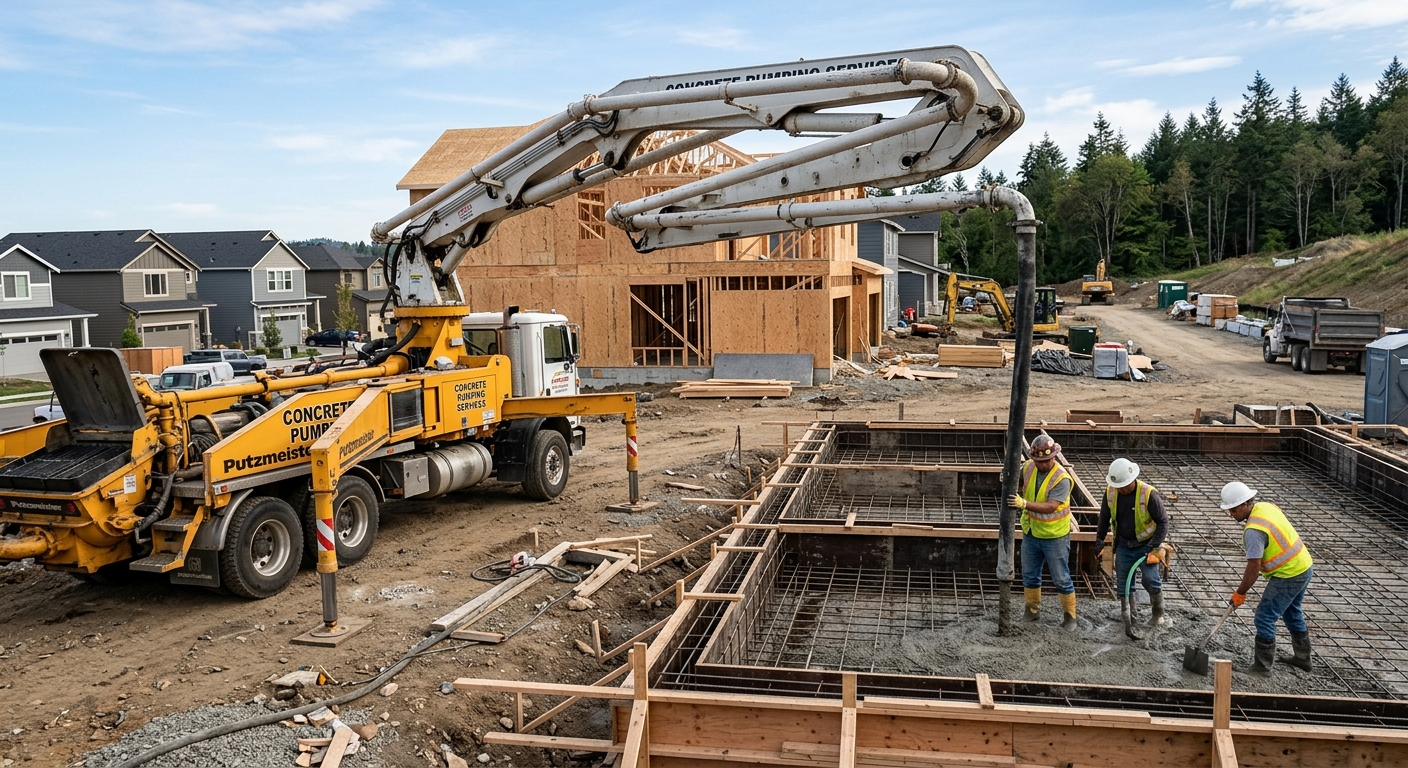
Concrete work options and costs in Ormsby Place
Concrete work in Ormsby Place, Alberta is a bit more engineered than many homeowners expect, mainly because Calgary-area winters drive freeze–thaw cycles and deeper frost requirements. In the 2021 Census, Ormsby Place had a population of 5,314 (Statistics Canada, 2021 Census), and that stable, family-oriented market is largely built around single-detached homes that need durable outdoor flatwork—driveways, patios, and walkways—built to handle salt, moisture, and seasonal movement. It’s also why concrete contractors in the nearby Calgary and Rocky View-area demand peaks around the spring-to-early-fall window and gets busier in late summer as homeowners line up exterior projects.
When pricing a driveway in this market, expect the bigger swings to come from excavation depth, the granular base rebuild, reinforcement scope, and the finish system chosen. Calgary’s cold continental climate typically means a design frost depth around 1.2 m, so footings for garages, retaining structures, and house foundations must bear on undisturbed soil below that depth to reduce frost heave. For exterior slabs, air-entrained mixes and careful curing are non-negotiable—rushing pours in late fall or early spring can lead to surface scaling and long-term spalling, and that risk affects both material selection and how crews schedule trucks and heaters.
If you’re seeing multiple quotes come in far apart, it’s often because one contractor is building for these conditions and another is not. In Ormsby Place, trade demand is especially steady near the newer residential pockets toward the eastern side of town, where driveways and back patios commonly tie into new landscaping and grading.
Here’s a practical cost comparison to help you budget before you request itemised quotes.
| Application |
Typical Size |
Key Spec |
Finish Option |
Price Range |
| Concrete driveway (standard broom finish) |
24 ft x 12 ft (288 sq ft) |
Air-entrained slab, reinforced where required, control joints |
Broom finish + simple saw cuts |
$12,000–$18,000 |
| Exposed aggregate driveway |
24 ft x 12 ft (288 sq ft) |
Air-entrained mix, carefully placed and cured; surface retarder style or exposed method |
Exposed aggregate texture |
$15,000–$21,000 |
| Stamped concrete driveway or patio |
20 ft x 12 ft (240 sq ft) |
Air-entrained mix, colour hardener where specified, proper jointing plan |
Stamp + colour (single or multi-colour) |
$15,000–$26,000 |
| Plain concrete patio or walkway |
10 ft x 16 ft (160 sq ft) |
Exterior-rated mix, compacted base, mesh or rebar per design |
Float/smooth finish + light broom at edges |
$5,000–$9,000 |
| Garage floor (interior slab) |
22 ft x 24 ft (528 sq ft) |
Minimum 32 MPa concrete, vapour control as needed, jointing |
Steel-trowel finish or broom depending on use |
$8,500–$14,500 |
| Foundation footings (structural, below frost) |
Typical house layout |
Below design frost depth bearing, engineered steel/rebar, proper inspection |
Structural concrete formwork + reinforcement |
$28,000–$45,000 |
Prices are estimates only and vary by project scope, site access and material selection.
What affects the price of concrete work in Ormsby Place
It’s common to see quotes for the “same” concrete job in Calgary and surrounding communities swing by 30–50% once you look at what’s included. The biggest drivers aren’t just the concrete line item—they’re excavation depth, granular base design, reinforcement, mix specification, access for the concrete truck, and the finish system. In Edmonton or warmer regions, you might not think about frost in the same way, but here in Ormsby Place the design frost depth and freeze–thaw cycles dictate the entire build-up: exterior work needs air-entrained concrete and footings must extend to undisturbed soil below the design frost depth (about 1.2 m in Calgary practice). That means more dig, more forming height, more rebar, and more careful curing logistics.
Local examples can move your price up or down quickly. A driveway where the existing subgrade is soft or topsoil-heavy usually needs deeper removal and a thicker compacted granular base, which pushes cost toward the high end of the $12,000–$18,000 driveway band. Conversely, a patio built on stable, compactable soil with good access may land closer to $5,000–$9,000 for a plain slab. For foundations, if engineered drawings require additional reinforcement or wider footings due to soil conditions, that can move the $28,000–$45,000 foundation/footings range.
Freeze–thaw also affects curing and protection. Cold-weather placement may require winter-grade practices such as insulating blankets and controlled temperatures to keep strength gain on track. And since Calgary-area use of de-icing salts accelerates surface scaling, homeowners who want a longer-lived slab typically budget for sealing—either included as an option or scheduled shortly after the recommended cure period.
| Price Factor |
Why It Matters |
Cost Impact |
| Frost line depth |
Determines footing depth and form height |
More excavation and higher concrete volume; can move foundation pricing substantially |
| Site preparation |
Excavation, grading, compacted granular base |
Extra haul-off, re-compaction, and base material costs (often 15%–35% of job scope) |
| Reinforcement |
Rebar or wire mesh requirement |
Steel delivery and placement labour; structural locations can require more than “typical” mesh |
| Mix design |
Air-entrainment and compressive strength spec |
Air-entrained exterior mixes and winter-grade curing add materials and planning time |
| Finish type |
Broom vs. stamped vs. exposed aggregate |
Stamped/exposed systems add steps, labour, and curing/colour timing |
| Pour size and concrete truck access to site |
Placement speed and ability to deliver at once |
Longer carry distance or limited access increases labour and can require scheduling changes |
| Cold-weather curing precautions |
Heating and blankets |
Heaters, insulation, and monitoring add cost and constrain pour dates |
| Control joint pattern and sealing cost |
Manages cracking and reduces salt-related surface damage |
Proper joint layout takes labour; sealing is an added, high-value protection step |
Permits & regulations in Alberta
In Alberta, permits and approvals depend on what concrete work you’re doing. Structural concrete work—such as foundation footings, foundation walls, and grade beams—typically requires a building permit, and engineered drawings are often part of the review process through the municipality. For concrete flatwork (driveways, patios, and walkways), permits usually aren’t required unless the work affects lot grading, drainage, impervious surface coverage limits, or encroaches into the municipal right-of-way. Even if a permit isn’t required for the slab itself, the grading/drainage plan can trigger requirements, so it’s smart to confirm before excavation starts.
For contractor compliance, don’t guess. For an Ormsby Place project, verify the contractor carries liability insurance and has required work coverage through the relevant Alberta protections (commonly referred to as WCB/WCB-related coverage), then ask for references on similar exterior or structural-scale work. Step-by-step: (1) check the contractor’s business registration details where applicable; (2) request a current certificate of insurance and make sure the coverage is active for your project dates; (3) ask for confirmation of coverage for workers (or a clearance letter if they provide one); (4) compare the scope to the drawings/permit notes if structural work is involved; and (5) confirm the contractor knows local inspection scheduling so concrete doesn’t get poured before inspections are completed.
If you can’t get clear answers and documents up front, that’s a major red flag.
Getting concrete right in Ormsby Place's freeze-thaw climate
Concrete fails in Ormsby Place primarily when it isn’t built for freeze–thaw and salt exposure. The common problem homeowners see is spalling (surface flaking), often traced back to inadequate air-entrainment, poor curing, or an insufficient granular base that allows water movement. To spec the job correctly, start with five basics: (1) base preparation—excavate to the correct depth, then place a compacted granular sub-base that’s suited to your soil and frost depth requirements; (2) mix design—exterior flatwork should use air-entrained concrete (typical target air content is often in the 5%–7% range for durable exposure performance) and a minimum compressive strength commonly specified as 32 MPa; (3) control joints—plan saw cuts early enough and with a spacing approach that limits random cracking; (4) curing—plan for at least 7 days of proper curing conditions, with extra protection when temperatures drop; and (5) sealing—apply a penetrating sealer after the slab has fully cured (commonly around 28 days) to reduce moisture and de-icing salt impact.
Now for the practical “is it worth it?” question. For a typical patio, a plain brushed or broom-finish slab might fit the $5,000–$9,000 band. If you choose stamped concrete, you may move toward the $15,000–$26,000 band, but that’s only justified when the contractor is also matching the durability specs—air content, curing, and joint layout. If the durability details are missing, paying for colour and texture doesn’t protect you from freeze–thaw failure.
When you interview a crew, ask technical questions like: “What air content target are you placing for this exposure class?” and “How are you protecting curing in cold snaps?” The answers should be specific, not vague.
| Spec |
Why It Matters in Ormsby Place |
What to Ask For |
Impact if Skipped |
| Compacted granular base (depth?) |
Prevents water pumping and reduces frost-related movement |
“How many inches/cm of compacted base and at what compaction standard?” |
Settlement, cracking, and accelerated deterioration around edges |
| Air-entrained concrete mix (target air %?) |
Improves freeze–thaw resistance under salt exposure |
“What target air content will you place for exterior exposure?” |
Spalling and scaling, especially on driveways and walkways |
| Compressive strength (MPa rating) |
Ensures structural performance and surface durability |
“Minimum 32 MPa—can you confirm the spec for my scope?” |
Lower strength gain, more cracking risk and surface wear |
| Control joints (spacing per ACI guidelines) |
Limits uncontrolled cracking during shrinkage |
“What joint spacing plan are you using and when will you cut?” |
Random cracks that can open and let water into the slab |
| Minimum 7-day curing period |
Strength develops properly in cold spells and shoulder seasons |
“How will you maintain curing conditions for at least 7 days?” |
Reduced surface strength; increased scaling risk |
| Penetrating sealer (when applied after cure) |
Helps repel moisture and salt water intrusion |
“When will you apply sealer—28 days after pour or as scheduled?” |
Faster surface breakdown and more maintenance cycles |
How to choose a concrete work contractor in Ormsby Place
Choosing the right concrete contractor in Ormsby Place starts with proof, not promises. In Alberta, verify licensing or registration where applicable, and always request liability insurance documentation before work begins. For worker protection, ask for confirmation of WCB/WCB-related coverage (or the contractor’s clearance letter if they provide one). In practice, you can check: (1) their insurance certificate details (policy active dates and that your address is covered for the job), (2) whether the coverage includes the workers who will be on site, and (3) that their references match the size and type of work—driveways and slabs are different from structural footings.
Next, get 2–3 written, itemised quotes. You want a breakdown that clearly separates labour, materials, excavation/disposal, rebar/mesh, base prep, and finishing. Avoid lump-sum quotes that don’t state what thickness, what reinforcement, and what finish you’re paying for. Read the scope line-by-line: is permit pulling included if required, who handles grading/drainage corrections, and is concrete waste/disposal included or billed separately?
Warranty matters too. Ask for the workmanship warranty length, whether it covers cracking from shrinkage versus movement, and whether product/manufacturer warranties (for specific products like sealers or admixtures) are assigned to you and remain valid. Finally, payment should be staged: never more than 10%–15% upfront, and hold back a portion until forms are removed, joints are cut, and the final clean-up is complete. In Ormsby Place, winter scheduling can shift, so get the start date and completion estimate in writing.
- Request insurance certificate before signing anything.
- Confirm WCB/WCB-related coverage for workers.
- Ask for 2–3 local references from Calgary-area projects.
- Get concrete thickness and reinforcement written into the quote.
- Confirm air-entrained mix and exterior exposure specs for flatwork.
- Ask who supplies and installs the granular base and at what depth.
- Ensure disposal/haul-off is included if excavation is required.
- Clarify truck access limits and how they handle placement distance.
- Confirm joint pattern: spacing, timing of saw cuts, and sealing plan.
- Ask what cold-weather curing method is used when temps drop.
- Verify warranty terms are in writing and define what’s covered.
- Use a payment schedule with 10%–15% max upfront and holdback.
Red flags we commonly see with concrete contractors in Ormsby Place include: vague air content or “standard mix” wording for exterior slabs, missing documentation for insurance/coverage, quotes that omit base depth and reinforcement, no mention of control joints or curing protection in cold snaps, and payment requests that front-load too much cash before forms, base prep, and finishing are verified.
Frequently asked questions — concrete work in Ormsby Place
Concrete vs pavers for a patio in Ormsby Place?
Both can work well in Ormsby Place, but the choice depends on drainage control and maintenance expectations. Concrete patio slabs—built with air-entrained mix, proper base prep, and jointing—typically fit the local budget band of $5,000–$9,000 for common patio sizes. Pavers can be more forgiving if you need to lift sections for future landscaping changes, but they rely on consistent base compaction and edging to prevent movement during freeze–thaw. Calgary-area freeze–thaw punishes poor drainage either way: water trapped under pavers or a slab without a well-prepared base can lead to heaving and cracking. If you want a low-maintenance finish and a smooth surface, concrete is often the best fit—especially when a contractor plans sealing after curing.
How long does a concrete driveway last?
A well-built concrete driveway in Alberta commonly lasts 20–30 years, and sometimes longer, but the timeline depends on how it was engineered for freeze–thaw and de-icing salt. In Ormsby Place, the durability hinges on air-entrainment, adequate base compaction, and a correct joint plan that prevents random cracking. If you’re comparing options, a standard broom-finish driveway often falls into the $12,000–$18,000 band; the difference between a “good” and a “great” pour is usually the unseen work—proper base rebuild, reinforcement where required, and curing/protection during cold spells. Sealing after cure can further slow moisture and salt intrusion. The fastest way to shorten driveway life is skipping air-entrainment or cutting corners on base prep.
What is air-entrained concrete and why does it matter here?
Air-entrained concrete is designed to survive repeated freeze–thaw cycles by including microscopic air bubbles that give water expansion a place to go. In Ormsby Place and the wider Calgary region, that matters because exterior slabs are exposed to moisture, temperature swings, and de-icing salt. Without air-entrainment, the surface paste can crack and spall as water freezes and expands. That’s why reputable contractors specify an air-entrained mix for driveways, patios, and walkways and plan curing carefully during cold periods. It’s also why you should ask for the contractor’s mix design details rather than accepting “standard concrete.” When air content is right and joints are cut appropriately, even a basic finish can hold up far better.
How do I prepare the base for a concrete slab?
Base prep is where good concrete starts. For a slab in Ormsby Place, the contractor should remove topsoil and any unsuitable material, then place a compacted granular sub-base to the required depth for local conditions and frost performance. The granular layers must be graded and compacted to reduce water movement (“pumping”) under the slab. Because the Calgary-area design frost depth is around 1.2 m, the overall excavation and base build-up can be more intensive than in milder climates, which is a big reason quotes can vary. Ask your contractor to explain what depth they’re installing, what material they’re using (and why), how compaction is verified, and how they’ll keep soil saturated or disturbed areas from undermining the pour.
How do I compare concrete quotes?
To compare quotes in Ormsby Place fairly, insist on itemised scope—not just a final number. Compare thickness, base depth, reinforcement (mesh or rebar and where), and the finish plan. Confirm whether the quote includes air-entrained concrete for exterior work, minimum curing expectations, and joint cutting and sealing. Check what’s included for access: concrete truck distance, any excavation/haul-off/disposal, and whether cold-weather precautions (insulating blankets or heat as needed) are part of the plan. If one quote is far lower than the others, it may be missing base prep, using a weaker spec, or assuming a less durable mix for Alberta freeze–thaw. As an example, a driveway might land somewhere in the $12,000–$18,000 band, but stamped or decorative work can move toward $15,000–$26,000 once labour and finish materials are properly included.
Can concrete be poured in cold weather in Ormsby Place?
Concrete can be poured in cold weather in Ormsby Place, but it must be managed correctly. In the Calgary region, freeze–thaw risk and short exterior pour windows mean you should expect cold-weather curing precautions like insulating blankets, temporary heating, and more careful temperature monitoring to ensure proper strength gain. The goal is to keep the concrete from freezing before it reaches adequate early strength. A responsible contractor will schedule around the forecast, use appropriate winter-grade mixes or admixtures as required, and document curing protection. If you’re getting late-season quotes, ask directly: “What is your cold-weather plan?” and “How will you maintain curing for at least 7 days?” Skipping these steps can lead to surface scaling and long-term durability issues even if the slab looks fine at first.