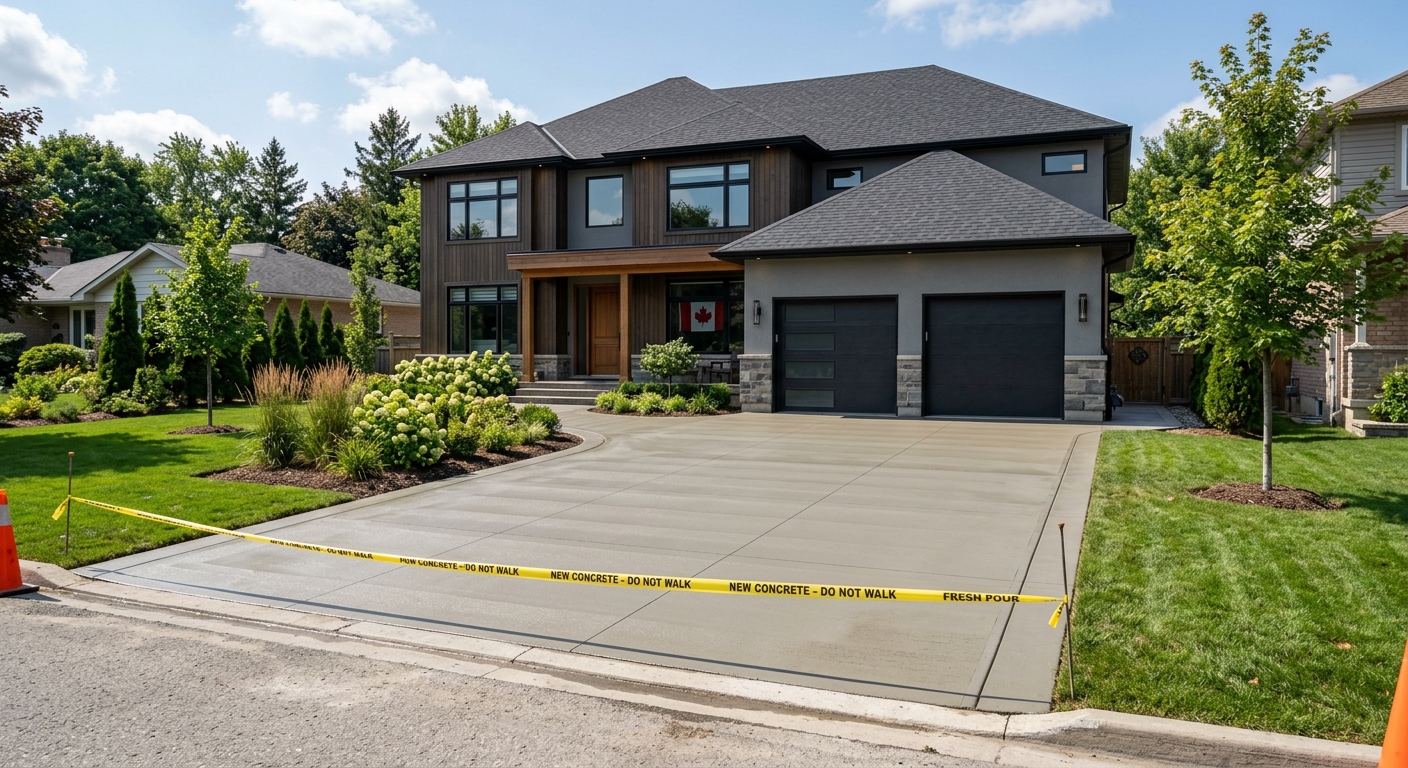
Concrete work options and costs in Capitol Hill
In Capitol Hill, concrete work is a year-round need, but it’s never “one-size-fits-all.” If you’re planning a new driveway, patio, walkway, garage floor, or foundation/footings for your home, the right concrete choice affects both appearance and long-term performance. This neighbourhood sits in the Calgary region where the housing stock is built for freeze–thaw reality—Capitol Hill’s community is home to 4,670 people (Statistics Canada, 2021 Census). Most homeowners here are working within the practical limits of cold-weather scheduling and engineered foundation depth.
Cost also depends on the type of flatwork you’re installing: standard broom-finished slabs usually cost less than stamped or exposed aggregate finishes, while structural foundation footings cost the most because they’re built below frost depth and require heavier excavation and reinforcement. Calgary-area work is especially active around family-oriented residential pockets near local commercial corridors, and contractors tend to be in higher demand when multiple homes in the same block are updating driveways and backyards in the same season. In Capitol Hill, that demand typically spikes when late spring weather stabilizes—because contractors need predictable conditions to meet curing and strength targets.
Calgary’s cold continental climate means crews design around frost penetration (about 1.2 m as a practical design reference) and plan for freeze–thaw cycles that can otherwise lead to scaling and spalling. That engineering shows up directly in quotes: air-entrained mixes, proper base prep, more careful jointing, and—when temperatures drop—winter-grade curing precautions. With that in mind, here’s a clear cost comparison to line up your expectations for common projects.
| Application |
Typical Size |
Key Spec |
Finish Option |
Price Range |
| Concrete driveway (standard broom finish) |
24 ft x 12 ft (288 sq ft) |
4 in slab, compacted granular base, air-entrained concrete |
Broom finish, edge forms, joints |
$12,000–$18,000 |
| Exposed aggregate driveway |
24 ft x 12 ft (288 sq ft) |
Air-entrained concrete, seeded/washed aggregate method |
Exposed aggregate (selected stone blend) |
$14,500–$21,500 |
| Stamped concrete driveway or patio |
20 ft x 15 ft (300 sq ft) |
Air-entrained concrete, integral color, proper base prep |
Stamp pattern + release + seal |
$15,000–$26,000 |
| Plain concrete patio or walkway |
12 ft x 12 ft (144 sq ft) |
4 in slab, compacted base, joints |
Float/steel trowel (or light broom as needed) |
$5,000–$9,000 |
| Garage floor (interior slab) |
24 ft x 24 ft (576 sq ft) |
Moisture/vapour barrier as required, 4–5 in slab, fibres optional |
Smooth trowel (light broom texture if preferred) |
$10,000–$16,500 |
| Foundation footings (structural, below frost) |
Typical single-detached footing package |
Excavation to undisturbed soil below design frost depth; rebar/formed walls |
Structural concrete only (engineered) |
$28,000–$45,000 |
Prices are estimates only and vary by project scope, site access and material selection.
What affects the price of concrete work in Capitol Hill
In Capitol Hill, you can easily see 30–50% swings between quotes for what looks like the same job on paper. The biggest drivers are: how deep the contractor must excavate for frost protection, how much base and compaction they’re including, what reinforcement and mix design they specify, and whether they’re building in cold-weather curing precautions. In Calgary’s market, crews are also managing scheduling windows—when exterior pours are delayed, labour becomes more expensive and less efficient, which shows up in pricing.
The cold-weather engineering is non-negotiable. Frost depth matters because footings must extend below the design frost depth (about 1.2 m as a practical reference in this region) to avoid frost heave from seasonal freeze. Freeze–thaw cycles also dictate air-entrained concrete for exterior slabs so moisture can expand and contract without destroying the paste. Calgary’s shorter exterior pour season means you often need winter-grade mixes, insulated blankets, and sometimes temporary heating to protect curing—those are added costs, but they’re what prevent scaling. Finally, de-icing salt accelerates surface wear; sealing is typically recommended to slow spalling and keep your finish looking new.
Two quick examples from local pricing: if your plan is a standard broom driveway, it typically sits in the $12,000–$18,000 band. If you upgrade to stamped or exposed aggregate, you’re paying more for specialized finishing labour—often landing closer to $15,000–$26,000 depending on size and complexity. On the cost side, challenging access (tight backyard removal, limited truck access, or hauling away poor soil) can push an otherwise “average” patio from a $5,000–$9,000 expectation toward the upper end once excavation and disposal are included.
| Price Factor |
Why It Matters |
Cost Impact |
| Frost line depth — determines footing depth and form height |
Footings must bear below frost to prevent heave and seasonal movement |
Higher excavation and concrete volume can add thousands to foundation-related work |
| Site preparation — excavation, grading, compacted granular base |
Sub-base compaction reduces settlement and cracking |
Poor soil or extra haul-off increases labour and equipment time |
| Reinforcement — rebar or wire mesh requirement |
Controls cracking and improves structural performance |
Rebar grids and supports add materials and detailing time |
| Mix design — air-entrainment and compressive strength spec |
Freeze–thaw resistance and durability in salt exposure |
Correct air entrainment and strength targets increase material cost and batching requirements |
| Finish type — broom vs. stamped vs. exposed aggregate |
Surface texture and appearance depend on finishing labour and products |
Stamped/exposed finishes typically cost more than broom-finished concrete |
| Pour size and concrete truck access to site |
Small or tight sites can require wheelbarrows, pumps, or extra crew |
Limited access can raise labour and mobilization fees |
| Cold-weather curing precautions — heating and blankets |
Protects strength gain and reduces scaling in early/late season pours |
Can add curing labour, insulation blankets, and temporary heat |
| Control joint pattern and sealing cost |
Joints guide cracking; sealing helps with salt-driven surface damage |
Sealer and joint saw timing can add line items but reduce long-term failure risk |
Permits & regulations in Alberta
In Alberta, structural concrete work typically requires a building permit and often engineered drawings reviewed by the municipality. This includes work like foundation footings and foundation walls, grade beams, and other structural elements tied to load-bearing capacity. Concrete flatwork (patios, walkways, and typical driveways) usually does not require a permit unless it changes drainage/lot grading, impacts impervious surface coverage limits, or involves municipal right-of-way concerns. Because rules can vary with location and scope, confirm with your local authority before any excavation.
To verify a contractor in Capitol Hill, start with the permit/engineering side: ask the contractor whether they will pull the relevant permit(s), and request the engineered drawing stamp where required for footings and foundations. Next, verify coverage before they begin any work. You’re looking for three things: (1) proper Alberta licensing/registration where applicable to the contractor’s business scope, (2) liability insurance certificate naming you as an additional insured where appropriate, and (3) WSIB/WCB coverage (or the contractor’s equivalent proof of coverage for workers). Step-by-step, you can do this by reviewing their written quote for permit responsibility, then checking their online registry details, then requesting an up-to-date certificate of insurance and a clearance letter or coverage confirmation. Always call or email the insurer/coverage provider if anything looks out of date.
Finally, ask for references on similar-scale projects—especially exterior concrete in Calgary’s freeze–thaw environment—so you know they’ve built jobs that survive winters, not just first inspection day.
Getting concrete right in Capitol Hill's freeze-thaw climate
Concrete failures in Capitol Hill usually trace back to the same causes: inadequate base preparation, the wrong concrete mix for freeze–thaw, poor jointing, and rushing the curing window. In a cold continental climate with persistent freeze–thaw cycles, water gets into the slab edges and micro-cracks; if the mix isn’t air-entrained and properly cured, the freeze–thaw damage escalates into scaling and spalling. The good news is that you can spec the job to avoid most problems.
Start with base preparation: compacted granular sub-base to the right depth for local soil and frost conditions, not “as close as possible.” Next, mix design: for exterior flatwork, specify air-entrainment typically around 5–7% air content and a minimum 32 MPa compressive strength unless your engineer dictates otherwise. Third, control joints: they should be placed so cracking occurs in the intended lines rather than randomly through the slab. Fourth, curing: plan for a minimum 7-day curing period under proper conditions. In cold weather, curing must be protected with insulating blankets and/or safe temporary heating so the concrete reaches strength instead of surface freezing. Fifth, sealing: apply a penetrating sealer after cure—commonly 28 days post-pour—to repel de-icing salts that accelerate surface wear.
For your decision-making, use pricing as a signal. For example, if a plain patio might land near $5,000–$9,000, paying the extra for better base prep, correct air-entrainment, and sealing can be more valuable than jumping straight to a decorative look. If you choose stamped concrete near the $15,000–$26,000 range, you still want the fundamentals done correctly—stamping doesn’t prevent freeze–thaw damage.
When you’re asking questions, focus on spalling prevention: “How do you ensure the air content is correct on this pour?” and “What will you do to protect curing if temperatures drop at night?” Those two answers usually separate durable slabs from repeat repairs.
| Spec |
Why It Matters in Capitol Hill |
What to Ask For |
Impact if Skipped |
| Compacted granular base (depth?) |
Prevents settlement and reduces water movement under the slab |
Base depth and compaction testing method for your soil and intended slab thickness |
Uneven settlement, cracking, and edge failures |
| Air-entrained concrete mix (target air %?) |
Improves freeze–thaw durability under salt and moisture exposure |
Specified air content (typically 5–7% for exterior flatwork) and how it’s verified |
Surface scaling and spalling over winters |
| Compressive strength (MPa rating) |
Ensures strength gain for load-bearing and long-term durability |
Minimum 32 MPa (or engineered rating), plus strength-curing plan in cold weather |
Reduced performance, higher early-age cracking risk |
| Control joints (spacing per ACI guidelines) |
Controls where cracking occurs during shrinkage and thermal movement |
Joint layout and sawing timing; confirm spacing and joint depth |
Random cracks and more water intrusion |
| Minimum 7-day curing period |
Protects strength development in Calgary’s temperature swings |
How they maintain curing conditions, especially nights and early/late season pours |
Surface defects, scaling, and weaker slab maturity |
| Penetrating sealer (when applied after cure) |
Repels de-icing salt and helps slow surface deterioration |
Sealer type and timing (commonly applied after 28 days cure) |
Faster wear, staining, and spalling acceleration |
How to choose a concrete work contractor in Capitol Hill
Choosing the right contractor in Capitol Hill means verifying coverage, demanding itemized details, and making sure their crew understands cold-weather concrete. In Alberta, before you sign, confirm they have the right business licensing/registration for their concrete scope (where applicable), current liability insurance, and WSIB/WCB coverage for workers. How to check: request their certificate of insurance and clearance/coverage confirmation, verify the policy is active and that it matches the company name on the quote, and then cross-check the contractor’s standing using their official online registry information. If they hesitate or can’t produce documents quickly, that’s a warning sign.
Next, get 2–3 written quotes with itemized line items—labour and materials broken down—so you can compare like-for-like (excavation, base material, reinforcement, concrete mix spec, finishing, joints, sealing, and disposal). Look for what’s excluded: site protection, saw-cut joints, snow removal during cure protection, permit responsibility (if structural work requires it), and whether truck access charges are included.
Warranty matters too. Ask for the workmanship warranty length, whether product/manufacturer warranties apply, and if warranties are transferable to you as the homeowner. Payment schedule should be cautious: never pay more than 10–15% upfront. Hold back a portion until the job is complete, inspected, and cleaned up. Finally, insist on a written timeline with a start date and completion estimate.
- Request proof of liability insurance and current WSIB/WCB coverage before work begins
- Confirm who pulls the permit(s) (especially for structural footings/foundation walls)
- Ask whether the crew will provide cold-weather curing plans if temperatures drop
- Require an itemized quote (no vague “concrete supply and install” line)
- Verify base prep details: granular base depth and compaction expectations
- Require air-entrainment specification for exterior work and ask how it’s verified on pour day
- Confirm reinforcement plan (wire mesh vs rebar) and slab thickness
- Ask for control joint layout and saw-cut timing
- Include sealing scope and timing (commonly after cure, e.g., 28 days)
- Check disposal/haul-off inclusions for unsuitable soil
- Confirm truck access plan (and any wheelbarrow/pump fees)
- Put warranty terms and payment milestones in writing
Concrete red flags in Capitol Hill include: quoting a driveway or patio with no mention of air-entrainment or curing protection, skipping joint layout details, offering “best price” without an itemized breakdown of base and reinforcement, requiring large upfront payments beyond 10–15%, or refusing to provide insurance/coverage documents. If they can’t explain their plan to prevent spalling in Calgary’s winters, you’re likely buying trouble later.
Frequently asked questions — concrete work in Capitol Hill
When is the best time to pour concrete in Capitol Hill?
For Capitol Hill and the Calgary area, the safest window is typically late spring through summer, when daytime temperatures are reliably warm enough to support proper curing. Calgary’s cold continental climate brings freeze–thaw cycles that can damage concrete if it hasn’t reached adequate strength. If you must pour in early spring or late fall, reputable contractors plan for cold-weather concrete placement: winter-grade mixes, insulating blankets, and sometimes safe temporary heat—plus a clear curing plan for night temperatures. For flatwork like patios and walkways, that scheduling matters just as much as it does for driveways. If you’re looking at an exterior project budgeted around the $12,000–$18,000 driveway band, ask your contractor for their exact cure/protection steps for forecasted cold nights.
How long does concrete take to cure?
Concrete “cures” in stages. You’ll see initial set within hours, but strength development continues after placement. For most exterior flatwork in Alberta, plan for at least 7 days of curing under proper conditions before treating it as fully set for normal use, and longer if temperatures are cold. In the Capitol Hill area, proper cold-weather curing is critical—surface freezing or early exposure to moisture and salt can lead to scaling and later spalling. If a contractor can’t explain how they’ll protect curing on nights when temperatures drop, that’s a concern. For sealing, don’t rush it: penetrating sealers are commonly applied after a full cure period—often around 28 days—so the slab is dry enough to accept the sealer and perform in de-icing seasons.
Do I need a permit for concrete work in Alberta?
In Alberta, the answer depends on whether you’re doing structural concrete or simple flatwork. Structural items like foundation footings, foundation walls, and grade beams typically require a building permit and, in many cases, engineered drawings reviewed through the municipal process. Concrete flatwork such as patios, walkways, and driveways often does not need a permit, unless it affects lot grading, drainage, impervious surface limits, or involves municipal right-of-way issues. For homeowners in Capitol Hill, the best practice is to ask your contractor what they’re handling: will they apply for any required permits, and does your scope trigger municipal review? Don’t rely on verbal assumptions—confirm before breaking ground, especially if the work changes how water runs off your property.
Concrete vs pavers for a patio in Capitol Hill?
Concrete and pavers both work well in Calgary’s freeze–thaw climate, but they fail differently. Concrete flatwork relies on correct base prep, air-entrained mix, and control joints to manage cracking; when those are done right, a properly sealed patio can hold up well through winter de-icing. Pavers can be easier to repair locally because individual units can be lifted and reset, but they still require excellent base grading and compaction to avoid shifting. Cost-wise, a plain concrete patio or walkway often fits around the $5,000–$9,000 range, while upgrades like stamping move higher. If your priority is durability with fewer maintenance tasks, good concrete spec and sealing is hard to beat; if your priority is flexibility for future repairs, pavers can be attractive.
How long does a concrete driveway last?
In Capitol Hill, a well-built concrete driveway commonly lasts 20–30 years, sometimes longer, but “built right” is the key phrase. The driveway’s lifespan depends on air-entrained mix for freeze–thaw resistance, proper granular base prep, correct slab thickness, and a joint pattern that controls cracking. Calgary’s winters add stress because moisture and de-icing salts accelerate surface wear. That’s why sealing and using the right curing approach matter—especially if your pour happens in colder shoulder seasons. If you’re deciding between a broom-finished driveway and decorative concrete, remember that decorative options can cost more (often within the $12,000–$18,000 to $15,000–$26,000 bands depending on scope). The best value long-term comes from durability specs first, and then finish aesthetics second.
What is air-entrained concrete and why does it matter here?
Air-entrained concrete is designed with microscopic air bubbles that give water room to expand when it freezes. In Alberta—including Capitol Hill—freeze–thaw cycles happen repeatedly, and that expansion can otherwise damage concrete paste, leading to scaling and spalling over time. For exterior slabs like driveways, patios, and walkways, specifying air entrainment is a core durability requirement. Many contractors target air content in the ~5–7% range for exterior flatwork and pair it with minimum compressive strength and correct curing. Ask your contractor how they ensure the mix is air-entrained on pour day and how they protect the slab during early strength gain. If a quote doesn’t mention air-entrainment or curing protection, treat it as incomplete for Calgary’s conditions.