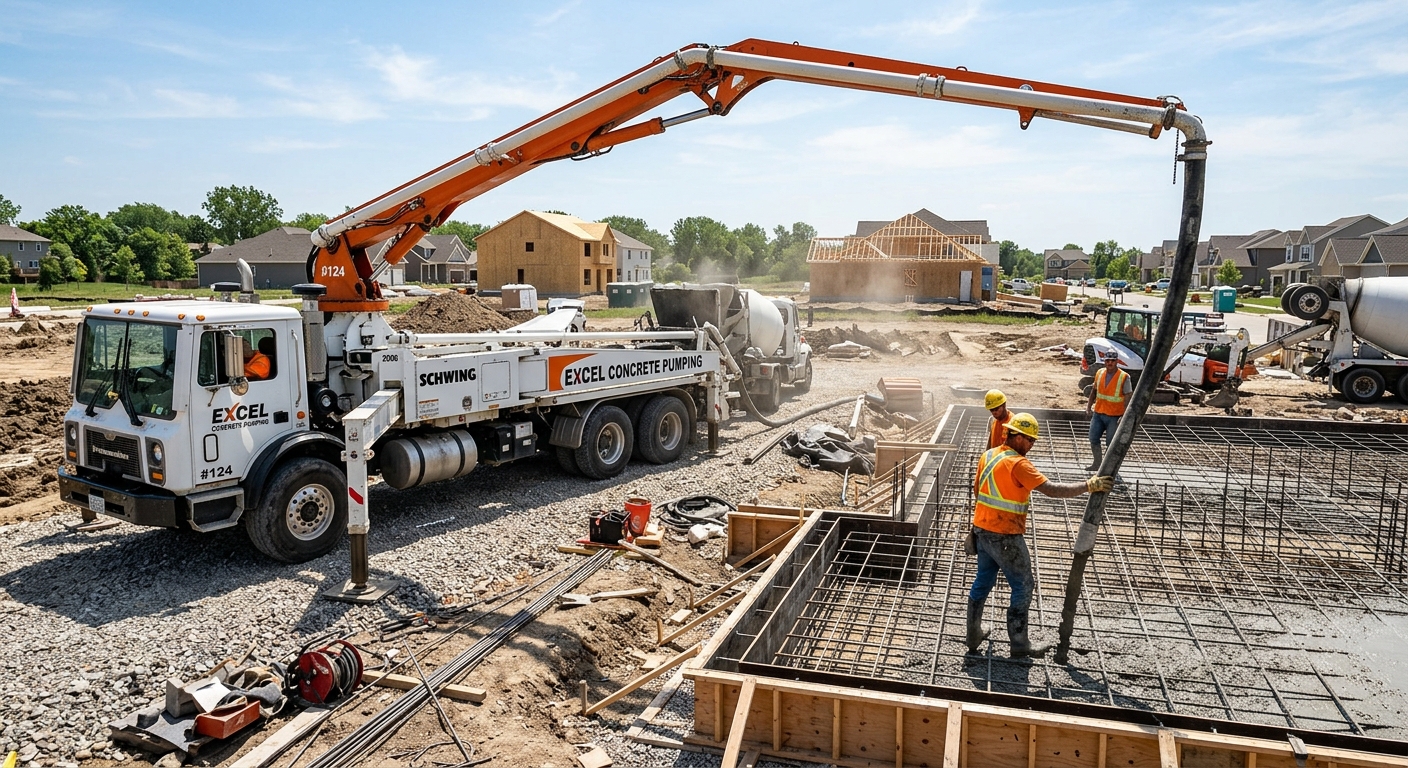
Concrete work options and costs in Patterson
Patterson, Alberta has a steady demand for concrete flatwork—especially around driveways, patios and walkways—because many homeowners want durable surfaces that can handle Calgary-area winters. With a population of about 4,145 (Statistics Canada, 2021 Census), the market is smaller than major city centres, but workmanship matters: one good contractor can stand out quickly with reliable crews and winter-proven curing practices. Patterson’s housing mix is consistent with nearby Calgary growth, where a large share of residents live in single-detached homes, so exterior slabs and attached garage pads are common improvement projects. (Statistics Canada, 2021 Census)
In this cold continental climate, pricing isn’t just about surface finish. Calgary’s freeze–thaw cycles and design frost depth drive foundation excavation and footing volume, and they also influence slab specs like air-entrained mixes, base grading, and joint patterns. You’ll often see higher-than-average costs versus milder provinces because footings for garages, decks, and retaining elements must bear below the design frost depth (about 1.2 m in the region), and because the exterior pour season is shorter. Contractor availability can also tighten in late fall/early winter when many crews pause to avoid curing risk.
In Patterson’s newer growth areas and in parts near commuting corridors toward Calgary, driveways and backyard patios are especially in demand as homes age and landscaping expands. Below is a practical comparison of common concrete options you’ll see quoted in Patterson, with realistic price bands to help you budget and compare proposals.
| Application |
Typical Size |
Key Spec |
Finish Option |
Price Range |
| Concrete driveway (standard broom finish) |
20 ft x 10 ft (200 sq. ft.) |
Air-entrained mix, compacted granular base, control joints |
Broom finish |
$12,000 – $18,000 |
| Exposed aggregate driveway |
20 ft x 10 ft (200 sq. ft.) |
Air-entrained mix, proper cure timing for wash/exposure, sealing recommended |
Exposed aggregate |
$14,500 – $21,500 |
| Stamped concrete driveway or patio |
20 ft x 10 ft driveway or 12 ft x 16 ft patio |
Air-entrained mix, integral colour, release agent, curing schedule |
Stamped pattern + sealer |
$15,000 – $26,000 |
| Plain concrete patio or walkway |
12 ft x 16 ft (192 sq. ft.) or 3 ft x 20 ft walk |
Air-entrained mix, granular base, joint layout |
Float and broom (or broom-surface) |
$5,000 – $9,000 |
| Garage floor (interior slab) |
20 ft x 22 ft (440 sq. ft.) |
Vapour barrier (if specified), reinforcement where required, proper curing |
Steel trowel or broom (choice by use) |
$9,500 – $15,500 |
| Foundation footings (structural, below frost) |
Typical detached house/garage footprint |
Excavation to design frost depth (~1.2 m), engineered rebar, concrete per spec |
Structural form finish (not decorative) |
$28,000 – $45,000 |
Prices are estimates only and vary by project scope, site access and material selection.
What affects the price of concrete work in Patterson
If you request quotes for the “same” concrete job in Patterson—say a driveway or patio—you can still see 30–50% variation across Calgary and Alberta. That spread usually comes from differences in excavation depth, how much granular base is installed and compacted, whether the contractor is actually meeting air-entrainment and strength specs, and how they handle cold-weather curing. In Alberta’s winters, rushing curing can lead to surface scaling or long-term durability issues, and fixing that later is expensive—so stronger quotes often reflect proper engineering and field practices.
Frost depth drives a big portion of foundation costs. In our region, footings must extend below the design frost depth (about 1.2 m, roughly 4 ft) on undisturbed soil to reduce frost heave risk. On exterior slabs like driveways and patios, freeze–thaw cycles require air-entrained concrete mixes and well-spaced control joints to reduce cracking and spalling. Cold-weather placement can also require winter-grade mixes, insulated curing blankets, and sometimes temporary heat to reach proper early strength—adding labour and equipment costs. Finally, de-icing salt accelerates spalling, so sealing becomes part of the durability conversation; a cheaper quote sometimes omits it or provides it late.
Concrete examples that change cost in Patterson: (1) if your soil is clayey and needs deeper excavation and thicker base, your driveway can price closer to the top end of the $12,000–$18,000 band; (2) if truck access is tight near a side-yard or boulevard constraint, labour time increases and the driveway can trend upward; and (3) if you choose stamped concrete, the added colour, stamping crew time, and curing control commonly moves you within the $15,000–$26,000 range rather than plain broom finishes. Even a homeowner decision like extending a patio size by 30% can increase material and cutting/joint layout time enough to shift the quote noticeably—especially when frost-relevant excavation or rebar placement is involved.
| Price Factor |
Why It Matters |
Cost Impact |
| Frost line depth |
Determines footing depth, form height and excavation quantity |
More excavation and concrete can push foundation pricing toward the upper band |
| Site preparation |
Excavation, grading and compacted granular base reduce settlement and heave |
Loose subgrade or extra base thickness increases labour and material |
| Reinforcement |
Rebar or mesh helps control cracking and supports load demands |
Spec-driven steel adds cost and installation time |
| Mix design |
Air-entrainment and target compressive strength support freeze–thaw durability |
Higher-spec mixes and tighter delivery requirements raise the price |
| Finish type |
Broom, exposed aggregate and stamping need different labour and curing control |
Decorative work commonly costs more than plain flatwork |
| Pour size and concrete truck access to site |
Large pours require staging, hoses/chutes and accurate scheduling |
Extra labour and access constraints can move the job upward |
| Cold-weather curing precautions |
Heating and insulated blankets protect early-age strength in the short pour season |
Equipment and time add to the total, especially near shoulder seasons |
| Control joint pattern and sealing cost |
Joints limit random cracking; sealing reduces salt-related surface damage |
Proper layout and materials increase upfront cost but reduce repairs |
Permits & regulations in Alberta
In Alberta, structural concrete work generally needs a building permit, and it often comes with engineered drawings for review by the municipality. That includes footings, foundation walls, grade beams and other structural elements that affect how the home carries loads. For concrete flatwork—driveways, patios and walkways—permits are frequently not required by default, but you should still confirm if the work affects lot grading, drainage, impervious surface coverage rules, or ties into municipal right-of-way requirements (especially if you’re adjusting a driveway approach or altering drainage patterns).
To protect yourself in Patterson, verify the contractor before you sign: first, ask for a current certificate of insurance showing liability coverage and ensure the policy covers the kind of concrete work being done. Next, confirm WSIB/WCB coverage (workers’ compensation coverage) so you’re not exposed if a worker is injured. Finally, check whether the contractor is appropriately licensed/registered for the scope they’re performing and for the trades they coordinate.
Step-by-step homeowner checks: (1) look up the business name on provincial/online registries applicable to contracting/qualified trades; (2) request a fresh insurance certificate and review the expiry dates; (3) request confirmation of WSIB/WCB clearance or coverage documentation; (4) ask for 2–3 recent similar project references in the Calgary area; and (5) make sure the written contract matches the scope (including excavation, base prep, reinforcement, curing and finishing). If anything is unclear, ask before breaking ground—freeze–thaw issues and rework are expensive to fix.
Getting concrete right in Patterson's freeze-thaw climate
Concrete failures in Patterson winters usually come down to one thing: water plus freeze–thaw. If the base isn’t properly excavated and compacted, if the concrete mix isn’t air-entrained for exterior exposure, or if control joints and curing are skipped, you’ll see cracks, scaling and eventually spalling—especially where de-icing salt is used. To spec the job correctly, focus on five areas. (1) Base preparation: install a compacted granular sub-base to the right depth for local soil and frost conditions, then grade for drainage so surface water doesn’t sit. (2) Mix design: order an air-entrained mix (commonly around 5–7% air for exterior flatwork) and a minimum 32 MPa compressive strength unless engineering calls higher. (3) Control joints: cut or form joints in a consistent pattern to limit random cracking and control where shrinkage occurs. (4) Curing: allow proper curing for at least 7 days under suitable conditions; in cold weather, ask about heating or insulated blankets. (5) Sealing: apply a penetrating sealer after the slab has cured—commonly around 28 days—to help repel de-icing salts.
Ask technical questions and you’ll avoid the most common—and costly—mistake: inadequate air-entrainment. For example, if you’re deciding between a plain broom patio and a decorative option, the price difference is often justified when the contractor is consistent about curing and joints. A plain patio that’s properly engineered might land in the $5,000–$9,000 range, while stamped work can run $15,000–$26,000; the higher cost is reasonable when the scope includes correct mix specs, controlled finishing, and sealing—not just added stamps and colour.
| Spec |
Why It Matters in Patterson |
What to Ask For |
Impact if Skipped |
| Compacted granular base (depth?) |
Supports the slab and reduces movement under freeze–thaw and rainfall |
Base type, compacted depth and target compaction method (per scope) |
Settlement, cracking, and premature edge/spall failures |
| Air-entrained concrete mix (target air %?) |
Creates microscopic space to protect concrete during freeze expansion |
Target air content (commonly 5–7% for exterior flatwork) and mix design sheet |
Higher risk of scaling and spalling in winter |
| Compressive strength (MPa rating) |
Ensures durable long-term performance for loads and freeze–thaw cycling |
Minimum 32 MPa (or higher if specified) and how strength is achieved in cold weather |
Surface wear, faster deterioration and potential structural concerns |
| Control joints (spacing per ACI guidelines) |
Controls crack locations and helps keep water out of fractures |
Joint spacing plan, sawcut timing, and alignment around drains/edges |
Random cracking and increased leakage/maintenance over time |
| Minimum 7-day curing period |
Early strength development reduces damage from cold snaps and moisture loss |
Curing plan, including blankets/heating if temps require it |
Scaling, weak surface and reduced durability in the first winter |
| Penetrating sealer (when applied after cure) |
Helps repel de-icing salts and reduces salt-driven surface breakdown |
Sealer type and application timing (commonly after ~28 days cure) |
More spalling risk and higher likelihood of annual patching |
How to choose a concrete work contractor in Patterson
Start with verification. For Alberta work, confirm the contractor carries valid liability insurance and WSIB/WCB coverage for their crews. To check: request a current certificate of insurance (showing coverage amount and policy dates) and confirm the business name matches the quote/contract. Ask for WSIB/WCB clearance evidence or documentation; a reputable contractor can provide it quickly. Also ensure the contractor is properly set up for the scope they’re pricing—particularly if they’re coordinating excavation, rebar installation and any municipal-related approvals.
Next, compare quotes the right way. Get 2–3 itemised written quotes—not just a lump sum. You want labour + materials breakdown showing excavation and disposal, granular base prep, reinforcement, concrete supply, finish and sealing, plus any winter curing/heating provisions. Read exclusions carefully: is removal and disposal included? Are forms, reinforcement ties, vapour barrier (if applicable), and sawcut timing included? Will they pull permits if your project affects drainage/lot grading or requires municipal review? Confirm whether traffic control or protection of the surface during cure is included.
For warranty, ask what’s covered and how long: workmanship warranty length, product/manufacturer warranty (if any), and whether it’s transferable if you sell the home. For payment, never pay more than 10–15% upfront; use progress payments and hold back a portion until clean-up and final curing requirements are met. Finally, insist on a written timeline: get a start date and completion estimate, because in Patterson’s freeze–thaw season the curing window matters.
- Ask for a sample pour plan: base thickness, compaction method and drainage slope.
- Confirm air-entrainment and target strength in writing for exterior concrete.
- Require a joint/cut plan (spacing and where joints will fall).
- Clarify curing method for your pour date (blankets/heating if needed).
- Confirm whether reinforcing is included where required (and at what coverage).
- Get a line item for sealing, including sealer type and application date.
- Check that demolition/removal and disposal are included if needed.
- Verify truck access and staging plan to prevent rushed finishing.
- Review protection responsibilities during curing (no early loading).
- Ensure the scope includes surface preparation and edge detailing.
- Ask how they handle weather changes and who decides stop/continue.
- Request references from similar Calgary-area climate projects.
Concrete red flags in Patterson include: quotes that omit granular base prep details, “cheap” exterior mixes without air-entrainment confirmation, no mention of control joints or sealing, rushing pours near cold snaps without a curing plan, and contractors who won’t provide insurance/WSIB/WCB documentation or a written schedule.
Frequently asked questions — concrete work in Patterson
How do I prepare the base for a concrete slab?
For Patterson slabs and flatwork, base prep is where durability starts. The contractor should excavate to the required depth for your soil conditions, then place and compact a granular sub-base in lifts to achieve uniform support. In Calgary’s freeze–thaw climate, proper grading and drainage are critical so water doesn’t sit against the slab. For exterior work, ask how they verify compaction and what base materials they use (and whether any weak soil needs removal and replacement). If you’re doing anything near footings or thickened edges, the frost-related design of the foundation (in the region, about 1.2 m design frost depth) affects how deep related excavation must be. A well-prepped base is one reason a properly scoped patio in the $5,000–$9,000 band costs more than bare-minimum options.
How do I compare concrete quotes?
Compare quotes line-by-line, not by total price alone. Ask each contractor to itemise excavation and disposal, granular base thickness/compaction, reinforcement (rebar/mesh or none where not required), concrete mix specs (air-entrainment for exterior) and strength, and the finish plan (broom vs stamped vs exposed aggregate). For Patterson winters, pay attention to cold-weather provisions: heating/blankets, curing timing and what happens if temperatures drop during placement. Also confirm sealing scope—penetrating sealer after the cure is what helps resist de-icing salt impacts. A quote that lands in the driveway $12,000–$18,000 range but omits air-entrainment or joint layout may cost more long-term. In contrast, a quote near the higher end of the same band is often justified by correct engineering execution and more controlled curing.
Can concrete be poured in cold weather in Patterson?
Yes, concrete can be poured in cold weather in Patterson, but it must be done with a cold-weather plan. The main risk is early-age damage: if the slab cools too quickly before strength development, you can get scaling and weakened surfaces that show up during the first freeze–thaw cycles. In the Calgary area, reputable crews use winter-grade mix designs, insulated blankets and sometimes temporary heat to protect curing for the required early strength period. Make sure the contractor discusses the forecast window and curing method, and that they won’t shortcut the curing timeline. For exterior slabs, winter curing precautions are a real cost driver, so expect pricing to reflect it. When you compare quotes, look for explicit line items for cold-weather curing rather than vague promises.
How do I maintain concrete in Patterson's freeze-thaw climate?
Maintenance in Patterson is about keeping water and salts off the surface and maintaining the joints. Start with de-icing: use de-icers carefully and avoid over-salting—salt can accelerate surface spalling after repeated freeze–thaw cycles. Keep joints free of debris so water doesn’t lodge, and avoid heavy impacts on edges (broken corners often start from water infiltration). If the contractor applied penetrating sealer, maintain it based on manufacturer guidance—commonly within a few seasons depending on traffic and salt exposure. Sweep off sand/grit to prevent abrasion. Visually check for early surface scaling, small cracks, or joint separation after the first winter and address it promptly. Proper sealing and curing practices at installation help reduce how often you’ll need patchwork in a region with deep frost considerations (about 1.2 m design frost depth) and frequent freeze–thaw swings.
What causes concrete to spall in Patterson winters?
Spalling in Patterson is typically caused by freeze–thaw damage that starts at the surface and grows over time. The usual culprits are inadequate air-entrainment (so the concrete can’t tolerate freeze expansion), poor curing in cold conditions, insufficient or poorly graded base that allows water movement, and weak or missing joint control that lets water penetrate cracks. De-icing salt then worsens the cycle by attacking the surface during repeated winters. If the contractor didn’t include air-entrained mix design (commonly around 5–7% air for exterior flatwork) or didn’t cure long enough (at least 7 days, with winter protection when needed), the surface can scale and spall earlier than expected. That’s why a broom-finished patio in the $5,000–$9,000 band should still include proper mix specs, joints, and sealing—not just the “pretty” finish.
What is rebar and when is it required in Alberta?
Rebar (reinforcing steel) is used to improve concrete’s performance under tensile forces and to control cracking. In Alberta, whether you need rebar depends on the structural design and the load conditions—not just on “typical practice.” For example, foundation footings and many foundation elements are typically engineered and will specify reinforcement, concrete strength and placement details because they must resist movement and load. For exterior slabs like patios and walkways, reinforcement may be required based on slab thickness, soil support, and whether the slab is designed for heavier loads or spans. Some garage floors and driveways also require reinforcement or thicker sections depending on intended vehicle loads and base preparation. The right approach is to ask your contractor what the structural spec calls for and, where engineering is involved, to confirm the design is followed. If you’re budgeting a structural footing project in the $28,000–$45,000 band, expect rebar and detailed placement requirements to be part of that scope.