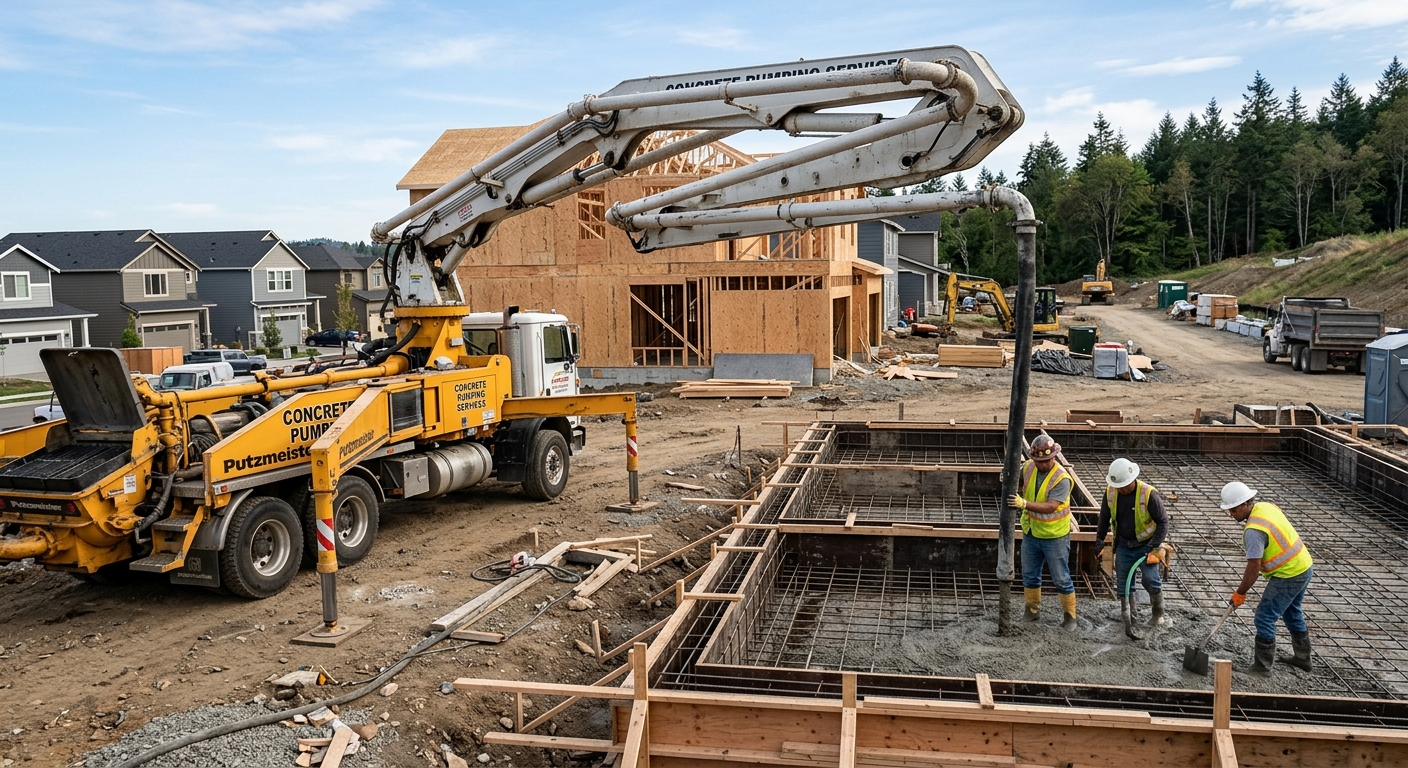
Concrete work options and costs in Evansdale
Evansdale is a community where concrete flatwork and foundations get a lot of use, and where winter is serious enough to punish shortcuts. With a population of 5,645 (Statistics Canada, 2021 Census), the area’s housing demand is steady, and most projects are tied to family homes, garages, and walkability upgrades around existing properties. In the wider Calgary area, the mix of older neighbourhood homes and newer builds means contractors are routinely asked for everything from driveway replacements to foundation repairs—especially in established pockets like the Evansdale Crescent/River Heights area where vehicle access and exterior touch-ups are common after freeze–thaw seasons.
In Calgary’s cold continental climate, concrete pricing is engineered around frost and repeated freeze–thaw cycles. Footings and exterior slabs need proper frost protection (design frost depth is about 1.2 m, roughly 4 ft, in this market), and exterior mixes must be air-entrained to reduce spalling and scaling. Labour availability and schedule also matter because the practical exterior pour season tightens as nights drop, so winter-grade placement measures (insulated blankets and sometimes temporary heat) can add cost if you’re working late in the season.
Because the scope can change quickly—especially around excavation, base preparation, and finishes—comparing apples to apples is the fastest way to get accurate numbers. The table below summarizes typical options and realistic price bands for Evansdale homeowners, so you can align expectations before you ask for quotes.
| Application |
Typical Size |
Key Spec |
Finish Option |
Price Range |
| Concrete driveway (standard broom finish) |
16 ft x 26 ft (416 sq. ft.) |
Air-entrained mix, granular base, control joints |
Broom finish, edges trowel/float as needed |
$12,000–$18,000 |
| Exposed aggregate driveway |
18 ft x 28 ft (504 sq. ft.) |
Air-entrained mix, base prep, proper curing |
Exposed aggregate finish with seed/texture |
$15,000–$21,000 |
| Stamped concrete driveway or patio |
12 ft x 24 ft (288 sq. ft.) |
Air-entrained mix, release agent, control joints |
Stamp mat pattern + colour hardener |
$15,000–$26,000 |
| Plain concrete patio or walkway |
10 ft x 16 ft (160 sq. ft.) |
Air-entrained mix, compacted base, joints |
Broom finish or light trowel |
$5,000–$9,000 |
| Garage floor (interior slab) |
22 ft x 24 ft (528 sq. ft.) |
Vapour barrier (if required), mesh or rebar, curing |
Steel-trowel finish, optional saw cuts |
$9,000–$15,000 |
| Foundation footings (structural, below frost) |
Per house plan (typical partial or full footing scope) |
Reinforced concrete, engineered excavation and bearing |
Formwork + steel placement (no decorative finish) |
$28,000–$45,000 |
Prices are estimates only and vary by project scope, site access and material selection.
What affects the price of concrete work in Evansdale
In Evansdale, it’s common to see quotes for the “same” concrete job swing by 30–50% once you compare hidden drivers like excavation depth, base thickness, reinforcement type, and finish complexity. Calgary and the surrounding region are engineered for frost and frequent freeze–thaw cycles, and those realities show up directly in both labour hours and materials. The design frost depth in this market is about 1.2 m (roughly 4 ft), so footing excavation is deeper and footing volumes are higher than in warmer regions—this is one reason foundations in Alberta often land closer to the upper end of the $28,000–$45,000 band.
Exterior slabs and driveways must use air-entrained concrete mixes so they can tolerate freeze–thaw without spalling. When a pour happens late in the season, cold-weather precautions become necessary—insulated blankets, sometimes temporary heat, and stricter curing controls—because rushing curing increases scaling risk. De-icing salt in winter is another factor; if sealing is skipped or the mix/curing is off, surface damage accelerates.
Two Evansdale examples: (1) a driveway replacement on compacted clay or disturbed soil may require thicker granular base and additional undercut, pushing you toward the upper end of the $12,000–$18,000 driveway band; (2) a smaller walkway with good truck access and straightforward grade can stay nearer the mid-range because truck time and excavation are less intensive. If you’re working on a home built during earlier expansion phases (more common in established Calgary-area neighbourhoods), older drainage patterns can also raise the cost because contractors must correct settlement paths before they pour.
| Price Factor |
Why It Matters |
Cost Impact |
| Frost line depth — determines footing depth and form height |
Footings must bear below design frost depth to prevent frost heave and seasonal movement |
Can add significant excavation and rebar/formwork time |
| Site preparation — excavation, grading, compacted granular base |
Proper base thickness and compaction control settlement and cracking |
More undercut and granular import increases hauling and labour |
| Reinforcement — rebar or wire mesh requirement |
Reduces slab cracking risk and improves durability under traffic loads |
Material + placement time; cost rises when thicker steel layouts are required |
| Mix design — air-entrainment and compressive strength spec |
Air-entrainment helps resist freeze–thaw damage on exterior surfaces |
Premium mix is typically a necessary cost, not an optional upgrade |
| Finish type — broom vs. stamped vs. exposed aggregate |
Finish complexity affects crew time, tooling, and curing sequencing |
Stamped/exposed typically costs more than standard broom |
| Pour size and concrete truck access to site |
Long pump runs, multiple mobilizations, or limited access can add labour hours |
Costs rise with restricted access, pump requirements, or extra truck time |
| Cold-weather curing precautions — heating and blankets |
Cold slows strength gain; proper curing reduces scaling and surface failure |
Extra materials and time—especially if you’re aiming for a late-season schedule |
| Control joint pattern and sealing cost |
Correct jointing controls where cracks form; sealing helps repel de-icing salts |
Skimping increases long-term repair risk; including both adds upfront value |
Permits & regulations in Alberta
In Alberta, structural concrete work typically needs a building permit, and it’s often tied to engineered drawings reviewed through the municipal process. That includes foundation footings, foundation walls, grade beams, and other structural elements that affect load paths. For Evansdale homeowners, that usually means any work beyond “flatwork” is treated as structural and must follow local permit requirements.
Concrete flatwork—like patios, walkways, and driveways—often does not require a permit by default. However, permits can become necessary if the project affects lot grading, drainage, impervious surface coverage limits, or municipal right-of-way conditions (for example, modifying the approach area or altering drainage patterns that lead toward the street). The practical rule: if your concrete changes how water flows, or if it touches an area that the municipality regulates, call first.
Step-by-step, verify your contractor before breaking ground. (1) Ask for their Alberta business/contractor licence information and confirm it using the appropriate provincial online registry tools. (2) Request a current certificate of insurance showing general liability coverage. (3) Confirm Workers’ Compensation coverage (WSIB/WCB) credentials—ask for proof and ensure it matches the legal business name on the quote. (4) Get references from similar projects (exterior slabs and/or footing pours), and confirm they’ve handled Alberta winter curing practices successfully.
Getting concrete right in Evansdale's freeze-thaw climate
Concrete failures in Evansdale usually trace back to one of five things: weak base preparation, incorrect mix design, missing reinforcement for the loading, poor control jointing, or inadequate curing and sealing. In a cold continental climate with freeze–thaw cycles, the biggest durability issue is spalling and surface scaling caused by inadequate air-entrainment or rushing strength development. Once the surface microstructure is damaged, de-icing salts can accelerate deterioration, even when the slab is otherwise level.
To spec the job correctly, focus on these essentials. (1) Base preparation: contractors should excavate to the correct depth for undisturbed soil support and place a compacted granular sub-base. (2) Mix design: exterior flatwork should use air-entrained concrete (commonly 5–7% air content) and a minimum 32 MPa compressive strength so it performs across winter conditions. (3) Control joints: plan the joint layout so cracking is controlled and predictable. (4) Curing: plan for at least 7 days of proper curing under the right temperature conditions—cold-weather placement may require insulated blankets and/or temporary heat. (5) Sealing: apply a penetrating sealer after the slab has cured (often at 28 days post-pour) to help repel de-icing salts.
As an example, if you’re choosing between a standard broom-finished driveway and a stamped finish, the stamped option usually costs more (often aligning with the $15,000–$26,000 band). That difference is justified when you’re also getting the same durable base prep, correct mix, and proper jointing—otherwise you’re paying for appearance while sacrificing service life.
| Spec |
Why It Matters in Evansdale |
What to Ask For |
Impact if Skipped |
| Compacted granular base (depth?) |
Controls settlement and cracking under repeated freeze–thaw |
Granular sub-base thickness, compaction method, and bearing on suitable soil |
Early cracking, uneven slabs, and increased water infiltration |
| Air-entrained concrete mix (target air %?) |
Reduces freeze–thaw scaling/spalling risk |
Documented air content (typically 5–7% for exterior flatwork) on the batch ticket |
Surface scaling and spalling, especially around edges and joints |
| Compressive strength (MPa rating) |
Ensures strength development for structural durability |
Minimum 32 MPa (or higher per engineered spec) and curing plan |
Premature wear and reduced resistance to winter stresses |
| Control joints (spacing per ACI guidelines) |
Controls where cracks form so they don’t turn into random damage |
Joint spacing plan, sawcut timing, and alignment with load patterns |
Random cracking, widened joints, and water penetration |
| Minimum 7-day curing period |
Helps achieve sufficient early strength in cold conditions |
Temperature protection approach (blankets/heating if needed) and curing schedule |
Higher risk of scaling, poor surface finish, and reduced long-term performance |
| Penetrating sealer (when applied after cure) |
Helps repel de-icing salts and reduces moisture ingress |
Confirm application timing (commonly after proper cure, often around 28 days) and product type |
Faster deterioration and more frequent surface maintenance |
How to choose a concrete work contractor in Evansdale
Start by verifying Alberta licensing/business status and proof of insurance. For liability, ask for a current certificate of insurance that matches the legal company name on the quote. For workers’ coverage, confirm WCB credentials (Workers’ Compensation coverage) and request proof—don’t rely on verbal assurances. If subcontractors are involved, ask who is on the job site and whether their coverage is confirmed as well. In a winter-focused climate like Evansdale and the Calgary region, you also want evidence they’ve handled cold-weather curing—photos and references from exterior pours are far more useful than general marketing.
Next, request 2–3 itemised written quotes. You want labour and materials broken out: excavation and granular base, reinforcement, concrete supply/mix type, finishing, joints, sealing, and disposal. Avoid “lump sum only” quotes unless the scope is extremely detailed—what’s included (and what’s excluded) can move the price by tens of thousands on foundations. Make sure the permit pull (if required), protection of landscaping, and concrete removal/disposal are spelled out clearly.
Warranty matters too: ask for the workmanship warranty length and whether it covers cracking tied to installation and jointing. Also ask about manufacturer/product warranties for any coatings or sealers, and whether those warranties transfer with ownership. Payment should be conservative—never pay more than 10–15% upfront, and hold a portion until completion and final cleanup. Finally, get the start date and a realistic completion estimate in writing, especially if weather could affect curing.
- Confirm Alberta business/contractor information matches the quote and invoice name.
- Request a current certificate of general liability insurance (with expiry date).
- Verify WCB/Workers’ Compensation coverage and get proof on request.
- Ask for 3–5 references for similar projects in cold Alberta climates.
- Get itemised pricing: excavation, granular base, reinforcement, concrete mix, finish, joints.
- Require written scope for removal/disposal and protection of driveways/sidewalks.
- Confirm whether control joints are included and how they’ll be cut/scheduled.
- Ask for the curing plan for late-season pours (blankets/heating if temperatures drop).
- Clarify sealing: product type, timing (after cure), and whether it’s included.
- Check warranty terms in writing for workmanship and any surface-coating products.
- Payment schedule: cap upfront at 10–15% and hold back until final acceptance.
- Request a written start date and contingency plan if weather delays curing.
Concrete red flags I see in Evansdale include: ignoring frost depth and calling it “standard,” using non–air-entrained mixes for exterior work, sketchy job-site curing (no blankets/heating plans when it’s cold), vague quotes that don’t list jointing and base thickness, and warranties that cover only “material defects” but not installation workmanship.
Frequently asked questions — concrete work in Evansdale
What is a concrete overlay and is it suited to Evansdale?
A concrete overlay is a new concrete layer placed over an existing slab to restore appearance and smoothness without full removal. In Evansdale and the broader Calgary market, overlays can be a fit when the original base is still solid, the slab isn’t actively shifting, and cracks aren’t indicating structural movement. Overlays don’t “fix” a moving foundation or a badly drained area—if water is saturating the base and freezing, the new layer can fail too. You’ll usually need surface prep like grinding/scab removal, crack assessment, and proper bonding/primer systems. For some homeowners, full replacement is the better value when the driveway is badly scaled or when drainage has been altered over time. If you’re quoted an overlay price, ask what prep and bonding steps are included and whether the mix is air-entrained for Alberta winters.
How do I seal concrete to protect it in Evansdale?
To protect exterior concrete in Alberta winters, sealing is mainly about reducing moisture and salt penetration. For Evansdale, I recommend a penetrating sealer applied after the slab has properly cured—commonly around 28 days post-pour—so you don’t trap moisture inside. Choose a product designed for concrete and de-icing salt exposure, and ensure the surface is clean and dry before application. If you have visible efflorescence or ongoing surface scaling, sealing won’t address the cause; base prep, air-entrained mix, and curing quality matter first. Sealing also won’t prevent cracking caused by inadequate joints or poor sub-base compaction. When contractors include sealing in a quote, it should specify the product type and timing. If sealing is quoted as “optional,” price it early so you can match it with your curing schedule and weather window.
What is the difference between concrete and cement?
Cement is one ingredient inside concrete. Concrete is the full mix—cement plus water, aggregates (sand and stone), and often admixtures like air-entraining agents for durability. In Evansdale, the “concrete” you see and walk on is engineered by the mix design: exterior projects should be air-entrained so freeze–thaw cycles don’t break down the surface. The cement component alone doesn’t determine performance without the right proportions, water-cement ratio, curing conditions, and air content. Batch tickets (from the ready-mix supplier) and mix specs should show strength requirements and air content for exterior slabs. That’s why two contractors can both say “we use good cement,” yet one job lasts and the other scales—the difference is in the overall concrete mixture and installation practices.
How much does concrete work cost in Evansdale?
Concrete costs in Evansdale depend heavily on excavation depth, base prep, reinforcement, finish, and whether the schedule requires cold-weather curing. For exterior driveways, many typical projects land in the $12,000–$18,000 range when you’re doing standard broom-finished concrete with proper base prep and joints. If you want exposed aggregate or stamped work, budgets often move toward the $15,000–$26,000 band because tooling, colour systems, and crew time increase. Foundation footings are a different category and commonly fall into the $28,000–$45,000 range depending on the footing scope and engineered excavation needs. If your site has soft soils or limited access for trucks, expect higher pricing due to extra granular import and longer labour days. Always compare quotes with the same scope: base thickness, reinforcement, mix spec, and whether sealing and disposal are included.
How deep must footings be for Evansdale's frost line?
In the Calgary region that includes Evansdale, the market design frost depth used in engineering practice is about 1.2 m (roughly 4 ft). That means structural footings generally must bear on undisturbed soil below that design frost depth to help prevent frost heave and seasonal movement. The exact footing depth still depends on your geotechnical report, soil bearing capacity, and the engineered foundation design for your specific house plan. If a contractor suggests a shallower footing “because it worked before,” that’s a serious red flag in Alberta’s freeze–thaw conditions. Deeper frost considerations also mean more excavation, more formwork, and more concrete volume—why footing projects often sit closer to the higher end of the $28,000–$45,000 range. Your engineer and the permit set should state the required footing dimensions and elevations.
Why does concrete crack in Evansdale and how is it prevented?
Concrete cracks in Evansdale mainly because of shrinkage, temperature movement, and freeze–thaw stresses—especially when the slab is restrained or when base conditions aren’t consistent. In this cold Alberta climate, poor air-entrainment can also lead to surface breakdown that widens and worsens joint/edge issues over time. Prevention starts with a properly compacted granular base, correct mix design (including air-entrainment for exterior work), and a control joint layout that intentionally guides cracking to desired locations. Proper curing is essential too; if curing is rushed in cold conditions, the slab is weaker and more likely to show early surface problems. Finally, sealing helps reduce moisture and de-icing salt intrusion after the slab cures. Ask your contractor how they’ll manage control joints (spacing and timing) and what cold-weather curing steps they’ll use if temperatures drop during or after placement.