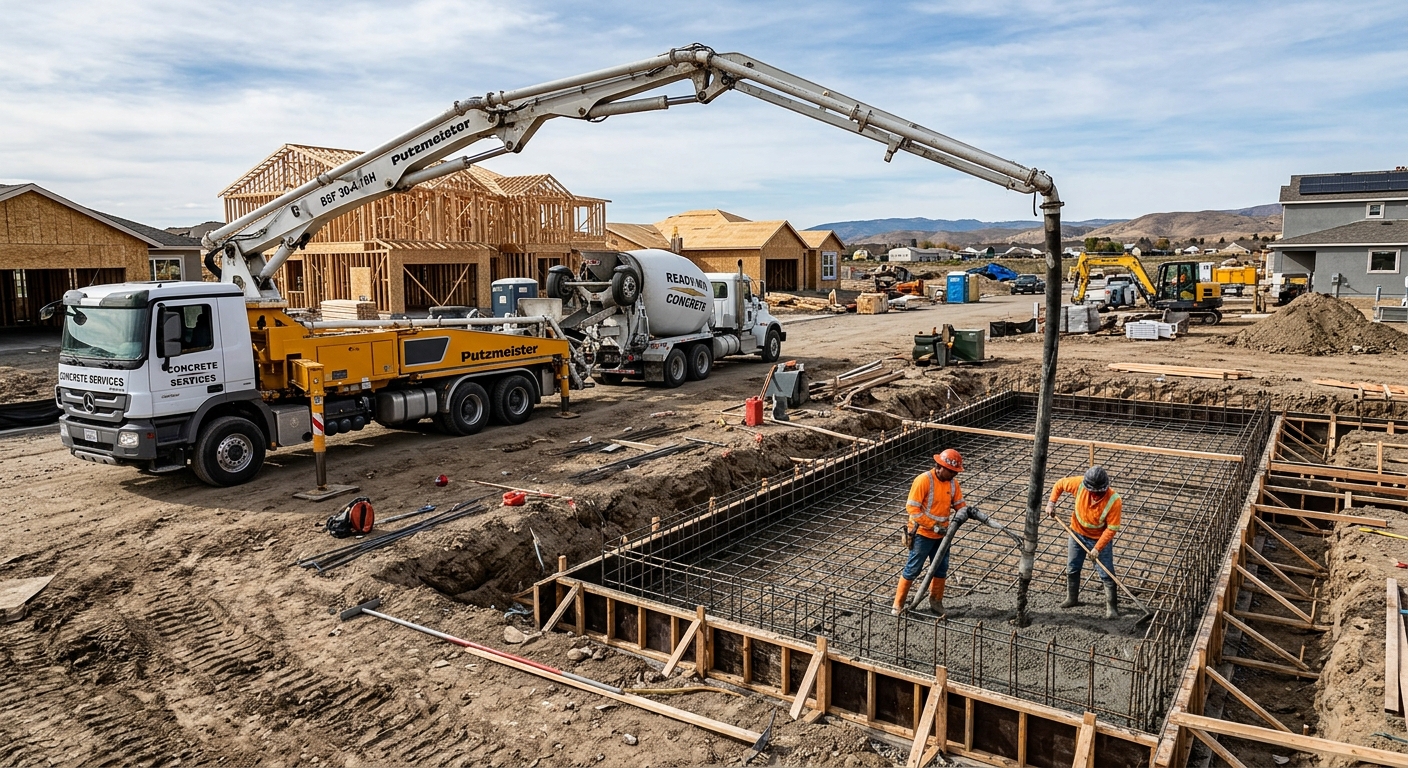
Concrete work options and costs in Walden
Walden is a young community—its population was 7,650 residents in 2021 (Statistics Canada, 2021 Census)—and that steady homebuilding pace keeps demand high for concrete flatwork: driveways, patios, walkway replacements, and basement steps. Most homeowners are tying new concrete into existing driveways and garage pads around newer single-detached areas, and the Calgary region’s broader housing stock relies on concrete not just for looks, but for durability through Alberta winters. In practice, Walden’s contractors often stay busy around the newer phases near Walden’s growth areas and the neighbourhood edges where lots are being serviced and graded for landscaping.
Pricing in Walden can move faster than many people expect because Calgary’s cold continental climate is engineered around freeze–thaw. The design frost depth is about 1.2 m (roughly 4 ft), so footings and foundation elements must bear below undisturbed soil at depth to prevent frost heave. Exterior slabs also need air-entrained mixes, and the pour season is tighter—cold-weather placement may require winter-grade concrete, insulating blankets, and sometimes supplemental heat to protect curing. Those added labour steps and material specs are why “same square footage” bids can differ meaningfully.
Below is a practical comparison of common concrete jobs homeowners ask for in Walden, using current regional price bands and realistic project variables like excavation volume, access for a concrete truck, and whether you want a standard finish or a decorative option. Use the table to benchmark your quote, then weigh the spec details in the next sections.
| Application |
Typical Size |
Key Spec |
Finish Option |
Price Range |
| Concrete driveway (standard broom finish) |
24 ft x 20 ft (480 sq. ft.) |
Air-entrained exterior mix; compacted granular base; control joints |
Broomed/brush texture |
$12,000–$18,000 |
| Exposed aggregate driveway |
24 ft x 20 ft (480 sq. ft.) |
Air-entrained exterior mix; proper retard/cleaning; added labour for texture |
Exposed aggregate (late wash) |
$14,000–$20,500 |
| Stamped concrete driveway or patio |
20 ft x 24 ft (480 sq. ft.) |
Air-entrained exterior mix; integral colour; release agent; proper jointing |
Stamps + colour (wood/stone patterns) |
$15,000–$26,000 |
| Plain concrete patio or walkway |
12 ft x 16 ft (192 sq. ft.) |
Air-entrained mix; compacted base; edge forms |
Float/smooth + light broom |
$5,000–$9,000 |
| Garage floor (interior slab) |
22 ft x 24 ft (528 sq. ft.) |
Vapour barrier (if required); minimum thickness; joints |
Steel-trowel finish (or broom if desired) |
$9,500–$15,000 |
| Foundation footings (structural, below frost) |
1,000–1,400 sq. ft. of footing footprint |
Excavate to design frost depth; structural concrete; reinforcement |
Structural finish (trowel as required) |
$28,000–$45,000 |
Prices are estimates only and vary by project scope, site access and material selection.
What affects the price of concrete work in Walden
In Walden and across the Calgary region, it’s common to see quotes for the “same” concrete job vary by 30–50%. That gap usually comes down to buried work: excavation depth, base prep quality, reinforcement choices, mix design, and the contractor’s approach to curing in cold weather. A decorative finish like stamping or exposed aggregate may look like the main cost driver, but in a freeze–thaw climate, the unseen specs often determine whether your concrete survives. With Walden’s winters and frequent temperature swings, footing and slab performance is engineered around frost depth and cure time, not just the final appearance.
First, frost depth dictates excavation volume and form height. In Alberta, footings and any frost-protected structural elements typically need to extend below the design frost depth (about 1.2 m in the Calgary region). That’s why foundation / footings pricing often lands in the $28,000–$45,000 band: more digging, more concrete, and more reinforcement are simply unavoidable. Second, exterior slabs and driveways require air-entrained concrete to handle freeze–thaw cycling and reduce scaling/spalling risk. Third, the colder pour season means crews may need winter-grade materials, insulated blankets, and sometimes temporary heat to protect curing—especially in late fall or early spring. Finally, de-icing salt accelerates surface deterioration, so sealing is a smart add-on on driveways and patios.
Two common Walden examples: (1) A driveway replacement where the contractor has to over-excavate poor subgrade and rebuild a deeper granular base will trend toward the higher end of the $12,000–$18,000 driveway band; (2) A small patio over a well-compacted base with easy truck access may come in closer to the lower end of the $5,000–$9,000 walkway/patio band. Even labour efficiency matters—tight access can force pump work or longer hose runs, increasing labour and time.
| Price Factor |
Why It Matters |
Cost Impact |
| Frost line depth — determines footing depth and form height |
Footings must bear below frost heave depth to limit seasonal movement. |
Higher excavation + structural concrete volume; often pushes foundation pricing up. |
| Site preparation — excavation, grading, compacted granular base |
Poor base compacts unevenly and creates settlement cracks. |
Extra trucking/compaction steps can add significant labour and material cost. |
| Reinforcement — rebar or wire mesh requirement |
Controls cracking and supports heavier loads (driveways/garage slabs). |
Material + tying/lifting time; cost increases for heavier reinforcement. |
| Mix design — air-entrainment and compressive strength spec |
Exterior air content helps concrete survive freeze–thaw cycles. |
Winter-grade and air-entrained mixes can cost more but prevent failures. |
| Finish type — broom vs. stamped vs. exposed aggregate |
Decorative work requires extra stages and skilled labour timing. |
Stamped/exposed typically adds labour, colour systems, and setup time. |
| Pour size and concrete truck access to site |
Access affects pump/placement method and downtime. |
Restricted access can increase labour hours and equipment charges. |
| Cold-weather curing precautions — heating and blankets |
Protects curing so strength develops correctly and surface scales less. |
May add equipment rental, labour, and a longer timeline for the same pour. |
| Control joint pattern and sealing cost |
Joints control where cracking happens; sealing repels salt and moisture. |
Proper jointing and sealant can add a few line items but reduce long-term repairs. |
Permits & regulations in Alberta
In Alberta, structural concrete work typically requires a building permit because it can affect structural safety and frost-protection design. That includes foundation footings, foundation walls, grade beams, and other structural elements that support the building and must be engineered for load and frost conditions. Many projects also use engineered drawings that are reviewed by the municipality as part of the permit process.
Concrete flatwork—driveways, patios, and walkways—usually does not require a permit on its own in Alberta. However, you should confirm before starting if your work impacts lot grading, affects impervious surface coverage limits, alters surface drainage, or changes anything near a municipal right-of-way (for example, curb tie-ins or work that affects drainage patterns).
For homeowner due diligence in Walden, Alberta, verify insurance and coverage step-by-step: (1) ask the contractor for a certificate of liability insurance showing the policy is active and includes your address (or your legal address area); (2) confirm WSIB/WCB clearance where applicable—request their current clearance letter; (3) check that they’re properly registered/licensed for the scope (where required) and that their crew is insured; (4) review references on similar cold-climate exterior work (driveways/patios) so you can see jointing, base prep, and finishing consistency.
Getting concrete right in Walden's freeze-thaw climate
Concrete fails in Walden most often when one of the “system” pieces is wrong: base prep, mix design, jointing, curing, or sealing. In Calgary’s cold continental climate, freeze–thaw cycles push water in and out of the concrete. If your slab isn’t built on a properly compacted granular sub-base, the structure can settle and crack. If the mix isn’t air-entrained, freeze–thaw expands freezing water pockets and can lead to surface scaling and spalling—especially where de-icing salts are used. And if curing is rushed in cold snaps, concrete may not reach the strength and durability you think you paid for, even if it looks fine on day one.
To spec the job correctly for Walden, focus on five items. (1) Base preparation: the excavation should be taken to the right depth and the granular base compacted to support the slab through seasonal movement. (2) Mix design: for exterior flatwork, ask for air-entrainment with a typical target of 5–7% air and a minimum 32 MPa compressive strength spec. (3) Control joints: install a joint pattern that limits random cracking (and don’t space them too wide). (4) Curing: plan for a minimum 7-day curing period under proper conditions; cold-weather placement may require insulating blankets or heat to protect the curing window. (5) Sealing: apply a penetrating sealer after full cure (commonly 28 days) to repel de-icing salt and moisture.
Where does the money make sense? For example, a stamped driveway often sits in the $15,000–$26,000 band, which can feel steep versus a standard broom driveway in the $12,000–$18,000 band. But that upgrade is justified only when the contractor also nails base prep, air-entrainment, and jointing—otherwise the decorative surface becomes more expensive to repair. The right technical questions prevent the costly “looks good at first, fails in 2–5 winters” scenario.
| Spec |
Why It Matters in Walden |
What to Ask For |
Impact if Skipped |
| Compacted granular base (depth?) |
Supports the slab so it doesn’t settle and crack during freeze–thaw. |
Specify excavation depth + granular base thickness and compaction method. |
Uneven settlement, cracking, and moisture pathways into the slab. |
| Air-entrained concrete mix (target air %?) |
Improves durability by allowing freezing expansion to occur safely inside the paste. |
Ask for target air content of 5–7% for exterior flatwork. |
Higher risk of spalling and scaling on Walden driveways/patios. |
| Compressive strength (MPa rating) |
Adequate strength helps resist wear and protects against early surface breakdown. |
Confirm a minimum 32 MPa compressive strength spec. |
Reduced durability and greater likelihood of surface damage. |
| Control joints (spacing per ACI guidelines) |
Controls where cracking occurs when concrete shrinks as it cures. |
Request joint layout and spacing appropriate for your slab dimensions. |
Random cracking and appearance issues plus faster deterioration routes. |
| Minimum 7-day curing period |
Curing is when strength develops; cold weather can slow progress. |
Ask how curing will be protected during cold snaps (blankets/heating). |
Lower strength, increased scaling risk, and shortened service life. |
| Penetrating sealer (when applied after cure) |
Repels moisture and de-icing salt, reducing freeze–thaw-driven surface loss. |
Schedule application after full cure—commonly at 28 days. |
Faster surface wear, staining, and spalling in salted areas. |
How to choose a concrete work contractor in Walden
Choosing a concrete contractor in Walden is mostly about verifying three things: competence, coverage, and clarity of scope. In Alberta, structural work like footings/foundation walls usually needs a permit and engineered documentation, so you want a contractor who understands what inspections and documentation come with that scope. Before you sign anything, confirm they carry active liability insurance and provide a current WSIB/WCB clearance letter (ask for the document). If their paperwork is hard to get or doesn’t match your job address, treat that as a serious warning.
Next, request 2–3 itemised written quotes. You’re looking for a breakdown that separates excavation/grading, base materials, reinforcement, concrete supply, forming/finishing, sealing (if included), and any cold-weather curing measures (blankets/heating). Avoid “lump sum” quotes that don’t state what’s included for control joints, disposal of excess material, or whether permits (when needed) are handled by the contractor.
Pay attention to warranty terms. Ask for a workmanship warranty length, plus any product/manufacturer warranty details and whether it transfers to you if the property is sold. Payment schedule should be conservative—generally keep upfront payment to 10–15% and use a holdback until the job is completed and cleaned up properly. Finally, insist on a written timeline: a start date and an estimated completion date in the contract or proposal.
- Confirm liability insurance is active and ask for proof (certificate) before booking.
- Request WSIB/WCB clearance letter for the trade scope.
- Get 2–3 itemised quotes (labour vs materials; not only one total).
- Ask for base prep details: excavation depth, granular base thickness, and compaction method.
- Confirm mix spec: air-entrainment and minimum compressive strength.
- Require joint layout: spacing plan and where joints will be placed around edges.
- Clarify finish scope: broom, stamped, exposed aggregate, and any colour/sealer specifics.
- Ask what’s included for drainage—especially if you’re tying into an existing driveway or regrading.
- Confirm concrete truck access plan; ask if pumping is needed.
- Discuss cold-weather curing: blankets/heating and who monitors temperatures.
- Check disposal and haul-away: is excess soil removal included or an extra charge?
- Use a written warranty and a payment schedule with a holdback until completion.
Concrete red flags in Walden: crews who won’t discuss air-entrainment targets, quotes that omit control joints, no clear curing plan for cold nights, vague “we handle everything” language without itemised scope, and contractors requesting large upfront payments (beyond about 10–15%) without a clear contract deliverables schedule.
Frequently asked questions — concrete work in Walden
How do I prepare the base for a concrete slab?
For Walden projects, base prep is where you protect your investment. The contractor should excavate to the required depth for frost considerations and then rebuild a compacted granular base in layers. Proper compaction matters more than people expect: a slab can look straight at first but crack once moisture and freeze–thaw cycles move through voids. Ask your contractor to state the granular base thickness, compaction method, and what they’re using to control drainage away from the slab. If you’re replacing an older driveway, ask whether they will remove unsuitable soils and how they’ll handle subgrade conditions. A well-prepped base is one reason standard driveway work usually lands in the $12,000–$18,000 range instead of being “cheap” and risky.
How do I compare concrete quotes?
When comparing quotes in Alberta (including Walden), don’t compare only the final total—compare what’s inside it. Ask each contractor for an itemised breakdown: excavation/grading, granular base quantities, reinforcement (if specified), concrete mix details (air-entrainment and minimum compressive strength), jointing plan, finishing method, and whether sealing is included. For exterior work, cold-weather curing precautions matter: confirm whether they’ll use insulated blankets or temporary heat if nights are cold, and whether they protect curing for at least 7 days. Also clarify access and disposal—truck access, pumping needs, and hauling excess spoil can change the price. A stamped driveway might be in the $15,000–$26,000 band, but the “real” comparison is whether the foundation and slab specs are equal across bidders.
Can concrete be poured in cold weather in Walden?
Yes, concrete can often be poured in cold weather in Walden, but it must be engineered and protected for curing. Alberta’s freeze–thaw environment means temperature swings can slow strength gain and increase risk of scaling if placement isn’t properly managed. A competent contractor will use winter-grade concrete (as needed), maintain curing conditions using insulated blankets and/or temporary heating, and monitor temperatures so the curing window is met. Don’t assume “it was poured” is enough—ask what curing measures were used and what the minimum curing period was. For exterior slabs, skipping cold-weather precautions is one of the most common reasons homeowners see early surface deterioration. Even if the project still fits within typical price bands (like driveway work in the $12,000–$18,000 range), the long-term durability depends on curing control, not the pour date alone.
How do I maintain concrete in Walden's freeze-thaw climate?
Maintenance in Walden is mostly about moisture and salt control. Keep water draining away from your driveway or walkway—standing puddles worsen freeze–thaw damage. After winter, rinse off de-icing residue when possible (avoid leaving heavy salt buildup sitting for weeks). If your contractor applied a penetrating sealer after proper cure (often after 28 days), you’ll usually get better resistance to salt and moisture intrusion. Re-seal timing varies by product and wear, so ask for the sealer’s recommended schedule. Also, don’t fill every crack right away if it’s hairline and stable, but monitor joints and edges: if joints separate or spall appears, address it sooner to stop water pathways. With good sealing and jointing, exterior flatwork priced around the $5,000–$9,000 patio/walkway range can stay serviceable longer in Alberta winters.
What causes concrete to spall in Walden winters?
Spalling in Walden winters is usually caused by water getting into the concrete and then freezing—expansion creates internal pressure that breaks the surface paste. The most common spec problem is inadequate air-entrainment for exterior exposure. If the concrete mix doesn’t have the correct air content, freeze–thaw cycles can damage the surface and lead to scaling and spalling, especially where de-icing salt is used. Base issues also contribute: if the slab settles or the base isn’t properly compacted, cracks open and water travels into the slab. Another common contributor is rushing curing in cold weather—if curing conditions aren’t protected, durability can drop. Jointing matters too: poorly spaced or missing control joints create random cracking, which becomes a water route. If you see spalling, it’s not just cosmetic—it indicates moisture/salt entry and needs an evaluation of mix, joints, and sealing.
What is rebar and when is it required in Alberta?
Rebar (reinforcing bar) is steel embedded in concrete to help carry tensile forces and control cracking. When it’s required depends on the structural design and the type of concrete element. In Alberta, structural concrete like foundation footings, grade beams, and many foundation walls typically require engineered reinforcement and often include rebar sized and placed per the structural drawings. For exterior flatwork such as driveways and patios, reinforcement is sometimes required based on thickness, soil conditions, and expected loads (for example, garage floors and heavier vehicles may call for rebar or wire mesh). In a freeze–thaw climate like Walden, reinforcement can help manage cracking, but it doesn’t replace proper air-entrainment, base prep, and jointing. Ask your contractor to specify what reinforcement is included and to show how it matches the design and the load conditions.