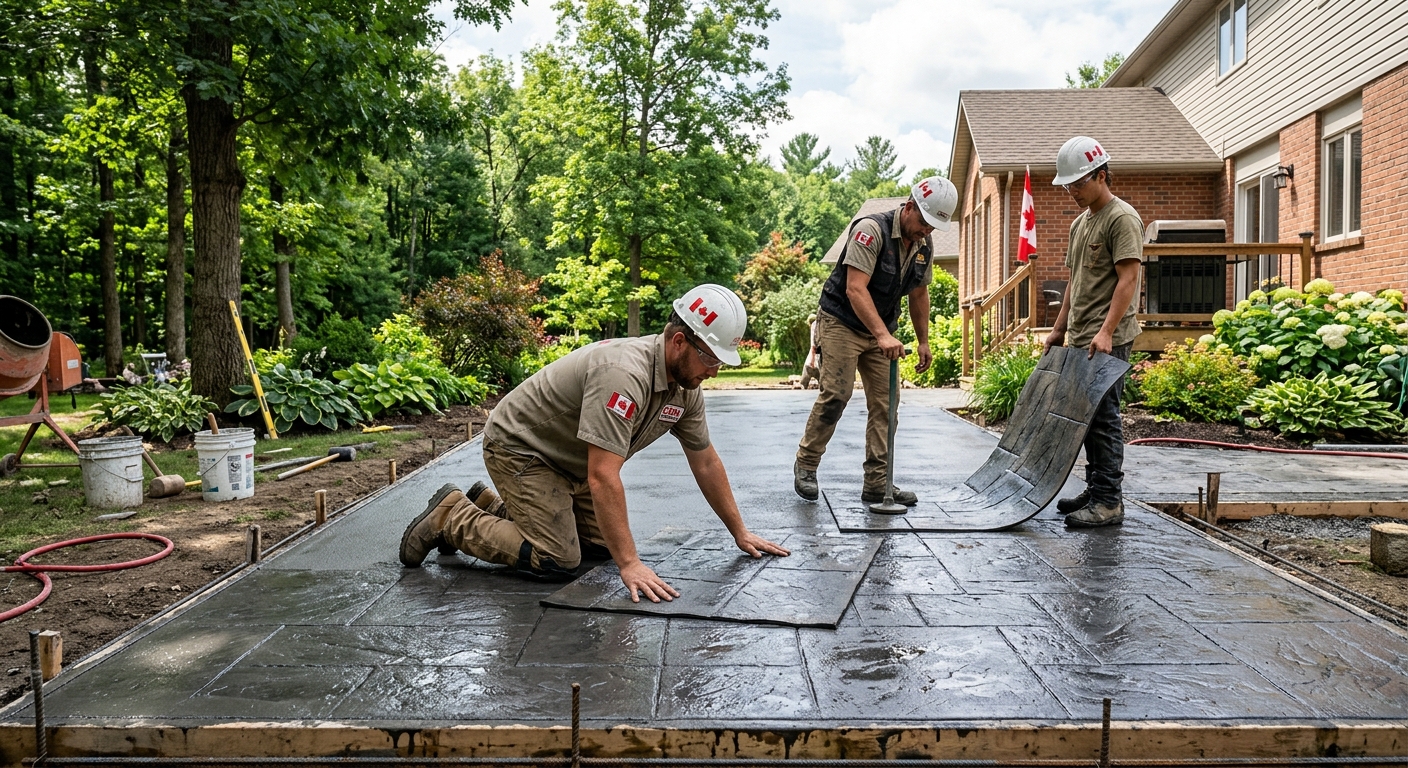
Concrete work options and costs in Garneau
Garneau, Alberta is a neighbourhood where concrete flatwork gets heavy, fast—between families, school runs, and winter road grit. With a population of 9,480 (Statistics Canada, 2021 Census), it’s also an area where a lot of homes are owner-occupied and long-term maintenance matters. That typically means garages, driveways, patios and walkways are upgraded or replaced as older slabs wear, and new pours need to be engineered for Calgary’s freeze–thaw reality. For many properties in Garneau, the “sweet spot” for value is standard broom-finished concrete on the primary driveway, paired with a higher-end finish (like stamping or exposed aggregate) on the patio-facing areas so you get curb appeal without paying for premium finishes everywhere.
In the Calgary region, costs tend to reflect that cold continental climate: design frost depth is deeper, so excavation and footing/sidewall work can be more substantial than in milder provinces. Freeze–thaw cycles also force contractors to use air-entrained mixes, plan granular base prep carefully, and schedule curing so the surface doesn’t scale or dust out. Trade availability can change quickly during the exterior pour season, and winter-grade curing measures (insulating blankets, temporary heat) can add labour and equipment time when you need work in shoulder months. This is why many Garneau homeowners prioritize scheduling early spring or late fall in a controlled way—so the concrete can achieve the right cure before severe cold returns. Neighbourhood pockets around 82 Avenue and the Beltline-adjacent streets see especially consistent demand for driveways and garage slabs due to the high turnover of renovations and landscaping.
Below is a practical cost comparison you can use when you’re lining up quotes for your project.
| Application |
Typical Size |
Key Spec |
Finish Option |
Price Range |
| Concrete driveway (standard broom finish) |
16 ft x 24 ft (384 sq ft) |
Air-entrained; proper granular base; control joints |
Broom finish, saw-cut joints |
$12,000–$18,000 |
| Exposed aggregate driveway |
16 ft x 24 ft (384 sq ft) |
Air-entrained; broom-texture base; aggregate exposure plan |
Exposed aggregate with colour (varies) |
$15,000–$22,000 |
| Stamped concrete driveway or patio |
14 ft x 20 ft (280 sq ft) or 10 ft x 16 ft (160 sq ft) |
Air-entrained; integral colour; release agent; joint layout |
Stamp pattern + integral colour (or overlay colour) |
$15,000–$26,000 |
| Plain concrete patio or walkway |
12 ft x 16 ft (192 sq ft) |
Air-entrained; compacted base; broom or float finish |
Float + light broom; standard saw joints |
$5,000–$9,000 |
| Garage floor (interior slab) |
20 ft x 22 ft (440 sq ft) |
Vapour barrier (if specified); thicker slab per use; jointing |
Broom finish, optional densifier/patch system |
$10,000–$16,000 |
| Foundation footings (structural, below frost) |
Typical house footing wall per engineered plan |
Below design frost depth; rebar as specified; engineered pour plan |
Structural concrete only (no decorative finish) |
$28,000–$45,000 |
Prices are estimates only and vary by project scope, site access and material selection.
What affects the price of concrete work in Garneau
If you get two quotes for the “same” concrete driveway or patio in Calgary and Alberta, it’s not unusual to see a 30–50% difference. The gap usually comes from what’s included in the scope (excavation and haul-away, base depth, reinforcement, curing protection), not just the concrete price. In Garneau, the climate is the biggest driver: Calgary’s freeze–thaw cycles and deeper frost requirements mean contractors engineer footings and slab edges to reduce movement year-round. Practically, that means exterior work needs air-entrained concrete mixes and better base prep so water can’t sit under or migrate toward the slab. For foundations and footings, Alberta practice typically requires bearing below the frost depth; if you’re below frost, you reduce the risk of frost heave and seasonal settlement. On the finishing side, cold-weather placement tightens the curing window—insulating blankets and sometimes temporary heating increase crew time and equipment costs.
De-icing salt is another Alberta cost factor. It accelerates surface wear and can contribute to spalling if the mix/air content and curing weren’t done right. That’s why a properly specified exterior pour can cost more up front but tends to hold up longer under winter conditions. Example: choosing air-entrainment and control joints on a plain patio can keep cracks predictable and reduce freeze–thaw damage, while skipping reinforcement or using an undersized base often leads to costly patching. The pricing bands show it: a standard broom-finished driveway commonly lands around the $12,000–$18,000 range, while moving to stamped concrete can increase the budget toward $15,000–$26,000 because of extra labour for forming, stamping and integral colour work. Garneau’s mix of older lots and established landscaping can also add excavation complexity—think tree roots, mature backfills, and tighter access—so labour and disposal can add meaningful dollars even when slab dimensions look similar.
| Price Factor |
Why It Matters |
Cost Impact |
| Frost line depth |
Determines footing depth and form height |
Deeper excavation and more concrete volume can raise foundation/footings costs substantially |
| Site preparation |
Excavation, grading, compacted granular base |
More hauling and granular material increases the budget, especially with roots or limited access |
| Reinforcement |
Rebar or wire mesh requirement |
Adds material + placement labour; can be essential for heavier loads or thicker slabs |
| Mix design |
Air-entrainment and compressive strength spec |
Winter-grade/air-entrained mixes cost more but reduce spalling and scaling risk |
| Finish type |
Broom vs. stamped vs. exposed aggregate |
Stamped/exposed typically adds labour, materials, and more careful scheduling |
| Pour size and concrete truck access to site |
Limited access can force smaller loads or more labour |
Traffic control, pump/telebelt time, and extra crew time can increase cost |
| Cold-weather curing precautions |
Heating and blankets |
Added labour, equipment and fuel can be significant in late fall/early spring |
| Control joint pattern and sealing cost |
Joints manage cracking; sealing helps against de-icing salt |
Sealing adds a line item; joint layout affects labour and long-term durability |
Permits & regulations in Alberta
In Alberta, structural concrete work generally requires a building permit because it affects the primary structure and load paths. That includes foundation footings, foundation walls, and grade beams (and any structural slab components identified by your engineer). In many cases, engineered drawings are required and reviewed as part of the permit process. For concrete flatwork like driveways, patios, and walkways, a permit usually is not required by default, but it can be required if the work changes lot grading or involves stormwater/impervious surface considerations, or if it impacts the municipal right-of-way. Because requirements can vary by site conditions, always confirm with the local authority before breaking ground.
To verify a contractor in Garneau the right way, do it in a simple sequence. First, request a certificate of insurance (general liability) naming you as the certificate holder when appropriate—make sure the policy includes construction work and is current. Second, confirm the contractor’s WSIB/WCB clearance letter (or equivalent clearance status where applicable) and that coverage is active for the trades doing the work. Third, check the contractor’s licensing/registration status through Alberta’s online resources (the province maintains public access points for business status and, where applicable, trade-related registrations). Finally, ask for references on similar-scale projects (driveways/flatwork with air-entrained mixes, and foundation work if they advertise structural capacity). Clear paperwork usually means fewer surprises during the permit and inspection steps.
Getting concrete right in Garneau's freeze-thaw climate
Concrete failures in Garneau are almost always linked to moisture, movement, and poor durability design for Calgary’s freeze–thaw cycle—not just “low-quality concrete.” The most common homeowner-visible problem is spalling (surface flaking), which often points to inadequate air-entrainment, rushed curing, or water pathways under the slab. To spec the job correctly, start with base preparation: use a compacted granular sub-base at the right depth for local soil and frost conditions so the slab doesn’t flex as water freezes and thaws. Second, require an air-entrained concrete mix—typically 5–7% air for exterior flatwork—and a minimum compressive strength such as 32 MPa (or higher if the design calls for it). Third, plan control joints so cracking happens where you can live with it; don’t let it random-crack. Fourth, curing matters: aim for at least 7 days of proper curing, especially when temperatures drop—winter-grade procedures, insulation blankets, and temperature monitoring are often needed. Fifth, apply a penetrating sealer after cure (commonly after 28 days) to help repel de-icing salts.
Ask your contractor directly: “What air content target are you delivering, and how are you maintaining curing conditions?” If someone can’t answer, that’s a red flag in Alberta. As a dollar example, a plain broom-finished patio might be in the $5,000–$9,000 range, while stamped work can push toward the $15,000–$26,000 band. The stamped premium is justified for aesthetics and careful joint layout—but durability still depends on base prep, mix air, curing, and sealing. You don’t want to pay extra for looks and then accept the wrong durability spec.
| Spec |
Why It Matters in Garneau |
What to Ask For |
Impact if Skipped |
| Compacted granular base (depth?) |
Reduces settlement and water movement during freeze–thaw |
Base depth, granular type, compaction method, and moisture control |
Uneven support leads to cracking, pumping, and faster deterioration |
| Air-entrained concrete mix (target air %?) |
Improves freeze–thaw durability and reduces spalling risk |
Target air content (commonly 5–7% for exterior flatwork) and mix report |
Surface scaling and spalling, especially with winter salt exposure |
| Compressive strength (MPa rating) |
Supports long-term load capacity and durability |
Minimum 32 MPa (or higher as engineered) and any cold-weather spec |
Lower strength can increase cracking and premature wear |
| Control joints (spacing per ACI guidelines) |
Controls where shrinkage cracking occurs in Alberta freeze conditions |
Joint spacing and saw-cut timing plan |
Random cracks can allow water ingress and accelerate freeze–thaw damage |
| Minimum 7-day curing period |
Ensures strength gain before severe cold returns |
Curing plan and what happens in cold weather (blankets/heating) |
Surface weakness, scaling, and long-term durability issues |
| Penetrating sealer (when applied after cure) |
Helps reduce salt and water penetration |
Sealer type and application timing (often ~28 days after pour) |
Faster surface wear and greater risk of spalling near edges |
How to choose a concrete work contractor in Garneau
Choosing the right contractor in Garneau comes down to proof: paperwork, clear scope, and concrete process discipline. First, verify Alberta licensing/registration status as applicable, then confirm liability insurance and WSIB/WCB clearance (active and current). How to check: look for a current certificate of insurance from the company (with coverage dates and policy limits) and ask for a WSIB/WCB clearance letter for the contractor doing the work (not just a subcontractor). If they can’t provide these documents quickly, don’t proceed.
Next, insist on 2–3 itemised written quotes. You want a breakdown that separates labour, concrete supply, reinforcement (rebar or mesh), base materials, excavation and disposal, forms, finishing, saw-cutting, sealing (if included), and any cold-weather protection. Avoid “all-in” pricing without scope—flatwork quotes can hide exclusions like hauling, wire mesh, or concrete truck waiting time. Read exclusions for permit pull (structural vs flatwork), equipment needs, and what happens if the weather changes.
Warranty should be in writing: ask the length of workmanship warranty and whether it covers cracking, spalling, and settlement issues caused by base prep. Also ask about product/manufacturer warranties and whether they’re transferable if you sell the home. For payment, never pay more than 10–15% upfront; hold a portion until completion and final cleanup. Get a written timeline with a start date, curing contingencies, and completion estimate—especially important in Alberta’s shoulder-season scheduling.
- Confirm current general liability insurance and request a certificate (with dates and coverage limits).
- Verify WSIB/WCB clearance status for the company doing the work.
- Ask for references on similar Garneau-sized projects (driveway/patio with exterior freeze–thaw specs).
- Require an itemised quote showing excavation, granular base, and disposal/haul-away.
- Make sure air-entrainment and compressive strength specs are stated, not implied.
- Ask how they handle cold weather curing (blankets/heating, minimum curing time).
- Confirm reinforcement details: rebar vs mesh, and slab thickness assumptions.
- Check the joint plan (timing of saw cuts and spacing).
- Clarify whether sealing is included, and when it will be applied (commonly after cure).
- Confirm concrete delivery logistics: truck access, pump/telebelt needs, and waiting time policy.
- Review warranty terms for spalling/scaling and whether base issues are covered.
- Use a payment schedule with a holdback until final inspection and walk-through.
Concrete red flags in Garneau include: quoting without mentioning air-entrainment or curing precautions; refusing to itemise base prep and disposal; using only “we’ll see” language for winter work; pushing for large upfront deposits; and offering vague warranties that don’t address spalling or cracking caused by mix/spec shortcomings.
Frequently asked questions — concrete work in Garneau
Can concrete be poured in cold weather in Garneau?
Yes, concrete can be poured in cold weather in Garneau, but it needs a winter-appropriate plan. In Calgary’s freeze–thaw climate, the key is achieving proper curing conditions so the concrete gains strength before it’s exposed to repeated freezing. Contractors typically use cold-weather placement procedures such as winter-grade mixes, insulation blankets and, in some cases, temporary heat. Your quote should clearly state the minimum curing duration (often at least 7 days under controlled conditions) and what they’ll do if temperatures drop during the pour window. If the job lands in late fall/early spring, ask whether heating and blankets are included. For exterior work, that added protection is often one reason concrete pricing can sit closer to the upper end of the $12,000–$18,000 driveway band versus a lower-budget estimate that doesn’t protect curing properly.
How do I maintain concrete in Garneau's freeze-thaw climate?
In Alberta, maintenance is mostly about keeping water and salt away from the surface and joints. First, use de-icing products thoughtfully—some salts are harsher on concrete surfaces. Second, get sealing done if your contractor recommends it: a penetrating sealer is commonly applied after the slab has cured (often around 28 days) so it can help repel moisture and reduce scaling risk. Third, keep edges and control joint areas clean so water doesn’t get trapped and cycle through freeze–thaw. Fourth, avoid dumping hot liquids or concentrated chemicals that can damage the surface. If you notice small chips or early scaling, patch them promptly rather than waiting—early intervention is cheaper than removing and replacing. For a patio or walkway that’s in the $5,000–$9,000 range, small repairs protect the investment when winter comes back fast.
What causes concrete to spall in Garneau winters?
Spalling in Garneau winters is commonly triggered by freeze–thaw damage plus water and salt exposure. If the concrete mix isn’t adequately air-entrained for exterior exposure, freeze–thaw cycles create internal pressure as moisture freezes, and the surface starts to flake and pop off. Another cause is rushing curing—if the concrete doesn’t properly cure, it can remain more vulnerable to scaling when temperatures drop. Poor base prep also contributes by allowing water pathways under the slab, increasing freeze activity near the surface. Finally, inadequate joint control or missed sealing can let water and de-icing salts penetrate and accelerate deterioration. The practical takeaway for homeowners in Garneau is to insist on the technical specs: air-entrainment, minimum curing time, and sealing after cure. Those details often explain why a “lowest bid” can drift away from the more durable pricing in the local driveway and patio bands.
What is rebar and when is it required in Alberta?
Rebar (reinforcing bar) is steel reinforcement embedded in concrete to help it resist cracking and structural loads. In Alberta, whether rebar is required depends on the slab’s thickness, intended use, soil conditions, and engineering requirements for the specific project. For structural work—like foundation footings, grade beams, and foundation walls—rebar is typically designed and specified on engineered drawings reviewed through the permit process. For flatwork such as driveways and garage floors, reinforcement may be required based on the design load (vehicle weight), slab thickness, and whether the contractor specifies it as part of the structural support system. It’s not always “rebar in everything,” but you should always ask for the reinforcement plan: what’s used (rebar or mesh), where it sits, and whether it’s tied/positioned correctly on supports. A good contractor will show these details in the itemised quote rather than leaving it vague.
How long does a concrete project take in Garneau?
Typical timelines depend on slab size, access, and weather conditions—especially in Garneau where the cold snaps can interrupt curing. The day-to-day process is usually: layout and forms (1 day), excavation and base preparation (1–3 days depending on site complexity), reinforcement placement (if included), pour day (often 1 day), then curing time and finishing (finishing is done same day or shortly after placement). Although concrete can be “walked on” sooner, proper curing is the real critical step: exterior durability generally relies on maintaining proper conditions for at least 7 days. If you’re in cold weather, blankets and heating can add time and require scheduling around temperature windows. For many homeowners, the visible “project duration” is often 3–7 days, but the usable timeline may be longer because curing and sealing after cure (commonly around 28 days) affect long-term performance.
What is a concrete overlay and is it suited to Garneau?
A concrete overlay is a new layer of concrete installed on top of an existing slab, usually after surface preparation (grinding/chipping) and bonding preparation. In Garneau, overlay can be a smart option when the existing concrete is still structurally sound—meaning it isn’t lifting, significantly settled, or widely deteriorated—but the surface is worn or uneven. Overlays are less suitable if the original slab has major structural movement, deep spalling, extensive cracking that indicates base failure, or widespread moisture issues. The freeze–thaw climate makes prep and bonding critical: if water can penetrate and freeze under the overlay, problems can reappear faster. If you’re comparing costs, an overlay may be cheaper than full replacement, but it’s not automatically a bargain—sometimes the added prep and engineering work narrows the gap. If your contractor can’t explain the condition assessment and the bonding approach, a full replacement may better protect the long-term durability.