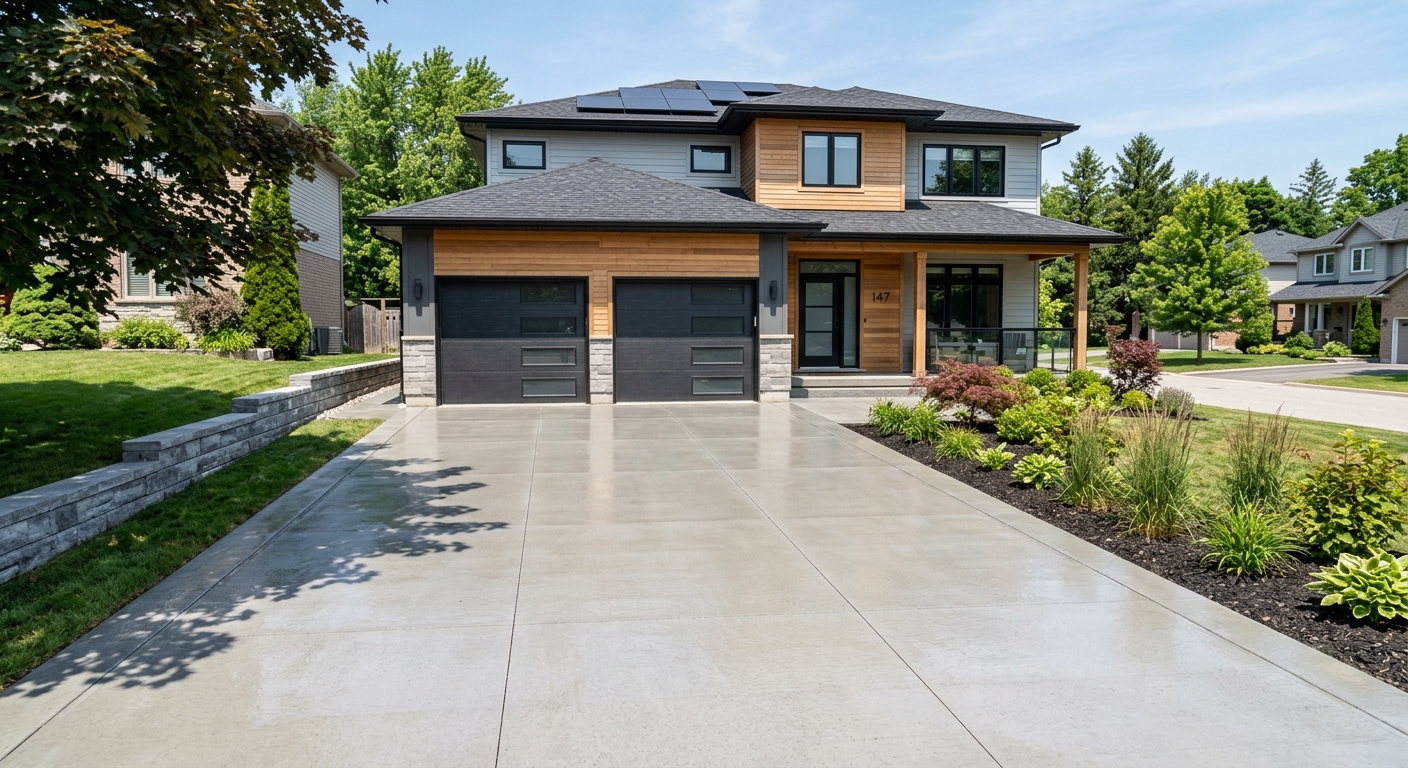
Concrete work options and costs in Ogilvie Ridge
Concrete work in Ogilvie Ridge, Alberta is mainly about building for a deep frost line and repeated freeze–thaw cycles—conditions that are harsher than most homeowners expect when they hear “Alberta.” In a community of about 1,001 people (Statistics Canada, 2021 Census), the concrete trades tend to be busy around residential expansion and home-improvement seasons, especially where flatwork like driveways, patios and walkways make the biggest day-to-day difference. Ogilvie Ridge is also part of the Calgary housing market, where older properties and newer infills alike often need concrete upgrades to keep surfaces safe and drainage-correct. In cold continental weather, engineered specs drive the cost: footings must go below frost to control seasonal movement, and exterior slabs need air-entrained mixes plus proper curing to reduce scaling and spalling.
Practically, you’ll see demand in areas with active lot development and landscaping work, including newer residential pockets within the greater Calgary region (many builds queue pours around the short exterior concrete window). Local contractors also face a tighter scheduling season, and that labour competition—along with higher excavation volumes—can shift pricing noticeably. For example, foundation/footings are typically priced in the $28,000–$45,000 band, while exterior flatwork commonly falls into the driveway band of $12,000–$18,000. Decorative options can add cost quickly because they require more labour, better finishing control, and often additional mix and curing protection.
Below is a realistic snapshot of common concrete projects you’ll run into in Ogilvie Ridge, so you can compare quotes apples-to-apples before you book a site visit.
| Application |
Typical Size |
Key Spec |
Finish Option |
Price Range |
| Concrete driveway (standard broom finish) |
400–600 sq. ft. |
Air-entrained exterior mix, control joints, compacted granular base |
Broom finish |
$12,000–$18,000 |
| Exposed aggregate driveway |
400–600 sq. ft. |
Air-entrained exterior mix, washed aggregate, base prep and jointing |
Exposed aggregate |
$15,000–$22,000 |
| Stamped concrete driveway or patio |
300–600 sq. ft. |
Air-entrained exterior mix, integral colour, sealer system, tight timing for stamping |
Stamped & coloured |
$15,000–$26,000 |
| Plain concrete patio or walkway |
200–400 sq. ft. |
Exterior air-entrained mix, proper base and drainage slope, joints as required |
Plain finish / light broom |
$5,000–$9,000 |
| Garage floor (interior slab) |
400–700 sq. ft. |
Vapour barrier (as spec’d), wire mesh or fibres, slab thickness per design |
Standard trowel/float finish |
$9,500–$15,500 |
| Foundation footings (structural, below frost) |
Per-engineered foundation plan |
Excavation to design frost depth (~1.2 m), reinforced concrete footings |
Structural concrete |
$28,000–$45,000 |
Prices are estimates only and vary by project scope, site access and material selection.
What affects the price of concrete work in Ogilvie Ridge
In Ogilvie Ridge and the broader Calgary market, quotes for the “same” concrete job can vary by about 30–50% because the real drivers aren’t just the slab—they’re the excavation, the reinforcement, the mix design, and the winter-proofing needed to cure properly. In Calgary’s cold continental climate, your specs are engineered around frost depth and freeze–thaw movement, not just aesthetics. In Alberta, footings must extend below the design frost depth (commonly around 1.2 m) to prevent frost heave and seasonal settlement effects. Exterior slabs also require air-entrained concrete mixes to handle repeated freezing and thawing cycles, plus control joints and sealing practices to reduce cracking and surface scaling.
There’s also a practical market factor: the exterior pour season is shorter. When late fall or early spring weather hits, contractors may need cold-weather curing precautions—insulating blankets, heat to protect the pour, and tighter inspection—so labour and materials increase. De-icing salt use accelerates surface spalling if the concrete isn’t built for it, which is why sealing becomes a cost-effective add-on after curing.
Two Ogilvie Ridge examples that move costs up or down: (1) if your soil requires deeper excavation or additional granular base because of poor bearing, the foundation/footings budget can jump into the higher end of $28,000–$45,000; (2) if access is tight and a pump or additional staging is required, driveway work that starts around the $12,000–$18,000 band can rise with truck time and crew labour. If your home is older and the yard has legacy drainage issues, correcting grading before placement often costs more upfront, but it prevents future settlement that otherwise forces costly repairs.
| Price Factor |
Why It Matters |
Cost Impact |
| Frost line depth |
Determines footing depth and form height |
Higher excavation and rebar volume; can push structural work toward the top end of the footing band |
| Site preparation |
Excavation, grading, compacted granular base |
More hauling/compaction time if soil is soft, wet, or contaminated |
| Reinforcement |
Rebar or wire mesh requirement |
Extra labour for tying/placing steel and lifting materials, especially for thicker slabs |
| Mix design |
Air-entrainment and compressive strength spec |
Air-entrained exterior mixes and higher strength requirements add material cost and control during pour |
| Finish type |
Broom vs. stamped vs. exposed aggregate |
Stamped/exposed work requires more labour time, colour steps, and tighter timing |
| Pour size and concrete truck access to site |
Volume affects scheduling; access affects labour and equipment |
Crane/pump use and truck-wait time can raise labour and logistics charges |
| Cold-weather curing precautions |
Heating and blankets |
Insulation materials plus added setup/monitoring increases total bid |
| Control joint pattern and sealing cost |
Joints manage cracking; sealing helps resist salt damage |
Proper joint layout and a sealer package reduce long-term failures, but add immediate line items |
Permits & regulations in Alberta
In Alberta, structural concrete work—typically footings, foundation walls, and grade beams—usually requires a building permit, and your municipality will often expect engineered drawings or engineered sign-off for structural components. For example, if you’re pouring new foundation elements (not just a decorative slab), treat it as permit-driven work. Concrete flatwork such as patios, walkways and driveways often does not require a permit unless it changes lot grading, affects impervious surface coverage rules, or ties into drainage and right-of-way requirements. Before any excavation, confirm with your local authority so you don’t get stuck reworking work that doesn’t match grading or drainage expectations.
For contractor accountability in Ogilvie Ridge, verify three things step-by-step: (1) licensing/registration status for the business (check Alberta’s online resources for contractor standing where applicable), (2) liability insurance certificate that names the homeowner and shows coverage levels, and (3) WSIB/WCB clearance or coverage confirmation (depending on how the contractor is operating). Ask for a current certificate of insurance, and request a written clearance/coverage letter rather than relying on verbal confirmation. Then ask for references on similar-scale pours in the Calgary region—especially projects with air-entrained exterior mixes and below-frost foundation excavation.
If you’re unsure whether your scope triggers a permit, provide your quote request with drawings and a scope description, and ask the contractor to specify what they will handle versus what you must confirm with the municipality.
Getting concrete right in Ogilvie Ridge's freeze-thaw climate
Concrete failure in Ogilvie Ridge is usually a freeze–thaw and moisture story: water gets into the surface or microstructure, expands during freezing, and gradually disrupts the cement paste and aggregate bond. The most common preventable issue is spalling caused by inadequate air-entrainment, followed by random cracking from poor jointing or base preparation. To spec the job correctly in Calgary’s cold continental climate, start with base preparation: excavate to the proper depth for local soil conditions, then place and compact a granular sub-base that supports the slab below frost-impacted movement zones. Next, specify the mix: exterior flatwork should use air-entrained concrete with a target air content in the 5–7% range and meet a minimum 32 MPa compressive strength for durability. Then plan control joints so cracking happens where it’s intended, not through decorative edges or slab corners.
Curing matters as much as placement here. You should assume a minimum 7-day curing period under proper conditions, and in cold weather that often means insulating blankets or temporary heat to keep the slab protected until it gains strength. Finish selection also ties to climate performance: broom-finish is simpler and cost-effective for slip resistance, while stamped and exposed aggregate add labour and require strict timing. Sealing is another climate-driven spec—apply a penetrating sealer after full cure (commonly around 28 days) to repel de-icing salts that otherwise speed up surface wear.
For cost realism: upgrading a plain patio/walkway from $5,000–$9,000 to a stamped option in the $15,000–$26,000 range is only justified if you’re aiming for visible curb appeal and you accept the added finishing and sealer requirements. If your goal is durability first (not style), proper base prep, air-entrainment and jointing often deliver the biggest long-term value.
| Spec |
Why It Matters in Ogilvie Ridge |
What to Ask For |
Impact if Skipped |
| Compacted granular base (depth?) |
Prevents settlement and reduces moisture movement during freeze–thaw cycles |
Documented excavation depth, granular type, and compaction testing approach |
Cracks, uneven slabs, and water pooling that accelerates spalling |
| Air-entrained concrete mix (target air %?) |
Traps expansion space so freezing water doesn’t destroy the paste |
Target air content of 5–7% for exterior flatwork, plus exposure spec |
Surface scaling and spalling within a few winters |
| Compressive strength (MPa rating) |
Ensures structural and durability performance under Alberta winter stress |
Minimum 32 MPa (or higher if engineered), with mix design details |
Lower durability and increased risk of premature damage |
| Control joints (spacing per ACI guidelines) |
Controls where shrinkage and movement cracking occurs |
Proposed joint spacing and layout plan before the pour |
Random cracking, especially near edges and decorative patterns |
| Minimum 7-day curing period |
Builds strength so the surface resists early freeze and moisture uptake |
Cold-weather curing plan (blankets/heating) if ambient temps drop |
Weak surface layer, scaling, and durability loss |
| Penetrating sealer (when applied after cure) |
Repels de-icing salt intrusion that drives surface breakdown |
Penetrating sealer applied after full cure—typically around 28 days |
Faster salt-related wear and patchy deterioration |
How to choose a concrete work contractor in Ogilvie Ridge
Choosing the right concrete contractor in Ogilvie Ridge starts with verification, not promises. In Alberta, confirm the contractor is properly registered/licensed for the work they’re doing and that they carry current liability insurance. Ask for a certificate of insurance (COI) and verify it lists you as a certificate holder or additional insured where possible, with coverage appropriate for job value and excavation risk. Then confirm WSIB/WCB coverage or clearance in writing—don’t accept “we’re covered” without paperwork.
Next, demand 2–3 itemised quotes instead of one lump-sum number. You want labour and materials broken out clearly (excavation, granular base, concrete supply, reinforcement, forming, finishing, curing protection, joints, and sealing if included). Carefully read exclusions: is disposal of removed soil included? Is permit pulling included if required for structural work? Are truck access and any pump/crane allowances included? The concrete market can swing price fast when those logistics change.
For warranty, ask for two parts: workmanship warranty length and the specific product/manufacturer warranty for any specialty materials (such as admixtures or sealer system). Also ask whether warranties are transferable if you sell the property.
Payment schedule matters—never pay more than 10–15% upfront. Use milestone payments and hold back until the job is complete and cured as required by the product specs. Finally, get the timeline (start date and completion estimate) in writing, because cold-weather impacts are real and can require postponement or added curing measures.
- Ask the contractor to list the target air content and concrete strength in writing for exterior work.
- Confirm excavation depth and base build-up plan (not just “we prep the base”).
- Request a joint layout plan before the pour.
- Confirm whether a pump is included or an additional charge if access changes.
- Ask who supplies and places reinforcement (tie-in details for footings/mesh for slabs).
- Verify liability insurance and WSIB/WCB coverage with current documents.
- Check disposal/hauling is included if excavation is required.
- Make sure cold-weather curing steps are included for late-season pours.
- Clarify what “sealer included” means (type and whether it’s after cure, typically around 28 days).
- Confirm protection of the slab (temperature monitoring, blankets/heating plan if needed).
- Get the pour sequence and protection timeline for weekends/holidays.
- Use a written warranty with clear exclusions and a contact process for service calls.
Concrete red flags I see around Ogilvie Ridge: quoting without discussing air-entrainment, skipping joint layout details, proposing minimal base prep because it “looks fine,” offering sealing as an immediate same-day step (it usually needs proper cure time), and taking a large deposit early with no milestones or curing plan documented.
Frequently asked questions — concrete work in Ogilvie Ridge
How deep must footings be for Ogilvie Ridge's frost line?
For Ogilvie Ridge and the Calgary region, footing depth is determined by Alberta frost design and local geotechnical conditions, but the practical rule we build around is that footings should extend below the design frost depth—commonly about 1.2 m (roughly 4 ft) in this part of Alberta. That depth is important because frost heave comes from freeze–thaw movement of moisture in near-surface soils, which can translate into foundation movement. Your exact required depth can also be influenced by engineered drawings and soil conditions, so reputable contractors base footing excavation on your foundation design plan rather than a “typical” guess.
Why does concrete crack in Ogilvie Ridge and how is it prevented?
Cracking is common in cold climates because concrete shrinks as it cures and then contracts/expands with temperature changes. In Ogilvie Ridge, freeze–thaw and moisture movement can also worsen stresses at the slab edges and around penetrations. The prevention strategy is a combination: compacted granular base to reduce differential movement, air-entrained exterior mix for durability, and a control joint plan so cracking happens at designed locations. Proper curing (minimum 7-day protection and cold-weather measures) is also key so the slab doesn’t gain strength too slowly.
If you’re comparing quotes, ask whether they include control joint layout and proper curing measures. Skipping those line items is often why one quote lands near the low end of the driveway band ($12,000–$18,000) but shows hairline cracks sooner after the next winter.
Stamped vs broom-finish concrete — cost difference?
In Ogilvie Ridge, broom-finish is usually the most budget-friendly because it’s faster to place and finish with fewer steps. Stamped concrete costs more because it involves integral colour or colour hardeners, precise timing to apply stamps, additional finishing attention to texture, and often a more involved sealing system. That labour and process difference is why stamped driveways or patios typically land in a higher band—often around $15,000–$26,000 depending on size and site conditions. By contrast, standard broom-finish driveway work is commonly in the $12,000–$18,000 range for a typical residential scope.
When deciding, focus on whether you’re paying for aesthetic upgrades that you’ll enjoy long-term, while still insisting on the same climate-critical specs: air-entrainment, proper joints, base prep and cure protection.
When is the best time to pour concrete in Ogilvie Ridge?
For Calgary-area winters, the best time to pour exterior concrete in Ogilvie Ridge is during stretches of mild-to-cool temperatures where contractors can maintain proper curing conditions. In real life, that means earlier in the season or during forecast windows when the slab can cure without freezing. Late fall and early spring pours can still be done, but they typically require cold-weather curing precautions—insulating blankets, temperature monitoring, and sometimes temporary heating—to achieve the durability you want. If those precautions aren’t planned in the quote, the risk of surface scaling increases dramatically.
Ask your contractor for a specific curing plan tied to the forecast and the expected cure duration (minimum 7 days). A quote that looks cheaper at the start is often offset by added failures later, especially on driveways and patios exposed to de-icing salts.
How long does concrete take to cure?
Concrete curing has two different timelines homeowners should know. First, concrete needs time to reach usable early strength; many residential exterior flatwork projects plan for at least a minimum 7-day curing period under appropriate conditions, including cold-weather protection when needed. Second, many surface protection products (like penetrating sealers) depend on full cure. In practice, penetrating sealer is typically applied after full cure—commonly around 28 days—so it can properly repel de-icing salts and moisture. If you skip that waiting period, sealing may not bond as intended, reducing long-term protection.
When you compare quotes for patios, walkways, or driveways, ask for the cure timeline in writing. This is one of the biggest reasons two bids that are close on paper can end up very different in performance after the next freeze–thaw season.
Do I need a permit for concrete work in Alberta?
In Alberta, permit requirements depend on what you’re building. Structural concrete work like footings, foundation walls, and grade beams typically requires a building permit and is usually tied to engineered drawings reviewed through the municipal process. Concrete flatwork—patios, walkways and driveways—often does not require a permit unless it affects lot grading, impervious surface limits, drainage compliance, or touches municipal right-of-way rules. Because these details can vary by site, you should confirm with the local authority before breaking ground.
For your contractor choice in Ogilvie Ridge, ask them what permits they handle and what they need from you. If structural work is involved, don’t accept a quote that doesn’t reference engineered scope and permit steps. A complete, paper-trail approach is also where you can better verify insurance and coverage documentation.