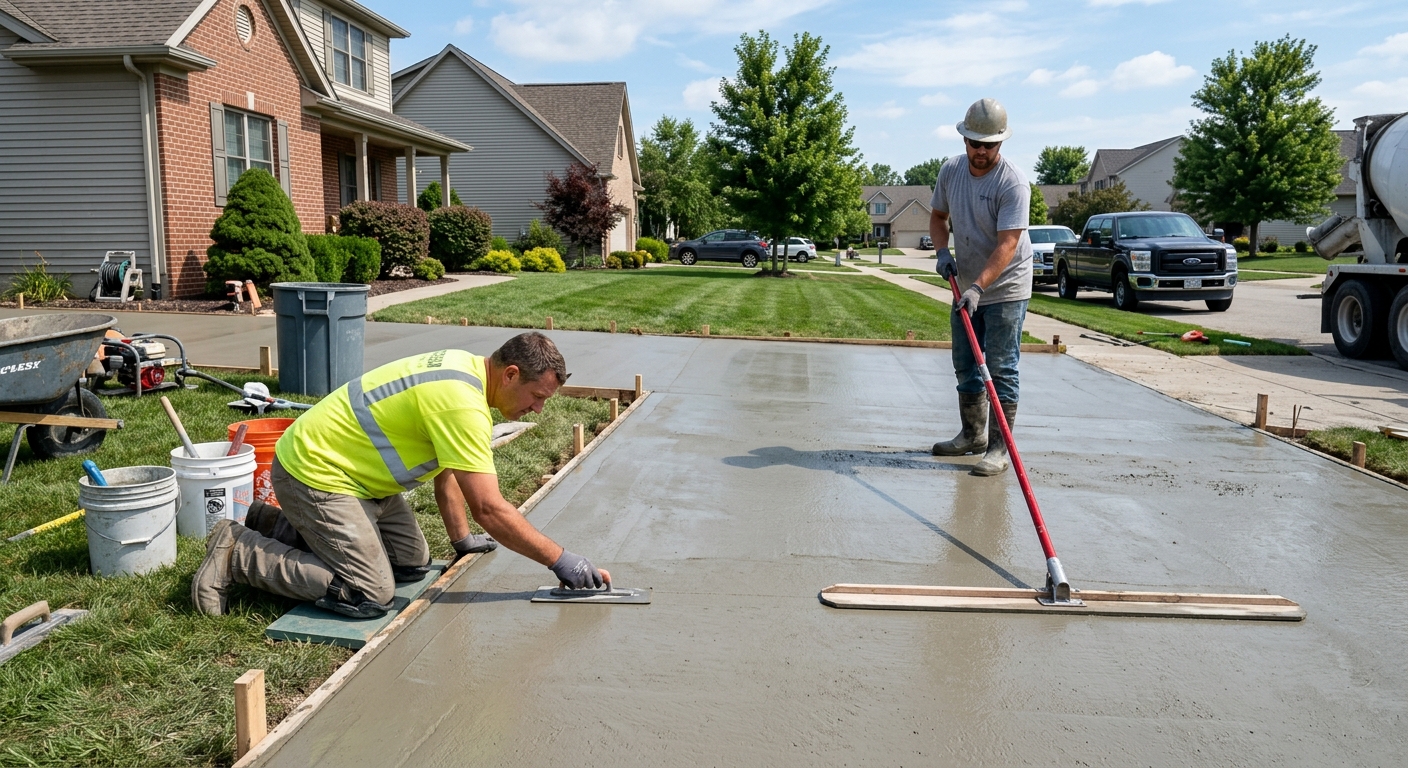
Concrete work options and costs in St. Andrews Heights
In St. Andrews Heights, Alberta, homeowners usually start with one of three goals: a long-lasting driveway, a clean patio/walkway surface, or structural concrete that sets the foundation for the whole home. With a 2021 population of 1,345 (Statistics Canada, 2021 Census), the community is small enough that quality contractors can be booked quickly—especially in established pockets where owner-renos and new builds are active. In Calgary’s surrounding area, the typical demand clusters in neighbourhoods like the newer-growth lanes near major arterial routes around Calgary—areas where access for concrete trucks and haul routes affects cost and scheduling.
Concrete pricing here isn’t just “material plus labour.” Calgary’s cold continental climate is engineered around frost depth and freeze–thaw cycles. Local practice assumes a design frost depth of about 1.2 m (roughly 4 ft), so footings must be founded on undisturbed soil below that line. Exterior flatwork also needs air-entrained mixes and careful control-joint spacing to limit cracking and surface scaling when temperatures swing above and below freezing. Because the exterior pour season is shorter, cold-weather placement may require winter-grade curing measures (insulating blankets, sometimes temporary heat) to protect the concrete as it gains strength—costs that show up in bids.
As a rule of thumb, the same driveway size can land 30–50% apart depending on the depth of excavation, the granular base, the reinforcement plan, and whether you choose broom finish versus exposed aggregate or stamped finishes. Below is a practical comparison to help you line up scopes before you request quotes.
| Application |
Typical Size |
Key Spec |
Finish Option |
Price Range |
| Concrete driveway (standard broom finish) |
24' x 12' (about 288 sq. ft.) |
Air-entrained concrete; compacted granular base; control joints |
Broom finish, light sealer |
$12,000–$18,000 |
| Exposed aggregate driveway |
24' x 12' (about 288 sq. ft.) |
Air-entrained mix; proper base and jointing; aggregate reveal process |
Exposed aggregate, slip-resistant texture |
$15,000–$22,000 |
| Stamped concrete driveway or patio |
24' x 12' (about 288 sq. ft.) |
Air-entrained concrete; stamping with release and colour; engineered joints |
Patterned/stamped, coloured with sealer |
$15,000–$26,000 |
| Plain concrete patio or walkway |
12' x 12' (about 144 sq. ft.) |
Air-entrained concrete; compacted base; edging and joints |
Float/trowel top with light broom |
$5,000–$9,000 |
| Garage floor (interior slab) |
22' x 22' (about 484 sq. ft.) |
Interior mix design; vapour considerations where specified; jointing |
Broom finish or smooth trowel (per plan) |
$9,500–$16,000 |
| Foundation footings (structural, below frost) |
Typical house/garage footprint (varies by plan) |
Below design frost depth (about 1.2 m); reinforced structural concrete |
Unfinished structural concrete |
$28,000–$45,000 |
Prices are estimates only and vary by project scope, site access and material selection.
What affects the price of concrete work in St. Andrews Heights
In St. Andrews Heights, Alberta, quotes for the “same” concrete job can vary by 30–50% across Calgary and the broader region because the biggest cost drivers aren’t always obvious from the surface. The excavation depth, soil conditions, and the granular base thickness (and compaction level) dictate how much concrete and labour you’re really paying for. On top of that, Calgary’s freeze–thaw cycles force contractors to design around frost movement: footings must extend below the design frost depth of about 1.2 m to prevent frost heave and seasonal settlement. Exterior slabs and walks also need air-entrained concrete to survive repeated freeze–thaw events, and the shorter exterior pour season can trigger cold-weather curing precautions like insulated blankets and, in some cases, temporary heat.
De-icing salt is another local cost factor. It doesn’t just damage aesthetics—it can accelerate scaling and spalling if the mix and finishing aren’t right, which is why sealing and proper jointing affect long-term maintenance costs. In a practical bid, you might see a broom-finished driveway land near the $12,000–$18,000 range, while stamped options often push toward the $15,000–$26,000 band because they require added materials (release agent/colour hardeners) and extra finishing time. Likewise, a foundation that’s straightforward on well-draining soil can be closer to the low end of the $28,000–$45,000 band, but poorer subgrade may force deeper excavation and more engineered backfill.
Two common St. Andrews Heights examples that swing costs: (1) frost-related excavation is deeper when soil is disturbed near the service line or when regrading is needed to meet drainage slopes; (2) truck access at the build site can add haul time or require smaller pours and extra finishing crews, which affects labour.
| Price Factor |
Why It Matters |
Cost Impact |
| Frost line depth — determines footing depth and form height |
Footings must bear below the design frost depth (about 1.2 m) to reduce frost heave risk |
Higher excavation and more concrete; can move foundation pricing by thousands |
| Site preparation — excavation, grading, compacted granular base |
Freeze–thaw performance depends on a stable, well-compacted sub-base and correct drainage slopes |
Extra truckloads of granular fill and labour increase bid totals |
| Reinforcement — rebar or wire mesh requirement |
Controls cracking and improves slab performance under loads and thermal movement |
Material and placement labour add cost, but reduce early repairs |
| Mix design — air-entrainment and compressive strength spec |
Air-entrainment helps resist spalling from freeze–thaw cycles |
Proper mix can add per-yard cost; using a cheaper mix raises long-term failure risk |
| Finish type — broom vs. stamped vs. exposed aggregate |
Finish method affects labour time, materials, and installation complexity |
Stamped/exposed often pushes pricing into the $15,000–$26,000 driveway/patio band |
| Pour size and concrete truck access to site |
Lineal access, pumping distance, and timing affect the pour plan |
Pump/extra crews/extended pour time can add noticeable costs |
| Cold-weather curing precautions — heating and blankets |
Concrete must cure properly before freezing or scaling risk rises |
Winter-grade provisions can increase exterior slab costs |
| Control joint pattern and sealing cost |
Joints reduce random cracking; sealing helps repel de-icing salt intrusion |
Sealer is usually small compared to the cost of replacement, but it matters |
Permits & regulations in Alberta
In Alberta, structural concrete work typically needs a permit and often comes with engineered drawings reviewed by the municipality. That includes concrete elements like foundation footings, foundation walls, and grade beams—anything that supports the house and transfers loads. For concrete flatwork such as patios, walkways, driveways, and garage floors, permits usually aren’t required unless the project affects lot grading/drainage, impervious surface coverage limits, or the municipal right-of-way. Even when a permit isn’t usually expected, you should confirm with your local authority before excavation, especially if you’re changing drainage patterns or modifying sidewalk/curb areas.
Before you book a crew in St. Andrews Heights, verify the contractor is properly insured and compliant. Start with their Alberta licence status (through the appropriate online registry), then request a current certificate of insurance showing liability coverage amounts and the project address. Ask specifically for WSIB/WCB coverage documentation (or their applicable exemption/clearance documents, if they’re legitimately exempt). Then request references for similar-scale work in Calgary-area conditions—exterior freeze–thaw jobs where they can show how they handled air-entrainment, base preparation, and joint layout.
Step-by-step for homeowners: (1) ask for licence details and the exact business name; (2) confirm the insurance certificate is active and lists you as an additional insured where applicable; (3) confirm WSIB/WCB coverage and that it applies to the workers on your site; (4) review the contract scope and who is responsible for any permits or inspections that are required for structural scope.
Getting concrete right in St. Andrews Heights's freeze-thaw climate
Concrete failures in St. Andrews Heights usually trace back to one or more gaps in the spec: insufficient base support, wrong mix design, weak curing, or missing joint/sealing details. In our Calgary-area freeze–thaw cycle, the concrete expands and contracts repeatedly, and water intrusion turns into a pressure event as temperatures drop. The most common homeowner-visible problem is spalling—surface scaling and flaking—often caused by inadequate air-entrainment, poor finishing, or allowing the surface to freeze before it reaches adequate early strength.
To spec the job correctly, you want five things locked in: (1) base preparation with properly compacted granular sub-base to match local soil and frost considerations (with excavation carried down far enough for stable support); (2) mix design that includes air-entrainment for exterior exposure—typically about 5–7% air content for durable flatwork—with a minimum 32 MPa compressive strength target unless engineering specifies otherwise; (3) a control joint plan that limits uncontrolled cracking—spacing should be set based on slab size and thickness; (4) curing that protects the slab for at least 7 days under suitable conditions, including cold-weather precautions (insulating blankets and/or heating when needed); and (5) penetrating sealer applied after proper cure (commonly 28 days post-pour) to repel de-icing salt and reduce water absorption.
Ask technical questions like: “What exact air content are you ordering for this pour?” and “How deep is the granular base, and what compaction testing do you perform?” Here’s where costs are justified: paying for the correct air-entrained mix and winter curing typically costs less than replacing a scaled driveway. If a broom-finished driveway is near the $12,000–$18,000 range, cutting corners on mix or curing is exactly how you end up spending again within a few winters instead of budgeting once.
| Spec |
Why It Matters in St. Andrews Heights |
What to Ask For |
Impact if Skipped |
| Compacted granular base (depth?) |
A stable, well-compacted base reduces movement and helps drainage through freeze–thaw seasons |
Confirm granular base depth and compaction method |
Settlement, cracking, and early surface failure |
| Air-entrained concrete mix (target air %?) |
Air-entrainment is critical to resist freeze–thaw damage and spalling |
Ask for target air content (commonly 5–7% for exterior flatwork) |
Higher risk of scaling/spalling in winter months |
| Compressive strength (MPa rating) |
Ensures strength development for load capacity and durability through temperature cycles |
Minimum 32 MPa (or engineered requirement) |
Reduced durability and increased cracking risk |
| Control joints (spacing per ACI guidelines) |
Joints give cracks a planned route when concrete shrinks and moves |
Joint spacing and layout plan before the pour |
Random cracking that can widen and admit water |
| Minimum 7-day curing period |
Proper curing prevents freezing-related damage during early strength gain |
How curing will be protected in cold weather |
Scaling, weak surface, and shortened service life |
| Penetrating sealer (when applied after cure) |
Repels de-icing salts and reduces water absorption during Alberta winters |
Penetrating sealer applied after cure (often around 28 days) |
Faster surface deterioration and more frequent maintenance |
How to choose a concrete work contractor in St. Andrews Heights
Choosing the right concrete contractor in St. Andrews Heights, Alberta is mostly about proof: proof they’re licensed where required, insured for the risk, and experienced in Calgary’s freeze–thaw conditions. Start by verifying Alberta licensing status using the online registry for the contractor/busines name shown on the quote. Next, ask for a certificate of insurance with liability coverage that matches the job size, and confirm it covers the workers who will be on site.
For WSIB/WCB coverage, request documentation showing coverage is active and applicable to the crew assigned to your project. If the contractor relies on subcontractors, you still want clarity on who carries what—your contract should name responsibilities. This is especially important for exterior flatwork where excavation and cutting operations introduce hazards.
Then, get 2–3 itemised written quotes. The better quotes break out labour and materials (concrete supply, rebar/wire mesh, granular base, formwork, finishing, joints, sealing) rather than presenting a single lump sum that hides risk. Read the scope carefully for what’s excluded: permit pull included or not (where applicable), disposal of excess soil, saw-cutting timing, pumping vs. truck placement, and winter curing provisions if the pour is near cold weather.
On warranty, ask for both workmanship warranty length and any product/manufacturer warranty (and whether it’s transferable to you). For payment, avoid paying more than 10–15% upfront; hold back a portion until the final walkthrough and any punch-list items are completed. Make sure the timeline includes a start date and completion estimate in writing, not just “weather permitting.”
- Verify Alberta licence using the business name that will sign your contract.
- Request certificate of liability insurance showing active coverage.
- Confirm WSIB/WCB coverage for the workers who will be on your site.
- Ask for references from exterior slabs poured in Calgary-area winter conditions.
- Require an itemised quote (materials + labour + finishing + joints + sealing).
- Confirm excavation depth, granular base depth, and whether compaction testing is done.
- Ask for the air-entrainment plan and target compressive strength (minimum 32 MPa for typical specs).
- Require a control joint layout with spacing and locations shown.
- Get curing protection details if the pour date is late fall or early spring.
- Clarify whether sealing is included and when it will be applied (after curing).
- Confirm disposal of excess soil and concrete washout handling.
- Agree on a payment schedule with a holdback until final acceptance.
Concrete red flags in St. Andrews Heights include: “we don’t use air-entrainment,” vague curing promises without winter protection details, no written joint layout, pressure to pay most of the amount upfront, and quotes that don’t specify base depth or reinforcement (rebar/wire mesh) where loads or slab type require it.
Frequently asked questions — concrete work in St. Andrews Heights
How do I maintain concrete in St. Andrews Heights's freeze-thaw climate?
In St. Andrews Heights and across the Calgary area, the key is limiting water and de-icing salt exposure while keeping hairline cracks from turning into water pathways. Start with proper timing: if your driveway or walkway was recently poured, wait until it’s fully cured before applying sealers. For many exterior flatworks, a penetrating sealer applied around 28 days after the pour helps reduce salt intrusion. During winter, use de-icers that are concrete-friendly when possible and avoid aggressive mechanical scraping that can chip the surface. Also keep drainage paths clear so meltwater doesn’t pond near joints. If you notice small spalls at corners or along joints, address them early—patching now is cheaper than replacing a wider section later. (Statistics Canada, 2021 Census)
What causes concrete to spall in St. Andrews Heights winters?
Spalling in St. Andrews Heights typically comes from freeze–thaw damage combined with water getting into the concrete. The most common technical cause is inadequate air-entrainment. Without the right air content (often about 5–7% for exterior flatwork), water in the concrete can freeze, expand, and pop the surface layer off over repeated cycles. Finishing too late, weak curing, or allowing the slab to freeze before it gains adequate early strength can also contribute. Another frequent contributor is poor base drainage—if water pools and finds its way into the slab edge or joints, winter performance drops quickly. Even when mix and curing are right, skipping sealing can make de-icing salt accelerate scaling. If you paid for a standard broom driveway near $12,000–$18,000, sealing and correct jointing are usually the difference between “looks fine for years” and “starts flaking in a couple winters.”
What is rebar and when is it required in Alberta?
Rebar is steel reinforcement bars embedded in concrete to help resist cracking and improve performance under loads. In Alberta—especially in freeze–thaw climates like Calgary and St. Andrews Heights—reinforcement requirements vary by slab type, thickness, and engineering (for structural work). Interior slabs may use wire mesh or reinforcement depending on the design, but driveways and exterior slabs typically rely on reinforcement and proper jointing to control cracking from shrinkage and temperature movement. For structural concrete like foundation footings and grade beams, rebar is usually required as part of engineered drawings and permit requirements. The best way to know for your specific project is to have the contractor confirm thickness, load assumptions, and whether rebar (or mesh) is specified in the plan. If a quote doesn’t state reinforcement details, that’s a reason to ask—because reinforcement is one of the main factors preventing early cracking.
How long does a concrete project take in St. Andrews Heights?
Project timelines in St. Andrews Heights depend on weather and the amount of site preparation, because Calgary’s cold continental conditions affect curing and scheduling. For many exterior flatwork jobs, the “active” work (excavation, formwork, pour, finishing, and initial curing setup) might be completed in a day or two, but the overall timeline includes prep and curing protection. A driveway or patio often requires extra time for granular base prep and joint layout planning; then you need proper curing for at least 7 days before you can fully stress the surface. Cold-weather pours may extend the schedule because insulated blankets and curing measures must be maintained to protect early strength gain. For homeowners, it’s realistic to expect a short project duration for smaller slabs, while foundation work involves longer sequences due to engineering, inspections, and structural staging. Always ask your contractor for a written completion estimate tied to weather and curing requirements.
What is a concrete overlay and is it suited to St. Andrews Heights?
A concrete overlay is a new layer of concrete placed on top of an existing slab—often after surface preparation and, sometimes, crack repair—so you can regain a smooth, durable finish without full demolition. In St. Andrews Heights, overlays can be suitable when the existing concrete is structurally sound and the problem is mainly surface wear or minor cracking. However, overlays are not a fix for slabs that are heaving, settling, or failing due to inadequate drainage or severe base issues. Because freeze–thaw cycles here can worsen trapped moisture, the condition of the original slab and the bond strategy (including cleaning, profiling, and any bonding agent system) matter a lot. If you’re considering an overlay, ask for a clear plan for crack repair, bonding/prep steps, and how they’ll prevent water from getting between layers. If the existing slab is already scaling badly, replacement may be more cost-effective than overlay. For reference, driveway replacements typically sit in the $12,000–$18,000 range, while overlays can look cheaper upfront but may cost more over time if the base is the real cause.
How do I seal concrete to protect it in St. Andrews Heights?
Sealing in St. Andrews Heights is about reducing water and de-icing salt penetration, which helps slow scaling and spalling caused by freeze–thaw cycles. The most important rule is timing: don’t seal too soon. For many exterior flatworks, wait until the concrete has cured properly—commonly around 28 days post-pour—so the sealer can penetrate rather than trap moisture in the surface. Use a penetrating sealer designed for exterior concrete (not just a surface film) and ensure the slab is clean, dry, and free of curing compounds, paint, or heavy debris. Application weather matters too; avoid sealing when rain or freezing temperatures are likely soon after. Ask your contractor what product they use and whether it’s intended for de-icing salt exposure in Alberta winters. Sealing usually complements good control joint work and air-entrained mix design—the sealer isn’t a substitute for correct concrete at the time of the pour.