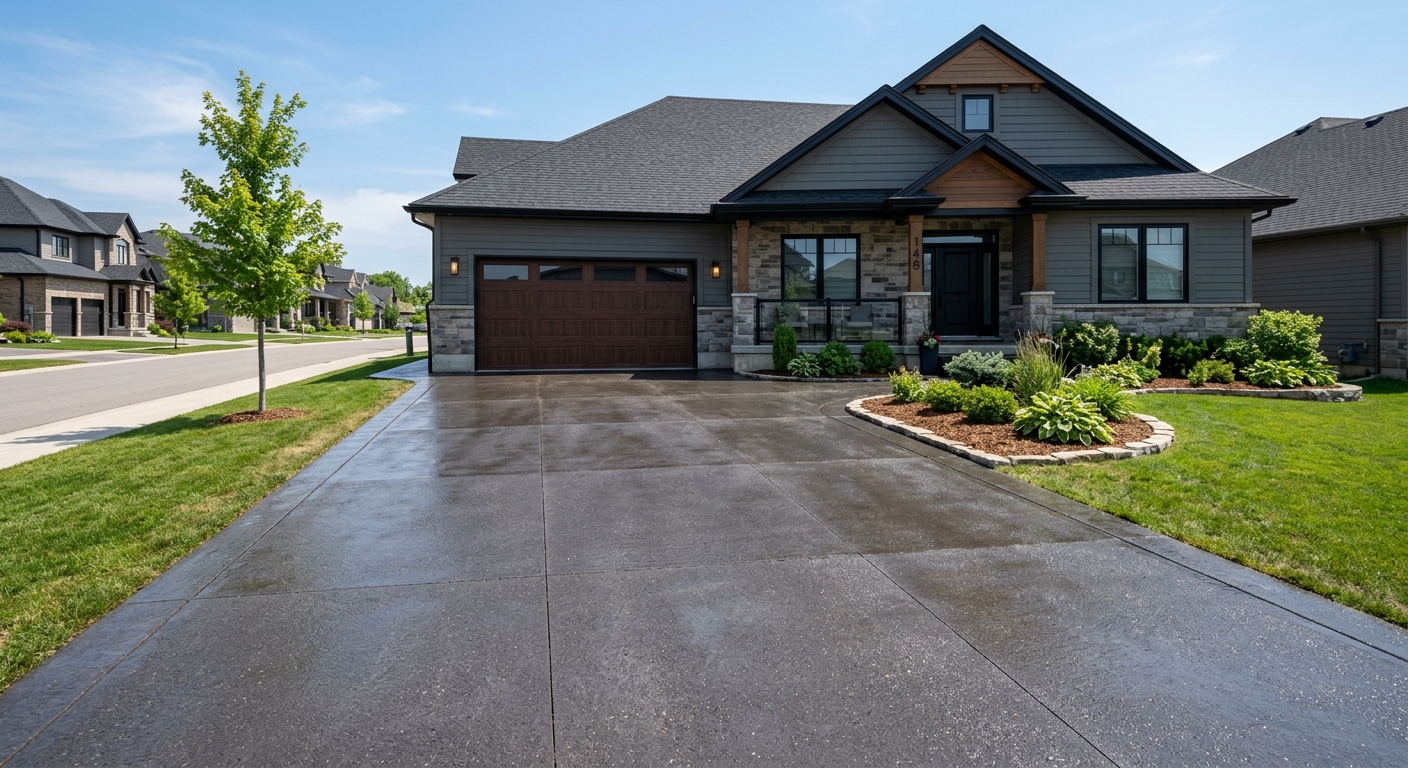
Concrete work options and costs in Altadore
Altadore, Alberta is where homeowners expect concrete flatwork to perform through long winters and rapid spring melt. With a population of 7,290 (Statistics Canada, 2021 Census), Calgary’s inner neighbourhoods like Altadore see steady demand for driveways, patios, and walkways tied to single-detached and infill home upgrades. In this market, concrete contractors price not only for materials, but for how long the project takes to prep, form, pour, and cure safely. In a cold continental climate, every detail is engineered around frost and freeze–thaw cycling; Calgary’s practical pour window is shorter, and cold-weather curing (insulating blankets, sometimes temporary heat) can be a cost driver when work happens late in fall or early in spring.
Concrete flatwork is also labour-intensive in established areas where access, removal of old slabs, and disposal of spoils can be major parts of the job. Around Altadore—especially near 10 Street S.W. and the Beltline-adjacent corridors—there’s consistent trade demand because many properties get resurfacing and foundation-adjacent upgrades as families improve curb appeal and improve water management.
Below is a realistic way to compare common options in the Altadore area. Use the specs as a guide when you review quotes, because two “driveway” bids can differ by 30–50% once excavation depth, reinforcement, finish selection, and winter curing are accounted for.
| Application |
Typical Size |
Key Spec |
Finish Option |
Price Range |
| Concrete driveway (standard broom finish) |
400 sq. ft. (approx. 16 ft x 25 ft) |
4 in. slab, air-entrained mix, compacted base, control joints |
Broomed surface |
$12,000–$18,000 |
| Exposed aggregate driveway |
400 sq. ft. (approx. 16 ft x 25 ft) |
4 in. slab, air-entrained mix, proper retarder/wash timing |
Exposed aggregate finish |
$14,500–$21,500 |
| Stamped concrete driveway or patio |
300 sq. ft. (approx. 15 ft x 20 ft) |
4 in. slab (driveway), air-entrained mix, release agent and stamping |
Stamped pattern + colour |
$15,000–$26,000 |
| Plain concrete patio or walkway |
250 sq. ft. patio / 100 sq. ft walkway |
4 in. slab (typical), air-entrained mix, compacted granular base |
Float/trowel finish with light broom |
$5,000–$9,000 |
| Garage floor (interior slab) |
400 sq. ft. (approx. 20 ft x 20 ft) |
4 in. slab, vapour considerations, reinforcement as required |
Steel-trowel finish or broom finish |
$10,500–$17,000 |
| Foundation footings (structural, below frost) |
Varies by plan; often 800–1,600 sq. ft. total footing area |
Engineered footing sizes, below design frost depth, rebar as required |
Structural concrete only (no decorative finish) |
$28,000–$45,000 |
Prices are estimates only and vary by project scope, site access and material selection.
What affects the price of concrete work in Altadore
In Altadore and the wider Calgary region, the same “concrete driveway” can land in two very different price bands because the scope hidden inside a quote can be large. It’s common to see 30–50% variation when one contractor includes deeper excavation, better granular base preparation, reinforcement placement, and proper winter curing—while another keeps the pour “basic” and relies on standard timing. In a cold continental climate, concrete is engineered to survive frost and freeze–thaw; Calgary’s design frost depth is about 1.2 m (roughly 4 ft) to manage seasonal movement. That means exterior work often requires excavation that reaches undisturbed soil below the frost influence, and footing sizes/volumes rise accordingly. Exterior slabs also require air-entrained concrete mixes to resist surface scaling and spalling.
Cost can also swing with the practical pour season. When temperatures drop, crews may need insulated blankets and sometimes temporary heat to protect curing. If you’re planning a driveway replacement closer to late fall or early spring, a “quick pour” bid can cost more long-term if curing is rushed. De-icing salts used by Calgary households can accelerate surface wear, so sealing becomes an important protective step. In the Altadore housing stock, older homes undergoing regrading or foundation-adjacent improvements often involve more demolition and spoil hauling, which pushes the job toward the upper end of the $12,000–$18,000 driveway band. On the other hand, a straightforward patio pour in a clear access area often stays nearer the $5,000–$9,000 range, especially when the base is already well-compacted and drainage is corrected.
| Price Factor |
Why It Matters |
Cost Impact |
| Frost line depth |
Determines footing depth and form height to prevent frost heave |
Higher excavation depth can raise foundation/footing costs significantly |
| Site preparation |
Excavation, grading, and compacted granular base are critical for long-term performance |
Poor base or deeper removal increases labour, granular material, and disposal |
| Reinforcement |
Rebar or wire mesh helps control cracking and supports load transfer |
Additional steel and correct placement can add meaningful line-item cost |
| Mix design |
Air-entrainment and specified strength are required for exterior freeze–thaw survival |
Winter-grade/correct air content may increase per-yard concrete cost |
| Finish type |
Broom vs. stamped vs. exposed aggregate changes labour time and material handling |
Decorative work typically costs more than plain broom-finish |
| Pour size and concrete truck access to site |
Large pours and limited access can require pump trucks or more staging time |
Shortened truck access can add labour, equipment rental, and delays |
| Cold-weather curing precautions |
Heating/blankets protect strength gain and reduce scaling risk |
Can add cost when temps drop below safe curing thresholds |
| Control joint pattern and sealing cost |
Joints manage shrinkage cracking; sealing repels de-icing salts |
Proper jointing reduces future patching and increases upfront scope |
Permits & regulations in Alberta
In Alberta, structural concrete work typically requires a building permit, and in many cases engineered drawings are reviewed as part of that permit process. Work that commonly requires a permit includes foundation footings, foundation walls, grade beams, and other structural elements that affect how the building carries loads. Decorative or purely surface-level concrete—like most standard patios, walkways, and driveways—usually does not require a permit unless the scope changes lot grading, impacts impervious surface coverage limits, or touches municipal right-of-way requirements. Because requirements can depend on your parcel and how the concrete ties into drainage and elevations, confirm with the local authority before any excavation starts.
For your protection in Altadore, verify the contractor’s coverage before you sign. Step one: confirm liability insurance—request a current certificate of insurance showing the contractor named, policy limits, and coverage for the types of work being performed. Step two: confirm WSIB/WCB coverage (or the applicable coverage approach used by the contractor) and ask for written confirmation/clearance. Step three: verify the contractor’s Alberta licensing information where applicable, and ask for references on similar-scale concrete projects. As a homeowner, you can check: (1) online contractor/licensing registries, (2) the certificate of insurance document dated within the last few months, and (3) WSIB/WCB clearance letters or verification numbers provided by the contractor for your review. Don’t rely on “we’re covered” as a phrase—ask to see the documents.
Getting concrete right in Altadore's freeze-thaw climate
In Altadore, the concrete problems I see most often are related to freeze–thaw damage and poor base preparation. When water gets into the slab edges or subgrade, expands during cold periods, and then repeatedly contracts and expands, you get surface scaling, spalling, and settlement-related cracking. The fix is to spec the job for Calgary’s engineered frost depth of about 1.2 m (roughly 4 ft), and to build a properly compacted base under every exterior slab. First, insist on compacted granular sub-base to the correct depth for your soil conditions and frost considerations, with proper grading to shed water away from the foundation.
Second, require an air-entrained mix. For exterior flatwork, a typical target is about 5–7% air content, paired with minimum 32 MPa compressive strength (per common structural/flatwork specifications). If the air-entrainment is wrong, freeze–thaw cycles can quickly break down the surface. Third, use a control joint layout that limits random cracking—spacing matters for driveways and patios. Fourth, curing must be protected: plan for at least 7 days of curing under proper conditions, and in colder placement windows use insulating blankets or temperature protection. Finally, apply a penetrating sealer after the concrete has fully cured—often around 28 days—so de-icing salts are less likely to accelerate surface wear.
Here’s a practical cost example: a decorative stamped patio can run in the $15,000–$26,000 band depending on size and detailing, but that price is justified when reinforcement, correct air-entrainment, and proper joint/sealing are included. If someone offers to “stamp over a thin base” to hit a cheaper number, you’re likely buying future patch work instead.
| Spec |
Why It Matters in Altadore |
What to Ask For |
Impact if Skipped |
| Compacted granular base (depth?) |
Prevents pumping and movement under freeze–thaw cycles |
Base depth and material specs for your soil, compaction method, and grading plan |
Settlement, slab edge cracking, and rapid surface deterioration |
| Air-entrained concrete mix (target air %?) |
Improves freeze–thaw durability in cold Calgary winters |
Air content target (typically 5–7% for exterior flatwork) and winter placement plan |
Spalling/scaling from inadequate freeze–thaw resistance |
| Compressive strength (MPa rating) |
Ensures strength gain and long-term load capacity |
Minimum 32 MPa (or higher where engineered) and concrete test/approval process |
Reduced durability, increased cracking, and weaker edges |
| Control joints (spacing per ACI guidelines) |
Controls shrinkage and reduces random cracking |
Joint spacing/layout plan and whether joints match the slab geometry |
Uncontrolled cracks that are harder and more expensive to repair |
| Minimum 7-day curing period |
Critical to strength development in a cold-weather environment |
Curing method, temperature protection, and what triggers winterized curing |
Surface scaling, weak near-surface strength, and early wear |
| Penetrating sealer (when applied after cure) |
Helps resist de-icing salts and moisture-driven surface damage |
Sealer type, application timing (often around 28 days), and coverage details |
Faster surface breakdown and more frequent maintenance |
How to choose a concrete work contractor in Altadore
Choosing the right contractor in Altadore comes down to proof, not promises. Start with Alberta verification: ask for their liability insurance certificate (showing your contractor named and appropriate limits) and confirm WSIB/WCB coverage. For licensing, request the applicable Alberta registration/clearance details where relevant, and confirm they’re in good standing. If they won’t provide documents promptly, that’s a warning sign. Next, require 2–3 itemised written quotes. You want a breakdown of labour, excavation and disposal, granular base materials, reinforcement, concrete supply, finish work, and—if scheduled in colder weather—curing blankets/heating. Avoid a “single lump sum” quote unless it’s paired with a detailed scope sheet.
Read the exclusions: is permit pulling included (when required for structural work)? Is formwork and demolition included? Who hauls away spoils? Does the quote include saw cutting, jointing, and sealing? Ask about warranty specifics. Look for a workmanship warranty length that’s written clearly, plus what happens if there’s a finish-related issue. Also clarify payment schedule: never pay more than 10–15% upfront, and use a holdback until the job is complete and surfaces meet the agreed finish standard. Finally, get the timeline in writing with a start date and estimated completion window, including contingencies for weather and curing.
- Provide certificate of insurance (date within the last few months) and confirm who is listed as insured where required
- Provide WSIB/WCB clearance/verification in writing
- Show 2–3 local references for similar slab sizes and finishes
- Itemise quotes: excavation/disposal, base materials, rebar/wire mesh, concrete supply, finish, curing, sealing
- Confirm slab thickness and reinforcement placement in writing
- Ask for the proposed air-entrainment specification for exterior flatwork
- Require a joint layout plan and when/what type of joints will be installed
- Ask what happens if temperatures drop mid-pour (blankets/heating plan)
- Clarify concrete finish type and finish consistency (broom profile, stamping details, wash/expose method)
- Confirm protection and curing responsibilities (who covers, how long, and what “proper conditions” means)
- Get warranty terms and whether they’re transferable if you sell the home
- Hold back a final payment until punch-list items are completed and sealed (if included)
Concrete red flags in Altadore: promises of “anytime, no need for winter curing,” a quote that treats excavation depth and reinforcement as optional, no written curing plan, refusal to show insurance/WSIB documentation, and mismatched pricing that doesn’t align with finish type (for example, stamped pricing that’s unusually close to broom-finish).
Frequently asked questions — concrete work in Altadore
How do I seal concrete to protect it in Altadore?
In Altadore and across Alberta’s cold winters, sealing matters because de-icing salts and moisture drive surface wear. After your concrete reaches cure—typically around 28 days—use a penetrating sealer designed for exterior slabs. The key is surface condition: the concrete should be clean, dry, and free of dust and construction residue. A good contractor will also prep the surface (sweep/wash as needed) and apply sealer evenly with correct coverage so you don’t get dark patches or missed areas. If your slab is curing in cool weather, don’t rush sealing; otherwise the sealer can trap moisture and reduce performance. When comparing quotes, look for whether sealing is included; it’s one reason driveway costs can move within the $12,000–$18,000 range.
What is the difference between concrete and cement?
Concrete is the full construction material you see and place on your property. It’s a mixture of cement, water, fine and coarse aggregates (sand and gravel), and often additives such as air-entrainment for freeze–thaw durability. Cement is just one component—the binder—that reacts with water to form a hard paste. In practical terms for homeowners in Altadore, contractors don’t usually “sell cement” separately; they specify the concrete mix design—such as air content and compressive strength—and then order a delivered batch to match those specs. That’s why a quote should reference air-entrained mix and required strength for exterior flatwork. If a contractor can’t explain the mix spec (especially for freeze–thaw), that’s a warning sign.
How much does concrete work cost in Altadore?
Concrete pricing in Altadore is driven by excavation depth, base preparation, reinforcement, finish complexity, and cold-weather curing needs. As a practical guide, a typical concrete driveway (broom finish) often lands in the $12,000–$18,000 range, while a plain patio or walkway is commonly in the $5,000–$9,000 range depending on size and access. Stamped concrete costs more because of additional labour and detailing; those projects commonly fall within the $15,000–$26,000 band. Foundation footings are a different category—structural concrete below frost is typically in the $28,000–$45,000 range. Expect quotes to vary 30–50% in Calgary-area bids when one contractor includes winter-grade curing precautions and proper air-entrainment while another doesn’t.
How deep must footings be for Altadore's frost line?
For Altadore in Calgary’s region, design frost depth is engineered at about 1.2 m (roughly 4 ft). In practical terms, that means structural footings for houses, garages, decks, and retaining elements must bear on undisturbed soil below that depth to reduce the risk of frost heave and seasonal movement. Your footing depth should be confirmed based on soil conditions and the engineered drawings for your specific foundation plan—especially where drainage and soil type vary. A good contractor will coordinate with the engineer/permit drawings and ensure excavation reaches the required bearing level. If a quote doesn’t explain footing depth relative to frost protection and the plan for undisturbed soil, ask for clarification before work starts. In a freeze–thaw climate, “close enough” depths can lead to expensive settlement repairs.
Why does concrete crack in Altadore and how is it prevented?
Concrete cracks in Altadore mainly due to shrinkage, temperature changes, and how water and freezing affects the slab and subgrade. Even good concrete will crack—what matters is controlling where and how it cracks. Prevention comes from proper base prep (compacted granular support to the right depth), correct mix design (including air-entrainment for freeze–thaw durability), and a deliberate control joint plan. Control joints reduce random cracking by creating planned “weak lines” that guide shrinkage stresses. Reinforcement and proper curing also help limit crack width and reduce surface scaling risk. When you compare quotes, ask how joints will be spaced and cut, what air content is targeted for exterior work, and how curing will be protected in cold weather. Those items are often why prices shift across Calgary-area concrete bids.
Stamped vs broom-finish concrete — cost difference?
Stamped concrete costs more than broom-finish because of extra steps: moulds/plates, release agents, careful timing, added labour to achieve a uniform pattern, and often additional colour/finishing materials. In Altadore, that’s reflected in typical pricing—plain broom-finish driveways usually sit around the $12,000–$18,000 band, while stamped driveway or patio projects commonly fall into the $15,000–$26,000 range. However, the real comparison is quality of spec, not just appearance. A stamped job should still include the same freeze–thaw durability requirements: air-entrained mix, correct curing, and a proper control joint layout. If someone offers stamped pricing near the broom-finish range, ask what they’ve excluded—base depth, reinforcement, winter curing, or sealing.