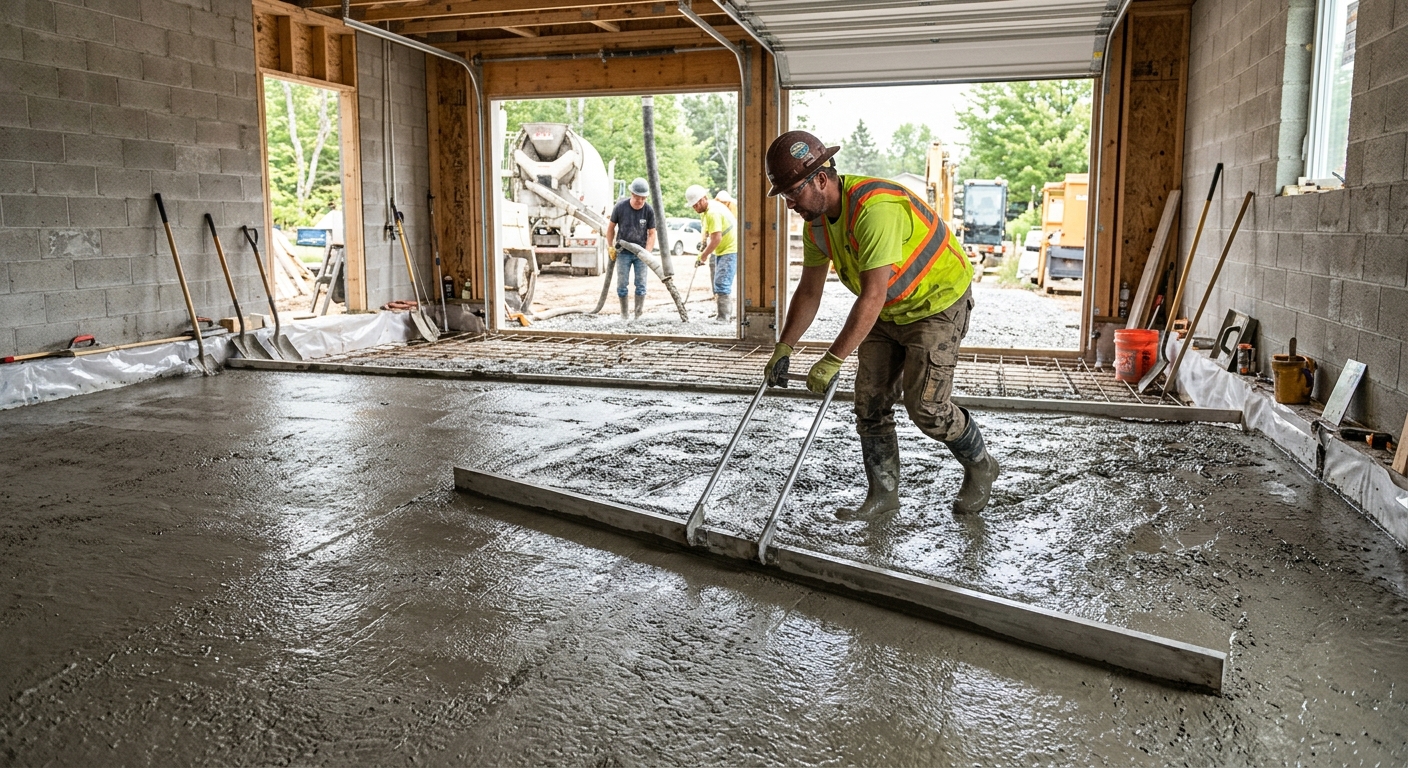
Concrete work options and costs in Lake Bonavista
Lake Bonavista is a well-established Calgary-area community, and concrete flatwork is one of the most common upgrades homeowners consider—especially around single-detached homes that rely on durable driveways, patios and walkways. In 2021, the Lake Bonavista area had a population of 10,145 (Statistics Canada, 2021 Census), and that steady owner-occupied market supports a consistent volume of masonry and concrete work. You’ll also see many mature properties on established lots, which often means more cutting, patching, and reinstatement around existing sidewalks, gates, and landscaping.
Calgary’s cold continental winters shape pricing in a way that’s very practical: we engineer around freeze–thaw cycles more than in milder regions. In this market, footings for houses, garages, decks and retaining structures are typically designed to bear below the local design frost depth (about 1.2 m, roughly 4 ft), which increases excavation and footing volume. Exterior slabs also require air-entrained concrete mixes and a deliberate approach to cold-weather placement—insulated blankets, winter-grade mixes, and sometimes temporary heating—so concrete cures properly and doesn’t scale or spall later.
In Lake Bonavista, contractors tend to be especially busy on streets and cul-de-sacs in the inner neighbourhood areas where access is tight and homeowners want quick turnaround before winter. Demand is often highest for driveway replacements and patio expansions because they’re visible projects and tie into broader yard re-grading.
Below is a realistic comparison of common options and what typically drives cost in this specific Calgary climate—then you can use it as a baseline for your site visit and estimate.
| Application |
Typical Size |
Key Spec |
Finish Option |
Price Range |
| Concrete driveway (standard broom finish) |
20 ft x 10 ft (200 sq ft) |
Air-entrained exterior mix, compacted base, control joints |
Broom finish, standard edges |
$12,000–$18,000 |
| Exposed aggregate driveway |
20 ft x 10 ft (200 sq ft) |
Air-entrained mix, well-compacted granular base |
Exposed aggregate (surface retarder/ wash) |
$14,000–$22,000 |
| Stamped concrete driveway or patio |
15 ft x 12 ft (180 sq ft) |
Air-entrained mix, reinforcement per design |
Stamped pattern + sealer |
$15,000–$26,000 |
| Plain concrete patio or walkway |
10 ft x 12 ft (120 sq ft) |
Sloped for drainage, control joints |
Float + broom/steel trowel edges |
$5,000–$9,000 |
| Garage floor (interior slab) |
22 ft x 22 ft (484 sq ft) |
Vapour barrier, reinforcement/welded wire, proper base thickness |
Steel trowel finish (smooth) |
$10,000–$16,000 |
| Foundation footings (structural, below frost) |
Typical detached home + garage portions |
Excavate to frost depth, rebar, engineered dimensions |
Structural concrete (no decorative finish) |
$28,000–$45,000 |
Prices are estimates only and vary by project scope, site access and material selection.
What affects the price of concrete work in Lake Bonavista
In Calgary and across the broader Alberta market, it’s common to see quotes for the “same” concrete project vary by 30–50%. The difference usually isn’t the concrete itself—it’s the engineering details, prep work, and how the contractor plans for cold-weather curing and freeze–thaw durability. Two contractors can both price a driveway, but one may design for proper base thickness, air-entrained mix, and jointing that holds up to winter salt; the other may default to a leaner spec that looks fine for a season and then deteriorates.
Frost depth and freeze–thaw cycles dictate the backbone of the system here. Footings must bear below the design frost depth (about 1.2 m, roughly 4 ft) to prevent frost heave and seasonal movement. Exterior slabs also need air-entrained concrete mixes to survive repeated cycles—especially on surfaces exposed to Alberta winters and de-icing salts. Cold-season placement matters, too: the practical pour window for exterior flatwork is shorter, and achieving proper curing may require winter-grade mixes, insulated blankets, and sometimes temporary heat. That curing protection is a cost driver, but it’s the reason the finish stays tight and doesn’t scale.
In Lake Bonavista, there are a couple of local conditions that regularly push costs up or down. Tight access on certain lanes increases labour time for excavation and concrete truck staging. Also, lots with older landscaping or existing flatwork removal often add disposal and sub-base replacement. On the flip side, a straightforward backyard with clean access can keep a plain patio closer to the $5,000–$9,000 band; once you move into stamped work with additional labour, forms, texture tools, and finishing/sealing, pricing more often lands in the $15,000–$26,000 range. For foundation work, the same rule applies—deeper frost design and more excavation can be the difference between “mid-band” and “top-band” foundation / footings pricing, especially when soil conditions require additional granular or rework.
| Price Factor |
Why It Matters |
Cost Impact |
| Frost line depth |
Determines footing depth and form height |
More excavation and concrete volume; biggest driver for footings |
| Site preparation |
Excavation, grading, compacted granular base |
Extra haul-off, granular replacement, and labour if existing base is poor |
| Reinforcement |
Rebar or wire mesh requirement |
Adds material and placement labour; may be required for thicker slabs |
| Mix design |
Air-entrainment and compressive strength spec |
Higher-performance exterior mix costs more but improves freeze–thaw durability |
| Finish type |
Broom vs. stamped vs. exposed aggregate |
Stamped/exposed adds labour, timing control, and sealing requirements |
| Pour size and concrete truck access to site |
Trucking/staging and ability to place quickly |
Long hose runs, limited access, or short pour windows increase cost |
| Cold-weather curing precautions |
Heating and blankets |
Insulation materials and labour to protect curing lowers scaling risk |
| Control joint pattern and sealing cost |
Jointing manages shrinkage; sealing repels salts |
Proper layout reduces random cracks; sealing is an added material/visit |
Permits & regulations in Alberta
In Alberta, whether you need a permit can depend on how the concrete ties into structural work and grading. Structural concrete work—such as foundation footings, foundation walls, and grade beams—typically requires a building permit and, in many cases, engineered drawings that the municipality reviews. If you’re doing a basement foundation, underpinning, or any work that changes structural loads, plan on permits. For concrete flatwork (driveways, patios, and walkways), permits are usually not required as long as the work doesn’t materially affect lot grading, alter drainage patterns, or introduce new impervious surface coverage that conflicts with municipal limits. Still, you should confirm with the local authority before breaking ground.
For Lake Bonavista homeowners, the easiest way to protect yourself is to verify contractor compliance before you sign. Step one: ask for their proof of liability insurance and a current certificate of insurance (it should list the coverage and limits). Step two: confirm they have the required workplace coverage—WSIB/WCB coverage in their trade capacity—then request documentation. Step three: verify their Alberta business credentials and trade licensing information through the appropriate online registry sources, and ask for their contractor references on similar foundation or flatwork jobs. Step four: make sure the quote clearly states what permit responsibilities fall under—if a permit is required, confirm who pulls it and whether any engineering or inspections are included.
Getting concrete right in Lake Bonavista's freeze-thaw climate
Concrete fails in Lake Bonavista mostly through the combination of moisture movement, inadequate base support, and freeze–thaw expansion. When water gets into the slab system and the concrete isn’t engineered for winter exposure, you’ll see surface scaling, flaking (“spalling”), and random cracking that worsens as freeze–thaw cycles repeat. The spec has to be built for this region: proper base preparation, air-entrained mix, correctly spaced control joints, and curing that actually completes before the surface is exposed to harsh temperatures.
Start with base preparation: we excavate to the right depth for local soil conditions and the frost-protection strategy, then compact a granular sub-base so the slab doesn’t pump or settle. Next, use the right mix design. For exterior flatwork in Calgary-area climates, we typically specify air-entrainment in the range of 5–7% and target a minimum 32 MPa compressive strength, with the exact values set to match your exposure and design requirements. Control joints matter: spacing and depth should limit random cracking so cracks are manageable and aligned. Curing is often the “hidden” failure point—minimum 7-day curing under proper conditions is essential, and in cold weather that means insulated blankets or heating so the concrete reaches adequate early strength. Finally, sealing is a smart layer of protection: apply a penetrating sealer after the cure (commonly around 28 days post-pour) to help repel de-icing salts.
Here’s a dollar-level example from recent homeowners’ conversations: upgrading a standard broom-finish driveway to stamped concrete usually adds labour and sealing steps. If a broom option is trending in the $12,000–$18,000 band, stamped work more often comes closer to the $15,000–$26,000 band. The price difference is justified when the contractor maintains the same durability specs (air content, joints, curing)—because in our freeze–thaw climate, the finish can’t compensate for poor engineering. If the contractor talks only about colour and pattern but can’t clearly explain air entrainment and jointing, that’s the part you should question first.
| Spec |
Why It Matters in Lake Bonavista |
What to Ask For |
Impact if Skipped |
| Compacted granular base (depth?) |
Prevents pumping and settlement under freeze–thaw cycles |
Granular base thickness and compaction method for your lot |
Cracks, uneven wear, and accelerated surface deterioration |
| Air-entrained concrete mix (target air %?) |
Allows concrete to resist freezing water expansion |
Exterior air content target (typically 5–7%) |
High risk of scaling and spalling in winter |
| Compressive strength (MPa rating) |
Ensures adequate strength development for service life |
Minimum 32 MPa (or project-specified rating) |
Surface damage and reduced durability |
| Control joints (spacing per ACI guidelines) |
Controls where shrinkage cracks occur |
Joint layout and spacing plan for your slab size |
Random cracking and water pathways into the slab |
| Minimum 7-day curing period |
Builds early strength before winter exposure |
Curing plan, including blankets/heating if cold |
Scaling, weak surface, and long-term cracking |
| Penetrating sealer (when applied after cure) |
Helps reduce de-icing salt penetration and moisture uptake |
When sealing is applied (commonly around 28 days post-pour) |
Faster surface wear and salt-related deterioration |
How to choose a concrete work contractor in Lake Bonavista
Choosing the right contractor in Lake Bonavista is mostly about verifying documentation and insisting on details that protect the concrete in a freeze–thaw climate. First, confirm Alberta credentials: ask for proof of general liability insurance (request a certificate of insurance), and verify workplace coverage under WSIB/WCB. Don’t rely on verbal confirmation—request documents and check that the coverage is current and appropriate for the type of work being done. Next, confirm references. Look for photos and addresses that match your scope: driveway replacements, patios, and any foundation/footing work (not just decorative indoor work).
Then get 2–3 itemised written quotes, not one lump number. A good estimate breaks labour and materials out clearly—for example, excavation/disposal, compacted granular base, reinforcement (if any), concrete mix spec, finish steps, and curing/blanketing provisions. Also verify what’s included: disposal of removed concrete, permit pull (if required), and protection of landscaping. If you’re pouring in a colder stretch, ensure the quote states the cold-weather curing method.
Warranty is where you should read carefully. Ask for the workmanship warranty length, whether it covers cracking and spalling, and whether manufacturer product warranties (like sealers) transfer to you. For payment, never pay more than 10–15% upfront; use a holdback until the job is complete and the final cleanup is done. Finally, get a written start date and a completion estimate that accounts for curing time—especially if the contractor is planning for winter-grade procedures.
- Ask for certificate of liability insurance and confirm limits match the job scope.
- Request WSIB/WCB clearance or proof of coverage in writing.
- Confirm their Alberta licensing/registration details using the appropriate online registry.
- Get 2–3 itemised quotes (labour, materials, equipment, and finish steps).
- Require the exterior concrete mix spec (air-entrainment) in the quote.
- Demand base thickness and compaction requirements for your slab.
- Confirm reinforcement plans (welded wire or rebar) where needed.
- Ask for control joint layout and sealing schedule for exterior slabs.
- For cold weather, require a written heating/blanket curing plan.
- Clarify exclusions: demo scope, disposal fees, and reinstatement of landscaping.
- Use payment milestones: keep a 10–15% holdback until final acceptance.
- Get timelines in writing, including curing time and restrictions on traffic.
In Lake Bonavista, red flags I commonly see include: quotes that don’t mention air-entrainment for exterior work, promises to pour without a curing plan when night temperatures drop, vague scope lines like “concrete as required” with no base depth or joint plan, refusal to provide insurance/WSIB/WCB documentation, and warranties that exclude freeze–thaw-related issues without explaining why.
Frequently asked questions — concrete work in Lake Bonavista
How deep must footings be for Lake Bonavista's frost line?
For Lake Bonavista and the Calgary region, footings are designed to bear below the local design frost depth. In this market, the working design frost depth used for engineering practice is about 1.2 m (roughly 4 ft), and contractors typically excavate and form to that depth (or to the engineered foundation drawings for your house). The exact required depth can vary by your specific soil conditions, footing width, and structural design, but the “below frost” rule is consistent because it prevents frost heave and seasonal movement. If a contractor proposes footing elevations that are above that design frost depth, that’s a major durability risk in Alberta’s freeze–thaw climate. Always confirm the footing elevations in the engineering drawings and ensure the excavated bearing is on undisturbed soil.
Why does concrete crack in Lake Bonavista and how is it prevented?
Concrete cracks happen mostly due to shrinkage, thermal movement, and how the slab is supported—not because concrete “should never crack.” In Lake Bonavista, the freeze–thaw cycle also amplifies moisture movement, so a slab that’s missing proper base prep or jointing can crack more noticeably and allow water pathways that worsen surface deterioration. Prevention is about specifying the right system: a properly compacted granular base, air-entrained exterior mix for winter durability, and control joints placed at a designed spacing so shrinkage cracks occur where you want them. Sealing after cure also helps reduce de-icing salt penetration. If you’re comparing quotes, a driveway at the $12,000–$18,000 band should still include joints and the correct exterior mix—those items protect your investment more than finish marketing.
Stamped vs broom-finish concrete — cost difference?
Stamped concrete costs more than broom-finish because it requires additional labour and controlled finishing steps: textures are placed and worked during the right timing window, and the process typically includes colour release materials and a full sealing system. In this Calgary-area market, a standard broom-finished driveway commonly trends in the $12,000–$18,000 band for typical sizes, while stamped driveway or patio work more often lands in the $15,000–$26,000 range. The key point for Lake Bonavista homeowners: don’t treat the finish as the “durability.” The durability comes from air-entrainment, a properly compacted base, jointing, and proper curing. If a quote offers stamped concrete but doesn’t clearly state those durability specs, you may be paying for appearance while sacrificing long-term performance.
When is the best time to pour concrete in Lake Bonavista?
The best time is when temperatures stay consistently above freezing and the contractor can complete curing without stress on the concrete surface. In Calgary’s colder continental climate, exterior pours typically become higher-risk in late fall or early spring because curing may slow down and surface protection becomes essential. For Lake Bonavista projects, the practical goal is to schedule so concrete can achieve adequate early strength—usually supported by a minimum 7-day curing plan—and to use insulated blankets or temporary heat if cold weather placement is unavoidable. If you wait too late, you may still proceed, but you should expect additional cost for winter-grade mixes, blankets, and monitored curing. A well-planned pour can protect a driveway or patio from early scaling, which is the most frustrating problem to fix after winter.
How long does concrete take to cure?
Concrete curing happens in stages. You’ll often see “set” occur within hours, but that’s not the same as full durability. For exterior concrete work in Alberta, a minimum 7-day curing period under proper conditions is commonly used as the target window for early strength development before exposing the surface to traffic and harsh weather. Full curing to design properties can take longer—often around 28 days—especially for surface treatments like penetrating sealer. If you’re scheduling in Lake Bonavista during cooler periods, the contractor should explain how they’ll keep the concrete warm enough during the first days—blankets and/or heating—so curing isn’t interrupted by freezing conditions. Skipping proper curing is a common cause of surface scaling that appears months later when freeze–thaw cycles intensify.
Do I need a permit for concrete work in Alberta?
In Alberta, structural concrete work—like foundation footings, foundation walls, and grade beams—usually requires a building permit and often engineered drawings reviewed through the municipality. For typical concrete flatwork such as patios, walkways, and driveways, permits are usually not required unless the work affects lot grading, drainage, or impervious surface coverage limits, or if it touches municipal right-of-way issues. In Lake Bonavista, I recommend you confirm with the local authority before you start, especially if your project includes raising slabs, changing drainage direction, or adding new surfaces near eavestrough discharge. Also, make sure your contractor provides liability insurance and WSIB/WCB coverage paperwork—those checks matter whether permits are required or not.