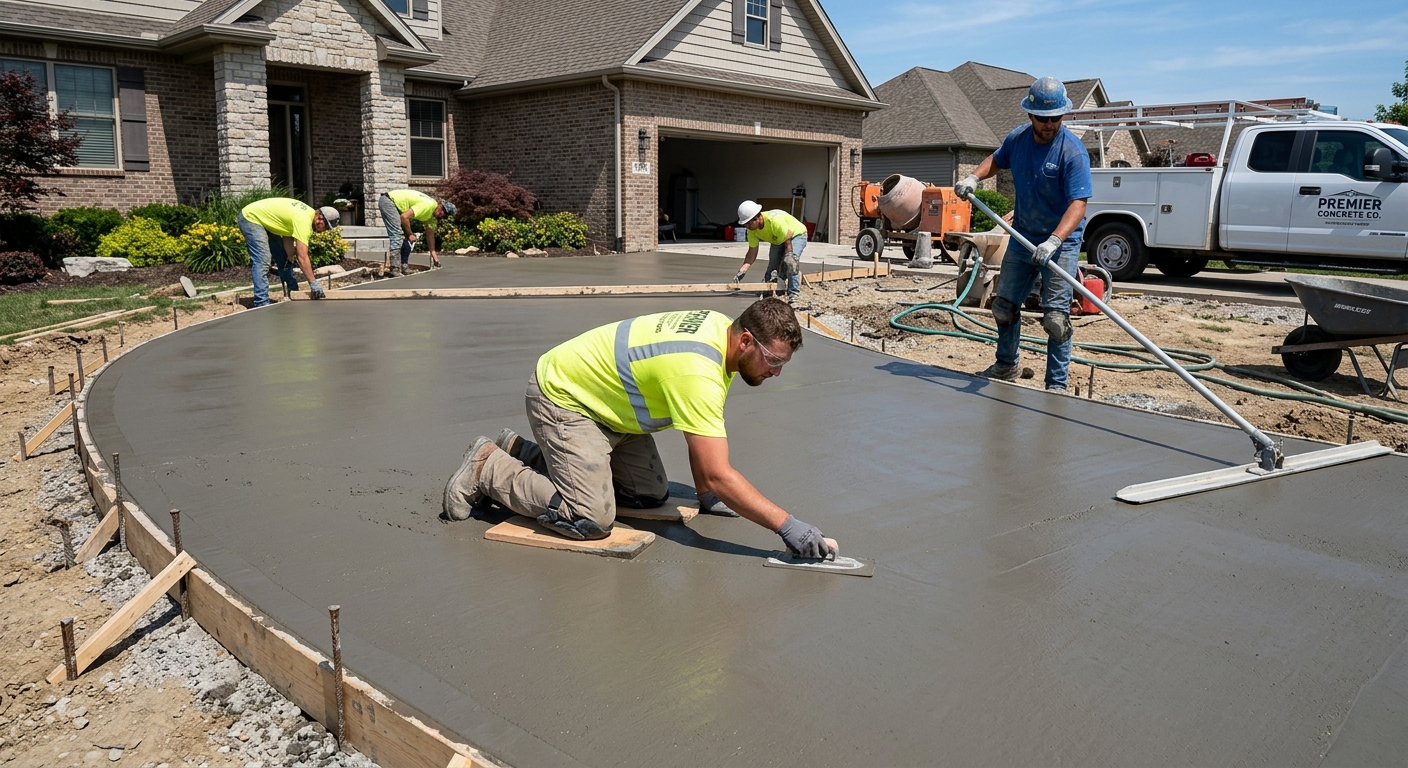
Concrete work options and costs in Rosemont
In Rosemont, Alberta, homeowners typically reach for concrete for driveways, patios, walkways, garage floors, and foundation footings—the kind of flatwork you see alongside many single-detached homes in the community. With Rosemont’s population listed at 1,155 people in the 2021 Census (Statistics Canada, 2021 Census), the market stays relatively small, and that has a direct effect on contractor availability and scheduling. When demand spikes in the Calgary area—especially around summer exterior projects—pricing can tighten because crew time and concrete truck slots get booked earlier.
Calgary’s cold continental climate is the other big driver. Local practice is engineered around a design frost depth of about 1.2 m (roughly 4 ft), meaning footings for houses, garages, decks and retaining structures need to bear below that depth to reduce frost heave and seasonal movement. Add frequent freeze–thaw cycles, and exterior slabs are placed with air-entrained concrete plus well-spaced control joints to manage cracking and spalling. The practical pour season for exterior flatwork is shorter, and in late fall or early spring, winter-grade mixes and curing precautions can add cost. In short: even when two quotes look similar, the specifications behind them often aren’t.
In Rosemont—particularly around the busier residential pockets connecting to established streets—concrete driveways and entry walkways tend to be in higher demand because people want curb appeal without ongoing maintenance. Use the table below to compare typical applications and finish levels, then we’ll break down what pushes bids up or down.
| Application |
Typical Size |
Key Spec |
Finish Option |
Price Range |
| Concrete driveway (standard broom finish) |
24 ft x 10 ft (240 sq. ft.) |
Air-entrained mix for exterior exposure, compacted base, joints |
Broom finish, control joints |
$12,000 – $18,000 |
| Exposed aggregate driveway |
24 ft x 10 ft (240 sq. ft.) |
Air-entrained mix, consistent aggregate reveal, proper curing |
Exposed aggregate with sealer |
$14,000 – $22,000 |
| Stamped concrete driveway or patio |
20 ft x 12 ft (240 sq. ft.) |
Air-entrained mix, integral colour or colour hardener, joints |
Stamp patterns (stone/brick textures) |
$15,000 – $26,000 |
| Plain concrete patio or walkway |
12 ft x 12 ft (144 sq. ft.) |
Compacted granular base, air-entrained mix, joints |
Plain trowel or broom-smooth finish |
$5,000 – $9,000 |
| Garage floor (interior slab) |
22 ft x 20 ft (440 sq. ft.) |
Vapour control considerations, adequate reinforcement, proper curing |
Float and light broom, or smooth trowel option |
$9,500 – $15,500 |
| Foundation footings (structural, below frost) |
Typical house footing system (engineered) |
Excavation to design frost depth, reinforced footings |
Structural concrete finish (not decorative) |
$28,000 – $45,000 |
Prices are estimates only and vary by project scope, site access and material selection.
What affects the price of concrete work in Rosemont
In Rosemont and across the Calgary region, it’s common to see bids for the “same” concrete project vary by 30–50%—and it’s usually because the specifications aren’t actually the same. Two contractors may quote a driveway at different prices, but one may assume thicker granular base, a higher air-entrainment target, more reinforcement, more joints, better truck access allowances, or winter curing precautions. In Alberta, where the design frost depth is about 1.2 m for local practice, footings and excavation volumes drive cost early—long before finishing choices do. For exterior slabs and flatwork, freeze–thaw cycles are constant, so concrete must be built to resist surface scaling and long-term spalling, especially where de-icing salt is used.
Local examples show how this plays out in dollars. If your driveway project lands in the $12,000–$18,000 band, that typically corresponds to a standard broom finish with straightforward access and a properly prepared base. Move into the higher range—like the $15,000–$26,000 band for stamped work—and you’re paying for integral colour systems, stamp tooling labour, and tighter finishing control to avoid surface defects after curing. Cost also rises if you’re in a late-season window, because cold-weather placement may require insulated blankets or temporary heating to get concrete through its early strength development. On the other hand, costs can drop when a job is compact, well-accessed, and doesn’t require extra excavation due to stable subsoil.
Even small site differences matter here. A driveway that needs additional granular depth because the existing grade is off, or requires more rework due to poor drainage, can push foundation-adjacent excavation and slab base costs upward—while an interior garage slab on stable grades may stay closer to the lower end of its range. The climate doesn’t care; the concrete details do.
| Price Factor |
Why It Matters |
Cost Impact |
| Frost line depth — determines footing depth and form height |
Footings must bear below the design frost depth to reduce frost heave and seasonal movement. |
Higher excavation volume can add significant labour and concrete; major driver of foundation pricing. |
| Site preparation — excavation, grading, compacted granular base |
Weak or improperly compacted base leads to settlement and cracking. |
Extra excavation/disposal and more granular material can add thousands. |
| Reinforcement — rebar or wire mesh requirement |
Controls cracking and improves slab performance where loads or movement are expected. |
Material and placement labour; typically moderate but can be decisive on slabs. |
| Mix design — air-entrainment and compressive strength spec |
Exterior durability depends on freeze–thaw resistance via air-entrainment and required strength. |
Winter-grade and engineered mixes can increase material cost. |
| Finish type — broom vs. stamped vs. exposed aggregate |
Decorative work requires more labour and stricter timing for proper curing and surface quality. |
Stamped/exposed typically move the job into higher price bands. |
| Pour size and concrete truck access to site |
Long walks, tight drive lanes, or limited access increases labour and delays pours. |
May require smaller batch strategies, additional crew time, and coordination cost. |
| Cold-weather curing precautions — heating and blankets |
Cold delays strength gain; poor early curing increases scaling and surface defects. |
Heaters, insulated blankets and monitoring add costs, especially during off-peak months. |
| Control joint pattern and sealing cost |
Joints manage cracking; sealing helps resist water and de-icing salt driven deterioration. |
More joints and proper sealer product increase line-item costs but reduce callbacks. |
Permits & regulations in Alberta
In Alberta, the permit picture depends on whether the concrete is structural or simply “flatwork.” Structural concrete work—such as foundation footings, foundation walls, grade beams, and other load-bearing foundation elements—typically requires a building permit, and it’s commonly paired with engineered drawings reviewed as part of the municipal process. That’s because these items affect the stability of the home and must be built to code.
Concrete flatwork like patios, walkways, driveways and garage slabs usually does not require a permit by default. However, you should confirm when the work affects lot grading, drainage, impervious surface coverage limits, or any municipal right-of-way considerations. If you’re tying into existing grades, changing runoff patterns, or moving elevations near property lines, local requirements can change the answer.
For Rosemont homeowners, a practical step-by-step contractor check is this: (1) verify the contractor’s Alberta business details and standing through available online resources; (2) request a current Certificate of Insurance (general liability) naming you/your property as applicable; (3) confirm workers are covered under WSIB/WCB (Workers’ Compensation Board coverage). Ask for a clearance letter or proof of coverage documentation rather than taking verbal assurances. (4) Request references from similar-scale concrete work in Alberta so you’re comparing apples to apples on frost durability and base prep. Lastly, make sure the quote clearly states what permits (if any) and inspections are included—especially for foundation work—so you’re not surprised later.
Getting concrete right in Rosemont's freeze-thaw climate
Concrete fails in Rosemont when the job is spec’d for “good weather” instead of for Alberta’s freeze–thaw reality. The most common problem I see is spalling and scaling on exterior slabs—driven by inadequate air-entrainment, poor base prep, and curing that doesn’t get the concrete to sufficient early strength. In this cold continental climate, freeze–thaw cycles and de-icing salts work together: water gets into micro-channels, expands as it freezes, and gradually breaks down the surface.
To spec the job correctly, start with base preparation: build a properly compacted granular sub-base at the correct thickness for your soil and local frost conditions. Next, lock in the mix design: exterior flatwork should use air-entrained concrete with target air content in the 5–7% range and a minimum 32 MPa compressive strength specification. Then control cracking intentionally with the right control joint spacing and finish timing. Curing matters too: plan for a minimum 7-day curing period under proper conditions, and in colder weather, use curing blankets or heating so the slab develops strength rather than just “looking set.” Finally, plan sealing: apply a penetrating sealer after the cure (commonly around 28 days) to help repel water and reduce salt-driven deterioration.
When homeowners choose decorative options, the price difference can be justified. For example, moving from a standard broom-finished driveway in the $12,000–$18,000 band to stamped concrete in the $15,000–$26,000 band often pays for tighter placement control, colour systems and more labour-intensive finishing—work that’s only worth it if the underlying freeze–thaw durability specs are correct. Ask for those specs in writing so the decorative surface lasts as long as it should.
| Spec |
Why It Matters in Rosemont |
What to Ask For |
Impact if Skipped |
| Compacted granular base (depth?) |
Reduces settlement and provides stable support under freeze–thaw movement. |
Base depth for your site conditions and soil; compaction method and gradation. |
Cracking, uneven surfaces, premature failure. |
| Air-entrained concrete mix (target air %?) |
Provides freeze–thaw durability to resist scaling and spalling. |
Target air content (typically 5–7% for exterior flatwork) and mix documentation. |
Rapid surface deterioration, especially with de-icing salts. |
| Compressive strength (MPa rating) |
Affects how quickly and how well the concrete reaches durability strength. |
Minimum 32 MPa compressive strength spec for the slab. |
Weaker, more damage-prone concrete under winter loading. |
| Control joints (spacing per ACI guidelines) |
Controls where cracking happens rather than letting random cracks form. |
Joint layout plan and spacing for your slab dimensions. |
Random cracking, water entry, and faster deterioration. |
| Minimum 7-day curing period |
Ensures durability develops through cold periods and early exposure. |
How curing will be protected (blankets/heating if needed) to achieve proper conditions. |
Surface scaling, reduced long-term performance. |
| Penetrating sealer (when applied after cure) |
Helps repel water and reduces salt-driven surface breakdown. |
Schedule for application after cure (often around 28 days) and product type. |
Faster water and salt penetration; more spalling risk. |
How to choose a concrete work contractor in Rosemont
Picking the right contractor in Rosemont is mostly about verifying the paperwork and comparing quotes line-by-line. Start with Alberta licensing/business standing and insurance: ask for a current Certificate of Insurance showing general liability coverage, and confirm workers are covered under WSIB/WCB (and request proof such as a clearance letter or coverage documentation). A reputable contractor won’t mind—these are normal trade checks in Alberta.
Next, get 2–3 itemised written quotes that separate labour and materials rather than only one lump sum. For concrete, itemisation matters because “cheap” often means reduced base prep depth, fewer joints, different mix design, or no winter curing provisions. Read the scope carefully: is excavation disposal included? Is permit pulling included if the work is structural (footings/foundation walls)? Who supplies rebar/mesh, and what size/placement method is specified? Also ask about warranty terms for workmanship and whether it includes crack repair within a reasonable timeframe.
For payment, never pay more than about 10–15% upfront. Use a practical holdback until the job is fully complete and the surface has been finished/cleaned as agreed. Finally, require a timeline in writing: expected start date, pour schedule windows, and completion estimate. In our climate, delays happen due to temperature and freeze risk—good contractors plan contingencies rather than rushing curing.
- Provide Alberta business details and proof of insurance before signing.
- Confirm WSIB/WCB clearance or coverage documentation.
- Ask for mix specs (air-entrainment target and compressive strength) in writing.
- Verify base preparation scope: excavation depth, granular material type, and compaction method.
- Confirm reinforcement details (rebar size/spacing or mesh type) for slabs that need it.
- Ensure joint layout and spacing are included in the scope.
- Ask how cold-weather curing will be handled (blankets/heating/monitoring).
- Check whether de-icing exposure and sealing are addressed for exterior slabs.
- Request a detailed schedule: prep days, pour day, finishing day, curing plan.
- Confirm disposal and haul-away are included for excavation.
- Look for clear exclusions: what they won’t do (e.g., grading corrections, utility relocations).
- Use a payment schedule with a holdback until walkthrough approval.
Concrete contractor red flags I see in Rosemont include: vague “standard” mix language with no air-entrainment spec, skipping or minimizing granular base depth, no written curing plan for cold temperatures, promises of “guaranteed no cracks” (especially in exterior slabs), and quotes that don’t itemise disposal/access or reinforcement details.
Frequently asked questions — concrete work in Rosemont
What causes concrete to spall in Rosemont winters?
In Rosemont and the wider Calgary area, spalling is usually the result of freeze–thaw damage combined with water and de-icing salts. If the concrete isn’t air-entrained to the right target, the freeze–thaw cycles can break down the surface layer over time. Water then gets into tiny pores and micro-cracks; when it freezes, it expands and lifts the surface. A second common contributor is poor base prep or inadequate curing, which leaves the slab more vulnerable to early scaling. If your slab is placed late in the season without proper cold-weather curing precautions (blankets/heating), surface deterioration risk increases. Even if it looks fine initially, winter exposure often reveals the difference—especially on driveways and steps where salts are used. If you’re budgeting, note exterior driveway work often lands in the $12,000–$18,000 band, but durability specs should be compared—not just the sticker price.
What is rebar and when is it required in Alberta?
Rebar is steel reinforcement placed inside concrete to help control cracking and improve strength, especially where tensile forces are present or where the slab is expected to handle movement and loads. In Alberta, whether rebar is required depends on the engineered design and the application—not just the “type of concrete.” For example, structural foundation elements like footings and foundation walls almost always include reinforcement per engineered drawings and local building requirements. For exterior flatwork, some slabs may use wire mesh or rebar depending on slab thickness, expected loads, and local frost/movement considerations. It’s also common to increase reinforcement where there are slopes, heavy vehicle traffic (driveways), or where subgrade conditions are less stable. The best approach in Rosemont is to ask your contractor for the reinforcement spec (type, size, spacing) and thickness in the written quote. That way, you’re comparing performance, not marketing.
How long does a concrete project take in Rosemont?
Timeline in Rosemont mostly depends on access, excavation and base prep, curing conditions, and whether weather requires cold-weather measures. A basic exterior patio or walkway can often be scheduled within a week from start to finish, but that assumes proper base conditions and suitable temperatures for finishing. Driveways and larger slabs typically take longer because excavation, grading, compacting, and joint layout take time, and truck coordination matters. Foundation footings are more step-driven—excavation, inspection/verification steps (depending on your build), reinforcement placement, then concrete pour. Curing is part of the schedule: contractors should plan at least 7 days of curing for strength development, and in colder stretches they may add insulation or heating time to reduce risk. If you’re seeing delays, it’s often due to temperature thresholds for safe placement and curing, not slow crews. Ask for a written pour plan and curing protection details rather than only a start date.
What is a concrete overlay and is it suited to Rosemont?
A concrete overlay is a new concrete layer placed over an existing concrete slab (after surface prep and bonding measures). It can be a cost-effective way to improve appearance and restore a worn surface, but it only works if the existing slab is sound and preparation is done properly. In Rosemont’s freeze–thaw environment, any hidden deterioration in the original slab (voids, extensive cracking, or ongoing movement) can cause the overlay to fail prematurely. That’s why a contractor should evaluate the existing concrete for stability before recommending an overlay. If the old slab is lifting, badly cracked, or has drainage issues, an overlay may not be the durable choice—even if it looks better initially. Overlay projects also require the right bond treatment and mix design. If your goal is a long-life exterior surface, it’s sometimes better to compare overlay pricing against a full replacement within the local driveway range (often $12,000–$18,000 for standard broom-finished driveways) once you account for durability and future risk.
How do I seal concrete to protect it in Rosemont?
Sealing in Rosemont is about managing water and salt exposure, not making concrete “waterproof forever.” For exterior flatwork, the usual approach is applying a penetrating sealer after the concrete has fully cured—commonly around 28 days after the pour—so the surface is stable and doesn’t trap moisture. A good contractor will clean the slab properly, address any curing residue if present, and apply sealer evenly according to product instructions. Sealing helps reduce water absorption, which lowers the risk of freeze–thaw deterioration and surface scaling. It won’t fix underlying issues like poor air-entrainment, inadequate base prep, or a poor joint plan—those are the real durability drivers. Ask for the sealer product type, application schedule, and whether the quote includes sealing (and when it will be applied). If you’re budgeting, a driveway that’s in the $12,000–$18,000 range with sealing and proper specs generally outperforms cheaper work that skips durability details.
What is the difference between concrete and cement?
Concrete is the final building material you see and walk on; cement is one ingredient inside it. In everyday terms, cement is the binder that reacts with water to create strength. Concrete is cement plus water, plus coarse and fine aggregates (like gravel and sand), and often additives such as air-entrainment agents to improve freeze–thaw durability. That’s why “concrete” can be engineered for Alberta’s climate: the mix design determines air content and performance under freeze–thaw cycles. When you compare quotes in Rosemont, ask for the mix spec rather than only the product name—especially for exterior driveways and patios where air-entrainment and strength requirements are critical. A contractor should be able to discuss compressive strength (often minimum 32 MPa for exterior flatwork in typical local practice), the air-entrainment target, and curing precautions for cold-weather placement. If those details are missing, the quote likely isn’t comparing apples to apples.