Concrete work options and costs in Upper Mount Royal
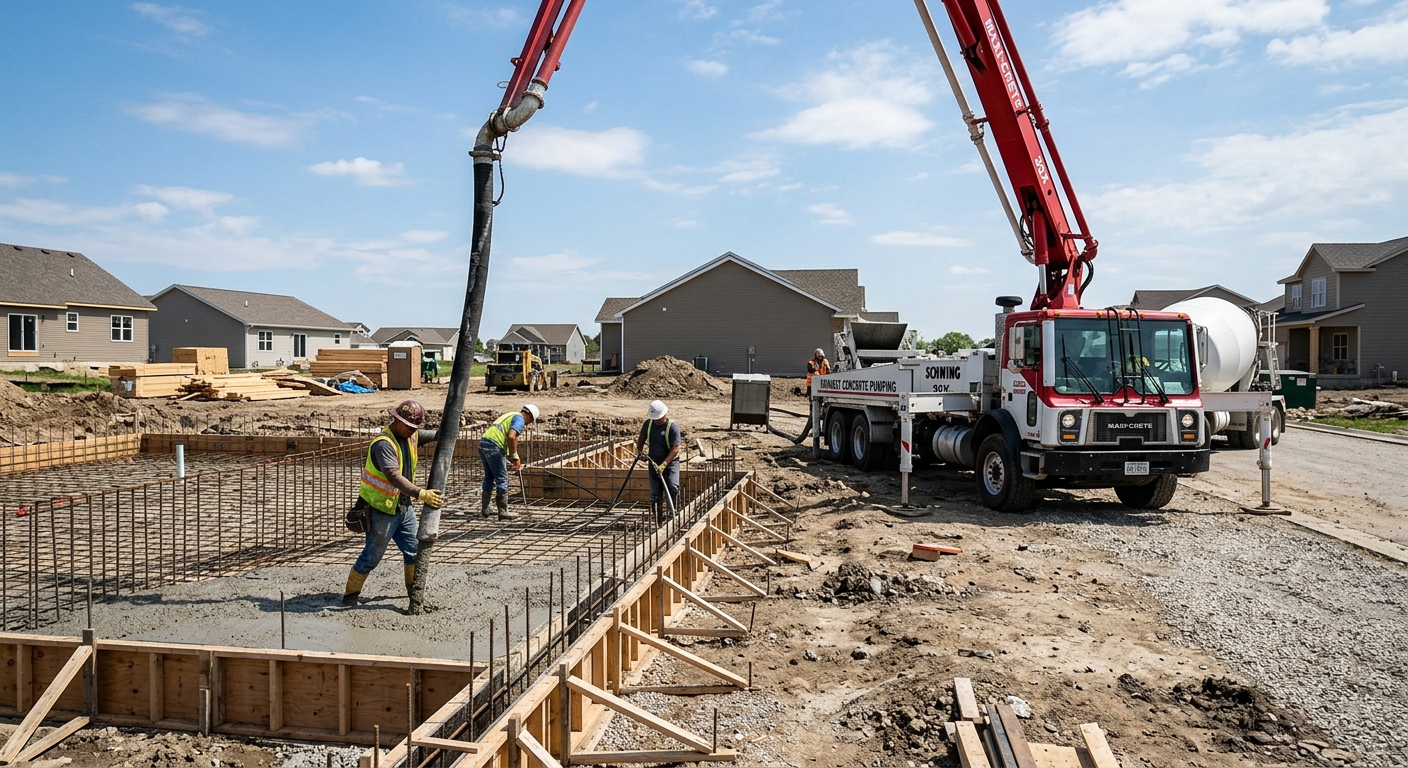
Upper Mount Royal, Alberta is a small but steady market for concrete flatwork, and most projects tie directly to the realities of Calgary-area winters. With a 2021 population of 2,735 (Statistics Canada, 2021 Census), you’ll see the same property types come up again and again—especially single-detached homes that rely on driveways, patios, and walkways for daily access. In this part of the Calgary region (including nearby areas like Rocky View County and Cochrane), the cold continental climate drives up the “hidden” costs in concrete work: engineered frost-depth support for foundations and extra protection for exterior slabs exposed to freeze–thaw cycles.
Because design frost depth is engineered around about 1.2 m (roughly 4 ft) in the region, excavation is deeper and footing volumes are higher than in warmer parts of Canada. For exterior slabs, contractors typically use air-entrained mixes, appropriate control joints, and—when temperatures drop—cold-weather curing methods like insulated blankets or temporary heating. That keeps long-term cracking and scaling under control, but it adds labour and materials to your quote.
In Upper Mount Royal, concrete demand is especially strong in and around the older-established residential pockets where driveways and front walks are due for replacement after years of salt exposure and thermal cycling. If you’re planning updates, it helps to compare options side by side—so you can see where standard work ends and decorative upgrades begin. Use the table below as a practical starting point for budgeting typical projects in Upper Mount Royal.
| Application |
Typical Size |
Key Spec |
Finish Option |
Price Range |
| Concrete driveway (standard broom finish) |
400–550 sq. ft. |
Air-entrained mix, compacted granular base |
Broom finish with control joints |
$12,000–$18,000 |
| Exposed aggregate driveway |
400–550 sq. ft. |
Air-entrained mix, additional finishing labour |
Seeded/washed exposed aggregate |
$14,000–$21,000 |
| Stamped concrete driveway or patio |
300–600 sq. ft. |
Air-entrained mix, proper release and curing |
Stamp pattern + colour release |
$15,000–$26,000 |
| Plain concrete patio or walkway |
200–450 sq. ft. |
Air-entrained mix, compacted granular base |
Light broom or smooth finish with joints |
$5,000–$9,000 |
| Garage floor (interior slab) |
300–500 sq. ft. |
Vapour barrier (where specified), fibre or mesh as needed |
Broom finish (or float finish) |
$7,500–$14,000 |
| Foundation footings (structural, below frost) |
Varies by house plan |
Engineered rebar, pour below frost depth |
Structural finish (not decorative) |
$28,000–$45,000 |
Prices are estimates only and vary by project scope, site access and material selection.
What affects the price of concrete work in Upper Mount Royal
If you request quotes in Upper Mount Royal, it’s common to see the same general job come back 30–50% apart. The difference usually isn’t “creeping price gouging”—it’s how contractors handle Calgary’s freeze–thaw performance requirements and how much excavation, prep, and curing labour they include. Frost depth and temperature swings dictate engineering: exterior slabs and structural foundations must be supported on undisturbed soil below the design frost depth (about 1.2 m in this region) to reduce frost heave and seasonal movement. That means deeper excavations, more granular base, and more concrete volume for footings.
On top of that, exterior flatwork needs air-entrained concrete so the slab can survive frequent freeze–thaw cycles without scaling or pop-outs. In cold months, the pour season shortens and cold-weather curing precautions become a cost driver—insulated blankets, heaters, and tight scheduling to keep the concrete in the proper curing window. If contractors don’t include these measures, they may under-quote today but you pay later for repairs.
Cost also moves with finish choices. A plain driveway or patio generally lands near the local driveway band of $12,000–$18,000, while stamped concrete often goes higher because of labour intensity and colour/curing requirements (commonly $15,000–$26,000). In Upper Mount Royal specifically, tight driveways and mature landscaping can raise mobilization and disposal costs. Conversely, a simpler rectangular patio on accessible grade can stay closer to the lower end of the $5,000–$9,000 patio/walkway band.
| Price Factor |
Why It Matters |
Cost Impact |
| Frost line depth — determines footing depth and form height |
Footings must bear on undisturbed soil below design frost depth to prevent heave |
Higher excavation depth and concrete volume can add major cost swings |
| Site preparation — excavation, grading, compacted granular base |
Bad base prep leads to settlement, rocking slabs, and faster cracking |
More haul-away and more granular material increases labour and material costs |
| Reinforcement — rebar or wire mesh requirement |
Reinforcement helps control cracking for structural and thicker slabs |
Engineered rebar mats and proper chairs can raise material and labour |
| Mix design — air-entrainment and compressive strength spec |
Exterior freeze–thaw exposure needs air-entrained concrete; strength affects durability |
Upgraded mix specs add cost but reduce long-term failure risk |
| Finish type — broom vs. stamped vs. exposed aggregate |
Decorative finishes require more labour, materials, and tighter workmanship |
Stamps/exposed aggregate often cost several thousand dollars more than plain broom |
| Pour size and concrete truck access to site |
Smaller access paths can require pumps, more staging, or multiple truckloads |
Reduced access can increase time and equipment charges |
| Cold-weather curing precautions — heating and blankets |
Proper early curing prevents scaling and surface defects in Calgary’s shoulder seasons |
Heaters/blankets and added crew time can meaningfully increase the budget |
| Control joint pattern and sealing cost |
Joints manage shrinkage cracks and sealing helps repel de-icing salts |
Better joint planning and sealer add cost, but reduce maintenance and spalling |
Permits & regulations in Alberta
In Alberta, structural concrete work typically needs a building permit and often engineered drawings that the municipality reviews. That includes concrete foundations and major structural elements such as footing systems, foundation walls, and grade beams. If your project is part of a new build, structural repair, or an underpinning scenario, plan on permit steps and engineering documentation.
Concrete flatwork—like patios, walkways, and driveways—usually does not require a permit by itself. However, permits can become necessary if the work changes lot grading, affects drainage patterns, impacts impervious surface coverage limits, or encroaches into municipal right-of-way requirements. Before anyone breaks ground, confirm whether your specific driveway or patio alteration triggers municipal approvals.
To protect yourself in Upper Mount Royal, verify the contractor is properly insured and compliant before you sign. Step 1: check their Alberta business details and contractor registration through the province’s online information resources. Step 2: request a certificate of insurance (liability) showing the coverage is active and includes your project as applicable. Step 3: confirm their worker coverage via WSIB/WCB clearance and ask for a current clearance letter or evidence of account status. Step 4: ask for references on similar projects in the Calgary area—especially exterior slabs where freeze–thaw performance matters.
Always ask who pulls the permit (if required), and get that responsibility in writing so there’s no surprise later.
Getting concrete right in Upper Mount Royal's freeze-thaw climate
Concrete fails in Upper Mount Royal mainly because water gets into the slab or foundation and then expands during freeze–thaw cycles. When concrete doesn’t have enough air entrainment, water can’t relieve pressure safely, leading to surface scaling and spalling—especially on driveways and walkways where de-icing salts are used. The key is to spec the job around performance: excellent base preparation, correct mix design, intentional jointing, proper curing, and sealing.
Start with base preparation: excavate to the engineered depth for the local soil and compact a properly sized granular sub-base so the slab sits solidly through winter movement. Then lock in mix design—exterior flatwork typically uses air-entrained concrete targeting about 5–7% air content, and most residential specs call for a minimum 32 MPa compressive strength for durability. Control joints should be spaced to encourage cracking in the joint line rather than random cracks in the field. Curing is just as important: aim for at least 7 days of proper curing under suitable conditions; when it’s cold, contractors may use insulated blankets and temporary heat to protect early strength gain. Finally, apply a penetrating sealer after the slab has cured—commonly around 28 days post-pour—to help repel salts and reduce water intrusion.
Here’s a practical pricing example: if you choose a stamped driveway, you may budget closer to $15,000–$26,000 rather than the standard broom driveway range of $12,000–$18,000. That difference is justified when the contractor also does the “boring” performance items—air entrainment, correct joints, and proper cold-weather curing—because the decorative finish won’t last if the slab underneath is compromised.
| Spec |
Why It Matters in Upper Mount Royal |
What to Ask For |
Impact if Skipped |
| Compacted granular base (depth?) |
Supports the slab through freeze–thaw movement and reduces settlement |
Confirm excavation depth and engineered granular thickness; compaction testing if available |
Rocking slab, uneven cracking, faster deterioration |
| Air-entrained concrete mix (target air %?) |
Prevents freeze–thaw pressure from damaging paste and causing scaling/spalling |
Request target air content for exterior flatwork (typically 5–7%) |
Surface scaling, spalling, premature failure in winter |
| Compressive strength (MPa rating) |
Early and ultimate strength impacts durability and resistance to wear |
Confirm minimum 32 MPa rating and spec sheet documentation |
Higher risk of cracking, dusting, and reduced service life |
| Control joints (spacing per ACI guidelines) |
Manages shrinkage and thermal cracking patterns |
Ask for joint layout plan and cut timing (or saw-cut method) |
Random cracking, water entry, accelerated freeze–thaw damage |
| Minimum 7-day curing period |
Ensures proper early strength for exterior exposure |
Confirm curing method for your pour date (including blankets/heating if cold) |
Reduced strength gain, scaling, and surface weakness |
| Penetrating sealer (when applied after cure) |
Repels water and de-icing salts that drive spalling cycles |
Ask for sealer type and timing (commonly after 28 days) |
Higher salt penetration, more maintenance, earlier re-surface needs |
How to choose a concrete work contractor in Upper Mount Royal
Choosing the right contractor in Upper Mount Royal is less about the lowest number and more about whether they build for Calgary’s freeze–thaw reality. Start by verifying Alberta compliance: ask for proof of general liability insurance and confirm their WSIB/WCB clearance (or current coverage status). Where to look—use online provincial resources for business/registration details, then review the contractor’s certificate of insurance directly for coverage limits and dates, and request a clearance letter so you know workers’ coverage is active.
Next, get 2–3 written quotes that are itemized by scope, not just lump sums. A good quote separates excavation and disposal, granular base, reinforcement (rebar or mesh and chairs), concrete supply (including air-entrainment and strength spec), finishing labour, and curing/cold-weather provisions. Also ask whether the contractor handles permit pulls (if required for structural elements) and whether concrete truck access issues are accounted for.
Warranty matters: request the workmanship warranty length and what’s covered (for example, surface scaling vs. structural defects). Clarify if product/manufacturer warranty transfers to you and whether it has conditions tied to sealing or maintenance. For payment, never pay more than 10–15% upfront. Hold back a portion until the slab is complete and cleanup is done, and avoid cash-only arrangements.
Finally, get timeline commitments in writing: a start date range and a realistic completion estimate. In Calgary’s shoulder-season weather, crews often need contingency plans so concrete curing isn’t compromised.
- Insist on air-entrained mix and confirm the target air content for exterior work.
- Ask for the minimum compressive strength (typically 32 MPa) in the spec.
- Confirm engineered footing depth below design frost in structural projects.
- Require an itemized labour/material breakdown (not just “concrete supply and place”).
- Check that excavation, grading, and compacted granular base are included with quantities.
- Ask who supplies and installs reinforcement (and whether chairs/spacers are used).
- Confirm control joint layout and cut timing (saw-cut plan).
- Ask how cold-weather curing is handled for your planned pour date.
- Verify sealer type and timing (often after full cure, commonly around 28 days).
- Review whether disposal/haul-away is included or excluded.
- Confirm warranty terms in writing and what maintenance is required.
- Use a payment schedule with a holdback until final inspection/cleanup.
Concrete red flags in Upper Mount Royal include: no clear air-entrainment discussion for exterior slabs, vague curing plans for cold weather, skipping or poorly planning control joints, quoting “structural” foundation work without engineered details, and refusing to provide insurance/WSIB/WCB documentation or itemized scopes.
Frequently asked questions — concrete work in Upper Mount Royal
What causes concrete to spall in Upper Mount Royal winters?
In Upper Mount Royal, spalling is usually driven by freeze–thaw damage plus water and salt. When exterior concrete isn’t properly air-entrained (or when the air content is too low), water can’t safely expand and contract within the cement paste. De-icing salts then increase the damage by accelerating deterioration at the surface. Poor base prep and weak curing can worsen the problem by allowing early cracking or surface scaling that lets more water in. If control joints aren’t spaced and cut correctly, random cracks can become entry points too. Finally, rushing winter curing—without blankets or heating when temperatures drop—can reduce early strength gain and increase susceptibility to scaling. A properly specified exterior slab can last much longer even in Calgary’s deep-frost conditions.
What is rebar and when is it required in Alberta?
Rebar (reinforcing steel) is used to strengthen concrete and help control cracking by holding tension forces that plain concrete can’t handle well. In Alberta, whether rebar is required depends on the structure and engineered design. For structural elements such as footings, foundation walls, and grade beams, rebar is commonly part of the engineered system, and a permit/engineering review is typically involved. For residential flatwork like patios, walkways, and some driveways, reinforcement may be fibre, wire mesh, or rebar depending on slab thickness, soil conditions, and loads (for example, heavier vehicle traffic). In Upper Mount Royal, the cold climate increases the importance of controlling cracking patterns, so a contractor should explain the reinforcement choice and provide specs. Ask whether the design uses rebar spacing, chairs, and cover requirements—or whether they’re assuming “no reinforcement” without checking slab conditions.
How long does a concrete project take in Upper Mount Royal?
The schedule in Upper Mount Royal depends on weather, prep scope, and curing requirements. For exterior flatwork, you’ll typically plan for: demolition/excavation and base prep (often 1–3 days), formwork and reinforcement (if needed, another 0.5–2 days), the pour and finishing (usually a day), and curing/setup time before traffic or heavier use. Because Calgary-area winters are harsh, cold-weather placement can add time due to insulated blankets, heaters, and stricter curing windows. Even when the pour itself is quick, you shouldn’t underestimate the “wait time” until safe use—especially for driveways and garage slabs where loading happens. If you’re comparing options, standard concrete driveway projects that fit the $12,000–$18,000 band often move faster than highly detailed stamped work that sits closer to $15,000–$26,000. Always ask for a start date and completion estimate in writing that includes curing conditions and any weather contingency.
What is a concrete overlay and is it suited to Upper Mount Royal?
A concrete overlay is a new layer placed over an existing concrete slab, usually to improve appearance or extend service life. In Upper Mount Royal, overlays can be suited to certain situations—mainly when the existing slab is structurally sound (not extensively broken, deeply spalled, or lifting due to base failure). Overlays are not a fix for major settlement, severe base erosion, or widespread failure driven by improper base prep and frost-related movement. Freeze–thaw cycles can also expose weak bonding if the surface prep isn’t done correctly. If you’re considering an overlay for a driveway or walkway, the contractor should inspect the slab for delamination, cracking severity, and drainage issues, then explain the surface treatment and bonding method they’ll use. For homeowners, a key question is whether the overlay will include proper air-entrained mix and whether the job also addresses drainage and jointing—because without that, the underlying movement will continue even under a fresh finish.
How do I seal concrete to protect it in Upper Mount Royal?
Sealing helps protect concrete against water and de-icing salts—two main drivers of winter deterioration in Upper Mount Royal. The most practical approach is to use a penetrating sealer designed for exterior concrete, applied after the slab has cured properly. A common benchmark is applying sealer around 28 days post-pour (or per the sealer manufacturer instructions) so the concrete is dry enough to accept the product. Before sealing, the surface should be clean and free of dust, oil, and curing compounds. Avoid sealing too early in cold weather, because trapped moisture can reduce sealer performance. Also, sealing isn’t a replacement for correct specs: if the mix isn’t air-entrained, joints aren’t planned, or base prep is inadequate, sealing can’t fully prevent freeze–thaw damage. If you’re budgeting, sealing is typically a lower-cost add-on compared with replacement—so it’s best treated as part of a “build it right” package rather than an afterthought.
What is the difference between concrete and cement?
Concrete and cement are related but not the same. Cement is a binding material—typically Portland cement—that reacts with water to form paste and “glue” the rest together. Concrete is the full mixture: cement plus water, plus fine and coarse aggregates (sand and gravel), and often additional ingredients like air-entrainment admixtures for freeze–thaw durability. That’s especially important in Alberta and the Calgary region because exterior slabs need air-entrained concrete to handle winter freeze–thaw cycles. When homeowners hear “cement” at the supply counter, they’re really talking about one ingredient in the overall concrete system. In practical terms, your quote should specify the concrete performance: target compressive strength (often 32 MPa for residential exterior durability), air-entrainment for exterior work, and curing/finishing details. If the contractor can’t explain those specs, you’re not really getting a performance-based concrete plan.