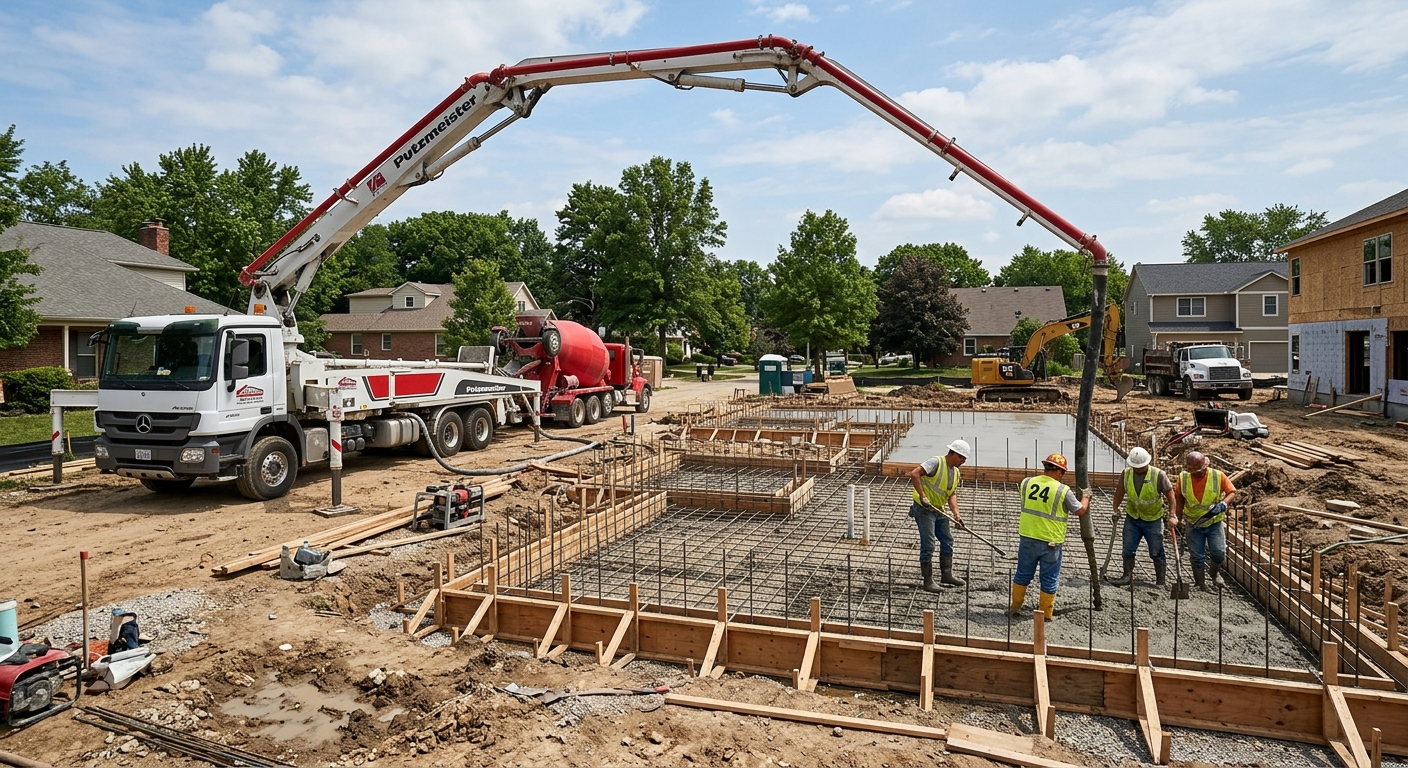
Concrete work options and costs in Strathcona Park
Concrete work in Strathcona Park, Alberta is shaped by a cold continental climate and a limited pour window, so the “cheapest” quote isn’t always the best value. With a population of 1,980 (Statistics Canada, 2021 Census), the market is smaller than Calgary—meaning many homeowners plan exterior concrete at the same time as other spring/summer trades. Strathcona Park’s typical housing stock is dominated by family properties and established neighbourhood streets where driveways, walkways, patios, and garage slabs get upgraded as yards mature. In this part of the Calgary region, contractors often see the highest demand around residential lanes and active infill pockets, where access can be tight and excavation is unavoidable.
Pricing here also reflects engineering reality: Calgary’s design frost depth is about 1.2 m (roughly 4 ft), and exterior footings for houses, garages, decks, and retaining structures need to bear on undisturbed soil below that depth to reduce frost heave. Freeze–thaw cycles then drive specs—air-entrained mixes, granular base prep, control joints, and careful curing—especially for slabs and flatwork. If a contractor has to schedule equipment, heat/cure protection, or haul extra gravel because of winter conditions, costs move quickly.
Below are common Strathcona Park concrete options with realistic price ranges to help you compare apples-to-apples. Once you pick the finish and confirm site conditions, we can narrow down the final number in a proper itemised quote.
| Application |
Typical Size |
Key Spec |
Finish Option |
Price Range |
| Concrete driveway (standard broom finish) |
24 ft x 10 ft (240 sq ft) |
Air-entrained exterior mix, compacted granular base |
Broom finish + control joints |
$12,500–$16,500 |
| Exposed aggregate driveway |
24 ft x 10 ft (240 sq ft) |
Air-entrained mix, proper curing for surface durability |
Exposed aggregate (washed) + sealer |
$14,500–$19,000 |
| Stamped concrete driveway or patio |
20 ft x 12 ft (240 sq ft) |
Air-entrained exterior mix, joint layout planned |
Stamp pattern + border edging (optional) |
$15,000–$26,000 |
| Plain concrete patio or walkway |
12 ft x 10 ft (120 sq ft) |
Exterior slab spec, compacted base |
Float/steel trowel or broom + joints |
$5,000–$9,000 |
| Garage floor (interior slab) |
20 ft x 22 ft (440 sq ft) |
Interior mix, thickened edges where required |
Smooth finish + hardener (optional) |
$12,000–$20,000 |
| Foundation footings (structural, below frost) |
Typical house/garage footing package |
Engineered steel/rebar, excavation below design frost depth |
Structural concrete (no decorative finish) |
$28,000–$45,000 |
Prices are estimates only and vary by project scope, site access and material selection.
What affects the price of concrete work in Strathcona Park
In Strathcona Park and the wider Calgary region, quotes for what looks like the “same” concrete job can swing 30–50% because contractors are pricing different assumptions: excavation depth, base thickness, reinforcement needs, access, and whether cold-weather measures are required. A slab poured on an easy, flat lot in summer will cost less than a comparable slab on a tighter lot that needs deeper digging, hauling, air-entrained winter-grade concrete, and thermal blankets to protect curing.
The biggest driver is the design frost depth. In Alberta’s cold continental climate, exterior footings and structural supports must extend below the design frost depth (about 1.2 m here) to prevent frost heave. That means more excavation and more concrete volume than many homeowners expect. Next come freeze–thaw cycles, which require air-entrained concrete mixes for exterior flatwork, and a granular base prep that drains and compacts properly. In addition, colder regions have a shorter effective pour season. When a pour happens late in the year or early in shoulder seasons, contractors often add insulated blankets and sometimes temporary heating to keep curing on track—otherwise you risk surface scaling and long-term durability issues.
Finally, de-icing salt accelerates surface damage if the slab isn’t protected. A driveway sealed at the right time can resist spalling better, while an unsealed finish may look fine initially but degrade faster—especially near plow lines.
Concrete examples from Strathcona Park: upgrading from broom-finish to stamped work often moves you into the $15,000–$26,000 band because of labour-intensive formwork, stamp timing, and border/detail work. Similarly, adding proper reinforcement and thicker sections for a garage slab or footing package can push foundation pricing toward the $28,000–$45,000 range, particularly when excavation goes below the frost line and access limits equipment efficiency. Even how old a home is matters—older properties can have yard fill, buried services, or drainage issues that increase demo and prep time (and cost).
| Price Factor |
Why It Matters |
Cost Impact |
| Frost line depth |
Determines footing depth and form height |
More excavation and concrete; can add thousands to structural work |
| Site preparation |
Excavation, grading, compacted granular base |
Loose soil or poor drainage increases haul/production time |
| Reinforcement |
Rebar or wire mesh requirement |
Steel and labour for placement/spacing increase material + hours |
| Mix design |
Air-entrainment and compressive strength spec |
Exterior-grade and winter provisions raise the concrete supply cost |
| Finish type |
Broom vs. stamped vs. exposed aggregate |
Stamped and exposed surfaces are labour-heavy and slower to install |
| Pour size and concrete truck access to site |
Placement method and time on site |
Limited access can require smaller pours or additional crew for placement |
| Cold-weather curing precautions |
Heating and blankets to protect set and cure |
In shoulder-season pours, adds labour, materials, and monitoring time |
| Control joint pattern and sealing cost |
Reduces random cracking and improves salt resistance |
Joints + proper sealer timing add line-item cost but improve longevity |
Permits & regulations in Alberta
In Alberta, structural concrete work typically requires a building permit, and engineered drawings are often reviewed by the municipality or the authority having jurisdiction for your project. That includes footings, foundation walls, grade beams, and any structural concrete that supports the building’s load path. If you’re tying new concrete into an existing foundation or changing structural elements, you should assume permits and engineering are required and confirm before excavation.
By contrast, concrete flatwork like driveways, patios, walkways, garage floors usually does not require a permit on its own—unless it affects lot grading, drainage, or impervious surface coverage rules, or if it impacts the municipal right-of-way (for example, work close to the road line or tie-ins that affect public areas). When in doubt, call the local authority before you break ground.
For Strathcona Park homeowners, verify the contractor’s paperwork before scheduling: start by confirming their business identity and whether they have the right provincial registration for the work. Then check liability insurance and WSIB/WCB coverage—these protect you and their workers if someone is hurt on site or if there’s property damage. Practical steps: request a certificate of insurance (COI) and check the policy is active and matches the legal business name; ask for a WSIB/WCB clearance letter; and keep copies with your contract. Finally, ask for references showing similar-scale foundation or driveway pours in the Calgary area.
Getting concrete right in Strathcona Park's freeze-thaw climate
Concrete failure in Strathcona Park usually comes down to one of five issues: weak base prep, incorrect mix design for freeze–thaw, poor reinforcement placement, insufficient curing, or missed joint/sealing details. In a cold continental climate with frequent freeze–thaw cycles, the worst offender is often spalling caused by inadequate air-entrainment. If the concrete doesn’t have the right air content, freeze–thaw pressure builds up in the hardened paste, and the surface can scale or pop—especially on driveways and areas exposed to de-icing salts.
To spec the job correctly, focus on (1) base preparation: you need a properly graded, compacted granular sub-base sized for local soil and frost conditions; (2) mix design: for exterior flatwork, target 5–7% air content and a minimum 32 MPa compressive strength; (3) control joints: place them to limit random cracking and keep cracks where you expect; (4) curing: plan for at least 7 days of proper curing conditions; cold weather may require insulated blankets and monitoring to protect the set; and (5) sealing: apply penetrating sealer around 28 days post-pour (once cured) to repel salts and reduce surface deterioration.
Ask your contractor how they’ll handle late-season pours in the Calgary area, including which steps change when temperatures drop. For a dollar reality check: replacing a failed driveway later can easily cost more than the “premium” for proper air-entrained mix and sealing—often turning a single $12,000–$18,000 driveway into a second round of excavation and re-pour. Paying for correct specs up front is usually the cheaper path over the life of the slab.
| Spec |
Why It Matters in Strathcona Park |
What to Ask For |
Impact if Skipped |
| Compacted granular base (depth?) |
Controls movement and supports slab during freeze–thaw |
Base thickness and compaction method (verified on site) |
Settlement and cracking; uneven surfaces and early deterioration |
| Air-entrained concrete mix (target air %?) |
Prevents spalling from freeze–thaw pressure |
Confirm target air content for exterior flatwork (5–7%) |
Scaling/spalling within seasons, especially with salt exposure |
| Compressive strength (MPa rating) |
Ensures durability under loads and cold exposure |
Minimum 32 MPa compressive strength (and how it’s verified) |
Surface wear, deeper cracking, reduced lifespan |
| Control joints (spacing per ACI guidelines) |
Limits random cracking and keeps cracks tight |
Joint layout/spacing plan matched to the slab geometry |
Random cracking; water intrusion; freeze–thaw accelerates damage |
| Minimum 7-day curing period |
Builds strength before freeze conditions stress the slab |
How curing will be protected in cold weather (blankets/heating if needed) |
Weak surface, early scaling, higher long-term failure risk |
| Penetrating sealer (when applied after cure) |
Repels salts and reduces moisture cycling at the surface |
Penetrating sealer after cure (around 28 days post-pour) |
Faster surface breakdown and salt-driven spalling |
How to choose a concrete work contractor in Strathcona Park
Choosing the right contractor in Strathcona Park is mostly about verifying credentials and matching the quote to the engineering reality of cold-weather concrete. Start by confirming Alberta licensing/registration applicable to the scope of work (and whether they perform the specific concrete items you need). Next, check liability insurance—ask for a current certificate of insurance showing the active policy and correct legal business name. Then verify WSIB/WCB coverage by requesting a clearance letter or proof of coverage before work begins. Don’t accept “we’re covered” without documentation.
Get 2–3 itemised written quotes, not one lump sum. You want labour and materials separated so you can see what’s included: excavation depth, granular base thickness, reinforcement, concrete mix spec, finishing method, curing method, sealing, and disposal. Carefully review exclusions like “weather delays,” “rock removal,” or “extra trucking if the mix can’t reach the pour location.” Also confirm whether any permit pull or inspections are included for structural work (footings/foundations), and whether disposal (haul-away of spoils) is part of the scope.
Warranty matters. Ask for a workmanship warranty length in writing, and understand whether it covers joints/sealing performance or only labour. Payment should be controlled: typically no more than 10–15% upfront, and hold back the remainder until the job is complete and defects are corrected. Get a timeline with a start date and completion estimate in writing—cold-weather provisions and curing protection should be spelled out so the schedule is realistic.
- Provide COI (liability insurance) with correct legal name and active dates.
- Provide WSIB/WCB clearance letter or proof of coverage before work starts.
- Match your quote to the correct scope: driveway width, slab thickness, and reinforcement details.
- Confirm air-entrainment and exterior mix requirements for freeze–thaw durability.
- Ask for base prep thickness and compaction requirements, not “we’ll grade and pour.”
- Review joint spacing and whether joints will be cut/formed as scheduled.
- Confirm curing plan for cold conditions (blankets/heating if needed).
- Ask whether a penetrating sealer is included and when it will be applied (about 28 days).
- Check who supplies and places reinforcement (rebar mesh type, lap/splice details).
- Get disposal/haul-away included (or clearly listed as an extra).
- Confirm concrete truck access limits and pump/placement method if the site is tight.
- Ensure workmanship warranty is in writing and clearly defines what “fixed” means.
Concrete red flags I see around Strathcona Park include: no written mix/spec details (especially air-entrainment), skipping control joints or delaying them, ignoring cold-weather curing protection, quoting “cheap” decorative work without labour-intensive layout and stamp timing, and offering vague warranties or asking for large deposits upfront.
Frequently asked questions — concrete work in Strathcona Park
How much does concrete work cost in Strathcona Park?
In Strathcona Park and the Calgary area, typical costs depend heavily on frost-depth excavation, granular base prep, and whether cold-weather measures are needed. As a quick benchmark, a concrete driveway often lands in the $12,000–$18,000 range for standard exterior work, while stamped decorative driveways or patios commonly fall into the $15,000–$26,000 band because they’re labour-intensive and require careful joint planning. Foundation and footing packages usually cost more—often $28,000–$45,000—because structural concrete must be engineered and placed below the design frost depth. Quotes can swing 30–50% when excavation conditions, reinforcement requirements, or truck access change, so always compare itemised scopes rather than lump sums. (Statistics Canada, 2021 Census)
How deep must footings be for Strathcona Park's frost line?
For Strathcona Park, Alberta’s design frost depth is about 1.2 m (roughly 4 ft) in local engineering practice. Practically, that means footings and structural supports need to bear on undisturbed soil below that frost depth to reduce frost heave and seasonal movement. The exact depth can vary based on your geotechnical findings, soil conditions, and the engineer’s drawings for your specific house or addition, so you shouldn’t rely on a “one-size” rule. If you’re adding a garage, deck, or retaining structure, confirm footing depth in the stamped drawings and ask how the contractor will verify excavation reaches the required bearing level before placing structural concrete.
Why does concrete crack in Strathcona Park and how is it prevented?
Concrete cracking in Strathcona Park is usually not a “bad concrete” problem—it’s often a controlled movement and timing issue under freeze–thaw and thermal stresses. When slabs move, water can intrude through random cracks, and then freeze–thaw cycles widen and worsen the damage. Prevention starts with the right granular base prep and compaction, correct air-entrained exterior mix for durability, and a proper control-joint layout so cracks happen where they’re planned. Curing also matters: exterior slabs need proper cure time (minimum 7 days under suitable conditions). Finally, sealing helps protect the surface from de-icing salts that can accelerate spalling on driveways and walkways. In Alberta’s climate, “good looks” isn’t enough—you need the durability spec.
Stamped vs broom-finish concrete — cost difference?
Stamped concrete costs more than a standard broom-finish because the process is slower and more labour-dependent: forms, stamp timing, texture consistency, and careful edging/detail work. In this market, broom-finish driveways typically sit around the $12,000–$18,000 band, while stamped concrete driveways or patios are commonly in the $15,000–$26,000 range depending on size, pattern complexity, and whether borders or colouring are included. The difference isn’t just the stamp material—it’s the added crew hours and the need to get joints and curing protection right for Calgary-region freeze–thaw. If a quote for stamped work seems close to broom pricing, ask what was changed in the spec: air content, joint plan, reinforcement, and curing/blankets are where quality costs show up.
When is the best time to pour concrete in Strathcona Park?
For Strathcona Park, the best time to pour exterior concrete is when temperatures can support proper curing for at least the first several days—typically late spring through summer, when day/night conditions are stable. Calgary’s short exterior pour season matters because cold weather increases the risk of surface scaling, poor strength development, and uneven curing. If you’re pouring in shoulder months, reputable contractors plan for cold-weather precautions such as insulated blankets and sometimes temporary heating to protect the slab while it cures. Ask your contractor what temperature thresholds trigger extra protection and how they’ll monitor curing conditions. For homeowners, scheduling early helps you avoid rushed pours and makes it more likely the project will meet the durability spec needed for Alberta’s freeze–thaw cycles.
How long does concrete take to cure?
Concrete curing has two practical timelines. First, allow enough time for strength gain before loading: many slabs are kept protected during the early period, and exterior work should be treated carefully during the first days. Second, plan for a minimum 7-day curing period under proper conditions—this is when the concrete reaches a more reliable strength level for ongoing durability. In cold weather, curing may require blankets/heating to maintain temperature and moisture. For sealing, a common rule is to apply penetrating sealer around 28 days post-pour once curing is complete and the surface is ready. If a contractor wants to seal immediately or rush the schedule to “beat the weather,” ask for the curing plan in writing—durability is where mistakes become expensive later.