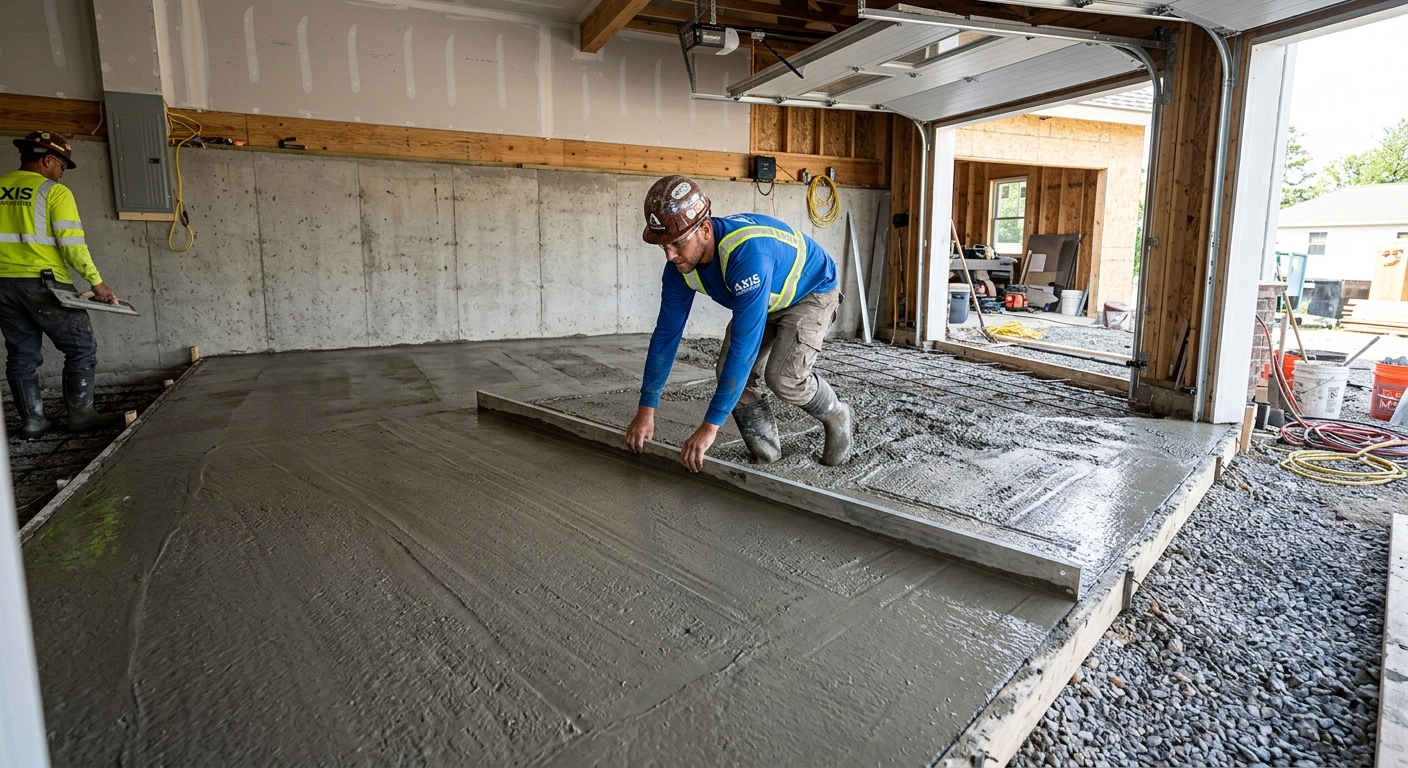
Concrete work options and costs in Gibbons
Concrete work in Gibbons is a practical upgrade for a lot of local homeowners because the housing stock is dominated by single-detached homes: 85.8% of dwellings in the area are that type, and 87.9% of households are owner households (Statistics Canada, 2021 Census). That’s exactly the market that drives demand for driveways, patios, walkways, garage slabs, and frost-protected foundations. With 3,218 people in Gibbons (Statistics Canada, 2021 Census), you’ll often see crews working in and around the Edmonton region—especially in neighbourhoods close to major commuting routes and service corridors—where scheduling can tighten during the short flatwork season.
Edmonton’s cold continental climate impacts pricing in two big ways. First, frost depths are commonly designed around 1.5 m or more, meaning exterior footings and foundation pours can require deeper excavation, forming, and more backfill. Second, repeated freeze–thaw cycles across late fall, winter, and spring raise the bar on air-entrained mixes, base compaction, drainage, and control joints for slabs like driveways and patios. On top of that, the pour season is realistically shorter, so labour and scheduling premiums can appear for late-spring starts or “rush” timelines.
In general, standard broom-finish driveways land in the lower end of the local tier, while decorative options climb quickly because of prep, finishing time, and colour/texture systems. The table below compares common options and typical pricing ranges so you can line up apples-to-apples when you request quotes.
| Application |
Typical Size |
Key Spec |
Finish Option |
Price Range |
| Concrete driveway (standard broom finish) |
16 ft x 30 ft (480 sq ft) |
Air-entrained exterior mix; compacted granular base; control joints; basic rebar/wire per design |
Broom finish |
$9,000–$18,000 |
| Exposed aggregate driveway |
16 ft x 30 ft (480 sq ft) |
Air-entrained exterior mix; proper base drainage; surface retarder/exposure method; joints to match layout |
Exposed aggregate |
$12,500–$22,500 |
| Stamped concrete driveway or patio |
12 ft x 24 ft (288 sq ft) to 16 ft x 30 ft (480 sq ft) |
Air-entrained exterior mix; enhanced curing and joint detailing; integral or hardener colour system |
Stamped pattern + colour |
$12,000–$26,000 |
| Plain concrete patio or walkway |
10 ft x 16 ft (160 sq ft) to 12 ft x 20 ft (240 sq ft) |
Air-entrained exterior mix; compacted granular base; slope for drainage |
Broom or light trowel + broom texture |
$3,500–$9,000 |
| Garage floor (interior slab) |
20 ft x 22 ft (440 sq ft) |
Vapour barrier; mesh reinforcement per slab spec; proper thickness for intended loads |
Power trowel with optional sealer |
$6,000–$14,000 |
| Foundation footings (structural, below frost) |
Typical house perimeter + piers as per plan |
Below frost depth excavation; formwork; rebar cage; concrete volume varies by design |
Structural concrete (no decorative finish) |
$25,000–$60,000 |
Prices are estimates only and vary by project scope, site access and material selection.
What affects the price of concrete work in Gibbons
In Gibbons (and throughout the Edmonton economic region), two quotes for the same “looking” job can differ by 30–50% because concrete pricing isn’t just the slab—it’s the depth, the base prep, the reinforcement, the mix design, and how the contractor handles cold-weather curing and drainage. In a cold continental climate, details that are optional in milder areas become mandatory. Edmonton-area frost design commonly targets around 1.5 m or more, and Alberta builds typically reflect deep frost protection up to about 2.4 m depending on the design and soil conditions. That immediately increases excavation, forming height, and backfill quantities compared to warmer regions.
Freeze–thaw cycling also drives mix and finishing requirements. Exterior flatwork needs air-entrained concrete to better resist surface scaling and spalling during repeated thaw events. If a contractor under-specs air content, you may not see problems right away—but you’ll often pay later for patching, sealing, or even deeper repairs. Also, the pour season is shorter, so scheduling premiums can show up when contractors compress work into late spring through early fall. In colder conditions, heating and insulated curing blankets can add material and fuel costs, and that can move a driveway project toward the mid-to-upper end of the $9,000–$18,000 band for standard broom-finish pours.
Local examples in Gibbons: (1) A driveway over softer topsoil costs more because you may need thicker compacted granular base for stability and drainage. (2) A stamped or exposed aggregate finish costs more because it requires additional labour time for colour hardener, stamps, and careful curing—often aligning with the $12,000–$26,000 decorative tier. (3) Homes built before 1981 often have different drainage patterns and older grading that may require rework to direct water away from the slab; that can add to site prep. With median household income around $108,000 (Statistics Canada, 2021 Census), many homeowners still upgrade to longer-lasting solutions—especially when de-icing salt is used—because sealing helps protect the surface from accelerated deterioration.
| Price Factor |
Why It Matters |
Cost Impact |
| Frost line depth |
Determines footing depth and form height to prevent frost heave |
More excavation and concrete volume; can push foundation-related scopes toward the upper end of local structural ranges |
| Site preparation |
Excavation, grading, and compacted granular base stability |
Uncertain soil or poor drainage increases labour, hauling, and base materials |
| Reinforcement |
Rebar or wire mesh placement reduces cracking and improves slab performance |
Additional materials and placement time; may change depending on slab thickness/design |
| Mix design |
Air-entrainment and compressive strength specs for Alberta freeze–thaw |
Air-entrained mix and higher spec can increase material cost and truck coordination |
| Finish type |
Broom vs. stamped vs. exposed aggregate changes labour and curing sensitivity |
Decorative systems add time for colour, stamping/exposure, and finishing steps |
| Pour size and concrete truck access to site |
Accessibility affects how quickly a crew can place and finish concrete |
Narrow access, long carry, or multiple mobilizations can increase labour and equipment use |
| Cold-weather curing precautions |
Heating and insulated blankets protect early-age concrete in freezing conditions |
Extra materials, labour, and energy can move cost upward in shoulders of the season |
| Control joint pattern and sealing cost |
Joints and proper sealing reduce random cracking and de-icer damage |
More layout/measuring time plus sealer cost for exterior protection |
Permits & regulations in Alberta
In Alberta, structural concrete work typically requires a building permit, and it often involves engineered drawings that the municipality reviews. That includes footings, foundation walls, and grade beams—any concrete element that’s part of the structure supporting the house or handling major loads. For concrete flatwork such as patios, walkways, and driveways, a permit often isn’t required by default; however, it can be required if the work affects lot grading, drainage, or impervious surface coverage, or if it touches municipal right-of-way areas. Always confirm with the local authority before you excavate, especially if you’re changing slopes, adding a culvert tie-in, or altering the way water runs off your property.
For your contractor vetting in Gibbons, treat this like a checklist. First, ask for their business info and confirm coverage documents before scheduling. You can verify their general business registration details through public sources online (where available) and, most importantly, request a current certificate of liability insurance and proof of WSIB/WCB coverage. If they can’t provide clear documentation, don’t move forward. Next, ask for references on similar footing/foundation or flatwork scopes in the Edmonton area. Finally, verify the contractor understands frost-aware design—because “close enough” footing placement is where concrete failures start in freeze–thaw climates.
Getting concrete right in Gibbons's freeze-thaw climate
Concrete failures in Gibbons are usually predictable: water gets in, freezes, and expands, then surfaces spall or cracks widen. The way to avoid this is to spec every layer correctly, not just the concrete “strength.” Start with base preparation: exterior slabs need a compacted granular sub-base at a depth that matches your soil and design frost considerations. Then get the mix right—exterior flatwork should be air-entrained (commonly 5–7% air content for many exterior placements) and meet a minimum 32 MPa compressive strength so it performs through temperature swings and de-icing exposure.
Control joints are another non-negotiable. They’re what manage where cracking happens; in Alberta, random cracking is expensive because freeze–thaw will encourage crack widening. Joint spacing should follow recognized concrete guidelines (often tied to slab geometry and design practice). After the pour, curing matters at least 7 days under proper conditions; if you pour during cooler weather, you may need insulated blankets or heating to keep early-age concrete from freezing. Finally, sealing: for driveways and exterior slabs, apply a penetrating sealer after the concrete has cured (often around 28 days post-pour) so it repels de-icing salts and reduces surface scaling.
When homeowners compare options, stamped concrete can cost more than broom finish, but the price difference is justified when the contractor is using proper joint layout and curing discipline. For example, moving from a $9,000–$18,000 standard driveway to a decorative tier around $12,000–$26,000 often pays for extra finishing labour and materials—especially important in Gibbons where inadequate air-entrainment shows up as early surface wear after winters.
| Spec |
Why It Matters in Gibbons |
What to Ask For |
Impact if Skipped |
| Compacted granular base (depth?) |
Prevents settlement and helps control water near the slab during freeze–thaw |
Base depth and compaction requirements; drainage plan and slope to shed water |
Uneven settlement, rocking, and rapid cracking or spalling |
| Air-entrained concrete mix (target air %?) |
Improves freeze–thaw durability to reduce scaling and spalling |
Documented target air content (commonly 5–7% for exterior flatwork) |
Surface deterioration that can appear within 1–3 winters |
| Compressive strength (MPa rating) |
Supports durability and long-term performance under cycles and loads |
Minimum 32 MPa specified for exterior placements |
Higher risk of premature wear and structural weakness |
| Control joints (spacing per ACI guidelines) |
Controls where cracks form to limit water intrusion |
Proposed joint layout, spacing, and whether joints align with slab geometry |
Random cracking and wider joints that leak water through freeze–thaw |
| Minimum 7-day curing period |
Ensures early-age strength and helps concrete resist early freezing |
Curing method (blankets/heating if needed) and minimum protected period |
Weak surface, increased cracking, and poor durability |
| Penetrating sealer (when applied after cure) |
Helps repel de-icing salts that accelerate scaling |
Application timing (often after full cure; commonly around 28 days post-pour) and product type |
Faster spalling and more frequent maintenance |
How to choose a concrete work contractor in Gibbons
Choosing a concrete contractor in Gibbons comes down to proof, not promises. In Alberta, you should verify (1) liability insurance, (2) WSIB/WCB coverage, and (3) that the contractor is insured to work on your site safely. Ask for a current certificate of liability insurance and read the coverage dates and project description. For WSIB/WCB, request confirmation that workers are covered for the relevant work. If the contractor won’t provide documents up front, that’s a major warning sign.
Next, get 2–3 itemised written quotes rather than a single lump sum. You want a breakdown that shows labour vs. materials, and ideally includes excavation/disposal, base prep, reinforcement, concrete supply, finishing, curing/blankets (if applicable), and sealing (if requested). Pay close attention to what’s excluded: removal and disposal of existing concrete, restoration of landscaping, hauling distance, permit pulls (if required), and whether site protection is included during curing.
Warranty matters too. Ask for a workmanship warranty period in writing, and separate it from the product/manufacturer warranty. Also ask whether their warranty is transferable if you sell your home. For payment scheduling, don’t pay more than 10–15% upfront; hold back a portion until the full scope is complete and any curing/sealer steps are finished.
Finally, ask for a start date and completion estimate in writing. In Alberta’s short season, the best contractors plan around temperature and curing needs—rather than rushing the pour and hoping for the best.
- Request certificate of liability insurance and confirm coverage dates.
- Ask for WSIB/WCB coverage proof for the crew doing the work.
- Get 2–3 itemised quotes with labour and materials separated.
- Confirm excavation, disposal, and hauling distances are included or clearly excluded.
- Ask about base depth and compaction proof (plan and spec).
- Confirm air-entrained exterior mix and minimum strength (e.g., 32 MPa).
- Verify reinforcement plan (mesh/rebar placement) for your slab thickness.
- Get the joint layout in writing (where joints go and spacing logic).
- Ask who handles curing protection in cold weather (blankets/heating).
- Confirm whether control joints are saw-cut and when sealing is scheduled.
- Check warranty terms: workmanship duration, exclusions, and product warranty.
- Use a payment schedule with a holdback until final inspection and cleanup.
Red flags to watch for in Gibbons: contractors who won’t discuss frost-aware footing depth or slab specs; “we always do 4 inches” without soil/base questions; quotes that omit base prep, reinforcement, or joint layout; vague curing answers (“it’ll be fine” in cold weather); and payment terms asking for large deposits (more than 15%) before any work starts.
Frequently asked questions — concrete work in Gibbons
Stamped vs broom-finish concrete — cost difference?
In Gibbons, stamped concrete costs more than a broom finish mainly because it adds colour systems, extra finishing steps, and tighter timing and curing discipline. A standard broom-finish driveway commonly falls into the $9,000–$18,000 band for typical residential sizes, while stamped decorative driveways and patios often land in the $12,000–$26,000 tier depending on area and complexity. The bigger driver in Edmonton-area freeze–thaw conditions is not just the appearance—it’s whether the contractor uses air-entrained mix, correct joint layout, and proper curing. If those basics aren’t handled, stamped work won’t last any better than plain concrete. Ask to see the mix spec and joint plan in the quote before comparing finishes.
When is the best time to pour concrete in Gibbons?
The best time is typically late spring into early fall when you have consistent temperatures that allow proper curing without expensive heating. In Alberta, cold nights can threaten early-age concrete, so crews often plan pours when they can keep concrete protected for at least the first week. If you must pour during cooler shoulder weather, expect costs for insulated blankets or heated enclosures, and make sure the quote explicitly includes curing protection. For homeowners in Gibbons, that usually means booking in advance—especially for driveways and patios—because the short flatwork season compresses scheduling around Edmonton and nearby communities. A contractor who can explain temperature protection steps in plain language is a good sign.
How long does concrete take to cure?
Concrete develops strength over time, but for practical purposes in Gibbons you should expect two timelines. First, curing protection should be provided for at least 7 days so the slab reaches adequate early strength; this is when freeze–thaw risk is most damaging if conditions get too cold. Second, many exterior treatments and sealing systems are best done after full cure—commonly around 28 days post-pour—because the concrete needs to be dry and stable enough for sealer to bond effectively. If you’re planning de-icing use, sealing after cure becomes especially important in freeze–thaw climates to reduce surface scaling and spalling. Always ask your contractor how they’ll handle curing if temperatures drop at night.
Do I need a permit for concrete work in Alberta?
Often, concrete flatwork like patios, walkways, and driveways does not need a building permit in Alberta, unless the work affects lot grading, drainage, impervious surface coverage limits, or involves changes near the municipal right-of-way. Structural concrete work—like footings, foundation walls, and grade beams—typically requires a building permit and often engineered drawings reviewed by the municipality. For a homeowner in Gibbons, the safe approach is to confirm before breaking ground, especially if you’re changing slopes or directing water. A reputable contractor should know whether your specific scope triggers permitting and should be able to tell you what they will handle versus what you must coordinate with the local authority.
Concrete vs pavers for a patio in Gibbons?
Concrete and pavers can both work well in Gibbons, but each has different trade-offs in freeze–thaw conditions and long-term maintenance. Concrete patios can be very durable when built on a properly compacted granular base, with air-entrained mix, correct slopes, and control joints. Typical patio/walkway concrete pricing commonly sits in the $3,500–$9,000 range depending on size and site prep. Pavers can be a good choice when you want easier section-by-section replacement, but they still require proper base prep and drainage to prevent heaving or shifting. If you use a lot of de-icing, concrete sealing and joint management matter. Ask any contractor how they address water management—either approach fails fast when water is trapped near edges.
How long does a concrete driveway last?
With correct specs—air-entrainment, compacted base, appropriate thickness, reinforcement as required, good slope/drainage, and proper control joints—a concrete driveway in the Edmonton region can last many years and often holds up well through Edmonton-area freeze–thaw cycles. The biggest early warning factor is surface scaling/spalling, which can appear sooner when air-entrainment and curing weren’t handled properly. Decorative finishes also depend on the same durability fundamentals, even if they look “premium.” In terms of timing, don’t judge by year one alone; Alberta damage often shows up after a few winters when water gets into cracks and freezes. A quality contractor will give you a joint/sealing plan and explain de-icing practices so you’re protecting the surface.