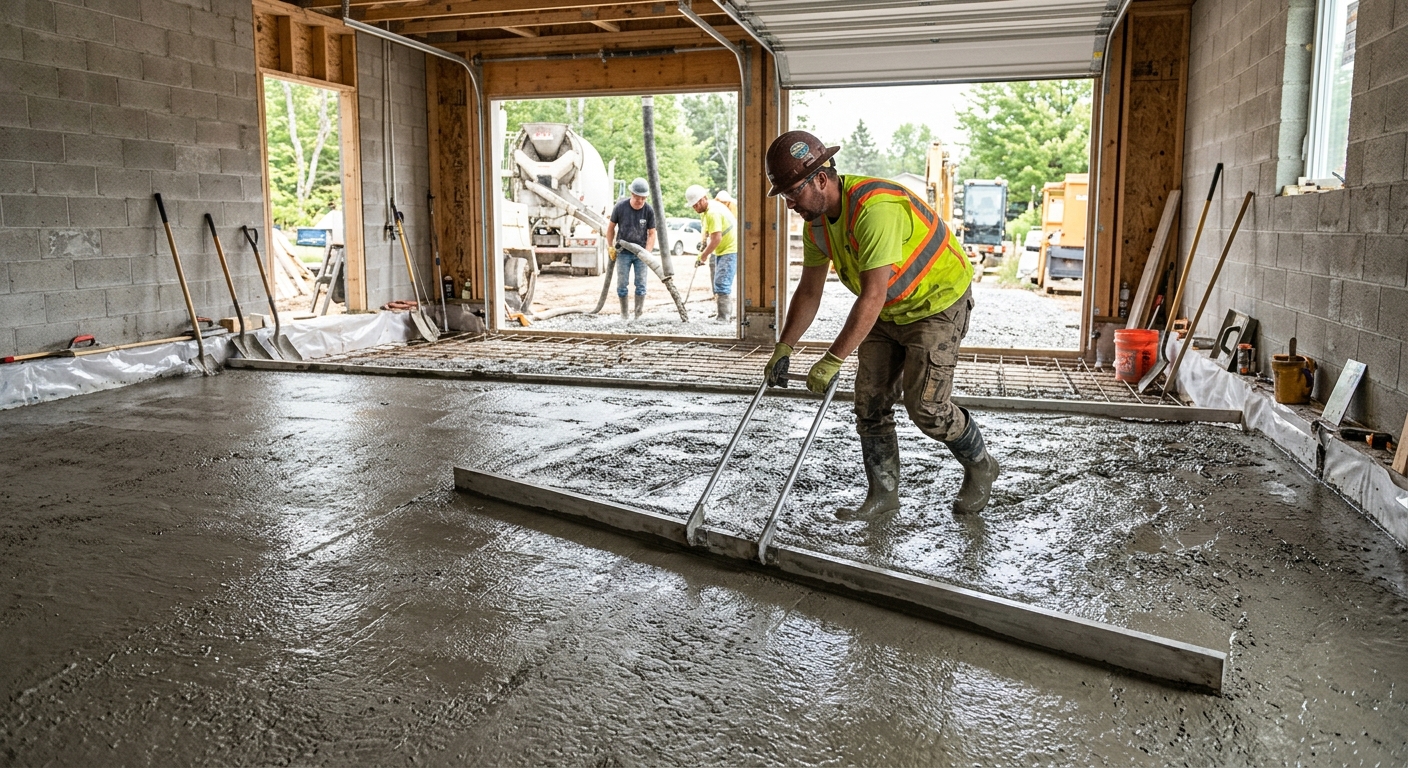
Concrete work options and costs in Christie Park
Christie Park, Alberta is a great place to invest in durable concrete because most homeowners rely on practical flatwork—driveways, patios, walkways and garage slabs—that needs to survive long winters and freeze–thaw cycles. Locally, the community’s housing stock leans toward single-detached homes (Statistics Canada, 2021 Census), which is why concrete contractors in and around Christie Park are especially busy with repeatable projects like driveway replacement and backyard patios. With a total population of 1,880 residents (Statistics Canada, 2021 Census), service areas around Calgary matter too: when demand rises across the region, availability of crews and concrete trucks can tighten, influencing scheduling and ultimately pricing.
In the Calgary region, concrete costs are engineered around a deeper frost depth and a shorter, colder exterior pour season. Footings for foundations and any structural bearing work must typically extend below the design frost depth (about 1.2 m in this region) to reduce frost heave. For exterior slabs and walkways, contractors also specify air-entrained mixes and stronger base preparation to limit scaling and cracking during freeze–thaw. If you’re in the busy pockets near local commercial corridors or newer subdivisions where lots have been recently developed, driveway and patio work tends to be in high demand because homeowners want quick, clean upgrades that also hold up to Alberta winters.
Below is a practical comparison of common options and what you should budget in Christie Park. Use these as baseline ranges before you ask for an itemised quote.
| Application |
Typical Size |
Key Spec |
Finish Option |
Price Range |
| Concrete driveway (standard broom finish) |
20 m² (about 215 sq ft) |
Air-entrained concrete, compacted granular base |
Broom finish, control joints |
$12,000–$18,000 |
| Exposed aggregate driveway |
20 m² (about 215 sq ft) |
Air-entrained mix with retarder/wash procedure |
Exposed aggregate texture, sealed topcoat |
$14,500–$21,500 |
| Stamped concrete driveway or patio |
30 m² (about 322 sq ft) |
Air-entrained concrete, broom/texture release |
Stamp pattern, stain options, sealing |
$15,000–$26,000 |
| Plain concrete patio or walkway |
20 m² (about 215 sq ft) |
Air-entrained concrete, compacted base |
Broom or smooth trowel (light broom outdoors) |
$5,000–$9,000 |
| Garage floor (interior slab) |
40 m² (about 430 sq ft) |
Vapour barrier, thicker slab for loads |
Plain trowel finish or light broom |
$10,500–$16,500 |
| Foundation footings (structural, below frost) |
Per typical single-family build |
Excavation to below frost, rebar/formwork |
Structural concrete, engineered layout |
$28,000–$45,000 |
Prices are estimates only and vary by project scope, site access and material selection.
What affects the price of concrete work in Christie Park
In Christie Park and the wider Calgary market, you can see the same concrete scope come in 30–50% apart. The difference is usually not just “concrete price”—it’s engineering and construction details: excavation depth, granular base thickness, reinforcement, mix design, crew productivity, and whether cold-weather curing is included. A driveway that looks similar on paper can require very different footing and base solutions depending on soil conditions and access, and contractors may price risk differently when the schedule is tight.
In this cold continental climate, frost depth and freeze–thaw cycles drive nearly every specification. Footings and any structural bearing work must sit below the design frost depth (about 1.2 m here) to help prevent frost heave. Exterior slabs need air-entrained concrete to survive repeated freezing and thawing; without that air system, surface scaling and spalling risks climb quickly. Calgary’s shorter pour season also matters: exterior concrete placement may require winter-grade mixes, insulated blankets, or temporary heating to achieve proper curing. That adds labour and equipment costs compared with milder regions.
Concrete is also sensitive to de-icing salt. If you expect long winter use, sealing becomes more than an aesthetic choice—it’s part of service-life planning. For homeowners, the pricing often lands near the local band totals: a standard driveway commonly fits the $12,000–$18,000 range, while decorative work like stamped concrete typically moves up toward $15,000–$26,000 due to labour and finishing time.
Two examples from Christie Park: (1) a driveway poured over weaker native soil may need deeper removal and additional compacted granular base, pushing your project toward the top of the range; (2) a late-fall patio with cold curing safeguards can come in higher than a similar stamped job done mid-summer, even if the square footage is the same. Housing age matters too—older properties often have more unknowns under existing slabs, including poor base, drainage issues, and utilities, which can add removal and rework costs measured in thousands of dollars.
| Price Factor |
Why It Matters |
Cost Impact |
| Frost line depth |
Determines excavation depth, form height, and bearing below frost |
Can add thousands on foundation-related work; often drives the “low vs high” for footings |
| Site preparation |
Excavation, grading, and compacted granular base control settlement |
Weak subgrade or poor drainage prep increases hauling, gravel, and labour time |
| Reinforcement |
Rebar or mesh improves crack control and load distribution |
More reinforcement and correct placement details raise material and labour costs |
| Mix design |
Air-entrainment and compressive strength affect durability in freeze–thaw |
Higher-spec cold-weather mixes and verified air content usually increase cost |
| Finish type |
Broom, stamped, or exposed aggregate changes labour and curing/finishing steps |
Stamped/exposed aggregate typically pushes totals toward decorative bands |
| Pour size and concrete truck access to site |
Short access routes reduce time; staging affects productivity |
Limited access can increase pumping, handwork, and wait time charges |
| Cold-weather curing precautions |
Heating/blankets protect strength gain during cold nights |
Can add noticeable equipment and labour costs for exterior pours |
| Control joint pattern and sealing cost |
Joints manage shrinkage cracking; sealing reduces salt-driven surface damage |
Skipping or under-specifying joints/sealant leads to early deterioration and costly callbacks |
Permits & regulations in Alberta
In Alberta, structural concrete work—commonly including concrete footings, foundation walls, and grade beams—generally requires a building permit, and municipalities often expect engineered drawings or design confirmation for the foundation system. For example, if you’re building or modifying a foundation, digging to frost depth, or changing load paths, assume permit and engineering involvement. Concrete flatwork (patios, walkways, driveways) usually does not require a permit by itself, unless it affects lot grading, drainage, impervious surface limits, or the municipal right-of-way (like sidewalk/curb tie-ins). Because local conditions can vary, confirm with the municipality before breaking ground—especially when drainage or lot grading is impacted.
Before you hire a contractor in Christie Park, verify three things step-by-step: (1) Insurance: request a current Certificate of Insurance showing liability coverage and the correct project address (and ask if your homeowner’s interest is referenced if applicable). (2) Coverage for workers: confirm WSIB/WCB coverage status through the contractor—if they can’t provide clear evidence, that’s a major red flag. (3) Licensing and standing: while concrete flatwork is often executed under general contractor arrangements, you should still verify the business is properly registered where required and in good standing; ask for their account or clearance documentation if they reference it. Finally, ask for references on similar-scale Calgary-area work so you can see how they handle frost-depth excavation, base prep, and freeze–thaw durability details.
Getting concrete right in Christie Park's freeze-thaw climate
Concrete failures in Christie Park are rarely mysterious—they’re usually the predictable result of base problems, inadequate mix design, missing reinforcement, poor jointing, or rushed curing. In our freeze–thaw winters, the biggest durability risk is spalling and surface scaling caused by insufficient air-entrainment or improper curing. When water penetrates, freeze expansion damages the paste, and de-icing salts accelerate that process. That’s why the specification has to be engineered for Calgary’s deeper frost environment and repeated temperature swings.
To spec the job correctly, start with base preparation: compacted granular sub-base to the right depth for frost protection and drainage. Next, require an air-entrained exterior mix—typically 5–7% air content—and a minimum 32 MPa compressive strength for structural flatwork standards. Then control cracking by building a joint plan: control joints at logical intervals with correct saw-cut timing so cracks happen where you can live with them. Curing matters too: plan on a minimum 7-day curing period under proper conditions; in cold weather, that often means insulated blankets or temporary heat to protect temperature and strength gain. Lastly, for winter exposure, ask for penetrating sealer applied after the concrete cures (commonly at 28 days) to help repel de-icing salts.
On price: upgrading from plain broom-finished patio work to a decorative stamped patio usually costs more—often within the $15,000–$26,000 decorative band—because labour and finishing steps increase. But you shouldn’t pay extra for “flashy” finishes while skipping the unglamorous items like air-entrainment verification, correct base compaction, and joint layout; those are what actually protect your investment over Calgary winters.
| Spec |
Why It Matters in Christie Park |
What to Ask For |
Impact if Skipped |
| Compacted granular base (depth?) |
Reduces settlement and frost-related movement under exterior slabs |
Specified granular type and compaction method to meet frost considerations |
Uneven slabs, accelerated cracking, water pooling and early deterioration |
| Air-entrained concrete mix (target air %?) |
Protects concrete paste during freeze–thaw and reduces spalling risk |
Air content target of about 5–7% for exterior flatwork; proof via delivery tickets |
Scaling/spalling within a few seasons in Christie Park winters |
| Compressive strength (MPa rating) |
Ensures durability and adequate strength gain for load and wear |
Minimum 32 MPa (or project-engineered rating for structural scopes) |
Surface wear, cracking, and reduced lifespan; callbacks become more likely |
| Control joints (spacing per ACI guidelines) |
Manages shrinkage cracks so they don’t become random structural failures |
Joint spacing plan and saw-cut timing aligned with slab thickness and conditions |
Random cracking and more difficult repairs; water ingress into cracks |
| Minimum 7-day curing period |
Strength gain depends on temperature and moisture—critical in winter |
Curing method included; cold-weather plan with blankets/heating if required |
Reduced strength, surface scaling, and compromised long-term performance |
| Penetrating sealer (when applied after cure) |
Helps resist de-icing salt damage from winter maintenance |
Penetrating sealer after curing (commonly around 28 days), with surface prep steps |
Faster surface breakdown and more staining/etching |
How to choose a concrete work contractor in Christie Park
Choosing the right concrete contractor in Christie Park starts with verification, not sales pitch. In Alberta, confirm liability insurance before work begins—ask for a Certificate of Insurance and ensure the coverage is current and matches the project. Next, verify worker protection coverage: request documentation showing WSIB/WCB coverage for their employees (or clearly how they manage coverage for labour). For licensing/registration, ask how they are registered for the work they’re performing and request their clearance information if they reference it. A contractor who can’t produce documentation quickly is usually not set up for consistent jobsite compliance.
Then, get 2–3 itemised written quotes. You want a breakdown that separates labour, concrete supply, excavation, granular base, reinforcement, forms, finishing, and—importantly—curing and sealing. Ask whether permits (where applicable), disposal, and any minor concrete removal are included. Avoid vague allowances; concrete costs can shift a lot once excavation and hauling realities are known.
Warranty should be clear and practical: workmanship warranty length (and what it covers), manufacturer warranty for products (like sealers or decorative release systems), and whether any warranty transfers to you if you sell the home. Payment schedule matters too—never pay more than 10–15% upfront; hold back the remainder until completion and cleanup. Also request a start date and completion estimate in writing so you can plan around Calgary’s shorter exterior pour window.
- Provide current liability insurance and an accurate Certificate of Insurance for the address
- Show WSIB/WCB coverage documentation for workers
- Give 2–3 itemised quotes (not lump sum only) with clear inclusions/exclusions
- Detail excavation scope, haul/disposal, and any utility locating responsibilities
- Specify base type, target thickness, and compaction approach
- Confirm air-entrainment and provide delivery ticket information for exterior pours
- Include reinforcement plan (wire mesh vs rebar, spacing, and placement depth)
- State joint layout: spacing, saw-cut timing, and sealing plan
- Cold-weather plan: blankets/heating and minimum curing approach if temperatures drop
- Describe finishing method (broom vs trowel vs stamped/exposed aggregate workflow)
- Outline sealer type and when it will be applied (after full cure)
- Use a payment schedule with a small upfront deposit and holdback until completion
Concrete red flags I see in the Christie Park area: skipping air-entrainment on exterior slabs, offering a “cheap broom finish” without a base/compaction specification, not discussing control joints or sealing for winter salt exposure, vague cold-weather curing language, and pressuring homeowners for large upfront payments or refusing to provide proof of insurance and coverage.
Frequently asked questions — concrete work in Christie Park
How do I prepare the base for a concrete slab?
For concrete flatwork in Christie Park, base prep is where durability starts. The contractor should excavate to remove topsoil/organics and then grade to a consistent level. Next comes a properly compacted granular sub-base sized for frost considerations and drainage, not just a “thin gravel layer.” Because Calgary-area freeze–thaw cycles can stress edges and water pathways, the job typically needs good compaction, consistent thickness, and a plan for runoff so water doesn’t sit under the slab. Ask for the proposed base thickness, granular type, compaction method (including how they confirm density), and whether they’re addressing any soft spots before concrete delivery. A well-built base helps your driveway or walkway last—especially when winter de-icing salts are used regularly.
How do I compare concrete quotes?
To compare quotes in Alberta (including Christie Park), insist on itemised pricing and technical inclusions, not just final totals. Break down labour, concrete supply, excavation/removal, granular base, reinforcement, formwork, finishing, curing precautions, joint layout, and sealing. A “good deal” can be misleading if air-entrainment, curing blankets, or proper joint spacing is missing. Also compare concrete quantities and thickness, because small differences in thickness or base depth can change material volumes and labour time. When you see large swings, it’s often access, truck/pump logistics, and whether cold-weather curing is included. For context, a typical concrete driveway often lands near the $12,000–$18,000 band, while stamped options may be closer to $15,000–$26,000 due to the extra finishing workflow.
Can concrete be poured in cold weather in Christie Park?
Concrete can be poured in cold weather in Christie Park, but it must be engineered for it. The key is curing: exterior concrete needs adequate temperature and time to gain strength safely and prevent surface scaling or early damage. Contractors typically use winter-grade practices such as insulated blankets and, in some cases, temporary heat to keep the slab within a suitable temperature range during the curing window. They also adjust materials and logistics—especially since Calgary’s freeze–thaw cycles return quickly. If a quote doesn’t mention cold-weather curing precautions, that’s a red flag for durability. Ask what temperature triggers their winter plan, how long they’ll protect the pour, and whether the mix design is appropriate for cold placement and Calgary conditions. Done properly, winter pours can work; rushed pours often lead to long-term spalling risk.
How do I maintain concrete in Christie Park's freeze-thaw climate?
Maintenance in Alberta is mostly about controlling water and salt exposure. Start with sealing: a penetrating sealer applied after the concrete is cured (commonly around 28 days) helps repel de-icing chemicals and can reduce surface deterioration. Use de-icing products carefully—over-salting can accelerate scaling and spalling in freeze–thaw winters. Keep edges and joints free of debris so water can’t sit and freeze repeatedly. If you notice early cracking, don’t ignore it; proper joint maintenance helps direct movement and reduces water ingress. Also, avoid aggressive metal shovels that gouge the surface—damaged paste becomes a pathway for freezing damage. If your project is new, ask your contractor what maintenance schedule they recommend for Christie Park winters and what products are compatible with the sealer used.
What causes concrete to spall in Christie Park winters?
Spalling in Christie Park is usually tied to freeze–thaw durability breakdown. The most common cause is inadequate air-entrainment or incorrect mix design for exterior exposure. Air-entrainment creates microscopic space for freezing water to expand safely; without it, expansion stresses the surface paste, leading to scaling and spalling. Poor curing is another big contributor: if the concrete doesn’t reach required strength during cold placement, surface damage can appear sooner. Base and drainage problems also contribute—water pooling under slab edges increases freeze action. Finally, de-icing salt accelerates deterioration once the surface paste is compromised. Ask your contractor how they achieve an exterior air system, how they cure in cold conditions, and whether they include sealing. These details are why well-specified driveways and patios cost appropriately within local bands like $12,000–$18,000 for standard driveway work, rather than being undercut with shortcuts.
What is rebar and when is it required in Alberta?
Rebar is steel reinforcement used to control cracking and help slabs and structural concrete carry load. In Alberta, whether rebar is required depends on the engineered design and the structural role of the concrete, including slab thickness, soil support, and loading. For foundation-related structural work such as footings and foundation walls, reinforcement is commonly part of engineered drawings and is typically required because these elements bear significant loads and must perform through frost cycles. For exterior flatwork like driveways, wire mesh or rebar may be specified based on slab thickness, intended vehicle loads, and crack-control strategy. The “when” is driven by engineering and code expectations, not by a one-size rule. In Christie Park, where freeze–thaw cycles and frost depth influence movement, ask for the reinforcement plan in writing and confirm placement details (spacing, tie-in, and cover thickness) so the reinforcement actually does its job.