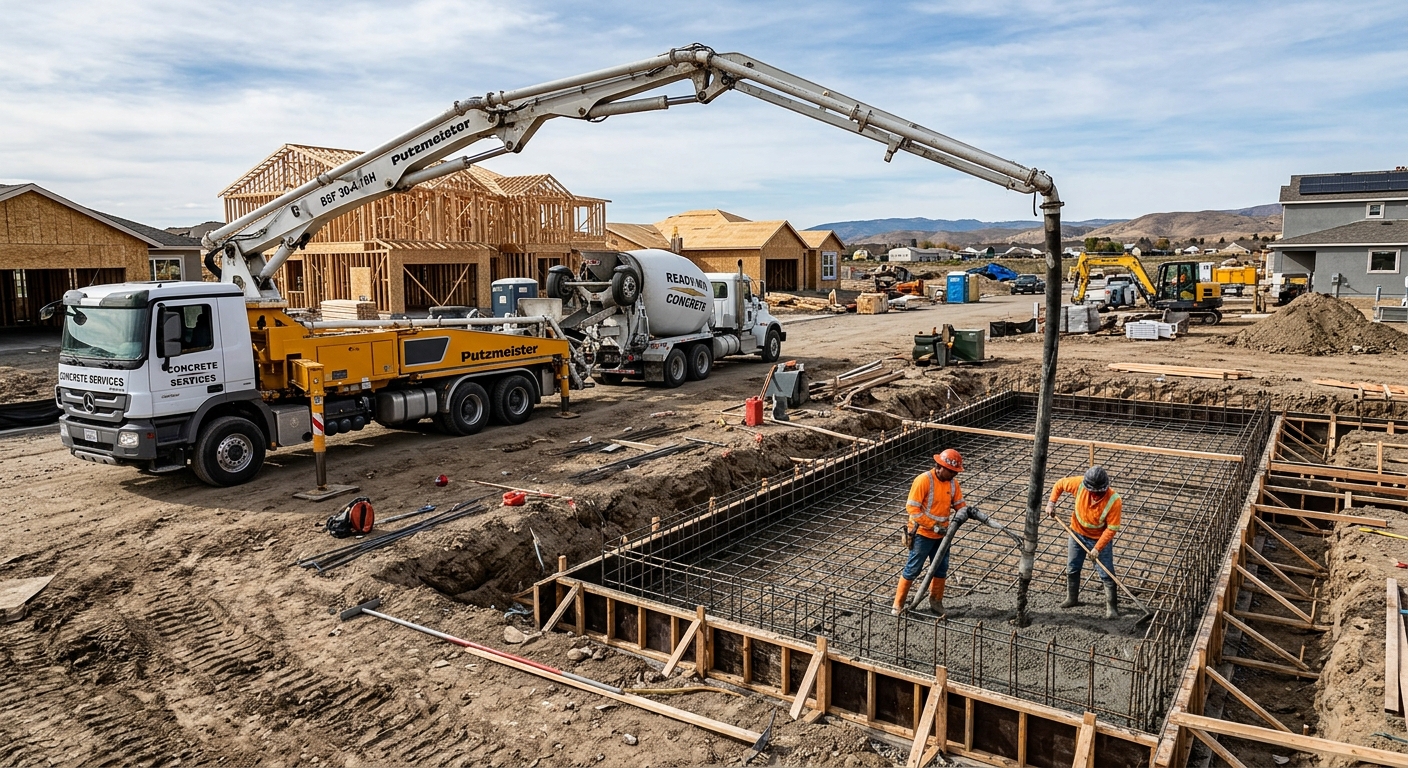
Concrete work options and costs in Lee Ridge
Lee Ridge, Alberta is a smaller community (population 2,741 as of the 2021 Census, Statistics Canada), but the demand for solid concrete flatwork is steady because most homeowners put longevity first. In the Calgary economic region, many properties feature single-detached homes with driveways, patios, and walkways where freeze–thaw cycles are hard on poorly built slabs. That’s why concrete options here are usually chosen around performance—not just appearance. You’ll see crews work faster when they have access to good truck routes, because exterior pours can be constrained by colder temperatures and curing needs. Demand is especially noticeable in established residential pockets near newer builds and lot infill, where homeowners often want matching work done quickly—driveways tied to garage approaches, and walkways connected to rear doors.
Cost swings in Lee Ridge are driven by a few Calgary-market realities: a deeper practical frost depth of roughly 1.2 m (about 4 ft) means more excavation and higher footing/slab volumes; frequent freeze–thaw cycles require air-entrained mixes and disciplined control joints; and the shortened exterior pour season can push up labour availability. Finish upgrades also vary widely: a broom finish is straightforward, while exposed aggregate and stamped work require more prep, specialized surface timing, and—on average—more skilled finishing time. The net result is that two projects with similar dimensions can land in different price bands depending on base prep, reinforcement, mix design, and access.
Use the comparison below as a realistic starting point for planning your quote and discussing specs with your contractor.
| Application |
Typical Size |
Key Spec |
Finish Option |
Price Range |
| Concrete driveway (standard broom finish) |
12 ft x 20 ft (240 sq. ft.) |
Air-entrained exterior mix; compacted granular base; control joints |
Broom |
$12,000–$18,000 |
| Exposed aggregate driveway |
12 ft x 20 ft (240 sq. ft.) |
Proper mix and retarder timing; dense base; air-entrained exterior mix |
Exposed aggregate |
$15,000–$21,000 |
| Stamped concrete driveway or patio |
12 ft x 20 ft driveway (240 sq. ft.) or 16 ft x 12 ft patio (192 sq. ft.) |
Air-entrained exterior mix; integral colour; release agent workflow |
Stamped & often coloured |
$15,000–$26,000 |
| Plain concrete patio or walkway |
10 ft x 12 ft (120 sq. ft.) walkway/patio, typical |
Compact base; air-entrained mix; straight edges and joints |
Plain |
$5,000–$9,000 |
| Garage floor (interior slab) |
22 ft x 24 ft (528 sq. ft.) |
Vapour control (if specified); fibre or mesh depending on plan; proper cure |
Plain trowel or light broom depending on use |
$14,000–$22,000 |
| Foundation footings (structural, below frost) |
Typical house perimeter footing (varies by plan) |
Excavate to below design frost depth; rebar and structural concrete |
Structural formwork (not decorative) |
$28,000–$45,000 |
Prices are estimates only and vary by project scope, site access and material selection.
What affects the price of concrete work in Lee Ridge
In Lee Ridge and the wider Calgary region, it’s common to see quotes for the “same” concrete project come back 30–50% apart. A big reason is that one contractor prices the job to specification (proper excavation depth, granular base, air-entrained mix, reinforcement, curing plan), while another bids only what’s visible at the surface. Labour availability also matters: winter scheduling and the need for heating/blankets can tighten crews’ windows, especially in early spring or late fall. Finally, site conditions—how far trucks can drive, how much dewatering is needed, and whether you have to remove/replace unsuitable soil—can swing costs quickly.
Frost depth and freeze–thaw cycles dictate the engineering here. Footings for houses, garages and retaining structures must bear on undisturbed soil below a design frost depth of about 1.2 m (roughly 4 ft) to reduce frost heave and seasonal movement. Exterior slabs also require air-entrained concrete mixes to survive Calgary’s repeated freeze–thaw cycles and to limit surface scaling. Cold-weather placement adds costs: contractors may use winter-grade mixes, insulated blankets, and sometimes temporary heat to keep curing on track. De-icing salt is another reality in this market—sealing is often the cheapest insurance against premature spalling.
In Lee Ridge, two common pricing examples are: (1) a driveway with poor sub-base or limited access may move from the lower end of the driveway band to the higher end because excavation and granular replacement costs grow fast; and (2) if you upgrade from plain paving to stamped work, the jump can be justified—stamped & coloured concrete often lands closer to the higher $15,000–$26,000 range due to labour-intensive finishing. Conversely, a simple walkway may stay within the $5,000–$9,000 band when base conditions are straightforward and drainage is already adequate. Even housing age matters: older lots can have fill, organics, or thinner topsoil layers that require more removal and re-compaction before you can meet exterior slab performance targets.
| Price Factor |
Why It Matters |
Cost Impact |
| Frost line depth |
Determines footing depth and form height |
More excavation increases concrete, rebar, and labour; often pushes foundation costs toward the upper band |
| Site preparation |
Excavation, grading, compacted granular base |
Hard/unfavourable soil or poor access can add days of work and significant granular supply |
| Reinforcement |
Rebar or wire mesh requirement |
Materials and placement time; required for structural uses and certain slab conditions |
| Mix design |
Air-entrainment and compressive strength spec |
Higher-spec mixes cost more and may affect delivery scheduling, especially for winter placements |
| Finish type |
Broom vs. stamped vs. exposed aggregate |
Decorative finishes add labour and finishing steps; stamped work typically costs more than plain broom |
| Pour size and concrete truck access to site |
Placement method and crew time |
Limited access can require pumping or multiple trips, increasing labour and material handling |
| Cold-weather curing precautions |
Heating and blankets |
Winter protection can add crew coordination, temporary equipment, and extended cure time |
| Control joint pattern and sealing cost |
Controls cracking and reduces salt damage |
Proper joint layout and a penetrating sealer after cure can add line-item costs that prevent costly repairs |
Permits & regulations in Alberta
In Alberta, structural concrete work is typically tied to permits and engineered documentation. That means projects like foundation footings, foundation walls, grade beams, and other structural elements generally require a building permit. Municipalities often rely on engineered drawings for the structural components, especially where bearing conditions or soil conditions are specific to the lot. For concrete flatwork—driveways, patios, and walkways—permits are usually not required by default, unless the work affects lot grading, impervious surface coverage limits, or interfaces with municipal right-of-way features (for example, ties into curbs/sidewalk drainage plans). Even when a permit isn’t usually required, you should confirm with the local authority before breaking ground because zoning and grading rules can still apply.
To verify your contractor in Lee Ridge, ask for three things and check them in sequence:
1) Alberta licence/eligibility: look up the contractor in the appropriate online registry used for licensing/registration in Alberta (the exact portal depends on the trade category, but you can confirm the business identity and status). Match the company name on the quote to the registry listing.
2) Liability insurance: request a current certificate of insurance and verify the coverage dates and that it lists you as the certificate holder if your contract requires it.
3) WCB/WSIB coverage: obtain the contractor’s clearance letter or proof of WCB coverage for the relevant period, and confirm it covers the specific crews who will be on your site.
Finally, ask for references on similar-scale jobs done locally in the Calgary area so you can judge workmanship under real freeze–thaw conditions.
Getting concrete right in Lee Ridge's freeze-thaw climate
In Lee Ridge, concrete failure is usually not about “bad concrete”—it’s about how the job is specified and executed for winter performance. The two most common issues are surface spalling/scaling (often linked to insufficient air-entrainment or poor curing) and cracking from inadequate base preparation or weak control joint planning. To spec the job correctly, focus on five parts: (1) base preparation—excavate to meet frost requirements and install a compacted granular sub-base at the right depth and density for your soil conditions; (2) mix design—use an air-entrained exterior mix with a typical target of 5–7% air content and a minimum 32 MPa compressive strength for durability; (3) control joints—place them at an appropriate spacing so shrinkage cracking happens where you planned, not randomly; (4) curing—plan for a minimum 7-day cure under proper conditions, and in cold weather add heating/blankets so the concrete reaches early strength; and (5) sealing—apply a penetrating sealer after the slab cures (often around 28 days) to repel de-icing salts.
Here’s how the Calgary market reality justifies cost decisions: if you’re choosing between a plain broom driveway and a stamped driveway, the stamped option can add meaningful cost—often moving toward the $15,000–$26,000 band for a typical driveway-sized project. That price is usually worth it for appearance and curb appeal, but you should not pay extra for looks at the expense of the basics. A driveway that meets the air-entrainment, base prep, jointing, and curing specs will outperform a “cheaper-looking” slab that was rushed through winter curing. Ask your contractor to explain their curing plan in writing, especially if your pour date is late fall or early spring.
| Spec |
Why It Matters in Lee Ridge |
What to Ask For |
Impact if Skipped |
| Compacted granular base (depth?) |
Reduces settlement and helps the slab perform through frost movement |
Confirm excavation depth and granular base thickness; compaction method and density targets |
Uneven settling, cracking, and accelerated deterioration |
| Air-entrained concrete mix (target air %?) |
Survives repeated freeze–thaw cycles by managing ice expansion |
Ask for mix design with 5–7% air content for exterior flatwork |
Higher risk of scaling/spalling on surfaces exposed to salt |
| Compressive strength (MPa rating) |
Early and long-term strength supports load and improves durability |
Specify minimum 32 MPa compressive strength (and confirm test documentation approach) |
Reduced durability and increased cracking risk |
| Control joints (spacing per ACI guidelines) |
Directs shrinkage cracking and limits random cracks |
Request joint spacing plan and timing for joint cutting |
Random cracking and water infiltration into edges |
| Minimum 7-day curing period |
Early strength development is critical in cold weather windows |
Confirm curing conditions and whether blankets/heating will be used below set temperatures |
Surface weakness, scaling risk, and long-term performance issues |
| Penetrating sealer (when applied after cure) |
Repels de-icing salt and helps slow surface damage |
Confirm sealer type and application timing after cure (commonly after 28 days) |
Faster spalling and staining from salt exposure |
How to choose a concrete work contractor in Lee Ridge
Choosing the right concrete contractor in Lee Ridge starts with checking credentials and making sure the quote matches the specification reality of Calgary’s freeze–thaw climate. First, verify Alberta licensing/registration for the contractor category that covers the work they’ll do. Then confirm liability insurance by requesting a current certificate of insurance (check coverage dates and limits). For safety and compliance, ask for proof of WCB/WSIB coverage; you should be given a clearance letter or equivalent documentation that shows coverage for the relevant period and the workers who will be on site.
Next, avoid apples-to-oranges pricing by getting 2–3 itemised written quotes—labour and materials breakdown—rather than a single lump sum. Look for line items that spell out: excavation and disposal, granular base, reinforcement (wire mesh vs rebar), air-entrained mix specification, the curing plan, control joints, finishing method, and whether sealing is included (and when). Clarify exclusions like permit pulls (if any are required), snow/ice management during curing, and concrete waste handling.
Warranty also matters. Ask for a workmanship warranty length and whether it covers labour repairs if cracking or surface scaling occurs within a stated period. Also ask about product/manufacturer warranties for sealers or decorative systems and whether those warranties are transferable to you.
On payment schedule, never pay more than about 10–15% upfront. Keep a holdback until the job is complete, verified, and any final cleanup is done. For timeline, get the start date and completion estimate in writing so you’re not left waiting on winter weather windows.
- Provide licence/registration details in writing and match the company name on the quote.
- Show current liability insurance certificate (with dates and coverage amount).
- Provide WCB/WSIB clearance proof for the workers who will be on your site.
- Itemise excavation, granular base, reinforcement, and disposal—no “allowance” blanks.
- Specify air-entrainment and minimum compressive strength for exterior work.
- State whether curing blankets/heating will be used if temperatures drop.
- Confirm control joint spacing plan and cutting schedule.
- Ask what finish is included (broom, stamped, exposed aggregate) and what it requires.
- Clarify sealing: product type and timing after cure (commonly around 28 days).
- Define warranty length for workmanship and what it covers/excludes.
- Agree on payment milestones (10–15% max upfront; holdback until completion).
- Get a written start/completion date and weather contingency plan.
Concrete red flags I see in Lee Ridge include: a quote that only talks about surface finish but not base prep or air-entrainment, contractors who won’t discuss curing conditions for late-season pours, unclear reinforcement plans, “blanket” warranties that don’t specify workmanship coverage, and payments that front-load too much money before forms, base, and jointing are verified.
Frequently asked questions — concrete work in Lee Ridge
Can concrete be poured in cold weather in Lee Ridge?
Yes, concrete can be poured in cold weather in Lee Ridge, but it needs a planned cold-weather method rather than “pour and hope.” In Calgary’s freeze–thaw climate, contractors typically use cold-weather procedures such as winter-grade mixes, insulated blankets, and sometimes temporary heating to keep early hydration on track. The critical goal is achieving adequate early strength before temperatures drop enough to disrupt curing. If you’re scheduling late fall or early spring, ask your contractor for their temperature thresholds and curing plan in writing. For exterior flatwork, good air-entrainment and proper curing reduce the risk of surface scaling that shows up over the next few winters. Pricing may also shift toward the higher end of local bands when blankets/heating are required—for example, driveway work commonly ranges from about $12,000–$18,000 depending on scope and winter protections.
How do I maintain concrete in Lee Ridge's freeze-thaw climate?
Maintenance is mostly about controlling water and salt exposure so the freeze–thaw cycles can’t attack the surface. Start with an appropriate penetrating sealer applied after the slab cures—often around 28 days—so de-icing salts have less opportunity to drive into pores. During winter, use de-icers carefully: avoid over-salting, and sweep loose grit because sand/rock abrasion can wear edges. If you see small surface scaling, don’t ignore it—repair early to prevent water from migrating under the slab. For patios and walkways near rear doors, keep drainage consistent (grade away from the slab) so water doesn’t pool. In Lee Ridge, where driveway and patio slabs are exposed to repeated cycles, maintenance helps extend the life of both plain broom finishes and decorative options. It’s also why properly sealed stamped work can hold up better against salt than unsealed surfaces.
What causes concrete to spall in Lee Ridge winters?
Spalling usually comes from a combination of moisture getting into the concrete and then expanding when it freezes—damaging the surface layer. In our region, the biggest preventable contributor is inadequate air-entrainment for exterior exposure. Air-entrained concrete creates microscopic air voids that help relieve freeze–thaw pressure; without that, surfaces can scale and eventually break off (spall), especially when de-icing salts are present. Poor or rushed curing can also contribute by leaving the surface weaker during the first winter. Another common driver is insufficient base prep or drainage: if water repeatedly pools or the slab settles unevenly, micro-cracks form and let more moisture in. That’s why good Lee Ridge projects specify air content, a minimum 32 MPa strength, proper control joints, and a curing plan for the weather window. Concrete that was priced too low often skipped one of these essentials.
What is rebar and when is it required in Alberta?
Rebar (reinforcing steel) is placed in concrete to handle tensile forces that concrete can’t resist well on its own. In Alberta, rebar is required for many structural concrete applications—particularly foundation footings, foundation walls, and grade beams—because these components support the building’s load paths and are engineered for strength and movement control. For concrete flatwork like driveways and patios, the need for steel can depend on thickness, sub-base conditions, and the load requirements (for example, heavy vehicles vs light residential use). Some slabs use wire mesh, fibres, or design-specific reinforcement, but structural elements generally require rebar per the engineering and permit drawings. For your Lee Ridge project, the safest approach is to ask your contractor to match reinforcement to the approved plan: if it’s a foundation or footing, treat it as structural and confirm the engineering details are followed.
How long does a concrete project take in Lee Ridge?
Project timelines in Lee Ridge depend on scope, excavation complexity, and weather conditions that affect curing. For small exterior flatwork like a walkway or a simple patio, the active on-site work is often a few days: excavation/grading, base prep, forms, pour, and finishing. However, curing time determines when you can safely use the surface. For typical residential flatwork, you’ll still plan around a minimum 7-day cure for acceptable strength development, with full performance building over time. Driveways take longer mainly because of base prep volume and finishing steps; decorative work (exposed aggregate or stamped) can also add scheduling because finishing must be done at the right concrete timing. If cold-weather curing requires blankets/heating, that can extend the “do not disturb” period. Foundation/footing work is usually multi-stage due to excavation, inspections, reinforcement placement, then pour. A well-organized Calgary-region crew will give you a written timeline and weather contingency plan.
What is a concrete overlay and is it suited to Lee Ridge?
A concrete overlay is a new layer of concrete placed over an existing slab, typically after the old surface is prepared and bonded correctly. In theory, it can be a way to restore a worn driveway without full removal, and it may reduce excavation and disposal costs. In Lee Ridge, though, overlay suitability depends heavily on why the original slab failed: if there’s structural movement, major cracking, or moisture issues beneath the surface, an overlay can hide symptoms but not fix the cause—leading to renewed cracking or debonding. If the existing slab is still sound and the surface prep (profiling, cleaning, patching) is done to allow good bonding, an overlay can work reasonably well for cosmetic or minor deterioration. Because freeze–thaw cycles and salt exposure are hard on surfaces, proper sealing and jointing still matter. When you’re budgeting, remember that overlay pricing and performance vary widely; compare it against full replacement so you’re not paying close to the $12,000–$18,000 driveway range for a solution that may not last through multiple winters.