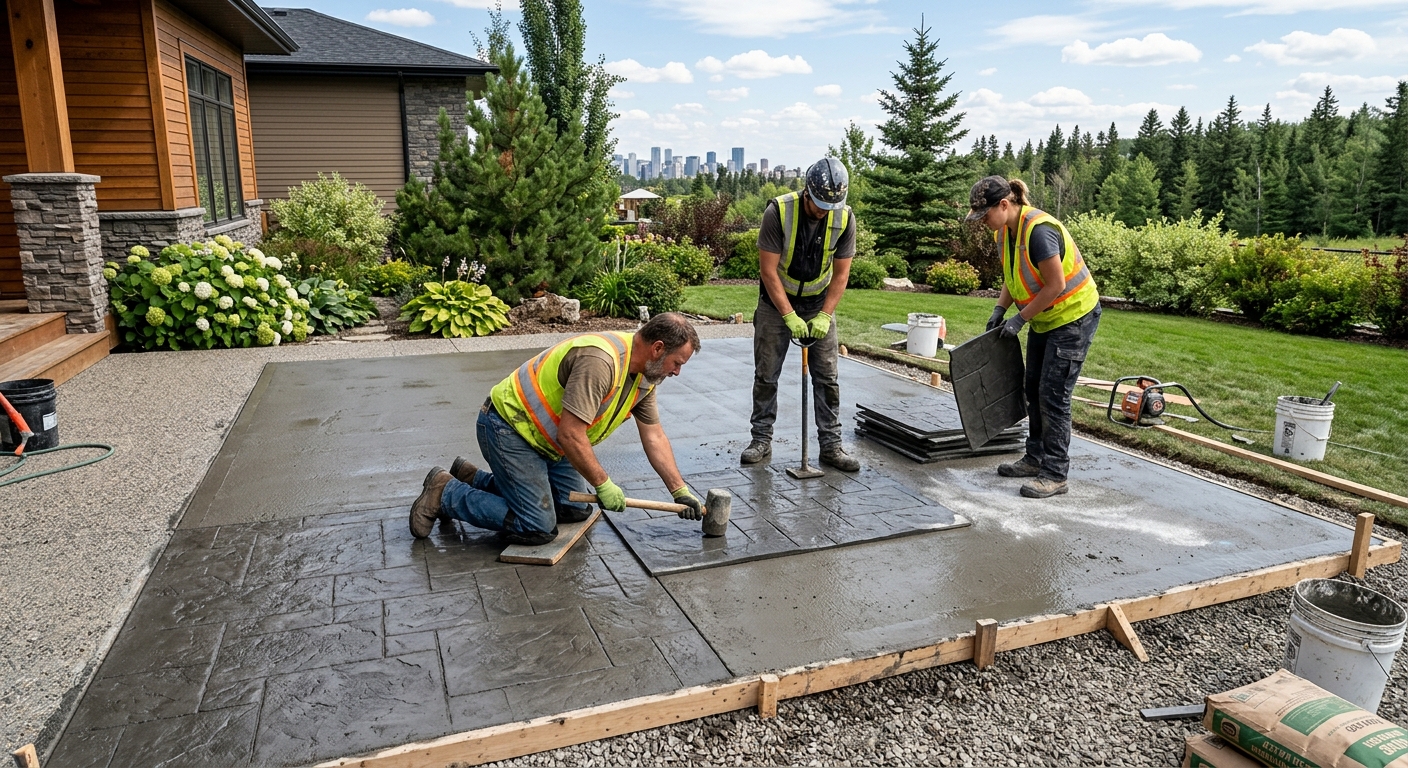
Concrete work options and costs in Port Elgin
Port Elgin is a great place for concrete flatwork, but the coast-side freeze–thaw cycles along Lake Huron and Georgian Bay make “standard” specs a little less forgiving than in milder parts of Ontario. With a population of 7,862 (Statistics Canada, 2021 Census), demand is steady for driveways, patios and walkways—especially in neighbourhoods where family homes and renovations cluster, like the areas around Queen Street and the broader downtown corridor. In most homes you’ll see concrete used for practical surfaces: it’s durable, easy to maintain, and holds up better than many alternatives when detailed correctly.
Costs here are shaped by deeper excavation for structural work, more forming, and more careful drainage and curing. Locally, the industry keeps footings below the design frost depth to reduce frost heave and cracking, and exterior slabs are typically air-entrained to resist scaling and spalling. The shorter pour season also means crews often schedule more work into late spring to early fall—so cold-weather pours may require extra labour, insulation and heating to reach proper strength and cure timelines. That’s why two bids for the “same” driveway can differ by a noticeable margin: granular base thickness, reinforcement, truck access, and finish type are where the real effort goes.
Below is a practical cost comparison for common options in Port Elgin—use it as a starting point when you request itemised quotes.
| Application |
Typical Size |
Key Spec |
Finish Option |
Price Range |
| Concrete driveway (standard broom finish) |
16 ft x 28 ft (448 sq. ft.) |
Air-entrained mix, compacted granular base, mesh in field |
Broom finish |
$7,200–$9,900 |
| Exposed aggregate driveway |
16 ft x 28 ft (448 sq. ft.) |
Air-entrained mix, thicker surface preparation |
Exposed aggregate |
$9,200–$12,600 |
| Stamped concrete driveway or patio |
12 ft x 22 ft (264 sq. ft.) |
Air-entrained mix, release agent, integral colouring |
Stamped (pattern + colour) |
$6,300–$9,200 |
| Plain concrete patio or walkway |
10 ft x 20 ft (200 sq. ft.) |
Air-entrained mix, control joints |
Plain trowel/smooth + light broom |
$2,800–$4,000 |
| Garage floor (interior slab) |
22 ft x 24 ft (528 sq. ft.) |
Vapour control as applicable, compacted base, reinforcement |
Float + power trowel (interior) |
$6,000–$9,900 |
| Foundation footings (structural, below frost) |
Typical new/underpinning plan (linear allowance) |
Engineered footing size, below frost depth, rebar cage |
Formed structural concrete |
$18,500–$32,000 |
Prices are estimates only and vary by project scope, site access and material selection.
What affects the price of concrete work in Port Elgin
In Port Elgin and across the Stratford–Bruce Peninsula region, you can see the same concrete project land 30–50% apart depending on how the contractor designs for winter. Ontario’s deeper frost protection expectations and our freeze–thaw cycles don’t just affect footings—they influence slab design, drainage, mix selection and even curing methods. A driveway priced using “thin base + minimal prep” might look cheaper upfront, but it often fails sooner when water gets under the slab and then freezes.
Here’s the key: exterior structural decisions are driven by frost. Footings must extend below the design frost depth to avoid frost heave and cracking; the depth in Ontario is commonly in the 1.5–2.4 m range, and the same logic is followed more aggressively where local soils hold water. For exterior slabs and flatwork, concrete is typically air-entrained to survive surface scaling and spalling during repeated freeze–thaw. When the season turns cold early, short pour windows mean extra labour, insulation and heating to keep curing on track—cost goes up. Coastal-wet exposure also pushes higher value on granular base drainage and stricter curing, because moisture and de-icing salt accelerate surface deterioration. That’s why sealing often becomes part of the long-term solution, and why the “cheapest” quote can become the most expensive over time.
Real-world Port Elgin examples: (1) A driveway on damp clay requires deeper excavation and improved drainage/granular base; that can move a project closer to the $16–$22 per sq. ft. backbone band. (2) If rebar/wire mesh placement and finish time are skipped, the contractor may quote toward the low end, but joints and durability can suffer. (3) Stamped or exposed aggregate work involves more labour and materials; it often aligns with the $22–$32 per sq. ft. stamped/decorative band—especially when patterns and colour are added.
| Price Factor |
Why It Matters |
Cost Impact |
| Frost line depth — determines footing depth and form height |
Deeper excavation and more forming to prevent frost heave |
Higher excavation + labour; can add significant cost on foundations |
| Site preparation — excavation, grading, compacted granular base |
Controls drainage and reduces voids that cause settlement and cracking |
Better base often raises price but improves longevity |
| Reinforcement — rebar or wire mesh requirement |
Helps control cracking and improves load performance |
Materials + placement labour; typically moderate cost increase |
| Mix design — air-entrainment and compressive strength spec |
Air-entrainment is critical for freeze–thaw durability in exterior slabs |
Higher-quality mix can increase per-yard cost |
| Finish type — broom vs. stamped vs. exposed aggregate |
More steps, tooling time and sometimes additional surface prep |
Stamped/exposed usually increases total cost meaningfully |
| Pour size and concrete truck access to site |
Narrow access may require pumping or multiple trips; labour ramps up |
Access issues can add truck, pump and labour fees |
| Cold-weather curing precautions — heating and blankets |
Maintains temperature for proper set and early strength development |
Can increase cost during late-season or shoulder-pour dates |
| Control joint pattern and sealing cost |
Controls where cracking happens and protects against salt-driven spalling |
More disciplined jointing + sealing can add line-items but prevents failures |
Permits & regulations in Ontario
In Ontario, structural concrete work typically needs a permit. That includes footings and foundation elements such as foundation walls, grade beams and any structural underpinning or foundation modifications. In many cases, engineered drawings are required and reviewed as part of the building permit process. For concrete flatwork—patios, walkways, driveways—permits are usually not required, unless the work affects lot grading, interferes with drainage, increases impervious surface coverage beyond municipal limits, or impacts a permit-related right-of-way/municipal requirements. Because these details can vary by site, the safest approach is to confirm with the municipality before you schedule the pour.
For contractor compliance, verify insurance and coverage even if you don’t need a permit for the slab. Step-by-step for a homeowner in Port Elgin:
- Licensing: confirm the contractor’s Ontario business registration and any trade qualifications that apply to the scope (ask directly which approvals they hold).
- Liability insurance: request a current certificate of insurance naming you (or your property) as appropriate and confirm coverage limits match the project.
- WSIB/WCB: ask for proof of clearance/coverage for workers involved on the site.
- Ask for references: request at least 2–3 similar-scale jobs in the last 12–24 months, ideally with exterior slabs that have seen winter.
- Confirm permit responsibility: if structural work is involved, ask whether they pull the permit or provide documentation for your permit application.
Having everything documented before excavation prevents delays and protects your investment.
Getting concrete right in Port Elgin's freeze-thaw climate
In Port Elgin, concrete failures are usually tied to water movement plus winter. The most common problems—spalling, scaling and early cracking—happen when exterior slabs absorb moisture, freeze, and expand pressure at the surface. The cure and the “first season” matter more here because de-icing salt and frequent freeze–thaw cycles punish weak air systems and poor drainage. The right approach is to spec the job with layers of protection: (1) base preparation using compacted granular sub-base to the appropriate depth for your soil and frost conditions; (2) mix design with air-entrainment for exterior exposure; (3) control joints cut early and spaced to encourage cracking at intended locations; (4) curing for enough time and the right temperature, especially during cool or damp periods; and (5) sealing after the concrete has cured so moisture and salt don’t penetrate the surface.
Ask for a mix with 5–7% air content for exterior flatwork and a minimum 32 MPa compressive strength. Plan joint spacing so shrinkage and thermal movement don’t create random wide cracks, and ensure curing is protected even when temperatures dip. Sealing is typically applied after cure—often around 28 days—so it can repel salts and water effectively.
To see where the price difference is justified: a stamped patio may cost more than broom-finished plain concrete, but if the base is only “good enough,” the stamp won’t hold up any better than a simple slab. Paying the extra for a proper air-entrained mix and proper base/granular drainage is what protects both plain and decorative concrete. For example, if broom-finished flatwork lands toward the $14–$20 per sq. ft. band and stamped lands higher, the premium is only worth it when the foundation layers and control joints are built correctly for Port Elgin winters.
| Spec |
Why It Matters in Port Elgin |
What to Ask For |
Impact if Skipped |
| Compacted granular base (depth?) |
Prevents water under the slab and reduces frost-related movement |
Confirm excavation depth, granular type and compaction testing/verification |
Settlement and cracking; water pooling leads to freeze–thaw damage |
| Air-entrained concrete mix (target air %?) |
Air bubbles provide space for freeze expansion, improving durability |
Ask for exterior air content typically 5–7% for flatwork |
Higher risk of surface scaling/spalling |
| Compressive strength (MPa rating) |
Strength gain supports long-term performance and reduces early failure |
Minimum 32 MPa specified for the application |
Soft surface, increased cracking and wear |
| Control joints (spacing per ACI guidelines) |
Directs cracking where it’s expected during shrinkage and temperature swings |
Ask for the planned joint layout and cutting schedule |
Random cracks that spread and allow water ingress |
| Minimum 7-day curing period |
Cold/damp conditions slow hydration; early strength is critical |
Confirm curing plan; protect from frost and rapid drying |
Weaker near-surface concrete; spalling and scaling risk rises |
| Penetrating sealer (when applied after cure) |
Repels salt and moisture that drive freeze–thaw deterioration |
Ask when sealing occurs (commonly around 28 days after pour) |
Faster salt/water damage and shortened surface life |
How to choose a concrete work contractor in Port Elgin
Start by confirming the contractor is legitimate and protected—especially important for excavation, rebar work and winter pours. For Ontario, ask for (1) proof of liability insurance (certificate of insurance, coverage limits appropriate to the job), and (2) WSIB/WCB coverage for workers working on your site (request a clearance letter or current proof of coverage). If the scope includes structural footings or foundation modifications, confirm they understand permit steps and engineered requirements, and that their documentation is consistent with what the municipality will review.
Then get 2–3 itemised written quotes. An itemised quote helps you compare apples-to-apples: labour line items, excavation/grading, granular base prep, reinforcement (mesh/rebar), concrete supply (including air-entrainment), forms, finishing, joints, and sealing. Look for what’s excluded: disposal of excavated material, saw-cutting, surface protection during curing, and whether a permit is pulled (if required) or included in pricing. For concrete flatwork in Port Elgin, disposal and access are common “gotchas” that can swing the final price.
Warranty and payment schedule matter. Ask for a workmanship warranty length and whether manufacturer warranties transfer to you for materials like sealers/admixtures. Payment should be staged—typically never more than 10–15% upfront. Hold back a portion until completion and final cleanup. Finally, insist on a start date and an estimated completion timeline in writing; shoulder-season weather in Ontario can affect scheduling, and reputable crews plan curing protection in advance.
- Request proof of liability insurance (COI) before signing.
- Ask for WSIB/WCB proof or clearance letter for active coverage.
- Confirm who pulls any required permits for structural work.
- Require itemised quotes (not a single lump sum).
- Verify concrete specs: air-entrainment and minimum compressive strength.
- Confirm base scope: excavation depth, granular material type and compaction plan.
- Ask how reinforcement is placed (mesh vs. rebar and placement height).
- Check joint plan: spacing and when joints will be cut.
- Ask for curing protection details for cold or damp days.
- Confirm whether sealing is included and when it’s applied after cure.
- Review disposal/restoration: spoil removal, topsoil replacement and grading.
- Agree on payment schedule with a holdback until final acceptance.
Concrete red flags in Port Elgin include: quotes that don’t mention air-entrainment, “thin base” assumptions without soil/drainage consideration, vague joint spacing, no curing/blanket plan for cooler temperatures, and contractors who refuse to put exclusions and timeline details in writing.
Frequently asked questions — concrete work in Port Elgin
How much does concrete work cost in Port Elgin?
In Port Elgin, pricing depends on whether you’re doing flatwork or structural concrete and how much site work is required. For typical exterior concrete, the region’s backbone bands generally land driveways (concrete slab) around $16–$22 per sq. ft., and patios/walkways around $14–$20 per sq. ft. Decorative stamped concrete typically runs higher, often in the $22–$32 per sq. ft. range due to extra labour, colour and finishing time. Foundation/footings commonly price per linear allowance based on frost-protected excavation and forming; in this market, footings often fall within $85–$140 per unit allowance. Expect bids to move 30–50% when base drainage, reinforcement, access and cold-weather curing are properly included.
How deep must footings be for Port Elgin's frost line?
Footing depth in Ontario is governed by local design frost depth and the engineering requirements for your soil and building load. In practice, structural footings are built below the design frost depth to reduce frost heave and cracking; Ontario’s frost depth range commonly falls around 1.5–2.4 m depending on the specific design and conditions. For Port Elgin homes, the contractor should confirm the required footing depth using your engineered drawings and any site-specific geotechnical notes. Don’t accept “we’ll just go a bit deeper”—a proper frost-depth spec impacts excavation volume, forming height and ultimately cost (and performance). If your quote doesn’t clearly reference below-frost excavation and engineered footing sizes, ask for that detail before proceeding.
Why does concrete crack in Port Elgin and how is it prevented?
Concrete cracks aren’t always a sign of failure, but in Port Elgin they’re often influenced by moisture and freeze–thaw cycles. The biggest triggers are inadequate base preparation (water gets under the slab), insufficient drainage, and improper joint layout. As temperatures swing, concrete shrinks and expands; if control joints aren’t placed and cut correctly, cracking becomes random instead of controlled. Prevention comes from compacted granular base, using an air-entrained exterior mix, and having a clear joint plan. Curing also matters: early cold snaps can slow strength gain and increase surface weakness. Finally, sealing—applied after proper cure—helps repel de-icing salts that can drive spalling. With the right specs, cracking becomes narrower, predictable, and less damaging.
Stamped vs broom-finish concrete — cost difference?
Stamped concrete costs more than broom-finish because the finish requires extra steps: surface prep, stamp mats, colour application/release, and careful curing and finishing timing. In Port Elgin, broom-finished exterior concrete typically aligns with the driveway backbone band of $16–$22 per sq. ft., while stamped decorative work generally falls within the $22–$32 per sq. ft. band. The premium isn’t just for appearance—it’s also for labour intensity and the fact that the contractor must protect the surface during curing to preserve the pattern and avoid early deterioration. If a quote is close in price, confirm what’s included: air-entrainment, base depth, reinforcement, joint pattern, and whether sealing is planned for winter exposure.
When is the best time to pour concrete in Port Elgin?
The best time is typically when temperatures allow curing without added heating—late spring through early fall—because concrete needs consistent conditions to develop strength. Port Elgin’s shorter pour season and freeze–thaw realities mean shoulder-season pours can still be done, but the contractor must plan for cold-weather curing (insulation blankets, temperature monitoring, and curing protection). If you’re scheduling a driveway, patio, or walkway, aim for a window when the forecast supports proper set and at least early curing progress. For structural footings, freezing conditions can affect excavation and forming schedules, and engineered steps still matter. If someone offers a pour date during cold nights without a curing plan, that’s a risk sign—especially for exterior flatwork where air entrainment and curing protection protect against scaling and spalling.
How long does concrete take to cure?
Concrete curing depends on temperature and mix design, but a practical homeowner guideline is to plan for at least 7 days of curing for early strength development, with longer time for full durability. In Port Elgin’s climate, colder damp periods can slow the process, so reputable contractors protect pours with curing blankets or controlled heating when needed. For sealing, wait until the concrete has sufficiently cured—often around 28 days for penetrating sealers—so the sealer can perform and repel moisture and de-icing salts. The “traffic-ready” time may be sooner for interior slabs, but exterior flatwork faces freeze–thaw exposure, so rushing is not recommended. Always ask the contractor to specify curing conditions and timelines in writing for your date and temperatures.