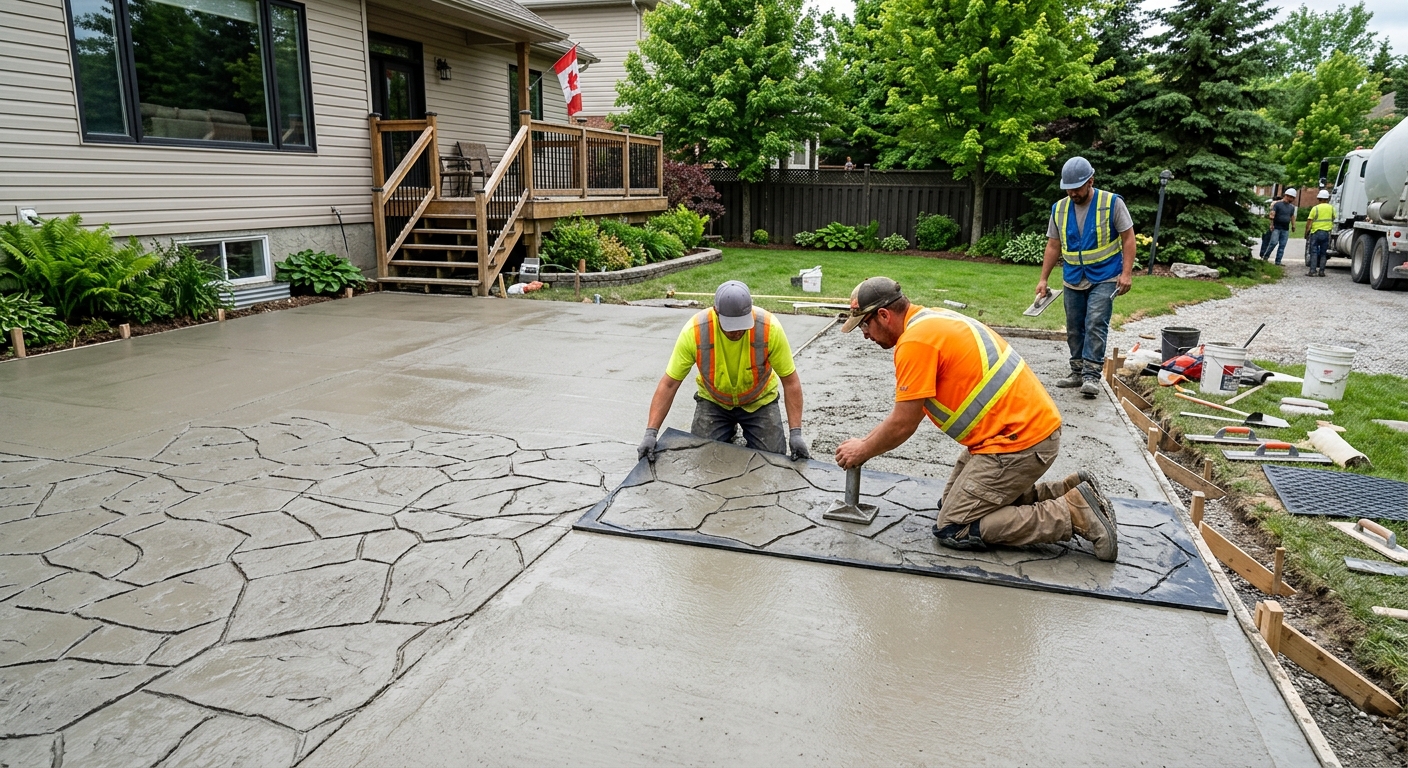
Concrete work options and costs in Regent Park
In Regent Park, concrete work is a practical, visible upgrade—especially for driveways, patios, and walkways that see heavy seasonal weather swings. Regent Park has a population of 10,803 (Statistics Canada, 2021 Census), and it’s an area where many homeowners and investors rely on concrete flatwork to keep access safe and maintenance predictable. While housing stock varies, Toronto’s mix of older properties and ongoing infill means contractors are often in demand for re-levelling, drainage improvements, and replacement of older slabs that have begun to crack or spall. In many neighbourhood pockets around Regent Park, including the streets closer to the transit and commercial edges, we commonly see higher turnover of walkways and driveway approaches where curbside access and grades are tight.
Pricing in the Toronto economic region is strongly shaped by frost depth and freeze–thaw cycles. Ontario generally requires exterior structural footings to extend at least about 1.2 m (4 ft) below grade to help prevent frost heave and differential movement. Exterior flatwork also needs air-entrained concrete and proper control-joint planning to manage cracking. Because curing performance drops when temperatures hover near 10 °C or below, Toronto contractors typically concentrate exterior pours into the warmer months, and that can raise labour demand and crew availability. If your project includes drainage corrections or tight truck access, cost can move quickly—so it helps to compare options with like-for-like specs.
The table below compares common Regent Park concrete projects, typical sizes, finish options, and realistic price bands you’ll see in the Toronto market.
| Application |
Typical Size |
Key Spec |
Finish Option |
Price Range |
| Concrete driveway (standard broom finish) |
12' x 20' (240 sq. ft.) |
Well-compacted granular base + control joints; air-entrained for exterior |
Broom finish |
$4,800 – $6,700 |
| Exposed aggregate driveway |
12' x 20' (240 sq. ft.) |
Higher paste control; air-entrained mix; jointing plan |
Exposed aggregate |
$5,600 – $8,000 |
| Stamped concrete driveway or patio |
10' x 18' (180 sq. ft.) |
Air-entrained mix; densifier/colour system; release agent |
Stamped pattern + colour |
$4,300 – $7,200 |
| Plain concrete patio or walkway |
8' x 12' (96 sq. ft.) |
Proper drainage + compacted base; control joints where needed |
Float & broom finish |
$1,600 – $2,500 |
| Garage floor (interior slab) |
20' x 22' (440 sq. ft.) |
Vapour barrier; reinforcement where required; curing protection |
Broom or trowel-finish options |
$6,600 – $11,000 |
| Foundation footings (structural, below frost) |
Typical footing perimeter for a small addition |
Engineered dimensions; excavation, forms, rebar; pour below frost depth |
Structural concrete |
$3,200 – $6,800 |
Prices are estimates only and vary by project scope, site access and material selection.
What affects the price of concrete work in Regent Park
In Toronto and across Ontario, it’s not unusual to see the “same” concrete job come in 30–50% apart, even when homeowners believe specs are comparable. The real differences usually start underground: excavation depth, soil conditions, base preparation, reinforcement, and whether the contractor is building for freeze–thaw durability. In Regent Park, quotes can swing because exterior work must be detailed for frost movement and repeated winter cycling—footings typically need to extend below design frost depth (Ontario commonly ranges roughly 1.5–2.4 m depending on area and design). On the flatwork side, exterior slabs are expected to use air-entrained concrete and a reliable joint pattern to reduce random cracking. When pours are scheduled near cooler shoulder-season weather, cold-weather curing precautions (insulating blankets, heaters, longer protection time) can add labour and equipment costs. Also, GTA homeowners often de-ice in winter, and that accelerates surface spalling if the mix and sealing aren’t right—so better contractors factor in sealer timing and prep.
Here are a few concrete examples that change price in Regent Park:
- Replacing an older walkway: if the base is soft and saturated, the contractor may need deeper granular excavation and more regrading—pushing the project toward the higher end of patio/walkway pricing (for reference, patios/walkways often land around $16–$26 per sq. ft.).
- A driveway with poor drainage: fixing downspout discharge or slope toward the street can increase prep time, but it prevents the concrete from “pumping” under freeze–thaw.
- Stamped vs. plain: stamped concrete often costs more (commonly $24–$40 per sq. ft. depending on complexity), but when you want aesthetics close to existing brickwork or new landscaping, the added labour and materials can be justified—especially if you’re replacing the slab anyway rather than patching.
One more reality: labour availability in peak pour months can tighten schedules. When crews are booked, mobilisation costs spread over fewer days, and that can affect unit pricing. And if your foundation work involves deeper excavation, the footing portion can quickly rise into the $180–$300 per linear foot-type category contractors use for budgeting structural work (site-specific pricing varies).
| Price Factor |
Why It Matters |
Cost Impact |
| Frost line depth |
Determines footing depth and how tall forms must be |
Higher excavation and concrete volumes can add significant cost |
| Site preparation |
Excavation, grading, and compacted granular base stability |
More base work raises labour and haul/disposal fees |
| Reinforcement |
Rebar or wire mesh helps control cracking in structural and some slabs |
Material + placement labour adds cost, especially on larger pours |
| Mix design |
Air-entrainment and compressive strength for freeze–thaw durability |
Premium mix specs can increase material cost but reduce failure risk |
| Finish type |
Broom vs. stamped vs. exposed aggregate affects labour intensity |
Stamped/exposed typically costs more than plain broom-finished work |
| Pour size and concrete truck access to site |
Smaller, tighter sites may require more crew time and short pours |
Access constraints can increase labour and mobilisation |
| Cold-weather curing precautions |
Heaters/blankets protect early strength gain when temperatures drop |
Additional equipment and time can raise overall project cost |
| Control joint pattern and sealing cost |
Jointing controls where cracks form; sealing helps resist salts and moisture |
Better detailing adds line-item costs but improves lifespan |
Permits & regulations in Ontario
In Ontario, structural concrete work typically requires a permit and sometimes engineered drawings reviewed by the municipality. That usually includes foundation footings, foundation walls, and grade beams—anything that forms part of the building’s structural system and supports loads. Concrete flatwork like patios, walkways, and many standard driveways often does not require a permit by itself. However, a permit can be required when the work affects lot grading, impervious surface coverage rules, or the local right-of-way (for example, modifications near curbs or municipal sidewalk areas). In Regent Park, always confirm requirements with the local authority before breaking ground—especially if you’re changing drainage, lowering/raising grades, or connecting new flatwork to foundation weeping systems.
Also, protect yourself by verifying the contractor’s paperwork. In Ontario, ask for: (1) liability insurance certificate, (2) WSIB/WCB coverage (or the applicable proof depending on their business status), and (3) references for similar-scale projects. To verify licence/credentials in practice, homeowners should check the Ontario contractor registry or licensing database linked for construction trades in your area, then request a certificate of insurance that names you (or confirms coverage terms) and a clearance letter for WSIB/WCB where applicable. Then confirm the company matches the name on the permits and quotes—mismatches are a common red flag.
Getting concrete right in Regent Park's freeze-thaw climate
Concrete failure in Regent Park is usually about freeze–thaw stress, moisture movement, and early-age curing—not “bad luck.” The most common problems homeowners notice—cracking, uneven settlement, and spalling—often trace back to three preventable gaps: inadequate base support, inadequate air content, and rushed curing. To spec your job correctly, start with the base: use a compacted granular sub-base to the required depth for your soil and frost conditions, with proper grading and drainage so the slab doesn’t sit on saturated material. Next is the mix: for exterior flatwork, use an air-entrained concrete mix with 5–7% air and a minimum 32 MPa compressive strength suitable for your exposure. Then plan control joints to limit random cracking by giving shrinkage cracks a path. For curing, protect the pour for at least 7 days; in colder spells when temperatures near 10 °C or below, protection with insulation blankets or enclosures matters because early strength gain is slower. Finally, plan sealing: apply a penetrating sealer about 28 days post-pour to help repel moisture and reduce de-icing salt intrusion.
Ask technical questions up front to avoid the classic failure mode: spalling from insufficient air-entrainment or poor finishing that traps weak surface paste. As a practical example, upgrading from plain broom-finished concrete to a better jointing/sealing package can be a few hundred dollars on a walkway, often less than the cost difference between finishes. But choosing a finish like stamped concrete (often roughly $24–$40 per sq. ft. in this market tier) without correct base and air content is where homeowners lose money—because the slab will still crack and degrade.
| Spec |
Why It Matters in Regent Park |
What to Ask For |
Impact if Skipped |
| Compacted granular base (depth?) |
Reduces settlement and keeps the slab from sitting on saturated, frost-susceptible soil |
Base depth and compaction method; confirm drainage slope and undercut/haul if needed |
Settlement, cracking, and early failure in freeze–thaw years |
| Air-entrained concrete mix (target air %?) |
Improves freeze–thaw durability by giving trapped air “space” for expansion |
Documented target air content (commonly 5–7% for exterior flatwork) and mix design |
Spalling and surface scaling, especially where de-icing salt is used |
| Compressive strength (MPa rating) |
Supports durability and long-term resistance under Ontario freeze cycles |
Minimum 32 MPa specified for the exposure and placement conditions |
Lower strength development and higher likelihood of cracking and scaling |
| Control joints (spacing per ACI guidelines) |
Controls where cracks occur and limits random splitting |
Proposed joint spacing and saw-cut timing; confirm which slab edges need more joints |
Uncontrolled cracking patterns and water infiltration at cracks |
| Minimum 7-day curing period |
Early-age curing protects strength gain in humid, cool Toronto seasons |
Protection plan and curing duration; cold-weather measures if temperatures drop |
Surface weakness, dusting, and reduced freeze–thaw performance |
| Penetrating sealer (when applied after cure) |
Reduces moisture and salt intrusion that drives spalling |
Sealer type and schedule—typically applied about 28 days after placement |
Faster deterioration from wetting/drying and de-icing salt exposure |
How to choose a concrete work contractor in Regent Park
Choosing the right contractor in Regent Park isn’t just about the lowest number—it’s about who will build to Ontario’s durability expectations for freeze–thaw. Start with verification. Ask for their liability insurance certificate and request the coverage limits. For worker protection, confirm WSIB/WCB coverage with a clearance letter or proof of coverage from the insurer/board. Also confirm they can do the specific scope in the permit context (structural footings vs. flatwork) and that the contractor’s company name matches the quote and any permit documents.
Next, get 2–3 itemised written quotes. The best quotes break the job into line items such as excavation and disposal, granular base and compaction, reinforcement (if needed), concrete supply/mix design, forms, finishing, joint cutting, and sealing. Avoid quotes that only say “concrete supply and labour” because you can’t compare apples to apples. Read exclusions carefully: is permit pulling included if required, is saw-cutting part of the price, and is concrete truck access or pumping included if your driveway is tight?
On warranty, ask for a workmanship warranty length and whether any product/manufacturer warranty applies to sealers, additives, or colour systems for stamped work—and whether it’s transferable if you sell. For payment, use a sensible schedule: no more than 10–15% upfront, and hold back a portion until the final inspection and cleanup are complete. Finally, request a written timeline with a start date and completion estimate—Toronto projects can slip when weather turns, but reputable crews communicate early.
- Provide COI (certificate of insurance) and confirm your named interest (where applicable).
- Show proof of WSIB/WCB coverage (or clearance letter).
- Use written scope: excavation depth, base thickness, and drainage plan.
- Confirm concrete mix design (air entrainment and compressive strength) in writing.
- Identify reinforcement plan: rebar/wire mesh where required.
- Include jointing method and timing (straight edges, saw-cut plan).
- Specify curing protection measures for cooler days.
- List sealing scope (product type, prep, and “after cure” timing).
- Clarify disposal/haul-away and whether it includes extra excavation.
- Confirm concrete truck access and whether pumping/short-load fees apply.
- State warranty length and what it covers (and in what conditions).
- Provide a detailed payment schedule tied to milestones, not just “project start.”
Concrete red flags in Regent Park include: quoting without stating air-entrainment for exterior work, skipping base thickness/compaction details, refusing to put joint spacing in writing, offering only a vague “lifetime” promise with no coverage terms, or asking for large upfront payments before any site work begins.
Frequently asked questions — concrete work in Regent Park
What is air-entrained concrete and why does it matter here?
Air-entrained concrete is a mix designed to include tiny, evenly distributed air bubbles. In Regent Park and the broader Toronto region, those microscopic bubbles give expanding water room as temperatures swing through freezing and thawing, which reduces internal pressure and helps prevent surface damage. This is why Ontario contractors typically specify air-entrained concrete for exterior flatwork like driveways, patios, and walkways. If the mix isn’t air-entrained, moisture and salt can drive deterioration faster—often showing up as scaling or spalling within a few winters. When you compare quotes, make sure the contractor actually states the air-entrainment target and includes it in the scope; otherwise, a “cheap” driveway can end up costing more than the higher end of the usual driveway pricing band (often around $18–$28 per sq. ft. depending on design and prep).
How do I prepare the base for a concrete slab?
Base prep is the part homeowners rarely see, but it’s usually the difference between long-lasting concrete and repeat repairs. In Regent Park, the goal is to remove soft or saturated subgrade, then rebuild with a compacted granular base sized for the frost conditions and your project loads. A proper plan includes excavation to a specified depth, grading to the right slope for drainage, and compacting in lifts (not just spreading and rolling once). For exterior slabs, well-drained granular base matters because saturated soils can expand and contract through freeze–thaw cycles, stressing the slab. Ask your contractor what base thickness they’re installing, what compaction method they use, and whether they’ll address downspouts or low spots before pouring. If base prep is vague, the quote may not truly be comparable—especially when exterior options fall anywhere from $16–$26 per sq. ft. for typical patios and walkways.
How do I compare concrete quotes?
To compare concrete quotes in Ontario fairly, you need like-for-like specs, not just similar square footage. Start by asking every bidder to itemise labour and materials: excavation and disposal, granular base and compaction, reinforcement (rebar or mesh), concrete mix design (including air-entrainment for exterior), joint cutting plan, finishing, curing protection, and sealing (if included). Confirm whether permit work is required and included for your scope—structural footings generally require permits, while many standard patios/walkways typically do not unless lot grading or right-of-way issues are involved. Then check access conditions: if a quote assumes easy truck access but your driveway is tight, the final cost can shift. As you evaluate finish options, don’t compare plain to decorative without adjusting expectations: stamped concrete often lands higher (commonly within the $24–$40 per sq. ft. range), and that extra cost should reflect the specified base, mix, and jointing too.
Can concrete be poured in cold weather in Regent Park?
Yes, concrete can be poured in cold weather in Regent Park, but it must be handled correctly. The Ontario reality is that temperatures often drop into the cooler range during the pour season shoulder months, and concrete strength gain slows. Contractors typically protect the slab with insulation blankets, wind barriers, and sometimes temporary heating to maintain curing conditions so the concrete achieves early strength safely. What you should look for is a written cold-weather plan: when they’ll start, how they’ll monitor temperature during placement and curing, and what protection duration they’ll provide. A contractor who says “we pour anytime” without addressing curing protection is taking a risk with durability and long-term performance. If you’re planning in advance, you may still see better pricing because crews schedule exterior work in warmer months; otherwise, you may pay more for labour/equipment to protect and cure properly. Your final cost can still fit in the normal bands, but the spec should reflect cold-weather precautions.
How do I maintain concrete in Regent Park's freeze-thaw climate?
Maintenance in Regent Park is mostly about keeping moisture and salts from repeatedly attacking the surface. If the contractor recommended sealing, follow the timing—typically penetrating sealer after the concrete has cured (often around 28 days post-pour). Use de-icing products carefully: avoid aggressive salts when possible and use appropriate products rated for concrete. In winter, remove snow promptly but use tools that won’t gouge the surface. For control joints, don’t ignore weed growth or debris—keep joints clean so water doesn’t pool and expand. If you notice early hairline cracking, address drainage first; settlement or water pooling usually drives deterioration. For homeowners, maintenance is cheaper than replacement, and it protects the investment you paid in the driveway/patio bands (for example, patios/walkways often fall around $16–$26 per sq. ft., while decorative driveways are commonly higher).
What causes concrete to spall in Regent Park winters?
Spalling—flaking or scaling of the concrete surface—usually happens when water enters the concrete pores and freezes, expanding and breaking off the outer layer. In Regent Park and Ontario’s freeze–thaw environment, the biggest triggers are inadequate air-entrainment, insufficient curing/early strength, and repeated salt exposure at the surface. Poor base prep can contribute too, because settlement opens up pathways for water to accumulate and freeze at the same spots over multiple winters. Another common issue is finishing or sealing problems: if the surface is weak or sealing isn’t applied after cure, de-icing salts and moisture can penetrate faster. That’s why contractors should specify the mix design (including air-entrainment) and provide a jointing and sealing plan. When a quote looks low compared to the $18–$28 driveway band or the $24–$40 decorative band, ask whether the “savings” came from skipping the air content or curing protection—because that’s exactly what leads to spalling.