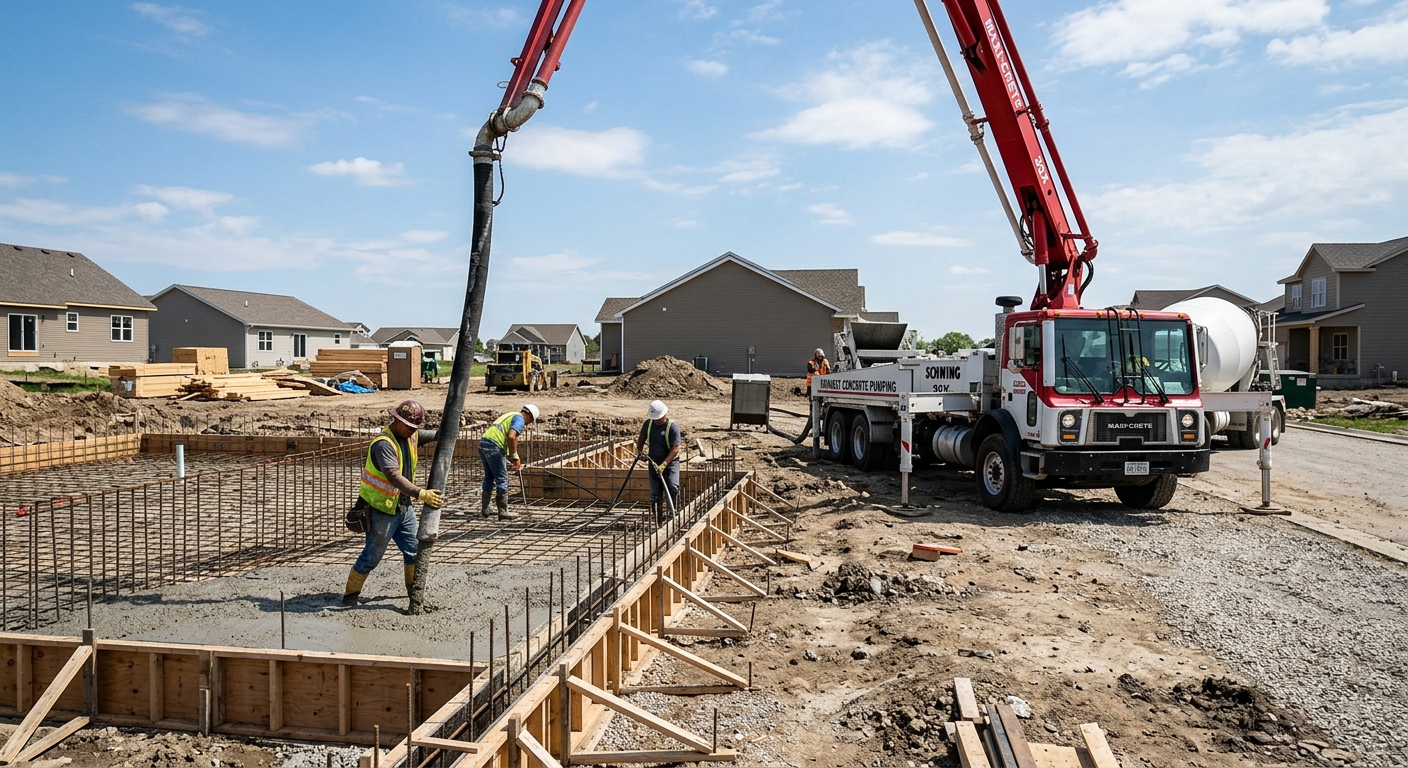
Concrete work options and costs in Rockwood
Concrete work is a common home improvement in Rockwood, Ontario, especially for driveways, patios, walkways and garage slabs. With a population of 4,629 (Statistics Canada, 2021 Census), Rockwood has a steady owner-occupier base that keeps flatwork demand consistent, and a lot of the local housing stock is built for practical updates rather than major structural rebuilds. In the Toronto economic region, concrete contractors also stay busy with larger infill projects and renovations across nearby communities, which affects scheduling and material availability. That’s why you’ll see real differences in quote timing and crew size when comparing contractors.
Toronto-area concrete is strongly influenced by frost depth and the repeated freeze–thaw cycle. Local building departments and the Ontario Building Code typically expect most structural footings to extend at least 1.2 m below grade to help prevent frost heave and differential movement. For exterior slabs, crews almost always specify air-entrained concrete and control joints to manage winter cracking. In practice, humid, often wet shoulder seasons can also slow curing and force stricter protection methods when temperatures dip toward 10 °C or below.
In Rockwood’s more established residential pockets near the downtown core and along main-access routes, concrete flatwork is especially in demand because many homes are seeing drainage upgrades, re-pours, and surface replacements. As a result, the most cost-effective options are usually standard broom-finished driveways or plain patios—while stamped and exposed aggregate pours cost more but can be justified when you’re also improving surface durability, drainage detailing, and joint layout. Below is a quick comparison to help you line up the right scope and budget before you request quotes.
| Application |
Typical Size |
Key Spec |
Finish Option |
Price Range |
| Concrete driveway (standard broom finish) |
12 ft × 24 ft (288 sq ft) |
Air-entrained mix, compacted granular base, control joints |
Broom finish, straight edges |
$4,800–$7,300 |
| Exposed aggregate driveway |
12 ft × 24 ft (288 sq ft) |
Air-entrained mix, proper jointing, exposed stone finish |
Exposed aggregate (acid wash or retarder) |
$6,000–$8,900 |
| Stamped concrete driveway or patio |
10 ft × 20 ft (200 sq ft) |
Air-entrained mix, release agent, control joints in pattern |
Stamped pattern (slate/stone look) |
$5,800–$8,000 |
| Plain concrete patio or walkway |
10 ft × 16 ft (160 sq ft) |
Compacted base, proper drainage grade, joints as needed |
Float/trowel with broom or light broom finish |
$2,600–$4,200 |
| Garage floor (interior slab) |
20 ft × 22 ft (440 sq ft) |
Minimum 4 in slab, vapour considerations (if required), joints |
Broom finish |
$8,200–$13,200 |
| Foundation footings (structural, below frost) |
Typical single footing system (varies by house) |
Engineered design, below-frost excavation, reinforcement |
Formed concrete |
$180–$300 |
Prices are estimates only and vary by project scope, site access and material selection.
What affects the price of concrete work in Rockwood
In the Toronto economic region around Rockwood, two quotes for the same “basic” concrete job can differ by 30–50% because the real drivers aren’t the slab itself—they’re the prep, the structural details, and the winter-ready specifications that contractors include to survive freeze–thaw. Contractors may also price differently based on crew availability, truck access, how much excavation is needed, and whether disposal, sealing, or cold-weather protection is included. When one quote assumes straightforward access and standard base prep while another includes drainage corrections and tighter joint layout, the price gap can quickly widen.
For exterior work, frost depth and freeze–thaw cycles dictate almost everything: structural footings must extend below the design frost depth (Ontario commonly lands around 1.5–2.4 m, depending on the engineered/municipal requirement) to prevent frost heave and movement. Driveways, patios and walkways also need air-entrained concrete because the repeated expansion and contraction stresses the surface—especially when de-icing salt is used in winter. If the pour schedule falls into colder periods, cold-weather curing precautions (insulating blankets, heaters, and longer protection time) add cost. Even in the GTA, humid fall and wet spring conditions can impact curing management and finishing time.
Local conditions in Rockwood often raise or lower cost in predictable ways. A site with soft, waterlogged soil or limited drainage may require deeper compacted granular base and sometimes additional subdrainage, pushing a patio/ walkway closer to the higher end of the $16–$26 per sq ft band. Conversely, a straightforward driveway replacement with good access and stable base prep can stay nearer the lower $18–$28 per sq ft band. For foundation work, engineered structural footings priced in the $180–$300 per linear foot range can increase if excavation is deeper, reinforcement is heavier, or if formwork is complex—this is common when upgrading older properties with uneven bearing conditions.
| Price Factor |
Why It Matters |
Cost Impact |
| Frost line depth |
Determines footing depth and form height |
Deeper excavation and more concrete typically increases structural costs |
| Site preparation |
Excavation, grading, compacted granular base |
More demo/removal and additional base material can add significant labour |
| Reinforcement |
Rebar or wire mesh requirement |
Higher material cost plus placement labour; may be required for thicker slabs |
| Mix design |
Air-entrainment and compressive strength spec |
Spec’d air content and strength may cost more but reduces winter deterioration |
| Finish type |
Broom vs. stamped vs. exposed aggregate |
Decorative finishes add labour time and specialty materials |
| Pour size and concrete truck access to site |
Placement speed and equipment needs |
Limited access may require smaller loads, extra labour, or pumping |
| Cold-weather curing precautions |
Heating and blankets |
More protection materials and time increase labour and overhead |
| Control joint pattern and sealing cost |
Controls cracking and helps resist water/salt penetration |
Proper joint cutting and sealer application add line-item costs |
Permits & regulations in Ontario
In Ontario, structural concrete work—such as foundation walls, grade beams, footings, and other load-bearing concrete components—typically requires a building permit and often engineered drawings that the municipality reviews. Concrete flatwork (driveways, patios, and walkways) usually does not require a permit by default, unless it changes lot grading, affects impervious surface coverage limits, alters drainage in a way that impacts neighbouring property, or involves municipal right-of-way concerns (for example, work close to a boulevard or roadway area). Before breaking ground in Rockwood, confirm the scope with the local authority so you don’t get stuck with a late permit requirement after excavation starts.
Also verify your contractor is properly insured and covered for workers. A solid Ontario contractor should carry liability insurance and WSIB/WCB coverage (the name can vary by circumstance), and they should be able to provide certificates on request. Ask for references on similar-scale projects—especially exterior flatwork exposed to Ontario freeze–thaw.
Step-by-step homeowner checks: (1) request their business details and confirm they operate in Ontario; (2) ask for a current certificate of insurance and ensure it includes liability coverage relevant to your project scope; (3) ask for proof of WSIB/WCB clearance or coverage documentation; and (4) verify any municipal permit expectations in writing before work begins. If the quote includes excavation near services, ask who coordinates locating utilities and how any restoration will be handled.
Getting concrete right in Rockwood's freeze-thaw climate
Concrete failures in Rockwood usually trace back to one theme: freeze–thaw pressure plus moisture moving in and out of the slab assembly. When the base isn’t prepared correctly, water saturates the soil underneath, then expands and contracts against the concrete every winter. When the mix isn’t air-entrained for exterior exposure, freeze–thaw can cause surface scaling and eventually spalling. In Ontario’s GTA climate—humid wet shoulder seasons and winter de-icing—those issues show up faster if jointing, curing, and sealing aren’t handled with discipline.
To spec the job correctly, start with base preparation: place and compact granular sub-base to the correct depth for your local soil and frost conditions, then ensure the final grade supports drainage away from the house. Next, require an exterior air-entrained mix (commonly 5–7% target air content for exterior flatwork) and a minimum 32 MPa compressive strength unless an engineered spec requires more. Then set a control joint plan: joints should be positioned to limit random cracking and to match expected shrinkage. For curing, insist on a minimum 7-day curing period under proper conditions—this matters even more when temperatures dip toward 10 °C or below, when contractors may need insulating blankets or other cold-weather precautions. Finally, sealing should be planned after the concrete has cured (typically 28 days post-pour) with a penetrating sealer designed to repel water and reduce salt-laden moisture penetration.
These specs can also save money. For example, a sealed, properly air-entrained broom-finished driveway is often within the $18–$28 per sq ft range, and it’s generally cheaper than doing an early replacement after scaling. Stamped concrete (often $24–$40 per sq ft) can be worth the premium when the client is also improving drainage detailing, joint layout, and curing protection—those are the things that protect the look for years.
| Spec |
Why It Matters in Rockwood |
What to Ask For |
Impact if Skipped |
| Compacted granular base (depth?) |
Prevents pumping and limits water saturation under the slab |
Verified granular depth and compaction method; drainage grade plan |
Premature settlement, cracking, and early deterioration |
| Air-entrained concrete mix (target air %?) |
Improves freeze–thaw durability in Ontario winters |
Specify target air content (commonly 5–7% for exterior flatwork) |
Spalling/scaling risk rises, especially with de-icing salt |
| Compressive strength (MPa rating) |
Supports structural and abrasion performance over time |
Minimum 32 MPa (or higher if engineered) |
Surface wear and cracking from inadequate strength |
| Control joints (spacing per ACI guidelines) |
Controls shrinkage cracking where you want it |
Joint spacing and depth; alignment with slab dimensions |
Random cracking, water intrusion, and wider future repairs |
| Minimum 7-day curing period |
Develops strength and improves long-term durability |
What happens if temperatures fall; curing protection plan |
Lower durability, increased cracking and surface damage |
| Penetrating sealer (when applied after cure) |
Repels moisture and helps reduce salt-driven damage |
Penetrating sealer; timing (typically after 28 days) |
Faster water/salt absorption and reduced surface lifespan |
How to choose a concrete work contractor in Rockwood
Choosing the right concrete contractor in Rockwood is mostly about proof. Start by verifying Ontario coverage and professionalism: ask for their current liability insurance certificate and proof of WSIB/WCB coverage. Then confirm their written scope matches what you’re paying for—especially base preparation, reinforcement (if required), mix type, air-entrainment, finishing, and jointing. A contractor should also provide references for projects exposed to Ontario freeze–thaw, not just interior work.
Next, get 2–3 itemised written quotes that break out labour and materials rather than offering a single lump sum. You want to see line items for demo/removal, excavation and haul-away (disposal), granular base and compaction, concrete quantity, reinforcement, forming, finishing, control joints, and whether sealing is included. Pay attention to exclusions: for example, some quotes include concrete only, while others include restoring sod, reinstating edges, or handling minor grade corrections. If permits are required for structural work, confirm whether the quote includes permit coordination.
Warranty matters too. Ask for both workmanship warranty length and any product/manufacturer warranty details, and whether the coverage is transferable to future owners. Keep your payment schedule conservative—never pay more than 10–15% upfront. Hold back a portion until the job is complete and cleaned, with curing protection followed through and any sealer applied where promised. Finally, insist on a start date and completion estimate in writing so you can plan around Rockwood’s seasonal pour window and curing needs.
- Request their liability insurance certificate and confirm project coverage.
- Ask for WSIB/WCB clearance or coverage proof for workers.
- Get 2–3 itemised quotes (labour vs materials) for true apples-to-apples pricing.
- Verify the concrete spec includes air-entrainment for exterior flatwork.
- Confirm minimum compressive strength (commonly 32 MPa for typical exterior specs).
- Require granular base depth, compaction approach, and drainage grade details.
- Ask whether reinforcement is included (and where) for your thickness and use.
- Make sure control joint spacing and saw-cut timing are in the scope.
- Confirm cold-weather curing/blanketing is included if temperatures drop.
- Ask if sealing is included and the timing (often 28 days post-pour).
- Clarify disposal/demo and restoration: who hauls away concrete and who reinstates edges?
- Set a payment schedule: keep upfront payment to 10–15% and hold a completion holdback.
Concrete red flags in Rockwood: vague “concrete only” scopes with no base depth listed; skipping or delaying control joints; promising decorative finishes without confirming air-entrainment and joint layout; starting pours late without a cold-weather curing plan; and pushing large upfront payments (beyond 10–15%) or refusing itemised line pricing.
Frequently asked questions — concrete work in Rockwood
How long does a concrete driveway last?
A properly built driveway in Rockwood can last 20–30 years, sometimes longer, but the range is wide because Ontario’s freeze–thaw cycles and de-icing salts accelerate surface wear. The biggest predictors of longevity are compacted granular base prep, correct exterior mix design (air-entrainment), and a disciplined joint pattern. Driveways that are poured too thin, lack proper base compaction, or skip air content are the ones that start scaling and spalling sooner. Decorative work isn’t automatically “less durable,” but stamped or exposed aggregate requires careful curing and jointing to preserve both appearance and performance.
In practical terms, you can budget around the $18–$28 per sq ft band for standard broom-finished driveways, and spending near the higher end is often tied to better prep and detailing—not just concrete. For Rockwood homeowners, that detail work is what tends to separate a driveway that survives winters from one that needs earlier resurfacing or replacement.
What is air-entrained concrete and why does it matter here?
Air-entrained concrete is mixed with tiny, evenly distributed air bubbles designed to give freezing water space to expand without breaking the paste. In Rockwood and across Ontario’s GTA area, that matters because concrete repeatedly experiences freeze–thaw cycles. If the mix isn’t air-entrained to the right target range for exterior exposure, water can expand inside the slab during freeze events, leading to surface scaling and spalling—often within a few winters. That’s why local contractors typically specify air-entrained mixes for exterior flatwork like driveways, patios and walkways.
When you compare quotes, look for wording about air-entrainment and exterior durability, not just “regular concrete.” A properly specified exterior driveway often sits within the $18–$28 per sq ft range; if a quote is dramatically lower, it may be cutting corners on mix spec, curing protection, or base prep. Asking the contractor to state the target air content (commonly 5–7% for exterior flatwork) is one of the quickest ways to see if they’re designing for Ontario winters.
How do I prepare the base for a concrete slab?
Base preparation is where long-term performance is won or lost. For a slab or driveway in Rockwood, the contractor should excavate to the required depth, grade the sub-base correctly, and place compacted granular material in layers to reach the design thickness. The goal is a stable, well-draining foundation that won’t pump fine soil into the slab or saturate under the concrete. Proper compaction is essential because freeze–thaw stresses the slab when moisture and soil movement combine.
In your quote, ask for the granular base depth and how compaction will be verified, along with drainage grade details away from the house. If your soil is soft or water tends to collect, you may need increased base depth, additional granular replacement, and sometimes improved drainage detailing—this can move pricing toward the higher end of typical bands such as $16–$26 for patios/walkways or $18–$28 for driveways.
How do I compare concrete quotes?
To compare concrete quotes fairly in Rockwood, insist on itemised, scope-matched proposals. Look for line items covering excavation/demo and disposal, granular base depth and compaction, reinforcement (if needed), concrete quantity, finishing, control joints, curing protection, and whether sealing is included (often after the cure period). If one quote lists only “concrete,” while another explains base prep and air-entrainment details, they are not comparable—even if the total looks close.
Also compare inclusions and exclusions: Are permits required for the work? Is permit coordination included where needed for structural concrete? Is cold-weather curing included if a pour is scheduled during colder periods? Decorative quotes should specify stamp/exposed aggregate process, timing, and how joints will be handled so cracks don’t ruin the pattern. Use your local price bands as a sanity check: standard driveways commonly fall around $18–$28 per sq ft, while stamped concrete often runs higher, roughly $24–$40 per sq ft.
Can concrete be poured in cold weather in Rockwood?
Yes, concrete can be poured in cold weather in Rockwood, but only if the contractor plans for it correctly. The key risk is that curing slows down when temperatures fall—especially near 10 °C or below—so the concrete may not develop strength as intended. A proper cold-weather plan typically includes insulated blankets and/or heaters, protection from freezing, and careful scheduling so the concrete remains within acceptable temperature and curing conditions. Without that, you can see problems like surface weakness, poor durability, and higher crack risk over time.
Ask the contractor what their minimum ambient and slab temperature requirements are, how long the protection will remain in place, and whether they include those materials in the quote. For exterior projects, cold-weather curing precautions are a real cost driver in the Toronto market because they require labour time and extra protection materials. A professional contractor will address this explicitly rather than offering a “we’ll pour whenever” approach.
How do I maintain concrete in Rockwood's freeze-thaw climate?
Maintenance in Rockwood is about reducing water and salt penetration and keeping surfaces in good condition. Start with sealing—many exterior flatwork projects benefit from a penetrating sealer applied after proper cure, commonly around 28 days post-pour. Sealing helps repel moisture and can reduce the rate at which de-icing salts attack the surface over repeated winters. Re-seal schedules vary by product and wear, but it’s typical to re-evaluate every few years depending on sun exposure, traffic, and how often salt is used.
Practically, keep drainage clear so water doesn’t pool against the slab edges. Avoid overusing harsh de-icers; use them sparingly and follow manufacturer guidance when possible. If you see minor cracks, address them early with appropriate joint maintenance so water doesn’t migrate into the slab assembly. And if you’re comparing upgrade options, remember that durable specs—like air-entrainment and proper jointing—are what protect your investment whether your driveway was built around the $18–$28 per sq ft band or you chose a higher-end finish.