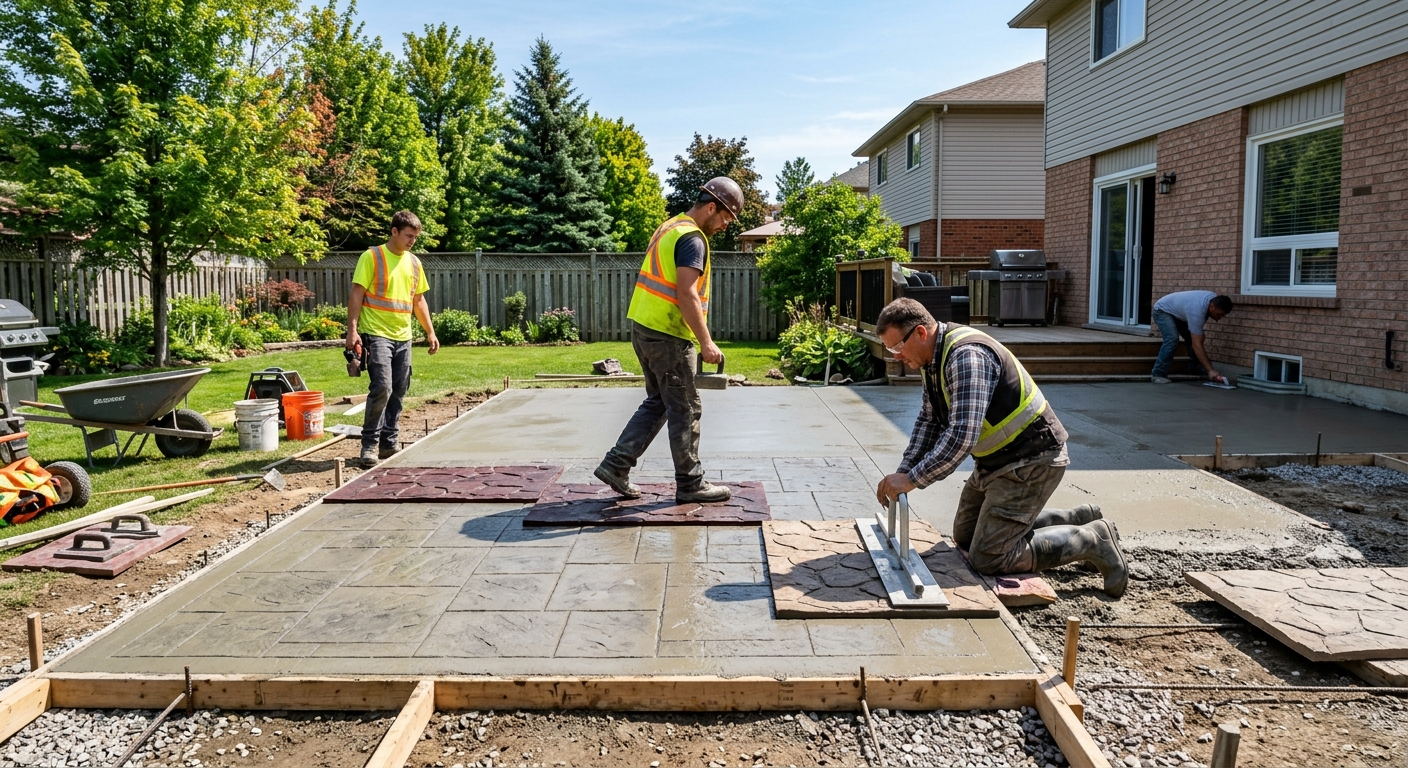
Concrete work options and costs in Trail
In Trail, British Columbia, concrete flatwork is one of those home-improvement projects that either gets done right the first time or turns into a yearly maintenance headache. That matters locally because many homes are single-detached—70.4% of dwelling types—so driveways, patios and walkways are a big part of everyday curb appeal. With 2,575 homeowner households (68.9% of households owning), there’s steady demand for concrete that can handle Kootenay freeze–thaw swings and winter de-icing. According to the 2021 Census, Trail’s population is 7,920, which keeps the market relatively busy and helps explain why scheduling availability can tighten during the best pour windows.
In the Kootenays, cold winters and micro-climates—from frost-prone low areas to well-drained lots up closer to the valley edges—shape labour time, materials, and curing requirements. Footings and any exterior slab work typically need deeper, well-compacted sub-bases and air-entrained mixes to reduce heave and random cracking. Contractors around Trail (including the broader Kootenay area) also price in a shorter pour season, plus cold-weather protection like curing blankets or heated enclosures when temperatures drop. If you’re in a neighbourhood with older housing stock—87.4% of homes built before 1981—you’ll also find more “tie-in” work at steps, old bases, and regrading, which can move costs up quickly.
If you want to budget confidently, use the ranges below as a baseline for common projects, then we’ll break down what drives your final number.
| Application |
Typical Size |
Key Spec |
Finish Option |
Price Range |
| Concrete driveway (standard broom finish) |
400–600 sq. ft. |
4,000 psi air-entrained mix, compacted granular base |
Broom finish + control joints |
$18,000–$28,000 |
| Exposed aggregate driveway |
400–600 sq. ft. |
Air-entrained mix, wash/expose process |
Exposed aggregate + sealed surface |
$20,000–$34,000 |
| Stamped concrete driveway or patio |
300–500 sq. ft. |
Air-entrained mix, proper release agent & curing control |
Stamped pattern + colour hardener |
$25,000–$40,000 |
| Plain concrete patio or walkway |
200–400 sq. ft. |
Air-entrained mix, compacted base |
Float/smooth or broom edge + joints |
$14,000–$24,000 |
| Garage floor (interior slab) |
400–600 sq. ft. |
Typically 35–50 mm slab, reinforcement as required |
Steel trowel finish (light broom at edges) |
$15,000–$26,000 |
| Foundation footings (structural, below frost) |
Varies (typical perimeter) |
Designed reinforcement, below frost depth, engineered layout |
Typically plain structural concrete |
$70,000–$120,000 |
Prices are estimates only and vary by project scope, site access and material selection.
What affects the price of concrete work in Trail
In Trail and the wider Kootenays, two quotes for what looks like “the same” concrete job can easily differ by 30–50%. The biggest reasons are below-grade requirements (frost depth, drainage, base prep), winter scheduling, and the quality of labour for finishing and jointing. Even within British Columbia, you’ll see price movement because colder climates and valley micro-sites change how contractors protect and cure concrete. That’s why the same driveway spec can land in different total ranges—often between the regional $18–$28 band for standard driveways and higher numbers when you add decorative finishes or heavier base/rebar needs.
Here’s the practical part: frost line depth and freeze–thaw cycles dictate every exterior spec. If footings or slab bases aren’t set below the design frost depth and built on a properly over-excavated, compacted, drained granular base, you invite heave and random cracking. Exterior slabs also need air-entrained concrete to survive repeated freezing and thawing, and in colder areas the pour season is shorter—so crews rely on tighter scheduling and cold-weather curing precautions (insulation, curing blankets, sometimes heated enclosures). De-icing salt is another Kootenay reality: it accelerates surface scaling if the finish and sealing plan isn’t right.
For Trail homeowners, these are common cost drivers. Example one: on a driveway with poor drainage or old base conditions, excavation and replacement granular material can move a project upward within the $18–$28 driveway band. Example two: on stamped or exposed aggregate work, the cost jumps not just because of forms and materials, but because the finishing and curing window needs tighter control to avoid mottling, soft edges, or early surface deterioration—pushing many decorative projects toward the $25–$40 stamped range. Example three: homes built before 1981 often have older grading and ties to steps—regrading, disposal, and re-fit around existing entry levels can raise the total by thousands. Budgeting for site conditions early protects you from surprises.
| Price Factor |
Why It Matters |
Cost Impact |
| Frost line depth — determines footing depth and form height |
Controls how far below grade concrete must be placed to prevent heave |
Can increase excavation, forming, and concrete volume significantly |
| Site preparation — excavation, grading, compacted granular base |
Prevents settlement and helps drainage through freeze–thaw cycles |
More base replacement typically adds labour, hauling and materials |
| Reinforcement — rebar or wire mesh requirement |
Improves crack control and load capacity for driveways and garage slabs |
Adds material cost and extra labour for placement/tie-in |
| Mix design — air-entrainment and compressive strength spec |
Air-entrainment is key to resisting freeze–thaw deterioration and scaling |
Upgrades can raise material costs and require tighter QA on placement |
| Finish type — broom vs. stamped vs. exposed aggregate |
Finish systems affect labour intensity and curing sensitivity |
Decorative work usually costs more due to specialized labour and materials |
| Pour size and concrete truck access to site |
Access affects pump/placement time, scheduling and safety |
Poor access can mean pumping or extra labour time, increasing totals |
| Cold-weather curing precautions — heating and blankets |
Ensures concrete reaches strength before exposure to freezing |
Added materials/equipment and scheduling constraints can raise unit pricing |
| Control joint pattern and sealing cost |
Joints control where cracks happen; sealing helps resist de-icing salt damage |
Better jointing and sealing add line-item costs but reduce failure risk |
Permits & regulations in British Columbia
In British Columbia, structural concrete work—things like footings, foundation walls, and grade beams—typically requires a building permit and often engineered drawings that the municipality reviews. For homeowners in Trail, that means you should plan for more lead time: permits, engineering confirmation, and inspections are part of the process, and crews can’t safely “guess” their way through below-grade structural details. By contrast, concrete flatwork such as driveways, patios, and walkways usually does not require a permit unless it impacts lot grading, drainage patterns, impervious surface coverage limits, or the municipal right-of-way. If you’re modifying approach slopes, adding surface drainage ties, or changing how water leaves the property, ask the local authority before you break ground.
Before signing a contract, verify three basics. Step 1: ask for proof of the contractor’s liability insurance and ensure the certificate lists the correct project address and dates. Step 2: confirm WSIB/WCB coverage (depending on the contractor’s classification) so you’re not taking on employment risk—request a clearance letter or coverage documentation. Step 3: confirm workmanship coverage by asking for references on similar Trail jobs (especially exterior flatwork in freeze–thaw conditions). If structural work is involved, ensure the contractor provides or coordinates the engineer-reviewed plan set and inspection schedule. Always confirm permit needs with the local authority for your exact scope, since “flatwork” can become “structural/grade-related” quickly when excavations and drainage are involved.
Getting concrete right in Trail's freeze-thaw climate
Concrete in Trail can fail in a few predictable ways: surface scaling, spalling, cracking, and sometimes settlement that reveals itself as uneven slabs. The usual root cause isn’t just age—it’s incorrect base preparation, the wrong mix, and rushed curing. In the Kootenays, you spec the job around freeze–thaw cycles. Start with the base: compacted granular sub-base to the correct depth and drainage profile for your soil and frost conditions. A driveway that “looks level” can still heave if the base isn’t compacted properly or if water is trapped under the slab.
Next is the mix design. For exterior flatwork, use air-entrained concrete (commonly targeting about 5–7% air content) and a minimum 32 MPa compressive strength so the concrete can resist freeze–thaw deterioration. Then control joints: they’re the crack-management plan. If joint spacing is too wide—or if joints are cut too late—random cracking shows up sooner, especially on driveways and walks that expand and contract each winter.
Curing matters as much as pouring. Plan for at least 7 days curing under proper conditions; in cold weather, crews should protect fresh concrete with insulation/curing blankets or heated enclosures to keep it from freezing early. After full cure, apply a penetrating sealer around 28 days post-pour (timing depends on weather and cure conditions) to help repel de-icing salts.
If you’re deciding between options, the price difference can be justified. For example, a standard broom-finished driveway in the regional $18–$28 range is often the “best value” when your base is straightforward. If you go stamped, budget closer to the $25–$40 stamped range—not because stamps are a gimmick, but because the finishing steps and curing control are more sensitive. The technical questions you ask should protect you from the most common failure: spalling caused by inadequate air-entrainment and poor curing.
| Spec |
Why It Matters in Trail |
What to Ask For |
Impact if Skipped |
| Compacted granular base (depth?) |
Prevents settlement and supports drainage through freeze–thaw cycles |
Granular type, over-excavation depth, compaction method, and drainage grading details |
Heave, uneven slab, early cracking, and water trapped underneath |
| Air-entrained concrete mix (target air %?) |
Improves freeze–thaw durability and reduces scaling/spalling risk |
Confirm air-entrainment target (about 5–7% for exterior flatwork) and mix design sheet |
Spalling and surface deterioration within a few winters |
| Compressive strength (MPa rating) |
Strength gain supports load and durability before cold exposure |
Minimum 32 MPa spec and expected curing conditions |
Low strength leads to surface wear, cracking, and reduced longevity |
| Control joints (spacing per ACI guidelines) |
Directs shrinkage/cracking to predictable lines |
Joint layout drawing or spacing plan for driveway/patio dimensions |
Random cracks and wider repair areas |
| Minimum 7-day curing period |
Strength development protects concrete against cold damage |
How curing will be maintained (blankets/heating if needed) and when finishing/jointing will occur |
Early freeze can cause micro-damage and later scaling/spalling |
| Penetrating sealer (when applied after cure) |
Helps block moisture and reduces de-icing salt impacts |
Sealer type and schedule (often after 28 days cure, weather-dependent) |
Faster surface deterioration and higher maintenance costs |
How to choose a concrete work contractor in Trail
Choosing the right contractor in Trail is mostly about verifying proof and matching the quote to your actual conditions. Start with British Columbia requirements and practical coverage. Ask for a liability insurance certificate (with the correct named insured and jobsite address), then confirm WSIB/WCB coverage documentation or a clearance letter for the contractor and any workers they bring on. If they can’t provide current documentation quickly, that’s a red flag.
Next, get 2–3 written, itemised quotes—breakdown for labour, concrete supply, base materials, reinforcement, forming, disposal, and finish systems. Avoid “lump sum” quotes that don’t say what’s included. Read the scope carefully: is permit pulling included if required, is disposal of concrete and excavated material included, and is traffic control or trucking access accounted for? For cold-weather work in the Kootenays, ask how they handle curing protection—heating, blankets, or insulated enclosures—because that can change the total.
Warranty matters too. Ask for a workmanship warranty length and what it covers (cracks due to shrinkage versus workmanship issues), plus any product/manufacturer warranties for sealers or decorative systems. Confirm if the warranty is transferable if you sell the home. For payment, never agree to more than 10–15% upfront; hold back a portion until the job is complete and surfaces are accepted. Finally, insist on a start date and a completion estimate in writing—concrete schedules shift, but you should still have a realistic plan.
- Provide liability insurance and WSIB/WCB proof before work starts.
- Show previous Trail references for exterior flatwork in freeze–thaw conditions.
- Use itemised quotes (base, reinforcement, concrete mix, finish, disposal) instead of a single lump sum.
- Confirm air-entrainment and curing approach in winter weather.
- Ask for joint layout details (spacing and where joints will land).
- Verify whether regrading/drainage corrections are included if needed.
- Get a clear truck/pump plan for your driveway access and setbacks.
- Confirm whether sealing is included and the timing (after cure).
- Ask what happens if temperatures drop mid-project (protection plan).
- Confirm reinforcement placement and cover requirements for your slab type.
- Review warranty terms in writing and what triggers claims.
- Limit upfront payment to 10–15% and secure holdback until completion.
Concrete red flags I see in Trail include: contractors who won’t specify the mix air-entrainment and curing plan, quotes that ignore excavation/base replacement needs, “cheap” decorative work that skips proper curing control, no written joint layout, and payment schedules that demand a large upfront deposit before any site prep is done.
Frequently asked questions — concrete work in Trail
How do I maintain concrete in Trail's freeze-thaw climate?
In Trail, maintenance is mostly about managing water and de-icing impact. First, keep the surface clean so salt and grit aren’t grinding into the concrete texture. Use a soft brush and avoid heavy shovels that can chip edges and joints. Second, seal the concrete after it fully cures (commonly around 28 days post-pour) if sealing was part of the plan—this helps repel moisture and reduces salt-driven surface scaling. Third, monitor joints and edges: if you see small gaps widening, have them assessed early because water can work its way in during freeze–thaw cycles. Finally, if you’ve got older flatwork on pre-1981 homes (87.4% built before 1981), expect more movement at ties/edges and plan minor repairs rather than waiting for large spalls. In budgeting, remember a standard driveway may sit around the $18–$28 range depending on your base and finish.
What causes concrete to spall in Trail winters?
Spalling usually comes from freeze–thaw damage plus moisture and de-icing salts. The most common technical cause is inadequate air-entrainment: without the correct air content and spacing, internal water expansion creates pressure that breaks the surface paste. The second big contributor is curing issues—if concrete freezes too early or isn’t properly protected, strength gain and durability suffer. Base drainage also matters; if water collects under or at edges, freeze–thaw cycles accelerate deterioration. In Trail’s Kootenay micro-climates, valley sites and poorly drained driveways can be worse than you’d expect from temperature alone. De-icing salt then intensifies surface wear, especially if sealing wasn’t applied or was skipped. If your driveway or walk spalls, don’t just patch—ask whether the original mix design (air content) and joint/sealing plan were correct. That’s what prevents repeat failures.
What is rebar and when is it required in British Columbia?
Rebar is steel reinforcement embedded in concrete to improve tensile strength and control cracking, especially in slabs that experience loads or shrinkage. In British Columbia, whether rebar (or wire mesh) is required depends on the slab type, thickness, soil conditions, and structural design requirements—not just the homeowner’s preference. For many driveways and garage floors, reinforcement is often specified to improve crack performance and load resistance, particularly where settlement risk is higher or the slab is thicker. For structural foundation elements like footings and foundation walls, reinforcement is a design/engineering requirement, and permitting typically applies. For concrete flatwork that seems simple, the spec still matters: thickness, base prep, and joint pattern often determine performance as much as reinforcement. When you get a quote for Trail work, ask what reinforcement is being used, where it sits in the slab (cover), and whether joints and base prep are designed to manage shrinkage and freeze–thaw movement.
How long does a concrete project take in Trail?
Timeline depends on weather, excavation scope, and whether the work is flatwork or structural. For a typical exterior flatwork project in Trail—like a driveway or patio—plan for a few days of on-site work: one day for layout and excavation/base prep, a day for forming and placing reinforcement (if needed), and the pour day plus early curing. Decorative work like stamped concrete can take longer because finishing steps are more detailed and finishing windows are tighter. Total calendar time is often longer if you need regrading, additional drainage work, or if winter protection is required due to cold nights and freeze–thaw conditions. After the pour, concrete needs time to cure properly; for most residential flatwork, you should plan at least 7 days before normal use, and allow longer for full durability. If you’re sealing, the sealer typically comes after full cure—often around 28 days. The best way to get a realistic estimate is to ask your contractor for a start date and completion timeline in writing.
What is a concrete overlay and is it suited to Trail?
A concrete overlay is a new concrete layer placed over an existing slab, usually after grinding the surface and addressing any major failure points. It can be a cost-effective way to restore appearance when the original concrete is mostly sound—no major structural heave, wide settlement, or failing base. In Trail’s freeze–thaw climate, overlays can work, but only if prep is thorough and drainage/joint conditions are respected. If the original slab has ongoing movement or water infiltration from edges and joints, an overlay may crack or debond sooner because it’s inheriting the original problems. Before considering an overlay, ask for inspection details: how they’ll prepare the surface, what bonding method or system they’ll use (as applicable), the overlay thickness, joint strategy, and whether they’ll seal for de-icing salt protection. If your driveway is in the range of $18–$28 for a full replacement, an overlay can sometimes be cheaper—but it’s not the right choice if the base isn’t stable. A contractor should be able to explain why overlay vs. replacement makes sense for your specific condition.
How do I seal concrete to protect it in Trail?
Sealing helps protect concrete from moisture and de-icing salt impacts, which is important in Trail’s winter freeze–thaw cycles. First, don’t seal too early. A common approach is applying a penetrating sealer after the concrete has cured—often around 28 days post-pour, depending on temperature and moisture. Before sealing, the surface must be clean and dry; remove dirt, chalky residue, and any contaminants so the sealer can penetrate. Choose a penetrating sealer suitable for exterior flatwork, and confirm coverage rate so you don’t end up with missed spots at edges and joints. Pay special attention to joint lines and transitions where water can collect. After sealing, continue basic maintenance—sweep debris and avoid harsh impact scraping. If sealing is offered as an add-on, it’s worth budgeting because it’s directly tied to reducing surface scaling and spalling risk. If your quote is for a standard driveway in the $18–$28 range, sealing might be part of the plan or a small line-item—either way, ask for the schedule and product details.