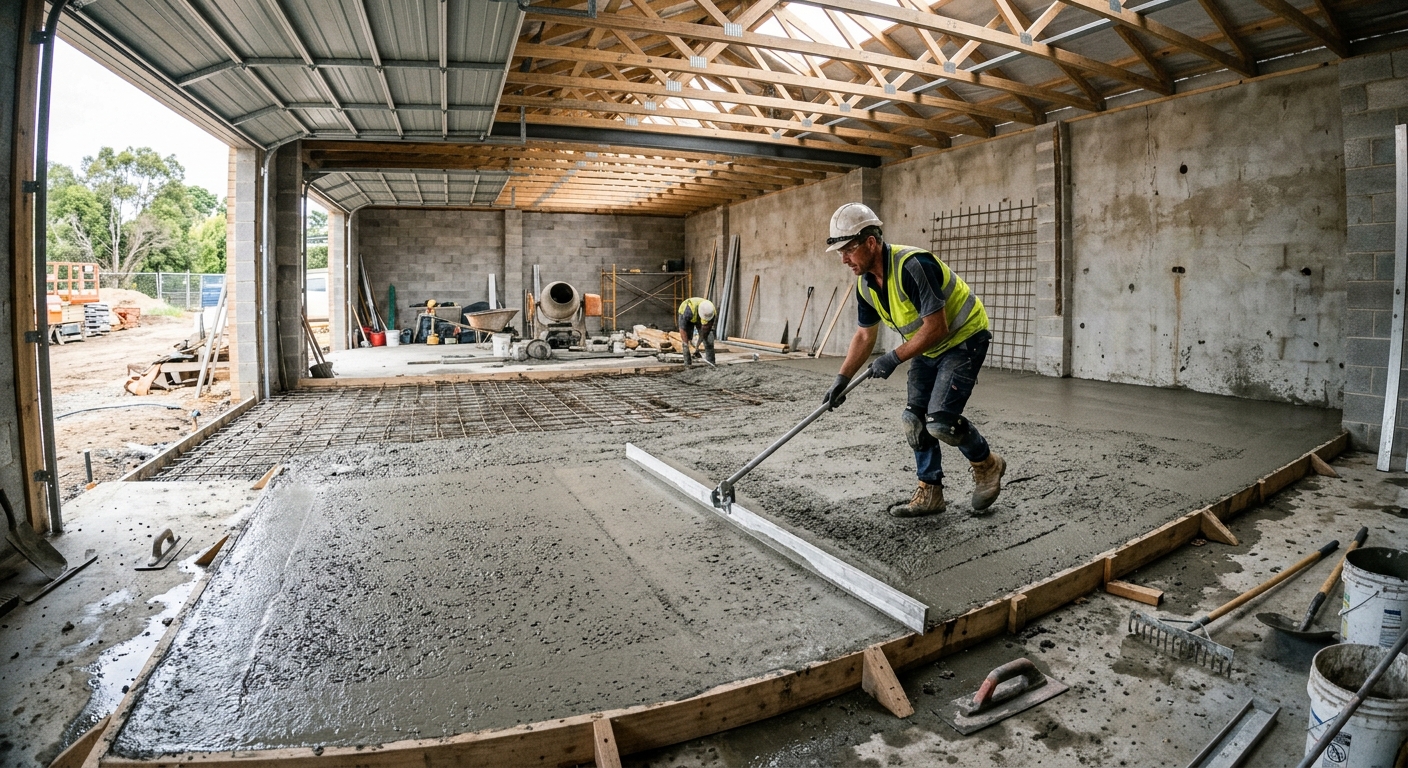
Concrete work options and costs in Popkum
Popkum, British Columbia is a compact community of 1,710 people (Statistics Canada, 2021 Census), and most concrete flatwork demand is tied to local homeowners maintaining older driveways and patios or adding new ones with house renovations. In the Lower Mainland–Southwest, many lots are served by single-detached homes, and concrete is often the practical choice for durable, low-maintenance walkways and driveways that can handle coastal-wet weather and seasonal freeze–thaw.
In this region, even though winters are milder than interior BC, concrete still needs to be designed around a shallow but important frost depth—locally assumed around 450 mm (18") for footing and base planning. That means footings and thickened edges are placed below frost, and exterior slabs require air-entrained mixes plus properly spaced control joints to reduce cracking and scaling. Another cost reality in Popkum and nearby Surrey–Abbotsford corridor is scheduling: rain, cool nights, and high humidity can slow curing, so crews may use curing blankets and longer cure timelines to reliably hit design strength before reopening traffic.
Concrete work is especially in demand in residential pockets where homes are older or lots slope toward ditches and drainage swales; in Popkum, the area around the main residential lanes off the Fraser Valley corridor tends to see frequent driveway and patio touch-ups as well as garage slab renewals.
Below are realistic “typical scope” ranges so you can compare like-for-like with contractors before you ask for a site visit and measurements.
| Application |
Typical Size |
Key Spec |
Finish Option |
Price Range |
| Concrete driveway (standard broom finish) |
400 sq ft |
Reinforced slab on compacted granular base, air-entrained mix for exterior exposure |
Broom finish, control joints, seal-ready |
$18,000–$28,000 |
| Exposed aggregate driveway |
400 sq ft |
Proper base prep + retarder/exposure process; air-entrained exterior mix |
Exposed aggregate with sealed surface |
$22,000–$34,000 |
| Stamped concrete driveway or patio |
250 sq ft |
Reinforcement as required; integral colour, air-entrained exterior mix |
Stamped pattern, stain or integral colour, sealed |
$22,000–$36,000 |
| Plain concrete patio or walkway |
200 sq ft |
Compacted base + reinforcement where needed; exterior air-entrained mix |
Smooth trowel or light broom finish |
$16,000–$26,000 |
| Garage floor (interior slab) |
500 sq ft |
Vapour barrier as needed, reinforced slab, thickness per structural requirements |
Standard trowel, optional densifier |
$18,000–$30,000 |
| Foundation footings (structural, below frost) |
Typical house build |
Excavate/form/pour below assumed frost depth (~450 mm / 18" design planning), rebar as engineered |
Structural concrete, formwork included |
$200,000–$350,000 |
Prices are estimates only and vary by project scope, site access and material selection.
What affects the price of concrete work in Popkum
In Lower Mainland–Southwest, two contractors can quote the “same” exterior slab and still be 30–50% apart, mostly because concrete is only part of the cost—site conditions, engineered base, reinforcement, and curing logistics drive the real variation. In Popkum and nearby Abbotsford–Surrey areas, mild winters can tempt estimates that ignore freeze–thaw reality, but exterior slabs must still be built to resist saturated soils, drainage issues, and surface deterioration.
Frost planning is the first big driver: footings and thickened edges must extend below the design frost depth (locally assumed around 450 mm / 18" for planning). While that frost depth is shallower than colder BC regions, every exterior slab still needs air-entrained concrete and controlled crack management so freeze–thaw doesn’t lead to scaling and spalling. Second, the region’s frequent freeze–thaw cycles and coastal rainfall mean base prep usually includes compacted granular and careful subgrade drainage details. Third, curing is not optional here—cool nights and high humidity often require curing blankets, sealers timed after cure, and longer production planning to reliably reach strength.
Simple site examples in Popkum that raise cost: poor drainage at the existing grade (extra excavation and base redesign), limited truck access (more labour to wheel concrete and manage pour sequencing), and uneven subgrade or clay pockets (additional granular and compaction checks). Cost can drop when the site is already well-drained, excavation is shallow, and the pour area is accessible. If you’re choosing between finishes, the price difference between a plain broom-finish driveway and a stamped or exposed aggregate option is often justified by more labour, integral colour work, and sealing requirements; typical driveway pricing is commonly in the $18–$28 band, while stamped & decorative work often moves into the $22–$36 range depending on area and detailing.
Finally, many homes in the Lower Mainland are older than modern drainage best-practices, so when you remove or replace an existing slab, contractors may discover additional settlement repairs that can add hundreds to thousands of dollars—especially if the old base was not compacted to today’s standards.
| Price Factor |
Why It Matters |
Cost Impact |
| Frost line depth — determines footing depth and form height |
Prevents frost heave by placing structural concrete below design frost exposure |
Often adds major excavation and formwork cost variation; can shift budgets by tens of thousands on foundations |
| Site preparation — excavation, grading, compacted granular base |
Stable, drained base reduces settlement and surface cracking |
Higher when soils are wet/clayey or when drainage improvements are required |
| Reinforcement — rebar or wire mesh requirement |
Controls crack width and supports loads like vehicles and garage traffic |
Material + install labour; typically modest but meaningful on larger driveway/garage work |
| Mix design — air-entrainment and compressive strength spec |
Air entrainment helps survive freeze–thaw; strength targets affect durability |
Can increase material cost and requires correct batching and documentation |
| Finish type — broom vs. stamped vs. exposed aggregate |
Finish methods change labour time, materials, and sealing prep |
Usually the biggest “aesthetic” price jump; stamped/exposed often add several thousands |
| Pour size and concrete truck access to site |
Shortens labour and reduces re-handling when access is good |
Poor access can add pumps, extra labour, or smaller batch pours |
| Cold-weather curing precautions — heating and blankets |
Protects the slab while it gains strength in cool, damp conditions |
Can add direct labour and equipment rental during shoulder seasons |
| Control joint pattern and sealing cost |
Joints limit random cracking; sealing reduces de-icing salt and moisture damage |
Sealing timing and surface prep can add cost but improves longevity |
Permits & regulations in British Columbia
In British Columbia, structural concrete work such as foundation footings, foundation walls, and grade beams generally requires a building permit and often engineered drawings reviewed as part of the permit process. For homeowners in Popkum, that typically means your concrete contractor coordinates with your builder or you coordinate with the permit-holder so structural details—rebar layout, thicknesses, and load requirements—match the approved drawings.
Concrete flatwork—driveways, patios, and walkways—often does not require a permit by default. However, a permit or at least municipal approval may be required if the project affects lot grading, changes stormwater drainage, increases impervious surface coverage limits, or impacts municipal right-of-way conditions (for example, work near boulevard areas). The safest approach is to ask the municipality before breaking ground, especially if you’re changing elevations or redirecting water flow.
Before hiring, verify two practical things every time. First, ask for a current certificate of liability insurance and confirm it covers your property address and scope. Second, ensure the contractor has appropriate coverage under provincial workplace requirements (workers’ coverage for crews). Then check references on similar-scale projects in the Fraser Valley or Lower Mainland.
Step-by-step verification you can do at home: (1) ask the contractor for their insurance certificate and coverage clearance letter, (2) request their licence/registration details as applicable and confirm it’s active, (3) check online registries provided by the province or licensing body where the contractor is listed, and (4) compare their documentation dates to your planned start date.
Getting concrete right in Popkum's freeze-thaw climate
Popkum’s freeze–thaw climate doesn’t always look harsh on the thermometer, but it is hard on concrete surfaces—especially when water gets under slabs or onto edges. The most common failure you want to prevent is spalling and surface scaling caused by freeze–thaw acting on saturated concrete. The fix is not a stronger “guess”—it’s correct base preparation, air-entrained mix design, and disciplined control joints and curing.
(1) Base preparation: excavat e to the right depth for your local soil conditions, then place compacted granular sub-base to a stable, drained grade. If the subgrade stays wet, concrete can’t perform even with good finish work. (2) Mix design: exterior flatwork should use air-entrainment (typically 5–7% air content) and meet minimum compressive strength targets (often 32 MPa for exterior concrete specifications used in practice). (3) Control joints: place joints to manage cracking—don’t “let it crack where it wants.” (4) Curing: plan on at least 7 days of proper curing conditions; in cold or damp stretches, blankets or other cold-weather measures may be necessary so the slab gains strength reliably. (5) Sealing: apply a penetrating sealer after curing (commonly around 28 days post-pour) to repel moisture and de-icing salt exposure.
When you get stuck between options, use cost vs. risk. For example, if a plain broom-finish driveway in Popkum is quoted in the $18–$28 range, and the stamped option is in the $22–$36 range, the extra cost can be justified when the contractor includes the same rigorous base, air-entrainment, and jointing as the plain pour. If the “upgrade” is only aesthetic without matching the technical spec, it’s not really an upgrade—it’s a higher price with the same durability risk.
Ask the technical questions early: What air content target are you batching? How thick is the slab and what base depth are you compacting? Where are the joints and how soon are you sealing?
| Spec |
Why It Matters in Popkum |
What to Ask For |
Impact if Skipped |
| Compacted granular base (depth?) |
Stabilizes the slab and supports drainage under freeze–thaw moisture movement |
Base thickness and compaction plan based on your soil and drainage |
Settlement and voids lead to cracking and faster scaling |
| Air-entrained concrete mix (target air %?) |
Air voids protect paste from expansion during freeze–thaw cycles |
Air entrainment target of 5–7% for exterior flatwork |
Spalling risk increases significantly, especially at edges |
| Compressive strength (MPa rating) |
Ensures the slab reaches durable strength for surface wear and load |
Minimum 32 MPa compressive strength specification |
Higher likelihood of surface damage and reduced long-term performance |
| Control joints (spacing per ACI guidelines) |
Limits random cracking so water doesn’t track into wider cracks |
Planned joint layout and spacing strategy for your slab dimensions |
Uncontrolled cracking and potential water ingress through cracks |
| Minimum 7-day curing period |
Strength gain depends on temperature and moisture conditions |
How they cure (blankets, moisture control) during cool/wet weather |
Surface weakness, powdering, and long-term durability issues |
| Penetrating sealer (when applied after cure) |
Repels moisture and reduces damage from coastal dampness and de-icing salts |
Sealer after full cure (commonly around 28 days post-pour) |
Faster scaling/spalling and more staining from wet weather exposure |
How to choose a concrete work contractor in Popkum
Choosing the right concrete contractor in Popkum comes down to verified coverage, clear technical specs, and quotes that reflect real site conditions. In British Columbia, confirm your contractor has appropriate licensing/registration where applicable, plus current liability insurance. Ask for their certificate of insurance (and ensure the certificate lists the correct coverage and your project address or property name). Also ask about workers’ coverage for their crew (commonly referenced as WSIB coverage in Ontario, and in BC it’s workers’ coverage under provincial workplace requirements). Do not rely on verbal assurances—request the paperwork and check the expiry dates.
Next, get 2–3 written, itemised quotes rather than one lump sum. You want a breakdown that shows labour and materials, plus line items for excavation, granular base, reinforcement, formwork, concrete supply, finishing, joints, curing measures, and sealing (if included). Carefully read the scope: what’s excluded (old slab removal, disposal, haul away, saw-cutting, dowels, drainage corrections)? Is the permit pull included where required for structural work? Will they handle disposal of excavated material, or is that your responsibility?
Warranty should be clear and practical: workmanship warranty length (often something like 1 year as a starting point, with details on what’s covered), how product/manufacturer warranty works, and whether it’s transferable if you sell your home. For payment, avoid large deposits—never pay more than about 10–15% upfront. Hold back a portion until the final inspection and clean-up are complete. Lastly, request a written timeline: a start date and realistic completion estimate tied to weather, cure time, and access.
- Ask for their concrete mix spec: air entrainment and exterior durability approach for freeze–thaw
- Confirm base design details: excavation depth, granular type, and compaction expectations
- Look for a joint plan (location and spacing) rather than “we’ll add some joints”
- Require details on reinforcement: thickness, rebar/wire mesh placement, and support chairs
- Get curing and weather protection methods in writing (blankets, moisture control, cool-weather plan)
- Ensure they include sealing only if it’s included in your selected scope and timing is realistic
- Verify their liability insurance certificate is current before work starts
- Verify workers’ coverage paperwork for their crew is current
- Confirm disposal/haul-away is included or clearly excluded
- Ask about truck access and pour method (pump vs. chute) so the quote matches the reality
- Require itemised costs so you can compare quotes on the same specifications
- Get everything in writing: start date, milestones, and cure/finish schedule
Concrete red flags in Popkum include: quotes that don’t mention air-entrainment for exterior slabs, “too-tight” timelines that ignore rain and cure time, missing joint layouts, unclear base prep depth/compaction details, and contractors who ask for most payment upfront without a holdback or clear completion criteria.
Frequently asked questions — concrete work in Popkum
Stamped vs broom-finish concrete — cost difference?
In Popkum and across the Lower Mainland–Southwest, stamped concrete typically costs more than broom-finish because it requires additional labour time, form-and-stamp coordination, and often integral colour, followed by proper curing and sealing. As a rough planning guide, a standard broom-finish concrete driveway is commonly in the $18–$28 range, while stamped or decorative options often land in the $22–$36 range depending on size and detailing. The best way to compare quotes is to make sure both options include the same technical durability specs—especially air-entrained exterior mix, adequate base prep, and a joint plan sized to your slab. If a stamped quote is only “aesthetic upgrade” without equivalent base and mix quality, it’s not worth paying the premium.
When is the best time to pour concrete in Popkum?
The best time to pour in British Columbia (including Popkum) is when you can control curing conditions: generally during milder stretches with lower rain risk and consistent temperatures. In practice, that often means late spring through summer, and sometimes early fall if weather forecasts look favourable. The reason is simple: cool nights and high humidity slow strength gain, and rain can interfere with finishing and curing unless the contractor uses correct protective measures. A good contractor plans around the frost risk and freeze–thaw cycles by sequencing pours and using curing blankets or other cold-weather precautions when temperatures drop. If you’re budgeting, shoulder-season work may increase cost because more time and labour go into protecting the slab until it reaches adequate strength.
How long does concrete take to cure?
Concrete curing is a multi-stage process. For most exterior slabs in the Lower Mainland–Southwest, plan on a minimum of 7 days for curing under proper conditions before you treat the slab as fully “ready.” However, full durability and the basis for many sealer warranties typically consider about 28 days after the pour. In Popkum’s coastal-wet climate, curing can take longer in damp, cool weather, so contractors often use curing blankets or moisture control to keep the slab developing strength. Avoid rushing traffic on the surface—vehicle loads too early can leave surface defects or lead to premature cracking. If your scope includes sealing, that’s usually scheduled after cure (commonly around 28 days post-pour) so the sealer bonds correctly and repels moisture effectively.
Do I need a permit for concrete work in British Columbia?
In British Columbia, structural concrete such as foundation footings, foundation walls, and grade beams typically requires a building permit, and it’s usually tied to engineered drawings and municipal review. Concrete flatwork like patios, walkways, and driveways often does not require a permit by default, but it may come up if you’re changing lot grading, affecting drainage, increasing impervious surface coverage limits, or working near a right-of-way where municipal rules apply. For Popkum homeowners, the key is to confirm with the local authority before starting if your job changes elevations, directs water differently, or alters how the property sheds runoff. Also, verify your contractor’s coverage and documentation before work begins—insurance and workers’ coverage matter as much as permits.
Concrete vs pavers for a patio in Popkum?
Concrete and pavers both work in Popkum’s climate, but they fail differently. Concrete is often a better fit when you want a smooth, uniform surface with fewer joints to maintain—provided the contractor uses air-entrained mix, correct base prep, and a joint plan. In the $16–$26 range, a plain concrete patio or walkway can be cost-effective for larger areas, while stamped decorative finishes move higher (commonly $22–$36 depending on scope). Pavers can be easier to repair in small sections later, but they still need proper base drainage and installation quality; poor base prep leads to sinking or heaving. If you want the lowest maintenance and consistent performance, concrete is often the simplest choice. If you value modular repairs and a more segmented look, pavers may be worth the added complexity and labour.
How long does a concrete driveway last?
With correct specs, a concrete driveway in Popkum can last decades. The biggest determinants are base preparation, air-entrainment for freeze–thaw durability, proper control joint placement, and curing/finishing quality—plus drainage details so water doesn’t repeatedly saturate the base. Driveways built with the right exterior mix and jointing typically perform much better than slabs that were poured without air-entrainment or with weak base compaction. Many homeowners notice the first issues around edges or where water collects; in coastal-wet areas, that’s where spalling and scaling can start if moisture management isn’t addressed. A driveway quoted around the typical $18–$28 band can last a long time when constructed correctly; the same price range can still produce early failure if the quote cuts corners on base depth, mix air content, or curing and sealing timing.