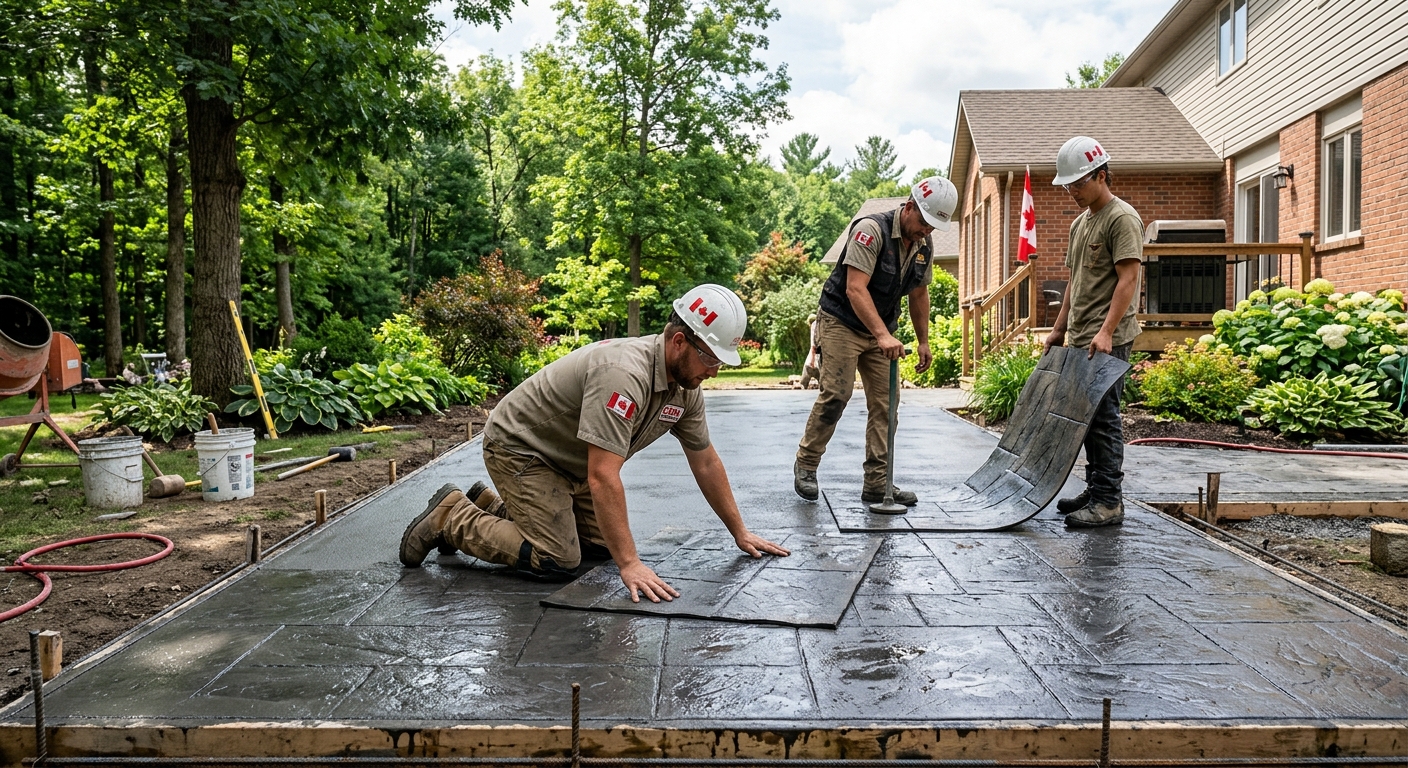
Concrete work options and costs in McKenzie Towne
In McKenzie Towne, Alberta, homeowners typically choose concrete for driveways, patios, walkways, garage floors and foundations because it handles heavy use and—when engineered correctly—stands up to Calgary’s freeze–thaw cycles. The local market is built around family homes; with 17,505 residents recorded in McKenzie Towne in the 2021 Census (Statistics Canada, 2021 Census), you’ll see a steady demand for exterior flatwork upgrades as neighbourhood lots mature and landscaping is refreshed.
Pricing in the Calgary economic region is tightly linked to climate performance. Alberta’s frost depth is deeper than in many warmer parts of Canada, so footings for foundations, retaining walls and other structural elements must sit below the design frost depth (often up to about 2.4 m in Alberta practice). On exterior slabs, repeated winter cycling means granular base prep, air-entrained concrete and well-spaced control joints aren’t “nice-to-haves”—they’re what protect the concrete from cracking, spalling and surface scaling.
In McKenzie Towne, trades tend to be especially busy around the busy retail and school corridor areas where families add new garages, widen driveways and build backyard access paths during spring and early summer. Availability can affect schedule and labour rates, which is why you may see different totals for the same scope.
Below are common project types and the realistic cost bands most homeowners in McKenzie Towne plan around before final measurements and site conditions are confirmed.
| Application |
Typical Size |
Key Spec |
Finish Option |
Price Range |
| Concrete driveway (standard broom finish) |
20 ft x 10 ft (200 sq ft) |
Air-entrained exterior mix, compacted base |
Broom finish, standard control joints |
$12,000–$18,000 |
| Exposed aggregate driveway |
20 ft x 10 ft (200 sq ft) |
Air-entrained mix, proper curing to support wash/expose |
Exposed aggregate with sealer |
$15,000–$22,000 |
| Stamped concrete driveway or patio |
20 ft x 10 ft driveway (200 sq ft) or 12 ft x 14 ft patio (168 sq ft) |
Air-entrained mix, colour hardeners as specified |
Stamp + colour, release agent system |
$15,000–$26,000 |
| Plain concrete patio or walkway |
10 ft x 12 ft (120 sq ft) patio or 3 ft x 20 ft walkway (60 sq ft) |
Air-entrained exterior mix, compacted granular base |
Float/smooth or broom, control joints |
$5,000–$9,000 |
| Garage floor (interior slab) |
22 ft x 24 ft (528 sq ft) |
16–20 MPa (typically), vapour barrier (if specified), reinforcement |
Steel trowel finish or broom depending on use |
$9,000–$15,000 |
| Foundation footings (structural, below frost) |
Typical single-family footprint (engineered plan) |
Designed depth below frost, reinforced footing concrete |
Formed structural concrete; finish not decorative |
$28,000–$45,000 |
Prices are estimates only and vary by project scope, site access and material selection.
What affects the price of concrete work in McKenzie Towne
In McKenzie Towne, Alberta, the same concrete job can land 30–50% apart between contractors because the “invisible” parts of the work—excavation depth, granular base thickness, reinforcement, mix design and curing protection—are where frost protection and durability are won or lost. Some quotes read cheaper because they under-spec base prep or assume easier access, then the project needs changes once the site is opened. In Calgary, labour and scheduling also tighten when there are short weather windows for exterior pours, which can push total pricing up when crews are booked.
Calgary’s cold continental climate is engineered into the specs. Footings must extend below the design frost depth to prevent frost heave; in Alberta practice this can be around 2.4 m depending on the engineered design and site conditions. For exterior flatwork—driveways, patios and walkways—air-entrained concrete is required to survive freeze–thaw cycles. Calgary’s freeze–thaw seasons also shorten the practical pour season for slabs, and cold-weather placement can require winter-grade procedures such as insulation blankets, proper heat for curing, and careful timing to meet strength gain targets. After the slab is in service, de-icing salt can accelerate surface damage, so sealing is often recommended to reduce spalling risk.
Concrete options can be cost-effective or not depending on the use. For example, a plain patio (often around the $5,000–$9,000 band) typically delivers best value for a backyard landing. Stamped concrete ($15,000–$26,000 band) is justified when you want curb appeal and a decorative look that hides minor cosmetic differences in texture. Where costs climb: winter curing add-ons, deep frost-driven excavation, and sites with limited truck access. Where costs ease: straightforward grade, good drainage, and a consistent subgrade that only needs standard granular base build-up. Homes in established areas with more mature landscaping sometimes require additional demo and disposal, which can move a driveway or walkway quote toward the upper end of the $12,000–$18,000 band.
| Price Factor |
Why It Matters |
Cost Impact |
| Frost line depth — determines footing depth and form height |
Footings must bear below frost to prevent heave and seasonal movement |
Higher excavation volumes can push foundation-related pricing up significantly |
| Site preparation — excavation, grading, compacted granular base |
Good base reduces settlement and helps drainage under the slab |
More hauling/compaction time typically increases costs 10–25% |
| Reinforcement — rebar or wire mesh requirement |
Controls cracking and improves slab performance under loads |
Material + labour add cost, especially for larger driveways |
| Mix design — air-entrainment and compressive strength spec |
Air entrainment is critical in freeze–thaw conditions to resist spalling |
Engineered mix can cost more but reduces premature failure risk |
| Finish type — broom vs. stamped vs. exposed aggregate |
Labour intensity and material systems vary by finish |
Stamped/exposed options often raise total by several thousand dollars |
| Pour size and concrete truck access to site |
Pumps, short-load logistics and extra labour increase placement complexity |
Limited access can add crane/pump and crew time charges |
| Cold-weather curing precautions — heating and blankets |
Strength gain must be protected to prevent scaling and weak surfaces |
Winter additions can add noticeable cost during late fall/early spring |
| Control joint pattern and sealing cost |
Joints manage cracking; sealing helps resist salt-driven surface damage |
Sealer and joint planning cost modestly but can improve long-term durability |
Permits & regulations in Alberta
In Alberta, structural concrete work generally falls under permit and engineered-drawing rules, while most decorative or flatwork doesn’t. For McKenzie Towne homeowners, the practical takeaway is: if the concrete is part of a building’s structural system—think foundation walls, footings, grade beams, and other load-bearing elements—assume a permit is required and engineered drawings are often reviewed through the municipality’s process. Flatwork such as patios, walkways and driveways usually does not require a permit, unless the project affects lot grading, impacts municipal requirements around drainage or impervious surface coverage, or touches the right-of-way area.
Step-by-step, here’s how to verify a contractor before you break ground:
- Ask the contractor what permits are required for your scope and whether they pull them (or provide required documentation).
- Request a Certificate of Insurance (liability) showing coverage limits and effective dates.
- Confirm WSIB/WCB coverage for their workers; most reputable Alberta contractors can provide proof on request.
- Get contractor references from similar-scale McKenzie Towne projects (driveways, retaining slabs or footings) and ask about workmanship and timelines.
- Use the insurer and contractor documents you receive to match names and project dates—don’t rely on verbal assurances.
If a contractor won’t provide clear paperwork, or insists that engineered structural work can proceed without permits/approvals, pause and get a second opinion. In a deep-frost region, structural mistakes can be expensive to correct later.
Getting concrete right in McKenzie Towne's freeze-thaw climate
Concrete failure in McKenzie Towne is usually about water and temperature—specifically how freeze–thaw cycles exploit small weaknesses. If the base is not compacted to the right depth, water collects beneath or at the slab edge, then expands during winter and loosens the system. If the concrete mix isn’t properly air-entrained, water that enters the concrete can freeze and expand inside the paste, leading to spalling and surface scaling. And if curing is rushed, the surface may look fine for a season while the strength development lags behind what the slab needs for long-term durability.
To spec the job correctly in Calgary’s market, focus on five items. First is base preparation: compacted granular sub-base sized and placed for local soil and the frost-protection expectations that engineers design around. Second is mix design: for exterior flatwork, air entrainment is commonly targeted in the 5–7% air range and the mix should meet a minimum 32 MPa compressive strength specification (or whatever the engineer/contract documents require). Third is control joints: they need a practical spacing pattern so cracks, when they happen, form in predictable lines. Fourth is curing: plan for a minimum 7-day curing period under appropriate conditions; in cold weather, insulation blankets or temporary heat can be necessary to reach adequate strength gain. Fifth is sealing: apply a penetrating sealer once the concrete has cured sufficiently—often around 28 days post-pour—so de-icing salts don’t accelerate surface damage.
If you’re comparing options, this is where the dollars make sense. For example, spending toward the upper end of the plain patio band (closer to $9,000–$9,000? adjusted—see note) is usually not about “more colour,” it’s about stronger base build-up, correct air entrainment and proper curing protection. A cheaper mix or skipped blankets might shave a bit upfront, but in Alberta’s freeze–thaw climate it can cost you again sooner with scaling repairs or cosmetic resurfacing. Ask technical questions—“What air content are you using?”, “What curing protection is included if temperatures drop?”, and “What’s your joint spacing plan?”—to avoid the most common spalling-related disappointment.
| Spec |
Why It Matters in McKenzie Towne |
What to Ask For |
Impact if Skipped |
| Compacted granular base (depth?) |
Controls settlement and keeps moisture from building under the slab during winter |
Specify the compacted base thickness and material type, and confirm compaction testing/inspection |
Uneven settlement, edge cracking, accelerated freeze–thaw damage |
| Air-entrained concrete mix (target air %?) |
Helps concrete resist freeze–thaw deterioration and spalling in Calgary area winters |
Confirm target air content (commonly 5–7% for exterior flatwork) and mix design report |
Surface scaling/spalling, premature rough texture and flaking |
| Compressive strength (MPa rating) |
Affects durability and resistance to early loading and winter stresses |
Confirm minimum 32 MPa (or engineered requirement) and how strength gain is protected |
Weak surface, abrasion and cracking that appears sooner |
| Control joints (spacing per ACI guidelines) |
Provides a “crack path” so random cracking is reduced |
Ask for joint spacing plan and whether saw-cut timing is followed |
Random cracking, joint-width variability and potential water intrusion |
| Minimum 7-day curing period |
Ensures adequate strength development before exposure to harsh temperature swings |
Confirm curing method and winter cure plan (blankets/heating if needed) |
Scaling, weak near-surface concrete, reduced long-term performance |
| Penetrating sealer (when applied after cure) |
Repels moisture and reduces salt-driven surface deterioration |
Confirm sealer type and timing (often around 28 days post-pour) |
Faster spalling risk, darker staining, reduced winter longevity |
How to choose a concrete work contractor in McKenzie Towne
Choosing a contractor in McKenzie Towne comes down to proof and process—not just the lowest line item. In Alberta, verify licensing and coverage before you sign. Ask for the contractor’s Alberta licence details (and confirm they’re in good standing where applicable), then request:
- Liability insurance: a Certificate of Insurance showing the project name/address (if available), coverage limits, and dates.
- WSIB/WCB coverage: proof they have coverage for workers (they should be able to provide this on request).
- Recent references: at least 2–3 similar jobs in the Calgary area (driveways, patios or foundations) with photos from different seasons.
Next, get 2–3 itemised written quotes that break out labour and materials. You want clarity on excavation/grading, granular base thickness, reinforcement, concrete mix specs, finishing steps, curing blankets or heat (if weather requires it), disposal/haul-away, and whether the contractor includes permit pull if structural work is involved. Avoid “lump sum” quotes that don’t explain what’s included.
For warranty, ask for the workmanship warranty length (and what it covers). Confirm whether product warranties from concrete suppliers/manufacturers are included and whether any warranties are transferable to a new homeowner. On payment schedule, never pay more than 10–15% upfront; hold back a portion until the final inspection and finish checks are done. Finally, insist on a written timeline with a start date range and completion estimate.
- Ask for mix design details: air content and compressive strength requirements
- Confirm base compaction method and whether compaction is checked
- Request reinforcement details: mesh vs rebar, and where it’s placed
- Verify control joint spacing and saw-cut timing
- Ask how they handle cold snaps (blankets/heating plan)
- Confirm site access logistics and whether pump/short-transport fees apply
- Get concrete thickness and tolerance expectations in writing
- Check disposal/haul-away is included if demolition is required
- Confirm sealing is included or excluded (and the timing requirement)
- Require photos before pour, during placement, and after finishing
- Ensure the quote states cure/return-to-use times
- Confirm warranty and claims process in the contract
In McKenzie Towne, red flags include: quotes that skip air-entrainment details for exterior slabs, no written joint/curing plan, refusal to show insurance/WSIB/WCB documents, “best guess” footing depths without engineering, and insisting you can pour whenever without discussing cold-weather curing protections.
Frequently asked questions — concrete work in McKenzie Towne
Concrete vs pavers for a patio in McKenzie Towne?
For a patio in McKenzie Towne, concrete is often the better durability value when you want a smooth, uniform finish that’s engineered for freeze–thaw. The key is the concrete spec: exterior work should use air-entrained mix (commonly targeted 5–7% air) and proper base compaction to reduce settlement and water buildup. Pavers can look great and are repairable section-by-section, but they rely on consistent base drainage and joint material; if that base shifts, paver edges can heave in Alberta winters. Cost-wise, a plain concrete patio often lands in the $5,000–$9,000 band for typical backyard sizes, while paver projects can vary widely depending on the thickness, base system and edging. If you expect heavy salt exposure from drive use or you want fewer ongoing adjustments, ask your contractor how they’ll manage joints, drainage and curing.
How long does a concrete driveway last?
A well-built concrete driveway in Alberta commonly lasts decades, but “life” depends on how it was constructed for cold weather. In McKenzie Towne, the durability drivers are base prep, proper air-entrainment, control joints and curing protection. If the slab was poured with a correct exterior mix and the installer planned joints to control cracking, freeze–thaw damage is much slower. If curing was rushed or the mix wasn’t air-entrained, you may see surface scaling and spalling within a few winters, even if the driveway still “looks okay” at first. Typical homeowners budget around $12,000–$18,000 for a standard broom-finished driveway—choosing the right mix and finishing steps is what makes that investment last. Sealing a cured slab can also help reduce de-icing salt impacts.
What is air-entrained concrete and why does it matter here?
Air-entrained concrete is a mix designed with tiny, evenly distributed air bubbles that give freezing water space to expand without destroying the paste. In McKenzie Towne and across Calgary’s region, freeze–thaw cycles are frequent enough that this isn’t optional for exterior slabs like driveways, patios and walkways. Without adequate air entrainment, water can freeze inside the concrete and push it apart, leading to spalling, rough scaling and premature deterioration. That’s why the best quotes will mention air content and exterior mix design, not just “regular concrete.” If you’re comparing quotes, ask for the mix spec and how they’ll protect curing in cold weather (blankets/heating may be needed depending on temperatures). Even when the upfront price differs within the $12,000–$18,000 driveway band, the air-entrainment and curing details are what separate a slab that lasts from one that needs early repair.
How do I prepare the base for a concrete slab?
Base preparation is where quality is built in a Calgary-area pour. For a slab in McKenzie Towne, the contractor should excavate to the right depth for frost protection and drainage expectations, then place a compacted granular sub-base in lifts. The goal is stable, well-draining support with consistent compaction so the slab doesn’t settle unevenly. Ask your contractor: what is the compacted base thickness, what material type are you using, and how is compaction verified? Also confirm that any soft spots are removed and replaced. For exterior slabs, good base prep works together with air-entrained concrete and control joints to resist freeze–thaw stresses. If the site requires extra demo/disposal or limited access changes haul logistics, that can affect your quote total within the usual patio ($5,000–$9,000) or driveway ($12,000–$18,000) bands.
How do I compare concrete quotes?
When comparing quotes for concrete work in McKenzie Towne, don’t just compare the bottom line—compare the spec. Ask each contractor to itemise labour and materials: excavation/grading, granular base thickness, reinforcement (mesh vs rebar and placement), concrete mix design (especially air-entrainment for exterior), finishing steps, and curing protection for cold weather. Confirm whether demolition and disposal are included, and whether sealing is included and when it will be applied. Also check access assumptions: if one quote assumes a shorter pour path or no pump, it can look cheaper until logistics change. For example, a plain patio quote in the $5,000–$9,000 band might be missing air-entrainment or the correct curing steps, while a properly built option includes those items. Use a checklist and insist on written answers to avoid “scope drift” later.
Can concrete be poured in cold weather in McKenzie Towne?
Yes, concrete can be poured in cold weather in McKenzie Towne, but it must be engineered with cold-weather curing precautions. Alberta winters can slow hydration and cause surface scaling if you don’t protect the slab long enough for adequate strength gain. A reputable contractor will plan for insulated curing blankets, temporary heat where needed, and careful scheduling so the mix reaches the necessary early strength before it’s exposed to harsh temperatures. This is why exterior pours are more sensitive to timing than in milder regions. If temperatures are dropping, the cost may rise because of the added winter-grade procedures and materials, but that cost is usually justified to prevent long-term damage. If you’re getting a driveway or patio quote during late fall or early spring, ask directly what cold-weather plan is included and how long they will protect curing before removing heat blankets.