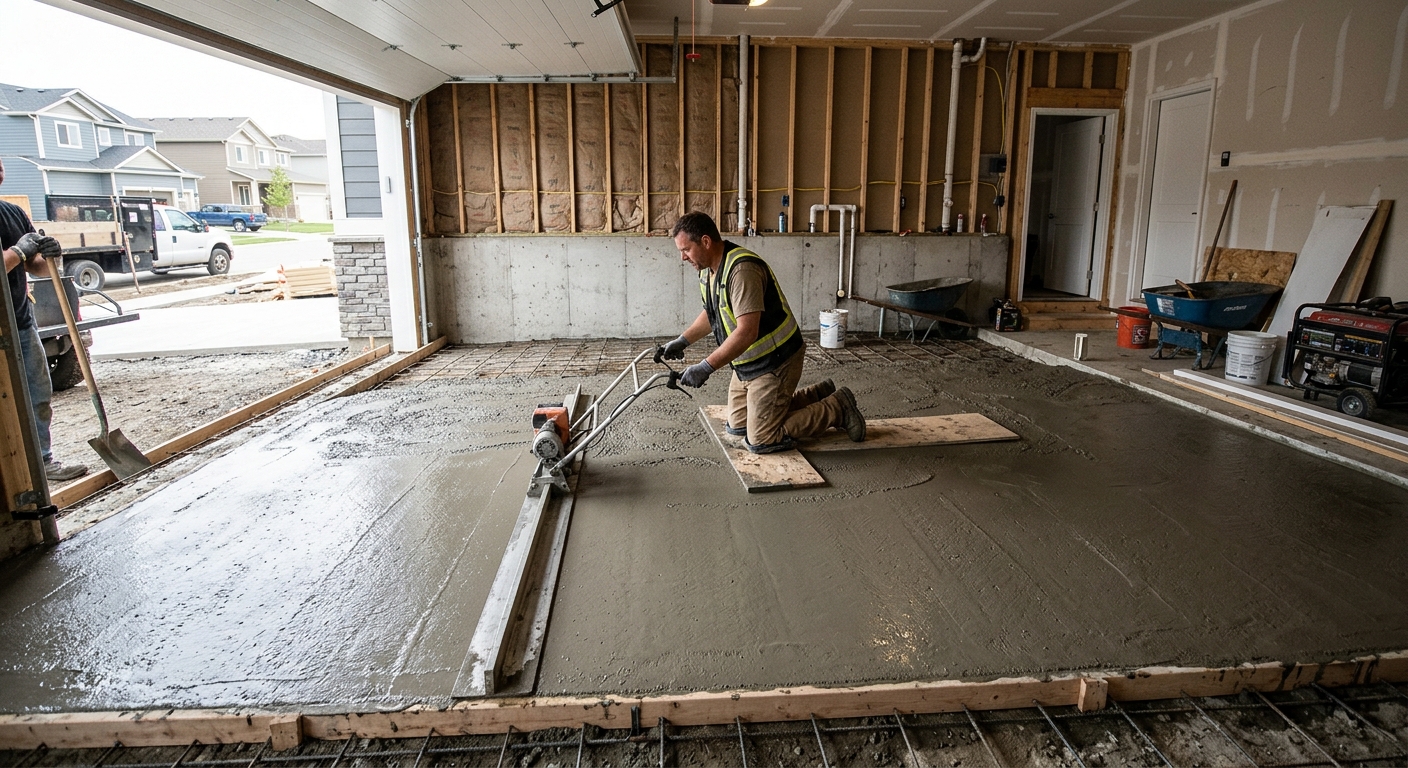
Concrete work options and costs in Magrath Heights
Magrath Heights, Alberta is a growing community where concrete flatwork is one of the first “big visible upgrades” homeowners plan—driveways, patios, and walkways matter because winters are long and the freeze–thaw cycle is relentless. With 2,806 residents (Statistics Canada, 2021 Census), the local market is smaller than Calgary, so scheduling can fill quickly when multiple homeowners launch projects at the same time. In this area, the most common concrete demand typically comes from single-family homes and garage-ready lots where durable exterior slabs are needed for daily use year-round.
Calgary’s cold continental climate drives engineering and workmanship details that affect both material and labour costs. For example, Alberta frost depth requirements mean excavations for foundation footings and structural supports must reach below the design frost depth (around 1.2 m, roughly 4 ft, for typical engineered design). Exterior slabs also need air-entrained concrete and careful curing—pouring too late in fall or early spring can increase the risk of surface scaling and long-term spalling, which is why winter-grade procedures (insulation blankets and sometimes temporary heat) can show up on your quote.
In Magrath Heights, concrete demand is especially strong around the newer residential pockets near the busier access corridors (you’ll often see repeat crews rotating through the same construction-active blocks). If you’re comparing options, it helps to look at what finish and structural requirements change your pricing—then match those choices to your site and goals. Use the cost ranges below as a realistic starting point for planning your project in the Calgary region.
| Application |
Typical Size |
Key Spec |
Finish Option |
Price Range |
| Concrete driveway (standard broom finish) |
24 ft x 10 ft (240 sq. ft.) |
Air-entrained concrete, rebar or wire mesh as specified, granular base |
Broom finish, expansion joints where required |
$12,000–$18,000 |
| Exposed aggregate driveway |
24 ft x 10 ft (240 sq. ft.) |
Air-entrained mix, proper curing to control surface strength |
Exposed aggregate with sealer-friendly finish |
$14,500–$21,500 |
| Stamped concrete driveway or patio |
24 ft x 10 ft driveway or 200 sq. ft. patio |
Air-entrained concrete, colour hardeners as selected |
Stamp pattern + release agent, typically sealed |
$15,000–$26,000 |
| Plain concrete patio or walkway |
200 sq. ft. patio / 4 ft x 20 ft walkway |
Air-entrained mix, compacted granular sub-base |
Broom finish or light trowel, control joints |
$5,000–$9,000 |
| Garage floor (interior slab) |
20 ft x 22 ft (440 sq. ft.) |
Vapour barrier, reinforced slab, proper base prep |
Float and trowel, optional light broom texture |
$10,000–$15,500 |
| Foundation footings (structural, below frost) |
Typical 2-storey house footprint |
Engineered size and depth below design frost, rebar cages, formwork |
Structural concrete, no “finish” requirement |
$28,000–$45,000 |
Prices are estimates only and vary by project scope, site access and material selection.
What affects the price of concrete work in Magrath Heights
In Magrath Heights and across the Calgary region, quotes for the “same” concrete job can differ by about 30–50% because the biggest cost drivers aren’t the driveway or patio itself—they’re the site conditions and the engineered specs needed for Alberta’s freeze–thaw reality. Two contractors may both quote “a driveway,” but if one includes deeper excavation and a properly compacted granular base, and the other trims base prep to save time, the labour, disposal, and material volumes change quickly.
Frost line depth is the headline factor. In Alberta, footings and structural concrete elements must extend below the design frost depth (up to about 2.4 m in Alberta for many engineered house designs) to prevent frost heave and seasonal movement. That means higher excavation volumes, more formwork, and more concrete for foundations and support elements. Next, exterior slabs need air-entrained concrete to survive freeze–thaw cycles, plus well-planned control joints and curing precautions. Calgary’s shorter practical exterior pour season also pushes projects toward winter-grade placement—insulated blankets, controlled curing, and sometimes temporary heat—each adding cost. Finally, de-icing salts accelerate surface wear, so sealing and surface selection become more important for long-term durability.
Local examples in Magrath Heights: a driveway that ties into an existing slab may require saw-cutting and removal, which adds disposal and rework time; a sloped lot often needs more base grading and more concrete thickness at low spots; and a narrow access path for a concrete truck can force smaller pours or more labour for concrete handling. If you’re deciding between a plain patio and a stamped finish, you might see a difference of several thousand dollars—one reason stamped projects commonly land in the $15,000–$26,000 band while standard flatwork typically aligns with $5,000–$9,000 for smaller patios/walkways.
| Price Factor |
Why It Matters |
Cost Impact |
| Frost line depth — determines footing depth and form height |
Controls how far down excavation and structural concrete must go |
Can add thousands due to extra concrete, rebar, and formwork |
| Site preparation — excavation, grading, compacted granular base |
Ensures a stable sub-base to reduce settlement and cracking |
Higher when removal/rock/soft spots are found |
| Reinforcement — rebar or wire mesh requirement |
Improves slab performance under loads and temperature movement |
Material and labour add cost; varies with slab use and thickness |
| Mix design — air-entrainment and compressive strength spec |
Reduces freeze–thaw damage and supports durability in de-icing season |
Winter- and exterior-grade mixes can raise total spend |
| Finish type — broom vs. stamped vs. exposed aggregate |
Finish method affects labour time, curing, and materials (forms/colour) |
Stamped/exposed typically increases price versus plain broom |
| Pour size and concrete truck access to site |
Impacts number of pours and whether additional crews/handling are needed |
Small access issues can trigger extra labour and schedule changes |
| Cold-weather curing precautions — heating and blankets |
Prevents early-age freeze damage and reduces scaling risk |
Can be a noticeable add-on during shoulder season or late fall |
| Control joint pattern and sealing cost |
Controls cracking and protects surfaces from salt and moisture ingress |
Better detailing and sealing can increase upfront cost but extends service life |
Permits & regulations in Alberta
In Alberta, structural concrete work typically needs a building permit and, in many cases, engineered drawings that the municipality will review. That usually includes foundation footings, foundation walls, and grade beams—any concrete work that forms part of the structure or load path. Concrete flatwork such as driveways, patios, and walkways often does not require a permit, unless the work impacts lot grading, drainage, impervious surface coverage limits, or the municipal right-of-way. Even when a permit is “likely not required,” it’s smart to confirm before breaking ground.
For homeowner due diligence in Magrath Heights, verify three things in order: the contractor’s ability to legally and responsibly build the work, the contractor’s coverage, and the documentation for your project. Step-by-step: (1) check the contractor’s Alberta licensing information through the appropriate online registry channel for construction trades/contractors; (2) ask for a current certificate of insurance showing liability coverage and the coverage dates—confirm it covers concrete/flatwork operations; (3) request proof of WSIB/WCB coverage clearance letter (as applicable to the contractor’s work and employees). Then ask for 2–3 references on projects of similar size—especially exterior slabs with winter placement.
If you’re unsure whether your specific scope triggers a permit (for example, any regrading near foundations or changes affecting drainage), ask your contractor to clarify what will be submitted and who pulls the permit. Good contractors will answer plainly and put it in writing.
Getting concrete right in Magrath Heights's freeze-thaw climate
In Magrath Heights, concrete failures are usually climate-driven: water gets into the wrong places, freezes, expands, and then damages the surface and internal paste over repeated cycles. The most preventable issues start before the first truck arrives. Proper base preparation is key—using compacted granular sub-base to the correct depth and ensuring it’s well graded for drainage reduces settlement and “pump-up” that can crack slabs. Mix design matters just as much: for exterior flatwork, you want air-entrainment (commonly in the 5–7% range) and an exterior-rated mix with at least 32 MPa minimum compressive strength so the paste can tolerate freeze–thaw. Control joints are the second line of defence; they don’t stop cracking, but they make cracks occur where they’re planned, improving appearance and reducing moisture pathways.
Curing is where many mid-season schedules go wrong. You should assume a minimum of 7 days curing under proper conditions; in cold weather, crews may need insulation blankets and/or temporary heat so the concrete gains strength without freezing at early age. For long-term protection against Alberta de-icing salts, apply a penetrating sealer after cure (commonly around 28 days) to reduce salt and moisture absorption. If you’re asking questions, start with: “What’s your air-entrainment target for this exterior slab, and can you provide the mix details?” Spalling from inadequate air-entrainment is one of the most expensive “rework surprises” we see when exterior spec is rushed.
As a dollar example: upgrading from a plain broom patio to a sealed, properly detailed exterior specification is often a smaller incremental cost than moving to stamped work. The latter might put you into the $15,000–$26,000 range for decorative driveways/patios, while a well-built plain patio/ walkway commonly fits $5,000–$9,000—meaning careful engineering can deliver durability without forcing you into decorative premiums.
| Spec |
Why It Matters in Magrath Heights |
What to Ask For |
Impact if Skipped |
| Compacted granular base (depth?) |
Supports slab and reduces frost-related movement in a cold climate |
Confirm the sub-base depth and compaction method for your soil |
Settlement and random cracking; premature surface wear |
| Air-entrained concrete mix (target air %?) |
Helps concrete resist freeze–thaw damage |
Ask for a target air content (typically 5–7% for exterior flatwork) |
Higher risk of spalling and scaling during winter cycles |
| Compressive strength (MPa rating) |
Supports durability and strength gain under Alberta temperatures |
Request minimum 32 MPa rating for exterior slabs as specified |
Lower performance and increased cracking risk under load |
| Control joints (spacing per ACI guidelines) |
Directs cracking to predictable locations for better long-term behaviour |
Ask for planned joint spacing and saw-cut timing |
Random cracking and more moisture ingress into slab edges |
| Minimum 7-day curing period |
Ensures strength development without early-age freeze injury |
Confirm curing plan; ask what happens if temperatures drop |
Weak surface, scaling, and reduced long-term durability |
| Penetrating sealer (when applied after cure) |
Reduces moisture and de-icer salt penetration that accelerates deterioration |
Request penetrating sealer application after cure (commonly ~28 days) |
Faster spalling and rough surface texture over multiple winters |
How to choose a concrete work contractor in Magrath Heights
Choosing the right concrete contractor in Magrath Heights is less about picking the lowest number and more about matching your project to Calgary-region cold weather practice. Start with verification. In Alberta, ask for their contractor details and confirm licensing information through the applicable online registry for the trade/contractor category. Then confirm insurance: request a certificate of insurance showing general liability for construction operations. For coverage, ask for proof of WSIB/WCB clearance (as applicable)—this helps protect you and your crew against exposure from uninsured workers.
Next, get 2–3 written, itemised quotes. You want a breakdown that separates labour, excavation/site prep, forms, reinforcement, concrete supply, and finishing/sealing. Avoid “lump sum” quotes that don’t list key inclusions. Scope clarity matters: is the permit pull included where required? Is disposal of excavated material included? Is truck waiting time included if access causes delays? For exterior work, ask whether cold-weather curing precautions are included when temperatures are borderline.
Warranty is a real differentiator. Ask for the workmanship warranty length and what it covers (cracks, scaling, settlement, joint failure) and whether it’s transferable if you sell your home. Then align on payment: a fair schedule typically keeps upfront payment to no more than 10–15%, with holdback until substantial completion and final documentation. Get timeline details in writing—start date, concrete delivery day, weather contingencies, and estimated completion date.
- Ask for their Alberta insurance certificate and verify it’s current.
- Request WSIB/WCB clearance documentation (as applicable).
- Confirm who pulls permits if your scope is permit-triggering (foundation/structural work usually is).
- Get a detailed, line-item quote (not just “materials + labour”).
- Ask about excavation depth and granular base specs for your site.
- Confirm air-entrainment and compressive strength targets for exterior slabs.
- Ask for reinforcement details (mesh vs rebar, and where).
- Verify control joint spacing plan and timing of saw cutting.
- Ask how they handle curing in cold weather (blankets/heating).
- Clarify sealing: whether it’s included and when it’s applied after cure.
- Confirm what’s included for disposal, haul-away, and restoration of disturbed areas.
- Set payment terms with a holdback until final acceptance.
Concrete contractor red flags in Magrath Heights: they can’t clearly explain air-entrainment targets for exterior work, they rush curing without a plan for shoulder-season temperatures, they won’t provide insurance/WSIB/WCB documentation, they quote without specifying base prep depth or reinforcement details, or they insist on full payment upfront with no holdback.
Frequently asked questions — concrete work in Magrath Heights
What is the difference between concrete and cement?
In everyday speech, people use “cement” and “concrete” interchangeably, but they’re not the same thing. Cement is one ingredient—usually Portland cement—that binds the mixture. Concrete is the full manufactured material: cement plus water, sand, gravel (or crushed stone), and often admixtures such as air-entrainment agents and water-reducers. In Alberta’s Magrath Heights climate, the “how it’s engineered” part matters: exterior slabs need proper air-entrainment so they can tolerate repeated freeze–thaw cycles. That’s why two contractors can quote similar square footage but still price differently—because they’re specifying different mixes for durability, not just “more or less concrete.”
How much does concrete work cost in Magrath Heights?
For Magrath Heights homeowners, realistic budgeting usually starts with the local Calgary-area price bands. A concrete driveway or slab typically falls around $12,000–$18,000 for standard broom-finished work, while a plain patio or walkway is often in the $5,000–$9,000 range depending on size and site prep. If you want decorative work, stamped concrete commonly moves into the $15,000–$26,000 band once you include the labour-heavy forming, stamping, and colour steps. Foundation/footings are a bigger structural budget item, often $28,000–$45,000, because Alberta frost depth demands deeper excavation and engineered structural concrete. Your final number can swing 30–50% with base conditions, access, reinforcement, and cold-weather curing precautions.
How deep must footings be for Magrath Heights's frost line?
For Magrath Heights (Calgary-region), footings generally must be engineered to bear below the design frost depth so frost doesn’t lift the foundation. In practice, engineered design often uses a design frost depth around 1.2 m (roughly 4 ft) as a baseline for many residential applications, but actual footing depth can be more depending on your soil conditions and house design. Many engineered foundation designs in Alberta can go deeper (sometimes up to about 2.4 m) where required by the engineering and geotechnical information. Because it’s structural, this isn’t a “guess the depth” decision—your foundation drawing will show the required embedment. If a contractor proposes shallow footings “to save money,” that’s a major quality and risk issue.
Why does concrete crack in Magrath Heights and how is it prevented?
Concrete cracks in Magrath Heights mainly due to shrinkage, temperature movement, and moisture changes—then freeze–thaw can widen any weak areas if water gets in. Alberta’s winters intensify the risk, so you prevent problems by building the slab to behave: correct base preparation (compacted granular base), air-entrained exterior mixes, and a control joint plan that places cracking where you want it. Control joints don’t “eliminate” cracking; they manage it so cracks are smaller and less disruptive. Also, curing matters: if concrete freezes too early, the surface can scale and become weaker. Sealing later helps reduce salt and moisture penetration during de-icing season. When contractors specify proper air content, joint layout, and curing precautions, you typically see fewer random cracks and better long-term appearance.
Stamped vs broom-finish concrete — cost difference?
Stamped concrete costs more than a basic broom-finish because it adds steps: colour integration or colour hardeners, release agent, stamp timing, and more labour on finishing. In the Calgary region, that premium typically aligns with the decorative price band—stamped driveway or patio projects are often in the $15,000–$26,000 range. Plain broom-finished concrete generally fits more common flatwork budgeting; patios/walkways usually land in the $5,000–$9,000 band depending on size, access, and base prep. A stamped look can absolutely be worth it if you want curb appeal and design impact, but for durability per dollar, a well-built broom-finish with correct air-entrainment, joints, and sealing often performs extremely well through Alberta winters.
When is the best time to pour concrete in Magrath Heights?
The best time to pour in Magrath Heights is typically during warmer months when temperatures support normal curing without extra protection. Calgary-region crews are very mindful of cold-weather curing because Alberta can drop temperatures quickly and because early-age freeze can cause scaling or surface damage that shows up later. If you must pour in shoulder season, reputable contractors plan winter-grade procedures: insulated blankets, possibly temporary heat, and strict curing timelines so concrete gains strength before it freezes. That curing window is one reason timing can affect your final budget. If you’re planning a driveway or patio and want the simplest, most consistent outcome, aim for a stable stretch of days with favourable conditions—your contractor should also schedule around delivery logistics and drying/finishing requirements.