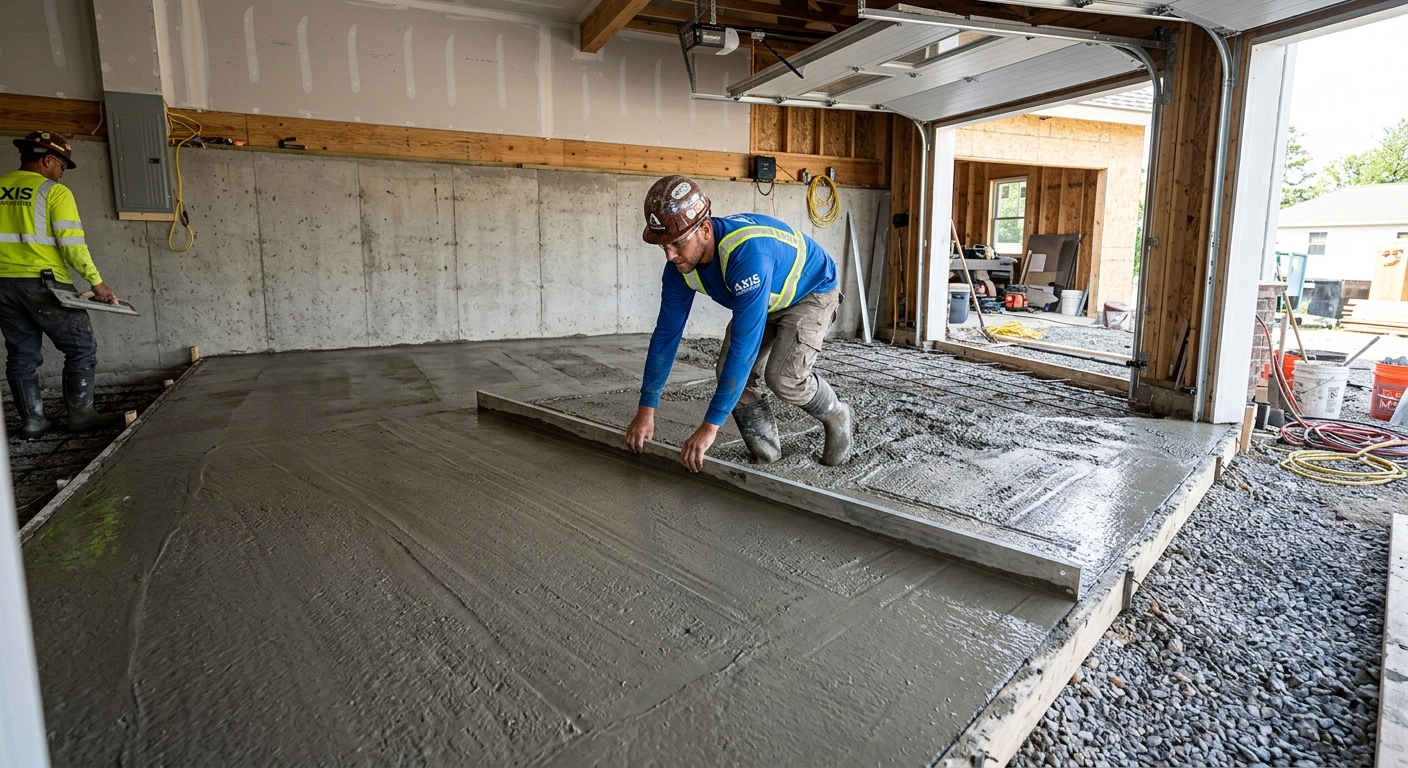
Concrete work options and costs in Stanley Park
In Stanley Park, Ontario, concrete work is a practical part of home maintenance—especially for driveways, patios and walkways that have to survive Toronto-area freeze–thaw winters. With a population of 7,181 (Statistics Canada, 2021 Census), most projects serve owner-occupied households in the broader Toronto market, where many homes rely on updated exterior flatwork. In this area, concrete contractors are busiest around neighbourhoods close to main arterials and established residential pockets off major routes, because access and truck staging are easier than on deeply tucked-in lots. If you’re planning around a change to your curb appeal, you’ll typically see the biggest demand for standard driveway replacements and patio upgrades.
Pricing in Stanley Park tracks the Toronto economic region: deeper footings and robust exterior specifications are driven by frost depth and recurring freeze–thaw cycles. Exterior slabs and flatwork generally require air-entrained mixes and proper control joints to manage shrinkage cracking. Costs can also rise when pour scheduling is tight in shoulder seasons, since concrete needs protection and curing time when temperatures dip toward 10 °C or below. On top of that, saturated soils and drainage issues increase base-prep scope—compaction, granular depth and sub-drain attention—which is where quotes can diverge quickly.
Below are common options and typical pricing bands you can use to compare proposals before you ask for a site-specific breakdown.
| Application |
Typical Size |
Key Spec |
Finish Option |
Price Range |
| Concrete driveway (standard broom finish) |
10 ft x 18 ft (180 sq. ft.) |
Air-entrained concrete + compacted granular base; control joints |
Broomed surface |
$3,240 – $5,040 |
| Exposed aggregate driveway |
10 ft x 18 ft (180 sq. ft.) |
Air-entrained mix + curing and wash timing for aggregate exposure |
Exposed aggregate finish |
$4,050 – $6,300 |
| Stamped concrete driveway or patio |
10 ft x 20 ft (200 sq. ft.) |
Air-entrained mix; colour hardeners or integral colour; seal coat |
Stamp + colour (patterned) |
$4,800 – $8,000 |
| Plain concrete patio or walkway |
10 ft x 12 ft (120 sq. ft.) |
Air-entrained concrete; proper base thickness and drainage |
Broom or steel-trowel depending on use |
$1,920 – $3,120 |
| Garage floor (interior slab) |
20 ft x 22 ft (440 sq. ft.) |
Interior mix; vapour barrier where needed; jointing for shrinkage |
Smooth trowel or light broom |
$7,920 – $12,320 |
| Foundation footings (structural, below frost) |
Per linear foot / typical small addition |
Excavation + formwork + rebar; depth to local frost requirements |
Structural concrete |
$180 – $300 |
Prices are estimates only and vary by project scope, site access and material selection.
What affects the price of concrete work in Stanley Park
In Toronto and the wider Ontario market, it’s not unusual to see quotes for the “same” concrete job vary by 30–50%. The reason is usually hidden in the prep and specs: excavation depth, base composition, reinforcement needs, and how contractors plan for Toronto’s freeze–thaw cycle. One crew might include only basic demolition and compaction; another will price proper granular depth, drainage improvements and a correctly air-entrained mix—those details are what protect concrete when winters repeatedly push moisture into the ground and freeze.
In Ontario, frost and freeze–thaw dictate the whole approach. Structural footings must extend below design frost depth to prevent frost heave and differential movement, and exterior slabs generally require air-entrained concrete mixes so the paste doesn’t spall over repeated cycles. When colder weather hits, crews also need cold-weather curing precautions—heating and insulating blankets—so strength gain is reliable. Salt use in winter accelerates surface wear and can lead to early scaling if the mix and sealing plan aren’t right, which is why sealing is frequently included or at least recommended after curing.
In Stanley Park, a driveway that starts out “simple” often becomes more expensive if the soil is soft or holds water—then base replacement and grading are added. Conversely, costs can drop where your existing sub-base is stable and there’s clear truck access for forming and pour logistics. For budgeting, standard exterior concrete can align with the $18–$28 per sq. ft. driveway band, while stamped work often moves toward the higher end of $24–$40 per sq. ft., especially when colour, stamps and additional labour are included. If your home is older with settled walkways, expect more sub-base correction—sometimes adding several hundred to a few thousand dollars depending on how much material must be removed and re-built.
| Price Factor |
Why It Matters |
Cost Impact |
| Frost line depth — determines footing depth and form height |
Deeper excavation and more formwork reduce frost heave risk |
Can add substantial excavation/labour and increase footing price scope |
| Site preparation — excavation, grading, compacted granular base |
Proper base reduces pumping, settlement and voids under slabs |
Often the biggest swing factor; can change total by tens of percent |
| Reinforcement — rebar or wire mesh requirement |
Controls cracking and improves load capacity in specific areas |
Adds material and labour; varies by slab thickness and design |
| Mix design — air-entrainment and compressive strength spec |
Helps survive freeze–thaw and supports strength gain |
Air-entrained and specified strength typically increase material cost |
| Finish type — broom vs. stamped vs. exposed aggregate |
Finish complexity affects labour time and curing/sealing steps |
Stamped/exposed finishes usually push pricing higher per sq. ft. |
| Pour size and concrete truck access to site |
Access affects staging, pumping needs, and pour speed |
Poor access can require smaller loads or pumping and extra crew time |
| Cold-weather curing precautions — heating and blankets |
Maintains strength development during cooler nights |
Added rental/supplies and labour can add noticeable cost |
| Control joint pattern and sealing cost |
Joints guide cracking; sealing helps repel salt and moisture |
Proper joint layout and sealing can prevent premature surface failure |
Permits & regulations in Ontario
In Ontario, structural concrete work—such as footings, foundation walls and grade beams—typically requires a building permit, and engineered drawings are often reviewed for compliance. Concrete flatwork like driveways, patios and walkways usually does not require a permit on its own, unless your project affects lot grading, drainage, or triggers rules tied to impervious surface coverage or municipal right-of-way requirements. The safest approach in Stanley Park is to confirm with the municipality before excavation, especially if you’re changing slopes toward a walkway, adding a new driveway approach, or working near existing drainage patterns.
Step-by-step, here’s how a homeowner in Stanley Park verifies a contractor properly:
- Licence and business status: Check the Ontario contractor licensing/registration information through the appropriate provincial/industry listings or the contractor’s own business documentation.
- Liability insurance: Ask for a Certificate of Insurance (COI) naming the homeowner or confirming coverage limits; verify dates and coverage types.
- WSIB/WCB coverage: Request a clearance letter or confirmation of coverage so labour isn’t performed uninsured. Ensure it matches the contractor’s legal name.
- References: Ask for recent photos and references on comparable exterior flatwork and/or foundation work.
- Permit responsibility: Confirm in writing who pulls any required permits and who covers inspection scheduling and required documentation.
If someone offers an “all-in” quote with no mention of engineering/permits where structural work is involved, that’s a red flag—structural scope without compliance is where problems get expensive.
Getting concrete right in Stanley Park's freeze-thaw climate
The most common concrete failures in Stanley Park come down to moisture movement and freeze–thaw stress: scaling and spalling from inadequate air-entrainment, cracking from weak base support, and premature surface wear when de-icing salts reach vulnerable concrete. To spec the job correctly for Ontario’s climate, start with the foundation of the system—base preparation. That means excavation to the correct depth and compacted granular sub-base sized for drainage, so saturated soils can’t expand and contract under the slab.
Next, the concrete itself needs the right chemistry and performance. For exterior flatwork, contractors typically target 5–7% air content in an air-entrained mix, along with a minimum 32 MPa compressive strength. Then plan for shrinkage and temperature movement using control joints placed to limit random cracking. Curing is also critical: plan for a minimum 7-day cure under conditions that allow strength gain, and use heating/blankets when temperatures drop toward or below 10 °C. Finally, apply a penetrating sealer around 28 days post-pour to help repel de-icing salts and reduce moisture penetration.
Here’s a concrete example of where cost is justified: if a stamped patio quote adds roughly $24–$40 per sq. ft. (depending on colour and stamp complexity), that premium usually buys better finishing labour and an added sealing step—not just appearance. If you try to cut that by skipping air-entrainment or sealing on an exterior patio, you often pay later with early scaling, especially in Toronto’s wet fall/spring freeze–thaw swings.
| Spec |
Why It Matters in Stanley Park |
What to Ask For |
Impact if Skipped |
| Compacted granular base (depth?) |
Prevents settlement and reduces moisture accumulation before freezing |
Confirm excavation depth and granular thickness; specify compaction testing if available |
Cracking, uneven slabs and pumping/potholes over winters |
| Air-entrained concrete mix (target air %?) |
Protects paste during repeated freeze–thaw cycles common in Toronto-area winters |
Ask for target air content typically 5–7% for exterior flatwork |
Spalling/scaling and loss of surface integrity |
| Compressive strength (MPa rating) |
Ensures strength development so concrete resists freeze–thaw stresses |
Confirm minimum 32 MPa at specified curing/age |
Early deterioration and increased cracking risk |
| Control joints (spacing per ACI guidelines) |
Controls where cracks occur as temperature and drying stresses change |
Request the planned joint spacing and sawcut timing |
Random cracking that’s harder to correct cosmetically |
| Minimum 7-day curing period |
Strength gain matters most when temperatures fluctuate in late season |
Ask how curing will be protected during cold nights (blankets/heating if needed) |
Reduced strength and surface damage during early freeze events |
| Penetrating sealer (when applied after cure) |
Helps repel de-icing salts and limits moisture ingress in harsh winters |
Confirm sealer type and that it’s applied about 28 days after pour |
Accelerated surface wear and water penetration |
How to choose a concrete work contractor in Stanley Park
Choosing the right concrete contractor in Stanley Park starts with verification and documentation. First, confirm Ontario compliance: ask for proof of liability insurance (COI with policy dates and coverage limits) and request confirmation of WSIB/WCB coverage—either a clearance letter or written verification showing coverage for the correct legal business name. For licensing/registration, use the appropriate Ontario registries and documentation your contractor should provide, and don’t rely on verbal reassurance. A reputable crew will answer quickly and provide paperwork without pushing back.
Second, get 2–3 itemised written quotes rather than a single lump sum. Look for a breakdown of labour, concrete supply, excavation and disposal, base materials and reinforcement. Check whether they include a permit pull (when required), inspection coordination, and whether they specify drainage and compaction standards. Make sure the scope includes curing protection if the schedule risks colder nights.
Third, compare warranties and the payment plan. A workmanship warranty should be stated clearly (including how long and what it covers). Product/manufacturer warranties—like for decorative systems—should be provided as separate documentation and explain whether they’re transferable to subsequent homeowners. Payment-wise, avoid large advances: typically keep upfront payment to 10–15% max and request a holdback until final completion and cleanup.
Finally, lock in timeline expectations: request a written start date window and completion estimate, plus weather contingencies for Toronto-area freeze–thaw swings.
- Ask for a site visit and written scope that matches your drawings or intended grades.
- Require air-entrained mix confirmation for any exterior slab or driveway.
- Confirm excavation and granular base depth (not “typical” thickness).
- Request reinforcement details: rebar vs. mesh and where it’s placed.
- Check joint plan: spacing, layout and sawcut timing.
- Ask how they handle weak subgrade and water—sub-drain or base replacement plan.
- Verify cold-weather procedures if pouring near shoulder season.
- Confirm disposal/recycling of debris is included (or excluded).
- Ensure sealing is included or clearly stated as an add-on after cure (often ~28 days).
- Get a clear warranty term in writing for workmanship and any decorative finishes.
- Request a detailed schedule: prep, pour, curing protection, finishing, and final cleanup.
- Review insurance and WSIB/WCB proof before signing; follow up if names don’t match.
Concrete red flags for Stanley Park include: missing air-entrainment on an exterior pour, vague “standard” base prep with no thickness or compaction plan, refusal to provide WSIB/WCB or COI documentation, pricing that excludes disposal while assuming you’ll manage it, and workmanship terms that don’t specify what’s covered for cracks or scaling within a reasonable timeframe.
Frequently asked questions — concrete work in Stanley Park
How long does concrete take to cure?
Concrete curing has two timelines: initial set/finish time and strength gain. For most exterior flatwork in Ontario, contractors plan for finishing and early handling within the first day, but meaningful strength development continues well beyond that. A common homeowner benchmark is about 7 days of curing for usability planning, while full performance continues gaining strength for weeks. In Stanley Park, curing needs extra attention when temperatures swing—especially near 10 °C and below—because freeze–thaw stress can show up early if the slab isn’t protected. If you pour in colder weather, expect heating and insulating blankets to be part of the plan. For sealing, many crews wait until roughly 28 days post-pour so the concrete has dried enough to accept a penetrating sealer. (Statistics Canada, 2021 Census) shows Stanley Park’s population is 7,181, but winter schedules and weather variability still drive the curing approach.
Do I need a permit for concrete work in Ontario?
In Ontario, the need for a permit depends on what you’re building. Structural concrete—such as footings, foundation walls and grade beams—typically requires a building permit and often engineered documentation reviewed by the municipality. Concrete flatwork like driveways, patios and walkways usually does not require a permit by itself, unless the work affects lot grading, drainage patterns, impervious surface coverage rules, or the municipal right-of-way. In Stanley Park, I recommend confirming with your local authority before you break ground, especially if you’re altering slopes toward landscaping or changing where water goes after a new driveway. Also confirm who is responsible for any permit pulls (if required) and that the contractor carries liability insurance and WSIB/WCB coverage—this is practical risk management for homeowners.
Concrete vs pavers for a patio in Stanley Park?
Concrete and pavers can both perform well in Stanley Park’s freeze–thaw climate, but the “right” choice depends on maintenance expectations and how precisely the base can be built. Pavers can be easier to repair section-by-section if one area fails, while concrete patios are often more straightforward to maintain once properly poured and sealed. With concrete, you’re relying on air-entrainment, correct base compaction and a good control-joint pattern to prevent random cracking. With pavers, the system’s success depends on excellent bedding sand and edge restraint so units don’t shift when the ground cycles through freezing and thawing. Pricing-wise, plain concrete patios commonly land in the $16–$26 per sq. ft. band, while decorative finishes can go higher depending on colour and stamping. If you expect uneven settling or you want flexible future changes, pavers can be attractive; if you want a uniform surface and are budgeted for proper specs and sealing, concrete is often the cost-effective long-term pick.
How long does a concrete driveway last?
A well-built concrete driveway in the Toronto area often lasts decades, but lifespan hinges on details. The biggest drivers are base preparation, proper thickness, air-entrained concrete for exterior freeze–thaw, jointing, and drainage. If the base is under-compacted or water can sit under the slab, freeze–thaw forces can cause cracking and surface deterioration. If air-entrainment is incorrect or joints aren’t planned, random cracking and spalling risk increase. In practice, homeowners should budget for periodic sealing and expect that salt use can shorten surface life if the concrete isn’t protected. When contractors specify air-entrained mix and include sealing after cure (around 28 days), they’re actively managing the Toronto/Mississauga/Brampton/Markham/Vaughan freeze–thaw reality described in the regional market context. For budgeting, driveway pours commonly align with the $18–$28 per sq. ft. band for standard broom finishes, and paying more for better prep is typically cheaper than replacing early.
What is air-entrained concrete and why does it matter here?
Air-entrained concrete is designed with tiny, evenly distributed air bubbles in the mix. In Stanley Park and across Ontario’s Toronto region, those bubbles provide space for water to expand when it freezes, reducing damage to the cement paste. That’s why air-entrainment is a key spec for exterior flatwork like driveways, patios and walkways exposed to repeated freeze–thaw cycles. When contractors skip or under-dose air, the result is often spalling or scaling—small surface flakes that can spread over time as de-icing salts and moisture get inside. For proper exterior performance, ask for a target air content typically around 5–7% and confirm the mix includes the needed compressive strength and curing plan. If you’re comparing quotes, this spec can be a major reason why prices differ by 30–50%: the right mix costs more, but it’s cheaper than repairs and replacement.
How do I prepare the base for a concrete slab?
Base prep is where most concrete performance is decided in Stanley Park’s climate. Contractors should excavate to the design subgrade depth, remove soft or organic material, and shape the base to the correct slope for drainage. Then they place compacted granular sub-base to the specified depth and compact it in lifts, not in one loose layer. For exterior slabs, drainage matters as much as frost protection—if water remains near the slab, it can freeze and expand under load. Ask your contractor how they determine the base depth for your soil and how they ensure compaction quality. For driveway and walkway projects, insist on a clear base spec in writing, including thickness and whether reinforcement is used. If you’re comparing to typical pricing, the driveway band of $18–$28 per sq. ft. for standard broom finishes often assumes solid base work; if a quote is significantly lower, base prep scope is the first place to check.