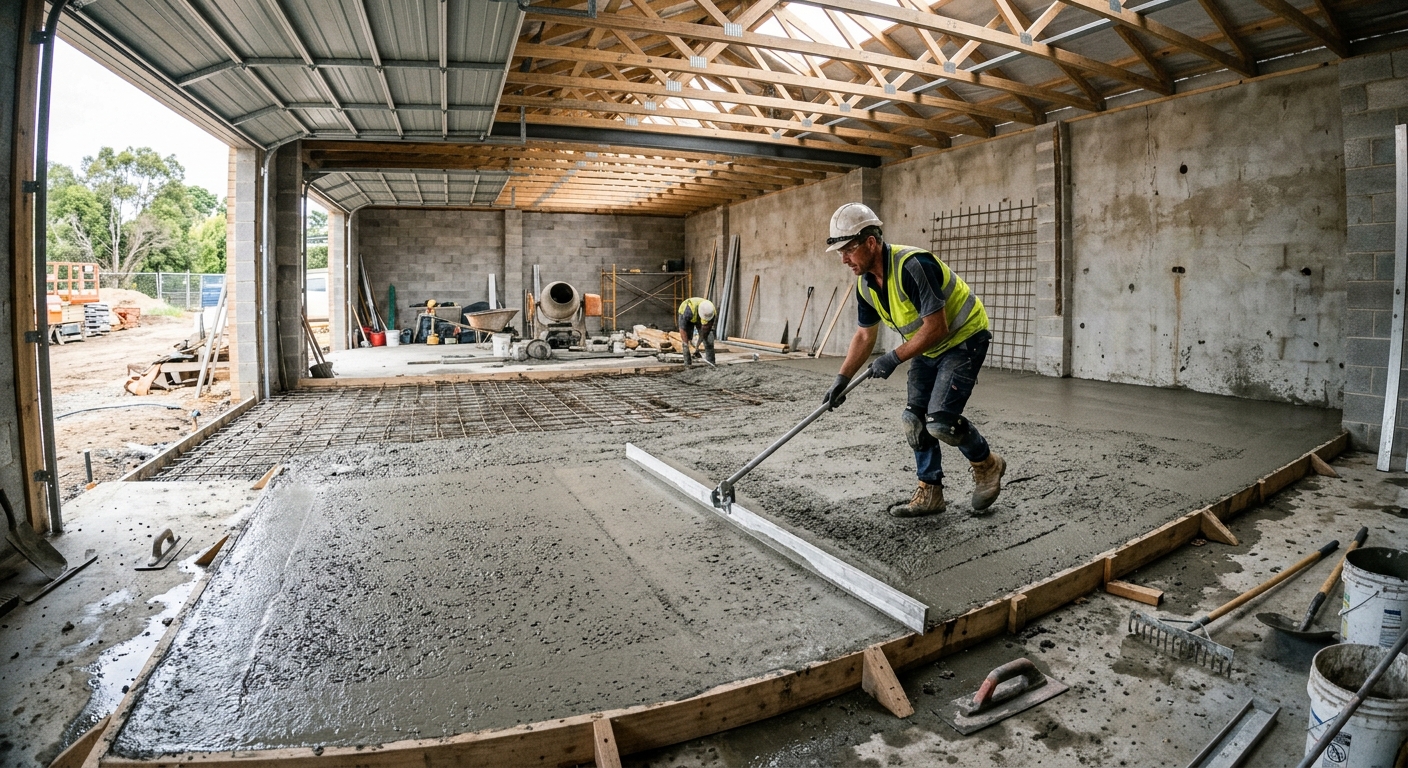
Concrete work options and costs in Ohsweken
In Ohsweken, concrete work is one of the most practical upgrades homeowners make—especially for driveways, patios, and walkways that see Ontario’s freeze–thaw every winter. With a local population of about 1,500 (Statistics Canada, 2021 Census), the market is smaller than Toronto proper, so contractors often coordinate crews around the short, warmer pour season. That’s why timing can affect price and availability. In many Ontario communities like Ohsweken, the majority of properties are family homes where exterior flatwork is a priority, and concrete is a long-term, low-maintenance option when it’s detailed correctly for frost protection and drainage. Toronto-area jobs also tend to price with stronger “durability specs” baked in—air-entrainment, proper base prep, and control-joint planning—because repeated freeze–thaw punishes poor installs.
In the Toronto economic region, building requirements typically push structural footings to extend at least 1.2 m below grade to reduce frost heave and differential settlement. For exterior slabs, contractors commonly use air-entrained concrete and manage curing carefully when temperatures drift toward 10 °C or lower. Humid, wet fall and spring conditions can slow drying and increase the attention needed for surface protection and sealing. If your site has soft or saturated soils, expect more granular base and drainage work, which is a major driver of the final number.
If you’re comparing options, use the ranges below as a practical starting point for Ohsweken projects—then align the finish and spec to your actual site conditions. (Next: see how those factors move the cost in real life.)
| Application |
Typical Size |
Key Spec |
Finish Option |
Price Range |
| Concrete driveway (standard broom finish) |
10 m x 3 m (30 m²) |
Air-entrained mix; proper base and drainage |
Broom finish, control joints |
$18,000 – $28,000 |
| Exposed aggregate driveway |
10 m x 3 m (30 m²) |
Air-entrained mix; surface retard/cleaning process |
Exposed aggregate finish |
$22,000 – $35,000 |
| Stamped concrete driveway or patio |
8 m x 4 m (32 m²) |
Air-entrained mix; integral colour and sealing plan |
Stamped patterns (stone/brick look) |
$24,000 – $40,000 |
| Plain concrete patio or walkway |
6 m x 3 m (18 m²) |
Air-entrained mix; compacted granular base |
Smooth or broom finish |
$16,000 – $26,000 |
| Garage floor (interior slab) |
6 m x 6 m (36 m²) |
Interior slab thickness; vapour control as needed |
Steel trowel or broom |
$10,000 – $20,000 |
| Foundation footings (structural, below frost) |
Varies by footing layout |
Excavation + reinforced concrete below frost depth |
Engineered reinforcement; formwork |
$180 – $300 |
Prices are estimates only and vary by project scope, site access and material selection.
What affects the price of concrete work in Ohsweken
In the Toronto economic region, two homeowners can get quotes that look wildly different for what seems like the same “concrete job.” It’s common to see a 30–50% spread because contractors price for real jobsite risk: soil conditions, excavation volume, how difficult it is to bring a truck in, and how much rework is avoided by better base prep and better concrete specs. In Ohsweken, where the local pool of crews is smaller than in Toronto and scheduling matters, lead times can also influence labour availability and crew productivity.
Climate drives the technical scope. Frost depth and freeze–thaw cycles dictate everything: structural footings must extend below design frost depth to prevent frost heave and differential movement, and exterior slabs typically use air-entrained concrete to survive repeated expansion and contraction. Colder periods mean a shorter reliable pour season; when temperatures drop toward 10 °C or below, cold-weather curing precautions (insulating blankets, temperature management) can add cost and require tighter scheduling. Toronto-area de-icing habits also accelerate surface wear—so sealing and a durable finish plan become part of the long-term budget.
Here are a few examples that commonly raise or lower cost in Ohsweken:
- If your driveway sits on saturated clay after spring rain, you may need deeper granular base and more grading—cost goes up, but performance improves.
- If you want stamped concrete, the added labour and material system (colour, stamping, finishing sequence, sealing) can push you toward the $24,000 – $40,000 range for a driveway or patio, especially with a larger footprint.
- If you keep it broom-finished and focus on drainage and joints, you can stay closer to the $18,000 – $28,000 driveway band while still building for durability.
Housing-stock and site factors matter too. Older properties often have older drainage patterns, tighter setbacks, and less predictable subgrade—so excavation can be more extensive. Even a change of a few centimetres in thickness or base depth can change material volume, truckloads, and crew time, which is why quotes can’t be apples-to-apples without specs.
| Price Factor |
Why It Matters |
Cost Impact |
| Frost line depth — determines footing depth and form height |
Footings must be below frost to reduce heave and settlement risk |
More excavation and formwork increase labour and concrete volume |
| Site preparation — excavation, grading, compacted granular base |
Concrete fails early when the base is soft or uneven |
Heavier base requirements can add significant materials and equipment time |
| Reinforcement — rebar or wire mesh requirement |
Controls cracking and improves slab performance under load |
Material + labour for tying, supports, and proper cover |
| Mix design — air-entrainment and compressive strength spec |
Air helps manage freeze–thaw damage; strength affects durability |
Air-entrained mixes and higher spec can increase material cost |
| Finish type — broom vs. stamped vs. exposed aggregate |
Surface durability and aesthetic complexity |
Stamped/exposed finishes add labour steps and sealing requirements |
| Pour size and concrete truck access to site |
Placement speed and the ability to avoid cold joints |
Poor access can mean smaller pours, extra labour, and rework risk |
| Cold-weather curing precautions — heating and blankets |
Proper curing prevents weakness and surface damage |
Tarps/blankets, heaters, and staff time add cost |
| Control joint pattern and sealing cost |
Joints manage cracking; sealing helps resist de-icing salt damage |
Better joint layout and sealing increase upfront scope for longer life |
Permits & regulations in Ontario
In Ontario, the rule of thumb is: anything structural usually needs more oversight than decorative flatwork. In Ohsweken, structural concrete work such as footings, foundation walls, grade beams, and other load-bearing components typically requires a building permit, and engineered drawings are often reviewed by the municipality or the applicable authority for code compliance. For concrete flatwork—driveways, patios, and walkways—a permit often isn’t required unless the work affects lot grading, changes stormwater/overland flow, impacts impervious surface coverage, or touches municipal right-of-way constraints. Because each site is different, it’s smart to confirm with your local authority before any digging begins.
Step-by-step verification you can do as a homeowner in Ohsweken:
- Ask for the contractor’s business licence/registration information (and make sure it matches their legal entity on invoices).
- Request a Certificate of Insurance showing liability coverage with your property name if possible.
- Confirm they carry WSIB/WCB coverage for their workers (or provide the appropriate proof/clearance where applicable).
- Verify they can provide references for similar-scale projects (same finish type and exterior exposure).
- For structural projects, ask whether they’re coordinating permit/engineering reviews as part of the scope.
If a contractor can’t provide proof of insurance and coverage, or they try to “skip details” on base prep and drainage, it’s a red flag—especially in a freeze–thaw climate where small shortcuts turn into expensive repairs.
Getting concrete right in Ohsweken's freeze-thaw climate
Concrete in Ohsweken lives a tough life. The usual failure pattern in the Toronto region isn’t just “cracks”—it’s spalling, scaling, and uneven settlement caused by freeze–thaw, saturated subgrade, and poorly detailed curing. To spec the job correctly, you have to treat the project as a system: base prep, mix design, joints, curing, and sealing.
1) Base preparation: exterior slabs need a compacted granular sub-base to the right depth for local soils and frost protection. If water can’t drain away, it migrates into the base, saturates, and expands during freeze events. That’s why grading and drainage matter as much as the concrete itself.
2) Mix design: for exterior flatwork, use air-entrained concrete (commonly around 5–7% air content for exposed exterior work). Pair that with a minimum 32 MPa compressive strength spec. Inadequate air is a common cause of freeze–thaw damage—your slab may look fine the first year, then scale and roughen once de-icing salts start working into the surface.
3) Control joints: install joints at a spacing that limits random cracking to manageable lines.
4) Curing: plan for at least 7 days of proper curing conditions. When pours happen near colder stretches (when temperatures drop toward 10 °C or below), curing protection becomes a must, not an upgrade.
5) Sealing: apply a penetrating sealer after the cure (often around 28 days) to help repel de-icing salts and moisture.
About price: stamped concrete can cost more than plain broom-finished work. For example, if a plain patio/sidewalk is in the $16,000 – $26,000 band, a stamped driveway or patio system often lands in the $24,000 – $40,000 band. The premium is justified when the finish is installed with correct base, proper air-entrainment, correct jointing, and sealing—otherwise the decorative surface won’t prevent underlying freeze–thaw damage.
| Spec |
Why It Matters in Ohsweken |
What to Ask For |
Impact if Skipped |
| Compacted granular base (depth?) |
Reduces saturation and supports the slab through freeze–thaw |
Base depth specific to your soil and frost protection plan |
Uneven settlement, rocking, and early cracking |
| Air-entrained concrete mix (target air %?) |
Air voids manage expansion during freezing |
5–7% air content target for exterior flatwork |
Spalling/scaling and surface breakdown after a few winters |
| Compressive strength (MPa rating) |
Strength supports durability and load capacity |
Minimum 32 MPa compressive strength |
Higher risk of surface wear and premature failure |
| Control joints (spacing per ACI guidelines) |
Directs cracking where it’s least noticeable |
Joint spacing plan and saw-cut timing |
Random cracking across driveway/patio surfaces |
| Minimum 7-day curing period |
Proper hydration develops strength and durability |
Confirm curing method and protection plan for cooler days |
Weak surface, mottling, and reduced long-term performance |
| Penetrating sealer (when applied after cure) |
Helps repel moisture and de-icing salt intrusion |
Application timing (commonly after full cure; often ~28 days) |
Faster scaling and salt-related deterioration |
How to choose a concrete work contractor in Ohsweken
Choosing the right concrete contractor is where projects succeed or end up with “patch-and-pray” repairs—especially in Ohsweken’s freeze–thaw climate. Start with Ontario compliance and coverage. Ask for the contractor’s proof of liability insurance (and confirm it covers concrete work and your property as applicable). For workers, request evidence of WSIB/WCB coverage. If they can’t provide current clearance or proof, don’t proceed—this is a basic homeowner protection step.
Next, get 2–3 itemised written quotes instead of lump sums. The best quotes break down labour and materials (excavation, granular base, reinforcement, concrete supply, finishing, joints, and sealing). Itemisation helps you compare apples-to-apples, especially when one contractor includes air-entrained mix and proper curing protections while another only “assumes” them.
Read the scope carefully for what’s excluded. Does the quote include permit pulling (if required), disposal of excess soil, and any necessary drainage upgrades? Ask who supplies and places reinforcement, what thicknesses they’re assuming, and the specific finish schedule for your driveway or patio.
Warranty matters too: request a workmanship warranty (how many years) and understand what’s covered. Product/manufacturer warranties can be different, and they’re often not transferable unless written in the contract. Finally, payment terms should protect you: never pay more than 10–15% upfront; use a holdback until the job is complete and cleaned up. Get a start date and estimated completion in writing so winter scheduling doesn’t leave you waiting.
- Ask for the contractor’s liability insurance certificate and confirm it’s current.
- Verify WSIB/WCB coverage documentation for their workers.
- Confirm who pulls permits (if structural work is involved) and what’s included in the quote.
- Insist on itemised pricing: excavation, base, reinforcement, concrete supply, and finishing.
- Request mix details: air-entrainment and minimum strength.
- Ask for the joint plan: where joints go and when they’ll be saw-cut.
- Confirm curing and cold-weather protection procedures for cooler stretches.
- Ask about sealing: whether it’s included, and when it’s applied after curing.
- Clarify drainage and grading responsibility (downspout routing, water flow away from slab).
- Review concrete thickness and base depth assumptions—don’t accept vague statements.
- Check disposal scope: hauled away vs. dumped where you can’t legally manage it.
- Use a payment schedule with a holdback until inspection/acceptance.
Red flags in Ohsweken: contractors who won’t discuss air-entrainment targets, vague “lump sum” quotes without thickness/base/joint details, promises to pour in cold conditions without curing protection, no proof of insurance/WSIB/WCB, and pressure to pay large deposits up front.
Frequently asked questions — concrete work in Ohsweken
How long does a concrete driveway last?
In Ohsweken and across Ontario’s freeze–thaw belt, a properly installed driveway can last many years—often 20+—but the real lifespan depends on how the slab was built, not just the concrete. The big durability drivers are air-entrainment, adequate granular base compaction, correct thickness, and a joint pattern that limits random cracking. Drainage also matters: if water is allowed to sit under or around the slab, saturation accelerates freeze–thaw damage. Sealing helps too because Toronto-area de-icing salts can worsen surface scaling over time. If your driveway is a standard broom-finish install, you’ll often see pricing in the $18,000 – $28,000 band for typical residential sizes—choosing better base prep and jointing within that budget usually improves long-term performance more than “upgrading only the colour.”
What is air-entrained concrete and why does it matter here?
Air-entrained concrete is mixed with tiny, evenly distributed air bubbles that give freezing water somewhere to expand. In Ohsweken, freeze–thaw cycles repeatedly push moisture through the slab and surface pores; without air entrainment, that pressure can break down the concrete’s surface, leading to scaling and spalling. That’s why most exterior flatwork in the Toronto region is specified with air-entrained concrete and managed curing to reach the intended strength. When contractors talk about “durability specs,” they should be referring to mix design (including air content) plus correct base support and jointing. If your contractor can’t clearly explain the mix and targets, it’s a sign to ask harder questions before work starts—because decorative finishes (broom, stamped, or exposed aggregate) don’t prevent freeze–thaw damage when the mix isn’t right.
How do I prepare the base for a concrete slab?
Base prep is the step that determines whether your slab stays level and crack-resistant in Ohsweken winters. For exterior work, contractors typically excavate to the required depth, remove unsuitable material, and build a compacted granular sub-base. The granular base must be placed in lifts and compacted properly to reduce voids and prevent water from pooling. Drainage grading should route water away from the slab, because saturated soils expand during freezing. You can’t reliably “fix” a weak base later with a better finish, so ask your contractor for the base depth and compaction approach tied to your soil conditions. For patios and walkways, many projects land within the $16,000 – $26,000 range depending on size and finish, but the durability difference comes from the base and joint plan—not just the surface look.
How do I compare concrete quotes?
To compare concrete quotes in Ontario, compare scopes and specifications, not just totals. Ask each contractor for an itemised breakdown: excavation, granular base depth, reinforcement (rebar or mesh and cover), concrete mix type (including air-entrainment and minimum strength), thickness, and finishing steps. Clarify what’s included for drainage and disposal, whether permit work is included (for structural items), and what curing protections are planned if temperatures drop toward 10 °C or below. Also compare finish deliverables: stamped or exposed aggregate typically includes extra labour and a sealing plan, so those quotes can land in the $24,000 – $40,000 range for driveways/patios depending on size and access. If one quote is much lower, ask exactly what they’re leaving out—often it’s base prep depth, reinforcement, air-entrained mix, or proper sealing and curing protection.
Can concrete be poured in cold weather in Ohsweken?
Yes, concrete can be poured in cold weather in Ohsweken, but only with the right procedures. The main concern isn’t whether concrete “sets,” but whether it cures long enough under protected conditions to reach the intended strength. In the Toronto region, when temperatures trend toward 10 °C or below, contractors typically use cold-weather curing precautions such as insulating blankets, controlled temperature strategies, and careful timing to protect the slab from early freezing. A reputable contractor will explain their cold-weather plan in writing and include it in the scope—rather than assuming normal curing will work. If you’re quoted for exterior flatwork around colder periods without any mention of curing blankets or heating, that’s a risk to durability and long-term surface condition. The best outcomes still come from scheduling pours during the warmer part of the pour season, when possible.
How do I maintain concrete in Ohsweken's freeze-thaw climate?
Concrete maintenance in Ohsweken is about protecting the surface from moisture and de-icing salt intrusion. Start with sealing: a penetrating sealer applied after the concrete has cured (commonly around the 28-day mark) helps repel moisture and reduces salt penetration. Re-apply according to the product’s instructions, usually after a few seasons depending on exposure. Keep drainage clear so water doesn’t run or pond on the slab. Use de-icing methods carefully; heavy salt loads and abrasives can increase surface wear and scaling over time. During the winter, address minor spalls early—patching small areas before they expand can prevent water pathways from developing. If you’re planning a new driveway or patio, ask your contractor to include the sealing step and a proper control joint pattern—because maintenance is easier when the original install was detailed for freeze–thaw performance.