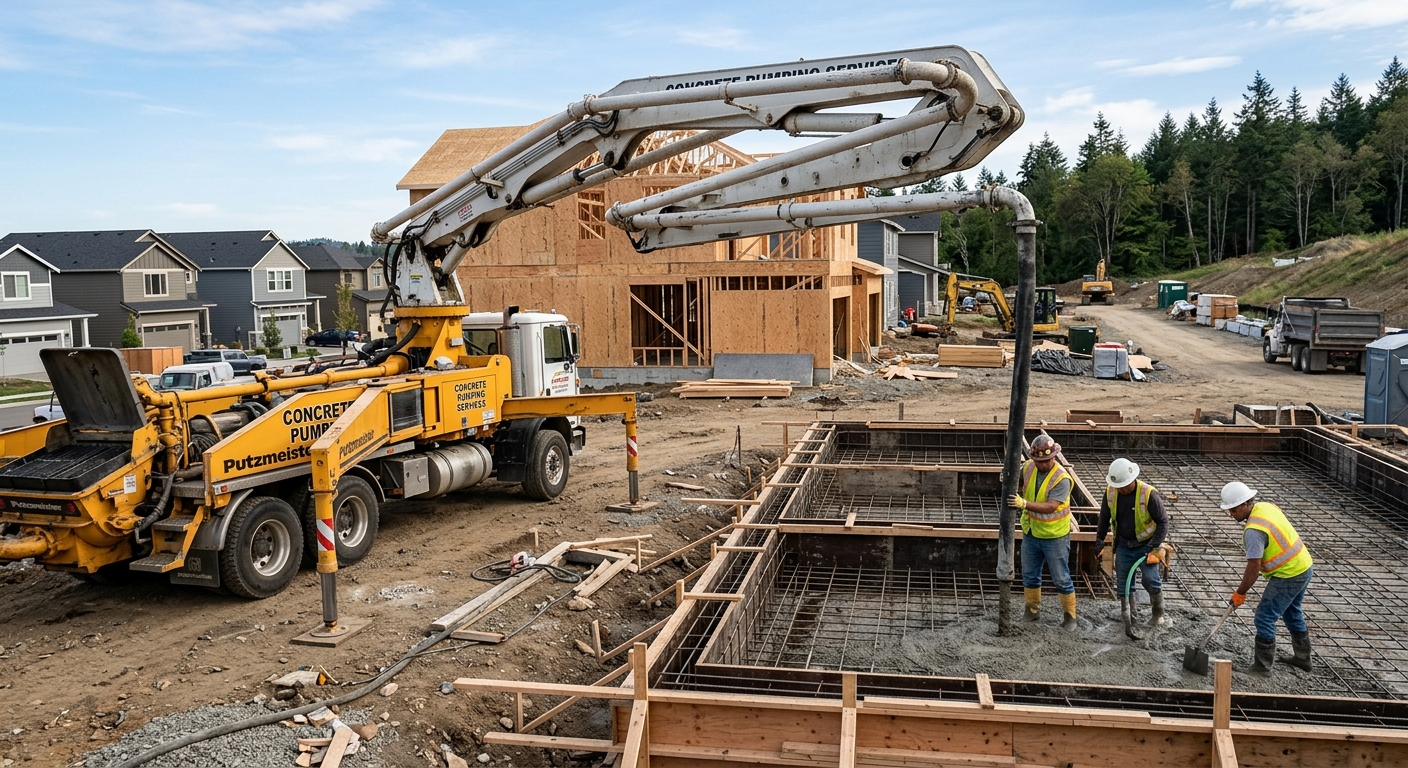
Concrete work options and costs in New Hamburg
In New Hamburg, most homeowners choose concrete because it holds up well under our local freeze–thaw rhythm when the base is built correctly and the mix is right for exterior exposure. With a population of 13,595 (Statistics Canada, 2021 Census), the town supports steady demand for driveway and flatwork upgrades, especially in established pockets where properties have been renovated over the years. New Hamburg’s housing stock is dominated by single-detached homes, which typically means driveways, patios, and walkways become part of routine exterior maintenance and seasonal curb-appeal projects. One advantage of working locally is you’ll often find crews already familiar with the ground conditions, drainage patterns, and how long concrete needs to cure in our shoulder seasons.
Concrete pricing in the Toronto economic region can vary noticeably because frost depth and freeze–thaw cycles drive deeper footings for structural work and more rigorous specifications for exterior slabs. In practice, this means contractors plan for adequate granular base, air-entrained mixes for exterior flatwork, and careful curing protection when temperatures trend toward 10 °C or below. Labour availability also tightens during the best pour window, which can affect turnarounds and the scheduling premium you see on quotes.
In New Hamburg, areas such as near the downtown corridor and along key residential streets often see repeat driveway work as families update access and drainage. If you’re comparing options, the table below helps you estimate the typical scope and realistic price bands for common concrete projects—then you can line-item your quote with specs that protect the concrete through winter.
| Application |
Typical Size |
Key Spec |
Finish Option |
Price Range |
| Concrete driveway (standard broom finish) |
400–550 sq. ft. |
Air-entrained exterior mix, compacted granular base, control joints |
Broomed surface |
$9,000–$15,000 |
| Exposed aggregate driveway |
400–550 sq. ft. |
Higher-quality mix + surface retarder, base and drainage matching exterior conditions |
Exposed aggregate finish |
$11,500–$18,500 |
| Stamped concrete driveway or patio |
300–500 sq. ft. |
Air-entrained mix, release agent, thicker section and joint plan |
Stamped pattern + color options |
$10,500–$19,500 |
| Plain concrete patio or walkway |
150–300 sq. ft. |
Compacted base, proper slope, air-entrained mix for exterior exposure |
Broom finish or smooth-trowel (as specified) |
$2,500–$7,800 |
| Garage floor (interior slab) |
300–520 sq. ft. |
Vapour barrier where required, proper sub-base, welded wire mesh or rebar as specified |
Smoother trowel finish, edges sealed/treated as needed |
$6,000–$14,500 |
| Foundation footings (structural, below frost) |
Per project |
Engineered dimensions, reinforced concrete below design frost depth (often ~1.2 m or more) |
Formed concrete |
$8,500–$20,500 |
Prices are estimates only and vary by project scope, site access and material selection.
What affects the price of concrete work in New Hamburg
In the Toronto economic region, it’s common to see quotes for the “same” concrete job land 30–50% apart once you look at the fine print. One contractor may price a thin slab on minimal base, while another prices to specification with deeper excavation, proper drainage, air-entrainment, and a joint/seal plan designed for Ontario’s freeze–thaw cycles. The labour rate and scheduling can also move quickly when the pour season gets busy, which is why two estimates can differ even if the finish looks identical.
Here’s what drives most of that spread in New Hamburg: structural footings must extend below the design frost depth to prevent frost heave and differential movement, and exterior slabs need an air-entrained mix to survive repeated freezing and thawing. Ontario typically requires footings around 1.2 m (about 4 ft) or more below grade for structural stability, and when frost is deeper in the spec, formwork and excavation increase. Exterior work is usually concentrated in warmer months so concrete cures reliably; when temperatures drop toward 10 °C or below, crews may need cold-weather curing precautions (insulating blankets or temporary heat), which add cost. Finally, de-icing salt can accelerate surface spalling if the mix and air content aren’t right—sealing and surface protection become more than “nice to have.”
Local conditions can raise or lower cost quickly. For example, a driveway replacement with poor drainage may require additional sub-drain work (cost up). A straightforward patio on firm, well-drained subgrade with easy truck access keeps labour efficient (cost down). If you choose a stamped driveway, the labour to prepare forms, stamp, and color can justify the premium—often aligning with the broader band of $24–$40 per sq. ft. for decorative work—while a plain broom-finished patio typically stays closer to $16–$26 per sq. ft. for exterior flatwork. Also, if your home is older and the existing base has shifted, removal and regrading can add thousands even before you order a more premium finish.
| Price Factor |
Why It Matters |
Cost Impact |
| Frost line depth — determines footing depth and form height |
Deeper footings reduce frost heave risk and differential movement |
Can add significant excavation and concrete volume (often the biggest driver on foundations) |
| Site preparation — excavation, grading, compacted granular base |
Concrete lasts when water is managed and sub-base is compacted |
Poor subgrade, extra hauling, or regrading can raise labour and disposal |
| Reinforcement — rebar or wire mesh requirement |
Controls cracking and supports loads, especially for driveways and garage slabs |
Adds material and labour; required on many slabs for longevity |
| Mix design — air-entrainment and compressive strength spec |
Air-entrainment helps resist freeze–thaw damage and spalling |
Higher spec or engineered mixes increase material cost |
| Finish type — broom vs. stamped vs. exposed aggregate |
Decorative finishes require additional steps, tools, and timing |
Decorative options usually increase cost versus plain broom finish |
| Pour size and concrete truck access to site |
Access constraints can require pumps, smaller loads, or more labour |
Pumping and traffic control can add thousands on tight lots |
| Cold-weather curing precautions — heating and blankets |
Protects early-age strength development when temps fall |
Higher overhead and material protection costs in shoulder seasons |
| Control joint pattern and sealing cost |
Joints manage shrinkage cracking; sealing improves resistance to salts/water |
Skipping or reducing this work can lower short-term cost but raise repair risk |
Permits & regulations in Ontario
In Ontario, structural concrete work generally requires a building permit because it affects the structural system of the home. That includes concrete footings, foundation walls, and grade beams, which must follow the Ontario Building Code requirements and typically align with engineered drawings reviewed by the municipality. If you’re planning foundation work, expect permit documentation and inspections as the work progresses—don’t rely on “we’ve done it before” assurances. For concrete flatwork—patios, walkways, and driveways—permits are often not required by default, but you may need approval if the project changes lot grading, alters drainage, or affects municipal requirements for impervious surface coverage or right-of-way impacts.
For New Hamburg homeowners, the safest approach is simple: confirm with the local authority before breaking ground, especially if the job involves excavation near services, changing slopes toward a neighbour, or reconstructing a driveway that ties into municipal pavement.
When verifying a contractor, start with their liability insurance and WSIB/WCB clearance. Ask for:
- A certificate of insurance showing adequate liability coverage.
- A WSIB clearance (or WCB coverage where applicable) confirming their workers are covered.
- Proof they carry appropriate coverage for subcontractors.
- References on similar-scale concrete projects in Ontario, including exterior flatwork.
Step-by-step, you can also check the contractor’s licensing/registration online through Ontario’s official resources, then compare what they claim in the quote to the paperwork you receive before work starts.
Getting concrete right in New Hamburg's freeze-thaw climate
Concrete fails in New Hamburg mainly when water gets into the system and can freeze inside the slab, base, or edges. Ontario’s freeze–thaw cycles are hard on exterior flatwork—especially driveways and patios—because repeated expansion and contraction can push stress through weak base prep and poorly designed mixes. The most common homeowner-visible issue is spalling at the surface: small pop-outs and rough areas that worsen when de-icing salts penetrate and the concrete lacks adequate air-entrainment.
To spec the job correctly, focus on five areas that matter most in our Toronto market climate: (1) base preparation with a compacted granular sub-base to the right depth and slope so water drains away; (2) mix design using air-entrainment (commonly in the 5–7% air range for exterior flatwork) and a minimum 32 MPa compressive strength target; (3) control joints placed to limit random cracking—then finished so joints don’t look “random” but actually work; (4) curing, aiming for at least 7 days under proper conditions, with extra protection if cold weather hits; and (5) sealing after the concrete has cured—typically 28 days post-pour—so it repels salt and moisture.
When comparing options, the price difference between plain and decorative isn’t just “looks.” For instance, if a stamped patio runs at the higher decorative band (often aligning with $24–$40 per sq. ft.), you’re paying for additional finishing steps and timing. If the base is still weak, however, you’ll still see early surface problems. A well-built broom-finished patio can cost far less (often around $16–$26 per sq. ft.) and last longer if engineered for drainage and freeze–thaw durability.
| Spec |
Why It Matters in New Hamburg |
What to Ask For |
Impact if Skipped |
| Compacted granular base (depth?) |
Prevents water pooling and reduces frost-related movement |
Granular base depth and compaction plan suited to your soil and frost conditions |
Settlement, premature cracking, and early surface failure |
| Air-entrained concrete mix (target air %?) |
Helps concrete resist freeze–thaw damage |
Air-entrainment in the 5–7% range for exterior flatwork (as specified) |
Higher risk of spalling and scaling each winter |
| Compressive strength (MPa rating) |
Strength supports loads and early-age curing resilience |
Minimum 32 MPa target (and curing method) |
Weaker slab, increased cracking and durability issues |
| Control joints (spacing per ACI guidelines) |
Manages shrinkage cracking to predictable lines |
Joint spacing and sawcut timing consistent with the slab geometry |
Random cracking and water infiltration through uncontrolled cracks |
| Minimum 7-day curing period |
Builds strength before traffic, moisture exposure, and cold snaps |
Protection plan if temps drop; confirm when the slab can be driven on |
Surface weakness and increased cracking risk |
| Penetrating sealer (when applied after cure) |
Reduces salt and moisture penetration |
Penetrating sealer applied after full cure (commonly at 28 days) |
Faster scaling/spalling and higher maintenance costs |
How to choose a concrete work contractor in New Hamburg
Choosing the right concrete contractor in New Hamburg starts with proof, not promises. In Ontario, you should verify three things: (1) appropriate licensing/registration for the scope of work, (2) liability insurance, and (3) WSIB/WCB clearance so you’re not exposed if something goes wrong on-site. Ask for a certificate of insurance (liability coverage limits should be shown clearly) and a current clearance letter/status from the relevant coverage organization. Then request proof that subcontractors—if any—are similarly covered. Finally, confirm the contractor has references for similar exterior flatwork and foundation-scale projects in Ontario’s climate.
Next, don’t accept a vague “lump sum” quote. Get 2–3 itemised written quotes with a breakdown for excavation/base prep, reinforcement, concrete supply, finish work, joint cutting, curing protection, and sealing (if included). The scope should explicitly state what’s excluded: removal and disposal of existing concrete, permit/paperwork support (if applicable), protection during cure, and any landscaping restoration. Ask for start date, estimated completion window, and a clear schedule for inspections where required.
For payments, avoid large upfront deposits. A common homeowner-safe approach is keeping upfront at 10–15% and holding back the remainder until the work is complete and clean-up is finished. Make sure you have a workmanship warranty in writing (duration, what’s covered, and any exclusions), and note whether product/manufacturer warranties are transferable to you.
- Written, itemised estimate (materials + labour) rather than “one price.”
- Concrete mix spec listed (air-entrainment and strength target).
- Base preparation depth and compaction method included.
- Joint layout explained (spacing, sawcut timing, and how joints are finished).
- Reinforcement details (mesh/rebar type, coverage, and placement height).
- Cold-weather plan if pours are scheduled near cooler temperatures.
- Curing steps and minimum cure time stated.
- Sealing plan stated (when applied and what type).
- Permit responsibility is clarified in the contract when structural work is involved.
- Removal/disposal of existing concrete is listed as included or excluded.
- Equipment/access plan for concrete truck delivery (and any pumping costs).
- Payment schedule and warranty terms documented in writing.
Concrete red flags I watch for in New Hamburg include: a quote that doesn’t specify air-entrainment or joint spacing, thin slabs or unclear base thickness, no curing/protection plan if weather turns cold, missing proof of liability insurance or WSIB/WCB clearance, and “cash discount” pressure to sign quickly without an itemised scope.
Frequently asked questions — concrete work in New Hamburg
How do I maintain concrete in New Hamburg's freeze-thaw climate?
For New Hamburg driveways, patios, and walkways, maintenance is mostly about limiting water and salt contact with the surface. Start by sweeping off grit and debris so salts work less aggressively at the surface. Use de-icing products carefully: rock salt is effective but can increase spalling risk when concrete isn’t properly air-entrained or when joints let water in. If your slab is properly built, the next best step is sealing—typically a penetrating sealer applied after full cure, commonly at 28 days post-pour. Reapply as the product manufacturer recommends (often every few years depending on traffic and winter use). If you see hairline cracks, keep an eye on joint edges and water pathways rather than trying to “patch everything” too early—stable, dry conditions help the patch last.
What causes concrete to spall in New Hamburg winters?
Spalling in Ontario winters is usually a freeze–thaw moisture problem, often made worse by de-icing salts. If exterior concrete is not air-entrained to the right target (commonly 5–7% for many exterior flatwork specs), freeze–thaw cycles can break down the surface as trapped water expands. Poor base prep can also contribute by letting water reach the slab and edges. Another common cause is skipping or botching the control joint plan—water then infiltrates random cracks instead of controlled joints. On top of that, curing shortcuts matter: if the slab isn’t protected and cured properly, early strength can be lower and the surface becomes more vulnerable. In New Hamburg, where winters are repeated freeze–thaw, the best “prevention spend” is usually choosing a properly specified exterior mix and confirming joints and sealing are included in the quote.
What is rebar and when is it required in Ontario?
Rebar is reinforcing steel placed inside concrete to help resist tensile stresses and control cracking under loads. In Ontario, whether rebar is required depends on the engineered design for the specific structural element (and sometimes the local building authority’s expectations for that project type). For foundation walls, footings, and many structural elements, reinforcement is typically mandated by the structural design. For exterior slabs like driveways and patios, reinforcement is often used when the slab is exposed to vehicle loads, when subgrade conditions are challenging, or when the design calls for it—commonly mesh for slabs and thicker-duty areas, or rebar in specific patterns for better crack control. A good contractor should explain why they recommend reinforcement based on your slab thickness, soil/base, and intended use, and they should show where it will be placed so it’s not just “thrown in.” Always match the contractor’s recommendation to the actual scope in the written contract.
How long does a concrete project take in New Hamburg?
Project duration in New Hamburg depends on size, access, and weather. Most exterior flatwork (like a driveway or patio) can be scheduled within days to a couple of weeks from site assessment to pour, but the cure time affects when you can use the area. Even when the concrete pour happens in a single day, it needs at least 7 days of proper curing for strength development before heavy use. Decorative work (stamped or exposed aggregate) adds time for surface prep, stamping, and finishing steps. Site preparation—excavation, base grading, and compacting granular base—can be a significant portion of the schedule, especially if you’re removing old concrete and hauling it away. In cold snaps near the season edge, crews may add heating blankets or protection, which can extend the timeline. As a benchmark, homeowners often budget more calendar time than they expect when scheduling around seasonal weather and contractor availability.
What is a concrete overlay and is it suited to New Hamburg?
A concrete overlay is a new concrete layer placed on top of an existing slab after preparation (usually grinding, cleaning, and sometimes patching). Overlays can be suited to New Hamburg when the existing concrete is generally sound—meaning it’s not extensively broken, badly settled, or failing structurally. They’re often used to improve appearance or correct minor surface issues without full demolition. However, overlays are not a fix for major drainage problems or widespread base failure; if water is migrating through cracks or the slab has moved, the new layer may crack in the same places. If you’re dealing with spalling, significant heaving, or a driveway that slopes incorrectly toward your garage, a full replacement with correct base drainage is often the longer-term solution. Overlay pricing varies, and you should compare it to the standard driveway band (for example, plain concrete driveway work often falls in the $18–$28 per sq. ft. range depending on site and spec) to confirm you’re not paying near replacement pricing without solving the root cause.
How do I seal concrete to protect it in New Hamburg?
Sealing helps protect concrete from moisture and de-icing salts by reducing penetration. In New Hamburg, sealing is most effective when applied at the right time: typically after full curing, commonly at 28 days post-pour, so the concrete has dried and the surface is ready to accept the product. Ask your contractor which sealer they use (penetrating sealers are common for exterior slabs) and confirm the prep steps—cleaning and ensuring the surface isn’t contaminated with dust or curing compounds. Sealer application should be done when weather is stable and there’s no rain forecast shortly after, since moisture can interfere with performance. If you’re choosing between finishing options, remember that sealing works best alongside proper exterior specs—air-entrainment, correct joints, and adequate base drainage. If your quote doesn’t mention sealing at all, it’s worth asking, because winter exposure in Ontario can be hard on unsealed surfaces.