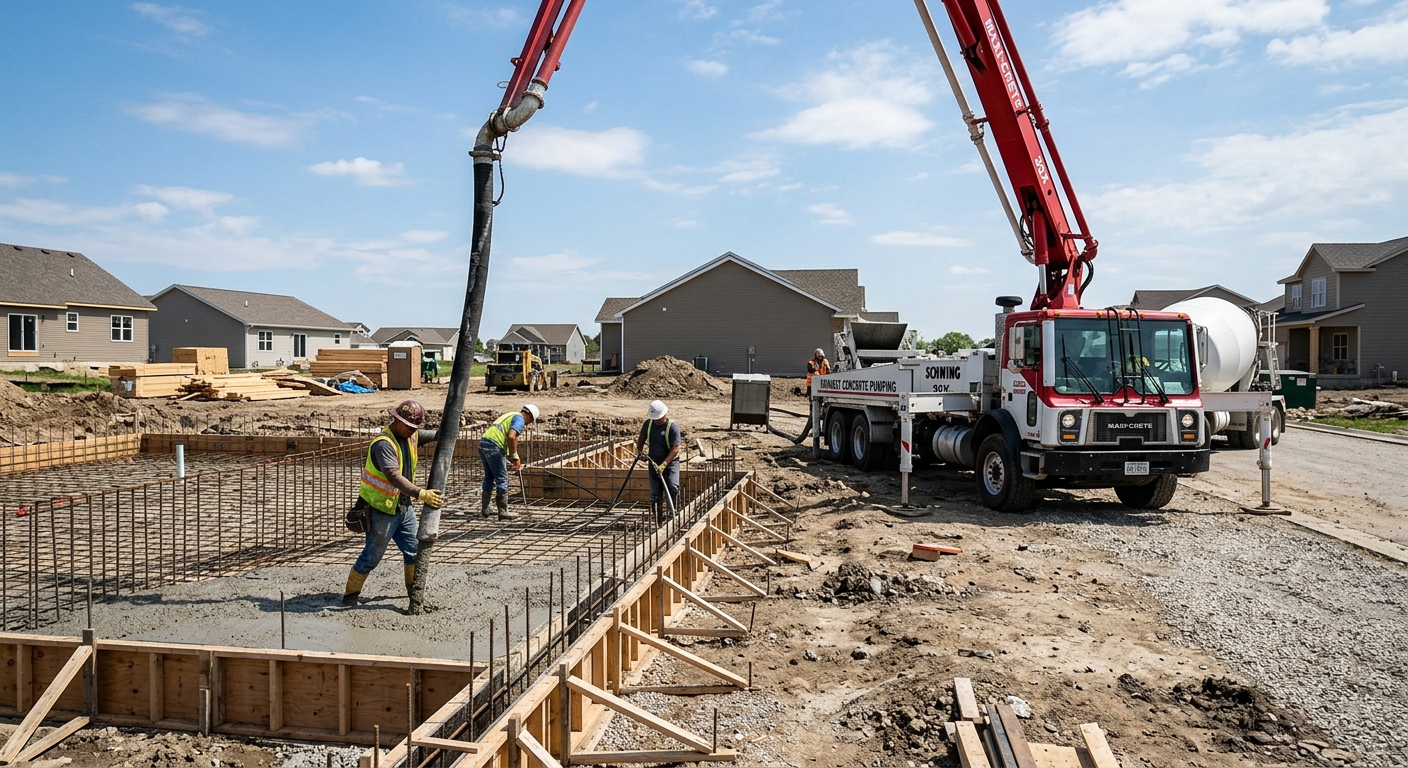
Concrete work options and costs in Moose Factory
Concrete work in Moose Factory is most often scheduled for the practical window when crews can excavate, place, and properly cure without cold-soak issues. With Moose Factory’s population of 1,807 people (Statistics Canada, 2021 Census), there’s a smaller local pool of trades versus the larger GTA hubs, so the best availability is typically in mid-to-late season. Most concrete flatwork demand comes from homeowners maintaining older residential lots and upgrading access—driveways, patios, and walkways that see salt, meltwater, and repeated freeze–thaw. The Toronto economic region’s concrete market is heavily shaped by frost depth and freeze–thaw cycling, which pushes specs toward deeper structural footings and more durable exterior mixes. In practice, it’s why many Ontario structural footing designs call for foundations to extend at least 1.2 m below grade, reducing frost heave and differential movement.
Those same climate drivers also affect driveways and slabs: contractors commonly use air-entrained concrete and plan control joints so cracking stays in predictable lines. In Moose Factory, the humid, often wet shoulder seasons mean your base preparation and drainage details matter as much as the pour day. If the site is tight or access is difficult, labour and equipment time increases—often the difference between a “typical” and an “extended” quote. For many homeowners around areas like the downtown and waterfront-adjacent neighbourhood pockets, driveways and patio replacements are especially common because these surfaces get heavy winter traffic and frequent shovelling. Below is a practical comparison of common concrete options and realistic price ranges to help you line up like-for-like quotes.
| Application |
Typical Size |
Key Spec |
Finish Option |
Price Range |
| Concrete driveway (standard broom finish) |
320–400 sq. ft. |
Air-entrained mix, compacted granular base, control joints |
Broom finish |
$6,500–$10,500 |
| Exposed aggregate driveway |
320–400 sq. ft. |
Proper base drainage, textured top using wash/expose process |
Exposed aggregate |
$8,000–$13,000 |
| Stamped concrete driveway or patio |
250–350 sq. ft. |
Air-entrained mix, stamped pattern, release agent and sealer plan |
Stamped & coloured |
$8,000–$14,000 |
| Plain concrete patio or walkway |
120–250 sq. ft. |
Sloped grading, compacted base, joints where required |
Float/smooth or light broom |
$2,000–$6,500 |
| Garage floor (interior slab) |
300–500 sq. ft. |
Vapour barrier (as required), compacted sub-base, thickness per use |
Plain trowel finish |
$4,800–$12,000 |
| Foundation footings (structural, below frost) |
Per linear ft. of footing |
Engineered size/steel, below-design frost, formwork and excavation |
Structural concrete only |
$180–$300 |
Prices are estimates only and vary by project scope, site access and material selection.
What affects the price of concrete work in Moose Factory
In Moose Factory, you can see quotes for the “same” concrete job vary by 30–50% across Ontario because the real drivers aren’t the finish name—they’re the hidden requirements: excavation quantity, base thickness, reinforcement needs, and the quality of the mix and curing plan. In the Toronto economic region, contractor availability is stronger in larger centres, but specifications still get tightened due to freeze–thaw. Exterior slabs and driveways need air-entrained concrete and well-drained base prep to keep saturated soils from expanding and contracting against the slab each winter. Ontario building practice also pushes structural footings to extend below the design frost depth (commonly at least 1.2 m in many designs), so formwork and digging aren’t optional.
Cold-weather realities also matter. When temperatures drop toward 10 °C or below, crews may need longer cure times and more protection (insulating blankets and, at times, temporary heat), which adds labour hours and materials. De-icing salt is another cost-shaping factor: it accelerates surface deterioration and spalling if the mix and sealing plan aren’t right. On the low end, a basic broom-finished patio might follow the typical $16–$26 per sq. ft. band. On the higher end, stamped concrete in the $24–$40 band costs more because the pattern, colouring, and sealing system are labour-intensive and require more careful finishing timing.
Concrete costs also swing with site conditions. For example, a driveway replacement on a wetter, softer subgrade can add thousands just for extra granular base and drainage detailing. Conversely, a straightforward backyard walkway removal and re-pour on firm, accessible ground can come in near the lower end because truck access and disposal are simpler.
| Price Factor |
Why It Matters |
Cost Impact |
| Frost line depth — determines footing depth and form height |
Footings must sit below design frost to prevent heave and differential movement |
Higher depth increases excavation, shoring and concrete volume (can add hundreds per linear ft.) |
| Site preparation — excavation, grading, compacted granular base |
Base density and slope control drainage and limit seasonal movement |
Wetter/soft subgrade can push base thickness and hauling up by several thousand dollars |
| Reinforcement — rebar or wire mesh requirement |
Controls cracking and improves load capacity for driveways and slabs |
Material and labour add cost; omission often leads to early deterioration |
| Mix design — air-entrainment and compressive strength spec |
Air entrainment helps resist freeze–thaw damage in exterior exposure |
Better mix can raise material cost, but typically reduces failure risk |
| Finish type — broom vs. stamped vs. exposed aggregate |
Finish complexity changes labour time and finishing steps |
Stamped/exposed usually lands higher—often in the $24–$40 sq. ft. band for decorative work |
| Pour size and concrete truck access to site |
Access limits placement speed and can require pumping or extra hand labour |
Tight sites can add equipment and labour charges (time-based) |
| Cold-weather curing precautions — heating and blankets |
Curing needs appropriate temperature and protection when it cools down |
May add daily costs for heaters/blankets and extend crew time |
| Control joint pattern and sealing cost |
Joints guide cracking and sealer helps resist salt/moisture damage |
Sealer and joint saw-cutting add line items but improve long-term performance |
Permits & regulations in Ontario
In Ontario, structural concrete work such as foundation walls, grade beams, and structural footing systems generally requires a building permit, and municipalities often expect engineered drawings for review depending on the scope. For Moose Factory homeowners, this is especially relevant if you’re underpinning, changing foundation sizes, adding a new bearing wall, or doing any work that affects structural load paths. Concrete flatwork—like patios, walkways, and driveways—usually does not require a permit by itself. However, it can trigger permit considerations if it changes lot grading or drainage, alters impervious surface coverage limits, or involves municipal right-of-way conditions (for example, work that impacts the edge of a driveway apron or municipal boulevard constraints).
To verify your contractor properly in Ontario, do it step-by-step before scheduling a pour. First, confirm the contractor carries current liability insurance by asking for a certificate of insurance and ensuring the policy is active and includes the correct business entity name. Second, check WSIB/WCB coverage: request either a clearance letter or proof of registration/coverage, depending on the contractor’s status. Third, confirm references on similar-scale projects—especially exterior freeze–thaw prone work like driveways and slabs. Finally, for structural jobs, ask who is handling permit submissions and whether drawings are engineered and reviewed as required. If any of these items are missing or delayed, that’s a practical red flag—especially in an area where weather windows can be short and rework is expensive.
Getting concrete right in Moose Factory's freeze-thaw climate
Concrete failures in Moose Factory are almost always tied to three things: moisture, movement, and curing. Moisture gets in when base prep or drainage is inadequate; movement happens during freeze–thaw when water expands; and curing suffers when temperature drops too quickly during placement. The fix starts before the truck arrives. Proper base preparation means compacted granular sub-base to the right depth for local soil conditions so the slab isn’t sitting on soft, water-holding material. Next, the mix design should be air-entrained for exterior flatwork—commonly aiming for about 5–7% air content—so the freeze–thaw stresses are absorbed by microscopic air voids rather than cracking the concrete.
Control joints are another make-or-break detail. You want joints spaced to limit random cracking and to keep shrinkage cracks in predictable lines that can be managed. For curing, plan for at least 7 days under appropriate conditions; if it’s cool, protection becomes critical to maintain strength gain. Finally, sealing—typically a penetrating sealer applied after the concrete has cured (commonly around 28 days)—helps repel meltwater and de-icing salts that would otherwise work into the surface over time.
In the Toronto market, decorative work is often priced above plain concrete for a reason: stamped slabs require careful finishing timing and consistent curing, and they’re frequently paired with a sealing routine. For example, if a broom-finished walkway lands near the $16–$26 per sq. ft. band, an equivalent stamped option may fall in the $24–$40 range; paying more is usually justified when the contractor also delivers superior base prep, joints, and a proper sealing schedule—otherwise the extra money won’t protect the slab from spalling.
| Spec |
Why It Matters in Moose Factory |
What to Ask For |
Impact if Skipped |
| Compacted granular base (depth?) |
Limits water build-up and reduces frost-related movement under the slab |
Granular sub-base depth and compaction testing method (or documented compaction) |
Premature settlement, uneven cracking and early surface scaling |
| Air-entrained concrete mix (target air %?) |
Exterior freeze–thaw resistance depends on stable microscopic air voids |
Target air content around 5–7% for exterior flatwork (per mix design) |
Spalling and scaling after winters, especially with salt exposure |
| Compressive strength (MPa rating) |
Strength gain affects durability and resistance to loading and wear |
Minimum 32 MPa compressive strength and confirmation of mix design |
Soft surface, increased cracking, and faster deterioration |
| Control joints (spacing per ACI guidelines) |
Controls where shrinkage and movement cracks appear |
Planned joint spacing for your slab size and thickness |
Random cracking that’s harder to repair cosmetically and functionally |
| Minimum 7-day curing period |
Proper curing enables strength development before freeze–thaw stresses |
How they protect curing in cool conditions (blankets/cover strategy) |
Reduced strength, surface defects, and higher failure risk |
| Penetrating sealer (when applied after cure) |
Reduces salt and moisture penetration through the top surface |
Sealer type and timing—commonly after full cure, around 28 days |
Accelerated surface wear and more rapid spalling in winter |
How to choose a concrete work contractor in Moose Factory
Choosing the right concrete contractor in Moose Factory is mostly about verifying proof, not just picking the lowest line. Start with Ontario checks. Ask for a current certificate of liability insurance (ensure it names the correct company and is active for the job dates). Then request WSIB/WCB clearance or proof of coverage—don’t accept “we’re covered” without documents. Next, get 2–3 written quotes that are itemised by labour and materials (not a single lump-sum that hides what’s included). For a driveway or patio, insist the quote specifies base preparation, reinforcement, mix design (air-entrainment), thickness, jointing approach, and whether disposal is included. If a permit is required for structural scope, clarify who pulls it and whether engineering review costs are included.
Warranty matters in real terms. Ask for a workmanship warranty length, what exact defects it covers (spalling, scaling, cracking within reason, settling), and whether there’s a product/manufacturer warranty for specific materials like sealers. Also confirm if warranties are transferable if you sell the property. For payment, a common safe approach is to never pay more than 10–15% upfront; hold back a portion until all cuts, sealers, cleanup, and final grade are complete. Finally, get a written start date and completion estimate, including what happens if weather affects curing—because in Moose Factory’s freeze–thaw environment, schedule slippage can change the outcome.
- Request proof of Ontario liability insurance before signing.
- Ask for WSIB/WCB clearance or coverage proof and keep it with your contract.
- Confirm the quote lists thickness and reinforcement method (mesh vs. rebar where applicable).
- Ensure the scope includes excavation and compacted granular base (with depth noted).
- Require an air-entrained exterior mix specification for outdoor slabs and driveways.
- Check joint layout: saw-cut timing and spacing plan.
- Confirm curing protection expectations for cool nights.
- Ask if sealing is included (penetrating sealer) and when it will be applied.
- Review what’s excluded: old concrete disposal, haul-away, topsoil replacement, and backfill.
- Verify truck access plan or whether concrete pumping is included.
- Get a written warranty statement in plain language.
- Use a payment schedule that leaves you holding back funds until completion.
Concrete red flags in Moose Factory include: refusing to provide WSIB/WCB proof, vague quotes that don’t mention base depth or reinforcement, mixing “interior-only” practices into exterior work (especially air-entrainment), no plan for curing protection when it’s cool, and asking for large upfront payments without a clear schedule and scope breakdown.
Frequently asked questions — concrete work in Moose Factory
How do I seal concrete to protect it in Moose Factory?
Sealing in Moose Factory is about keeping meltwater and de-icing salts from penetrating the surface pores. For most exterior flatwork, the practical approach is to let the concrete cure fully first—often around 28 days—then apply a penetrating sealer designed for concrete. Don’t seal too early; trapping moisture can cause haze and reduced performance. Before sealing, clean the slab thoroughly (no paint/grease residue) and make sure it’s dry enough for the sealer to absorb properly. In the Toronto economic region, freeze–thaw and salt exposure are key reasons sealing is worth doing; the sealer is not a substitute for correct air-entrainment, but it can slow surface scaling and spalling.
What is the difference between concrete and cement?
Cement is a component inside concrete. In simple terms, cement is the powder (usually Portland cement) that reacts with water to bind everything together. Concrete is the full engineered mixture: cement plus water, aggregates (sand and stone), and—when the work is exterior—often an air-entrainment component to help resist freeze–thaw damage. When you get a quote in Ontario (including Moose Factory), the important details aren’t “brand of cement” so much as the mix design: the target compressive strength (commonly minimum 32 MPa for many exterior specs) and the air content appropriate for freeze–thaw exposure. A good contractor will tell you the mix parameters, not just the label.
How much does concrete work cost in Moose Factory?
For Moose Factory homeowners, budgeting usually starts with per-area price bands similar to the Toronto economic region, then adjusts for site conditions like excavation volume, drainage needs, and truck access. As a quick reference, a plain concrete patio or walkway typically falls in the $16–$26 range, while stamped and decorative concrete is commonly $24–$40 per sq. ft. for the decorative portions. Driveway costs land higher because the slab is thicker and carries more vehicle load; a standard concrete driveway is often around $18–$28 per sq. ft. for a typical scope. Structural footing work is billed differently—often quoted per linear foot—commonly around $180–$300. Your exact price depends on base depth, reinforcement, and whether cold-weather curing precautions are required.
How deep must footings be for Moose Factory's frost line?
In Ontario, structural footings must extend below the design frost depth to reduce frost heave and differential movement. A common guideline used in many designs is at least about 1.2 m below grade (roughly 4 ft), but the exact requirement comes from your engineered foundation design and site conditions. The Toronto economic region’s concrete specs are influenced by freeze–thaw cycles, so contractors plan excavation depth, form height, and concrete volume around that below-frost requirement. In practice for Moose Factory projects, you should not “guess” footing depth based on online advice—ask your engineer (or your contractor for the documentation they’re following) and ensure it matches the permit/structural drawings.
Why does concrete crack in Moose Factory and how is it prevented?
Concrete cracks mainly because it shrinks as it cures and because it moves with seasonal temperature and moisture changes. In Moose Factory, freeze–thaw makes these movements more noticeable, especially if water gets into the base or if the mix isn’t properly air-entrained. Prevention isn’t about stopping all cracks—it’s about controlling where they appear. The most effective approach is correct base preparation and drainage, an exterior air-entrained mix, proper thickness, and a planned control joint layout. Control joints should be placed to guide shrinkage and movement cracking into straight, repairable lines. The contractor should also plan curing protection; rushed cold pours are a common contributor to surface defects. If you seal at the right time, you also reduce salt-related deterioration that can make cracks worse.
Stamped vs broom-finish concrete — cost difference?
Stamped concrete costs more than broom-finish because it requires extra labour, timing, and materials. Broom-finish typically focuses on a straightforward texture and reliable joints. Stamped work adds form-and-pattern installation, colouring/release processes, and often an enhanced sealing routine to protect the surface. In the Toronto economic region price bands used for Moose Factory budgeting, stamped and decorative concrete commonly lands around $24–$40 per sq. ft., while plain driveway or slab work is usually lower—often around $18–$28 per sq. ft. for standard concrete driveway scopes. Paying the premium is usually justified when the contractor also gets the basics right: compacted granular base, correct exterior air-entrainment, control joints, and proper curing. If those aren’t done, the decorative finish can still fail just like any other slab.