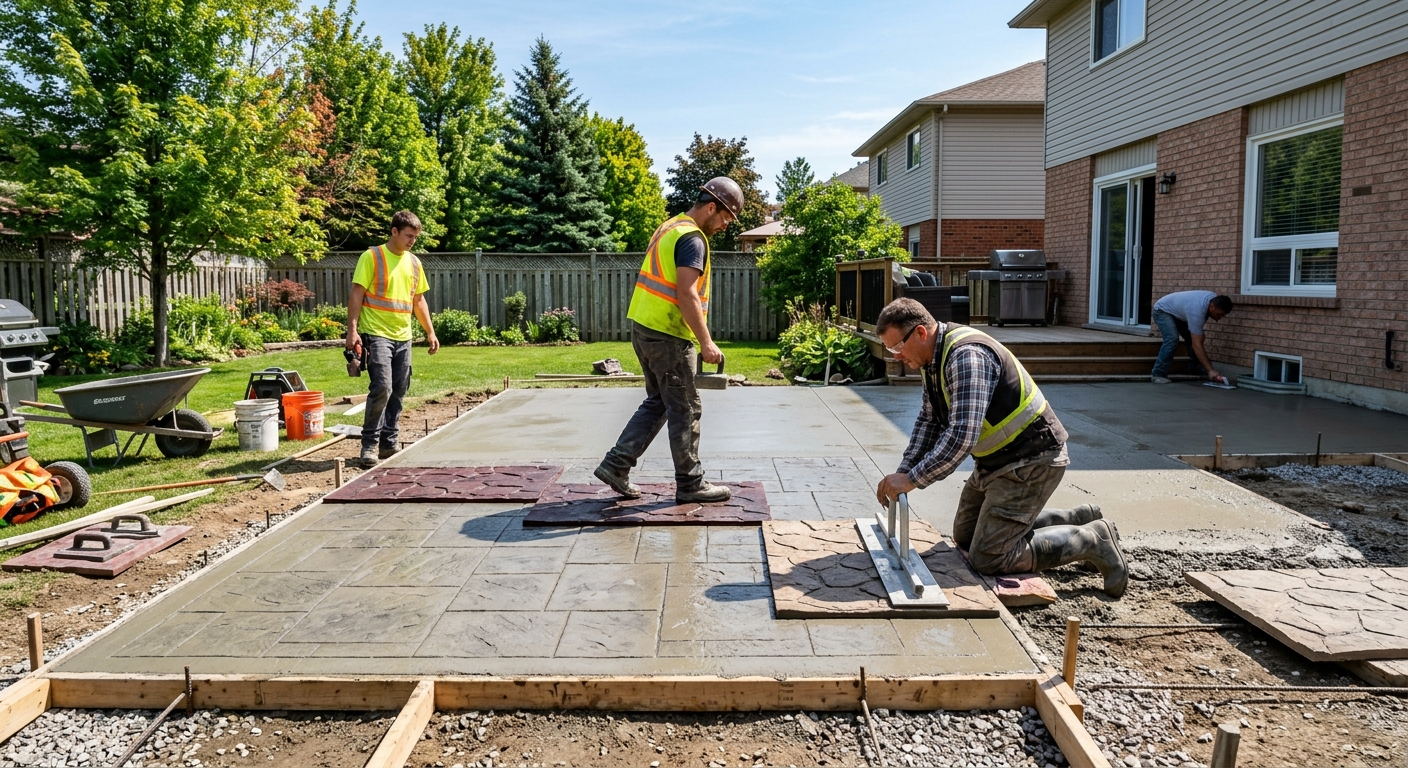
Concrete work options and costs in Mount Pleasant West
In Mount Pleasant West, concrete jobs tend to be busiest in the yards and laneways around Yonge–Eglinton, Oriole Park and the Lawrence Ave corridor, where driveway replacements and patio refreshes show up on most renovation schedules. With a total population of 29,658 (Statistics Canada, 2021 Census), the Toronto housing market keeps contractors working year-round on a steady mix of new builds, infills, and replacement work. Most concrete flatwork demand comes from established neighbourhoods where homeowners want longer-lasting exterior surfaces—especially driveways, patios and walkways—plus older homes that may be seeing settlement or surface deterioration. That’s also why concrete pricing here is often a little more “spec-driven” than in smaller towns: small differences in base prep, air-entrainment and jointing can swing the durability—and the final quote.
Toronto’s freeze–thaw rhythm directly affects concrete cost. Structural pours must be planned around Ontario frost protection, and exterior flatwork has to resist winter expansion and contraction. Contractors in the Toronto economic region typically concentrate exterior concrete work in warmer months for curing performance, then add protection measures if temperatures drop toward 10 °C or below. Even when your visible finish looks similar, the mix design and prep work behind it can change the price by a noticeable margin compared with a “low-spec” bid.
Below is a practical comparison of common options you’ll see in Mount Pleasant West, with typical sizes and the key specs homeowners should ask about before you sign.
| Application |
Typical Size |
Key Spec |
Finish Option |
Price Range |
| Concrete driveway (standard broom finish) |
300–450 sq. ft. |
Air-entrained mix; compacted granular base; control joints |
Broom finish, light sealer |
$18,000 – $28,000 |
| Exposed aggregate driveway |
300–450 sq. ft. |
Proper base + air-entrainment; surface retarder + wash timing |
Exposed aggregate (slip-resistant) |
$22,000 – $32,000 |
| Stamped concrete driveway or patio |
200–400 sq. ft. |
Air-entrained mix; integral colour; control joints |
Stamp mats with release agent |
$24,000 – $40,000 |
| Plain concrete patio or walkway |
150–300 sq. ft. |
Compacted base; air-entrained concrete; jointing |
Broom or smooth trowel top; simple edging |
$16,000 – $26,000 |
| Garage floor (interior slab) |
400–600 sq. ft. |
Vapour barrier; proper base; typical reinforcement |
Steel-trowel or broom finish |
$18,000 – $30,000 |
| Foundation footings (structural, below frost) |
~40–100 linear ft. |
Engineered sizing; excavation to frost depth; reinforced footing |
Structural concrete, no decorative finish |
$180 – $300 |
Prices are estimates only and vary by project scope, site access and material selection.
What affects the price of concrete work in Mount Pleasant West
In Toronto, two quotes that look like the same “driveway replacement” can still vary by 30–50% once you total the real scope. The biggest reason is that concrete pricing isn’t only about the finished surface; it’s mostly about what’s underneath and what’s required to survive our winters. In Mount Pleasant West, frost protection and freeze–thaw cycles dictate every spec: structural footings must extend below the design frost depth (Ontario commonly targets roughly 1.2 m or more below grade) to prevent frost heave and differential movement. For exterior slabs—driveways, patios and walkways—contractors typically use air-entrained mixes so the concrete can tolerate repeated winter expansion and contraction. When temperatures drop toward 10 °C or below, the reliable pour season shortens, and cold-weather curing precautions (insulation blankets, heating, longer protection windows) add labour and materials.
Local soil and drainage also swing costs. For example, if your property has saturated clay or poor grading, the contractor may need additional excavation and deeper granular base to keep water from pooling against the slab—this is a major reason “cheap” bids rise once the site is opened. Conversely, if you’re replacing an existing driveway with decent base conditions and good site access on a wide street frontage, pricing can land closer to the lower end of the concrete driveway band (often around $18,000 – $28,000 for a typical scope). If you choose stamped finishes, you’re paying for higher material labour and tighter finishing control—those projects commonly align with the stamped/decorative band (roughly $24,000 – $40,000 for driveways and patios depending on size and complexity).
Finally, consider neighbourhood context: older housing stock across Mount Pleasant West is more likely to have buried services, uneven driveway edges, or prior cracking lines that require careful saw-cut removal and regrading. Those details translate into real dollars on excavation, disposal, and rework.
| Price Factor |
Why It Matters |
Cost Impact |
| Frost line depth — determines footing depth and form height |
Footings must be placed below design frost depth to limit frost heave. |
Higher depth increases excavation, formwork height, and concrete volume. |
| Site preparation — excavation, grading, compacted granular base |
Most driveway failures start with weak or waterlogged base. |
Heavy excavation/disposal and additional base can add significant labour. |
| Reinforcement — rebar or wire mesh requirement |
Controls cracking and improves slab performance under load. |
Material and install time increase cost, especially on larger areas. |
| Mix design — air-entrainment and compressive strength spec |
Air entrainment helps resist freeze–thaw damage; strength supports durability. |
Better mix and testing can cost more but reduces future spalling. |
| Finish type — broom vs. stamped vs. exposed aggregate |
Surface detailing affects labour intensity and timing windows. |
Stamped/exposed finishes typically add material and finishing hours. |
| Pour size and concrete truck access to site |
Access affects how concrete is placed and how long pours take. |
Limited access can mean smaller loads, extra labour, or pumping costs. |
| Cold-weather curing precautions — heating and blankets |
Temperature control helps concrete reach proper strength and avoids surface issues. |
Adds labour, materials, and schedule constraints near shoulder season. |
| Control joint pattern and sealing cost |
Jointing controls cracking; sealing reduces water and de-icer impact. |
Better joint layout and proper sealing add value and a small cost increase. |
Permits & regulations in Ontario
In Ontario, structural concrete work generally needs the proper permitting pathway. If your project involves structural footings, foundation walls, or grade beams, expect a building permit and often engineered drawings that the municipality reviews. Concrete flatwork—like driveways, patios and walkways—usually doesn’t require a permit by default, but it can become permit-relevant if it affects lot grading, triggers concerns about impervious surface coverage, or impacts a municipal right-of-way. In Mount Pleasant West, it’s smart to confirm with your local authority before breaking ground, especially if you’re changing drainage patterns or raising the profile near the property line.
For contractor compliance, a homeowner should verify three things step-by-step. First, check the Ontario contractor licence/registration status on the appropriate online registry (the exact program name depends on the trade class). Second, ask for a Certificate of Insurance for liability—it should include the coverage dates and list you as the certificate holder if required by your contract. Third, confirm WSIB/WCB coverage (for workers involved in the project). If a contractor provides a clearance letter or current standing, request a copy for your records.
Also, request references from similar-scale concrete jobs in the Toronto region, then verify they completed both base prep and the exterior freeze–thaw durability specs you’re expecting.
Getting concrete right in Mount Pleasant West's freeze-thaw climate
Mount Pleasant West concrete is constantly challenged by Ontario’s freeze–thaw cycle, wet springs, and de-icing salts. Concrete “looks fine” early, but the failures you notice later—scaling, spalling, and random cracking—usually trace back to base problems, insufficient air entrainment, or rushed curing. To spec the job correctly, start with base preparation: the contractor should excavate to the correct depth and install a well-compacted granular sub-base so water can’t sit under the slab. Next, lock in mix design: for exterior flatwork, air-entrainment is critical (typically targeting 5–7% air content) and the concrete should meet a minimum strength requirement (often 32 MPa for exterior slabs, as specified by the project design/scope).
Third, require a sensible control joint layout so shrinkage and temperature movement crack in predictable locations rather than randomly. Fourth, insist on proper curing: a common benchmark is minimum 7 days under proper conditions. When pours land near colder nights, discuss cold-weather protection so the slab gains strength before freeze risk. Fifth, plan for sealing: a penetrating sealer is typically applied after the concrete has cured—often around 28 days—to help repel de-icing water and reduce deterioration.
If you’re deciding between options, use real numbers: a standard driveway might fall near the lower concrete driveway band, while stamped work can add labour-intensive finishing and colour steps. In most Mount Pleasant West projects, spending for the correct durability specs is the “must,” while the stamp pattern is the “preference.” Paying the difference between a basic broom finish and decorative stamped finish is justified when you want the look—and the contractor proves they’ll still build the base and air-entrainment needed for winter.
| Spec |
Why It Matters in Mount Pleasant West |
What to Ask For |
Impact if Skipped |
| Compacted granular base (depth?) |
Prevents water retention and supports slab through freeze–thaw movement. |
Confirm base depth, material type, and compaction method (e.g., plate compactor). |
Settlement and pumping lead to cracking and early surface breakdown. |
| Air-entrained concrete mix (target air %?) |
Creates resistance to freeze–thaw scaling and spalling in Ontario winters. |
Ask for target air content (commonly 5–7% for exterior flatwork) and mix documentation. |
Higher risk of spalling/scale after winter exposure and de-icer contact. |
| Compressive strength (MPa rating) |
Strength supports long-term durability and load performance. |
Confirm minimum strength spec, commonly 32 MPa for exterior slabs (per scope). |
Reduced performance and faster wear under traffic and thermal stress. |
| Control joints (spacing per ACI guidelines) |
Controls where cracks form during shrinkage and temperature swings. |
Request joint spacing/layout plan before pour and confirm saw-cut timing. |
Random cracking that’s unsightly and can open pathways for water. |
| Minimum 7-day curing period |
Cold snaps and wet weather can stall strength gain without protection. |
Confirm curing method and protection plan if temperatures drop. |
Weak surfaces, increased scaling risk, and reduced overall strength. |
| Penetrating sealer (when applied after cure) |
Helps repel water and de-icing chemicals that accelerate surface damage. |
Schedule sealer after full cure—commonly about 28 days post-pour—using an exterior-grade product. |
Faster deterioration, increased staining, and higher likelihood of scaling. |
How to choose a concrete work contractor in Mount Pleasant West
Start by verifying Ontario compliance the same way you’d verify any major building trade. Ask for the contractor’s Ontario licence/registration (for the relevant concrete/foundation scope), then request a Certificate of Liability Insurance showing active coverage during your project dates. Next, confirm WSIB/WCB coverage for their workers; a clearance letter or current status documentation is typically provided when requested. If a contractor won’t share proof up front, treat that as a red flag.
Then get 2–3 itemised written quotes. The best quotes break pricing into labour and materials components (excavation, granular base, reinforcement, concrete supply/mix, forms, finishing, joints, sealing, and disposal). Avoid lump sums that don’t show what’s included—especially around demo and hauling, which can change quickly after the slab is removed. Also confirm whether the quote includes permits (if required), inspection requirements for structural work, and any municipal constraints for grade changes.
Review warranty terms carefully: you want a workmanship warranty length in writing, plus clear product/manufacturer warranty details for any sealer or specialty finishes. Confirm whether warranties are transferable to the next homeowner. Payment schedule should stay conservative—typically no more than 10–15% upfront; hold back a portion until the job is complete and cleaned up. Finally, insist on a written timeline with start date and completion estimate, because GTA pours often shift around weather and curing windows.
- Ask whether the contractor uses air-entrained concrete for all exterior flatwork in Ontario.
- Confirm footing depth is below design frost depth for structural scopes.
- Request a granular base spec: thickness, material type, and proof of compaction.
- Verify reinforcement plan (rebar/wire mesh) matches the slab design and thickness.
- Ask for control joint spacing and when joints will be cut/sawed.
- Confirm curing method and protection plan for cold nights near shoulder season.
- Make sure demolition and disposal are clearly included (or listed as an allowance).
- Check concrete truck access logistics and whether pumping/removal tools are priced.
- Insist on a written scope for sealing: product type and timing after cure.
- Clarify warranty start date and what work is covered vs excluded.
- Use itemised quotes, not a single “all-in” number, especially for stamped work.
- Schedule a site visit before quoting so excavation realities aren’t discovered later.
Concrete contractor red flags in Mount Pleasant West include: quotes that don’t mention air entrainment or jointing, unclear base-depth details, asking for large upfront payments beyond typical levels, refusing to provide WSIB/WCB and liability proof, and promises to pour and finish without discussing cold-weather curing protection.
Frequently asked questions — concrete work in Mount Pleasant West
How do I compare concrete quotes?
In Mount Pleasant West and across Ontario, the fastest way to compare quotes is to match apples to apples: same thickness, same base prep, same reinforcement, and the same mix spec. Ask each contractor to list concrete quantity and air-entrainment (exterior flatwork should be designed for freeze–thaw). Confirm control joint type and spacing, and whether saw-cut timing is included. Make sure demo and disposal are itemised—this is where many “low” bids narrow once removal is complete. For pricing context, a basic driveway often lands in the concrete driveway band (roughly $18,000 – $28,000 depending on size and site access), while stamped finishes typically fall closer to the decorative band (around $24,000 – $40,000). If one quote is far outside the band, it’s worth asking what durability specs were reduced to get the lower number.
Can concrete be poured in cold weather in Mount Pleasant West?
Yes, concrete can sometimes be poured in cold weather in Mount Pleasant West, but it requires a plan—not just “pour and hope.” Ontario’s freeze–thaw cycle makes early strength gain critical, especially when temperatures approach 10 °C or below overnight. Reputable GTA contractors use cold-weather curing precautions such as insulating blankets, temporary heating, and longer protection periods so the concrete reaches sufficient strength before freeze risk. Ask how they measure conditions (air temperature, slab temperature), what protection they provide for the first 24–72 hours, and whether they adjust the mix or curing approach to meet the spec. If the job requires structural footings, your engineered requirements and permit conditions should align with the cold-weather schedule. If a contractor can’t explain curing steps in detail, that’s a sign to reschedule into warmer months when possible.
How do I maintain concrete in Mount Pleasant West's freeze-thaw climate?
Maintenance is mostly about water control and protecting the surface from de-icers. For exterior slabs (driveways, patios, walkways) in Mount Pleasant West, sealing is a practical step once the concrete has fully cured—often around 28 days after the pour. Use a penetrating sealer designed for freeze–thaw exposure and winter conditions. In winter, avoid over-salting: use recommended ice melt products sparingly, and don’t let water repeatedly pool on the slab (grading and drainage matter). Clean spills and organic debris promptly, since stains can become rough surfaces that wear faster. During seasonal transitions, keep an eye on hairline cracks or joint gaps—small issues are easier to address early than later spalls. If you installed joints and used proper air-entrained concrete, your maintenance burden is usually lower, and your driveway holds up better over the long run.
What causes concrete to spall in Mount Pleasant West winters?
Concrete spalling in Ontario winters is commonly tied to freeze–thaw damage plus water and de-icer exposure. The most frequent root cause is inadequate air entrainment in the mix or inconsistent air content from a poor spec. When water gets into the concrete and freezes repeatedly, it expands and pressures the surface, leading to scaling and spalling. Another contributor is insufficient base prep or poor drainage, which allows water to stay near the slab. Thin slabs, missing or improperly spaced control joints, and rushed curing can also leave the surface more vulnerable. Mount Pleasant West experiences wet fall and spring conditions followed by temperature swings, which increases water infiltration cycles. If your contractor doesn’t clearly specify air-entrained mix and control joints—and doesn’t handle curing properly—you’ll see symptoms sooner, even if the finish looks good on day one.
What is rebar and when is it required in Ontario?
Rebar is steel reinforcement embedded in concrete to improve strength and control cracking under load and movement. In Ontario, whether rebar is required depends on the structural design and the scope. For structural elements like foundation footings and foundation walls, reinforcement requirements are typically determined by engineering (and included in permit drawings for structural work). For exterior slabs such as driveways and patios, reinforcement may be used based on thickness, soil conditions, and design loads—some projects use wire mesh, rebar, or both. The key is that reinforcement isn’t a “one-size-fits-all” decision; it should match the slab thickness, base support, and expected traffic/loading. In Mount Pleasant West, where freeze–thaw and drainage matter, reinforcement works best when paired with proper base preparation, adequate air-entrained concrete, and well-planned jointing.
How long does a concrete project take in Mount Pleasant West?
Timelines vary based on size, access, and weather, but most residential concrete projects follow a predictable rhythm. Demo and excavation typically take 1–3 days depending on how much removal is needed and how complex the regrading is. Base prep and forms often require another 1–3 days. The pour itself usually happens within a single day, but stamped and exposed-aggregate work may involve extra finishing steps and tighter timing windows. Curing drives the calendar: even though you may be able to walk on the slab sooner, exterior work often needs at least 7 days of proper curing conditions for strength development, with full performance continuing beyond that. Sealing is commonly scheduled after the concrete cure window (often around 28 days). If the contractor is protecting the pour against colder nights, that can extend the schedule. The best quotes include a written completion estimate and weather contingency plan for Mount Pleasant West.