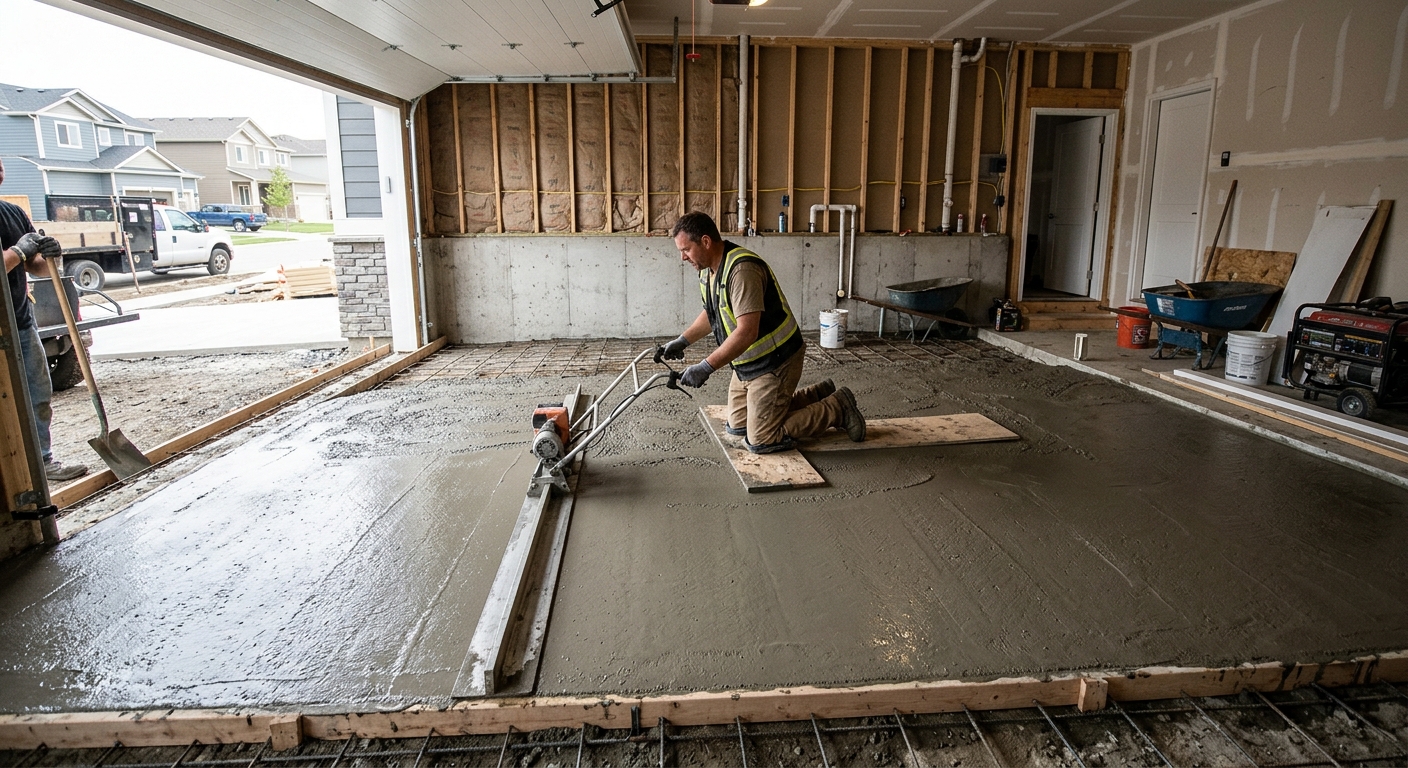
Concrete work options and costs in Malvern
Concrete work in Malvern is a year-round home upgrade topic because driveways, patios, and walkways are where Ontario’s freeze–thaw cycle shows up first. With a 2021 population of 43,794 in the Malvern area (Statistics Canada, 2021 Census), the Toronto market is busy enough that scheduling can matter as much as price. Many homes in this neighbourhood market are detached and semi-detached, which typically means more exterior flatwork per property—especially around entrances, side yards, and rear patio areas. That demand is strongest in and around the Malvern Town Centre corridor, where new infill and ongoing renos keep crews running.
Pricing in the Toronto economic region is strongly shaped by how deep contractors must set structural footings and how they manage curing. Ontario building practice generally requires exterior structural supports to extend below the design frost depth to reduce frost heave and differential movement, and it drives excavation and formwork costs. For slabs and walkways, GTA contractors typically specify air-entrained mixes and appropriate thickness, plus control joints sized to manage random cracking. When temperatures drift toward 10 °C or below during shoulder seasons, curing protection (insulating blankets, sometimes temporary heat) can add labour and material costs, and the pour season can feel shorter for crews.
Below are realistic Malvern cost ranges by application, so you can compare quotes apples-to-apples before you talk finish options and site conditions. Use the table as your baseline, then refine once you know access, soil conditions, and whether the job is exterior flatwork or structural work.
| Application |
Typical Size |
Key Spec |
Finish Option |
Price Range |
| Concrete driveway (standard broom finish) |
400 sq. ft. (approx. 20’ x 20’) |
Air-entrained mix, compacted granular base, control joints |
Broom finish |
$7,200–$11,200 |
| Exposed aggregate driveway |
400 sq. ft. (approx. 20’ x 20’) |
Air-entrained mix, base prep and finishing timing |
Exposed aggregate (surface wash) |
$10,000–$14,800 |
| Stamped concrete driveway or patio |
300 sq. ft. driveway/patio |
Reinforcement as needed, control joints, integral colour |
Stamped pattern + colour |
$10,200–$15,000 |
| Plain concrete patio or walkway |
200 sq. ft. (approx. 10’ x 20’) |
Air-entrained mix, proper slope/drainage, control joints |
Broom/plain |
$3,200–$5,200 |
| Garage floor (interior slab) |
450 sq. ft. (approx. 20’ x 22’) |
Slab thickness per design, vapour management as specified |
Plain (option for broom/medium-sheen) |
$7,700–$12,600 |
| Foundation footings (structural, below frost) |
Assorted linear metres (typ. for a small addition) |
Excavation, rebar/anchors, concrete placement below frost line |
Structural concrete (engineered) |
$3,600–$6,800 |
Prices are estimates only and vary by project scope, site access and material selection.
What affects the price of concrete work in Malvern
Even when two homeowners describe the same concrete project in Malvern, Ontario, Toronto-area quotes can swing by 30–50%. The biggest reasons are how frost depth and freeze–thaw cycles change the required specs, plus differences in how thoroughly crews price site preparation and curing protection. In practice, one contractor may include deeper excavation and a properly compacted granular base, while another may assume easier soil conditions. In the GTA, those assumptions can translate into real dollars.
For exterior work, frost and freeze–thaw dictate every step. Ontario requires structural footings to extend below the design frost depth to prevent frost heave and differential movement. For slabs, air-entrained mixes are critical to survive repeated freeze–thaw, and crews also plan thickness and control joints to manage cracking. Colder periods shorten the reliable pour season; if temperatures drop toward 10 °C or below, contractors often need cold-weather curing precautions such as insulating blankets or temporary heat. That added labour and equipment shows up in the quote. Finally, GTA driveways and walkways are exposed to de-icing salt; surface spalling risk increases when concrete isn’t properly spec’d and sealed, so sealing can be a worthwhile line item.
In Malvern, a few local examples commonly move price up or down: (1) poor drainage or saturated soils can require extra base and regrading before you pour; (2) a tight driveway with limited truck access can mean smaller pours or more labour for placement; (3) removing old concrete can raise disposal and sawcut costs, especially for patios near mature landscaping. As a baseline, a standard broom-finish driveway often lands in the local band of $18–$28 per sq. ft., while stamped or decorative options can run closer to $24–$40 per sq. ft. because of additional materials, finishing time, and curing/colour management.
For foundation work, the economics change further because structural footings are priced around engineered excavation and below-frost placement (often in the $180–$300 per unit range depending on quantities and depth). If your project is tied to an older home or an addition on an uneven lot, the extra grading and rebar detailing can quickly widen the gap between “similar” quotes.
| Price Factor |
Why It Matters |
Cost Impact |
| Frost line depth — determines footing depth and form height |
Deeper excavation reduces frost heave and helps prevent differential movement |
Can add major excavation and formwork hours; large variability site-to-site |
| Site preparation — excavation, grading, compacted granular base |
Proper base prevents settlement and keeps the slab stable through seasons |
More over-excavation and import material increases material + disposal costs |
| Reinforcement — rebar or wire mesh requirement |
Controls cracking and supports loads where needed |
Additional steel, chairs, and labour for placement can raise cost noticeably |
| Mix design — air-entrainment and compressive strength spec |
Air-entrainment improves freeze–thaw durability in exterior slabs |
Higher-spec mix and concrete availability can increase per-yard costs |
| Finish type — broom vs. stamped vs. exposed aggregate |
Finishes require different labour intensity and tight timing |
Stamped/exposed typically costs more (more material and skilled finishing time) |
| Pour size and concrete truck access to site |
Access affects placement speed and pump/extra labour needs |
Tight access can add pump charges, skid-steer time, or more labour hours |
| Cold-weather curing precautions — heating and blankets |
Low temperatures slow strength gain and can lead to poor long-term performance |
Blankets, monitoring, and heating can add line-item costs and extend schedule |
| Control joint pattern and sealing cost |
Joints reduce random cracking; sealing helps resist de-icing-salt exposure |
Skipping quality joints or sealing can reduce short-term costs but raise repair risk |
Permits & regulations in Ontario
In Ontario, structural concrete work typically requires a building permit, especially when it involves footings, foundation walls, or grade beams that affect the structure of the home. In many Malvern projects, engineered drawings are reviewed by the municipality before the first pour. That includes new foundations, foundation underpinning, and structural additions where concrete becomes part of the load path. Concrete flatwork—like patios, walkways, and driveways—often does not require a permit by itself unless it affects lot grading, impervious surface coverage limits, or the municipal right-of-way (for example, work that changes drainage patterns near a driveway approach).
Because rules can vary based on how the project impacts drainage and grading, it’s smart to confirm with the local authority before breaking ground. Also, make sure the contractor carries liability insurance and has appropriate coverage for workers. In Ontario, homeowners should ask for proof of WSIB/WCB coverage, because it protects you if a worker is injured on your property.
How a homeowner can verify a contractor (step-by-step): first, ask the contractor for their Ontario business licence information if they list one publicly, and request a certificate of insurance showing liability coverage (with your address name noted if possible). Second, request proof of WSIB/WCB clearance or coverage status—often provided as a clearance letter or account documentation. Third, ask for recent references on similar Malvern-sized jobs (driveways and patio flatwork that survived at least one winter is a good sign). Finally, confirm whether a permit is required for your specific scope and whether the contractor plans to coordinate it if needed.
If you’re unsure, tell the contractor what you’re building and where it connects to existing grades and drainage; reputable crews will explain whether permits/engineered drawings apply to structural work vs. decorative flatwork.
Getting concrete right in Malvern's freeze-thaw climate
The most common concrete failures in Malvern aren’t “bad luck”—they’re usually spec and construction issues that interact with Toronto’s humid winters and repeated freeze–thaw. The biggest offender is spalling from inadequate air-entrainment combined with poor curing and/or weak surface protection. Concrete can also crack if the base wasn’t compacted to the right depth, if thickness is undersized, or if control joints aren’t placed to take cracking where you want it. In exterior locations, drainage matters just as much: saturated sub-base can expand and contract against the slab every winter.
To spec a durable job, focus on five things. (1) Base preparation: use a properly compacted granular sub-base sized for your soil conditions and frost considerations, and make sure the slab has correct slope away from the house. (2) Mix design: for exterior flatwork, contractors typically target 5–7% air content and minimum 32 MPa compressive strength. (3) Control joints: add a joint pattern that limits random cracking—don’t rely on “it’ll be fine.” (4) Curing: require at least 7 days of curing under good conditions; when cold weather hits, insulation blankets or heat may be needed to reach strength. (5) Sealing: apply a penetrating sealer after the cure period (commonly after about 28 days) to repel de-icing salts.
Here’s a practical money example. If you choose a “cheaper” patio that skips sealing, you may save a few hundred dollars up front; however, in Malvern winters with regular salt use, that can lead to surface scaling sooner and more frequent patching. Spending the extra on air-entrained mix and correct jointing is usually the better ROI than paying to redo a worn surface later.
When you compare options in the Malvern market, treat durability specs as the foundation of the price—finish is important, but it’s the mix, joints, base prep, and curing that keep the slab looking good through winter after winter.
| Spec |
Why It Matters in Malvern |
What to Ask For |
Impact if Skipped |
| Compacted granular base (depth?) |
Prevents settlement and helps the slab resist soil movement through freeze–thaw |
Confirm granular type and compacted depth for your soil and slab thickness |
Early cracking, uneven surfaces, and base pumping under load |
| Air-entrained concrete mix (target air %?) |
Air voids protect against freeze–thaw damage |
Request exterior air target of 5–7% and document mix design |
Increased risk of spalling and surface scaling within a few winters |
| Compressive strength (MPa rating) |
Strength gain supports durability and reduces surface breakdown |
Minimum 32 MPa specified for exterior flatwork |
Weaker concrete, faster wear, and higher repair frequency |
| Control joints (spacing per ACI guidelines) |
Controls where shrinkage and movement cracks occur |
Ask for joint layout and spacing consistent with standard guidance |
Random cracking across the slab and costly replacement patches |
| Minimum 7-day curing period |
Cold and damp conditions can slow strength development |
Require at least 7 days proper curing; ask about cold-weather protection if needed |
Reduced strength and higher long-term cracking/spalling risk |
| Penetrating sealer (when applied after cure) |
Repels de-icing salts and reduces moisture intrusion |
Ask for penetrating sealer applied after curing (commonly 28 days) |
Faster surface deterioration and more frequent re-sealing/repairs |
How to choose a concrete work contractor in Malvern
Choosing a concrete contractor in Malvern is mostly about verifying three things up front: coverage, scope clarity, and technical competence on freeze–thaw durability. First, verify Ontario licensing/business status where applicable for the contractor’s work category, then request liability insurance documentation (a certificate of insurance is standard). Next, ask for proof of WSIB/WCB coverage. In Ontario, don’t accept “we’re covered” verbally—request a clearance letter or proof of coverage that matches your project dates.
Second, get 2–3 itemised written quotes. For concrete, “itemised” should include concrete supply, base preparation (excavation/haulage if needed), reinforcement, forming, finishing (including jointing), and any sealing/cold-weather curing provisions. A lump-sum quote without a breakdown often hides the real differences between contractors. Third, read the scope carefully: what is excluded (tree root removal, old concrete demolition, permit pulling), and what disposal is included? If disposal isn’t included, you may get surprise add-ons once demolition starts.
Fourth, ask about warranties. A workmanship warranty should be in writing and clearly explain what’s covered (for example, spalling due to mix/freeze–thaw issues caused by specification failures). Also ask whether product or admixture warranties apply and whether those warranties are transferable. Fifth, payment terms should be sensible: for most residential concrete work, avoid paying more than 10–15% upfront. Consider a holdback until completion and final cleanup.
Finally, insist on a written timeline with a start date and a completion estimate. In Malvern, the schedule is part technical risk management—pouring too late in cooler conditions without protection can create long-term surface problems.
- Request proof of liability insurance and WSIB/WCB coverage before signing.
- Confirm the contractor’s experience with exterior flatwork in Toronto freeze–thaw conditions.
- Ask for an itemised quote (labour, materials, base prep, reinforcement, finishing, sealing).
- Ensure joint layout and thickness are discussed in writing, not just “we’ll do it properly.”
- Clarify disposal and demolition scope if replacing existing concrete.
- Ask whether cold-weather curing protection will be included if the forecast turns cool.
- Verify the mix will be air-entrained for exterior applications and ask for target air.
- Ask what reinforcement is included (wire mesh vs. rebar, and where it’s placed).
- Confirm slope/drainage details away from the house for driveways and patios.
- Review whether control joints are cut or tooled, and when they’re installed.
- Ask about curing protection and the minimum curing expectations (7 days or longer).
- Check warranty terms and what triggers any warranty repair.
Concrete red flags in Malvern include: contractors who won’t discuss air-entrainment and joint spacing, quotes that omit base prep depth and reinforcement, refusing to provide WSIB/WCB clearance or insurance documentation, promises to pour “anytime” without cold-weather curing plans, and vague scopes that exclude disposal or permit coordination without explanation.
Frequently asked questions — concrete work in Malvern
How deep must footings be for Malvern's frost line?
In Malvern (Toronto area), the intent of the Ontario Building Code and typical engineering practice is that structural footings extend below the design frost depth to reduce frost heave and differential movement. In practical contractor terms, many residential structural footings are commonly set at least around 1.2 m (about 4 ft) below grade, but your exact depth can change based on soil conditions, loading, and engineered drawings. That’s why two nearby homes can require different footing depths even if the foundation footprint looks similar. Your contractor should provide the footing depth and confirmation they’re following the engineered/spec’d requirements. If you’re planning an addition or underpinning, insist on the engineered design details being matched to the excavation schedule.
Why does concrete crack in Malvern and how is it prevented?
Concrete cracks in Malvern mainly because of shrinkage as it cures, movement from temperature changes, and soil/base behaviour through freeze–thaw cycles. Exterior flatwork is especially vulnerable when moisture sits under the slab or when the base wasn’t compacted to the right depth. The good news is cracking can be managed: specify proper air-entrained concrete, correct slab thickness, and a control joint pattern so shrinkage cracks happen in planned locations rather than randomly. Contractors also manage drainage so saturated soils don’t expand and contract against the concrete each winter. If you’re comparing quotes, don’t just compare the $18–$28 per sq. ft. band for standard driveways—ask whether the job includes granular base prep, reinforcement as required, and jointing that’s actually laid out on the plan.
Stamped vs broom-finish concrete — cost difference?
Stamped and decorative concrete costs more than a broom finish because it requires extra labour and materials: integral colour, stamping tools, release agent, and more skilled finishing timing. In the Malvern market, standard driveway/flatwork often aligns with the local $18–$28 per sq. ft. band for broom-finish work, while stamped & decorative concrete typically falls around $24–$40 per sq. ft. The bigger difference is usually labour and finishing complexity, not “stronger” concrete. If you’re trying to keep the budget controlled, a common approach is to use broom finish in higher-traffic or utility areas and reserve stamped patterns for the most visible sections. Just make sure both options still use air-entrained mix, proper control joints, and curing protection for winter durability in Ontario.
When is the best time to pour concrete in Malvern?
The best time to pour concrete in Malvern is during the warmer months when curing temperatures are stable. In the Toronto area, contractors typically concentrate exterior pours in periods when temperatures stay comfortably above the range where curing slows—especially because cold-weather curing precautions (insulating blankets, sometimes temporary heat, and more monitoring) can add cost and complexity. If the forecast drops toward 10 °C or below, you may need protection even if the pour starts in good weather. Interior garage slabs can sometimes be scheduled more flexibly, but exterior driveways, patios, and walkways still need careful curing management to reduce long-term surface issues. If you’re planning a replacement or new flatwork, book early in spring or early summer so you avoid rushed work near the shoulder-season.
How long does concrete take to cure?
Concrete needs time to gain strength and durability, and the “curing time” depends on temperature and mix. For practical residential planning in Ontario, contractors commonly plan for a minimum curing period of about 7 days under proper conditions to reach sufficient strength for many typical uses. Full durability and sealer readiness is usually handled with a longer timeline; for penetrating sealing intended to repel de-icing salts, it’s commonly applied after about 28 days post-pour. Cold weather can slow curing, which is why GTA crews may use blankets or heat to keep conditions steady. When you compare quotes in Malvern, ask whether they include cold-weather curing precautions and how long they’ll keep the surface protected before opening it to traffic or applying any coatings.
Do I need a permit for concrete work in Ontario?
In Ontario, whether you need a permit depends on what you’re building. Structural concrete work—such as footings, foundation walls, and grade beams—typically requires a building permit and often engineered drawings reviewed by the municipality. Concrete flatwork like patios, walkways, and driveways often does not require a permit by itself, unless it affects lot grading, impervious surface coverage limits, or drainage and right-of-way considerations. In Malvern, the deciding factor is frequently how the new concrete changes drainage or surface coverage. Before work starts, confirm with the local authority what applies to your exact scope. Also, verify your contractor has liability insurance and WSIB/WCB coverage documentation, because those requirements affect homeowner protection and jobsite risk.