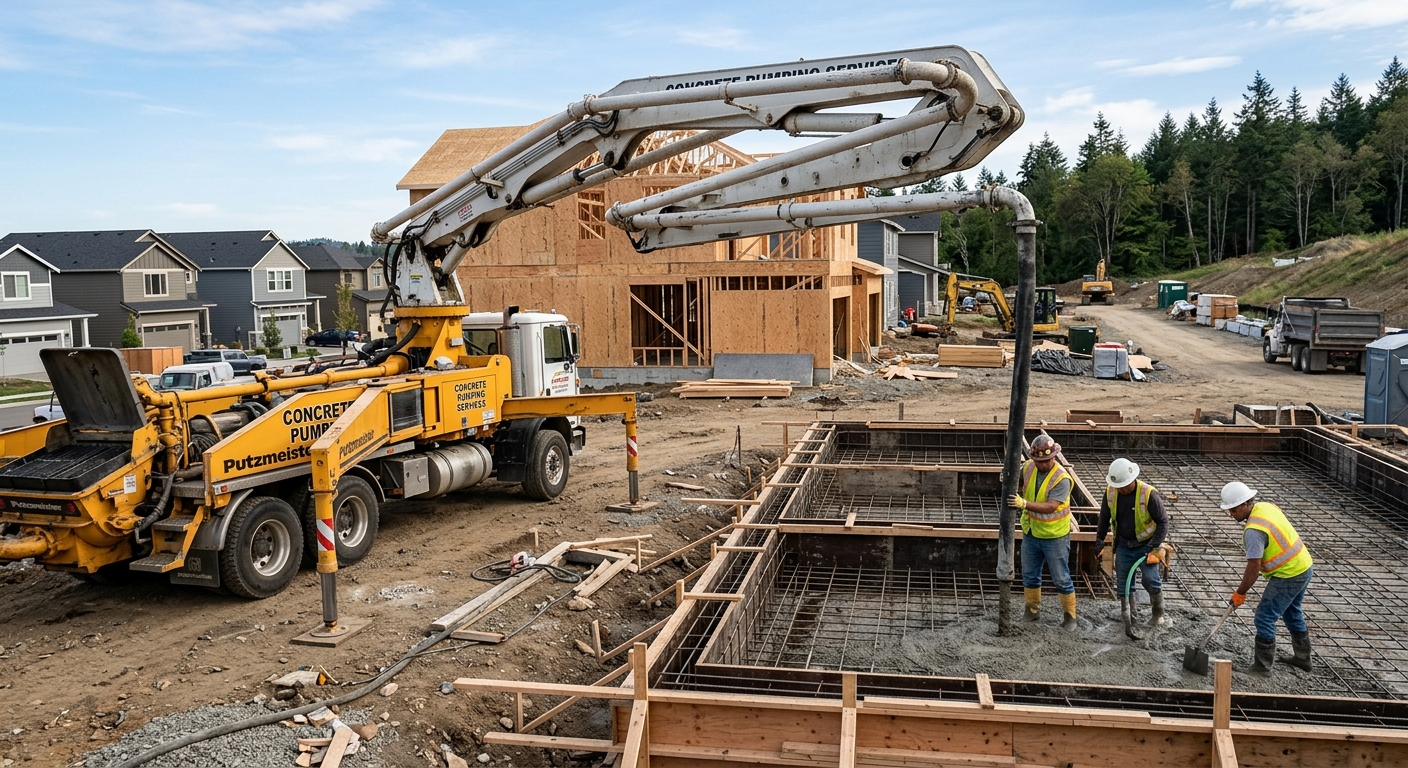
Concrete work options and costs in Alta Vista
Concrete contractors in Alta Vista, Ontario price projects based on the same fundamentals—how much material you need, how much base prep is required, and how the job is protected through freeze–thaw. Alta Vista is a mature, established community with a population of 24,726 (Statistics Canada, 2021 Census), and that matters because many homes are slated for driveway and walk repairs rather than brand-new lots. In these areas, concrete flatwork is especially in demand around Alta Vista Drive and the Hunt Club Road corridor, where older driveways often show settling, scaling, and surface cracking from repeated winter cycles.
In the Toronto economic region, costs are shaped less by “distance” and more by frost depth and curing control. Most structural footings must extend to at least 1.2 m below grade to manage frost heave and differential movement, so foundation work carries a heavier foundation-and-form labour component than a simple slab. For exterior flatwork—driveways, patios and walkways—GTA crews typically use air-entrained mixes and rely on proper drainage and compacted granular base, because saturated soils expand and contract against concrete every winter. Contractors also concentrate exterior pours in the warmer months to protect curing when temperatures drop toward about 10 °C or below.
Because of that, you’ll often see a bigger spread between a basic broom-finished driveway and a decorative option than you’d expect in milder climates. Use the ranges below to compare the most common options for Alta Vista, then we’ll break down what drives each line item in the next section.
| Application |
Typical Size |
Key Spec |
Finish Option |
Price Range |
| Concrete driveway (standard broom finish) |
400–500 sq. ft. |
Air-entrained mix, compacted base, control joints |
Broom finish |
$7,200–$13,500 |
| Exposed aggregate driveway |
400–500 sq. ft. |
Air-entrained mix, proper curing, sealer recommended |
Exposed aggregate |
$9,200–$17,500 |
| Stamped concrete driveway or patio |
300–500 sq. ft. |
Air-entrained mix, release agent, joint layout |
Stamped pattern |
$8,400–$19,000 |
| Plain concrete patio or walkway |
200–350 sq. ft. |
Compacted granular base, drainage grade, control joints |
Float/trowel then light broom |
$3,200–$9,100 |
| Garage floor (interior slab) |
350–500 sq. ft. |
Vapour barrier/insulation optional, fibre or mesh as specified |
Standard float finish |
$6,300–$14,000 |
| Foundation footings (structural, below frost) |
Per project (often 40–80 linear ft.) |
Below-grade structural concrete, rebar per engineer |
Form-and-pour footings |
$7,200–$24,000 |
Prices are estimates only and vary by project scope, site access and material selection.
What affects the price of concrete work in Alta Vista
If you get two quotes for the “same” driveway or patio in the Toronto economic region, a 30–50% difference is common because concrete pricing isn’t just about the number of square feet. It’s about how the contractor manages frost depth requirements, base preparation quality, reinforcement needs, and cure protection. In Ontario, structural footings and grade-related concrete are expected to be built below the design frost conditions—often at least 1.2 m below grade—to prevent frost heave and differential movement. Exterior flatwork then has to survive repeated freeze–thaw, so most GTA crews specify air-entrained concrete and plan control joints to reduce random cracking.
That climate reality changes labour and materials. When temperatures drop and the weather turns wet, concrete crews either delay pours or use cold-weather curing precautions (insulating blankets, heaters, longer protection). Sealing also becomes a practical add-on because de-icing salts can accelerate surface scaling and spalling over time. On top of that, contractor availability tightens during the short, reliable pour window, especially for decorative or stamped work that requires extra finishing time.
In Alta Vista, you’ll see cost swing both up and down. For example, if your existing driveway base is badly saturated, contractors may need deeper excavation and re-compaction, which pushes standard driveway pricing toward the $18–$28 per sq. ft. band. On the other hand, a walkway or patio placed over a stable, well-drained base can stay closer to the $16–$26 band. If the project includes stamped or exposed work, expect higher labour and materials—often justified when you’re replacing failing slabs rather than patching, because control-joint and joint-matching details are critical to long-term performance. Even foundation work is influenced by access and formwork complexity, not just the concrete itself.
| Price Factor |
Why It Matters |
Cost Impact |
| Frost line depth — determines footing depth and form height |
Footings must extend below design frost conditions to prevent heave and uneven settlement. |
Higher excavation, more formwork, more rebar; can materially raise foundation pricing. |
| Site preparation — excavation, grading, compacted granular base |
Proper base stops saturated soil from expanding/contracting against concrete. |
Undercutting and hauling add cost; good base can reduce it. |
| Reinforcement — rebar or wire mesh requirement |
Helps control cracking and supports loads (especially for larger slabs and driveways). |
Material + labour; mesh/fibre selection varies by design. |
| Mix design — air-entrainment and compressive strength spec |
Air entrainment improves freeze–thaw durability; strength supports structural performance. |
Higher-spec concrete costs more and drives contractor material planning. |
| Finish type — broom vs. stamped vs. exposed aggregate |
Finish controls appearance and influences curing/technique timing. |
Stamped/exposed requires extra labour, tools, and finishing steps. |
| Pour size and concrete truck access to site |
Access affects how quickly crews can place concrete and avoid cold joints. |
Tight access may require pump or smaller loads; increases labour and logistics. |
| Cold-weather curing precautions — heating and blankets |
Protection is needed when temperatures drop; curing depends on stable conditions. |
Often adds day(s) of labour and material rental. |
| Control joint pattern and sealing cost |
Joints manage shrinkage cracking and sealing reduces salt-related deterioration. |
Better joint layout and sealing add cost but reduce future repairs. |
Permits & regulations in Ontario
In Ontario, the permit picture depends on what kind of concrete you’re building. Structural concrete work—such as footings, foundation walls, and grade beams—typically requires a building permit and is often tied to engineered drawings that the municipality reviews. Concrete flatwork like patios, walkways, and driveways usually does not require a permit by default, but it can trigger review if it affects lot grading, changes surface drainage, or alters impervious surface coverage in a way that conflicts with municipal stormwater rules. It can also matter if the work is in/near a municipal right-of-way or sidewalk area. Always confirm with your local authority before breaking ground.
For homeowners in Alta Vista, verifying your contractor is just as important as the permit. Step by step:
- Confirm the contractor’s Ontario licensing/registration is active (use provincial contractor directories where applicable).
- Request a Certificate of Insurance showing general liability (and builder’s risk if relevant).
- Ask for evidence of WSIB coverage (or the contractor’s clearance letter where applicable) before work starts.
- Get their WSIB/WCB clearance documentation in writing so it’s clear what’s covered.
- For bigger foundation or engineered work, ask who supplies the engineering and who coordinates permit submissions.
- Verify references on similar-scale projects in the GTA.
Then, make sure the quote clearly states whether the contractor includes permit handling (when required), inspections, and protection/curing requirements so you’re not paying twice later.
Getting concrete right in Alta Vista's freeze-thaw climate
Concrete failures in Alta Vista usually trace back to water and movement. If the base isn’t compacted to the correct depth or drainage is poor, saturated soil can expand in freeze–thaw seasons and pull on the concrete. The fix starts before any pour: specify a properly prepared, well-compacted granular sub-base sized to support local soil conditions and frost considerations. Then specify a mix designed for exterior exposure—GTA contractors commonly target 5–7% air content for exterior flatwork to manage freeze–thaw stress, along with a minimum 32 MPa compressive strength.
Next is cracking control. Control joints should be placed at appropriate intervals so shrinkage and movement crack where you want them—not randomly across the slab. Finally, curing and protection matter more in Toronto than many homeowners expect. Plan on minimum 7 days of curing under proper conditions; in cold snaps, crews need protection (insulation blankets and/or heaters) to keep early strength development on track. After the slab cures (commonly 28 days post-pour for sealer), apply a penetrating sealer to help repel moisture and reduce de-icing salt impact, which can otherwise contribute to scaling and spalling.
To make the price difference make sense: if a standard driveway is near the $18–$28 per sq. ft. band, an air-entrained mix upgrade, correct joint layout, and proper base can be the difference between a driveway that lasts and one that needs patching within a few winters. By contrast, “cheap” pours that skip base depth or adequate air are usually where the real cost shows up—repairs often cost far more than doing it right the first time.
| Spec |
Why It Matters in Alta Vista |
What to Ask For |
Impact if Skipped |
| Compacted granular base (depth?) |
Stops frost-related movement by keeping the slab supported and well-drained. |
State required excavation depth and granular base thickness, plus compaction method. |
Settling, cracking, and faster deterioration as water infiltrates. |
| Air-entrained concrete mix (target air %?) |
Air voids help concrete withstand freeze–thaw expansion. |
Specify target air content of 5–7% for exterior flatwork. |
Higher risk of surface scaling and spalling. |
| Compressive strength (MPa rating) |
Ensures durability and structural performance under loads and temperature swings. |
Minimum 32 MPa for exterior flatwork (as appropriate to design). |
Increased cracking and reduced life expectancy. |
| Control joints (spacing per ACI guidelines) |
Controls where shrinkage/movement cracks appear. |
Ask for joint layout plan and spacing for your slab dimensions. |
Random cracking and difficult-to-repair slab damage. |
| Minimum 7-day curing period |
Early strength gain determines long-term durability in wet/cold weather. |
Confirm curing method and protection plan when temperatures drop. |
Weak surface, premature wear, and higher failure risk. |
| Penetrating sealer (when applied after cure) |
Helps repel moisture and de-icing salt exposure. |
Apply after cure—commonly 28 days post-pour—and specify product type. |
More scaling/spalling and faster surface breakdown. |
How to choose a concrete work contractor in Alta Vista
Choosing the right concrete contractor is mostly about proof: proof they’re insured, proof they understand Ontario’s climate-driven specs, and proof they’ll build to a clear written scope. Start with licensing/registration where applicable in Ontario, then verify liability insurance using their Certificate of Insurance—make sure the policy is active and your address/job is covered as required. Next, confirm WSIB clearance or proof of WSIB coverage before work begins; ask for the clearance letter/documentation, not just verbal confirmation. These checks matter because concrete work involves excavation, heavy formwork, cutting, and sometimes trucking that increases risk on-site.
Then compare quotes the right way: get 2–3 itemised written quotes that separate labour from materials and list concrete type (including air-entrainment), base prep, reinforcement, finishing method, curing protection, and sealing (if included). Avoid quotes that only list a single lump sum without specifying thickness, joint layout, or what happens to existing material. Ask what’s excluded: permit fees, disposal/hauling, saw-cutting, and any traffic-area protection.
Warranty matters too. Ask for a workmanship warranty length and whether product/manufacturer warranty applies to specific materials. Confirm if warranties are transferable if you sell the home. Keep payment sensible: never pay more than 10–15% upfront, and consider holding back a portion until the final inspection/proper cure and finish are complete. Finally, require a start date and completion estimate in writing—GTA crews often have scheduling constraints around warmer pour windows.
- Ask for project photos showing joint layout and long-term flatwork performance.
- Confirm concrete mix design: air-entrainment and minimum strength.
- Require base prep details: excavation depth, granular thickness, and compaction method.
- Check whether reinforcement is included (and in what form).
- Verify control joints: spacing, depth of cut, and pattern consistency.
- Confirm curing protection plan for any cold nights or shoulder-season weather.
- Ask if penetrating sealer is included and when it will be applied (after cure).
- Get disposal/haul-off included if the contractor removes existing slabs.
- Confirm grade/drainage approach so water doesn’t pond against the house or slab.
- Require workmanship warranty in writing, including what triggers a service call.
- Use an itemised quote with allowances listed for rebar, wire mesh, and finishing.
- Schedule a site walk-through to verify truck access and where concrete is placed.
Concrete red flags in Alta Vista include: quotes that don’t mention air-entrainment for exterior work, skipping base thickness details, vague promises about “we’ll seal it” without a date (and no product/type), paying the full amount before any curing/protection period, and contractors who won’t show WSIB clearance or insurance paperwork before starting.
Frequently asked questions — concrete work in Alta Vista
What is air-entrained concrete and why does it matter here?
Air-entrained concrete is mixed with tiny, evenly distributed air bubbles that give freezing water space to expand. In Alta Vista and across Ontario, that directly improves durability in freeze–thaw cycles. Without sufficient air content, exterior slabs and driveways are more likely to develop surface scaling and spalling, especially where de-icing salts are used. For homeowners, the practical takeaway is to ask your contractor to specify air-entrainment in the mix design (typically about 5–7% air for exterior flatwork) and to confirm it’s paired with proper base prep and control joints.
Cost-wise, the difference is usually smaller than the price of repairs. If you’re budgeting within the driveway band (often $18–$28 per sq. ft. for standard to broom-finished work in the GTA), the right mix and curing protection are what determine whether your driveway lasts through multiple winters.
How do I prepare the base for a concrete slab?
Base prep is where durable concrete jobs are won or lost, particularly in the Alta Vista freeze–thaw climate. Your contractor should excavate to the required depth for stable soils, then place and compact a properly graded granular base (and sub-base if needed). The goal is to reduce water infiltration and prevent saturated soil from expanding and contracting against the slab. Ask for the planned granular thickness, the compaction approach, and how they’ll achieve the drainage grade so water doesn’t pond.
In practice, good contractors also check existing conditions before they pour—if your driveway is failing due to poor drainage or soft spots, they may need deeper removal and re-compaction, which can shift pricing within the GTA bands (for example, driveway work often sits around $18–$28 per sq. ft.). A base that’s “good enough” is rarely good enough in Toronto’s wet shoulder seasons.
How do I compare concrete quotes?
To compare concrete quotes fairly in Alta Vista, avoid comparing only the total price. Instead, line up the scope details: concrete thickness, air-entrainment and strength spec (ask for MPa and exterior air target), whether reinforcement is included, how joints are laid out, and the required curing/protection steps. Also compare base prep depth, drainage/grading plan, and whether the contractor includes disposal/hauling of removed concrete.
Ask if the quote includes sealing (and when it’s applied). Many failures show up when sealing or proper curing protection is treated as optional. A reputable contractor should be willing to explain differences line-by-line—especially when one quote lands near the lower end of the patio/walkway range (often around $16–$26) while another includes deeper excavation, better drainage, and correct mix design.
Finally, make sure the permit/engineering requirements are clear for structural work. Structural concrete typically needs municipal involvement, while flatwork usually won’t unless grading or drainage rules are affected.
Can concrete be poured in cold weather in Alta Vista?
Concrete can sometimes be poured in cold weather in Ontario, but it’s not “one-size-fits-all,” and it should be done with proper cold-weather curing precautions. In the Toronto area, crews often target pours when conditions support normal curing; when temperatures drop toward about 10 °C or below, concrete needs protection so early strength development isn’t compromised. That can mean heated enclosures, insulating blankets, and extended curing protection.
Ask your contractor what they’ll do for night-time temperatures and how they’ll protect the slab during the critical early days. A good sign is when the quote includes a curing plan—not just “we’ll pour.” If a contractor skips protection, you can end up with a weaker surface that wears quickly and is more prone to scaling when winter arrives.
In short: yes, sometimes, but only when the contractor can control curing conditions and document the approach.
How do I maintain concrete in Alta Vista's freeze-thaw climate?
Maintenance in Alta Vista is mostly about controlling water and salt exposure. Start with a penetrating sealer applied after the slab has properly cured—commonly around 28 days post-pour. Sealing helps repel moisture and reduces the harsh impact of de-icing salts. Keep the area free of debris that can trap water, and address drainage issues early if you notice pooling or water running toward the slab.
During winter, use de-icing products thoughtfully; overuse and aggressive application can increase surface wear. Avoid chipping ice with metal tools that damage the surface, and keep minor surface cracks from growing by having them assessed promptly—especially for exterior flatwork where freeze–thaw can widen gaps.
Whether your project is a standard driveway (often priced within the $18–$28 sq. ft. band) or a decorative option, consistent maintenance protects your investment and can delay costly replacement.
What causes concrete to spall in Alta Vista winters?
Spalling is most often linked to freeze–thaw stress combined with moisture ingress and insufficient air-entrainment or curing problems. In Alta Vista’s winter conditions, water can get into pores or micro-cracks, freeze, and expand—weakening the surface layer. If the concrete mix doesn’t have the right air void system, the freeze–thaw damage accelerates, and you can see flaking or scaling that progresses into spalls.
Base issues contribute too. If the base wasn’t properly compacted or drainage wasn’t planned, the slab can sit in moisture and keep getting wet throughout the season. De-icing salts then compound the surface deterioration. That’s why sealing and proper joint layout matter—joints help manage shrinkage cracking so moisture doesn’t invade random fracture paths.
When you get quotes, specifically ask about air-entrainment, curing protection, and whether the contractor will include or recommend sealing after cure for exterior flatwork in the GTA.