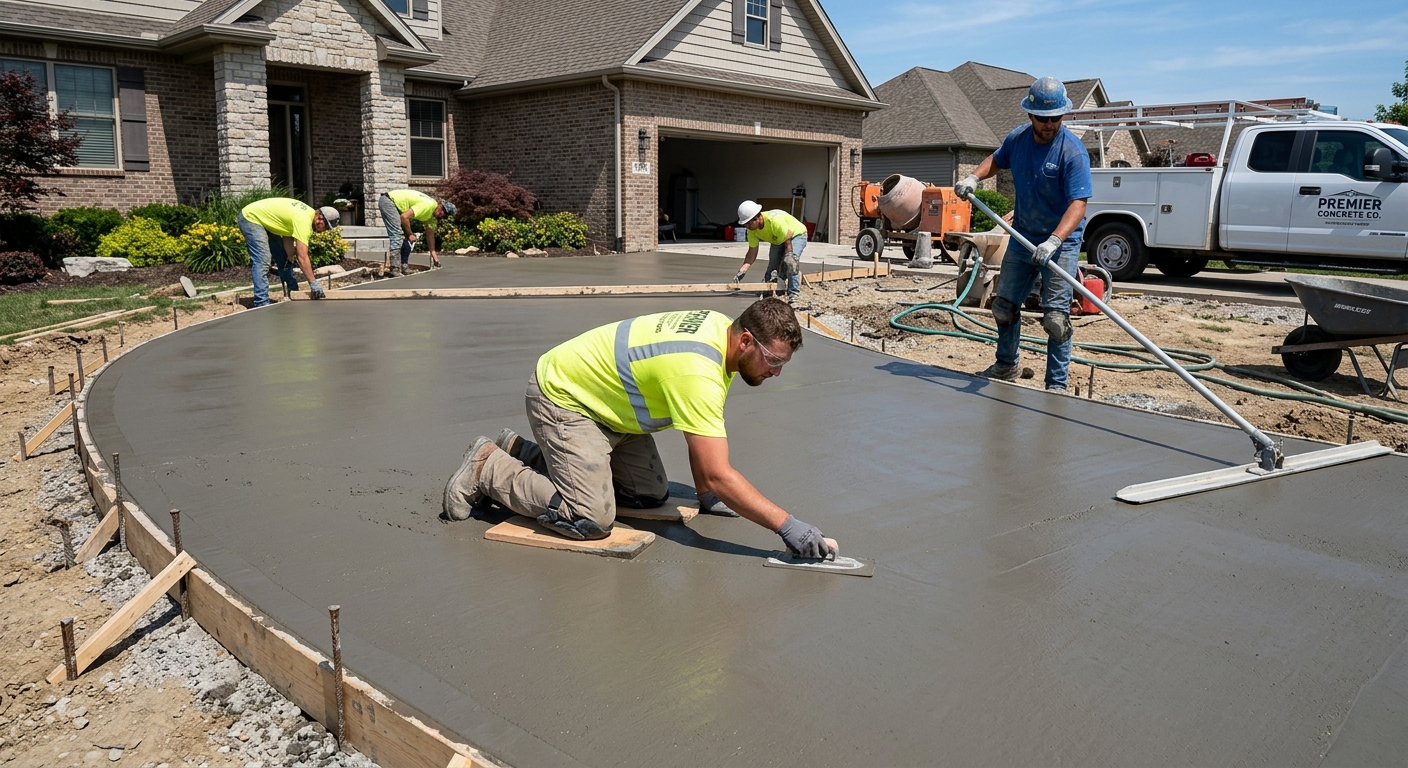
Concrete work options and costs in Yonge-St.Clair
Concrete work in Yonge-St.Clair is typically busiest around the leafy pockets near Yonge Street and the Forest Hill–Chaplin area, where homeowners often upgrade driveways, entry walkways, and backyard patios. In a market of 12,528 residents (Statistics Canada, 2021 Census), the demand tends to track the pace of home improvements—especially in established neighbourhoods where driveways and front steps were poured decades ago. Toronto’s freeze–thaw cycles and frost-depth requirements are a big reason quotes can feel “all over the map” even for the same driveway footprint. In this part of Ontario, exterior slabs and any structural concrete are built to manage winter movement: footings generally need to be placed below the design frost depth, and exterior flatwork needs air-entrained concrete plus a properly compacted granular base. That combination adds material, excavation, and longer site prep time compared with regions that don’t see as much ground cycling. On top of that, Toronto’s humid shoulder seasons can create tricky curing conditions—if temperatures drop toward 10 °C or below, contractors often plan added protection and more conservative pour scheduling to protect long-term durability.
If you’re comparing options, think beyond the look: the right base and joint plan can be the difference between a driveway that stays tight for years versus one that heaves or cracks early. Below are realistic ranges for common jobs in Yonge-St.Clair, from broom-finish driveway work to stamped finishes and structural footing pours.
| Application |
Typical Size |
Key Spec |
Finish Option |
Price Range |
| Concrete driveway (standard broom finish) |
400–600 sq. ft. |
Air-entrained mix, compacted granular base, control joints |
Broom finish |
$7,200–$13,800 |
| Exposed aggregate driveway |
400–600 sq. ft. |
Air-entrained mix, added surface finishing steps, sealed or ready-for-seal finish |
Exposed aggregate |
$9,000–$16,500 |
| Stamped concrete driveway or patio |
300–500 sq. ft. |
Air-entrained mix, integral colour/dry-shake system, proper joint layout |
Stamped pattern (wood/stone look) |
$12,000–$20,000 |
| Plain concrete patio or walkway |
150–350 sq. ft. |
Compacted base, air-entrainment, slope for drainage |
Broom or smooth trowel (as specified) |
$2,400–$8,600 |
| Garage floor (interior slab) |
250–450 sq. ft. |
Vapour barrier (as needed), reinforcement, thickness per use |
Broom finish |
$4,500–$11,500 |
| Foundation footings (structural, below frost) |
Per linear foot (typ. 40–120 ft. total) |
Engineered footing design, excavate to frost depth, formwork and rebar |
Structural concrete |
$7,200–$36,000 |
Prices are estimates only and vary by project scope, site access and material selection.
What affects the price of concrete work in Yonge-St.Clair
In Toronto’s concrete market—including Yonge-St.Clair—two quotes for the “same” driveway can differ by 30–50% because the scope usually isn’t truly identical: excavation depth, base quality, reinforcement, thickness, drainage work, and finishing complexity are often where the real cost sits. Freeze–thaw is the governing design pressure here. Frost-depth requirements dictate every spec in Ontario: footings generally need to extend below the design frost depth to prevent frost heave and differential movement, and exterior slabs need air-entrained concrete to survive repeated cycles. When temperatures drop toward 10 °C or below, contractors must also add cold-weather curing precautions—extra protection, slower pour planning, and sometimes temporary heating/insulation—so the concrete achieves strength and durability. Add de-icing salt in winter, and sealing becomes more than “nice to have” for many homeowners because chloride exposure can accelerate surface spalling if the slab and surface are not properly protected.
In Yonge-St.Clair, site conditions can swing pricing quickly. For example, removing old concrete, hauling debris, and re-grading for drainage can add cost to a driveway even if the final square footage stays the same—especially on older properties with tighter access and established landscaping. Conversely, a small backyard walkway on stable, well-drained soil with easy forms and minimal demolition can land near the lower patio band (for instance, plain concrete at about $16–$26 per sq. ft.). A larger, decorative project can be justified: stamped concrete often costs more because it includes colour/texture materials and extra labour time, but it may still be a good value versus exposed aggregate if you’re prioritizing curb appeal and consistent joints across the entire entrance area.
| Price Factor |
Why It Matters |
Cost Impact |
| Frost line depth — determines footing depth and form height |
Deeper, below-frost excavation and taller forms protect against heave |
High (often a major swing in foundation-related bids) |
| Site preparation — excavation, grading, compacted granular base |
Weak base and poor compaction lead to settlement, cracking and pumping |
High to medium |
| Reinforcement — rebar or wire mesh requirement |
Controls cracking and supports loads in driveways and garage slabs |
Medium |
| Mix design — air-entrainment and compressive strength spec |
Air-entrainment helps durability through freeze–thaw; strength impacts long-term performance |
Medium |
| Finish type — broom vs. stamped vs. exposed aggregate |
Stamped/exposed systems add materials and additional labour steps |
Medium to high |
| Pour size and concrete truck access to site |
Smaller pours often cost more per sq. ft.; longer carries increase labour |
Medium |
| Cold-weather curing precautions — heating and blankets |
Protects curing when temperatures fall and reduces risk of surface scaling |
Medium (timing-dependent) |
| Control joint pattern and sealing cost |
Joints limit random cracks; sealing helps resist de-icing salts on exterior flatwork |
Low to medium (can be high if omitted and repairs follow) |
Permits & regulations in Ontario
In Ontario, the key distinction is whether the work affects the structure or building systems. In most cases, structural concrete work—such as foundation footings, foundation walls, grade beams, and other elements that support the building—requires a building permit, and municipalities often expect engineered drawings for the structural scope. For homeowners in Yonge-St.Clair, that means if you’re touching anything load-bearing (new footings, underpinning, foundation wall repairs), don’t assume it’s “just concrete.” For concrete flatwork—patios, walkways, and typical driveways—permits are usually not required unless the work affects lot grading, impervious surface coverage limits, or impacts municipal right-of-way conditions (for example, work tied to curb/sidewalk adjustments). Always confirm with the local authority before breaking ground.
Contractor checks are just as important. Step 1: confirm the contractor has the proper Ontario business/registration and can provide proof of liability insurance—ask for a current certificate of insurance. Step 2: verify worker coverage. Most reputable Ontario concrete contractors have WSIB/WCB coverage (ask for clearance documentation or current account status proof). Step 3: request references for similar-scale projects in the Toronto area (exterior flatwork and/or foundation-related work), and ask to see photos of completed jobs in comparable freeze–thaw conditions.
Getting concrete right in Yonge-St.Clair's freeze-thaw climate
The main ways concrete fails around Yonge-St.Clair are not “mystery cracking,” but predictable outcomes of winter movement: water finds its way into the slab/sub-base, the ground cycles through freezing and thawing, and the concrete expands, contracts, and stresses weak areas. Spec the job correctly and you control those failure paths. Start with base preparation: a compacted granular sub-base, placed and compacted to the right depth for your soil and drainage conditions, reduces movement beneath the slab. Next, mix design—exterior flatwork should use air-entrained concrete (commonly 5–7% air content, depending on mix design and exposure) and minimum 32 MPa compressive strength so the paste can handle repeated freeze–thaw. Then control joints: don’t rely on random cracking—plan joints early so the concrete cracks where you can maintain it. Curing is critical: aim for at least 7 days of curing under proper conditions, and if you’re pouring later in the season, the contractor must protect the slab when temperatures dip. Finally, sealing should be done after curing—typically 28 days post-pour for penetrating sealers—so the surface resists de-icing salt and surface scaling.
A practical example: a broom-finish driveway might land near the $18–$28 per sq. ft. band, while stamped concrete generally sits higher (often $24–$40 per sq. ft.). That price difference is justified when the decorative project still includes the same (or better) base prep, air-entrainment, joint plan, and sealing. If a contractor “cuts” those essentials to win the low bid, you may save money upfront but pay for repairs sooner—especially in Ontario freeze–thaw conditions.
| Spec |
Why It Matters in Yonge-St.Clair |
What to Ask For |
Impact if Skipped |
| Compacted granular base (depth?) |
Reduces settlement and keeps water from saturating under the slab through winter cycles |
Base depth, granular type, compaction method, and drainage/slope plan |
Early cracking, rocking, pumping and joint failures |
| Air-entrained concrete mix (target air %?) |
Improves freeze–thaw durability and lowers risk of spalling |
Air-entrainment target (commonly 5–7% for exterior flatwork) and exposure class details |
Scaling/spalling within a few winters |
| Compressive strength (MPa rating) |
Affects durability and ability to achieve design performance in Ontario conditions |
Minimum 32 MPa (or higher if specified) and mix documentation |
Surface wear, increased cracking and reduced long-term strength |
| Control joints (spacing per ACI guidelines) |
Controls where cracking happens under shrinkage and thermal movement |
Joint spacing plan, saw-cut timing, and alignment with reinforcement |
Random cracks across visible areas |
| Minimum 7-day curing period |
Cold nights and humid swings in Toronto make curing management essential |
Curing method and protection plan if temps drop |
Weaker surface, scaling, and worse bonding at joints |
| Penetrating sealer (when applied after cure) |
Helps repel moisture and de-icing salt that can worsen freeze–thaw damage |
Sealer type and application timing—often at about 28 days post-pour |
Faster deterioration and higher maintenance/repair costs |
How to choose a concrete work contractor in Yonge-St.Clair
Choosing the right contractor in Yonge-St.Clair comes down to proof: proper coverage, clear scope, and a realistic plan for Ontario’s frost and freeze–thaw season. First, verify Ontario licensing/business registration (where applicable), and ask for a current certificate of liability insurance showing your project address in the description if possible. Next, confirm WSIB/WCB coverage. You can check the documentation they provide and ensure coverage is active for the time period of the job—don’t accept “it’s in the mail.”
Then get 2–3 itemised written quotes. Don’t just compare totals; require a breakdown for labour, forms, excavation, granular base, reinforcement, concrete supply, finishing, sealing, and any permit-related items. Make sure the quote states what’s included and excluded: demolition/disposal of old concrete, cartage distance, and whether the contractor will restore landscaping and edges. Confirm timeline details in writing—start date, pour date window, protection/curing duration, and expected completion. A solid warranty matters too: ask for the workmanship warranty length, what it covers (cracking due to normal shrinkage vs. movement from base failure), whether product/manufacturer warranties apply, and whether the coverage is transferable if you sell your home.
Payment terms should be conservative. Avoid paying more than 10–15% upfront, and use a holdback until the job is complete and deficiencies are corrected. Lastly, match the quote to the finish you want: stamped concrete costs more (often in the $24–$40 per sq. ft. band), but the scope should still include the same durability specs.
- Ask for proof of liability insurance and active WSIB/WCB coverage before signing.
- Request an itemised quote (labour + materials), not just a lump sum.
- Confirm footing depth assumptions and whether frost protection measures are included.
- Require specific base depth/type and compaction standards in writing.
- Ask whether reinforcement (rebar/wire mesh) is included and where it’s placed.
- Get the mix design details: air-entrainment and minimum strength target.
- Confirm control joint spacing and how/when joints will be cut or formed.
- Ask for curing and protection plan for any cold nights or late-season pours.
- Confirm sealing plan and timing (typically after curing, not immediately).
- Clarify demolition scope, disposal, and any topsoil/landscape reinstatement.
- Set payment schedule with a holdback until final inspection and walkthrough.
- Ensure the contract includes a clear completion date and weather contingency.
Concrete red flags in Yonge-St.Clair: vague quotes that don’t mention base depth or mix specs, skipping air-entrainment while relying on “standard concrete,” offering “cheap” stamped work without a joint plan, demanding large upfront payments, and refusing to provide insurance/WSIB/WCB documentation or references for comparable exterior freeze–thaw projects.
Frequently asked questions — concrete work in Yonge-St.Clair
Stamped vs broom-finish concrete — cost difference?
In Yonge-St.Clair, stamped concrete typically costs more because it adds decorative materials and extra labour for patterning, colouring, and finishing. As a guide, stamped & decorative concrete generally falls in the $24–$40 per sq. ft. band, while broom-finish driveway work is often closer to the $18–$28 per sq. ft. range depending on thickness, base prep, and access. The bigger question is what’s included beneath the surface: if both options use proper air-entrained mix, adequate thickness, a compacted granular base, and the same control joint plan, the premium is usually justified by appearance and labour. If a low bid tries to shortcut base prep or joint detailing, you may see cracking sooner—especially with Toronto’s freeze–thaw cycles.
When is the best time to pour concrete in Yonge-St.Clair?
For Ontario, the best pour window is typically late spring through early fall when temperatures are stable enough for normal curing. In Yonge-St.Clair, that often means planning around wet conditions in spring and cooler nights in autumn. Contractors also watch when air and slab temperatures dip toward 10 °C or below, because cold weather curing precautions can add cost (insulation blankets, temporary heat, or extended protection time). If you’re aiming for exterior flatwork—driveways, patios, and walkways—schedule early enough that the contractor can complete finishing and curing without rushing. A good crew will still pour in shoulder seasons if needed, but they should explain their protection plan clearly in the quote.
How long does concrete take to cure?
Concrete curing is a multi-stage process. For most exterior flatwork in Ontario, you should plan for at least 7 days of proper curing before treating the slab as “ready,” especially for foot traffic. However, full performance continues to develop over time, and many contractors recommend waiting about 28 days for activities like applying penetrating sealers (sealers are most effective after the concrete has had time to cure thoroughly). The exact timeline depends on temperature, wind, and moisture—factors that swing in Toronto’s fall and spring. If you’re doing a driveway near winter, ask your contractor what protection they’ll use during cold nights so the slab reaches the specified strength without surface scaling.
Do I need a permit for concrete work in Ontario?
In Ontario, concrete permits depend on what you’re building. Structural concrete—such as foundation footings, foundation walls, and grade beams—usually requires a building permit and often engineered drawings reviewed by the municipality. For typical exterior flatwork like patios, walkways, and most driveways, permits are often not required, unless the work affects lot grading, impervious surface coverage limits, or impacts conditions tied to municipal right-of-way. For Yonge-St.Clair homeowners, the safest approach is to confirm in advance with the local authority before any excavation. Also verify your contractor’s insurance and WSIB/WCB coverage; the permit question doesn’t replace contractor due diligence, especially when excavation and hauling are involved.
Concrete vs pavers for a patio in Yonge-St.Clair?
Concrete and pavers can both work well in Yonge-St.Clair, but the durability conversation is similar: base prep and drainage matter most with freeze–thaw. Concrete is typically more uniform in appearance and can be faster to install, with fewer joint lines than some paver layouts—though concrete still needs control joints. Pricing varies by finish: plain patios and walkways often land around the $16–$26 per sq. ft. band, while decorative stamped options cost more. Pavers can be attractive if you want easy localized repairs later, but they still require correct compaction and bedding sand, and they can shift if the base is wrong. If you want low maintenance and a clean finish, concrete often wins; if you want high design flexibility, pavers are worth comparing with itemised quotes.
How long does a concrete driveway last?
With correct base preparation, air-entrained concrete, proper joints, and curing, a driveway in Ontario commonly lasts many years—often decades before major repairs. In Yonge-St.Clair specifically, longevity depends heavily on managing water and freeze–thaw: if the slab is built on weak or poorly drained base, you can see cracking or heaving earlier, especially around edges and low spots. De-icing salt can also accelerate surface wear, which is why sealing after proper curing is a smart step for exterior flatwork. If your current driveway is crumbling or spalling, ask whether the issue is surface protection (sealer not applied) or a deeper problem like inadequate base depth or missing air-entrainment. That’s where the right quote scope matters as much as the price band.