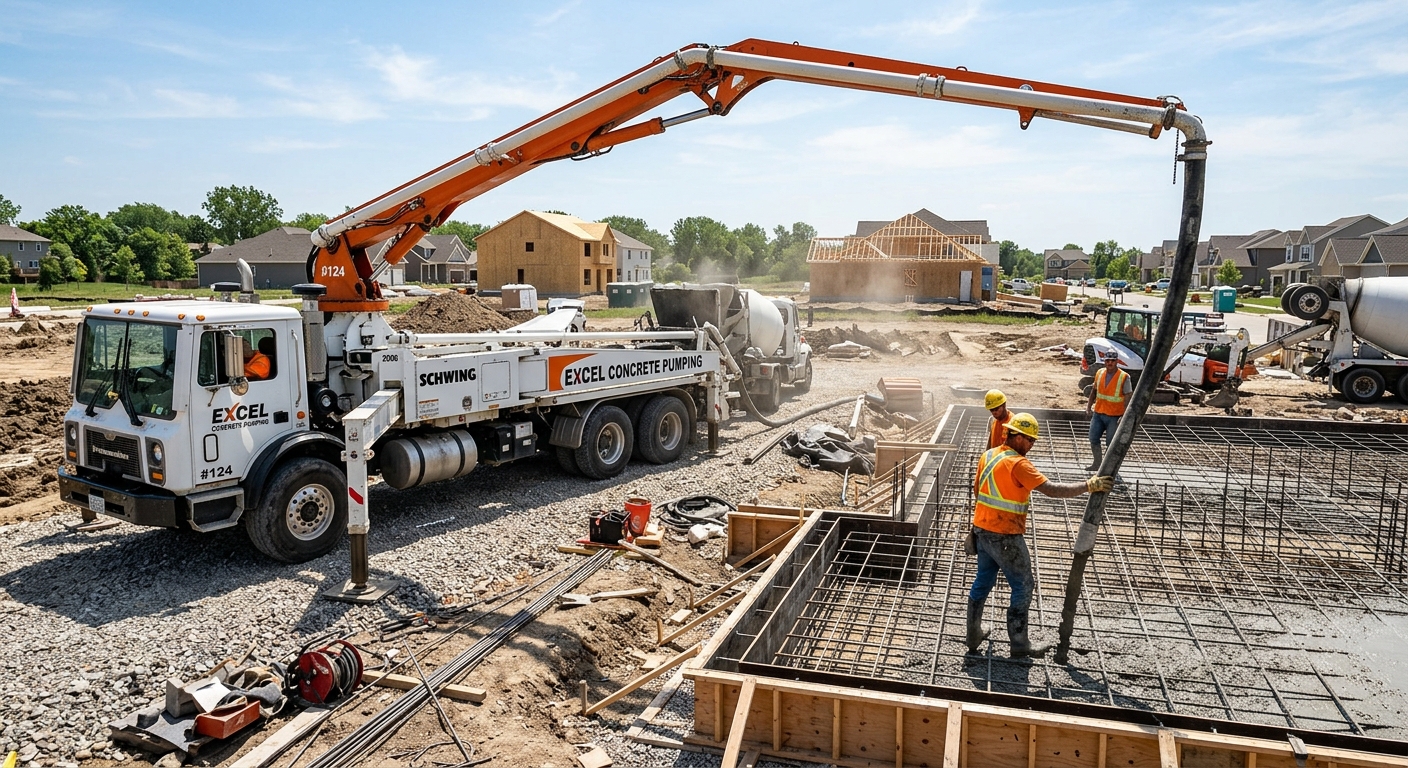
Concrete work options and costs in Guelph
Guelph is a great place to invest in concrete flatwork, but costs can swing a lot depending on finish, reinforcement, and how deep the contractor must excavate. In Guelph, about 48.6% of dwellings are single-detached homes (Statistics Canada, 2021 Census), and that housing mix drives steady demand for driveways, patios, and walkways—especially in older neighbourhoods where many homeowners are resurfacing or expanding existing slabs. The city’s population was 143,740 in 2021 (Statistics Canada, 2021 Census), and that translates into reliable labour availability, though pricing still reflects Southern Ontario’s busy construction season and competitive trades.
The Kitchener–Waterloo–Barrie region sits in a cold, high freeze-thaw climate. Frost depth commonly falls in the 1.0–1.2 m range, so structural work and any exterior concrete tied into foundation systems must be planned with footings below frost to reduce heave and random cracking. You also pay more for excavation, because digging deeper takes time and disposal. Exterior slabs typically use air-entrained concrete for durability, and the region’s freeze-thaw cycling increases the importance of base prep, drainage, and well-spaced control joints. When it’s wet or cold, curing blankets and membranes may be required, and you’ll often see a shorter effective pour season.
In Guelph, contractors are particularly in demand in family-heavy areas like southwest Guelph, where many homeowners upgrade front approaches and add rear patio space before winter settles in. Below is a practical comparison of the options most commonly quoted, so you can benchmark your estimate before you compare crews and scopes.
| Application |
Typical Size |
Key Spec |
Finish Option |
Price Range |
| Concrete driveway (standard broom finish) |
400 sq. ft. (e.g., 20’ x 20’) |
Air-entrained exterior mix; compacted granular base; control joints |
Broom finish + optional sealer |
$6,000–$10,000 |
| Exposed aggregate driveway |
400 sq. ft. (e.g., 20’ x 20’) |
Air-entrained mix; proper retarder/cleaning approach; good drainage |
Exposed aggregate with colour options |
$9,000–$14,000 |
| Stamped concrete driveway or patio |
300 sq. ft. (e.g., 15’ x 20’) |
Air-entrained mix; integral colour; reinforced edges where needed |
Stamp pattern + release + sealer |
$8,000–$13,000 |
| Plain concrete patio or walkway |
200 sq. ft. (e.g., 10’ x 20’) |
Air-entrained mix; compacted sub-base; control joints |
Float/wood finish or light broom |
$3,000–$5,000 |
| Garage floor (interior slab) |
400 sq. ft. (e.g., 20’ x 20’) |
Vapour barrier (if required); fibre or mesh; minimum strength spec |
Broom/steel-trowel depending on use |
$5,500–$9,000 |
| Foundation footings (structural, below frost) |
Varies by design |
Engineered footing dimensions; below frost placement |
Formed concrete; drainage detailing |
$4,000–$8,000 |
Prices are estimates only and vary by project scope, site access and material selection.
What affects the price of concrete work in Guelph
Even when two contractors quote the “same” concrete driveway, the price can vary by 30–50% across the Kitchener–Waterloo–Barrie region and Southern Ontario. The big reason is that exterior concrete isn’t just about placing concrete—it’s the prep that protects the slab in freeze-thaw conditions: excavation depth, granular base thickness and compaction, drainage details, reinforcement placement, and the right mix. If one quote includes those items and the other treats them as “allowances,” you’ll see the difference quickly.
In this region, the frost line depth and freeze-thaw cycling dictate every spec. Footings and any structural concrete tied to foundations must extend below the design frost depth—often in the 1.0–1.2 m range in Southern Ontario—so your slab and supporting components don’t heave and crack. Exterior slabs also need air-entrained concrete to handle repeated freezing and thawing. Colder conditions mean a shorter effective pour season, plus cold-weather curing precautions (insulating blankets, temperature management), which adds labour and equipment. Salt and de-icing can accelerate surface spalling if the concrete isn’t properly air-entrained and sealed, so sealing is frequently recommended.
Costs can rise in Guelph when the site has mature trees, uneven grade, or limited truck access (extra labour for hauling and clean-up). Costs can lower when the existing base is already stable and the scope stays simple—like a straight patio placement over a well-prepared sub-base. You’ll also see finish-driven swings: for example, a broom-finished driveway may align with the region’s backbone of $15–$25 per sq. ft. equivalent work pricing, while stamped or decorative options often climb toward $22–$35 per sq. ft., depending on reinforcement and pattern complexity. Homes built before 1981 make up a substantial share of the housing stock, and older drainage patterns often need correction before a new slab will perform (Statistics Canada, 2021 Census), which affects cost in real dollars.
| Price Factor |
Why It Matters |
Cost Impact |
| Frost line depth — determines footing depth and form height |
Deeper excavation and formed concrete are required to prevent frost heave |
Can add significant labour and equipment time; higher costs on constrained sites |
| Site preparation — excavation, grading, compacted granular base |
Correct base thickness and compaction reduce settling and random cracking |
Often the largest variable after finish; poor access increases hauling labour |
| Reinforcement — rebar or wire mesh requirement |
Controls cracking and supports heavier loads when properly placed |
Mesh/rebar cost is moderate; placement labour can be higher on complex forms |
| Mix design — air-entrainment and compressive strength spec |
Air void system improves freeze-thaw durability for exterior flatwork |
Premium mix is usually worth it; skipping it increases failure risk |
| Finish type — broom vs. stamped vs. exposed aggregate |
Surface demands different finishing time, materials, and workflow |
Stamped/exposed typically costs more than plain broom or float finishes |
| Pour size and concrete truck access to site |
Smaller pours can mean extra mobilization; access affects time and methods |
More trips, wait time, or pumping increases overall pricing |
| Cold-weather curing precautions — heating and blankets |
Protects early strength gain and helps prevent surface and durability issues |
Usually a cost add-on in shoulder season, especially for exterior work |
| Control joint pattern and sealing cost |
Joints manage shrinkage; sealing helps resist de-icing salt damage |
Sealer is an added line item, but it reduces long-term surface deterioration |
Permits & regulations in Ontario
In Ontario, the rules depend on whether you’re doing structural concrete or non-structural exterior flatwork. In most cases, structural concrete work—such as footings, foundation walls, and grade beams—requires a building permit and often engineered drawings that the municipality reviews. For concrete flatwork like driveways, patios, and walkways, permits typically are not required unless the work affects lot grading, stormwater/impervious surface coverage limits, or you need changes near the municipal right-of-way. Because rules can vary by circumstance (and by how the lot drains), it’s smart to confirm before demolition.
Regardless of permit requirements, verify your contractor is properly insured. Step one for you as a homeowner in Guelph is licensing/registration checks—look for the contractor’s business information through provincial or business registries and confirm who will be on site. Step two is insurance: request a certificate of insurance (COI) showing liability coverage with your property listed as an additional insured when applicable. Step three is WSIB/WCB coverage: ask for proof that workers are covered for workplace injury protection. Finally, request references on similar-scale jobs—driveway and patio work in older Guelph neighbourhoods often needs drainage corrections before the slab goes down.
Getting concrete right in Guelph's freeze-thaw climate
Concrete failures in Guelph usually come down to one or more weak points in the system: the base wasn’t built right, the mix wasn’t appropriate for exterior freeze-thaw, joints were missing or poorly spaced, curing was rushed, or the surface wasn’t protected from salt. With frost depth commonly in the 1.0–1.2 m range in Southern Ontario, you must ensure any structural elements and supporting soils are prepared so the slab can’t heave. Exterior flatwork should be designed for a harsh winter cycle: freeze-thaw stress is hard on surfaces, especially when water gets trapped.
To spec the job correctly, focus on these essentials:
- (1) Base preparation: compacted granular sub-base to the correct depth for your soil and frost considerations, plus proper slope and drainage.
- (2) Mix design: air-entrained concrete (commonly 5–7% air content for exterior flatwork) and a minimum 32 MPa compressive strength spec where required by your contractor/engineering.
- (3) Control joints: a joint pattern that limits random cracking; joints should be planned before pour day.
- (4) Curing: protect the slab for at least 7 days under proper conditions—cold weather often means blankets or other curing protection.
- (5) Sealing: apply a penetrating sealer about 28 days post-pour to help repel moisture and de-icing salts.
When you ask the right technical questions, you reduce the most common failure we see locally: spalling from inadequate air-entrainment. For a practical budget example, homeowners choosing stamped concrete (often closer to the decorative band of $22–$35 per sq. ft.) may pay roughly $1,000–$3,000 more than a broom-finish patio, but that premium is justified only if the base, air entrainment, joints, and curing are fully addressed—not treated as “nice-to-haves.”
| Spec |
Why It Matters in Guelph |
What to Ask For |
Impact if Skipped |
| Compacted granular base (depth?) |
Controls settlement and helps keep water from pumping through during freeze-thaw |
Granular type, target thickness, compaction method, and how drainage slope is formed |
Premature cracking, uneven edges, and water pooling |
| Air-entrained concrete mix (target air %?) |
Reduces damage when trapped water freezes in the concrete |
Documented air content (commonly 5–7%) and confirm it’s an exterior freeze-thaw mix |
Spalling and scaling within a few winters |
| Compressive strength (MPa rating) |
Ensures the slab develops enough strength for durability and load transfer |
Minimum 32 MPa (or project-specific spec), with curing steps to reach strength |
Surface wear, faster deterioration, and reduced longevity |
| Control joints (spacing per ACI guidelines) |
Manages shrinkage cracking so cracks don’t form randomly |
Planned joint layout, saw-cut timing, and spacing aligned to slab size and thickness |
Random cracks, wider repairs, and trip hazards |
| Minimum 7-day curing period |
Cold conditions in Ontario can slow strength gain |
How curing is handled if temperatures drop (blankets/membranes/heating) |
Low early strength, surface damage, and higher failure risk |
| Penetrating sealer (when applied after cure) |
Helps limit moisture and salt penetration during Ontario winters |
Sealer type and application timing (about 28 days after pour, once cured) |
More scaling, staining, and faster surface deterioration |
How to choose a concrete work contractor in Guelph
Choosing a contractor carefully matters in Guelph because freeze-thaw durability is won (or lost) on details like base prep, air entrainment, and curing protection. Start by confirming Ontario compliance: ask the company for their business details and verify they are operating as a legitimate contractor. Next, request proof of liability insurance (a current certificate of insurance) and ask who is covered on site. Then verify WSIB/WCB coverage for their workers—ask for documentation and confirm it covers your project period. A contractor who can’t provide this paperwork is a risk, not just an inconvenience.
Get 2–3 itemised written quotes rather than a single lump sum. You want a breakdown that separates labour from materials (concrete, rebar/mesh, granular base, forms, finishing labour, joints, and sealing). Review what’s excluded: disposal, saw cutting, dowels/anchors, permit pull responsibility (if required), and any tie-ins to existing surfaces.
For warranty, ask for: (1) the workmanship warranty length, (2) whether it covers freeze-thaw cracking/spalling, and (3) whether the warranty is transferable if you sell the home. For payment, never accept a schedule that front-loads the contractor heavily; as a rule of thumb, keep deposits around 10–15% and use holdback until the job is fully complete and cleaned up. Finally, make sure the timeline includes a start date and a completion estimate in writing—this matters because cold nights can affect curing and finishing quality.
- Ask for the exact mix type and whether it’s air-entrained for exterior exposure.
- Confirm footing/slab-related excavation depth and granular base thickness in writing.
- Require joint layout and saw-cut timing to be included in the scope.
- Ask how they handle rain, snow, and cold weather during curing.
- Verify liability insurance limits and confirm your property address is listed where appropriate.
- Request WSIB/WCB proof (not just verbal assurances).
- Get a labour/materials breakdown—not only “concrete and labour.”
- Confirm reinforcement method (mesh vs rebar) and placement height (chairs/spacers).
- Clarify sealing: product, timing (around 28 days), and whether it’s included or optional.
- Ask who supplies and disposes of excavated soil and whether disposal is included.
- Check protection of landscaping and driveway entry during truck access.
- Confirm warranty terms for workmanship and whether repairs include removal and replacement.
In Guelph, common red flags include contractors who won’t discuss air entrainment or curing, quotes that omit base preparation thickness and drainage slopes, promises of “no joints required,” pressure to pay large deposits upfront, and vague timelines with no plan for cold-weather curing blankets or membranes.
Frequently asked questions — concrete work in Guelph
Concrete vs pavers for a patio in Guelph?
For a patio in Guelph, concrete often wins on long-term cost predictability, while pavers can win on appearance variety and easier partial replacement. In our Southern Ontario freeze-thaw conditions, both systems need good base and drainage, but concrete’s air-entrained exterior mix helps it handle winter cycles when it’s poured and cured correctly. A simple plain concrete patio typically lands in the region’s backbone range of about $14–$22 per sq. ft., while pavers tend to cost more once you include excavation, bedding sand, and edging. That said, pavers can be a smart choice if you want to match existing stonework or you’re expecting future landscaping changes. The best decision comes down to your layout complexity, how level you need it, and whether you prefer one monolithic surface or modular repairs.
How long does a concrete driveway last?
A well-built concrete driveway in Guelph commonly lasts decades, provided the contractor built the base correctly, used an exterior freeze-thaw mix, and placed joints properly. The region’s cold, high freeze-thaw climate means small mistakes—like poor drainage, inadequate air entrainment, or skipping sealing—can show up as scaling or spalling in a few winters. Driveway longevity is also affected by how you salt and plough. If your driveway is older (many homes in Guelph are in neighbourhoods with a lot of pre-1981 stock, Statistics Canada, 2021 Census), you may see earlier surface deterioration because drainage details and joint patterns weren’t always designed with today’s best practices. When comparing quotes, don’t focus only on the material price; insist on base prep, air-entrainment, and cure protection so the driveway can actually perform through Ontario winters.
What is air-entrained concrete and why does it matter here?
Air-entrained concrete is made with a controlled network of microscopic air bubbles. Those air voids give freezing water somewhere to expand, reducing internal pressure that would otherwise damage the paste and lead to scaling/spalling. In Guelph and the wider Kitchener–Waterloo–Barrie market, freeze-thaw cycles and moisture exposure are frequent stressors, so air entrainment is a key part of exterior durability—not an upgrade. If a contractor uses a standard non-air mix for an exterior driveway or patio, the risk of winter surface damage rises quickly. This is one reason why quotes can vary by 30–50%: the “cheaper” number may skip or underspec the freeze-thaw requirements. For pricing context, a standard broom-finished driveway usually aligns with the $15–$25 band, but the correct exterior air-entrained mix is what protects that investment.
How do I prepare the base for a concrete slab?
For a concrete slab (patio, walkway, or garage floor), base prep should be planned around soil conditions and frost considerations. In Southern Ontario, the goal is to create a stable, well-drained foundation using compacted granular sub-base to the right depth, then grade it for slope so water doesn’t pool. Preparation typically includes stripping topsoil, excavating to the design depth, compacting native soils or sub-base in lifts, and placing a uniform granular layer. In Guelph, freeze-thaw and water movement make drainage details especially important; water trapped under a slab can contribute to movement and cracking. Avoid settling where you can by asking for compaction method (plate compactor vs roller approach), granular type, and how they handle any soft spots. If your area is near older drainage patterns, budget time for regrading—this is one of the biggest drivers of quote differences and long-term performance.
How do I compare concrete quotes?
Start by comparing apples to apples: ask each contractor for an itemised quote that lists excavation, granular base thickness and compaction, reinforcement type (mesh vs rebar), mix design requirements, joint pattern, finishing steps, and curing/protection. Clarify whether sealing is included and when it’s applied. Also confirm what’s excluded: disposal, permit pull responsibility (when required for structural work), protection of landscaping, and any demolition of existing concrete. In Guelph’s climate, curing blankets or cold-weather methods can be a major quality factor, so the scope should state how they’ll protect the slab if temperatures drop. Use the regional price bands as a sanity check: a driveway may land near the $15–$25 range for typical concrete work, while stamped/decorative options more often align with $22–$35. If one quote is far below the others, ask what freeze-thaw durability items are missing.
Can concrete be poured in cold weather in Guelph?
Yes, concrete can be poured in cold weather in Guelph, but only with the right precautions and planning. The contractor has to manage temperature so the concrete can reach adequate early strength without freezing. That often includes cold-weather curing methods such as insulating blankets, curing blankets/membranes, sometimes heated enclosures, and careful scheduling to avoid freezing during the first critical hours and days. Because Southern Ontario has freeze-thaw conditions and a shorter effective pour season, many crews prefer to pour when daytime and overnight temperatures are workable, but it can still be done safely when the spec and protection plan are in place. When you’re getting quotes, ask specifically: what is their minimum ambient temperature requirement, what curing protection will they use, and how will they prevent de-icing salt and heavy loads until the slab has achieved sufficient strength. This protects durability in Ontario winters.