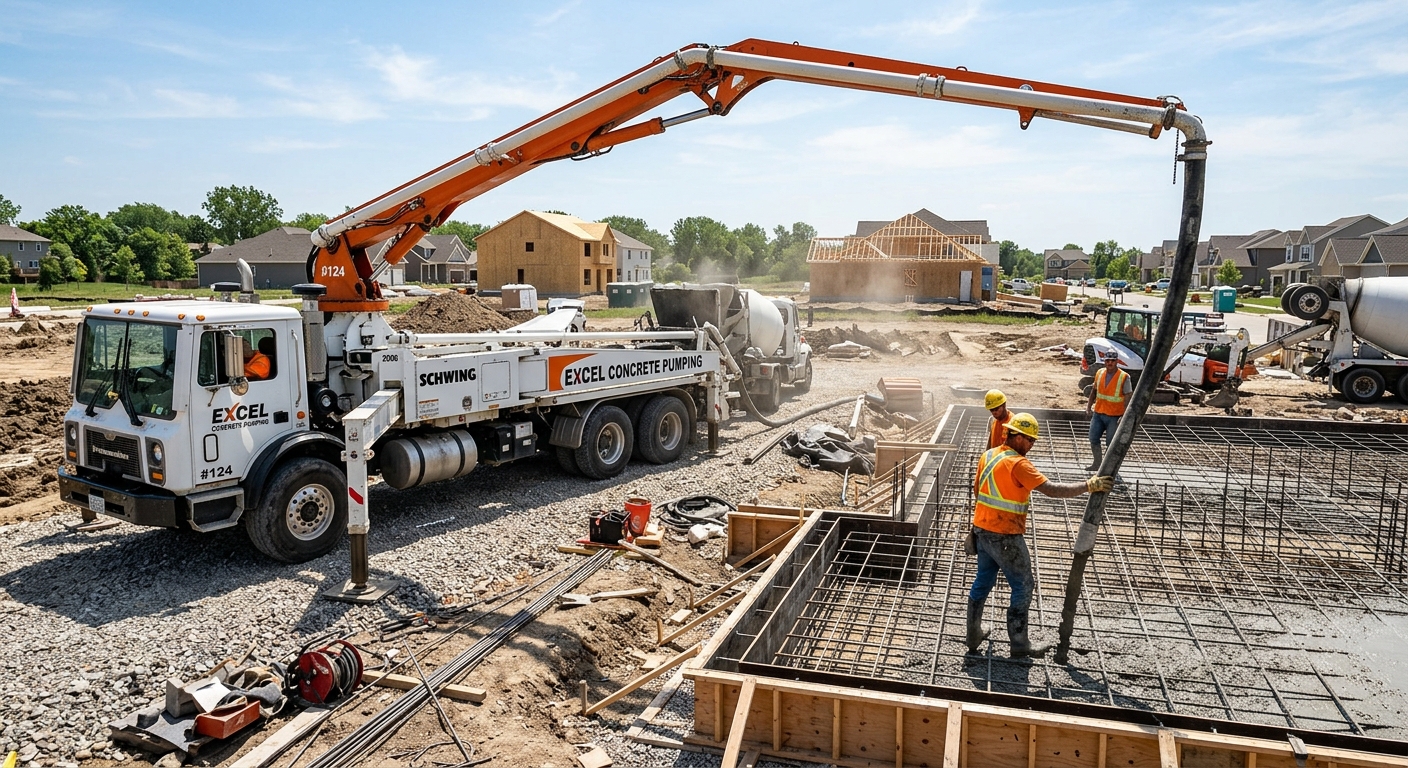
Concrete work options and costs in Jarvis
Concrete work in Jarvis, Ontario is a bit of a balancing act: you want a smooth driveway and crisp walkways, but you also need a durable slab that can handle Toronto-area freeze–thaw cycles and deep frost protection. Jarvis is a small community of 1,037 people (Statistics Canada, 2021 Census), and that scale means there are fewer crews competing at any one time—good for quality, but it can tighten scheduling during peak pour season. Most concrete flatwork demand comes from the neighbourhoods with established homes and local infill, where homeowners typically upgrade driveways, add patios, or replace cracked slabs rather than starting from scratch. In practice, many jobs involve exterior flatwork and garage or basement-related work that ties into how your property sheds water during wet fall and spring.
In the Toronto economic region, local specifications often push structural footings to at least 1.2 m below grade, and exterior pours require air-entrained mixes to survive repeated freeze–thaw. That climate reality affects cost: deeper excavation, better drainage and granular base, and extra curing protection when temperatures drop toward about 10 °C or below all add labour and materials. It also means the “cheapest” quote may not include the base depth, reinforcement, or finishing details that prevent heaving and surface scaling.
Contractors are especially busy around the downtown Jarvis corridor where older properties are more likely to need driveway or walkway replacement after years of salt exposure and settlement. If you’re comparing options, use the table below as a realistic starting point for budgeting different concrete projects in Jarvis.
| Application |
Typical Size |
Key Spec |
Finish Option |
Price Range |
| Concrete driveway (standard broom finish) |
12 m x 3 m (approx. 36 m²) |
Air-entrained mix; compacted base; control joints |
Broom finish, standard edging |
$18,000 – $28,000 |
| Exposed aggregate driveway |
12 m x 3 m (approx. 36 m²) |
Air-entrained mix; proper retarder timing; good drainage |
Exposed aggregate with colour options |
$22,000 – $32,000 |
| Stamped concrete driveway or patio |
10 m x 3 m (approx. 30 m²) |
Air-entrained mix; thicker slab; joints planned |
Stamped pattern + sealer |
$24,000 – $40,000 |
| Plain concrete patio or walkway |
3 m x 6 m (approx. 18 m²) |
Compacted granular base; air-entrained mix |
Broom or light float finish |
$16,000 – $26,000 |
| Garage floor (interior slab) |
6 m x 6 m (approx. 36 m²) |
Vapour barrier if needed; reinforcement; proper sub-base |
Float-finished, optional sealer |
$4,500 – $9,500 |
| Foundation footings (structural, below frost) |
Perimeter length varies (e.g., 40 m perimeter) |
Below design frost; engineered/typical rebar; formwork |
Structural concrete work |
$180 – $300 |
Prices are estimates only and vary by project scope, site access and material selection.
What affects the price of concrete work in Jarvis
In Jarvis and the broader Toronto economic region, even “the same” concrete job can land 30–50% apart from one quote to the next. The biggest drivers are the parts homeowners often don’t see: the depth and quality of excavation, the granular base compaction, how reinforcement is placed, and whether the contractor specifies air-entrained concrete plus the right curing and jointing for freeze–thaw conditions. In a market shaped by frost depth and repeated freeze–thaw cycles, contractors also face a tighter, warmer pour season—when temperatures stay workable—so labour demand increases and crews get booked. That labour availability can raise costs, especially for exterior work that can’t safely be poured when conditions fall too low for adequate curing.
Here’s the core issue: footings and exterior slabs are designed around frost heave risk. Structural footings generally need to extend at least 1.2 m below grade in Ontario to stay below the design frost. Exterior slabs should use air-entrained concrete (commonly around 5–7% air) so the freeze–thaw cycle doesn’t break the paste. De-icing salt in winter accelerates surface spalling if the mix or curing was weak, which is why sealing and surface protection after cure matter.
Cost swings you’ll feel in Jarvis commonly look like this: adding 100–150 mm more compacted granular base to correct a soft soil area is usually money well spent; switching from a basic broom finish to stamped or exposed aggregate adds formwork complexity and finishing time (your budget may move from roughly the $16–$26 band for simpler patios/walkways toward the $24–$40 band for stamped work). Conversely, a simple interior garage floor in a clear-access driveway can sometimes be priced more tightly because formwork and truck access are straightforward. For older Jarvis neighbourhood properties where settlement and drainage problems show up, the “missing” drainage fix is often where the biggest budget surprises happen.
| Price Factor |
Why It Matters |
Cost Impact |
| Frost line depth |
Determines footing depth and form height needed to prevent frost heave |
Can add major excavation and labour; biggest driver for foundation work |
| Site preparation |
Excavation, grading and well-compacted granular base reduce settlement and cracking |
Small changes to base thickness or drainage can shift quote pricing |
| Reinforcement |
Rebar or mesh helps control cracking and supports loads on slabs and footings |
Material + placement labour; usually modest compared with base prep |
| Mix design |
Air-entrainment and specified strength improve freeze–thaw durability |
Higher spec mix costs more, but prevents early spalling and repairs |
| Finish type |
Broom vs. stamped vs. exposed aggregate changes labour and timing |
Decorative finishes typically move into the higher price bands |
| Pour size and concrete truck access to site |
Shorter haul times, wide access and crane-less pours reduce labour |
Bad access can add hauling, equipment and extra labour hours |
| Cold-weather curing precautions |
Heating and insulated blankets protect strength gain when temps drop |
Adds cost; also affects scheduling and crew availability |
| Control joint pattern and sealing cost |
Joints control cracking locations; sealing helps resist salt scaling |
Often overlooked; can add several hundred to over a thousand dollars |
Permits & regulations in Ontario
In Ontario, structural concrete work generally requires a building permit. That means footings, foundation walls, and grade beams typically fall under the permit and inspection process, and many projects also rely on engineered drawings reviewed by the municipality as part of permit approval. Concrete flatwork like patios, walkways and driveways typically does not require a building permit by default, unless it affects lot grading, drainage, impervious surface coverage limits, or the municipal right-of-way (for example, work tied to a driveway apron or sidewalk area). Because rules can vary based on the exact scope, the safe approach in Jarvis is to confirm with the local authority before breaking ground.
Beyond permits, always verify the contractor is properly insured and licensed. Concrete contractors should carry liability insurance and be covered under the provincial work coverage system (WSIB in Ontario) or provide equivalent documentation if they subcontract labour. Start your check by asking for: (1) a current certificate of insurance showing the effective dates and jobsite coverage, (2) evidence of WSIB/WCB clearance or coverage, and (3) references on similar-scale exterior and structural work.
Step-by-step for a homeowner in Jarvis: first, request the contractor’s insurance certificate and WSIB/WCB status letter before scheduling. Next, confirm the contractor’s business registration and any trade licensing they claim (you can cross-check online through Ontario’s business and service registries). Finally, confirm the permit responsibility in writing—who pulls it, when it’s required, and what inspections are scheduled—so you’re not surprised after the work starts.
Getting concrete right in Jarvis's freeze-thaw climate
Concrete fails in Jarvis most often due to freeze–thaw damage on exterior slabs and spalling from salt exposure, especially when the base isn’t built correctly or the mix isn’t designed for Ontario winters. The fix isn’t just “more concrete”—it’s the right spec sequence: (1) base preparation, (2) air-entrained mix design, (3) planned control joints, (4) proper curing, and (5) sealing after cure. In the Toronto region, repeated temperature swings and wet shoulder seasons mean saturated soils can expand and contract against poorly compacted base, leading to voids and slab movement. Over time, that movement creates random cracking, which then allows water to get into the slab edges and freeze.
To spec the job correctly, insist on a properly compacted granular sub-base at the right depth for local soil conditions, plus proper drainage so water doesn’t pond. For exterior flatwork, request air-entrained concrete with target air content typically in the 5–7% range, and ask for a minimum 32 MPa compressive strength spec. Control joints should be spaced to limit random cracking, and you should plan for curing: minimum 7-day curing under proper conditions, with additional protection if cold weather arrives during the pour window. Finally, seal with a penetrating sealer applied after cure (often around 28 days post-pour) so de-icing salt is less likely to drive surface scaling.
Is the spend justified? Yes. For example, upgrading a driveway from standard broom finish toward stamped concrete can move you roughly into the $24–$40 band, but that premium is only worth it when the contractor also includes the right base, joints, and sealing plan. If someone is offering stamped work at a “standard driveway” price (around the $18–$28 band), ask what’s being omitted—decorative stamping doesn’t replace the fundamentals that stop freeze–thaw damage.
| Spec |
Why It Matters in Jarvis |
What to Ask For |
Impact if Skipped |
| Compacted granular base (depth?) |
Supports the slab and prevents frost-related movement through weak sub-base |
Documented excavation depth, granular type, and compaction method |
Settlement, cracking, and voids that accelerate freeze–thaw damage |
| Air-entrained concrete mix (target air %?) |
Creates freeze–thaw resistance so paste doesn’t scale/spall |
Target air content (typically 5–7%) and mix design sheet |
Higher risk of surface scaling and spalling in winter |
| Compressive strength (MPa rating) |
Strength gain supports durability and load performance |
Minimum 32 MPa (and confirmation of curing expectations) |
Reduced strength, easier cracking and surface wear |
| Control joints (spacing per ACI guidelines) |
Directs shrinkage cracking to planned locations |
Proposed joint spacing, layout and saw-cut timing |
Random cracking and water intrusion at edges |
| Minimum 7-day curing period |
Ensures strength development despite humid wet/dry swings |
Curing method, protection details, and minimum curing timeline |
Weak surface, increased spalling risk under salt and freeze–thaw |
| Penetrating sealer (when applied after cure) |
Repels moisture/salt solution that drives surface scaling |
Confirm sealer type and application after cure (often ~28 days) |
Faster surface deterioration and more winter maintenance |
How to choose a concrete work contractor in Jarvis
Choosing a concrete contractor in Jarvis is mostly about verifying capability and managing risk. Start with Ontario coverage checks. Ask for their certificate of liability insurance (with the jobsite address listed or at least the coverage confirmed) and proof of WSIB/WCB clearance for workers. If they can’t provide documents promptly, that’s a red flag. Next, request itemised written quotes—ideally with a labour + materials breakdown—so you can see excavation/base prep, reinforcement (if any), concrete supply and finishing, plus disposal and cleanup. Avoid vague “all-in” numbers with missing scope; those are how you end up paying change orders mid-pour or after the slab is already down.
Then read the scope carefully. Is permit pulling included (if required for structural work), or is it your responsibility? Is construction debris disposal included, and how will they protect nearby lawns, landscaping and walkways during formwork and saw-cutting? Clarify warranty: workmanship warranty length, whether product/manufacturer warranty applies to sealer or decorative systems, and whether warranties are transferable if you sell your home. For payment, a safe practice is to keep the upfront deposit modest—never more than 10–15%—and hold a holdback until substantial completion.
Finally, get schedule details in writing: requested start date, concrete delivery day, curing protection plan, and completion estimate. In the Toronto region, short pour-season windows and cold snaps mean timelines can swing—good contractors plan for it.
- Confirm liability insurance certificate is current and covers the project term.
- Request WSIB/WCB clearance or proof of coverage for all workers.
- Verify they have done similar work in Ontario freeze–thaw conditions (ask for photos and references).
- Get 2–3 itemised quotes: base prep, reinforcement, mix spec, finishing, sealing, and disposal.
- Ask who pulls permits (structural work typically needs permits).
- Confirm slab thickness, base depth, and how compaction is achieved.
- Require air-entrained mix for exterior work and confirm target air percentage.
- Ask about control joint pattern and when saw cuts will happen.
- Ask how they handle curing—especially if nights drop near 10 °C or colder.
- Clarify whether sealing is included and when it will be applied after cure (often ~28 days).
- Request a written warranty: workmanship duration and what’s covered.
- Use a payment schedule with ≤10–15% upfront and a holdback until punch-list completion.
Concrete contractor red flags in Jarvis include: refusing to provide insurance/WSIB documentation, quoting decorative concrete without specifying base depth and joint spacing, starting a pour in cold conditions without a curing/protection plan, using “standard mix” wording instead of air-entrainment, and offering non-transparent “lump sum” pricing that doesn’t list disposal, reinforcement and sealing scope.
Frequently asked questions — concrete work in Jarvis
What is air-entrained concrete and why does it matter here?
Air-entrained concrete is mixed with tiny, evenly distributed air bubbles that give water room to expand when it freezes. In Jarvis and the broader Toronto region, the repeated freeze–thaw cycle is hard on ordinary concrete: as surface moisture freezes, it can cause scaling and spalling, especially when de-icing salts are used. That’s why exterior flatwork (driveways, patios, walkways) should typically be air-entrained, with target air content commonly around 5–7%. When contractors specify it clearly, you reduce the risk of the “early winter failure” pattern—rough, flaking surfaces and widening cracks. For budgeting, remember that a correctly specified exterior pour still fits within the typical driveway and patio bands; for instance, simple patios/walkways commonly land around $16,000 – $26,000, while decorative driveway options move higher depending on finish.
How do I prepare the base for a concrete slab?
Base prep is where most long-term durability is won or lost in Ontario. For a driveway, patio or walkway in Jarvis, the contractor should excavate to the required depth, then install and compact a properly graded granular base in lifts. The goal is to create a stable, well-draining foundation so saturated soils don’t expand and contract against the slab through winter. Ask for the planned granular type, the compacted depth, and proof of compaction method (and ideally compaction targets). Good prep usually also includes drainage details—slopes away from the house and appropriate ties into surrounding grades—because trapped water is a fast track to cracking and spalling. If the contractor can’t explain their base depth or compaction approach, the low end of the pricing band can look attractive at first, but it often costs more later when you’re repairing or replacing.
How do I compare concrete quotes?
To compare concrete quotes fairly in Jarvis, don’t just look at the total number—compare line items and specifications. Ask for an itemised quote that shows excavation and grading, granular base depth, reinforcement (rebar or mesh), concrete mix details (including air-entrainment for exterior), concrete thickness, finishing type, joint plan, disposal, and sealing (if offered). Make sure each quote covers the same scope: permit pull responsibility (for structural work), protection during curing, and timing of sealing. Quotes can vary widely across the Toronto region because of differences in base prep and curing protection, which is why two contractors can both mention “concrete” but produce very different durability. A practical check: if one quote offers decorative work at a price closer to the simpler patio band (often around $16,000 – $26,000) while another quotes correctly spec’d stamped work closer to $24,000 – $40,000, ask what’s reduced—typically it’s base depth, mix spec, jointing, curing protection, or sealing scope.
Can concrete be poured in cold weather in Jarvis?
Yes, concrete can be poured in cold weather, but it should be approached carefully. In Jarvis and the Toronto region, when temperatures trend toward about 10 °C or below, the concrete may not cure properly without protection, which can reduce strength gain and increase surface damage risk. Contractors typically address this with cold-weather curing precautions such as insulating blankets, temperature monitoring, and sometimes heating to maintain curing conditions. The key is that the contractor should document their cold-weather plan and ensure curing time is protected—not just “we poured it anyway.” For homeowners, ask for their temperature protection strategy, how long they keep blankets/heat in place, and what measures they take if weather changes mid-pour. If cold-weather work is offered without any curing protection plan, consider it a major risk for future spalling, especially with de-icing salt exposure.
How do I maintain concrete in Jarvis's freeze-thaw climate?
Maintenance in Jarvis is about reducing moisture and salt exposure. First, keep drainage working: clear eavestrough downspouts and avoid letting soil or mulch pile against slab edges. Second, seal your exterior concrete after cure (commonly around 28 days post-pour, using a penetrating sealer) so water and salt solution are less likely to penetrate the surface. Third, manage de-icing: use appropriate de-icers and avoid excessive chloride-based salts where possible, since salts can accelerate surface breakdown when moisture freezes. Fourth, address minor cracks early—control joints are normal, but random widening cracks can allow water into the slab. Finally, keep an eye on flatwork that’s starting to settle; freeze–thaw cycles exaggerate small movement. A well-built slab using air-entrainment, correct joints, and proper curing needs less “aftercare,” but sealing and sensible de-icing extend service life through winter.
What causes concrete to spall in Jarvis winters?
Concrete spalls in winters when water gets into the surface or paste, freezes, and damages the material. In Jarvis, the common causes are inadequate air-entrainment, poor curing (especially if the pour cools too quickly), and weak or saturated base conditions that allow moisture migration. Salt exposure increases the problem by driving moisture/salt deeper into the surface, which can accelerate scaling when freeze–thaw repeats. Another contributor is skipped or poorly planned control joints: if cracking isn’t directed to planned joints, cracks can open unpredictably and become pathways for water ingress. The fix is preventative specification: use air-entrained mix (often around 5–7% air for exterior), confirm curing time (minimum 7-day curing under proper conditions), and apply penetrating sealer after full cure (often around 28 days). If you’re choosing between options, make sure the quote around $18,000 – $28,000 for a standard driveway also includes these durability details—not just the final look.