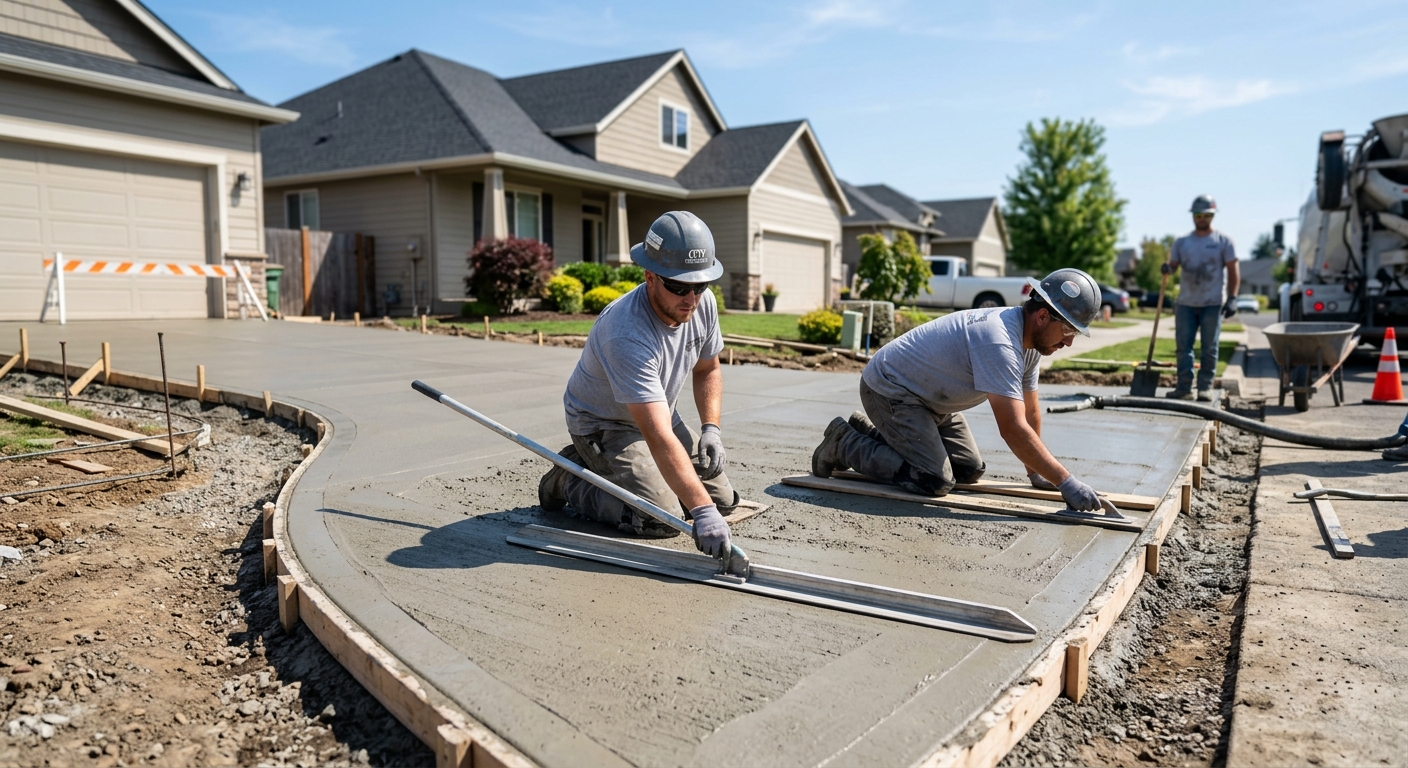
Concrete work options and costs in East Hespeler
Concrete work in East Hespeler, Ontario is mostly driven by the same realities as the broader Toronto economic region: wet ground, winter freeze–thaw cycles, and the need to manage frost heave with proper footing depth and drainage. East Hespeler is a small but active market—population is 7,321 (Statistics Canada, 2021 Census)—and the demand pattern is steady because many homeowners are improving driveways, patios, and entry walks as part of property upgrades. Most concrete flatwork demand comes from owner-occupied homes where curb appeal and reliable access matter year-round, especially along busier corridors and service lanes where slabs see more loading, salt exposure, and foot traffic.
In Toronto-area projects, costs can climb or flatten based on the “hidden” items: excavating to a stable base, reinforcing requirements, concrete mix selection (especially air-entrainment for exterior work), and the time needed to cure properly when temperatures dip toward 10 °C or below. In East Hespeler, contractors often schedule more exterior pours during the warmer part of the year, because cold-weather protection (insulating blankets, temporary heat, and controlled curing) can add labour and material expenses.
Neighbourhood demand is especially noticeable in the older residential pockets near the East Hespeler core, where driveway replacements and walkway resets are common after settling or drainage issues. With that context, here’s a practical comparison of typical options and realistic budget ranges before you line up quotes from local crews.
| Application |
Typical Size |
Key Spec |
Finish Option |
Price Range |
| Concrete driveway (standard broom finish) |
16×24 ft (384 sq ft) |
Air-entrained exterior mix; compacted granular base; control joints |
Broom finish + sealer |
$18,000–$28,000 |
| Exposed aggregate driveway |
16×24 ft (384 sq ft) |
Air-entrained mix; consistent stone exposure; well-drained base |
Exposed aggregate with non-slip texture |
$22,000–$35,000 |
| Stamped concrete driveway or patio |
12×20 ft (240 sq ft) |
Air-entrained mix; thicker section; durable release system |
Stamp pattern + integral colour |
$20,000–$38,000 |
| Plain concrete patio or walkway |
10×16 ft (160 sq ft) |
Air-entrained exterior mix; compacted base; edges protected |
Smooth float or broom finish |
$2,500–$4,500 |
| Garage floor (interior slab) |
20×20 ft (400 sq ft) |
Vapour control where required; properly graded sub-base; fibre/rebar as specified |
Light broom/smooth trowel |
$6,000–$12,000 |
| Foundation footings (structural, below frost) |
House perimeter varies |
Below design frost depth; engineered size and reinforcement |
Structural concrete only |
$180,000–$300,000 |
Prices are estimates only and vary by project scope, site access and material selection.
What affects the price of concrete work in East Hespeler
In the Toronto region, it’s common to see quotes for the “same” concrete job vary by 30–50% once you compare what’s actually included. That’s because concrete pricing isn’t just about the truckload—it’s excavation, base preparation, reinforcement, mix design, weather protection, and finishing/control joints that determine durability. For East Hespeler homeowners, the biggest cost drivers are dictated by frost depth and freeze–thaw cycles: exterior slabs and driveways require air-entrained concrete so the material can survive repeated expansion and contraction; structural footings must extend at least 1.2 m (about 4 ft) below grade in Ontario to help prevent frost heave. On top of that, the pour season is shorter when we get colder stretches, so contractors may need cold-weather curing precautions (heating and insulated blankets), which adds labour and equipment rental.
These conditions also influence availability. When multiple crews are booked for summer work across the Greater Toronto area, schedules tighten, and that pushes labour costs upward. Conversely, projects with straightforward access and uncomplicated base drainage can come in closer to the lower end of the market—especially for plain patios/walkways, which often land around the $16,000–$26,000 band when the footprint and prep are simple.
Here are a few real-world examples from East Hespeler that move budgets by dollars: (1) a driveway replacement where we uncover weak or saturated soil may require extra granular base and thicker sections, pushing you toward the higher $18,000–$28,000 driveway band; (2) a stamped driveway with increased thickness, stamping mats, and colour release costs more than a broom finish; (3) if salt exposure and winter vehicle loads require a more durable surface and sealing plan, that adds manageable cost now to reduce spalling risk later. Older homes with settled approaches or poor drainage often show the problem right away once we remove the existing concrete.
| Price Factor |
Why It Matters |
Cost Impact |
| Frost line depth — determines footing depth and form height |
Footings must be below design frost depth to limit frost heave. |
More excavation and concrete increases structural cost significantly. |
| Site preparation — excavation, grading, compacted granular base |
Weak or wet subgrade leads to settlement and early cracking. |
Extra excavation and base material can raise costs 10–25%. |
| Reinforcement — rebar or wire mesh requirement |
Controls cracking and improves performance for driveways and slabs. |
Material + placement labour can add several thousand dollars. |
| Mix design — air-entrainment and compressive strength spec |
Air-entrainment is critical for freeze–thaw durability outdoors. |
Air-entrained and higher-spec mixes cost more but prevent spalling. |
| Finish type — broom vs. stamped vs. exposed aggregate |
Finishes require different forms, labour, and sometimes extra thickness. |
Stamped/exposed systems add labour and consumables. |
| Pour size and concrete truck access to site |
Limited access increases pumping/chaulage and time. |
Truck access issues can increase labour and equipment costs. |
| Cold-weather curing precautions — heating and blankets |
When temps drop near or below 10 °C, curing slows and risks surface damage. |
Insulation blankets/heaters can add noticeable line-item cost. |
| Control joint pattern and sealing cost |
Joints manage cracking; sealing helps repel de-icing salt staining and spalling. |
Better joint layout and sealing typically increase cost but improve lifespan. |
Permits & regulations in Ontario
In Ontario, structural concrete work typically requires a permit and often engineered drawings reviewed by the municipality. For East Hespeler homeowners, that means work such as foundation footings, foundation walls, and grade beams generally falls under permit requirements because it involves structural safety. In contrast, many concrete flatwork projects—like patios, walkways, and standard driveways—usually do not require a building permit as long as they don’t create grading changes that affect drainage, violate impervious surface coverage limits, or encroach on municipal right-of-way. The safer approach is always to confirm with the local authority before breaking ground, especially if you’re changing the slope, raising the height near doors, or relocating downspouts.
To verify your contractor, do it step-by-step. First, ask for a valid certificate of insurance (liability) showing the policy is active and covering the scope of work. Second, confirm coverage for workplace injuries by requesting proof of WSIB/WCB registration—legitimate trades should provide this without pushback. Third, verify the contractor’s Ontario licensing/registration status through appropriate provincial registries for their trade class. Finally, request references from similar-scale jobs (for example: exterior air-entrained driveway work in freeze–thaw conditions), and ask whether the contractor handled drainage and curing protection properly.
Getting concrete right in East Hespeler's freeze-thaw climate
Concrete failure in East Hespeler is usually about freeze–thaw exposure interacting with poor base prep, the wrong mix, or weak curing. The most common issue homeowners notice is spalling—flaking and scaling—often tied to inadequate air-entrainment and inconsistent concrete quality. To spec the job correctly, start with the base: compacted granular sub-base sized for local soil conditions so water can drain away rather than saturate and expand against the slab. Next is the mix design. For exterior flatwork, specify air-entrainment targeting 5–7% air content and a minimum 32 MPa compressive strength for durability. For cracking control, plan control joints at the right spacing so cracks form in predictable lines instead of randomly across your driveway or patio. Curing is non-negotiable: you generally need a minimum 7-day cure under proper conditions, and if temperatures drop, the contractor should use cold-weather curing protection (insulation blankets and, where needed, temporary heating).
Finally, sealing matters in this climate. Apply a penetrating sealer after the concrete is cured—commonly around 28 days post-pour—so it can repel de-icing salts and reduce surface deterioration. When comparing options, it’s worth spending dollars where it counts: for instance, choosing an air-entrained exterior mix over a cheaper “non-air” approach may cost a few hundred to over a thousand dollars on a typical driveway project, but it can prevent early scaling that would otherwise force a costly replacement far sooner.
Ask concrete contractors in East Hespeler exactly how they’ll protect the pour from freeze risk, how deep the base is, what the air content target is, and how they’ll build joints and sealing into the schedule. That’s how you avoid the failures that show up after the first winter.
| Spec |
Why It Matters in East Hespeler |
What to Ask For |
Impact if Skipped |
| Compacted granular base (depth?) |
Reduces settlement and limits water that freezes and expands under the slab. |
“What granular base depth and compaction method are you using, and how do you drain it?” |
Premature cracking, uneven surfaces, and joint failures. |
| Air-entrained concrete mix (target air %?) |
Air bubbles provide room for freezing water, reducing spalling in freeze–thaw. |
“What air-entrainment target are you placing for exterior flatwork (5–7%)?” |
Spalling and surface scaling within a few winters. |
| Compressive strength (MPa rating) |
Higher strength supports durability under vehicle loads and winter wear. |
“What is the minimum 32 MPa rating for this slab?” |
Surface wear, scaling, and earlier deterioration. |
| Control joints (spacing per ACI guidelines) |
Controls where shrinkage cracks happen in outdoor slabs. |
“Show me the joint layout and spacing so cracking stays in lines.” |
Random cracking, wider repair costs, and water infiltration. |
| Minimum 7-day curing period |
Ensures strength gain and surface integrity before winter stresses. |
“How long do you cure, and what do you do if temps drop near 10 °C?” |
Weak surface, dusting, and early deterioration. |
| Penetrating sealer (when applied after cure) |
Repels de-icing salts and reduces freeze–thaw damage at the surface. |
“Which sealer are you using, and do you apply it after cure (often around 28 days)?” |
Salt damage accelerates spalling and staining. |
How to choose a concrete work contractor in East Hespeler
Choosing the right contractor in East Hespeler starts with proof, not promises. In Ontario, verify licensing/registration for the type of concrete work they do, and always confirm liability insurance is active (ask for the certificate of insurance). Next, confirm WSIB/WCB coverage so you’re not exposed if a worker gets injured on your site. A reliable contractor should provide these documents quickly and clearly.
Get 2–3 itemised written quotes that break down labour and materials—don’t accept a vague lump sum without details. The quote should explain what’s included in site prep (excavation, grading, drainage, compacted granular base depth), reinforcement (mesh or rebar requirements), mix type (air-entrained for exterior), finishing method (broom vs. stamped vs. exposed aggregate), and whether control joints and sealer are included. Also confirm what’s excluded: permit pull, disposal, saw-cutting timelines, and any landscaping reinstatement.
Look for warranty terms that separate workmanship from product/manufacturer coverage. Ask how long the workmanship warranty lasts, whether it covers cracking/spalling, and whether the warranty is transferable if you sell the property. For payment, never let a contractor ask for more than about 10–15% upfront; hold back a portion until the job is complete and any finishing/cleanup items are done. Finally, insist on a start date and a completion estimate in writing—weather windows matter in this area because curing conditions change quickly when temperatures drop.
- Ask for WSIB/WCB proof before scheduling the pour.
- Request liability insurance certificate showing your property/address if available.
- Confirm the contractor’s experience with exterior air-entrained concrete for freeze–thaw.
- Require an itemised quote: excavation/base, reinforcement, concrete supply, finish, joints, sealing.
- Check whether control joints are included (and the planned spacing/layout).
- Verify curing protection plans for cold snaps and night temperatures.
- Confirm base depth and compaction requirements in writing.
- Ask how they handle drainage (especially at edges, slopes, and downspout discharge).
- Make sure demolition/disposal is included if you’re replacing existing concrete.
- Get a concrete truck access plan (pumping, chute lengths, staging area).
- Review warranty length and what failures it covers (cracking/spalling/settlement).
- Use a payment schedule with 10–15% maximum upfront and a holdback until completion.
Red flags I see with concrete contractors in the East Hespeler area include: refusing to show WSIB/WCB or insurance documents, quoting exterior flatwork without specifying air-entrainment, not discussing curing protection when temperatures fall, pricing based only on “square footage” while skipping base depth and reinforcement details, and asking for large upfront payments before any prep work starts.
Frequently asked questions — concrete work in East Hespeler
How long does a concrete project take in East Hespeler?
Typical timelines in East Hespeler depend on whether it’s flatwork (driveway, patio, walkway) or structural work (footings). For many driveway or patio pours, plan on 1–3 days of on-site work: demolition (if replacing), excavation and base compaction, form setting, reinforcement placement, then the pour and finishing. The concrete then needs curing time; even if it’s “walkable,” you generally need proper curing—often a minimum of 7 days—before heavy loads. If temperatures drop toward 10 °C or below, crews may add protection like insulating blankets or temporary heat, which can extend the calendar schedule. For budgeting context, a standard driveway typically sits within the $18,000–$28,000 band, and a staged schedule is normal in winter-adjacent weather. Always ask your contractor for a start date, pour date, and cure/protection plan in writing.
What is a concrete overlay and is it suited to East Hespeler?
A concrete overlay is a new concrete layer placed over an existing slab after preparation (usually grinding/saw-cutting, cleaning, and patching). It can be a cost-effective option when the original concrete is still structurally sound and the main issue is surface wear, minor cracking, or staining. In East Hespeler’s freeze–thaw conditions, overlay success hinges on prep and drainage: if the original slab has poor base support or active movement, the overlay can crack quickly. Overlays also need correct mix selection and joint planning so water doesn’t migrate into expansion/contraction gaps. Cost-wise, overlays can sometimes be cheaper than full replacement, but they’re not always the best long-term play if settlement or drainage problems are driving the deterioration. Compare quotes against your driveway budget, often around the $18,000–$28,000 range for full replacement scope, so you can judge whether the overlay is truly addressing the cause—not just the symptoms.
How do I seal concrete to protect it in East Hespeler?
In Ontario’s freeze–thaw climate, sealing helps protect against de-icing salts, staining, and early surface deterioration. For most exterior concrete, you apply a penetrating sealer after the concrete has cured—commonly around 28 days post-pour—so the surface has stabilized and moisture is appropriate for the product. The contractor should clean the surface thoroughly before sealing and apply it evenly, respecting weather and temperature conditions so it cures properly. Sealing won’t fix poor base prep or inadequate air-entrainment, but it can reduce salt-driven scaling at the surface. If you want the “right” plan, ask for your contractor’s sealer type and application window, plus whether they included sealing in the quote. It’s especially relevant for driveways and steps where winter salt is tracked in. If you chose a decorative finish like stamped or exposed aggregate, sealing still matters for durability and consistent colour appearance.
What is the difference between concrete and cement?
It’s a common question in Ontario. Cement is the binder powder (often Portland cement) that chemically reacts with water. Concrete is the final engineered material made from cement plus water, sand, gravel/stone, and often additives such as air-entrainment and plasticizers. In East Hespeler, the key performance requirement for exterior work is the concrete mix design—particularly air-entrainment—so the slab survives freeze–thaw cycles without spalling. When contractors talk about “32 MPa concrete” or “air content 5–7%,” they’re referring to the concrete mixture, not the cement alone. That’s why two contractors can both say “we use concrete,” but one may not meet the air-entrainment or strength spec needed for Ontario winters. For exterior slabs, ask what air target they place and what compressive strength the mix is designed to achieve.
How much does concrete work cost in East Hespeler?
Concrete pricing in East Hespeler typically depends on size, base prep, reinforcement, finish type, and access. As a quick budgeting guide aligned to this market tier, a standard broom-finished driveway commonly falls in the $18,000–$28,000 range, while plain patios or walkways often run around the $16,000–$26,000 band depending on footprint and site conditions. Stamped concrete usually costs more because of labour and materials; it may fit within the $24,000–$40,000 style decorative range for driveway/patio scopes. Foundation footings are a different category because they’re structural: typical allowances are in the $180,000–$300,000 band depending on house size, excavation depth, and reinforcement. If quotes vary a lot, ask what’s included for granular base depth, air-entrained mix, control joints, curing protection, and sealing—those details explain most of the difference.
How deep must footings be for East Hespeler's frost line?
Footing depth is tied to Ontario’s design frost requirements and soil conditions. In the Toronto region, building practice and the Ontario Building Code typically require structural footings to extend at least 1.2 m (about 4 ft) below grade to help prevent frost heave and differential movement. The final depth can change based on engineered drawings, soil type, and the building’s load path—so your engineer or permit documents are what governs the final spec. In practical terms for homeowners in East Hespeler, that means contractors should plan excavation accordingly and factor in the extra concrete and formwork that deeper digs create. If a quote seems “too low” for a footing job, it often means the contractor isn’t costing in the full depth below frost, reinforcement, or proper concrete specification. Always ask for the engineered footing dimensions and confirmation that the pour will be made below design frost depth.