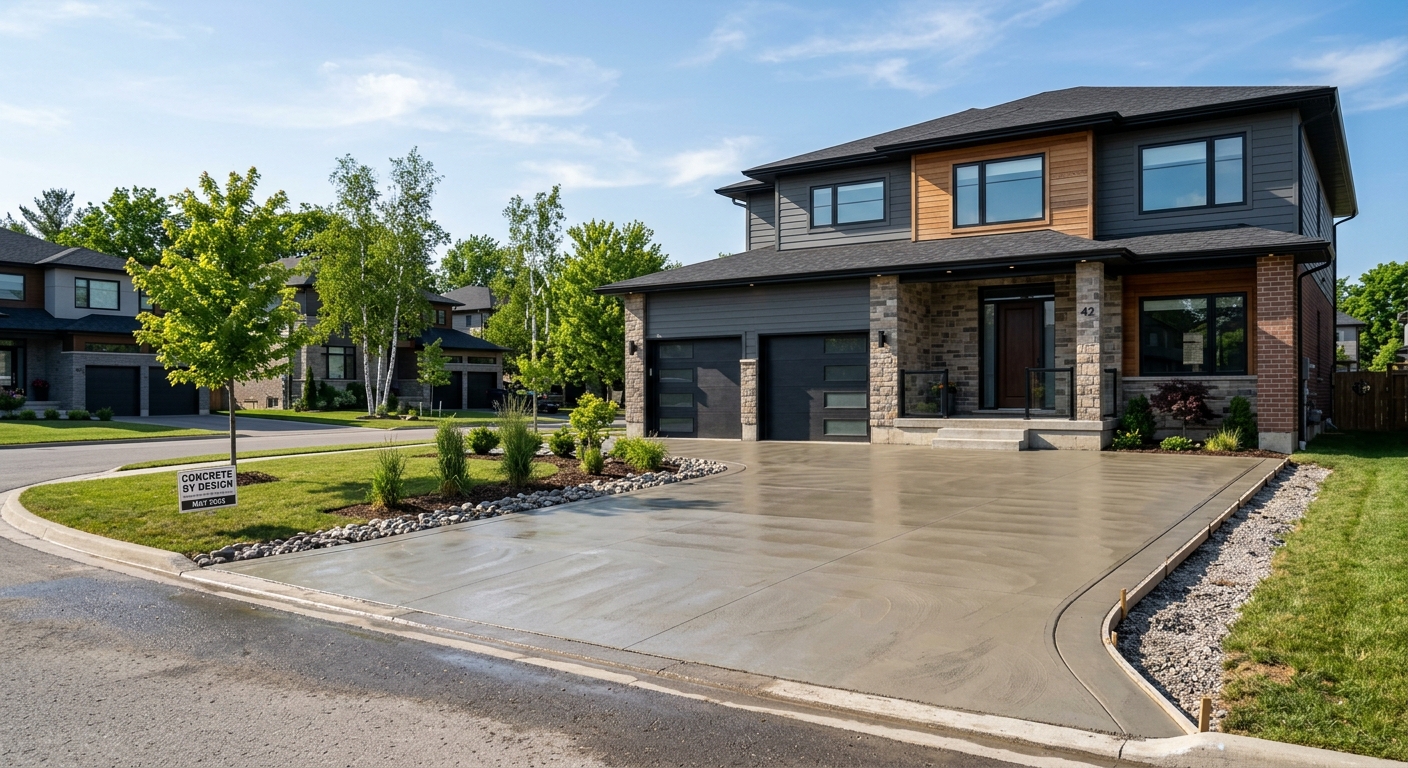
Concrete work options and costs in Annex
Annex, Ontario is a mature, established neighbourhood where homeowners commonly upgrade the same “high-use” concrete surfaces year after year—driveways, patios, walkways and, in many cases, basement-related concrete. With a 2021 population of 30,526 (Statistics Canada, 2021 Census), and a strong stock of single-detached homes typical of the Toronto economic region, you’ll see steady demand for exterior flatwork that can handle winters. That demand is especially noticeable around older pockets and intensifying redevelopment areas near local commercial strips, where lots often change owners and refresh hardscaping.
Concrete pricing here is heavily shaped by Toronto’s freeze–thaw cycles and frost depth requirements. In the GTA, structural footings generally must extend to at least about 1.2 m below grade to reduce frost heave and differential movement. For exterior slabs, contractors typically use air-entrained mixes, build a well-compacted granular base, and plan control joints so cracks don’t become open paths for water. Pour scheduling matters too: crews try to concentrate exterior pours in warmer months, because when temperatures trend down near 10 °C or below, curing slows and protection needs increase.
Contractor availability also shifts with the season—summer scheduling can tighten, and that can affect lead times. When you’re comparing options, it helps to look at how finish type changes labour time and material costs, from standard broom-finished driveways to decorative stamped systems. Use the table below as a realistic starting point for scoping your project in Annex.
| Application |
Typical Size |
Key Spec |
Finish Option |
Price Range |
| Concrete driveway (standard broom finish) |
10 m x 3 m (~30 m²) |
Air-entrained mix, compacted granular base, control joints |
Broom finish |
$3,000–$8,400 |
| Exposed aggregate driveway |
10 m x 3 m (~30 m²) |
Air-entrained mix, proper curing schedule |
Exposed aggregate (wash) |
$5,000–$9,600 |
| Stamped concrete driveway or patio |
8 m x 4 m (~32 m²) |
Air-entrained mix, thicker wear surface, colour hardener |
Stamped pattern + release agent |
$7,700–$13,000 |
| Plain concrete patio or walkway |
3 m x 6 m (~18 m²) |
Granular base, edge forms, control joints |
Float + broom touch |
$1,300–$4,700 |
| Garage floor (interior slab) |
6 m x 6 m (~36 m²) |
Vapour barrier (as required), proper sub-base, finishing |
Standard trowel finish |
$4,200–$10,000 |
| Foundation footings (structural, below frost) |
Varies by house (per project) |
Engineered design, below frost, excavation & forming |
Structural concrete |
$15,000–$30,000 |
Prices are estimates only and vary by project scope, site access and material selection.
What affects the price of concrete work in Annex
In Annex and across the Toronto economic region, quotes for the same “looking” job can vary by 30–50% because concrete pricing isn’t just concrete—it’s excavation, base preparation, reinforcement (if needed), finishing complexity and seasonal protection during curing. Two homes on the same street can still price differently because of access for a concrete truck, how much soil must be removed and replaced, and whether the contractor needs additional labour for winter work.
The biggest spec driver is frost depth and freeze–thaw cycling. Exterior flatwork has to be built to resist movement during repeated expansion and contraction; that’s why structural footings in Ontario typically extend to around 1.2 m (about 4 ft) below grade or deeper, depending on the design. For exterior slabs, contractors generally specify air-entrained concrete mixes and adequate thickness so freeze–thaw doesn’t lead to spalling. Toronto’s humid, often wet fall and spring conditions also make curing management important—when temperatures drop toward 10 °C or below, crews may add insulation blankets and plan longer protection periods.
Here are a few examples of how local conditions change costs in Annex. First, driveways on compacted clay or disturbed fill usually require more granular base and stricter compaction—this can move a standard broom driveway toward the higher end of the $18–$28 per square foot style range. Second, stamped concrete in a freeze–thaw environment costs more not because it “looks nicer,” but because it often includes colour hardener, extra materials and more precise timing to avoid mismatched stamp lines—often justifying the $24–$40 band when the surface finish is done carefully. Third, if de-icing salt exposure is expected (common on long driveways and walkways), sealing is not a cosmetic add-on; it’s part of durability planning and can reduce early surface scaling.
Finally, housing age matters: many Annex basements were built decades ago, and if you’re doing foundation-related work alongside flatwork, the overall job may include additional excavation and regrading—costs that can quickly outgrow a simple slab estimate.
| Price Factor |
Why It Matters |
Cost Impact |
| Frost line depth — determines footing depth and form height |
Deeper frost exposure increases excavation, forming and concrete volume for stability |
Higher depth can add significant labour and concrete costs, often pushing structural items toward the top of the band |
| Site preparation — excavation, grading, compacted granular base |
Proper base prevents settlement and reduces freeze–thaw movement |
More removal/replacement of poor subgrade increases labour and trucking/disposal |
| Reinforcement — rebar or wire mesh requirement |
Reinforcement improves crack control and structural capacity |
Adds material and placement labour; sometimes increases overall thickness requirement |
| Mix design — air-entrainment and compressive strength spec |
Air entrainment helps concrete survive repeated freeze–thaw |
Air-entrained mixes and higher specs can cost more per cubic yard but reduce failure risk |
| Finish type — broom vs. stamped vs. exposed aggregate |
Finish affects labour time, material steps and surface curing/handling |
Decorative finishes typically cost more; standard broom is usually least expensive |
| Pour size and concrete truck access to site |
Access constraints can require smaller pours or longer pump/hose set-up |
Poor access increases crew time and may add equipment charges |
| Cold-weather curing precautions — heating and blankets |
Protecting early-age concrete prevents weak, damaged surfaces |
Insulation/heaters and extra monitoring can raise costs during shoulder months |
| Control joint pattern and sealing cost |
Joints control where cracking happens; sealing protects against salts and water |
Better joint spacing and scheduled sealing add materials/labour but reduce early deterioration |
Permits & regulations in Ontario
In Ontario, structural concrete work generally requires permits, especially when it involves things that affect the building’s structural system. That means projects like foundation footings, foundation walls, grade beams and other structural elements typically require a building permit and often engineered drawings that the municipality reviews. Concrete flatwork—patios, walkways and standard driveways—usually does not require a permit by itself, unless your work affects lot grading, drainage, impervious surface coverage limits, or interferes with municipal right-of-way conditions (for example, work that changes how water runs off toward a curb or sidewalk).
For homeowners in Annex, the safest approach is simple: confirm with the local authority before breaking ground and before you order materials. Also make sure your contractor is properly insured and properly covered for worker risk. Ask whether they carry liability insurance and WSIB coverage (or the applicable equivalent for their situation), and request references on similar-scale pours completed in the last 12–24 months.
Step-by-step, here’s how to verify key items in Ontario:
- Confirm contractor licensing/registration status via the appropriate Ontario contractor/consumer registry search (use the exact company legal name).
- Ask for a current certificate of insurance and verify the policy limits are appropriate for the job.
- Request proof of WSIB/WCB coverage (a clearance letter or account confirmation, depending on their setup).
- Match the insurance certificate to the contractor who will actually perform the work—don’t accept subcontractor-only paperwork.
- Get the permit expectations in writing: whether you’re expected to pull it, or whether the contractor handles it as part of their scope.
Doing this upfront prevents delays and protects you if there’s a work stoppage or inspection issue during the pour season.
Getting concrete right in Annex's freeze-thaw climate
Concrete failures in Annex are usually repeatable problems caused by water, poor base support and early-age damage—not “bad luck.” In the Toronto market, the most common exterior issues I see are spalling (surface scaling), random uncontrolled cracking and uneven settlement. These show up when a job doesn’t account for freeze–thaw cycles, inadequate air entrainment, or insufficient compaction and drainage.
To spec the job correctly, start with base preparation: use a compacted granular sub-base to the right depth for local soils and frost considerations, and grade it so water drains away from the slab. Next is mix design. For exterior flatwork, request an air-entrained mix with about 5–7% air content and a minimum 32 MPa compressive strength (higher if engineered or if the design calls for it). Control joints matter because they provide a planned crack path; in freeze–thaw climates, even small crack openings can become water routes. Proper curing is also critical: plan at least 7 days of curing under suitable conditions, and for cold-weather pours the contractor should protect the slab with insulating blankets or other approved methods.
Finally, include sealing. A penetrating sealer applied after full curing—commonly around 28 days post-pour—helps repel de-icing salts and limits water intrusion, which reduces scaling over the next winter cycles.
When comparing prices, pay attention to what you’re really buying. For example, if a stamped patio quote is near the $24–$40 band and includes proper air entrainment, curing protection and sealing, the added cost can be justified; if it’s “stamped without durability steps,” you’re paying for aesthetics while risking premature surface breakdown.
| Spec |
Why It Matters in Annex |
What to Ask For |
Impact if Skipped |
| Compacted granular base (depth?) |
Stiffens support and reduces movement during freeze–thaw |
Base depth and compaction method; confirm drainage grading away from home |
Settlement, heaving, and cracking that reopens each winter |
| Air-entrained concrete mix (target air %?) |
Air voids help concrete tolerate freezing water expansion |
5–7% air content for exterior flatwork and confirmation in mix ticket |
Spalling and rapid surface deterioration under de-icing salts |
| Compressive strength (MPa rating) |
Strength influences durability and wear resistance in wet/salt exposure |
Minimum 32 MPa (or higher if specified) documented on mix batch info |
Wear, flaking and reduced long-term performance |
| Control joints (spacing per ACI guidelines) |
Controls where cracking occurs so it’s not random |
Joint spacing and depth; confirm tool-cut timing and pattern |
Random cracking, wider openings and faster water infiltration |
| Minimum 7-day curing period |
Early-age protection prevents weak concrete formation |
How curing will be maintained; confirm protection plan when temps fall |
Surface damage, reduced strength and poor abrasion resistance |
| Penetrating sealer (when applied after cure) |
Repels water and salts to limit freeze–thaw surface scaling |
Sealer type and application timing (commonly ~28 days post-pour) |
Higher risk of scaling and staining over repeated winters |
How to choose a concrete work contractor in Annex
Choosing the right concrete contractor in Annex starts with verification. In Ontario, require proof of liability insurance and WSIB/WCB coverage before any work begins. How to check: (1) request their certificate of insurance and confirm it’s current and specific to the legal entity doing the job; (2) ask for WSIB/WCB clearance documentation (or account confirmation letter, depending on their setup); and (3) confirm the contractor’s licensing/registration status using the Ontario registry search by the company’s exact legal name. If a contractor can’t provide documentation promptly, that’s a major warning sign.
Next, get 2–3 itemised written quotes that break out labour and materials. You should see line items for excavation, granular base, reinforcement (if included), concrete supply, forms, finishing, curing/protection and sealing (if applicable). Avoid “lump sum only” quotes unless the scope is extremely clear, because exclusions can quietly shift the total cost at change time.
Read the scope for what’s included and what’s not: permit pull included or not, disposal and hauling included or not, and how they handle drainage grading. For warranty, ask for the workmanship warranty length and whether there’s a separate product/manufacturer warranty (and whether it’s transferable if you sell). For payment schedule, don’t pay more than 10–15% upfront; hold back the remainder until you’re satisfied with final finishing and cleanup. Finally, ensure the schedule includes a start date and completion estimate in writing so you can plan around the GTA pour season.
- Ask for a detailed scope covering base prep, thickness and reinforcement.
- Confirm mix design: air entrainment and minimum compressive strength.
- Require an item for cold-weather protection if work spans cooler weeks.
- Verify control joint spacing and finishing plan.
- Confirm sealing inclusion and application timing (if exterior).
- Request proof of liability insurance and WSIB/WCB coverage before signing.
- Use a written quote with measurable quantities (sq m, m, or thickness).
- Ask about disposal/hauling and whether trucking is included.
- Clarify access limits for concrete trucks and any pumping/hose charges.
- Check if they pull permits or if you must do it—get it in writing.
- Insist on a workmanship warranty and what it covers/excludes.
- Confirm payment terms: low deposit, holdback until final acceptance.
Concrete contractor red flags in Annex include: vague mix specs (“standard concrete” with no air requirement), no mention of frost/freeze–thaw protection, refusing to provide WSIB/WCB documentation, pressuring you for a large upfront deposit, and skipping sealing for salt-exposed exterior flatwork.
Frequently asked questions — concrete work in Annex
Do I need a permit for concrete work in Ontario?
In Ontario, structural concrete work—such as foundation footings, foundation walls and grade beams—almost always requires a building permit, and engineered drawings are commonly involved depending on the design. For typical residential flatwork like a patio, walkway or driveway, permits are often not required by default, but there are exceptions in Annex when the work affects lot grading, drainage patterns, impervious surface coverage rules, or municipal right-of-way conditions. Because details vary by site plan and how water is directed, you should confirm with the local authority before any excavation.
Also, treat contractor paperwork as part of the “permit readiness” process: confirm liability insurance and WSIB/WCB coverage before work starts. If your contractor is planning a foundation-related change, ask how they handle permit pull and inspections so you’re not surprised later during the pour window (especially when temperatures drop toward 10 °C or below).
Concrete vs pavers for a patio in Annex?
Concrete and pavers can both work well in Annex, but freeze–thaw climate conditions influence the decision. Concrete patios—especially broom-finished or lightly textured—are durable when the base is properly compacted and the mix is air-entrained for exterior exposure. Concrete also tends to be less labour-intensive to install overall and provides a monolithic surface once it’s cured.
Pavers can offer easier spot repairs, but they still require correct base depth, compaction and joint bedding—otherwise they shift under cycling winter moisture. If you’re comparing costs, plain concrete patios often fall into the $16–$26 band range for typical exterior flatwork pricing, while stamped or decorative finishes move higher (often aligning closer to the $24–$40 range). If you want a uniform, low-maintenance finish that handles salt, sealed concrete with correct joints is usually the simplest long-term choice.
How long does a concrete driveway last?
In Annex, a properly built concrete driveway can last decades, but the lifespan depends on the details that survive freeze–thaw cycles. The essentials are air-entrained concrete for exterior durability, a well-compacted granular base, correct thickness, and a control joint layout that limits random cracking. Drainage and water management matter just as much: if water sits against the slab edge, you’ll see scaling or movement sooner.
For many GTA homes, an exterior driveway poured with correct specs and sealing practices can outperform cheaper “value” installs that skip air content or underbuild the base. Pricing can help you predict durability. Standard broom-finished driveways in Annex often start around the $18–$28 band for the concrete work tier, and when a contractor’s price is at the low end without explaining the base and air requirements, that’s where premature cracking or spalling risk increases. When a contractor includes proper curing protection (especially if the pour happens late in the season), you’re more likely to see the long-term performance homeowners want.
What is air-entrained concrete and why does it matter here?
Air-entrained concrete is mixed with microscopic air bubbles (air content typically about 5–7% for exterior flatwork) that give freezing water a place to expand without destroying the concrete paste. In Annex and the broader Toronto area, repeated freeze–thaw cycles and humid seasonal wetting are exactly the conditions that make non-air-entrained concrete vulnerable. Without air entrainment, the surface is more prone to spalling and scaling, especially when de-icing salts are used on driveways and walkways.
When you request quotes, ask for the mix design details—not just the finish. Make sure the contractor documents air entrainment and minimum compressive strength (commonly at least 32 MPa for exterior flatwork). A stamped or exposed aggregate driveway looks great on day one, but durability still hinges on the mix. If a contractor can’t explain air requirements or won’t provide mix ticket information, it’s a strong sign to reconsider—particularly in a climate where temperatures can hover around freezing and curing protection matters.
How do I prepare the base for a concrete slab?
Base preparation is the part of the job you can’t “patch later,” so it needs to be specified clearly. For concrete slabs, the contractor should excavate to the required depth, remove topsoil and unsuitable material, then install a compacted granular sub-base. The goal is a stable, evenly supported layer that resists settlement. They should also grade the base so water drains away from the house and manage any soft pockets or utility trenches appropriately.
In Annex’s freeze–thaw environment, base performance directly affects how the slab moves each winter. That’s why air-entrained concrete alone isn’t enough; the slab must sit on a properly compacted foundation that won’t pump moisture or shift under load. When you compare quotes, ask what base thickness is included, whether they use compacted granular material (and to what standard), and whether reinforcement and thickness adjustments are included when soil conditions are poor. If someone quotes a low price but won’t discuss base depth and compaction, you’re likely risking the early-life cracking and unevenness issues that show up after a couple of winters.
How do I compare concrete quotes?
To compare concrete quotes in Annex fairly, focus on scope and specs—not just the total price. First, ensure each quote covers the same size and thickness, the same base preparation (excavation and compacted granular depth), the same reinforcement (if any), and the same concrete mix requirements like air entrainment for exterior exposure. Second, check whether curing protection for cooler conditions is included—Toronto-area pours are often scheduled in warmer months, but shoulder-season weather can raise costs with blankets or other measures when temperatures trend down.
Ask for itemised breakdowns: labour, materials, disposal/hauling, forms, finishing and sealing (for exterior). If one quote includes sealing and the other doesn’t, that alone can explain a noticeable difference, similar to what you see when comparing standard driveway pricing in the $18–$28 band to decorative options that land closer to $24–$40. Finally, verify the contractor’s liability insurance and WSIB/WCB coverage before you sign—paperwork and real site protection are part of “what you’re buying” in Ontario.