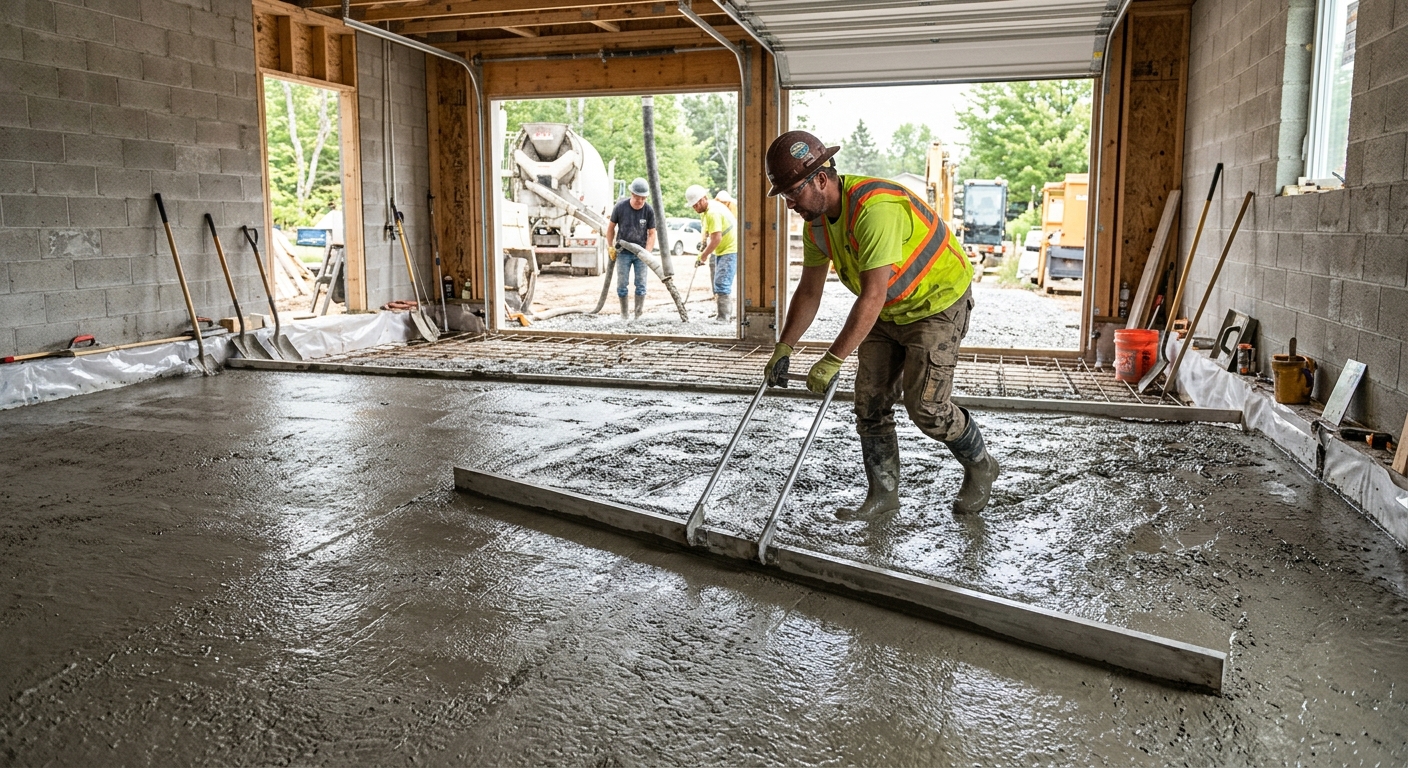
Concrete work options and costs in Vancouver
In Vancouver, concrete flatwork is a practical choice for homeowners who want a durable surface that can handle our Lower Mainland–Southwest weather swings. About 45.5% of households in the region are owner households, and single-detached homes make up 14.7% of dwellings—the kind of housing stock where driveways, patios, and garage slabs are most often replaced or upgraded. The good news is that Vancouver’s milder winters and a shallow typical frost depth mean we usually don’t need the deep, expensive footing profiles you see farther inland. The trade-off is that our coastal-wet climate brings frequent freeze–thaw cycles, saturated soils, and heavy rainfall, so base drainage, compacted granular preparation, and the right air-entrained mix are non-negotiable. That’s why quotes for “the same size” driveway or walkway can still move meaningfully once we account for subgrade conditions, truck access, reinforcement needs, and how much scheduling time we lose to cool, damp curing conditions.
In neighbourhoods like Kitsilano and along the Cambie/Marpole corridor, we often see higher demand for decorative and low-maintenance driveway solutions, but the same site-access realities—street parking, narrower lanes, and staged deliveries—can push labour and forming time. Below is a realistic comparison of common concrete options so you can line up scopes before you call contractors.
| Application |
Typical Size |
Key Spec |
Finish Option |
Price Range |
| Concrete driveway (standard broom finish) |
400–500 sq. ft. |
Compacted granular base; air-entrained exterior mix; control joints |
Broomed surface |
$18,000–$28,000 |
| Exposed aggregate driveway |
400–500 sq. ft. |
Air-entrained mix; proper curing; aggregate exposure process |
Exposed aggregate |
$22,000–$34,000 |
| Stamped concrete driveway or patio |
300–450 sq. ft. |
Air-entrained mix; integral colour or hardener; sealing after cure |
Stamped pattern + sealer |
$22,000–$36,000 |
| Plain concrete patio or walkway |
200–400 sq. ft. |
Compacted base; control joints; exterior air content |
Float/trowel + light broom |
$16,000–$26,000 |
| Garage floor (interior slab) |
300–500 sq. ft. |
Vapour considerations if required by plan; fibre or rebar per design |
Standard broom or smooth trowel |
$12,000–$22,000 |
| Foundation footings (structural, below frost) |
Varies by footing plan |
Designed thickness/steel; poured below design frost depth; drainage details |
Structural concrete (no cosmetic finish) |
$200–$350 |
Prices are estimates only and vary by project scope, site access and material selection.
What affects the price of concrete work in Vancouver
In Vancouver and the wider Lower Mainland–Southwest, the same driveway or patio can come in dramatically different once you price the whole job—not just the concrete. It’s common to see 30–50% variation across British Columbia because factors like excavation depth, drainage work, reinforcement, and curing protections change the labour hours and materials. Frost and moisture also drive the engineering choices: in colder regions, the frost line and freeze–thaw intensity force deeper, heavier sections. In coastal BC, the frost depth is typically around 0.5–1.2 m, and our practice often assumes about 450 mm / 18" to guide excavation and footing levels; that said, Vancouver projects still require footings and thickened edges placed below the design frost line to prevent frost heave. Exterior slabs also need an air-entrained mix and correct control-joint detailing to manage scaling and random cracking.
Two practical examples show where costs rise or fall in Vancouver. First, upgrading to a decorative option is mostly about extra prep and finishing labour: stamped concrete often prices higher than plain work (you’ll commonly see exterior decorative pricing in the $22–$36 band), but when the pattern replaces the need for pavers and extra edging, homeowners sometimes find the lifecycle value better. Second, if your subgrade is soft or poorly drained, base prep and granular drainage can add significant scope; that can move a standard driveway closer to the upper range (the driveway backbone band here is $18–$28). We also feel this in older housing stock—43.0% of homes built before 1981 often have legacy drainage issues—so bringing the site back to a stable, compacted base can be the difference between a surface that looks good for years and one that heaves or spalls prematurely.
| Price Factor |
Why It Matters |
Cost Impact |
| Frost line depth — determines footing depth and form height |
Footings and thickened edges must sit below the design frost to reduce frost heave. |
Higher excavation and forming time; can add major labour/material cost on structural work. |
| Site preparation — excavation, grading, compacted granular base |
Vancouver’s saturated soils and rainfall require a stable, well-compacted foundation layer. |
More granular, hauling, compaction equipment time, and potential drainage work. |
| Reinforcement — rebar or wire mesh requirement |
Controls cracking and supports structural loads based on slab use and thickness. |
Additional steel material and placement labour; cost varies by engineered requirements. |
| Mix design — air-entrainment and compressive strength spec |
Exterior air entrainment helps concrete survive freeze–thaw and surface scaling. |
Upgraded mix and tighter batching quality controls; usually a worthwhile cost. |
| Finish type — broom vs. stamped vs. exposed aggregate |
Complex finishes require timing, extra steps, and sealing for durability. |
Stamped/exposed work typically costs more than plain broom-finish flatwork. |
| Pour size and concrete truck access to site |
Restricted access increases labour for hose/pump logistics and staged pours. |
More crew hours, possible pump/placing charges, and material handling time. |
| Cold-weather curing precautions — heating and blankets |
Cool nights and damp weather can slow strength gain and increase long-term risk. |
Blankets, heaters, and monitoring time can add cost in shoulder-season pours. |
| Control joint pattern and sealing cost |
Correct jointing limits random cracking; sealing helps resist chloride from de-icing and staining. |
Additional materials and labour; often cheaper than early repairs. |
Permits & regulations in British Columbia
In British Columbia, the permit picture depends on the type of concrete work. Structural concrete—including footings, foundation walls, grade beams, and other load-bearing elements—typically requires a building permit and, in many cases, engineered drawings that the municipality reviews. Concrete flatwork such as driveways, patios, and sidewalks usually does not need a permit unless it affects things like lot grading, impervious surface coverage limits, drainage flows, or municipal right-of-way requirements. Because each project site can have unique drainage and servicing considerations, always confirm with the local authority before you break ground—even if your neighbour did something similar.
For contractor due diligence in Vancouver, ask for the following step-by-step: (1) their business licence where applicable and the trades documentation they hold for your scope; (2) a certificate of liability insurance naming you as the appropriate additional insured (or showing coverage limits that match your project); and (3) proof they have appropriate coverage for workers (WSIB/WCB-equivalent coverage, as applicable). Then verify by looking for a current online registry listing for their business/trade status and by confirming the COI dates and policy limits. Also request clearance letter documentation if they can provide it for current coverage status. Finally, get references on similar-scale Vancouver projects with comparable access and exterior exposure.
Getting concrete right in Vancouver's freeze-thaw climate
Concrete doesn’t fail in Vancouver because of one problem—it fails when multiple small decisions stack up. The biggest risks in our climate are inadequate base preparation, insufficient drainage, and poor mix design. Freeze–thaw cycling and heavy coastal rainfall increase moisture movement through the slab and into the edges and base, which can lead to scaling and spalling if the concrete isn’t properly air-entrained. For a correct spec, start at the base: (1) build a compacted granular sub-base to the right depth for local soil conditions and frost protection; don’t “save” on base thickness because it’s hard to fix later. (2) Use the right mix: for exterior flatwork, ask for air-entrainment typically in the 5–7% range and a minimum 32 MPa compressive strength so the concrete achieves the durability you expect. (3) Control joints: plan a joint layout so cracking happens where you can manage it, not randomly. (4) Curing: in Vancouver’s cool, damp periods, plan for at least 7 days of curing under proper conditions; shoulder-season pours may need blankets or other precautions. (5) Sealing: apply a penetrating sealer after the concrete has cured (often around 28 days) to help repel moisture and salts.
When comparing prices, use examples rather than vibes. If a contractor offers to reduce cost by omitting air entrainment or skipping granular drainage, the risk can turn into a costly do-over. Meanwhile, spending more on the right finish can be justified: for instance, if your upgrade from plain patio to stamped concrete is within the regional decorative band (often $22–$36), that premium can be worth it if the contractor still includes the same durable base, jointing, and sealing plan—otherwise you pay for appearance without performance.
| Spec |
Why It Matters in Vancouver |
What to Ask For |
Impact if Skipped |
| Compacted granular base (depth?) |
Helps manage moisture and supports the slab against settlement and frost effects. |
Granular type and target compacted depth; specify drainage provisions. |
Settlement, pumping, and early surface breakdown. |
| Air-entrained concrete mix (target air %?) |
Reduces scaling/spalling risk under freeze–thaw and wet conditions. |
Confirm air content in the mix is typically 5–7% for exterior flatwork. |
Frost-related scaling and spalling, especially on edges and high-traffic areas. |
| Compressive strength (MPa rating) |
Ensures the slab reaches design durability and strength under local curing realities. |
Minimum 32 MPa compressive strength (or project-specified rating). |
Surface wear, cracking, and reduced long-term performance. |
| Control joints (spacing per ACI guidelines) |
Controls where shrinkage and thermal movement crack. |
Joint spacing plan based on thickness and slab dimensions (ACI-aligned). |
Random cracking that may require patching or resurfacing. |
| Minimum 7-day curing period |
Strength gain is slower in cool, damp Vancouver weather if not managed. |
How they protect and cure the concrete; plan for cold or rainy days. |
Weaker surface, increased cracking and durability problems. |
| Penetrating sealer (when applied after cure) |
Improves resistance to moisture and salt exposure near driveways and entrances. |
Sealer type and application timing after cure (commonly around 28 days). |
Higher staining and moisture ingress, especially in rainy seasons. |
How to choose a concrete work contractor in Vancouver
Choosing the right contractor in Vancouver is less about the lowest number and more about verifying the basics that protect your slab. Start by confirming British Columbia compliance and financial responsibility: ask for their business licence or trade registration for the scope you’re hiring (and verify it via the appropriate online registry), then request a certificate of liability insurance showing the policy is current, with adequate limits for exterior concrete work. Also ask for proof of worker coverage (WSIB/WCB-equivalent coverage as applicable in your trade situation) and look for current clearance/coverage documentation when they can provide it. A reputable crew will hand you paperwork without pressure.
Next, get 2–3 itemised written quotes that separate labour, formwork, excavation/grading, base materials, reinforcement, concrete supply, finishing, sealing, and disposal. Don’t accept a vague lump sum that hides exclusions—ask what’s not included (e.g., curb cuts, cutting/removal, drainage corrections, permit pulls, or concrete disposal/haul-away). For warranty, ask for both the workmanship warranty length and whether there’s a separate product/manufacturer warranty. Verify whether the warranty is transferable if you sell the home.
Finally, manage cash flow: in practice, you should avoid paying more than 10–15% upfront, and use a holdback until the job is complete and you’ve confirmed the finish and cleanup. Get a start date and completion estimate in writing, because Vancouver’s rain windows can affect curing schedules.
- Ask for an itemised quote (labour + materials + equipment), not just a total price.
- Confirm exterior concrete will be air-entrained for freeze–thaw durability.
- Request the target compacted base depth and whether drainage is included.
- Verify reinforcement approach (rebar/wire/fibres) matches slab thickness and use.
- Check the joint plan (spacing and where joints will be placed).
- Confirm curing methods (blankets/heating if cool nights are expected).
- Ask if penetrating sealer is included and when it will be applied (after cure).
- Review protection plan for landscaping, sidewalks, and neighbour impacts.
- Clarify haul-away/disposal of concrete and excavated soil is included or excluded.
- Ensure a written schedule includes rain delays and curing time buffers.
- Confirm insurance certificate dates and coverage limits before signing.
- Check references for similar Vancouver site conditions (access, drainage, older homes).
Concrete contractor red flags in Vancouver: (1) they won’t explain the air-entrainment and jointing plan; (2) they quote low prices but exclude base drainage or granular prep; (3) they demand large upfront payments; (4) they can’t show current liability coverage or worker coverage documentation; and (5) they’re vague about curing—especially for shoulder-season pours.
Frequently asked questions — concrete work in Vancouver
When is the best time to pour concrete in Vancouver?
In Vancouver, the best window is generally late spring through early fall when temperatures are steadier and rain can be managed with better scheduling. That said, we still pour outside those months when necessary, but the contractor should plan for Vancouver’s cool nights and high humidity with curing blankets or other cold-weather precautions. For exterior work like driveways, patios, and walkways, we also pay attention to freeze–thaw timing and moisture saturation; the shallow frost line still means we protect edges and foundations below design frost depth. If you’re comparing quotes, ask how they handle prolonged rain—good crews build in extra time and surface protection rather than rushing. As a reference point, a standard exterior driveway often sits in the $18,000–$28,000 band depending on prep and access, and scheduling can move that number.
How long does concrete take to cure?
Concrete strength gain happens over time. In Vancouver conditions, contractors typically plan for at least a 7-day curing period under proper protection and temperature, especially for exterior slabs. However, full durability performance is better associated with longer curing—commonly around 28 days for the concrete to reach design strength and for coatings/sealers to perform correctly. Weather matters: cool evenings and damp spells can slow early strength gain, so a contractor should state what they’ll do if nights are cold or if rain is likely. If you’re choosing between options, curing practices can be more important than the finish: stamped and exposed aggregate look great, but the base prep, mix, joints, and curing determine whether the slab scales or spalls later. Always ask how they protect the slab during the first week and when sealing is scheduled.
Do I need a permit for concrete work in British Columbia?
In British Columbia, structural concrete work—like footings, foundation walls, and grade beams—usually requires a building permit and often engineered drawings reviewed by the municipality. For typical concrete flatwork such as patios, walkways, and driveways, a permit is often not required, unless the project affects lot grading, impervious surface coverage limits, drainage direction, or municipal right-of-way elements. Because Vancouver sites vary (especially older properties with complicated drainage), you should confirm with your local authority before breaking ground. A good contractor will ask about drainage, existing services, and lot conditions upfront, then include any needed permit steps in the scope. If permit work is required, you should see it clearly listed in the written quote and schedule.
Concrete vs pavers for a patio in Vancouver?
Both can work well in Vancouver, but concrete is often more predictable for long-term performance if the base preparation and mix design are correct. Pavers can offer easier spot repairs later and more flexibility in design, but they rely heavily on proper bedding sand, edge restraint, and drainage—problems show up quickly when saturated soils or poor grading cause shifting. Concrete patios use air-entrained exterior mixes and a joint plan to control cracking under our freeze–thaw conditions. Cost-wise, plain concrete patios commonly align with the $16,000–$26,000 band for typical scopes, while decorative options can run higher depending on stamping and finishes. If you want a low-maintenance, monolithic look, concrete is hard to beat. If you prefer individual unit replacement aesthetics and don’t mind more detail in base layers, pavers may fit better.
How long does a concrete driveway last?
A concrete driveway’s lifespan in Vancouver depends less on the “type of concrete” and more on base prep, drainage, air-entrainment, jointing, and curing. When those fundamentals are done correctly, many driveways can last decades, even with Lower Mainland rainfall and freeze–thaw cycling. The most common early issues come from moisture movement—if the granular base isn’t properly compacted or if edge drainage isn’t addressed, freeze–thaw cycles can contribute to scaling and spalling. Joint spacing also matters because it dictates where shrinkage cracking happens. If de-icing salts are used, sealing after cure can help reduce surface deterioration. When you’re budgeting, remember that higher-cost jobs often include better prep, reinforcement where needed, and finishing/sealing—features that protect your investment. For reference, driveway projects frequently fall within the $18,000–$28,000 range depending on size and scope.
What is air-entrained concrete and why does it matter here?
Air-entrained concrete is mixed with tiny, evenly distributed air bubbles that give water a space to expand when temperatures swing around freezing. In Vancouver and the wider Lower Mainland–Southwest, that matters because our climate can produce repeated freeze–thaw cycles and our slabs often sit over saturated soils. Without proper air entrainment, exterior concrete is more vulnerable to scaling and spalling—especially on edges, near downspouts, and in areas exposed to splashback from coastal rainfall. When contractors specify exterior air-entrainment, you’re buying durability. Ask what air content they target (commonly 5–7% for exterior flatwork) and confirm they’re using an appropriate exterior mix spec with correct curing. In homeowners’ terms: air-entrainment is one of the main reasons an exterior slab can look good today and resist damage years from now.