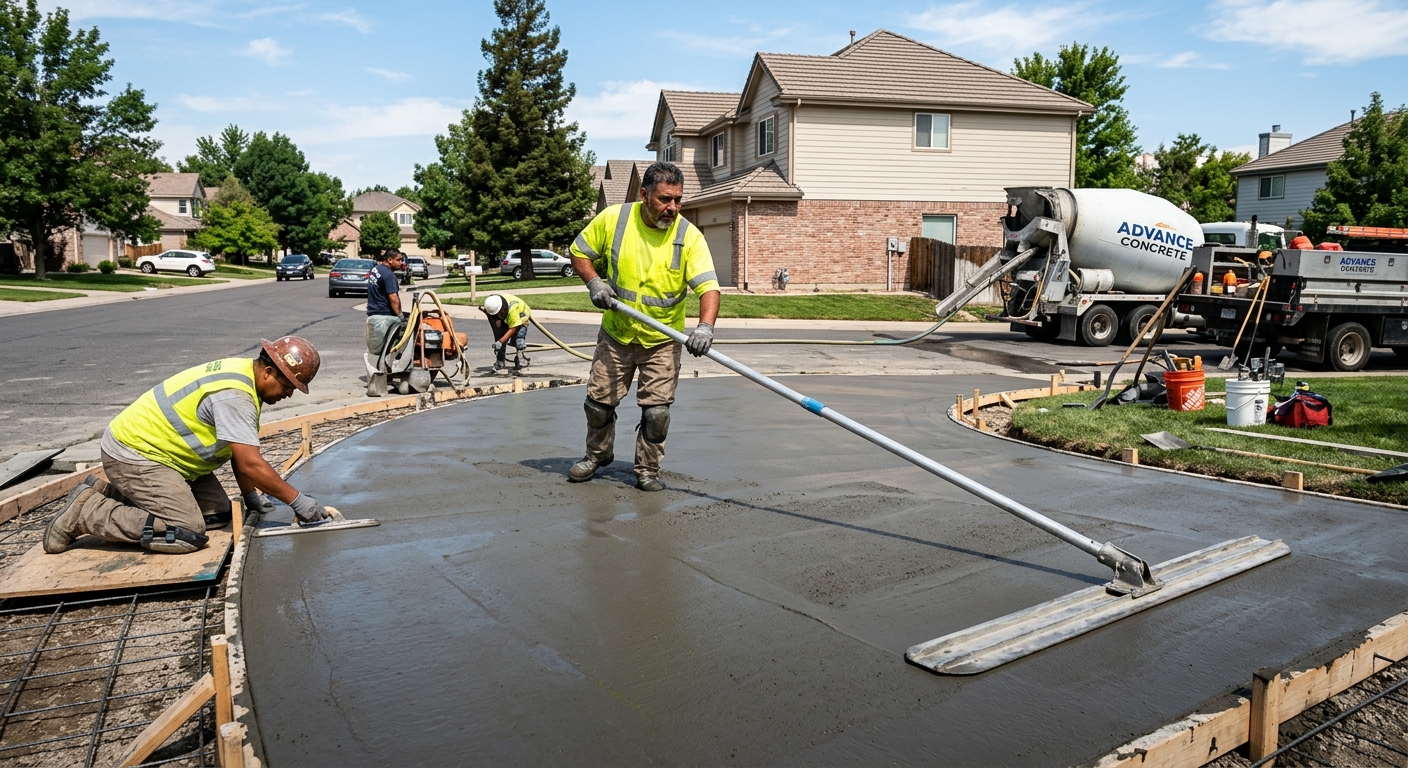
Concrete work options and costs in Marpole South
Concrete work in Marpole South, British Columbia is popular because this is a practical, family-focused neighbourhood where many homeowners choose durable exterior flatwork—especially when upgrading driveways and backyard patios. Marpole South is part of a Lower Mainland–Southwest housing market (population 7,150 in the area profile, Statistics Canada, 2021 Census) and that demand typically concentrates around established pockets with older homes needing replacements, resurfacing, and better drainage. You’ll see strong interest in areas near Marpole and the west-side arterials, where driveways and sidewalks take a beating from coastal wet weather and freeze–thaw cycles. Even though our winters are milder than interior BC, the shallow frost depth still matters for slab support and footing design.
Pricing is shaped by how contractors plan for freeze–thaw damage: base preparation often includes compacted granular, careful subgrade drainage, and air-entrained concrete for exterior slabs. Curing also costs more here than many homeowners expect—cool nights and long humid stretches can slow strength gain, so crews may use curing blankets or sealers and extend schedule buffers to protect surface durability. Labour and availability can vary too, since crews serving the Vancouver–Surrey–Abbotsford corridor tend to be booked during peak construction windows.
To compare apples-to-apples, use the price ranges below as a starting point for typical scopes in Marpole South, then line up the specs (base depth, reinforcement, air content, finish) with your quote.
| Application |
Typical Size |
Key Spec |
Finish Option |
Price Range |
| Concrete driveway (standard broom finish) |
400 sq ft |
4" slab, compacted granular base, control joints |
Broom finish |
$18,000–$28,000 |
| Exposed aggregate driveway |
400 sq ft |
4" slab with proper curing and finishing timing |
Exposed aggregate |
$22,000–$32,000 |
| Stamped concrete driveway or patio |
300 sq ft |
Air-entrained exterior mix, release agent, joints |
Stamp + integral color (where selected) |
$22,000–$36,000 |
| Plain concrete patio or walkway |
200 sq ft |
4" slab, compacted base, control joints |
Float/smooth then broom texture |
$16,000–$26,000 |
| Garage floor (interior slab) |
450 sq ft |
Vapour barrier (as required), fibre or mesh (project dependent) |
Smooth trowel (with light broom edge texture) |
$18,000–$30,000 |
| Foundation footings (structural, below frost) |
Per linear ft allowance |
Below frost depth per design, reinforced concrete |
Structural concrete |
$200–$350 |
Prices are estimates only and vary by project scope, site access and material selection.
What affects the price of concrete work in Marpole South
In Marpole South and across the Lower Mainland–Southwest, quotes for the “same” concrete job can vary by 30–50% because the price is driven by spec decisions—not just the square footage. Two contractors can both quote a 400 sq ft driveway, but one may price a thin slab over a better-prepped base, while another accounts for deeper excavation, drainage corrections, reinforcement, and longer curing protection during cool, wet periods. In British Columbia, regional scheduling and labour demand also influence rates, especially when crews are balancing multiple trades on tight access streets in Vancouver and surrounding municipalities.
Design specs are dictated by the frost and the freeze–thaw cycle. Even with a shallow frost depth typical of coastal BC (practice often assumes frost around 450 mm / 18"), exterior footings and thickened edges must sit below the design frost to prevent frost heave. For slabs and exterior flatwork, air-entrained concrete is essential to manage micro-damage from cycles of saturation and freezing. Colder stretches of the season shorten effective pour windows; that means additional labour planning and cold-weather curing precautions (insulating blankets, curing protection, and sometimes temperature control), which raise costs. De-icing salts can accelerate scaling and spalling if the mix and curing aren’t right—so sealing is often recommended for durability.
In Marpole South, costs commonly rise for projects where soil is saturated or where downdrain/roof runoff routing requires rework—then you’re paying for added base and drainage. Costs can drop when the subgrade is already well-prepared, access is easy, and you choose a standard broom finish instead of stamped or exposed aggregate (often moving you from the $18–$28 driveway band toward the $22–$36 stamped & decorative band). Housing age also plays a role: older homes frequently have existing drainage issues or sunken driveways, and fixing them can add thousands before concrete is even poured.
| Price Factor |
Why It Matters |
Cost Impact |
| Frost line depth — determines footing depth and form height |
Footings must extend below design frost to prevent heave in exterior foundations and piers |
Can add material and excavation cost; typically higher for deeper design requirements |
| Site preparation — excavation, grading, compacted granular base |
Proper base and drainage reduce voids that lead to settlement and cracking |
Big swing if removal of unsuitable soil or drainage corrections are required |
| Reinforcement — rebar or wire mesh requirement |
Controls cracking and improves load capacity for driveways and garage floors |
Increase labour and material; required more often on wider or heavier-use slabs |
| Mix design — air-entrainment and compressive strength spec |
Air entrainment improves durability under freeze–thaw and scaling risk |
Usually moderate increase, but essential for exterior durability |
| Finish type — broom vs. stamped vs. exposed aggregate |
Finish affects labour time and finishing technique, and can impact curing timing |
Stamped/exposed often costs more than standard broom due to extra steps and materials |
| Pour size and concrete truck access to site |
Long hauls and tight access can require smaller batches, more trips, or pumps |
May raise costs with additional mobilization or pumping |
| Cold-weather curing precautions — heating and blankets |
Protects early-age strength development and reduces surface damage in cool, damp periods |
Can increase labour and material; more common in shoulder-season schedules |
| Control joint pattern and sealing cost |
Correct joints limit random cracking; sealing helps repel salts and staining |
Small-to-moderate add-on, but prevents costly surface repairs |
Permits & regulations in British Columbia
In British Columbia, structural concrete work—such as footings, foundation walls, and grade beams—typically requires a building permit, and engineered drawings are often reviewed by the municipality before inspection. Concrete flatwork (patios, walkways, and most driveways) usually does not require a permit by itself, but it can if it affects lot grading, drainage, or impervious surface/servicing rules, or if it touches municipal right-of-way or sidewalk/curb interfaces. For any project that changes how water drains or alters elevation near property lines, confirm with the local authority before breaking ground.
Before signing, ask your contractor for proof of capability and coverage. For Marpole South homeowners, the practical way to verify a contractor is to: (1) check licensing/registration details using the provincial online registry tools available for your trade category (site shows current status and whether the contractor is active); (2) request a current Certificate of Insurance showing liability coverage amounts and that the policy is valid for the project dates; and (3) confirm worker coverage (WSBC/WCB) by asking for the clearance letter or proof that matches your project timeline and jobsite address. Then verify references—ideally recent projects with similar footing depth, drainage conditions, and exterior exposure.
Work with a contractor who will clearly separate what’s included in the scope (engineering/permits if applicable, forms and inspections, excavation and disposal) so you’re not surprised after the pour window closes.
Getting concrete right in Marpole South's freeze-thaw climate
Concrete failure in Marpole South is usually a “systems” problem: the slab or foundation is only as good as the base, drainage, mix, joints, and curing. In the Lower Mainland–Southwest climate, repeated wetting from coastal rain followed by cool temperatures creates freeze–thaw damage. If the base isn’t compacted to the right thickness or if subgrade drainage is inadequate, water sits under the slab and undermines support. If the mix lacks proper air entrainment, the freeze–thaw cycle can cause scaling and eventual spalling—often starting at edges, cracks, and low spots where water collects.
To spec the job correctly, focus on five core items. (1) Base preparation: excavate to the right depth, install compacted granular, and keep drainage paths clear so the slab sits on stable, well-draining support. (2) Mix design: use air-entrained concrete (commonly 5–7% air for exterior flatwork) and specify a minimum 32 MPa compressive strength for durability. (3) Control joints: plan joint spacing to limit random cracking and reduce water intrusion into cracks. (4) Curing: protect the pour for at least 7 days under appropriate conditions; in cool, wet weather you may need blankets or sealers to hit strength and avoid surface damage. (5) Sealing: apply a penetrating sealer after the cure period (commonly at 28 days) to repel de-icing salts and reduce staining and moisture absorption.
For example, if one quote offers a “cheaper” plain patio in the $16–$26 band but skips air-entrainment language or joint sealing details, you may pay again sooner in repairs. Spending the extra amount for correct mix, base compaction, and a proper joint/seal plan is usually the best way to justify any price difference.
| Spec |
Why It Matters in Marpole South |
What to Ask For |
Impact if Skipped |
| Compacted granular base (depth?) |
Stable support reduces settlement and water pooling under slabs in wet seasons |
Confirm excavation depth to suit local soil and frost exposure; granular thickness and compaction requirements |
Higher risk of cracking, uneven surfaces, and premature failure |
| Air-entrained concrete mix (target air %?) |
Manages freeze–thaw durability for exterior flatwork in coastal BC conditions |
Specify exterior air content target (typically 5–7% air) and confirm mix type with the supplier |
Increased scaling and spalling, especially at edges and joints |
| Compressive strength (MPa rating) |
Ensures the slab reaches design strength for load and long-term durability |
Request minimum 32 MPa for exterior flatwork (or higher if engineered) |
Surface wear and reduced long-term performance |
| Control joints (spacing per ACI guidelines) |
Controls where cracks occur so water doesn’t penetrate randomly |
Ask for joint spacing and saw-cut/formed timing plan |
Random cracking and faster deterioration at crack locations |
| Minimum 7-day curing period |
Strength development is slower in cool nights and damp weather |
Confirm curing method (blankets/sealer protection) and minimum curing time before exposure |
Lower strength, dusting, and increased surface defects |
| Penetrating sealer (when applied after cure) |
Helps repel salt and moisture typical of Marpole South winter conditions |
Ask for penetrating sealer application after full cure (often around 28 days) |
More staining, moisture absorption, and faster surface aging |
How to choose a concrete work contractor in Marpole South
Choosing the right concrete contractor in Marpole South starts with verifying credentials and then insisting on itemised documentation. In British Columbia, confirm your contractor is properly registered for the work they’re doing, and check liability insurance before any excavation. You should request a Certificate of Insurance showing the insurer, policy number, coverage limits, and the jobsite/project details (or at least the named insured and valid dates). For worker coverage, ask for proof of WSBC/WCB clearance (a clearance letter or equivalent document) that matches the time period of your project—this is the cleanest way to avoid risk if an accident happens on site.
Next, get 2–3 written quotes that break down labour and materials instead of one lump number. Ask how they’ll handle excavation and disposal, what base thickness and compaction they include, whether reinforcement is included, and whether the mix is explicitly air-entrained for exterior exposure. Make sure the scope lists whether permits/engineering are included (when needed), and who is responsible for calling for inspections for foundation/structural elements.
Warranty matters: ask for the workmanship warranty length and what it covers (cracks that exceed a defined limit, joint spacing issues, spalling due to mix/curing errors, etc.). Also ask about any manufacturer warranty for specific products (sealers, admixtures) and whether it transfers to your ownership. For payments, a responsible schedule rarely asks for more than 10–15% upfront; hold back a portion until you’ve completed punch list items and final curing/sealing steps where included. Finally, get a start date and estimated completion timeline in writing—wet-weather buffering is normal here.
- Confirm licensing/registration status for the contractor and the specific trade activity being quoted.
- Verify current liability insurance with project dates and correct jobsite details.
- Request WSBC/WCB clearance proof (clearance letter or equivalent).
- Insist on an itemised quote (excavation, granular base, rebar/mesh, concrete mix, finishing, curing, sealing).
- Ask whether the mix is specified as air-entrained for exterior slabs (target air content in the spec).
- Confirm footing/frost requirements and whether thickened edges or reinforcement are included.
- Ask for base depth and compaction method; don’t accept “standard base prep” language only.
- Check reinforcement placement plan (on chairs, correct cover, mesh size/type if applicable).
- Ask about control joint spacing and whether joints will be sealed (where recommended for durability).
- Clarify curing plan: curing blankets, sealers, and minimum curing time for exterior durability.
- Confirm disposal is included (haul-away of unsuitable soil and excess materials).
- Get a written timeline with concrete delivery schedule and rain/cold-weather contingencies.
Concrete red flags I see in Marpole South include: quotes that omit air-entrainment details, “standard” base prep with no depth/compaction stated, no mention of control joints or sealing, vague wording like “we’ll handle permits” without specifying who pulls them, and payment requests above 10–15% before work begins.
Frequently asked questions — concrete work in Marpole South
Concrete vs pavers for a patio in Marpole South?
For a patio in Marpole South, concrete usually wins on long-term uniformity and cost predictability, especially when your contractor specifies an exterior, air-entrained mix and includes control joints. Pavers can be great if you want an easy zone-by-zone repair later or a more decorative look, but the base and compaction still determine lifespan—if drainage is off, you can get settling and uneven surfaces. Concrete patios typically fall around $16,000–$26,000 for common sizes, depending on thickness, reinforcement, and finish. Pavers can be competitive when you already have good base conditions and a simple layout, but labour and materials can vary heavily with edging, pattern complexity, and base depth. Given Marpole South’s wet coastal conditions and freeze–thaw cycles, the best choice is often the one with the stronger, documented drainage and base prep plan.
How long does a concrete driveway last?
A well-built concrete driveway in British Columbia can last decades, often 20–40 years, but durability depends on the “whole system” in Marpole South: air-entrained mix for exterior freeze–thaw resistance, proper base compaction, correct joint spacing, and good curing protection during cool, damp periods. If the slab is poured over saturated or poorly prepared subgrade, you can see cracking and edge spalling sooner—especially where water pools after rainfall. Most driveway replacements are triggered by surface scaling, uneven settlement, or structural cracking. Typical driveway pricing in the area starts around the regional band of $18,000–$28,000 for a standard broom-finished pour, but paying a bit more for documented base prep and finishing details usually protects against early surface failure. If you use de-icing salt, a penetrating sealer (after full cure) helps slow deterioration.
What is air-entrained concrete and why does it matter here?
Air-entrained concrete is mixed with tiny, evenly distributed air bubbles designed to give freezing water room to expand without destroying the cement paste. In Marpole South, the combination of coastal rain, saturated soils, and freeze–thaw cycles is exactly what drives spalling and scaling when the mix is wrong. Exterior flatwork should use air-entrained concrete with a target commonly in the 5–7% air range (for exterior durability), along with a minimum compressive strength such as 32 MPa. If your quote doesn’t mention air entrainment, that’s a major omission for British Columbia exterior work. A proper mix, combined with correct curing and control joints, helps the slab survive repeated wetting and temperature swings. It’s one of the most cost-effective specs to protect your driveway, patio, or walkway from premature surface failure.
How do I prepare the base for a concrete slab?
Concrete slab performance in Marpole South starts with base prep: excavation to the right depth, graded subgrade, and a compacted granular layer sized for your soil conditions and frost exposure. Contractors should remove unsuitable or organic material, then place compacted granular in lifts (with compaction testing where practical) to reduce settlement risk. Drainage matters, too—if water has nowhere to go, it undermines the slab and increases freeze–thaw damage. For exterior slabs, ask your contractor to explain the granular thickness and compaction approach rather than using vague language. You should also ask how they’ll protect the base during ongoing rain (covering, scheduling, and prompt forming). When the base is done correctly, the concrete—often in the $16,000–$26,000 patio/walkway range depending on scope—has a solid foundation to last through cycles without cracking early.
How do I compare concrete quotes?
To compare concrete quotes fairly in Marpole South, you need to match specifications, not just totals. Ask each contractor for an itemised breakdown (excavation and disposal, granular base depth, reinforcement type, concrete mix details including air entrainment for exterior work, and finishing method). Confirm joint spacing and whether joints will be sealed where appropriate, and ask how curing is handled during cool nights or prolonged humidity. Also clarify access constraints: truck access, pumping needs, and how they’ll stage materials can change labour and timing. If one quote offers stamped or exposed aggregate, compare it against finish steps and materials—stamped concrete often lands in the higher $22,000–$36,000 band because of integral color/release agents and extra labour. Finally, check what’s excluded (permits/engineering for structural work, site protection, saw cutting, cleanup). A quote that’s cheaper but missing key durability specs usually costs more later.
Can concrete be poured in cold weather in Marpole South?
Yes, concrete can be poured in cold weather in British Columbia, but it must be protected so the mix reaches strength correctly. In Marpole South’s climate, “cold weather” can still mean cool nights, damp conditions, and risks for early-age freezing. Contractors typically use cold-weather curing precautions such as insulating blankets, wind/surface protection, and sometimes heating methods to keep the concrete within acceptable temperature ranges while it develops strength. The goal is to avoid surface defects and reduce the risk of weak early structure that leads to premature wear. A reputable contractor will include a winter plan in the quote—curing method, minimum curing time, and how they monitor conditions. If you’re being quoted a standard schedule with no mention of curing protection, that’s a concern. For most exterior projects, plan for extra time buffers, and confirm they’re specifying the right mix and curing steps for durability under freeze–thaw conditions.