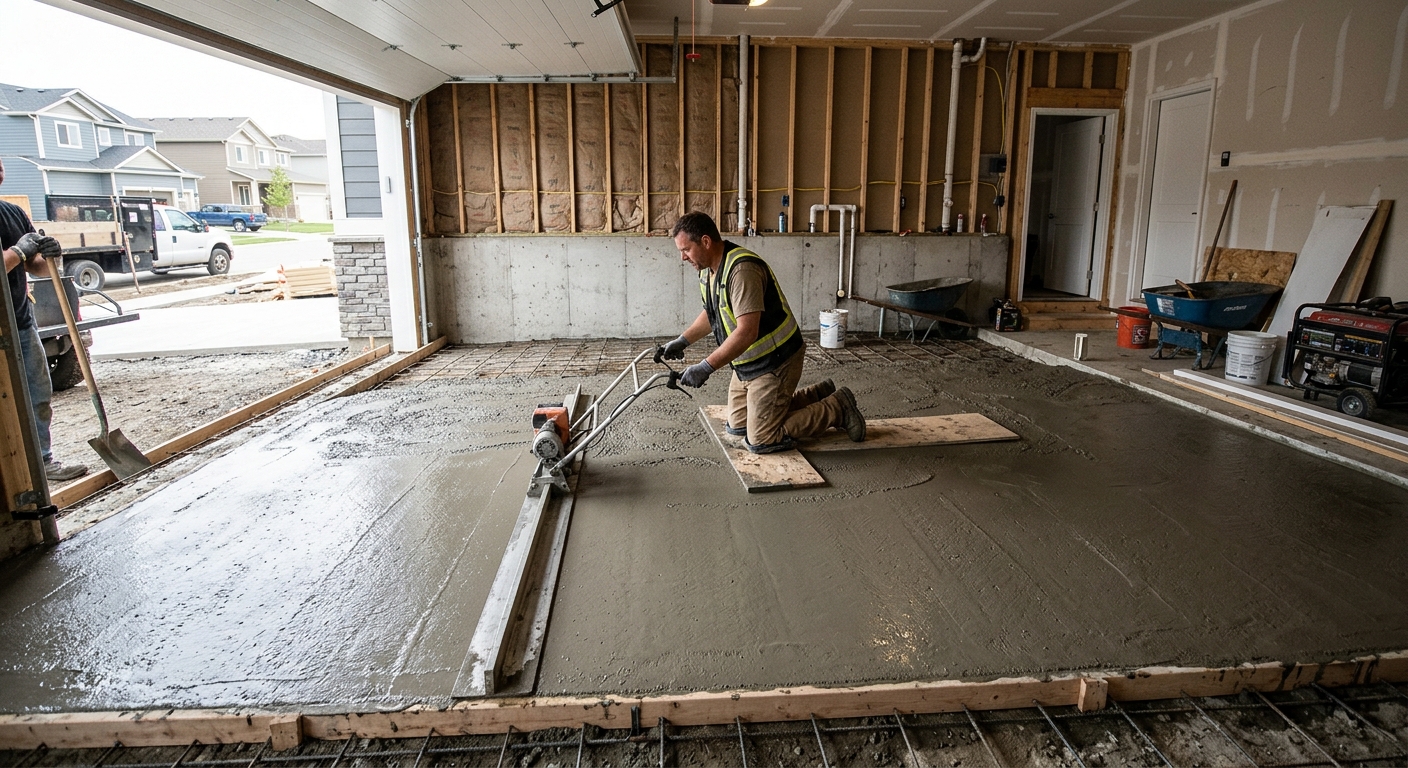
Concrete work options and costs in Smithers
Concrete is a big part of everyday home maintenance and upgrades in Smithers, especially with a housing stock where single-detached houses make up 62.8% of dwellings. In a community of 5,378 people, there are also about 1,630 homeowner households (70.4% of households own), which is a strong driver of repeat flatwork needs like driveways, patios, walkways and garage slabs. The Nechako region’s cold-climate interior conditions directly shape what you pay: contractors plan for deeper excavation and frost protection, and they design slabs and footings to handle frequent freeze–thaw cycles that can lead to heaving, scaling, and cracking if the spec is weak.
Cost can also vary because Smithers’ pour season is shorter than in southern B.C., so cold-weather placement often requires insulated blankets, heaters, and tighter curing protection. Those extras—along with roughly 30% higher concrete and related material costs across B.C. since 2020—push pricing above what you’d see from marketing in coastal cities. That said, competition is typically strongest in high-traffic residential pockets where people are actively renewing driveways and walk areas, such as areas around Downtown Smithers and the Town Centre / Highway corridor.
Below is a practical comparison of common concrete jobs and realistic budget ranges for Smithers, so you can line up apples-to-apples when you request quotes.
| Application |
Typical Size |
Key Spec |
Finish Option |
Price Range |
| Concrete driveway (standard broom finish) |
400 sq. ft. (about 20' x 20') |
4" slab, air-entrained, control joints |
Broom finish + sawcut joints |
$7,200–$10,000 |
| Exposed aggregate driveway |
400 sq. ft. (about 20' x 20') |
4" slab, air-entrained, sealed |
Exposed aggregate wash |
$9,200–$12,800 |
| Stamped concrete driveway or patio |
300 sq. ft. (about 15' x 20') |
4" slab, air-entrained, pattern stamp |
Stamped + integral color (or stain system) |
$8,400–$12,300 |
| Plain concrete patio or walkway |
200 sq. ft. (about 10' x 20') |
4" slab, air-entrained |
Light broom finish |
$3,200–$4,800 |
| Garage floor (interior slab) |
500 sq. ft. (about 20' x 25') |
4" slab (or per design), fine grading |
Broom finish or smooth-trowel option |
$9,000–$13,000 |
| Foundation footings (structural, below frost) |
Per linear foot: 60 lf example |
Engineered footing size, below frost excavation |
Structural concrete |
$3,600–$5,400 |
Prices are estimates only and vary by project scope, site access and material selection.
What affects the price of concrete work in Smithers
Even when two homeowners describe the “same” concrete job, quotes in the Nechako region can swing by 30–50% once you account for frost protection, base prep, reinforcement, and weather curing. In Smithers, that variability is normal because the cold-climate interior conditions force more excavation and more careful slab design than milder parts of British Columbia. For example, colder areas require air-entrained mixes and better curing protection so freeze–thaw cycles don’t degrade the surface. From a budgeting perspective, that’s why a plain patio often lands closer to the lower end of the region’s patio band, while stamped options land closer to the top end (labour, forms, and finishing time).
Here are the big drivers behind the numbers. Frost line depth and freeze–thaw cycles dictate every exterior spec: footings must extend below the design frost depth, or you risk frost heave that can lift slabs or crack foundations. All exterior slabs should use air-entrained concrete mixes to survive repeated freezing and thawing. Then comes the shortened pour season: in late fall or shoulder season, contractors may need insulated blankets, heaters, and accelerated curing measures to achieve strength—adding cost. Finally, de-icing salt accelerates surface spalling if the mix and finish aren’t properly done, so sealing becomes less of an option and more of a protective step.
Local examples that push costs up in Smithers include removal of unsuitable soil before placing a compacted granular base, building driveways with limited truck access near older streets, and coordinating excavation depth where older homes (and homes built before 1981 make up 51.6%) have different drainage patterns and utility layouts. Conversely, costs can be lower when the site already drains well, the footprint is simple, and rebar mesh is minimal because the engineer’s loading requirements are modest. For reference, stamped work can push toward the higher driveway/patio range of roughly $28–$35 per square foot equivalent, while broom-finish driveway pours commonly budget closer to $18–$25 per square foot equivalent.
| Price Factor |
Why It Matters |
Cost Impact |
| Frost line depth — determines footing depth and form height |
Controls excavation volume and how far concrete must extend below freezing |
Higher depth = more concrete, labour, and disposal; typically a major cost swing |
| Site preparation — excavation, grading, compacted granular base |
Bad sub-base leads to settlement and cracking, especially with freeze–thaw cycles |
Unsuitable soil removal and re-compaction can add substantial labour and material |
| Reinforcement — rebar or wire mesh requirement |
Improves resistance to cracking under load and thermal movement |
Extra steel and tie-wire work increases material and crew time |
| Mix design — air-entrainment and compressive strength spec |
Air content and strength determine durability in freezing conditions |
Custom mix can cost more, but reduces early spalling and repairs |
| Finish type — broom vs. stamped vs. exposed aggregate |
More labour, more materials, and more finishing steps for decorative work |
Stamped/exposed typically adds meaningful labour and increases rework risk if rushed |
| Pour size and concrete truck access to site |
Small pours still need proper staging; difficult access increases set-up time |
More trips, waiting time, or pump needs can raise overall cost |
| Cold-weather curing precautions — heating and blankets |
Ensures proper early-age strength and prevents freezing damage |
Heaters, blankets, monitoring and schedule changes can add a significant premium |
| Control joint pattern and sealing cost |
Controls where cracks appear and protects against salt-driven surface deterioration |
Accurate sawcut layout and sealing material/labour reduce long-term failures |
Permits & regulations in British Columbia
In British Columbia, structural concrete work is generally treated more formally than decorative flatwork. If you’re doing footings, foundation walls, or grade beams, you should expect that a building permit is required, and you may need engineered drawings reviewed through the municipal process. For concrete flatwork such as driveways, patios, and walkways, a permit is often not required by default—unless your project affects things like lot grading, drainage patterns, or municipal rules around impervious surface coverage and right-of-way impacts. Because each site is different, it’s smart to confirm with the local authority before excavation.
Regardless of whether a permit is required, verify contractor compliance in Smithers (and across the B.C. North). Step-by-step: (1) Ask for their liability insurance certificate—check that it’s current and shows coverage for the work you’re hiring them for. (2) For worker coverage, request proof of WSBC/WCB coverage (worker compensation) and confirm they’re registered and in good standing. (3) Confirm licencing and compliance using the appropriate online registry resources for B.C. contractors (the contractor should be able to provide their business details, licence number, and documentation). (4) Request references on similar-scale projects in northern communities and ask whether they handled winter protection and curing on exterior slabs.
Getting concrete right in Smithers's freeze-thaw climate
In Smithers, concrete failures are usually climate-driven: freeze–thaw cycling can pull moisture into the slab surface and near-surface paste, then expand it as temperatures drop, leading to scaling and spalling. The most expensive “fix” is repeating the pour because the base wasn’t built for frost movement or the mix wasn’t designed for it. Start with base preparation: a compacted granular sub-base to the required depth for the local soil and frost conditions helps prevent pumping and settlement. Next, mix design: specify air-entrained concrete with a target of roughly 5–7% air content for exterior flatwork, and a minimum 32 MPa compressive strength (exact requirements should follow the engineer/spec for the application).
Then control cracking: install properly located control joints (sawcut or tooled as appropriate) at spacing that limits random cracking. Curing is critical in a shorter pour season—plan for at least 7 days of curing under protected conditions, especially if temperatures are near freezing. Finally, sealing matters in a salt-and-ice environment: apply a penetrating sealer after the slab has cured (commonly around 28 days) to help repel de-icing salts.
When homeowners compare options, the dollar difference is often justified. For instance, if a broom-finish driveway is budgeted around $18–$25 per square foot equivalent, and stamped is closer to $28–$35, the extra cost is largely labour-intensive finishing and pattern work—not just “nicer look.” If a contractor tries to cut corners on air content or joints to win the lower price, that “savings” tends to show up as early repairs instead of long-term performance. For Smithers, the right spec is what makes the decorative finish last.
| Spec |
Why It Matters in Smithers |
What to Ask For |
Impact if Skipped |
| Compacted granular base (depth?) |
Reduces settlement and limits moisture movement before it freezes |
State required excavation depth and granular base thickness, plus compaction method |
Settlement, cracking, and faster freeze–thaw damage |
| Air-entrained concrete mix (target air %?) |
Air bubbles provide freeze–thaw resistance in exterior exposure |
Target air content (typically 5–7% for exterior flatwork) and mix certification |
Higher risk of spalling/scaling, especially with de-icing salts |
| Compressive strength (MPa rating) |
Design strength supports durability under traffic and thermal movement |
Minimum 32 MPa (or engineered requirement) and confirmation on test records |
Surface weakness, wear, and premature failures |
| Control joints (spacing per ACI guidelines) |
Controls where cracks happen during temperature swings |
Joint spacing plan and sawcut timing |
Random cracking and unsightly, unstable failure locations |
| Minimum 7-day curing period |
Ensures hydration and early-age strength before cold snaps |
Protection plan for curing (tarps/blankets/heaters as needed) and weather limits |
Reduced strength, increased cracking, and durability loss |
| Penetrating sealer (when applied after cure) |
Improves resistance to salt intrusion and water uptake |
Apply after full cure window (commonly around 28 days), product type, and coverage rate |
Faster surface deterioration and higher long-term maintenance costs |
How to choose a concrete work contractor in Smithers
Choosing the right contractor in Smithers is mostly about verifying compliance and protecting yourself from the common “low bid” trap: weak base prep, incorrect mix spec, or rushing finishing before proper curing. Start with licensing and insurance. In British Columbia, ask for their liability insurance certificate (you want it current, with limits appropriate for your project), then request proof of WSBC/WCB coverage so you’re not stuck if a worker is injured on your property. Most reputable contractors can provide these documents immediately. Next, get 2–3 itemised written quotes that break labour and materials—don’t accept a lump sum without line items for excavation, forms, reinforcement, concrete supply/mix, finishing, joints, sealing, and disposal.
Read exclusions carefully: is the permit pull included if your project touches foundation/structural work? Who handles trucking/disposal of excess soil? Is winter protection included if the start date falls into colder temperatures? For warranty, ask for both workmanship warranty length (how long they stand behind joints, curing, and finishing) and any product/manufacturer warranty that applies to sealers or decorative systems—then ask if it’s transferable to future owners.
Payment schedule matters: never pay more than 10–15% upfront. Keep a holdback until the job is complete and cleaned up. Finally, insist on a written timeline—start date and estimated completion—because in Smithers’ short pour season, scheduling changes can affect curing outcomes.
- Confirm liability insurance: certificate date, coverage type, and project details
- Confirm WSBC/WCB coverage and request documentation
- Ask if the quote includes air-entrained mix and curing protection for cold weather
- Require itemised labour + materials (not just “concrete supply”)
- Specify slab thickness, footing depth (below frost), and base depth
- Confirm reinforcement: rebar mesh size, placement, and chairing/ties
- Ask for a control joint plan (where, how soon they sawcut)
- Ask who supplies and places drainage materials (granular base, oversite prep)
- Confirm sealing: product type and whether it’s included, and when it’s applied
- Clarify site access: truck route, pump needs, and any extra labour assumptions
- Check disposal/haul-away: included in the quote or billed separately
- Get warranty in writing (workmanship and any product terms)
Red flags in Smithers include: quotes that don’t mention air-entrainment or curing protection, contractors who offer a very low price but plan to “pour no matter the temperature,” no written timeline or joint plan, missing proof of WCB/WSBC or liability coverage, and crews who won’t put sealing or winter measures in scope when they affect exterior durability.
Frequently asked questions — concrete work in Smithers
How much does concrete work cost in Smithers?
In Smithers, costs depend heavily on frost protection, base prep, and finishing level. For a realistic reference, concrete patios and walkways often budget around the regional band of $16–$22 per square foot (typical for plain broom-finish work), while standard driveways usually land closer to $18–$25 per square foot once excavation, granular base, and joints are included. Decorative work costs more: stamped concrete driveways or patios are commonly priced in the $28–$35 per square foot range because of extra labour, pattern work, and integral colour/stain systems. If your site has poor drainage, needs deeper excavation, or the pour needs winter heaters and insulated blankets, expect the higher end of these bands.
How deep must footings be for Smithers's frost line?
Footings in Smithers must be designed below the local design frost depth to reduce frost heave and movement. While frost depth can vary based on soil conditions and the engineer’s design, the practical takeaway for homeowners is that contractors should base footing depth on the design frost depth and site-specific conditions—not guesswork. In a cold-climate interior like the Nechako region, this often means deeper excavation and greater form height than in milder parts of B.C. Ask your contractor whether the footing depth is being set from engineered drawings (for foundation/structural work) and confirm they are planning for the required excavation and granular support beneath footings.
Why does concrete crack in Smithers and how is it prevented?
Concrete cracks in Smithers mainly because of temperature swings and moisture movement tied to freeze–thaw cycles. When water in the near-surface freezes and expands, it creates stress in the paste and can also push or shift the slab if the base isn’t built for frost movement. Cracking is also controlled by shrinkage and the way joints are laid out. Prevention comes from good base preparation, air-entrained concrete for exterior exposure, and a proper control joint plan. Ask for control joints at a spacing pattern suitable for the slab size and thickness, and confirm sawcut timing (so cracks form where you want them). Sealing also helps reduce salt-driven deterioration that makes small cracks expand over time.
Stamped vs broom-finish concrete — cost difference?
Stamped concrete costs more than broom-finish because it takes longer to build forms (or prepare template work), place and finish the slab to receive the stamp, and complete colouring and detailing. In Smithers budgeting terms, broom-finish driveway concrete commonly falls around $18–$25 per square foot, while stamped concrete driveways or patios are often around $28–$35 per square foot. That difference is typically justified when your slab design and joints are still built for freeze–thaw durability—air-entrainment, proper curing, and correct joint spacing matter just as much for stamped surfaces. If a contractor tries to keep cost down by skipping winter curing protection or reducing the spec on exterior air content, the stamped look won’t prevent early spalling.
When is the best time to pour concrete in Smithers?
The “best time” is when temperatures allow curing without freezing risk—so late spring through early fall is usually ideal in Smithers. Because the pour season is shorter in the cold-climate interior, shoulder-season pours can require insulated blankets, heaters, and tighter scheduling to protect early-age strength. If you’re planning exterior flatwork like driveways, patios or walkways, ask your contractor what their weather cutoff is for placement and finishing, and what cold-weather curing measures they include if frost is expected. For best results, also plan for curing protection so rain doesn’t wash cement paste during early set, and so the slab doesn’t lose moisture too fast before it gains strength.
How long does concrete take to cure?
Concrete needs two kinds of timeframes: initial cure and long-term strength gain. In practice for homeowners in Smithers, you should plan for at least 7 days of proper curing under suitable conditions for typical flatwork durability, with extra protection when cold weather is possible. Full performance continues beyond that—so for sealing, the common approach is to apply penetrating sealer after the slab is fully cured, often around 28 days, so the concrete can dry appropriately and the sealer can bond as intended. If a contractor doesn’t protect curing in winter-like temperatures, you can see reduced strength and a higher chance of cracking or surface scaling under freeze–thaw cycles.