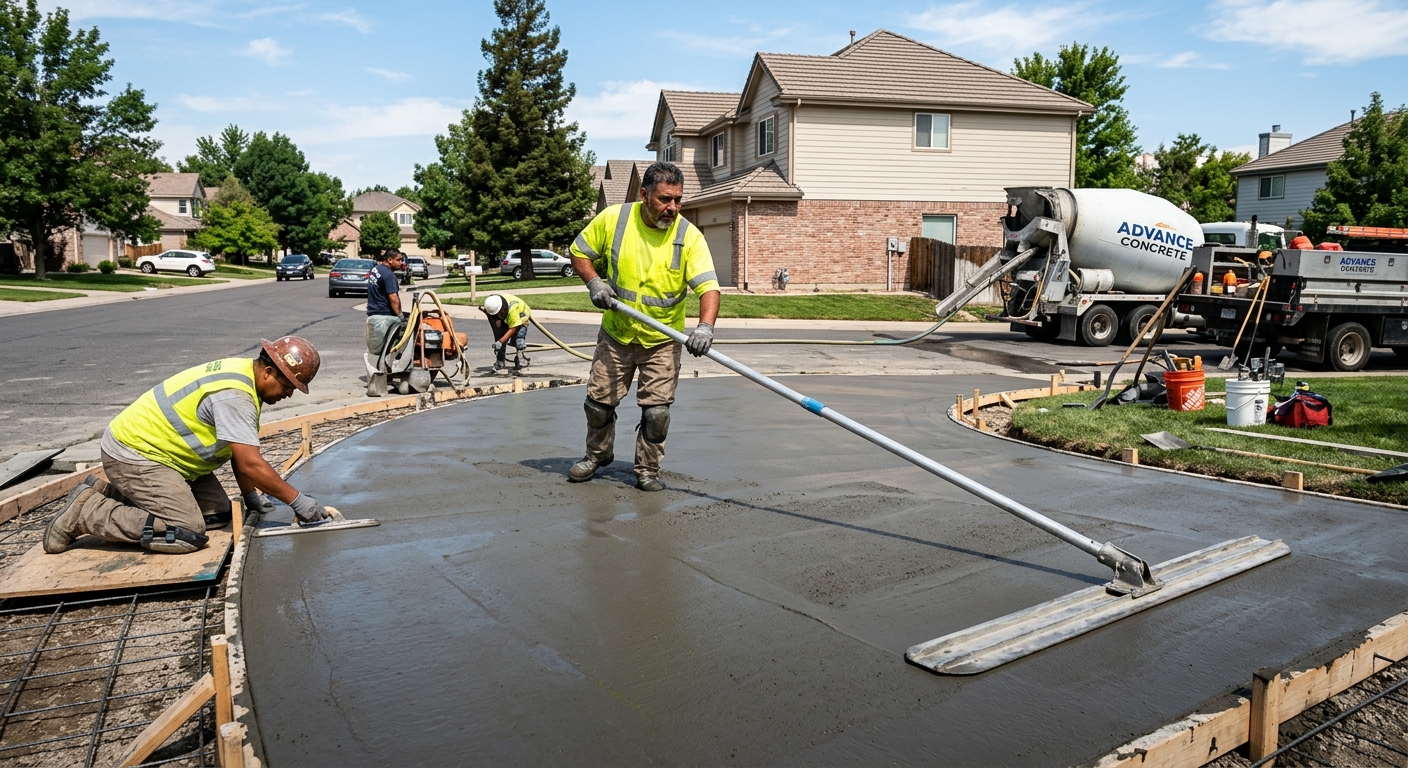
Concrete work options and costs in Royal Oak
In Royal Oak, homeowners typically choose concrete flatwork because it’s durable, maintainable, and fits the neighbourhood’s mix of family homes and growing infill. With a 2021 population of 8,855 (Statistics Canada, 2021 Census), there’s steady demand for driveways, patios and foundation work—especially around the older pockets near Saanich Road and the Royal Oak retail area where many properties are transitioning from older finishes to modern, long-life upgrades. Most of the concrete work we see is tied to single-family living: in the Lower Mainland–Southwest, the single-detached home market drives consistent needs for new driveways and backyard slabs.
Lower Mainland–Southwest pricing is shaped by our mild winters and a shallow design frost depth, but we still build for freeze–thaw and coastal rainfall. Even with a frost depth around 450 mm / 18", footings and thickened edges are usually set below that to reduce frost heave risk. That foundation spec influences everything from excavation depth to rebar placement and truck access. You’ll also see higher scheduling and curing attention in Royal Oak because persistent rain, cool nights and high humidity can slow strength gain at the surface—so contractors often use curing blankets, sealers, and longer cure windows to protect driveways and patios.
To compare options the way contractors actually price them, use the ranges in the table below as your starting point, then line up the right specs (base depth, mix design, reinforcement, finish, and joints) for an apples-to-apples quote.
| Application |
Typical Size |
Key Spec |
Finish Option |
Price Range |
| Concrete driveway (standard broom finish) |
400 sq. ft. (approx. 18' x 22') |
Air-entrained exterior mix, compacted granular base |
Broom finish, control joints |
$10,200–$14,700 |
| Exposed aggregate driveway |
400 sq. ft. (approx. 18' x 22') |
Air-entrained exterior mix, proper base + curing |
Exposed aggregate, sealant-ready surface |
$12,900–$18,200 |
| Stamped concrete driveway or patio |
300 sq. ft. (approx. 15' x 20') |
Air-entrained exterior mix, reinforcement as needed |
Stamps + release + texture matched to pattern |
$9,600–$13,500 |
| Plain concrete patio or walkway |
250 sq. ft. (approx. 10' x 25') |
Air-entrained mix, compacted base, joints |
Float/screed then light broom or trowel texture |
$4,100–$6,500 |
| Garage floor (interior slab) |
500 sq. ft. (approx. 20' x 25') |
Standard slab thickness, moisture awareness |
Broom finish or hard-trowel (as specified) |
$7,800–$12,900 |
| Foundation footings (structural, below frost) |
Varies by house |
Below design frost depth; engineered dimensions; rebar |
Typically structural finish (not decorative) |
$6,000–$12,000 |
Prices are estimates only and vary by project scope, site access and material selection.
What affects the price of concrete work in Royal Oak
In Royal Oak and across the Lower Mainland–Southwest, quotes for the “same” concrete job can swing by 30–50% because the real cost drivers aren’t just the volume of concrete—they’re the depth and preparation of the base, the frost protection details, and how well the contractor can schedule curing in rainy periods. A nearby market competitor might price a driveway with a lighter base and fewer QC steps; another contractor prices to a more conservative frost-and-drainage approach, including better compaction, air-entrained mix control, and more robust finishing and sealing.
Frost-line depth and freeze–thaw cycles dictate key specs. Even though coastal BC generally uses a shallower design frost depth (commonly discussed around 0.5–1.2 m in coastal BC), exterior concrete still needs air-entrainment to survive repeated saturation and temperature swings. When the spec is tighter—like placing footings and thickened edges below the design frost and using air-entrained concrete consistently—labour and material costs rise. In addition, our pour season can be interrupted by cool nights and heavy coastal rainfall, so contractors often include cold-weather precautions (curing blankets, temperature monitoring, and slower scheduling), especially for driveways and patios.
Two common Royal Oak scenarios that change pricing: (1) sloped sites or poor surface drainage can require extra excavation and granular drainage work before concrete goes down; (2) tight access off laneways can slow truck movements, increasing time and crew cost. That’s why a standard broom driveway may land near the lower end of local bands, while exposed aggregate or stamped work often moves toward the top end (for example, stamped & decorative concrete commonly sits around $22,000-$36,000 for decorative projects by scope). Foundation work also reflects the structural nature of excavations, formwork and reinforcement—typically budget $200–$350 per linear foot equivalent for footing/structural work depending on the plan and depth.
| Price Factor |
Why It Matters |
Cost Impact |
| Frost line depth — determines footing depth and form height |
Footings and thickened edges must sit below design frost to prevent heave and cracking. |
Higher excavation and formwork; increases cost range materially on structural work. |
| Site preparation — excavation, grading, compacted granular base |
Drainage and compaction are what stop settlement and premature surface scaling. |
More granular, more labour, and potentially more truckloads if soil is unsuitable. |
| Reinforcement — rebar or wire mesh requirement |
Controls cracking and supports loads like vehicles and door thresholds. |
Material + labour time; can add noticeable cost for driveways and garage slabs. |
| Mix design — air-entrainment and compressive strength spec |
Air-entrainment helps resist freeze–thaw damage on exterior flatwork. |
Improves durability but costs more than generic mixes; QC time adds labour. |
| Finish type — broom vs. stamped vs. exposed aggregate |
Decorative finishes require additional steps, timing control and materials. |
Stamped and exposed surfaces usually price higher than standard broom. |
| Pour size and concrete truck access to site |
Long pours or limited access can require extra crew and staging. |
Can raise labour/time costs; sometimes adds pumping or handwork. |
| Cold-weather curing precautions — heating and blankets |
Cool nights and humidity can slow strength gain and affect surface durability. |
Adds consumables, monitoring, and potentially extends scheduling windows. |
| Control joint pattern and sealing cost |
Joints guide cracking; sealing helps protect from de-icing salts and moisture. |
Sealer and extra finishing time add cost but reduce future scaling repairs. |
Permits & regulations in British Columbia
In British Columbia, structural concrete work such as footings, foundation walls, and grade beams typically requires a building permit and, in most cases, engineered drawings reviewed through the municipality’s process. Concrete flatwork—like patios, walkways, and most standard driveways—usually does not require a permit unless it changes lot grading, affects municipal impervious surface or drainage constraints, or involves work impacting the public right-of-way.
For your Royal Oak project, the fastest way to stay compliant is to confirm with your local authority before the first shovel of soil comes out. Then verify your contractor’s credentials: liability insurance and workers’ coverage (WCB) for workers on site. Ask for references from similar-scale pours in the Lower Mainland–Southwest so you know they’ve handled our frost-and-drainage specs and rainy-season scheduling.
Step-by-step, here’s how a homeowner can verify a contractor:
- BC contractor licence/record: confirm the contractor is properly registered for the scope of work you’re hiring (use the provincial registry/search tools available online).
- Certificate of Insurance: request a current certificate showing liability coverage and confirm the coverage dates.
- WCB clearance: ask for proof they have workers’ compensation coverage and keep it current for the job period.
- Ask for permit responsibility: in writing, confirm whether they will pull permits for any structural portions (if required).
- References and photos: request recent photos of similar driveways/patios and at least one foundation-related project if you’re doing structural work.
Getting concrete right in Royal Oak's freeze-thaw climate
Royal Oak’s concrete failures usually come from a few predictable causes: weak base preparation, poor drainage, incorrect air-entrainment, inadequate curing, and skipping the control-joint-and-seal plan. In a coastal-wet climate with freeze–thaw cycles, water gets into hairline cracks and pores; when temperatures swing, that water expands and can lead to spalling or scaling. The fix is not just “more concrete”—it’s correct depth of compacted granular, a properly specified exterior mix, well-planned joints, and curing you can defend.
To spec the job correctly, insist on: (1) base preparation with compacted granular to the correct depth for the local soil and traffic/usage; (2) mix design with air-entrainment (commonly 5–7% air for exterior flatwork) and a minimum 32 MPa compressive strength target; (3) control joints spaced to reduce random cracking; (4) curing for at least 7 days under proper conditions, with extra protection if nights are cool; and (5) penetrating sealer applied after the concrete is fully cured (commonly at about 28 days) to repel moisture and de-icing salt impacts.
Here’s a practical cost example: if you’re choosing between a plain patio and a decorative stamped finish, decorative work typically costs more because it includes stamping materials, additional finishing steps and timing control. For instance, stamped options commonly land in the $22,000–$36,000 range by scope, whereas a plain patio/walkway usually sits closer to the $16,000–$26,000 local band. That price difference is justified when you want colour/texture plus good joint layout and proper sealing—otherwise you’re paying for aesthetics without necessarily improving durability. For most Royal Oak patios, durability starts with correct base and air-entrained mix first.
When you review your quote, use these specs as your checklist—especially to prevent spalling by confirming the contractor is actually placing an air-entrained exterior mix, not just “any ready-mix.”
| Spec |
Why It Matters in Royal Oak |
What to Ask For |
Impact if Skipped |
| Compacted granular base (depth?) |
Controls settlement and provides drainage under exterior flatwork. |
Confirm granular base depth and compaction method for your soil and slab type. |
Uneven settling, cracking, and early surface deterioration. |
| Air-entrained concrete mix (target air %?) |
Resists freeze–thaw damage when the slab absorbs and releases moisture. |
Ask for the exterior air content target (typically 5–7% for flatwork). |
Higher risk of scaling and spalling during winter swings. |
| Compressive strength (MPa rating) |
Strength gain supports durability and load performance. |
Confirm minimum 32 MPa compressive strength spec. |
Surface damage, increased cracking potential and reduced service life. |
| Control joints (spacing per ACI guidelines) |
Joints manage shrinkage and temperature cracking in freeze–thaw conditions. |
Request the joint spacing plan and where contraction joints will land. |
Random cracking and moisture paths that worsen in winter. |
| Minimum 7-day curing period |
In our humidity and cool-night conditions, curing time affects strength development. |
Ask what curing method they’ll use and how they’ll protect the slab. |
Weak early-age concrete and increased long-term cracking risk. |
| Penetrating sealer (when applied after cure) |
Helps repel moisture and limits de-icing salt impacts on the surface. |
Confirm sealer type and timing (commonly around 28 days after pour). |
More staining, faster scaling, and higher maintenance over time. |
How to choose a concrete work contractor in Royal Oak
Choosing the right concrete contractor in Royal Oak comes down to verifying credentials, demanding clear scope, and paying in a way that protects you. Start by confirming British Columbia licensing/registration for the work type you’re hiring, then request proof of liability insurance for the job dates. Next, ask for workers’ coverage proof (WCB) and ensure it applies to the crew that will be on your property. Don’t accept “we’re covered” verbally—ask for documents you can keep on file.
Then get 2–3 itemised written quotes. You want a breakdown that separates excavation/site prep, forms, reinforcement (rebar/mesh), concrete supply, finishing, curing/blankets, and sealer—rather than one lump sum. Carefully read what’s excluded: disposal of excess soil? Permit pulling for structural portions? Replacement of damaged forms/edges? Access constraints and truck staging details?
Warranty matters too. Ask for the workmanship warranty length in writing, what it covers (cracks, scaling, spalling), and whether it’s tied to proper maintenance and normal freeze–thaw exposure. Also ask if the product/manufacturer warranty is included and whether it’s transferable to future owners.
Finally, protect your cashflow: never pay more than 10–15% upfront, and hold back payment until the job is complete, cleaned up, and cured/finished to the agreed standard. Ask for a written start date and a realistic completion estimate that accounts for weather, curing, and any rain delays.
- Verify BC registration/licence for the contractor and confirm it matches your project scope.
- Request a current certificate of liability insurance (with job-site coverage dates).
- Ask for WCB proof/clearance for the crew working on your property.
- Get at least 2–3 itemised quotes (labour + materials + finish steps).
- Confirm base prep depth, compaction method, and drainage provisions in writing.
- Ensure the quote specifies air-entrained exterior concrete and minimum 32 MPa.
- Ask for reinforcement details: rebar/mesh type, spacing, and where it’s placed.
- Confirm control-joint spacing and how joints will be sealed (or not).
- Clarify curing plan: blankets/temperature protection in cool or rainy periods.
- Ask whether penetrating sealer is included and when it will be applied (about 28 days).
- Review site-access plan: where trucks will stage, and whether pumping is needed.
- Set a payment schedule in writing with a holdback until final walkthrough and cleanup.
Red flags in Royal Oak include: quotes that don’t mention air-entrainment or joint spacing, unusually low pricing that skips base prep depth, lack of proof of insurance/WCB, vague timelines that ignore curing/weather, and change orders that move “below frost” or drainage responsibilities onto you after excavation begins.
Frequently asked questions — concrete work in Royal Oak
Stamped vs broom-finish concrete — cost difference?
In Royal Oak (and across the Lower Mainland–Southwest), stamped concrete costs more than a broom-finish because it adds materials (stamps/release/colours) and more labour time for timing control and texture work. A standard driveway with a broom finish is commonly priced in the local concrete driveway/slab band (around $18,000–$28,000 by scope), while decorative stamped concrete is usually higher (local stamped & decorative concrete often lands around $22,000–$36,000, depending on size and pattern complexity). The durability difference isn’t in the “stamp”—it’s in the base prep, air-entrained mix, reinforcement, joints and curing. If a low price doesn’t clearly cover those, you may be paying for appearance without the freeze–thaw protection you need in British Columbia.
When is the best time to pour concrete in Royal Oak?
The best time is when daytime temperatures support consistent curing and when you can protect the slab from cool nights and heavy rain. In Royal Oak, that usually means late spring through early autumn, but contractors also plan around actual conditions and forecast risk. Because Lower Mainland–Southwest schedules can be interrupted by wet weather, good crews coordinate delivery timing, have curing blankets ready, and manage surface protection so strength develops properly. If you’re comparing quotes, ask how the contractor handles cool-weather curing precautions (heating/blankets) and how they’ll protect the finish from washout or delayed strength gain. A contractor who builds curing protection into the plan is usually more reliable than one who promises “we’ll pour whenever.”
How long does concrete take to cure?
Concrete needs time to reach usable strength, and the answer has two parts: curing time and strength development. As a practical standard, exterior slabs should be protected and treated as at least partially cured for a minimum of 7 days under proper conditions—this is when contractors typically start removing forms and allowing limited use. Full design performance continues beyond that, and many durability steps like sealing are timed around the concrete being fully cured (commonly about 28 days for penetrating sealer). In British Columbia, cool nights and high humidity can slow early curing, so ask what curing method is included in your quote (blankets, temperature monitoring, and surface protection). That protection is especially important in Royal Oak where freeze–thaw cycling can exploit early weaknesses.
Do I need a permit for concrete work in British Columbia?
It depends on what you’re building. In British Columbia, structural concrete like footings, foundation walls, and grade beams typically requires a building permit and engineered drawings reviewed through the municipal process. Most concrete flatwork such as patios, walkways and standard driveways typically does not require a permit unless it affects lot grading, drainage, or impervious surface/right-of-way requirements. For Royal Oak, the safest approach is to confirm with your local authority before excavation. When you ask for quotes, also ask whether the contractor is responsible for pulling any permits that apply to your scope. Don’t assume: a permit-related omission is a common reason projects slow down midstream.
Concrete vs pavers for a patio in Royal Oak?
Concrete is often the better value when you want a clean, low-maintenance patio with fewer joints and a uniform surface. A plain patio/walkway in the local band is commonly around $16,000–$26,000 depending on size, thickness, base depth, and finish. Pavers can look great and may be easier to replace locally if a section shifts, but they rely heavily on the base and drainage system—if those aren’t built properly, you can still get movement and weed growth. In Royal Oak’s freeze–thaw conditions, both systems need well-drained, compacted base prep. If you care about longevity and a straightforward maintenance plan, concrete with air-entrainment, proper control joints, and penetrating sealer after cure usually performs very well.
How long does a concrete driveway last?
With correct base prep, air-entrained exterior concrete, control joints, and proper curing, a Royal Oak driveway can last decades. The real-world lifespan depends on workmanship and ongoing exposure: heavy rainfall, freeze–thaw cycling, and de-icing salt can accelerate surface scaling if sealing and joint detailing are skipped. Typical maintenance like keeping water away from edges and using a penetrating sealer after curing (often around 28 days) helps protect the surface. If your driveway is priced at the low end, double-check the quote includes the durability steps (not just the pour). A broom-finish driveway spec that matches the local climate approach will generally outperform a “cheaper” mix that lacks proper air content or misses proper base/drainage details.