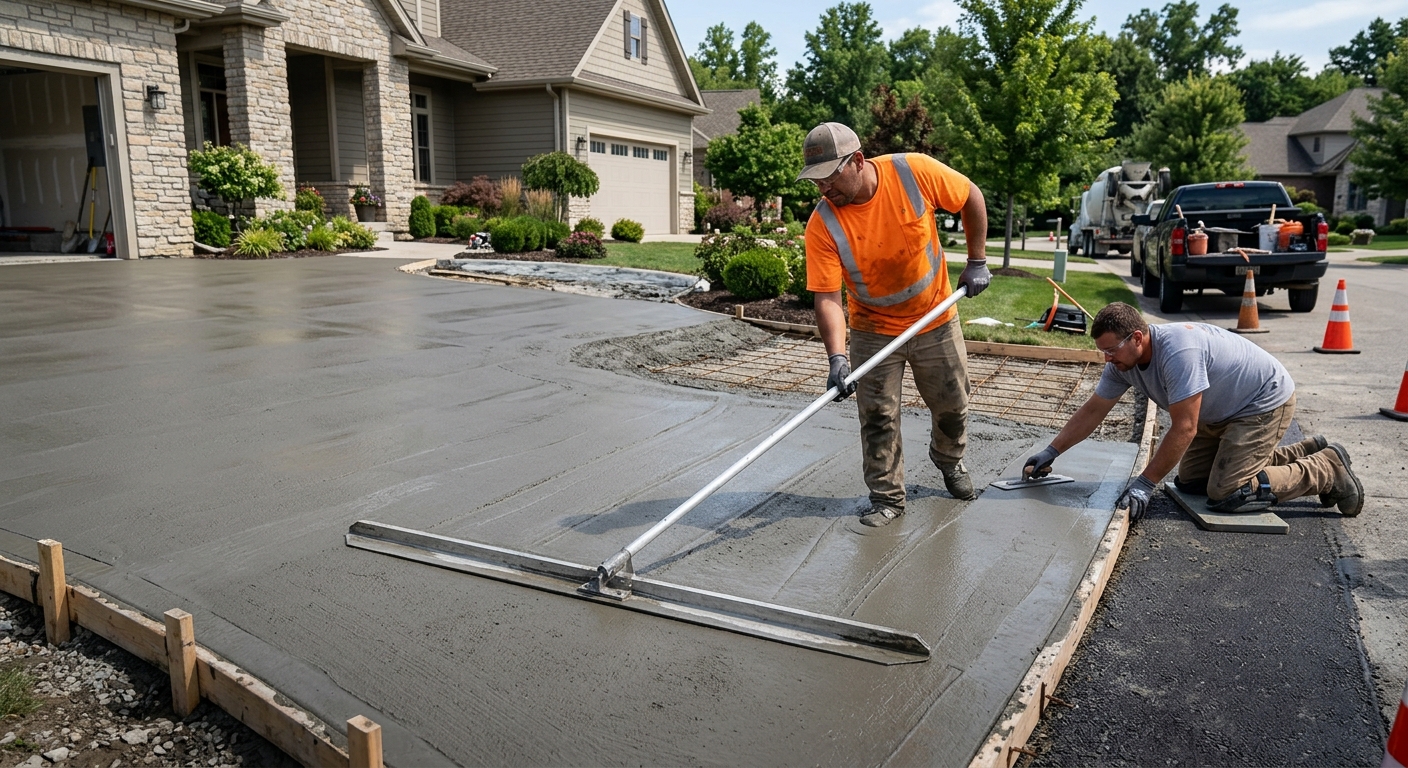
Concrete work options and costs in Uptown
In Uptown, concrete flatwork is a common upgrade for homeowners because it pairs well with the area’s mix of family housing and practical outdoor spaces. Based on the 2021 Census, single-detached homes remain a prominent housing type in the region (Statistics Canada, 2021 Census), which typically leads to high demand for driveways, patios, and walkway replacements. Uptown itself has a population of 9,273 (Statistics Canada, 2021 Census), and with that steady owner-occupant base, contractors tend to be busiest around late spring to early fall when outdoor curing is more predictable.
Lower Mainland–Southwest pricing is shaped by our shallow-but-real frost depth and frequent freeze–thaw cycles. Even with mild winters, we design footings and thickened edges below the frost depth (commonly ~450 mm / 18") to reduce the risk of frost heave. Rain and coastal humidity also affect scheduling and finishing—contractors may use curing blankets and sealers more often than inland regions, especially for exterior slabs. Because the Vancouver–Surrey–Abbotsford corridor is active and labour is in demand, availability can tighten on short notice in neighbourhoods like South Uptown and near the transit-oriented cores, where access and truck positioning can add time.
Below is a practical cost comparison for the most requested concrete options in Uptown, tied to typical sizes and the specs that keep exterior concrete durable in our wet-freeze conditions.
| Application |
Typical Size |
Key Spec |
Finish Option |
Price Range |
| Concrete driveway (standard broom finish) |
16 ft × 38 ft (608 sq. ft.) |
Compacted granular base; air-entrained mix; control joints |
Broom finish; optional sealer |
$10,900–$17,000 |
| Exposed aggregate driveway |
16 ft × 38 ft (608 sq. ft.) |
Air-entrained mix; proper cure; engineered drainage where needed |
Exposed aggregate (wash finish) |
$13,000–$20,000 |
| Stamped concrete driveway or patio |
18 ft × 24 ft (432 sq. ft.) |
Air-entrained mix; saw-cut control lines; stain/release system |
Stamped pattern; integral colour (where selected) |
$10,000–$16,000 |
| Plain concrete patio or walkway |
12 ft × 16 ft (192 sq. ft.) |
Compacted base; control joints; air-entrained mix |
Plain trowel/steel finish or broom |
$3,100–$5,000 |
| Garage floor (interior slab) |
20 ft × 22 ft (440 sq. ft.) |
Vapour barrier (if required); reinforced slab; consistent thickness |
Float and broom; optional densifier |
$6,500–$10,500 |
| Foundation footings (structural, below frost) |
Per typical new/repair scope |
Engineered footing sizes; excavation below frost (~450 mm / 18" design depth) |
Structural concrete; form-and-pour |
$6,000–$13,500 |
Prices are estimates only and vary by project scope, site access and material selection.
What affects the price of concrete work in Uptown
In Uptown and across the Lower Mainland–Southwest, two quotes for the “same” concrete job can easily diverge by 30–50% because the hidden drivers aren’t visible from your front step: subgrade condition, drainage details, how deep the frost-protected base and footings must be, reinforcement requirements, and how long curing will take under rain and cool nights. Pricing also reflects how busy the Vancouver–Surrey–Abbotsford market is—labour and equipment availability can shift what a crew can schedule within the season.
Frost depth and freeze–thaw cycles dictate every spec in this region. While our frost line is shallower than interior BC, exterior work still needs footings designed below the typical ~450 mm / 18" frost depth to prevent heave. That same exposure drives air-entrained concrete requirements for exterior slabs to resist scaling and freeze damage. Colder regions force deeper excavations and longer cold-weather precautions; in Uptown we’re not dealing with Alberta-level frost depth, but we still plan around cool snaps and saturated soils. If crews need to add curing blankets, temperature protection, or extend curing time, costs rise. Finally, because coastal-wet conditions and de-icing salt can accelerate spalling, sealing and surface durability planning are often essential rather than optional.
Concrete choices in Uptown also move the needle. Switching from a standard driveway ($18–$28 per sq. ft. for typical projects) to stamped and decorative concrete ($22–$36 per sq. ft.) is justified when you want colour, patterns, and a higher finish package—otherwise broom finish typically provides the best value. Likewise, if your site needs extra excavation and drainage to build a proper granular base, a plain patio/sidewalk ($16–$26) can become closer to the higher end even without decorative finishes.
| Price Factor |
Why It Matters |
Cost Impact |
| Frost line depth — determines footing depth and form height |
Footings and thickened edges must sit below design frost depth to reduce heave |
Higher excavation and materials can add 10–25% |
| Site preparation — excavation, grading, compacted granular base |
Unsuitable soil and poor drainage lead to settlement, cracking and premature failure |
Often the biggest swing factor; can add 20–40% |
| Reinforcement — rebar or wire mesh requirement |
Controls cracking and improves slab performance under loads |
May add 3–12% depending on slab type/thickness |
| Mix design — air-entrainment and compressive strength spec |
Exterior durability depends on air content and proper strength |
Typically adds 2–8% vs. a basic mix |
| Finish type — broom vs. stamped vs. exposed aggregate |
Labour time, materials (stains/release/aggregate) and complexity differ |
Can shift 15–40% between standard and decorative options |
| Pour size and concrete truck access to site |
Smaller pours take more set-up; difficult access increases labour and risk |
Can add 5–20% for staging, hoses/boom use, or extra manpower |
| Cold-weather curing precautions — heating and blankets |
Concrete needs time and temperature control to reach strength and durability |
May add 5–18% depending on conditions and schedule |
| Control joint pattern and sealing cost |
Joints manage shrinkage cracking; sealers reduce salt/water penetration |
Sealing adds modestly, but skipped work can cause expensive surface issues |
Permits & regulations in British Columbia
In British Columbia, structural concrete work typically requires municipal oversight because it affects the building’s load path and long-term safety. Work such as foundation walls, grade beams, structural footings, and any concrete that is part of the main structure usually needs a building permit and, in many cases, engineered drawings reviewed by the municipality.
Concrete flatwork—patios, walkways, and most driveways—usually does not require a permit, unless the project affects lot grading, drainage, or impervious surface coverage limits, or you’re impacting municipal right-of-way/sidewalk areas. Even when a permit is “not usually required,” you should confirm with the local authority before breaking ground because drainage changes in Uptown can trigger conditions for run-off control and setbacks.
Here’s how a homeowner in Uptown can verify a contractor properly. Step 1: ask for their liability insurance certificate (and confirm the named insured matches the legal company name). Step 2: request proof of workplace coverage—WSBC or the applicable coverage documentation for the contractor and any subcontractors they use. Step 3: verify contractor credentials using the appropriate provincial online contractor registry entry and cross-check that the business name, address, and licence details match the quote paperwork. Step 4: ask for references on similar-size concrete projects in the Lower Mainland–Southwest (driveways and exterior flatwork are most relevant), and confirm the dates align with real work performed, not just pictures.
Getting concrete right in Uptown's freeze-thaw climate
Concrete fails in Uptown most often when exterior slabs don’t get the right base, the mix isn’t designed for freeze–thaw exposure, or the curing and sealing steps are skipped. In the Lower Mainland–Southwest, saturated soils and frequent wetting make drainage and compaction critical, and our freeze–thaw cycles mean surface protection matters. If the concrete doesn’t have proper air-entrainment and the control joints aren’t planned, you’ll often see premature cracking and, in worse cases, spalling—especially where de-icing salt is used or where water pools near doorways and edges.
To spec the job correctly, focus on five areas: (1) base prep: a compacted granular sub-base to the right depth for your local soil and exposure; (2) mix design: air-entrainment targeted for exterior flatwork (commonly 5–7% air) and minimum 32 MPa compressive strength; (3) control joints: a realistic saw-cut pattern to limit random cracking; (4) curing: keep it protected and properly hydrated, with a minimum 7-day curing period under good conditions and extra precautions in cool weather; (5) sealing: apply a penetrating sealer after the cure (commonly at 28 days) to help repel salt and reduce water absorption.
Example: upgrading from plain broom-finish patio concrete (often $16–$26 per sq. ft. depending on prep and thickness) to a properly sealed exterior system and better base drainage might only add a few hundred to around a thousand dollars for a typical backyard patio. That extra cost is usually justified because it prevents the “cheap-looking” failure cycle—repairs and patching that cost more over a few seasons.
| Spec |
Why It Matters in Uptown |
What to Ask For |
Impact if Skipped |
| Compacted granular base (depth?) |
Stable support and drainage reduce settlement and water pumping under slabs |
Granular base depth specified (site-dependent) with compaction testing approach |
Cracking, dips, and edge deterioration within 1–3 years |
| Air-entrained concrete mix (target air %?) |
Air voids protect paste from freeze–thaw scaling in wet coastal cycles |
Air content target of 5–7% for exterior flatwork, with mix confirmation on delivery |
Higher risk of surface scaling and spalling |
| Compressive strength (MPa rating) |
Strength ensures durability and resistance to traffic and freeze damage |
Minimum 32 MPa (or higher as engineered for the application) |
Premature wear, surface breakdown, and faster cracking |
| Control joints (spacing per ACI guidelines) |
Joints manage shrinkage cracking where you intend it |
Planned joint layout and saw-cut schedule; alignment near edges and penetrations |
Random cracking that can’t be cleanly repaired |
| Minimum 7-day curing period |
Proper curing is needed to reach strength and improve water resistance |
Minimum 7-day cure (with curing blankets/temperature protection if nights are cool) |
Reduced strength and higher cracking risk |
| Penetrating sealer (when applied after cure) |
Sealer helps repel de-icing salts and slows water absorption during storms |
Penetrating sealer applied after cure (commonly at 28 days), with surface readiness |
Faster deterioration where salt and moisture are present |
How to choose a concrete work contractor in Uptown
Choosing the right contractor matters more in Uptown than many homeowners expect, because freeze–thaw exposure and rain-soaked soils punish shortcuts. Start by verifying British Columbia licensing/credentials through the proper online registry for the business name and principal contact. Next, check liability insurance: ask for a current certificate of insurance and confirm coverage limits are appropriate for concrete work (and that the certificate matches the legal company). For coverage, request proof of WSBC/WCB standing for the contractor and confirm subcontractors are also covered—don’t rely on verbal assurances.
Then, get 2–3 itemised written quotes—not just a lump sum. A good quote breaks labour and materials and explains what’s included in excavation, formwork, reinforcement, concrete mix design (air-entrainment), finishing, curing steps, and disposal. Make sure the scope notes whether permits are included (if applicable), whether concrete is saw-cut with a joint plan, and whether a sealer is included or offered as an add-on.
Ask about warranty: workmanship coverage should be clearly stated (length, what defects are covered, and how long you must notify them). Clarify whether product/manufacturer warranties apply to sealer systems or admixtures and whether they’re transferable. For payment schedule, a safe rule is to avoid large upfront amounts—keep deposits around 10–15% and use a holdback until the job is complete and clean-up is done. Finally, request a written start date and completion estimate; if rain is common in your planned week, ask how the contractor protects and cures the concrete.
- Confirm their legal business name matches the quote and insurance certificate
- Check liability insurance is current and specific to the work
- Verify WSBC/WCB coverage for the contractor and any subcontractors
- Request 2–3 itemised quotes (labour, materials, disposal, and curing/sealer)
- Ask for the proposed concrete mix design details (air-entrainment and strength)
- Confirm base prep scope (excavation depth, granular base, compaction approach)
- Review reinforcement details (mesh size, rebar placement, thickness assumptions)
- Get a written control joint plan (pattern and timing)
- Ask how they handle rainy days, cool nights, and curing protection
- Clarify finishing specs (broom, exposed aggregate process, stamped system)
- Confirm sealing plan (if included, when applied—commonly after 28 days)
- Use a payment schedule with a holdback until the final walk-through passes
Red flags in Uptown include: quotes that don’t mention air-entrainment for exterior slabs, “too-good-to-be-true” decorative pricing for stamped work without detailing stamp/release materials and curing steps, contractors who won’t discuss control joint spacing and drainage, requests for large upfront payments beyond 10–15%, and vague schedules with no plan for rain and cool-weather curing.
Frequently asked questions — concrete work in Uptown
Stamped vs broom-finish concrete — cost difference?
In Uptown and across British Columbia’s Lower Mainland–Southwest, stamped concrete typically costs more than broom-finished concrete because it adds colour/stain systems, stamp mats/release products, extra labour time, and careful curing/finishing. As a rule of thumb for typical projects, broom-finished exterior concrete often lands around the driveway slab band of $18,000–$28,000 (project totals vary with size and access), while stamped & decorative work usually sits higher—commonly $22,000–$36,000 in the per-sq.-ft band for decorative options. The real decision should come down to whether you need the added visual finish, and whether your base prep and joint/sealing plan are being treated as “must-haves.” If a contractor can’t explain air-entrainment and joint layout, the finish won’t last as well in our wet-freeze conditions.
When is the best time to pour concrete in Uptown?
The best time to pour concrete in Uptown is during late spring through early fall, when temperatures are more consistent and the risk of cold, rain-soaked curing conditions is lower. Even though Lower Mainland–Southwest has mild winters, overnight cool snaps and high humidity can slow strength gain—especially if concrete needs curing blankets or temperature protection. Ask your contractor what their weather plan is: how they’ll manage prolonged rain, whether they’ll adjust the cure schedule, and what they’ll do if the pour date shifts. For exterior flatwork, contractors also consider frost-protected scheduling: footings and thickened edges are still planned around freeze-thaw exposure, even when the frost line is shallow. A well-prepared crew may pour earlier or later, but only if curing protection and logistics are planned properly.
How long does concrete take to cure?
Concrete curing depends on temperature, mix design, and exposure conditions. In British Columbia, a typical baseline for exterior work is a minimum 7-day curing period under good conditions before you expect substantial strength, with careful handling during that window. Full design strength is often associated with longer curing (commonly referenced as 28 days for many performance targets), which matters for surface treatments like sealing. If your slab is exposed to Uptown’s wet conditions and freeze–thaw cycles, the curing step shouldn’t be rushed—especially for driveways and patios where water pooling can accelerate deterioration. If a contractor offers to remove forms quickly but doesn’t protect the slab with curing methods (blankets/sealers timing), you should be cautious. Good curing also reduces the chance of early shrinkage cracks that get worse once salt and moisture hit.
Do I need a permit for concrete work in British Columbia?
In British Columbia, structural concrete work such as foundation footings, grade beams, and foundation walls usually requires a building permit and often engineered drawings reviewed by the municipality. Concrete flatwork—driveways, patios, and walkways—often does not require a permit, unless the work affects lot grading, drainage, impervious surface coverage limits, or impacts municipal right-of-way areas (like a sidewalk tie-in). For Uptown homeowners, the safest approach is to confirm with the local authority before you start—especially if you’re changing slopes or diverting water. Also verify your contractor can explain what’s included for permits (if needed), and that they carry current liability insurance and the required coverage documentation. Don’t proceed until you know whether your specific scope triggers permitting.
Concrete vs pavers for a patio in Uptown?
Concrete and pavers both work well for patios in Uptown, but they fail differently. Concrete offers a continuous surface that can be more cost-effective for larger areas, especially with proper base prep and control joints. Typical plain patio/walkway projects often fit the $16,000–$26,000 band depending on size and prep. Pavers can be more modular—damaged sections can sometimes be lifted and replaced without breaking up a whole slab—but paver installations are labour-intensive and still require excellent drainage and base compaction to prevent rocking or weed growth. In our Lower Mainland–Southwest climate, the biggest differentiator is base and drainage quality, not whether the surface is concrete or pavers. If you’re concerned about future spot repairs and want individual panel replacement, pavers can be attractive; if you want simpler long-term maintenance and a smooth finish, concrete is often the better fit.
How long does a concrete driveway last?
A well-built concrete driveway in Uptown commonly lasts decades, but the lifespan depends heavily on freeze–thaw durability details and drainage. Exterior slabs must use air-entrained concrete designed for our wet-freeze cycles, include a proper compacted granular base, and have a joint plan to prevent random cracking. Sealing and surface maintenance also matter—especially if de-icing salt is used or if water sits near edges during coastal rain periods. A contractor who designs to manage water and cold exposure reduces the risk of scaling/spalling and edge breakdown. Pricing doesn’t always predict longevity, but cutting corners on air content, curing, or base prep can shorten service life dramatically, sometimes to just a few years. If your quote is in the driveway range (for example, broom-finish projects commonly fall into the $18,000–$28,000 per typical driveway band), insist they also explain how they’ll achieve durability specs for the Lower Mainland climate.