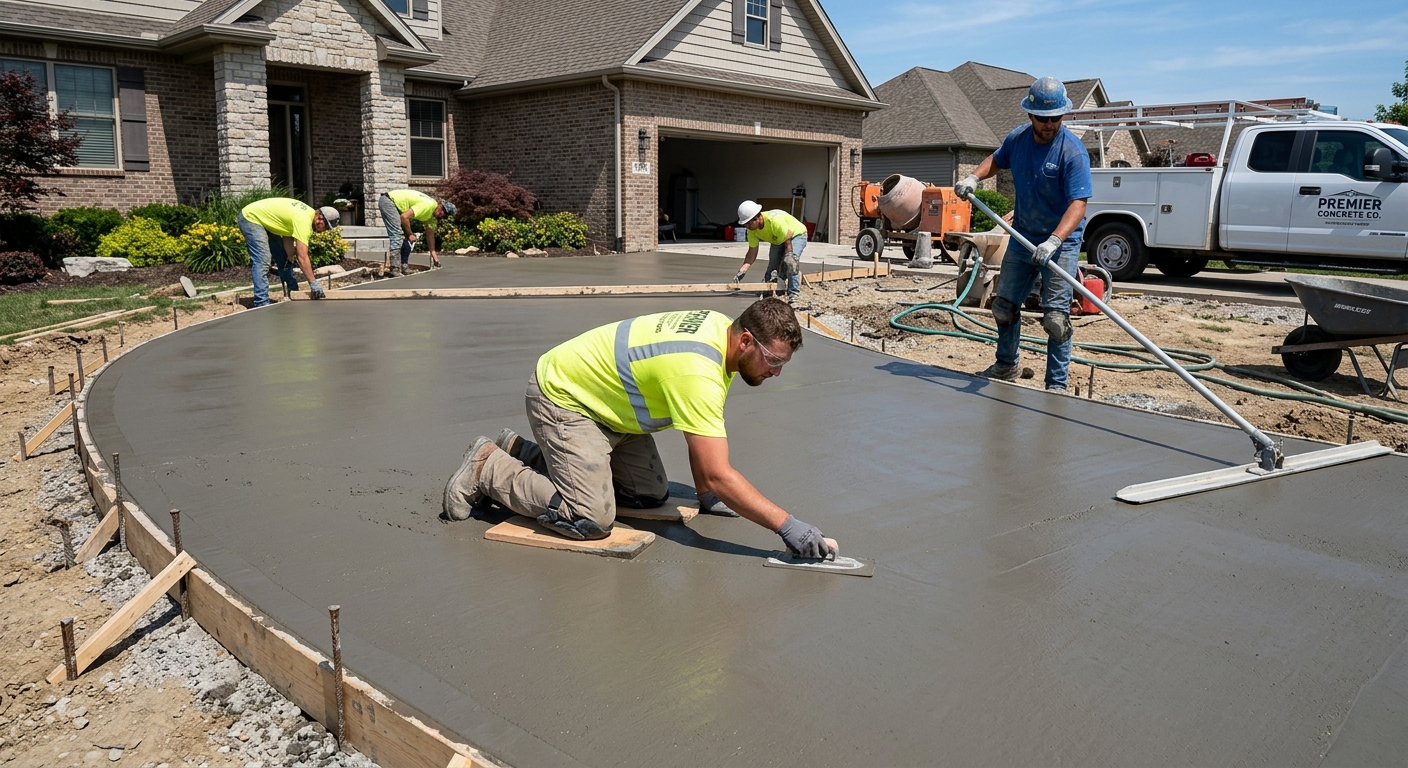
Concrete work options and costs in Castlegar
Concrete work in Castlegar is mostly driven by homeowners, and with about 76.1% of households owning (Statistics Canada, 2021 Census), there’s steady demand for driveways, patios, walkways, and basement upgrades. It also helps that single-detached homes make up 67.7% of dwellings (Statistics Canada, 2021 Census), which is the market segment that most often adds concrete flatwork and new foundation elements. You’ll see the trade especially busy in areas where older homes are common and lots are being refreshed—South Castlegar and the neighbourhood pockets around downtown Trail/Highway corridors tend to pull crews because access and drainage details are critical.
In the Kootenays, pricing isn’t just about concrete strength; it’s about staying ahead of cold continental winters, frequent freeze–thaw cycles, and the need to place footings below frost depth. That typically means deeper excavation, more granular base prep, and air-entrained mixes for exterior slabs to reduce spalling. Castlegar’s shorter pour season also affects scheduling—contractors often charge a premium for cold-weather protection like insulating blankets or heated enclosures, plus more careful curing and inspection time.
For a typical project, the best-value option is often standard broom-finished concrete if your goal is durable, safe traction. If you want curb appeal and colour variation, decorative work (stamped or exposed aggregate) is where you’ll see the biggest step up. Below are realistic per-project ranges you can use as a starting point before you compare quotes.
| Application |
Typical Size |
Key Spec |
Finish Option |
Price Range |
| Concrete driveway (standard broom finish) |
400–600 sq. ft. |
Air-entrained exterior mix, compacted base, reinforcement as needed |
Broom finish, control joints, optional sealer |
$7,200–$16,800 |
| Exposed aggregate driveway |
350–550 sq. ft. |
Air-entrained mix, colour hardening system or wash-exposed aggregate |
Exposed aggregate with edging and jointing |
$9,000–$19,500 |
| Stamped concrete driveway or patio |
300–500 sq. ft. |
Air-entrained mix, release agent, integral or surface colour |
Stamp pattern + texture, control joints, optional sealer |
$9,000–$20,000 |
| Plain concrete patio or walkway |
200–400 sq. ft. |
Air-entrained exterior mix, proper slope, compacted granular base |
Float/ broom blend, saw-cut joints |
$2,800–$9,600 |
| Garage floor (interior slab) |
300–600 sq. ft. |
Vapour barrier, 25–35 MPa mix, reinforcement (mesh/rebar) as specified |
Steel trowel or broom finish (light traffic) |
$6,000–$16,800 |
| Foundation footings (structural, below frost) |
Per linear foot / typical small addition |
Excavation to frost depth, formwork, reinforcement, engineered spec |
Structural finish (not decorative) |
$3,500–$18,000 |
Prices are estimates only and vary by project scope, site access and material selection.
What affects the price of concrete work in Castlegar
In Kootenay communities like Castlegar, the same “concrete slab” quote can vary by 30–50% because the cost isn’t just concrete—it’s what it takes to keep it from failing in our conditions. A flatwork job may look similar on paper, but footing and base requirements, reinforcement decisions, and winter curing strategy can change significantly from one crew’s method to another. Those differences show up fast when comparing a standard broom slab (often aligned with the regional concrete driveway/slab band of $18–$28 per sq. ft.) versus decorative work like stamped options.
Two drivers govern almost every spec in the Kootenays: frost protection and freeze–thaw durability. Footings must extend below design frost depth to prevent frost heave, and in colder inland climates that can mean deeper excavation and higher formwork costs. Exterior slabs also need air-entrained concrete so the paste has room to manage freeze–thaw expansion without spalling. Finally, cold-weather scheduling matters. In Castlegar, the pour window can be shorter, and crews often need curing blankets or heated protection, which adds labour and fuel overhead. With de-icing salts common on driveways, sealing becomes more important—otherwise, surface scaling accelerates.
Local site conditions can also shift pricing. For example, a driveway with poor drainage or a high-water table may require more base build-up and drainage detailing, while a straightforward, flat access route with truck-friendly entry can reduce labour. If your home is older (many are pre-1981, and older lots often have more buried services or settlement), demolition and utility locating can add thousands. In practical terms, upgrading from plain exterior flatwork to stamped concrete can be worth it visually, but it’s not always justified if the goal is simply safe, reliable traction—plain patios and walkways often land closer to the $14–$24 band.
| Price Factor |
Why It Matters |
Cost Impact |
| Frost line depth — determines footing depth and form height |
Deeper frost protection increases excavation and formwork |
Can add several thousand dollars on footing-heavy scopes |
| Site preparation — excavation, grading, compacted granular base |
Proper base reduces settlement, cracking and heave |
Major driver when soil is soft or lots are sloped |
| Reinforcement — rebar or wire mesh requirement |
Supports slabs and helps manage shrinkage and load cracking |
Small material cost but labour and placement time increase |
| Mix design — air-entrainment and compressive strength spec |
Air helps resist freeze–thaw; strength supports performance |
Higher-spec mixes can raise unit costs |
| Finish type — broom vs. stamped vs. exposed aggregate |
Decorative systems require additional materials and skilled labour |
Stamps/exposed aggregate typically add the most |
| Pour size and concrete truck access to site |
Smaller pours may require additional crew time; access affects placement speed |
Truck access issues can add pumping/handling costs |
| Cold-weather curing precautions — heating and blankets |
Maintains early strength so concrete reaches durability milestones |
Can significantly increase labour and equipment time in winter |
| Control joint pattern and sealing cost |
Joints and sealing reduce random cracking and salt scaling |
Relatively small cost compared to repair avoidance |
Permits & regulations in British Columbia
In British Columbia, structural concrete work—such as footings, foundation walls, grade beams, and other elements that support the building—typically requires a building permit, and you’ll often see engineered drawings reviewed as part of the permit process. For concrete flatwork (patios, walkways, driveways), permits are usually not required by default, but you must confirm if your project impacts lot grading, changes drainage patterns, or affects impervious surface considerations and municipal right-of-way requirements. Before anyone breaks ground in Castlegar, confirm requirements with the local authority so you don’t get stuck mid-project.
For homeowner due diligence, check contractor insurance and coverage step-by-step:
- Licensing: Verify the contractor is properly registered/authorized for the work they’re doing (and matches the scope you’re hiring for).
- Liability insurance: Ask for a current Certificate of Insurance showing the policy is active and limits are appropriate for construction work.
- Workers coverage: In BC, confirm workers’ coverage status (commonly shown through WCB/coverage clearance documentation or the contractor’s proof of account/coverage).
- Clearance letter: If required for your project type, request a clearance letter/documentation showing the account is in good standing.
- References: Ask for 2–3 similar jobs nearby or in comparable climate conditions, ideally on exterior slabs where freeze–thaw matters.
With concrete, your protection isn’t just the permit—it’s hiring a contractor who can document coverage and build to the right specifications for Castlegar’s winter climate.
Getting concrete right in Castlegar's freeze-thaw climate
Concrete failures in Castlegar are most often linked to inadequate base preparation, poor mix design, or shortcuts in curing—especially during cold snaps. The freeze–thaw cycle stresses concrete repeatedly, and water movement at the surface or near the slab edges can drive spalling, pop-outs, and random cracking. To spec your project correctly, start with the base: a compacted granular sub-base to the right depth (based on soil conditions and the design frost environment) so the slab doesn’t settle or heave.
Next, specify the mix. For exterior flatwork, require air-entrainment targeting roughly 5–7% air content and a minimum 32 MPa compressive strength (for the structural requirements of a typical durable exterior spec). This directly reduces freeze–thaw damage like scaling/spalling when de-icing salts hit the surface. Control joints are equally important: proper spacing helps the slab crack where you want it, not randomly. Curing matters in cold weather—plan for at least a 7-day curing period under proper conditions, which may include blankets or enclosure heating when temperatures drop. Finally, schedule penetrating sealer after the cure (commonly around 28 days post-pour) to repel salt water intrusion.
If you compare options, the price difference is usually justified when it prevents rework. For example, a broom-finished driveway can fall into the $18–$28 per sq. ft. band, while stamped concrete typically costs more (often aligned with the $25–$40 range depending on pattern and finishes). Stamps won’t “solve” freeze–thaw issues, but paying for the right air-entrainment and joints still makes the decorative surface last longer. Ask your contractor to explain their air content, joint spacing, and curing plan—not just the finish.
| Spec |
Why It Matters in Castlegar |
What to Ask For |
Impact if Skipped |
| Compacted granular base (depth?) |
Prevents settlement and edge cracking during freeze–thaw |
Base thickness based on soil/fill and a compaction target; drainage plan if needed |
Random cracking, uneven slab, costly removal and replacement |
| Air-entrained concrete mix (target air %?) |
Reduces freeze–thaw spalling and scaling |
Air content target for exterior flatwork (commonly 5–7%) and specified cement/aggregate approach |
Surface pop-outs and scaling within a few seasons |
| Compressive strength (MPa rating) |
Supports wear resistance and structural integrity |
Minimum 32 MPa (typical durable exterior spec) and what standard they follow |
Premature wear, chipping, and reduced long-term performance |
| Control joints (spacing per ACI guidelines) |
Controls where cracks occur as concrete shrinks |
Planned saw-cut timing and joint spacing for your slab dimensions |
Random, unsightly cracking that can let water in |
| Minimum 7-day curing period |
Builds strength before the weather swings |
How they cure in cold conditions; blankets/enclosures if needed |
Reduced strength and increased cracking risk |
| Penetrating sealer (when applied after cure) |
Helps repel salt water and reduces surface scaling risk |
Penetrating sealer after cure (commonly after 28 days) and application schedule |
Salt damage accelerates, leading to early surface deterioration |
How to choose a concrete work contractor in Castlegar
Choosing a concrete contractor in Castlegar is less about fancy photos and more about verifying the basics: coverage, written scope, and a realistic plan for freeze–thaw performance. Start by confirming British Columbia licensing/registration that matches the work, then verify liability insurance. Ask for a current Certificate of Insurance—your contractor should list you as the customer/interest where applicable and show coverage limits suitable for construction sites. Next, check workers coverage (WCB/clearance documentation). A good contractor can provide proof of coverage or a clearance letter if your project type calls for it. Don’t rely on verbal confirmation.
For quoting, get 2–3 itemised written proposals. You want labour and materials breakdowns (excavation, base, reinforcement, concrete supply, formwork, finishing, joints, sealer) rather than one lump sum. Read the exclusions carefully: does the quote include permit pull (if required), disposal, saw-cutting, temporary protection, or cold-weather curing blankets? If those items aren’t included, you can get change-order surprises once temperatures shift.
Warranty should be clear. Ask about the workmanship warranty length, what it covers, and whether it’s tied to a maintenance expectation like sealing. Also confirm if manufacturer/product warranties are separate and transferable. For payment, never pay more than about 10–15% upfront; hold back funds until the job is complete and conditions match the final inspection checklist. Finally, insist on a written timeline: start date and completion estimate, especially because Castlegar’s pour season can tighten quickly with temperature swings.
- Written scope with dimensions, thicknesses and reinforcement method.
- Proof of active liability insurance (current COI).
- Workers coverage documentation (WCB/clearance as applicable).
- Base prep included (granular thickness + compaction plan).
- Air-entrainment and minimum compressive strength specified.
- Control joint spacing and cut timing identified.
- Cold-weather plan: blankets/heating if temperatures require it.
- Sealer included or scheduled after the cure (not “someday”).
- Disposal and haul-away included where demolition is required.
- Truck access/placement method described (no vague “we’ll manage”).
- Clear protection measures for landscaping, edges and forms.
- Wage/payment schedule with a holdback until completion.
Red flags in Castlegar include: vague mix statements (“regular concrete” without air-entrainment), skipping or reducing base thickness to “save money,” refusing to explain joint spacing, avoiding details on curing/blankets in cold weather, and offering only a lump-sum quote with unclear inclusions.
Frequently asked questions — concrete work in Castlegar
How deep must footings be for Castlegar's frost line?
Footing depth in Castlegar must be set below the design frost depth to prevent frost heave, so the exact number depends on the engineering/soil information for your lot and the structural design requirements for your foundation. In practice across inland BC, colder winter conditions often mean deeper excavation than people expect, and contractors will build form height and excavation quantities around that design. Because Kootenay properties can vary widely with drainage and soil moisture, a one-size-fits-all depth usually isn’t appropriate. For budgeting, it’s why foundation/footing scopes typically price higher (often in the $70–$120 range per unit footprint), and why site preparation and reinforcement details are part of the quote. Ask your contractor to reference the engineered foundation spec and explain their excavation and base/dry-out plan.
Why does concrete crack in Castlegar and how is it prevented?
Concrete cracks in Castlegar mainly because of shrinkage during curing and movement from freeze–thaw cycles when water gets into vulnerable areas—especially edges and areas around joints. The best prevention is a full spec, not just “stronger concrete.” Ensure the contractor uses air-entrained exterior mix (to reduce freeze–thaw spalling and scaling), prepares a properly compacted granular base, and installs control joints on a planned pattern so cracks occur where they’re meant to. Joint timing matters too: saw-cut or formed joints need to happen at the right stage. Curing is another key factor—minimum 7 days under appropriate protection in cold snaps. Finally, sealing helps protect against salt exposure. If you’re budgeting, remember that plain broom-finish concrete can be in the $18–$28 per sq. ft. band, but skipping air/joints can lead to early repairs.
Stamped vs broom-finish concrete — cost difference?
Stamped and broom-finish concrete differ most in labour and materials. Broom-finish exterior flatwork is typically the most cost-effective because it uses a simpler finishing workflow. Stamped concrete adds colour systems (integral or surface colour), stamp patterns, release agents, and often extra time for finishing, edging, and consistent texture. In the Kootenays, that usually translates to decorative work coming in higher—often aligning with the stamped/decorative range of $25–$40 per sq. ft., compared with standard driveway/slab pricing that frequently lands around $18–$28 per sq. ft. The important point for Castlegar homeowners: decorative finishes don’t replace the need for the same durability spec (air-entrainment, joints, and curing). Ask whether your quote includes the same freeze–thaw protective measures, not just the look.
When is the best time to pour concrete in Castlegar?
The best time to pour concrete in Castlegar is when temperatures stay reliably above workable curing conditions for the first several days. In the Kootenays, you typically want to schedule around cold snaps to avoid needing extensive heating and enclosure measures. A contractor experienced locally will plan pour dates based on forecasted overnight lows and will outline cold-weather precautions if the weather turns. Even if crews can pour later in the season, curing protection (insulating blankets, enclosures, or controlled heating) can add cost and must be built into the quote. That’s one reason quotes can vary: a “same-size” slab in shoulder season often costs more than the same job in a more stable period. Your best move is to request a written curing plan and protection details as part of the estimate—especially if your project involves exterior flatwork exposed to freeze–thaw and de-icing salts.
How long does concrete take to cure?
Concrete strength development continues after the pour, but for practical purposes you’ll hear two timeframes. First, allow a minimum 7-day curing period under proper conditions before expecting the slab to perform normally, especially in colder Castlegar conditions. Second, many surface treatments—like penetrating sealer meant to repel salt water—are typically applied after the concrete has cured more fully, commonly around 28 days post-pour. Cold weather changes the timeline because early-age concrete is more sensitive; that’s why your contractor may require blankets or heated enclosures to keep curing on track. If the job is decorative (stamped or exposed aggregate), good curing still matters for colour stability and long-term surface durability. If you’re comparing quotes, ensure each proposal includes curing and the timing of any sealing step, not just the finish day.
Do I need a permit for concrete work in British Columbia?
In British Columbia, structural concrete work—such as footings, foundation walls, and grade beams—usually requires a building permit and often engineered drawings reviewed through the municipal process. For concrete flatwork like patios, walkways, and driveways, permits are often not required, but you must confirm if your project affects lot grading, drainage, or impervious surface/municipal right-of-way considerations. For homeowners in Castlegar, the safe approach is to ask your contractor what they expect to handle and then verify with the local authority before excavation begins. When you review quotes, confirm whether permit pull (if needed), inspections, and disposal are included. Also verify coverage: ask for a Certificate of Insurance for liability and documentation for workers’ coverage (WCB/clearance as applicable). This helps protect you during the work window in the Kootenay freeze–thaw season.